
Search
Search results

Lucy Buglass (45 KP) rated Anchor & Hope (2018) in Movies
Jun 20, 2019
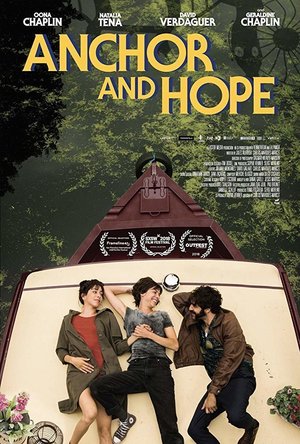

A heart-wrenching portrait of parenthood & sexuality
Deciding to have a baby is a big step in many couples’ lives, but sometimes, things don’t always go according to plan. Carlos Marques-Marcet’s Anchor and Hope follows two lesbian women who, one drunken night, decide to use their friend’s sperm in order to have a child of their own. It’s not a decision that should be taken lightly, but makes for an interesting story nonetheless. Insemination is a viable option that is often considered by those in same-sex relationships, or by those who struggle to conceive. This is the first film I’ve seen that deals with the subject so explicitly.
Throughout the course of the film, we focus heavily on the lives of Eva, Kat and Roger. The quality of acting was very good and believable, meaning it was easy for me to stay invested in their lives as events transpired. They all have very different personality traits that inevitably clash, and it’s not long before jealousy starts to rear its ugly head and tensions rise. Kat and Roger are close and both fluent in Spanish, meaning they’re able to communicate and Eva hasn’t got a clue what they’re saying. She starts feeling left out, which may or may not have driven her to think about the insemination. It’s left up to the audience to figure that one out. It’s clear Eva wants the baby more than Kat does, which is already a huge red flag.
The baby becomes a central part of the narrative, and the character’s lives. Anchor and Hope presents us with different viewpoints, all centred around this new life. It’s incredibly emotional to watch as we witness how three very different characters respond to it. I respected the fact the film doesn’t position itself as for or against any argument, it simply presents them to the audience as valid responses to what’s happening. Had the film gotten too preachy one way or the other, I think I may have found that frustrating. This is a film that leaves a lot up to the audience, and one that can spark interesting discussions.
Despite my interest in the topic and praise for the acting, I didn’t particularly like any of the characters. They’re all frustrating in their own ways and sometimes it felt a little too far-fetched and melodramatic. This weakened the film for me as I didn’t find myself rooting for anyone, and just wished they’d never made that decision in the first place. There’s no warmth for any of the characters, which was a let down. I also felt the story could have been shorter and snappier, as it felt too drawn out in places.
However, it is a very interesting look into insemination and sperm donors, and the script is strong and considered. It would be easy to cause controversy if not dealt with respectfully, but I felt like appropriate research had been done and they remained impartial throughout. The visuals are clean, well shot, and I liked the use of small, intimate locations to tell the story. Eva and Kat live on a houseboat, so that sense of minimalism is present throughout.
I was mostly entertained and enjoyed watching it, so I would recommend this film if it’s a topic that interests you. Overall, it’s an emotionally charged and well-written LGBT+ film and we definitely need more of those.
https://lucygoestohollywood.com/2018/11/08/anchor-and-hope-a-heart-wrenching-portrait-of-parenthood-sexuality/
Throughout the course of the film, we focus heavily on the lives of Eva, Kat and Roger. The quality of acting was very good and believable, meaning it was easy for me to stay invested in their lives as events transpired. They all have very different personality traits that inevitably clash, and it’s not long before jealousy starts to rear its ugly head and tensions rise. Kat and Roger are close and both fluent in Spanish, meaning they’re able to communicate and Eva hasn’t got a clue what they’re saying. She starts feeling left out, which may or may not have driven her to think about the insemination. It’s left up to the audience to figure that one out. It’s clear Eva wants the baby more than Kat does, which is already a huge red flag.
The baby becomes a central part of the narrative, and the character’s lives. Anchor and Hope presents us with different viewpoints, all centred around this new life. It’s incredibly emotional to watch as we witness how three very different characters respond to it. I respected the fact the film doesn’t position itself as for or against any argument, it simply presents them to the audience as valid responses to what’s happening. Had the film gotten too preachy one way or the other, I think I may have found that frustrating. This is a film that leaves a lot up to the audience, and one that can spark interesting discussions.
Despite my interest in the topic and praise for the acting, I didn’t particularly like any of the characters. They’re all frustrating in their own ways and sometimes it felt a little too far-fetched and melodramatic. This weakened the film for me as I didn’t find myself rooting for anyone, and just wished they’d never made that decision in the first place. There’s no warmth for any of the characters, which was a let down. I also felt the story could have been shorter and snappier, as it felt too drawn out in places.
However, it is a very interesting look into insemination and sperm donors, and the script is strong and considered. It would be easy to cause controversy if not dealt with respectfully, but I felt like appropriate research had been done and they remained impartial throughout. The visuals are clean, well shot, and I liked the use of small, intimate locations to tell the story. Eva and Kat live on a houseboat, so that sense of minimalism is present throughout.
I was mostly entertained and enjoyed watching it, so I would recommend this film if it’s a topic that interests you. Overall, it’s an emotionally charged and well-written LGBT+ film and we definitely need more of those.
https://lucygoestohollywood.com/2018/11/08/anchor-and-hope-a-heart-wrenching-portrait-of-parenthood-sexuality/
Lucy Buglass (45 KP) rated Black Mirror: Bandersnatch (2018) in Movies
Jun 20, 2019
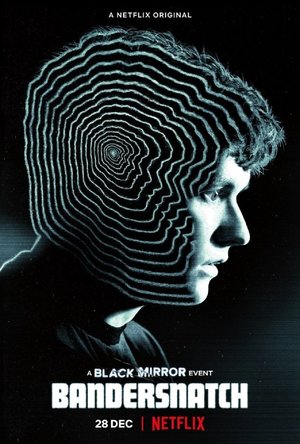


It comes as no surprise that Black Mirror was Netflix’s guinea pig for their first ever interactive film. Charlie Brooker’s anthology series about the dark side of technology has captivated fans ever since it first aired on Channel 4 in the UK. With Netflix being a leading entertainment service, the time had come for them to try something brand new. The film dropped over the Christmas break, and I for one was very excited to sit down and try it.
Black Mirror: Bandersnatch is set in the ’80s and follows teenager Stefan Butler as he works to create a choice/consequence video game called ‘Bandersnatch’. He’s basing it off one of his mother’s ‘choose your own adventure’ books, where you could flick back and forth between chapters to change the course of your story. He’s been invited to speak with video games company Tuckersoft, comprised of video game creator Colin Ritman and savvy businessman Mohan Thaku, in the hopes he can make the game for their company.
As Stefan works on ‘Bandersnatch’, he also visits a therapist to help with his depression following the loss of his mother. He takes an unnamed medication in an attempt to ease his symptoms. Soon, the lines between reality and the video game world start to blur for Stefan, and he becomes more and more unhinged before our eyes.
That’s about all I’m going to tell you about the plot itself, because I don’t want to give away any spoilers. My advice when approaching this for the first time is to go in completely blind and just make your own decisions. You can find numerous pathway guides online, but try to avoid these until your later playthroughs if you can. Black Mirror: Bandersnatch is an experience that requires multiple watches and a lot of patience, but I promise you it’s worth it.
Personally I adore this episode, and I think they did such a fantastic job of bringing it to life. It’s so fluid and engaging; the scenes continue to play even when the options pop up on screen. The acting is absolutely stunning, with Fionn Whitehead (Stefan) and Will Poulter (Colin) impressing me the most, but every character is so well acted and believable. For the very first time, you feel part of the Black Mirror universe, and everything starts to feel so meta. There are also a lot of references to previous episodes which will delight long term fans, but aren’t too jarring for those new to the series.
Both Black Mirror and Netflix have proven they can work with interactivity without making it too gimmicky or tedious. It’s a fascinating format that I’m excited to see more of, and I’m sure we haven’t seen the last of this. I have equal amounts of praise for both the series and Netflix themselves, because they’re constantly upping the entertainment game which makes me fall in love even more. This is the kind of stuff that really excites me!
In classic Black Mirror style, there are some disturbing pathways but they’re arguably my favourite. They’re chilling, harrowing and bloody brilliant. At this point I think I’ve explored every possible ending or pathway, but I’m reluctant to spoil any of them on here because that would ruin the experience. However, if you do want to discuss anything, please do message me on @LGTHBlog so we can fangirl together!
https://lucygoestohollywood.com/2019/01/06/netflixs-first-interactive-film-my-thoughts-on-black-mirror-bandersnatch/
Black Mirror: Bandersnatch is set in the ’80s and follows teenager Stefan Butler as he works to create a choice/consequence video game called ‘Bandersnatch’. He’s basing it off one of his mother’s ‘choose your own adventure’ books, where you could flick back and forth between chapters to change the course of your story. He’s been invited to speak with video games company Tuckersoft, comprised of video game creator Colin Ritman and savvy businessman Mohan Thaku, in the hopes he can make the game for their company.
As Stefan works on ‘Bandersnatch’, he also visits a therapist to help with his depression following the loss of his mother. He takes an unnamed medication in an attempt to ease his symptoms. Soon, the lines between reality and the video game world start to blur for Stefan, and he becomes more and more unhinged before our eyes.
That’s about all I’m going to tell you about the plot itself, because I don’t want to give away any spoilers. My advice when approaching this for the first time is to go in completely blind and just make your own decisions. You can find numerous pathway guides online, but try to avoid these until your later playthroughs if you can. Black Mirror: Bandersnatch is an experience that requires multiple watches and a lot of patience, but I promise you it’s worth it.
Personally I adore this episode, and I think they did such a fantastic job of bringing it to life. It’s so fluid and engaging; the scenes continue to play even when the options pop up on screen. The acting is absolutely stunning, with Fionn Whitehead (Stefan) and Will Poulter (Colin) impressing me the most, but every character is so well acted and believable. For the very first time, you feel part of the Black Mirror universe, and everything starts to feel so meta. There are also a lot of references to previous episodes which will delight long term fans, but aren’t too jarring for those new to the series.
Both Black Mirror and Netflix have proven they can work with interactivity without making it too gimmicky or tedious. It’s a fascinating format that I’m excited to see more of, and I’m sure we haven’t seen the last of this. I have equal amounts of praise for both the series and Netflix themselves, because they’re constantly upping the entertainment game which makes me fall in love even more. This is the kind of stuff that really excites me!
In classic Black Mirror style, there are some disturbing pathways but they’re arguably my favourite. They’re chilling, harrowing and bloody brilliant. At this point I think I’ve explored every possible ending or pathway, but I’m reluctant to spoil any of them on here because that would ruin the experience. However, if you do want to discuss anything, please do message me on @LGTHBlog so we can fangirl together!
https://lucygoestohollywood.com/2019/01/06/netflixs-first-interactive-film-my-thoughts-on-black-mirror-bandersnatch/

Darren (1599 KP) rated 12 Strong (2018) in Movies
Jun 20, 2019

Story: 12 Strong starts on the day of 9/11, Captain Mitch Nelson (Hemsworth) witnesses the horrors of the terrorist attack on the Twin Towers, returning to his military base, he wants to lead her unit into battle against the Taliban in Afghanistan.
Once receiving permission and earning the right, Mitch is joined by Hal Spencer (Shannon) and his 10 other trusted soldiers that head into Afghanistan to work with the Afghan Warlord General Dostum (Negahban) as they unleashes the first attack in retaliation after the 9/11 attack.
Thoughts on 12 Strong
Characters – These soldiers are real people, Mitch Nelson is the unexperienced combat Captain that takes his driven man into battle, he must use his own smarts to be given the opportunity to be the first in the retaliation, he uses his knowledge to work with General Dostum as the two different cultures and ideas must come together for the battle. Hal Spencer is the second in command of the unit, he is older and offers the advice he soldier needs to get himself to the right answers. The rest of the unit all have their moments through the story and by the end you will believe you are watching a real unit.
Performances – Chris Hemsworth in the leading role is fantastic, he keeps himself looking like the star even though he needs to work with a unit to get the right answers, showing he can handle the serious roles once again. Michael Shannon in the supporting role shines even though it is strange seeing him in a good guy role after his recent run as a villain. The rest of the cast are great, they all have wonderful chemistry which the unit needs to pull this off.
Story – The day of 9/11 shocked the world, America the most and this shows the plan to retaliate after the attacks, the first men to go into combat against the Taliban as they risked everything to get a strike back and prevent what was believed to be another big attack. This is a true story, this could easily have been a fictional story because after the mission starts, you are pulled into seeing just what the men will do to get the job done and of course it is an against the odd style mission.
Action/History/War – The action sequences are shot in a brutal style that doesn’t hold back with what happens, we are left shocked by certain moments and on the edge of our seats the next because of the war time battle sequences.
Settings – The settings look the part, we are mostly just in and around caves and canyons which is where the Taliban would be hiding and preparing.
Special Effects – The effects for the battle sequences are flawless, looking brutal and the stunt team need praise for the work they have put into this movie.
Scene of the Movie – The final surge, wonderfully shot moment.
That Moment That Annoyed Me – It is ‘we are America, we are great’
Final Thoughts – This is one of the best war movies or recent years, it shows the brutally of the war, the thin line between good and evil between the Afghan units and just how bringing together two cultures can unit for a same enemy.
Overall: Must watch action movie.
https://moviesreview101.com/2018/01/27/12-strong-2018/
Once receiving permission and earning the right, Mitch is joined by Hal Spencer (Shannon) and his 10 other trusted soldiers that head into Afghanistan to work with the Afghan Warlord General Dostum (Negahban) as they unleashes the first attack in retaliation after the 9/11 attack.
Thoughts on 12 Strong
Characters – These soldiers are real people, Mitch Nelson is the unexperienced combat Captain that takes his driven man into battle, he must use his own smarts to be given the opportunity to be the first in the retaliation, he uses his knowledge to work with General Dostum as the two different cultures and ideas must come together for the battle. Hal Spencer is the second in command of the unit, he is older and offers the advice he soldier needs to get himself to the right answers. The rest of the unit all have their moments through the story and by the end you will believe you are watching a real unit.
Performances – Chris Hemsworth in the leading role is fantastic, he keeps himself looking like the star even though he needs to work with a unit to get the right answers, showing he can handle the serious roles once again. Michael Shannon in the supporting role shines even though it is strange seeing him in a good guy role after his recent run as a villain. The rest of the cast are great, they all have wonderful chemistry which the unit needs to pull this off.
Story – The day of 9/11 shocked the world, America the most and this shows the plan to retaliate after the attacks, the first men to go into combat against the Taliban as they risked everything to get a strike back and prevent what was believed to be another big attack. This is a true story, this could easily have been a fictional story because after the mission starts, you are pulled into seeing just what the men will do to get the job done and of course it is an against the odd style mission.
Action/History/War – The action sequences are shot in a brutal style that doesn’t hold back with what happens, we are left shocked by certain moments and on the edge of our seats the next because of the war time battle sequences.
Settings – The settings look the part, we are mostly just in and around caves and canyons which is where the Taliban would be hiding and preparing.
Special Effects – The effects for the battle sequences are flawless, looking brutal and the stunt team need praise for the work they have put into this movie.
Scene of the Movie – The final surge, wonderfully shot moment.
That Moment That Annoyed Me – It is ‘we are America, we are great’
Final Thoughts – This is one of the best war movies or recent years, it shows the brutally of the war, the thin line between good and evil between the Afghan units and just how bringing together two cultures can unit for a same enemy.
Overall: Must watch action movie.
https://moviesreview101.com/2018/01/27/12-strong-2018/
Darren (1599 KP) rated All Is Lost (2013) in Movies
Jun 20, 2019

Story: All is Lost starts 1700 Nautical Miles from The Sumatra Straits on the 13th July as Our Man (Redford) believes that all is lost. The film starts out with a bang when sleeping lone sailor is awoken be cargo shipping container floating in the ocean smashing into the side of his ship leaving a massive hole in the side. The breach in the ship leaves our man with no connections for help even if his boat isn’t going down yet. Staying calm our man fixes the hole before fixing the radio knowing he can survive for a time but just how long is the question, mother nature decides to test our man by throwing storms at him but his years of experience are keeping him a float.
All is Lost is such a very simple story of one man trying survive against mother nature. We have to say this is a courage story that shows our hero never panic and use all the tricks he can to make sure he survives as long as he can always hoping for help. We are left guessing whether he will survive or not as we learn tricks that could help us one day, but in the end I do think this is an incredible story but is very slow, I can easily see the casual film fan giving up on this one. There is pretty much no dialogue in the film because our character has no one to talk to or need to explain who he is. I can honestly I would rather watch the fantasy Life of Pi over this because of the extra elements involved. (8/10)
Actor Review
Robert Redford: Our Man is our lone character in the whole film, we learn little about him over than he likes to boat, we know he keeps calm during the panic and knows how to survive and we also get to see his determination to survive. Robert gives a great performance without having to say too much that his action bring us in. (9/10)man
Director Review: J.C. Chandor – J.C gives us a very good drama about surviving that will get the praise from the critics but might not get enough attention from the casual fans. (8/10)
Action: All is Lost has the action scenes when our hero has t take on mother nature, each scene is heart stopping and realistic. (9/10)
Drama: All is Lost brings us a brilliant story about surviving against the odds. (9/10)
Settings: All is Lost can’t be faulted one bit for the settings because the whole film is set in the middle of the ocean giving our hero little to no chance of surviving. (10/10)
Suggestion: All is Lost is one to watch even if it does come off slow in places. (Watch)
Best Part: Redford is brilliant.
Worst Part: Slow in places.
Action Scene Of The Film: Storm turning the boat upside and back up again.
Believability: Events like this happen a lot and while this story is fictional it takes ideas from other stories. (8/10)
Chances of Tears: No (0/10)
Chances of Sequel: No
Post Credits Scene: No
Similar Too: Life of Pi
Oscar Chances: Nominated for Best Achievement in Sound Editing.
Box Office: $6.25 Million
Budget: $9 Million
Runtime: 1 Hour 46 Minutes
Tagline: Never Give Up
Overall: All is Lost is a very good story about survival that keeps everything looking very realistic.
https://moviesreview101.com/2015/06/30/all-is-lost-2013/
All is Lost is such a very simple story of one man trying survive against mother nature. We have to say this is a courage story that shows our hero never panic and use all the tricks he can to make sure he survives as long as he can always hoping for help. We are left guessing whether he will survive or not as we learn tricks that could help us one day, but in the end I do think this is an incredible story but is very slow, I can easily see the casual film fan giving up on this one. There is pretty much no dialogue in the film because our character has no one to talk to or need to explain who he is. I can honestly I would rather watch the fantasy Life of Pi over this because of the extra elements involved. (8/10)
Actor Review
Robert Redford: Our Man is our lone character in the whole film, we learn little about him over than he likes to boat, we know he keeps calm during the panic and knows how to survive and we also get to see his determination to survive. Robert gives a great performance without having to say too much that his action bring us in. (9/10)man
Director Review: J.C. Chandor – J.C gives us a very good drama about surviving that will get the praise from the critics but might not get enough attention from the casual fans. (8/10)
Action: All is Lost has the action scenes when our hero has t take on mother nature, each scene is heart stopping and realistic. (9/10)
Drama: All is Lost brings us a brilliant story about surviving against the odds. (9/10)
Settings: All is Lost can’t be faulted one bit for the settings because the whole film is set in the middle of the ocean giving our hero little to no chance of surviving. (10/10)
Suggestion: All is Lost is one to watch even if it does come off slow in places. (Watch)
Best Part: Redford is brilliant.
Worst Part: Slow in places.
Action Scene Of The Film: Storm turning the boat upside and back up again.
Believability: Events like this happen a lot and while this story is fictional it takes ideas from other stories. (8/10)
Chances of Tears: No (0/10)
Chances of Sequel: No
Post Credits Scene: No
Similar Too: Life of Pi
Oscar Chances: Nominated for Best Achievement in Sound Editing.
Box Office: $6.25 Million
Budget: $9 Million
Runtime: 1 Hour 46 Minutes
Tagline: Never Give Up
Overall: All is Lost is a very good story about survival that keeps everything looking very realistic.
https://moviesreview101.com/2015/06/30/all-is-lost-2013/

Gareth von Kallenbach (980 KP) rated Alita: Battle Angel (2019) in Movies
Jul 2, 2019
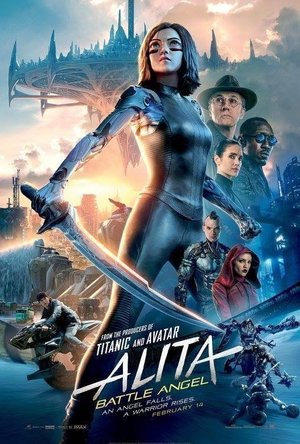
Don’t let the “big anime eyes” or unusual title fool you into thinking this will be a lame film. Yes, this movie is based off a manga you’ve probably never heard of. Yes, it is easy to dismiss this film as something that will bomb like last year’s Mortal Engines. But if you place your faith in director Robert Rodriguez and writer/producer James Cameron, you will be treated to a surprisingly solid narrative and fast paced visual spectacle that is worth the price of admission to view in the theater.
The biggest praise I can give to Alita: Battle Angel is that the visually stunning world they create on screen feels “lived in” and real. I found it easy to accept and understand the rules of that world they built and explained throughout film. And while we are not given a full history of their world, we are given enough explanation to understand how or why something existed in their world. This gives us the opportunity to focus on the story of “self-discovery” that Alita ultimately is.
Rosa Salazar motion capture performance of Alita is excellent. Not only in movement but in emotionally delivery. You get the real sense of discovery with this amazing world that Alita is being exposed to. Additionally, as she begins to become more self-aware of who she is, you can understand the emotion and she struggles with love, trust and obligation. Furthermore, from a technical standpoint, by the end of the movie, I was not thinking of Alita being something that is motion captured and instead just accepted her as part of this onscreen world they delivered. This is really something that becomes make or break with this film for some people and it’s easy to dismiss it based on the trailers. However in context of the film, it works and does a good job drawing you in.
In addition to Alita, we are given strong performances from the ensemble cast of characters in the film. Christoph Waltz play’s Alita surrogate father Dr. Dyson Ido, Keean Johnson as the street smart and resourceful Hugo, Mahershala Ali as the gangster type gate keeper Vector, Jennifer Connelly as the morally ambiguous goal focused scientist and Ed Skrein as the cocky bounty hunter. Each of these characters play their roles well and help usher in the different levels of the society they live in. Perhaps the once complaint I have of this film is that the pacing of this film is so fast that we miss an opportunity to obtain a bit more backstory from some of these characters. It is not a big loss, but it makes you wonder if this film would have been better served as a 10 episode Netflix series or something of that nature.
In the end, I found myself enjoying this film more than I expected I would. Is it a perfect film? No. Nor does it invoke emotionally deep existential thought that the manga it is based on provides. But it does tell a sold story of self-discovery in a visually stunning and fully realized world. It is fun, fast paced and something that should be seen in the theaters. And if possible, do yourself a favor and watch it in 3D. This film has some of the best 3D effects since Avatar. The 3D doesn’t feel like an afterthought or gimmicky, but instead works to enhance the on screen world.
The biggest praise I can give to Alita: Battle Angel is that the visually stunning world they create on screen feels “lived in” and real. I found it easy to accept and understand the rules of that world they built and explained throughout film. And while we are not given a full history of their world, we are given enough explanation to understand how or why something existed in their world. This gives us the opportunity to focus on the story of “self-discovery” that Alita ultimately is.
Rosa Salazar motion capture performance of Alita is excellent. Not only in movement but in emotionally delivery. You get the real sense of discovery with this amazing world that Alita is being exposed to. Additionally, as she begins to become more self-aware of who she is, you can understand the emotion and she struggles with love, trust and obligation. Furthermore, from a technical standpoint, by the end of the movie, I was not thinking of Alita being something that is motion captured and instead just accepted her as part of this onscreen world they delivered. This is really something that becomes make or break with this film for some people and it’s easy to dismiss it based on the trailers. However in context of the film, it works and does a good job drawing you in.
In addition to Alita, we are given strong performances from the ensemble cast of characters in the film. Christoph Waltz play’s Alita surrogate father Dr. Dyson Ido, Keean Johnson as the street smart and resourceful Hugo, Mahershala Ali as the gangster type gate keeper Vector, Jennifer Connelly as the morally ambiguous goal focused scientist and Ed Skrein as the cocky bounty hunter. Each of these characters play their roles well and help usher in the different levels of the society they live in. Perhaps the once complaint I have of this film is that the pacing of this film is so fast that we miss an opportunity to obtain a bit more backstory from some of these characters. It is not a big loss, but it makes you wonder if this film would have been better served as a 10 episode Netflix series or something of that nature.
In the end, I found myself enjoying this film more than I expected I would. Is it a perfect film? No. Nor does it invoke emotionally deep existential thought that the manga it is based on provides. But it does tell a sold story of self-discovery in a visually stunning and fully realized world. It is fun, fast paced and something that should be seen in the theaters. And if possible, do yourself a favor and watch it in 3D. This film has some of the best 3D effects since Avatar. The 3D doesn’t feel like an afterthought or gimmicky, but instead works to enhance the on screen world.
Darren (1599 KP) rated Slender Man (2018) in Movies
Jul 5, 2019



Director: Sylvain White
Writer: David Birke, Victor Surge (Screenplay)
Starring: Joey King, Julia Goldani Telles, Jaz Sinclair, Annalise Basso, Alex Fitzalan, Taylor Richardson, Javier Botet
Plot: In a small town in Massachusetts, a group of friends, fascinated by the internet lore of the Slender Man, attempt to prove that he doesn't actually exist - until one of them mysteriously goes missing.
Runtime: 1 Hour 33 Minutes
There may be spoilers in the rest of the review
Verdict: The Worst Horror Film of 2018
Story: Slender Man starts with four high school friends Wren (King), Hallie (Telles), Chloe (Sinclair) and Katie (Basso) decide to learn about Slender Man on the internet, they watch a video to summon him and the next morning the girls have had nightmares, before Katie vanishes.
The three remaining girls start searching for answers after the police come up with nothing and soon find themselves the latest target for the Slender Man.
Thoughts on Slender Man
Characters – Usually I would start to describe the characters here, but this film could well be the worst character development film I have ever seen, we have Wren and Hallie who are the longest surviving members of the group, who mostly just scream and think they are better than everyone else. Chloe is here too, she doesn’t listen to instructions and Katie is the one that goes missing. This is how little we learn about the characters in this film.
Performances – With terrible characters, comes no chance for the poor actresses in the main roles of the film to get anything memorable in, it is hard to give any of them any praise for their performance, mostly because it was hard to tell Joey King and Julia Goldani Telles apart too.
Story – The story follows four girls that play along with a Slender Man mystery that leaves them being terrorised by the mythical monster. The problem with this story is that we are force to follow four boring high characters that are given nothing to make them standout in a crowd, we have a internet video starting the nightmare which doesn’t create any sort of rules behind the mysterious figure. We have one person literally vanish, another one getting chased which just makes it hard to believe just what is happening with the characters will be going through. It is the most lacklustre pointless story we have seen that almost feels like everything is complete list of what not to do when making a movie.
Horror/Mystery – The horror in the film could be high tension moment, only for it to come back flat on its face not building the tension just, this is a scary moment, over. We even have a mystery which should be interesting but soon turns into nothing important.
Settings – The film is set in a city, didn’t notice which one, but it is surround by woodlands which only get to add what could be the mystery about the Slender Man who could use this area for hiding places.
Special Effects – The effects are just complete the weak attempt to make a movie here, with the Slender Man never getting anything remotely looking scary which he should be if he is literally kidnapping children.
Scene of the Movie – Ummmmmmm, the credits were good.
That Moment That Annoyed Me – The kids have nothing that makes them look different.
Final Thoughts – This is one of the weakest horror films you will ever see, it is just a terrible mess, with no scares and doesn’t give the talent a chance to shine in.
Overall: Bad is being nice.
Rating
Writer: David Birke, Victor Surge (Screenplay)
Starring: Joey King, Julia Goldani Telles, Jaz Sinclair, Annalise Basso, Alex Fitzalan, Taylor Richardson, Javier Botet
Plot: In a small town in Massachusetts, a group of friends, fascinated by the internet lore of the Slender Man, attempt to prove that he doesn't actually exist - until one of them mysteriously goes missing.
Runtime: 1 Hour 33 Minutes
There may be spoilers in the rest of the review
Verdict: The Worst Horror Film of 2018
Story: Slender Man starts with four high school friends Wren (King), Hallie (Telles), Chloe (Sinclair) and Katie (Basso) decide to learn about Slender Man on the internet, they watch a video to summon him and the next morning the girls have had nightmares, before Katie vanishes.
The three remaining girls start searching for answers after the police come up with nothing and soon find themselves the latest target for the Slender Man.
Thoughts on Slender Man
Characters – Usually I would start to describe the characters here, but this film could well be the worst character development film I have ever seen, we have Wren and Hallie who are the longest surviving members of the group, who mostly just scream and think they are better than everyone else. Chloe is here too, she doesn’t listen to instructions and Katie is the one that goes missing. This is how little we learn about the characters in this film.
Performances – With terrible characters, comes no chance for the poor actresses in the main roles of the film to get anything memorable in, it is hard to give any of them any praise for their performance, mostly because it was hard to tell Joey King and Julia Goldani Telles apart too.
Story – The story follows four girls that play along with a Slender Man mystery that leaves them being terrorised by the mythical monster. The problem with this story is that we are force to follow four boring high characters that are given nothing to make them standout in a crowd, we have a internet video starting the nightmare which doesn’t create any sort of rules behind the mysterious figure. We have one person literally vanish, another one getting chased which just makes it hard to believe just what is happening with the characters will be going through. It is the most lacklustre pointless story we have seen that almost feels like everything is complete list of what not to do when making a movie.
Horror/Mystery – The horror in the film could be high tension moment, only for it to come back flat on its face not building the tension just, this is a scary moment, over. We even have a mystery which should be interesting but soon turns into nothing important.
Settings – The film is set in a city, didn’t notice which one, but it is surround by woodlands which only get to add what could be the mystery about the Slender Man who could use this area for hiding places.
Special Effects – The effects are just complete the weak attempt to make a movie here, with the Slender Man never getting anything remotely looking scary which he should be if he is literally kidnapping children.
Scene of the Movie – Ummmmmmm, the credits were good.
That Moment That Annoyed Me – The kids have nothing that makes them look different.
Final Thoughts – This is one of the weakest horror films you will ever see, it is just a terrible mess, with no scares and doesn’t give the talent a chance to shine in.
Overall: Bad is being nice.
Rating

Neon's Nerd Nexus (360 KP) rated The Lighthouse (2019) in Movies
Mar 2, 2020

Spill yer beans
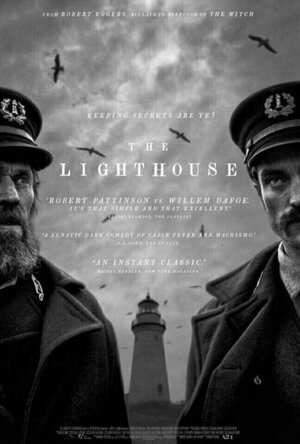
The Lighthouse is cinematic perfection that will leave anyone that lets it engulf thier mind and senses broken, disturbed, traumatised and violated. An experience like no other I can not stress enough that everyone must whitness this utter masterpiece. Primarily a character study about two lighthouse keepers descent into madness however the way the film depicts this reaches far deeper than I ever even imagined it would. (Possible spoilers ahead) Theres an unquestionable comparison to Greek mythology here and as the film plays out Willem Dafoe character draws several comparisons to King Trident, Zeus and Minos but ultimatly ends up becoming one of his own 'God of the lighthouse' keeping his prized possession locked away at the top of his tower. Robert Pattison also compares to the Titan Prometheus trying to steel this possesion/fire from this so called god. He can also be compared to Icarus trapped in a tower by a mean man with no means of escape and Odysseus constantly distracted/infatuated with the Sirens surrounding the lighthouse. I found these comparisions integrated into the story beautifully and theres constant fable/mythological imagry to reinforce these comparisons too which is hauntingly striking and terrifyingly prominent. Atmosphere is pin sharp here and as these two men begin to break you feel everything that starts to grate on them bombarding your senses as a viewr too. Everything is communicated flawlessly to really draw the viewer in as if we too are stuck with these to men feeling evrything build up, irritate, torment and add to the degradation of the mind until it hits its breaking point. Floors creaking & bowing, metal bending and screeching, wind howling, waves crashing, rain beating down, shutters rattling and birds squawking its intense and realistic sound design thats for sure. Mix this with a constant sence of dread from the narrow corridors, looming shadows, low lighting, claustrophobic living quaters, fog, harsh weather, mud, anoying seagulls, restricted views, countless foul smells, hard back breaking work, sexual frustrations, loneliness and alcohol its enough to make anyone go insane and as the film plays out cabin fever really intensifies (especially for us with the film being shot in black and white and with a smaller aspect ratio). This is some of the best acting ive seen for sure both Dafoe and Pattison portray these characters so well that you would be convinced you were watching historic archive footage of two people cooped up. Both are devious liars, have vicious tempers and nasty streaks as well as mysterious pasts and both are also constantly in a fight for dominance of the lighthouse and the secrets it holds. In this day and age The lighthouse is such a true gem to behold and is so unique and engrossing you would swear it transported you back in time while watching it. I also did not expect this film to take the turn it does half way through either almost becoming a distressing horror movie and as intense as a tesuo film and as my friend and me left the screening we found ourselves deeply disturbed/traumatised with our hearts pounding from what we had just been exposed to. Disgustingly intense, depressingly dripping in sadness, brutaly violent and deeply unsettling the lighthouse is one hell of a movie and may just be one of the best movies I have ever seen, it really is without a doubt a cinema experience I will certainly never forget. Comparable to the witch, the turin horse and apocalypse now the lighthouse deserves all the praise its been getting and more. Stunning.
Gareth von Kallenbach (980 KP) rated The Man Who Knew Infinity (2016) in Movies
Aug 6, 2019
In 1914, Srinivasa Ramanujan (Dev Patel) traveled from his poverty-stricken existence in Madras, India to Trinity College, Cambridge in the hope that he would have his theories published and be recognized for the mathematical genius he was. While there, despite facing racism, hostility and severe illness, he formed an important relationship with G.H. Hardy (Jeremy Irons) that would lead to breakthroughs in mathematics that are still relevant today.
It would be easy to prattle on about the tremendous talent onscreen in The Man Who Knew Infinity and with a supporting cast that features some of Britain’s best; we get exactly what we’d expect from the likes of Jeremy Irons, Toby Jones and Kevin McNally. All at the top of their game, they serve the story well with nuanced and well-rounded performances, and I’m certainly not going to take anything away from the exceptional jobs they’ve all done here. All the praise this film deserves however, needs to be directed at Dev Patel. In his role as Ramanujan, he’s completely stepped out of the shadow of his big-screen debut in Slumdog Millionaire and has proved his worth as a leading man capable of carrying the weight of an entire feature. Distancing himself also from the lovable, bumbling hotel owner in The Best Exotic Marigold movies, with Ramanujan he is allowed the room to display an incredible range, from quiet intensity to outspoken, unbridled passion and determination. Kudos also to the writers for not going The Big Short route (e.g. talking down to the uninitiated with ridiculous cutaways), but by using simple logic and examples to help convey complex information relevant to the plot.
For the performances alone, this is a solid entry in the biopic genre, but structurally speaking, it’s the editing that lets the film down. This very easily could have emerged as the next A Beautiful Mind, but between a bloated first act, a middling and wandering second act and a truncated final third, The Man Who Knew Infinity falls just short of greatness. Not only is no attention paid to Ramanujan’s achievements as a child, but too much time is given to details and subplots that are arguably inconsequential to the main narrative. This is especially evident in the inclusion of Bertrand Russell (who lived such a rich and fascinating life himself, it would take several films to do that story justice) and his being here feels like just a hollow excuse to include a cameo from another figure of historical importance. The biggest disservice though comes with the ending where we are denied a much needed catharsis and are left to suffer through a slap-dash, halfhearted montage. A restructuring from a more seasoned hand would have undoubtedly led to stronger word-of-mouth and perhaps a wider release. I also wouldn’t be surprised to learn that this is a case of “too many cooks” as the film has a staggering 43 credited producers. I get that independent features can be forced to source their funding from many places, but you can’t tell me that with all those opinions flying about that some of the original intent didn’t get lost in the noise.
As an aside, what Stephen Fry is doing here is beyond me. He’s given two scenes with perhaps a half a dozen lines, leaving his incomparable persona entirely wasted on a completely throwaway character. It’s a pity he wasn’t given a meatier role as one of Ramanujan’s antagonists.
It would be easy to prattle on about the tremendous talent onscreen in The Man Who Knew Infinity and with a supporting cast that features some of Britain’s best; we get exactly what we’d expect from the likes of Jeremy Irons, Toby Jones and Kevin McNally. All at the top of their game, they serve the story well with nuanced and well-rounded performances, and I’m certainly not going to take anything away from the exceptional jobs they’ve all done here. All the praise this film deserves however, needs to be directed at Dev Patel. In his role as Ramanujan, he’s completely stepped out of the shadow of his big-screen debut in Slumdog Millionaire and has proved his worth as a leading man capable of carrying the weight of an entire feature. Distancing himself also from the lovable, bumbling hotel owner in The Best Exotic Marigold movies, with Ramanujan he is allowed the room to display an incredible range, from quiet intensity to outspoken, unbridled passion and determination. Kudos also to the writers for not going The Big Short route (e.g. talking down to the uninitiated with ridiculous cutaways), but by using simple logic and examples to help convey complex information relevant to the plot.
For the performances alone, this is a solid entry in the biopic genre, but structurally speaking, it’s the editing that lets the film down. This very easily could have emerged as the next A Beautiful Mind, but between a bloated first act, a middling and wandering second act and a truncated final third, The Man Who Knew Infinity falls just short of greatness. Not only is no attention paid to Ramanujan’s achievements as a child, but too much time is given to details and subplots that are arguably inconsequential to the main narrative. This is especially evident in the inclusion of Bertrand Russell (who lived such a rich and fascinating life himself, it would take several films to do that story justice) and his being here feels like just a hollow excuse to include a cameo from another figure of historical importance. The biggest disservice though comes with the ending where we are denied a much needed catharsis and are left to suffer through a slap-dash, halfhearted montage. A restructuring from a more seasoned hand would have undoubtedly led to stronger word-of-mouth and perhaps a wider release. I also wouldn’t be surprised to learn that this is a case of “too many cooks” as the film has a staggering 43 credited producers. I get that independent features can be forced to source their funding from many places, but you can’t tell me that with all those opinions flying about that some of the original intent didn’t get lost in the noise.
As an aside, what Stephen Fry is doing here is beyond me. He’s given two scenes with perhaps a half a dozen lines, leaving his incomparable persona entirely wasted on a completely throwaway character. It’s a pity he wasn’t given a meatier role as one of Ramanujan’s antagonists.
Gareth von Kallenbach (980 KP) rated The Finest Hours (2016) in Movies
Aug 6, 2019

The Finest Hours tells the story of four men who, in February of 1952, undertook one of the most daring rescue attempts in the history of the Unites States Coast Guard. A tanker, the SS Pendleton, is caught in a storm off the coast of New England and is ripped in half, leaving more than 30 sailors adrift and sinking. While Bernard Webber (Chris Pine) leads an impossible rescue in a lifeboat designed to hold only 12, his fiancée, Miriam (Holliday Grainger), struggles to come to terms with what it means to be the wife of a man who has to willingly risk his life for others.
Year after year, it proves out. January is just not a good month for cinema. With one hand, the studios campaign for award season glory and with the other, dump their trash. That’s not to say The Finest Hours is total garbage. Even I’m not that cynical to unconditionally condemn something that shines a light on the triumph of the human spirit when faced with insurmountable odds. It’s just that there is only about one-third of a good film here. Anytime the crew of the Pendelton was onscreen, I was captivated. Their struggle for survival and their feats of engineering under incredible pressure make for riveting entertainment and should have been a film unto itself. These scenes unfortunately are interspaced with and, more often than not, forced to take a back seat to paint-by-numbers dialogue, two-dimensional caricatures (both disappointing when you consider the three writers on this film were behind The Fighter) and a shockingly abrasive score during the main U.S. Coast Guard narrative. And yes, it may be called The Finest Hours, but if that’s the title they’re going with a little more effort should have been put into the rescuers, as opposed to those being rescued. Overall, we’re deprived of a sense of urgency, in what is supposed to be a race against time, and an intimacy with any character performed well enough to be worth caring about.
At least this isn’t a complete waste of an all-star cast. I’ll ease off on Chris Pine, tempted as I might be to pick on him. After having fumbled his way through both Captain Kirk and Jack Ryan, doing so now in a flick produced by Disney would feel rather like a cheap shot. Instead it’s fairer to write off the other, usually more dependable leads and praise Casey Affleck, who alone makes The Finest Hours watchable. Ironically, he plays the man who has to keep not only half a ship afloat, but an entire crew together. Between Eric Bana’s overstatement, Ben Foster’s understatement, and a questionable casting choice in Holliday Grainger, Affleck is heads above the rest when it comes to making courage and sentiment ring true.
A regrettable execution notwithstanding, better can and should have been done to honor these distinguished service members and viewers looking for a storytelling standard above the level of your average Hallmark original are advised to look elsewhere. Try, for instance, Oliver Stone’s (not as controversial as we all thought it was going to be) World Trade Center for a better example of how these tales of perseverance and survival are supposed to be done.
Year after year, it proves out. January is just not a good month for cinema. With one hand, the studios campaign for award season glory and with the other, dump their trash. That’s not to say The Finest Hours is total garbage. Even I’m not that cynical to unconditionally condemn something that shines a light on the triumph of the human spirit when faced with insurmountable odds. It’s just that there is only about one-third of a good film here. Anytime the crew of the Pendelton was onscreen, I was captivated. Their struggle for survival and their feats of engineering under incredible pressure make for riveting entertainment and should have been a film unto itself. These scenes unfortunately are interspaced with and, more often than not, forced to take a back seat to paint-by-numbers dialogue, two-dimensional caricatures (both disappointing when you consider the three writers on this film were behind The Fighter) and a shockingly abrasive score during the main U.S. Coast Guard narrative. And yes, it may be called The Finest Hours, but if that’s the title they’re going with a little more effort should have been put into the rescuers, as opposed to those being rescued. Overall, we’re deprived of a sense of urgency, in what is supposed to be a race against time, and an intimacy with any character performed well enough to be worth caring about.
At least this isn’t a complete waste of an all-star cast. I’ll ease off on Chris Pine, tempted as I might be to pick on him. After having fumbled his way through both Captain Kirk and Jack Ryan, doing so now in a flick produced by Disney would feel rather like a cheap shot. Instead it’s fairer to write off the other, usually more dependable leads and praise Casey Affleck, who alone makes The Finest Hours watchable. Ironically, he plays the man who has to keep not only half a ship afloat, but an entire crew together. Between Eric Bana’s overstatement, Ben Foster’s understatement, and a questionable casting choice in Holliday Grainger, Affleck is heads above the rest when it comes to making courage and sentiment ring true.
A regrettable execution notwithstanding, better can and should have been done to honor these distinguished service members and viewers looking for a storytelling standard above the level of your average Hallmark original are advised to look elsewhere. Try, for instance, Oliver Stone’s (not as controversial as we all thought it was going to be) World Trade Center for a better example of how these tales of perseverance and survival are supposed to be done.
Gareth von Kallenbach (980 KP) rated Trumbo (2016) in Movies
Aug 6, 2019
What is it that makes, not a great, but even a good biopic? It is certainly no enviable task, trying to condense decades of a person’s life into a mere two hours. Choosing what to keep and what to leave, stringing events together so that they feel as though they are one complete narrative opposed to a series of vignettes. And then there are the inevitable purists who will write off the entire product based on a single detail either left out or composited due to running time or budgetary restrictions. Over the years, I have found myself wrestling with my opinion of Braveheart. Do I enjoy it for its epic qualities, or do I cast it aside as the wretched historical inaccuracies fly in the face of what is one of the most important times in a country’s past?
The answer is simply, and stolen from another great historical epic, are you not entertained? Film can and should be powerful and informative. It can and should influence our thinking and encourage an emotional response, but above all, it should entertain. Trumbo does all of the above, ticks all the necessary boxes on the list of what makes a great biopic and whatever historical inaccuracies lie within be damned. Director Jay Roach, writer John McNamara and an ensemble so good it has to be seen to be believed have made, if not the best biopic of the year (that distinction still stays with Steve Jobs for now), then certainly the most enjoyable.
Where I find myself in reviewing Trumbo is trying not to sound monotonous in singing its high praises. Whether you’re interested in a message or not, because there is a good one in there, it’s a film that demands to be seen just on the strength of the cohesiveness that comes from the writing, the acting and (I still can’t believe I’m about to write this about the man who made all three Austin Powers movies) the directing.
I could prattle on endlessly about how overwhelmingly good this cast is, but the names speak for themselves. Bryan Cranston showcases that he is not just the best thing on television, but also a big-screen powerhouse. Helen Mirren, in her inimitable fashion and with beautiful understatement, is a force to be reckoned with, seething venom and self-righteousness. Louis C.K. finally breaks out of his stand-up comic persona to give a truly heartfelt performance played with surprisingly restrained vulnerability. The chemistry between him and Bryan Cranston will no doubt leave you wanting more. And John Goodman… well, it’s John Goodman. He continues to prove that no matter how small a part he has to play, it will stay with you long after you’ve left the theater. Hands down, and these are only four out of a dozen terrific performances, there hasn’t been an ensemble this stunning since L.A. Confidential.
It should also be mentioned that Michael Stuhlbarg, David James Elliott and Dean O’Gorman, who portray Edward G. Robinson, John Wayne and Kirk Douglas respectively, are unquestionably destined to go down as the unsung heroes of Trumbo. Their efforts, not just to imitate but to fully realize these Hollywood stars of a by-gone era, are a further complement to inspired casting and commitment to honoring the lives of the people portrayed on screen.
In short (and well done for making it this far through monotonous and truly well-deserved praise), if you have to see one film this Thanksgiving season that doesn’t star Tom Hardy as England’s notorious Kray brothers, see Trumbo.
The answer is simply, and stolen from another great historical epic, are you not entertained? Film can and should be powerful and informative. It can and should influence our thinking and encourage an emotional response, but above all, it should entertain. Trumbo does all of the above, ticks all the necessary boxes on the list of what makes a great biopic and whatever historical inaccuracies lie within be damned. Director Jay Roach, writer John McNamara and an ensemble so good it has to be seen to be believed have made, if not the best biopic of the year (that distinction still stays with Steve Jobs for now), then certainly the most enjoyable.
Where I find myself in reviewing Trumbo is trying not to sound monotonous in singing its high praises. Whether you’re interested in a message or not, because there is a good one in there, it’s a film that demands to be seen just on the strength of the cohesiveness that comes from the writing, the acting and (I still can’t believe I’m about to write this about the man who made all three Austin Powers movies) the directing.
I could prattle on endlessly about how overwhelmingly good this cast is, but the names speak for themselves. Bryan Cranston showcases that he is not just the best thing on television, but also a big-screen powerhouse. Helen Mirren, in her inimitable fashion and with beautiful understatement, is a force to be reckoned with, seething venom and self-righteousness. Louis C.K. finally breaks out of his stand-up comic persona to give a truly heartfelt performance played with surprisingly restrained vulnerability. The chemistry between him and Bryan Cranston will no doubt leave you wanting more. And John Goodman… well, it’s John Goodman. He continues to prove that no matter how small a part he has to play, it will stay with you long after you’ve left the theater. Hands down, and these are only four out of a dozen terrific performances, there hasn’t been an ensemble this stunning since L.A. Confidential.
It should also be mentioned that Michael Stuhlbarg, David James Elliott and Dean O’Gorman, who portray Edward G. Robinson, John Wayne and Kirk Douglas respectively, are unquestionably destined to go down as the unsung heroes of Trumbo. Their efforts, not just to imitate but to fully realize these Hollywood stars of a by-gone era, are a further complement to inspired casting and commitment to honoring the lives of the people portrayed on screen.
In short (and well done for making it this far through monotonous and truly well-deserved praise), if you have to see one film this Thanksgiving season that doesn’t star Tom Hardy as England’s notorious Kray brothers, see Trumbo.