

The Bandersnatch (199 KP) rated Memoirs of a Geisha in Books
Nov 7, 2019
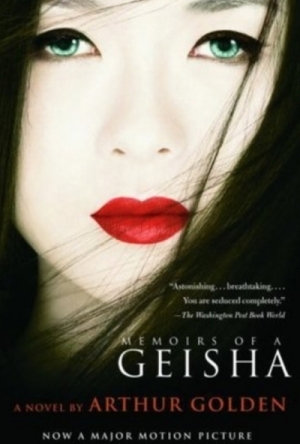


My opinion of the book is one of both curiosity and interest. Japan is one of those countries where its history and culture is both unusual and mysterious. The book gives a brief glimpse into the hidden world of the Geisha which are a prominent spot in Japanese culture but are relatively unknown world wide. I believe that the story of Sayuri is one of personal travel and evolution. Since we see Sayuri';s experience as a child before becoming a Geisha, experiencing the horror of war and eventually finding love with the Chairman.
Arthur Golden was born on December 6th 1956 in Chattanooga, Tennessee. When he was eight years old his parents divorced with his father dying five years later. He spent most of his childhood living in lookout mountain, Georgia before graduating from the Baylor school in Chattanooga in 1974. After earning a degree in Fine art (Specifically Japanese art), an M. A. in Japanese history, Golden spent a summer at the Peking University in Beijing and spent some time working in Tokyo. When he returned to the states he earned an M. A. in English at Boston University. Golden married Trudi Legge and they went on to have two children Hays and Tess.
After getting the initial idea for Memoirs of a Geisha Golden spent six years over the story rewriting it at least three times, changing the view point until settling on the viewpoint of Sayuri. Golden had spent time interviewing several Geisha including Mineko Iwasaki (who ended up suing Golden when the Japanese version of the book came out for breach of contract.....the case was settled out of court in 2003) all of whom provided information about the world of the Geisha. After its release Memoirs of a Geisha spent two years on the New York Times bestseller list, its sold more than four million copies in English alone and has been translated into thirty-two languages around the world. In 2005 the book was made into a movie garnering three academy awards.
My opinion of Arthur Golden is very small and somewhat limited.......I believe he is a fantastic writer and very knowledgeable about Japanese history and art....Much more so than I am but hearing he faced being sued because of citing who his sources were when he was contracted not to has put something of a dampener on his character in my eyes.
Memoirs of a Geisha was released as a Movie on December 9th 2005 under director Rob Marshall and Produced by Steven Spielberg's production Company Amblin Entertainment and Spyglass Entertainment. With its production from pre- to post-production taking place mainly in California US, with a few spots filmed in Kyoto Japan. The movie received mixed reviews in the western world and received somewhat negative reviews in Japan due to its mixed casting of Chinese and Japanese actors and actresses and its relationship to history. Despite the chaos they won three Academy Awards (Best Art Direction, Best Cinematography and Best Costume Design), a Golden Globe (Best Original Score), A national Board of review (Best Supporting Actress), a satellite award (Outstanding screenplay) and three BAFTA's (Cinematography, Costume design and the Anthony Asquith award for Achievement in film music).
Whilst I quite like the movie I definitely feel that if more effort was put into tying more of both Japanese and Geisha history was some how tied into the movie. As well as using more Japanese Actors and actresses in the roles......despite that I believe the actors and actresses did a very good job in brining the script to life and keep a layer of mystery and fluidity to their roles.
And there you have it a book for all the ages, its definitely under the banner of AWESOME!!!.

The Glass Ocean
Karen White, Beatriz Williams and Lauren Willig
8.0 Rate It
Book
From the New York Times bestselling authors of The Forgotten Room comes a captivating historical...

Rachel King (13 KP) rated The Lens and the Looker in Books
Feb 11, 2019

Backing up, I was very interested in the present-day time period of 2347 and the few details that Kaufman spared regarding this society. Unfortunately, not much is explained about how this society came to be. A brief explanation is given for the planetary population of 300 million, along with other random details interspersed throughout the book, such as every child born is paired with an A.I., people are implanted with a device that keeps disease and infection at bay, and parents are only allowed to have one child with a lottery sometimes allowing for a second child. The purpose of the History Camps are explained through the rebellious attitudes of the three main characters and how they can easily manipulate the system for their own entertainment. As a parent, the word that continually echoed through my head regarding these children in the Hard-Time History Camp is "Spoiled!" Though they are supposed to be learning about how the rebellion of the human populations of the past caused everything from war, to disease, to poverty and famine, the way the children are coddled and protected from any sort of real pain or hardship makes me wonder how these History Camps ever accomplished anything of lasting value in any child.
Once the children are brought to the real Verona and abandoned as orphans, they finally begin to get a taste of real difficulty and hardship, but this is where the believability ends for me. The children had a single day in the History Camp Verona to get acquainted with their roles, and they show up in the real Verona as near-experts, maneuvering the details of their jobs to accommodate for comfort and ease of use that the family they work for is not familiar with, of course all with the help and direction of a very convenient genie. On top of all of this, the three children become agreeable, cooperative, and hard-working practically overnight, with little sign of the rebellious tendencies that put them in a History Camp in the first place. These transitions in character development felt forced to me.
Another aspect that really bugged me from the beginning of the book was the awkwardness of the dialog throughout the book, specifically regarding the children's speech. It felt stilted and over-simplified, and slowed down my reading because I consistently felt that children today did not speak like this. Some of the speech of the people native to the real Verona also seemed strange, but I attributed that to the speech of the time period.
Many of the characters took on unique facets that made them rather memorable to me, such as Ugilino's looks and arrogance, Signora della Cappa's madness, and Shamira's artistic inclinations. The budding romance between Hansum, or "Romero", and Guilietta copies the Shakespearean play, "Romeo and Juliet", in many ways, down to the presence of a Father Lurenzano, and I have to wonder about Kaufman's motivations for working this tale into the plot. And again, their romance also felt forced and over-the-top, missing the reality-warping conviction that is obvious in the original Shakespeare story.
I also have to wonder how these advancements that the three children are introducing to 1347 Verona are actually affecting the progression of time, since this is a much harped-upon concern regarding time travel. The only thing that is apparent to both the children and the reader is the quaint changes made to the appearance of the genie. Something else that is also mentioned early on is that this is also the same time period as the Black Plague, which has yet to make an appearance. Hopefully, the next book in the trilogy will address these things, The Bronze and the Brimstone: The Verona Trilogy, Book 2.
This book seemed geared to appeal to pre-teens and young teens in many ways, but as an adult reader, it left much to be desired for me.

Shawn Mendes: The Ultimate Fan Book
Book
This is a number one album in nine countries, 1.5 billion views on YouTube and a world tour that...
How to Think Like Muhammad Ali: The Paradox of Greatness and the Power of Mental Toughness
Book
Muhammad Ali is the most famous boxer in the history of the sport. Three-times World Champion and...

Ibn Khaldun
Book
Ibn Khaldun (1332-1406) was one of the most remarkable Muslim scholars of the pre-modern period. He...
Iran - Culture Smart!: The Essential Guide to Customs & Culture
Book
Iran is rarely out of the headlines, and there is likely to be a rush of interest from tourists and...
When Football Was Football: Arsenal: A Nostalgic Look at a Century of the Club
Book
So comprehensively has Arsene Wenger rebranded Arsenal Football Club that it is possible to forget...

Arbitration in France: Law and Practice
Book
This is a much-needed reference work providing practitioners and academics with a detailed...
Wicca: History, Belief & Community in Modern Pagan Witchcraft
6.0 Rate It
Book
The past century has born witness to a growing interest in the belief systems of ancient Europe,...