
Search
Search results
LeftSideCut (3776 KP) rated The Falcon and the Winter Soldier in TV
Apr 24, 2021 (Updated Jul 16, 2021)


Contains spoilers, click to show
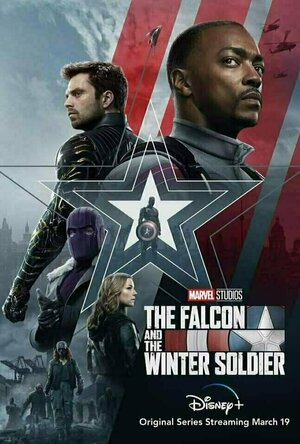
On the surface, The Falcon and the Winter Soldier starts off in a familiar fashion. The first couple of episodes feel like a (welcome) return to the earlier days of the MCU, but as the story develops, it just blossoms into so much more.
The narrative mainly focuses on the two titular Avengers taking on a revolutionary group, hell bent on returning to a post snap world. It deals head first with the fallout of Thanos' devastating blow in Infinity War, and the subsequent return of the 3.5 billion people who re-materialised after Endgame, and the issues that came with them. It's good to see that Marvel Studios aren't avoiding these complicated plot points that could have potentially just been swept under the rug.
The series also develops the John Walker/U.S. Agent comic story. Its well realised and Wyatt Russell is fantastic in the role. Daniel Brühl returns as Baron Zemo after an underwhelming narrative in Civil War, and unexpectedly is plain hilarious (and finally in full costume, even if it is for one scene).
As well as all this, fans of the comics are treated to a plethora of potential future stories - The introduction of Madripoor marks the first proper acknowledgement of X-Men material. Lesser known comic characters such as Isiah Bradley, Madame Hydra, Battlestar, Batroc, and Ayo are given screentime. There's even some carrots dangled for a potential Young Avengers adaption with the appearance of Eli Bradley/Patriot (and with Kate Bishop incoming, surely this is a thing)
Perhaps most importantly, TFATWS doesn't shy away from tackling race issues, touching upon real world events, and developing them into the plot. This spills over into the future of Captain America, and what the shield represents to the black community. There are some truly powerful moments of dialogue, especially between Isiah and Sam. It's all handled respectfully, and brings new depth the MCU, as they stride into a more diverse future.
With this series, and the preceding WandaVision, this new phase for the MCU is off to an incredibly strong start, and I'm so excited to see where they take it. Between Falcon rightfully taking the reigns as Captain America, the upcoming Shang Chi movie finally adapting the martial arts corner of Marvel for the MCU, and the tantalising promise of the multiverse, it's a good time to be a Marvel fan.
The narrative mainly focuses on the two titular Avengers taking on a revolutionary group, hell bent on returning to a post snap world. It deals head first with the fallout of Thanos' devastating blow in Infinity War, and the subsequent return of the 3.5 billion people who re-materialised after Endgame, and the issues that came with them. It's good to see that Marvel Studios aren't avoiding these complicated plot points that could have potentially just been swept under the rug.
The series also develops the John Walker/U.S. Agent comic story. Its well realised and Wyatt Russell is fantastic in the role. Daniel Brühl returns as Baron Zemo after an underwhelming narrative in Civil War, and unexpectedly is plain hilarious (and finally in full costume, even if it is for one scene).
As well as all this, fans of the comics are treated to a plethora of potential future stories - The introduction of Madripoor marks the first proper acknowledgement of X-Men material. Lesser known comic characters such as Isiah Bradley, Madame Hydra, Battlestar, Batroc, and Ayo are given screentime. There's even some carrots dangled for a potential Young Avengers adaption with the appearance of Eli Bradley/Patriot (and with Kate Bishop incoming, surely this is a thing)
Perhaps most importantly, TFATWS doesn't shy away from tackling race issues, touching upon real world events, and developing them into the plot. This spills over into the future of Captain America, and what the shield represents to the black community. There are some truly powerful moments of dialogue, especially between Isiah and Sam. It's all handled respectfully, and brings new depth the MCU, as they stride into a more diverse future.
With this series, and the preceding WandaVision, this new phase for the MCU is off to an incredibly strong start, and I'm so excited to see where they take it. Between Falcon rightfully taking the reigns as Captain America, the upcoming Shang Chi movie finally adapting the martial arts corner of Marvel for the MCU, and the tantalising promise of the multiverse, it's a good time to be a Marvel fan.

Tom Chaplin recommended OK Computer by Radiohead in Music (curated)

Gaspar Noe recommended An Andalusian Dog (1929) in Movies (curated)


Cristy Amanda (87 KP) rated Children of Blood and Bone: Book 1 in Books
Sep 28, 2019
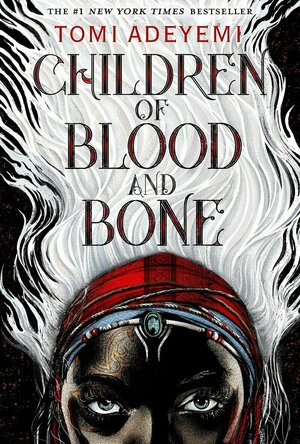

A hidden wonder!
Contains spoilers, click to show
This was a "desperation" book buy. I happened to be in my local WHSmiths buying my toddler some books and wanted something new to read myself. I picked this up off the shelf, took a cursory glance at the blurb and decided why not - at the very least it will give me something to read for a few days.
This book was totally captivating and eclipsing! Within the first 5 pages I was hooked and could not put it down. Not consciously hooked straight away as I sometimes am, but in the sense of I literally couldn't make myself stop reading yet didn't know why. Within a day and a half I had finished and was thoroughly torn up to discover I couldn't even get the sequel yet. (So I now have to make do with re-reading it almost continuously which is no hardship!)
The clever descriptive writing soon sucks you into the world of the storyline and convinces you it is not only plausible but very real. The charactors felt as though they were my very own family and I was totally invested in their futures.
Whilst the reason for the book being written is heartwrenching in itself, the story line is so cleverly written to portray the social issues and paradigms of the modern world in an intelligent yet disconnected way. I have never felt such an emotional rollercoaster as I did reading this book. Each time it looked as though they would succeed in restoring magic, my own heart soared with hope. And each time the plans didn't pan out, I personally felt like a candle in the night had been extinguished. The social caste differences and brutal violence were traumatic in their own right, yet to illustrate the point with the demise of some charactors who were pivotal to the aim of the protagonists, really drove home the risks, suffering and sacrifices of the charactors in the story, as well as further illustrate the point of the novel. The ending was totally unexpected and soul-destroying and I am somehow both excited and apprehensive to read the next book upon its release. I don't think any amount of time can prepare me for the adreneline building heartwrenching rollercoaster still to come. I 100% recommend this novel to everyone and commend such an inspirational, thought provoking and clever interpretation and translation of modern day societal issues into fantasy fiction.
This book was totally captivating and eclipsing! Within the first 5 pages I was hooked and could not put it down. Not consciously hooked straight away as I sometimes am, but in the sense of I literally couldn't make myself stop reading yet didn't know why. Within a day and a half I had finished and was thoroughly torn up to discover I couldn't even get the sequel yet. (So I now have to make do with re-reading it almost continuously which is no hardship!)
The clever descriptive writing soon sucks you into the world of the storyline and convinces you it is not only plausible but very real. The charactors felt as though they were my very own family and I was totally invested in their futures.
Whilst the reason for the book being written is heartwrenching in itself, the story line is so cleverly written to portray the social issues and paradigms of the modern world in an intelligent yet disconnected way. I have never felt such an emotional rollercoaster as I did reading this book. Each time it looked as though they would succeed in restoring magic, my own heart soared with hope. And each time the plans didn't pan out, I personally felt like a candle in the night had been extinguished. The social caste differences and brutal violence were traumatic in their own right, yet to illustrate the point with the demise of some charactors who were pivotal to the aim of the protagonists, really drove home the risks, suffering and sacrifices of the charactors in the story, as well as further illustrate the point of the novel. The ending was totally unexpected and soul-destroying and I am somehow both excited and apprehensive to read the next book upon its release. I don't think any amount of time can prepare me for the adreneline building heartwrenching rollercoaster still to come. I 100% recommend this novel to everyone and commend such an inspirational, thought provoking and clever interpretation and translation of modern day societal issues into fantasy fiction.

Becs (244 KP) rated Ready Player One in Books
Oct 2, 2019
Genre: Sci-Fi, Fiction, Dystopia, Fantasy
Audience: Young Adult
Reading level: High School +
Interests: science fiction, fantasy, video games, 80’s
Style: Sci-Fi
Point of view: First person.
Difficulty reading: It started off great and I flew through the first half of the book. It’s towards the 55%-75% mark that was a bore for me. But the ending was great!
Promise: Dystopian Sci-Fi video game world
Quality: Minus the 20% that was pretty darn boring and long, the book as a whole was a great read.
Insights: I’m not a huge gaming geek, so without Cline explaining half the time what these gaming terms are, I’d be as lost as a pig in a supermarket. For that, I thank him. It was nice seeing a Dystopian world set in the future that was still in our lifetime. I have never read anything like that – cool to see how Cline wrote it.
Ah-Ha Moment: SPOILERS AHEAD!
Okay, I knew Aech was hiding something. But I could not figure out what it was for the life of me. But when Aech and Parzival first met, in real life, face to face, I WAS NOT EXPECTING him to actually be a ‘her’.
This was me:
Favorite Quotes: “Going outside is highly overrated.” – Yea, I feel ya too. I just want to stay in and read all day every day. Who needs a job, who needs to eat, all we need are books. Am I right?
“You’d be amazed how much research you can get done when you have no life whatsoever.” – I mean, you’re not wrong.
“One person can keep a secret, but not two.” – Secrets, secrets are no fun. Secrets, secrets hurt someone.
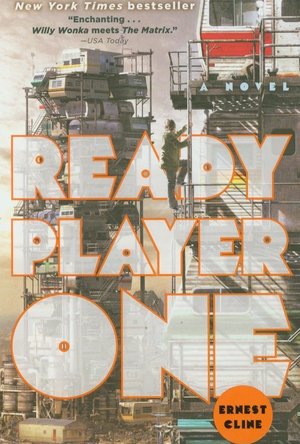
Aesthetics: The whole book is an 80’s aesthetic that I love. Plus, it gives a brief inside scoop on the whole “if we don’t care for the planet now, there will be nothing in the future” debate. Which is true, we should care for the planet more than what we do now. I mean we only live on Earth just as much as everybody else. The copy of Ready Player One that I have, is a 2015 Special Edition copy – I love the cover on it.
“People are more than just the way they look.”
Audience: Young Adult
Reading level: High School +
Interests: science fiction, fantasy, video games, 80’s
Style: Sci-Fi
Point of view: First person.
Difficulty reading: It started off great and I flew through the first half of the book. It’s towards the 55%-75% mark that was a bore for me. But the ending was great!
Promise: Dystopian Sci-Fi video game world
Quality: Minus the 20% that was pretty darn boring and long, the book as a whole was a great read.
Insights: I’m not a huge gaming geek, so without Cline explaining half the time what these gaming terms are, I’d be as lost as a pig in a supermarket. For that, I thank him. It was nice seeing a Dystopian world set in the future that was still in our lifetime. I have never read anything like that – cool to see how Cline wrote it.
Ah-Ha Moment: SPOILERS AHEAD!
Okay, I knew Aech was hiding something. But I could not figure out what it was for the life of me. But when Aech and Parzival first met, in real life, face to face, I WAS NOT EXPECTING him to actually be a ‘her’.
This was me:
Favorite Quotes: “Going outside is highly overrated.” – Yea, I feel ya too. I just want to stay in and read all day every day. Who needs a job, who needs to eat, all we need are books. Am I right?
“You’d be amazed how much research you can get done when you have no life whatsoever.” – I mean, you’re not wrong.
“One person can keep a secret, but not two.” – Secrets, secrets are no fun. Secrets, secrets hurt someone.
Aesthetics: The whole book is an 80’s aesthetic that I love. Plus, it gives a brief inside scoop on the whole “if we don’t care for the planet now, there will be nothing in the future” debate. Which is true, we should care for the planet more than what we do now. I mean we only live on Earth just as much as everybody else. The copy of Ready Player One that I have, is a 2015 Special Edition copy – I love the cover on it.
“People are more than just the way they look.”
Neon's Nerd Nexus (360 KP) rated Hustlers (2019) in Movies
Sep 16, 2019
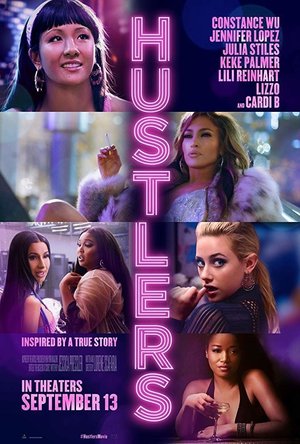

Diva is the female version of a Hustler
Hustlers is such an extremely glamorous and electrifying film that once you are pulled in and comfortable under its spell it rips the rug right from under you bringing you crashing down into the harsh realities of the real world. From its trailer you may dismiss Hustlers for being a seedy throw away cash grab movie but to do this you would be missing out on one of this years best films. Playing out somewhere between Widows and the Wolf Of Wall Street Hustlers is smart, hard hitting and classy with a perfect dash of comedy too. Shot exceptionally with fantastic cinematography Hustlers drips style and glam making it almost seem like a dizzying fantasy film at times. We are shown the harsh realities of the stripper industry and just how much hard work has to be put in constantly to get any kind kind of pay off back. These girls literally put their heart, sweat and tears into this job sacrificing their wellbeing and health just to pull the wool over the customers eyes making them believe its the place of their dreams so in turn they earn more money. Everything is a lie and the constant comparison of stripping and wall street is explored greatly with the line between whats wrong and right always being contested. Theres no doubt that what both sides do is wrong but the film brilliantly makes you care for both of them equally depicting both as victims just trying to get by in a harsh world but also as heartless animals doing anything to become top dog. Its all really is thought provoking stuff and some of its themes of how selfish, obsessive, disturbing, desensitized, cold & heartless we have all become are so relevant at the moment too. There's also a very heavy theme of rape and how no matter what the circumstances exploiting anyone in a vulnerable state is still taking advantage wrong and unacceptable on every level. Acting is superb too with Jennifer Lopez and Constance Wu putting in next level performances. Hustlers really impressed me, theres not one ounce of exposition here as all the film and its characters demand is that your paying attention assuming that you are smart enough to think for yourself instead which I truly admire.

Soccer Ragdoll 2 Player Physics games
Games and Entertainment
App
***~~~Kick, Jump, and Goal~~~*** ~Soccer Ragdoll Fun! Multiplayer one touch Soccer Jump game! For...
Super Cheap Flights & Deals on Air Plane Tickets
Travel
App
Bonus! 15 Best Travel Tips The best money-saving tip! Departure on a ***, Tuesday or Saturday. ...
Disney Build It: Frozen
Entertainment and Education
4.0 Rate It
App
Join your friends from FROZEN to build your very own version of Arendelle and let your imagination...