
The Evangelicals: The Struggle to Shape America
1.0 Rate It
Book
This groundbreaking book from Pulitzer Prize–winning historian Frances FitzGerald is the first...
History Religion
The Crisis of Multiculturalism in Europe: A History
Book
A history of modern European cultural pluralism, its current crisis, and its uncertain future In...
Politics social issues
Street of Eternal Happiness
Book
An unforgettable portrait of individuals who hope, struggle, and grow along a single street cutting...
Travel
The Enlightenment: The Pursuit of Happiness, 1680-1790
Book
A magisterial history that recasts the Enlightenment as a period not solely consumed with rationale...
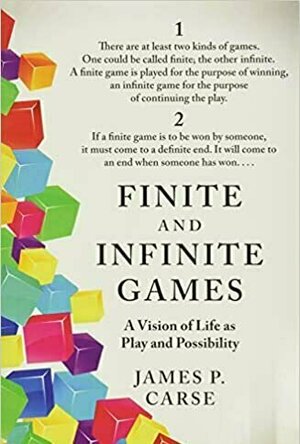
Finite and Infinite Games
Book
“There are at least two kinds of games,” states James P. Carse as he begins this extraordinary...

The Blood Of Gods by Gwar
6.0 Rate It
Album Watch
The story of GWAR is carved across the history of this barren and hopeless planet, but GWAR...
thrash metal
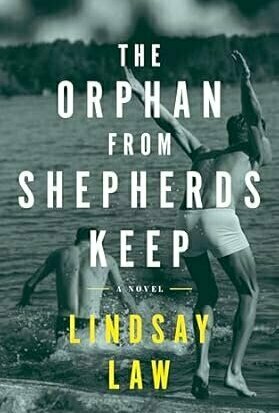
The Orphan from Shepherds Keep: Three Men, Three Intertwined Lives, One Rightful Place in Each Other's Heart - A Gay Nov
Book
Over a period of thirty years, three gay men struggle to define themselves and make their mark on a...
LGBTQ+ Coming of Age Forbidden Love Love Triangle Slow Burn Found Family
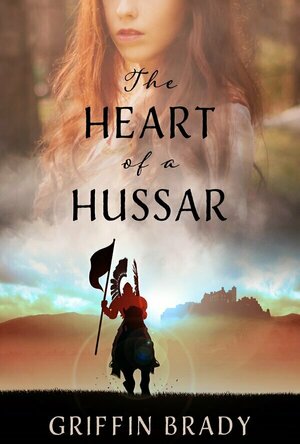
The Heart of a Hussar (The Winged Warrior #1)
Book
Poland is at war. He must choose between his lifelong ambition and his heart. Exploiting...
Historical Fiction Polish Winged Hussars

Jamie (131 KP) rated Men Explain Things to Me: And Other Essays in Books
Jul 26, 2017


The titular essay, Men Explain Things to Me, discusses the author’s experiences with men explaining things with the assumption that she couldn’t possibly know due to her gender. While I was nodding my head that yes, I have experienced this as well, there was not much else. There was little to no research into the history of why this might be or any additional insight into the topic which was really a let down, I didn’t feel like I got much out of it. I should have known that the rest of the essays in this collection would be the same but I was optimistic.
One of the better essays was In Praise of the Threat: What Marriage Equality Really Means which discussed how the fight for marriage equality, or same-sex marriage, has been redefining the traditional gendered views of marriage and I thought that this was really great. However in a later essay Solnit goes on to claim that gay marriage would never have been possible if it weren’t for feminists redefining marriage as a union between equals, which is a statement I found both bold and mildly insulting.
I also need to address a specific statement that became the basis the essay, The Longest War, which was the following:
“Violence doesn’t have a race, a class, a religion,
or a nationality, but it does have a gender.”
It is very apparent that Solnit doesn’t know a thing about intersectionality because any minority can tell you that the statement above is laughably false. Is it true, statistically, that more reported violent crimes are perpetrated by men? Yes. Do people in many societies have an issue with toxic masculinity? Yes. Does this mean, then, that violence has a gender, that it is purely a male problem? No. To say that it doesn’t have a specific race, class, religion, or nationality despite evidence to the contrary throughout history is naïve.
Solnit continues on to rant about how men are the almost exclusive source of violence and assault and how everyone should acknowledge this so we can go about finding solutions. She doesn’t go into much more depth than that or offer up much in the way of solutions herself. A large portion of the essay is just her fluffing up the piece with a literal list of vague examples which might not mean much to folks less knowledgeable about violent crimes. There are also quite a few statistics thrown in with absolutely no sources to back up the claims.
Not that I doubt the information provided, but in times where people cherry pick the news to fit their own narrative books like this become questionable. After flipping through the back of the book I eventually found a note in the acknowledgements section that Solnit chose to edit out her sources for the book version, but that they could be found on the online versions of her essays. It’s careless and lazy for an author that wants to be taken seriously.
Solnit also postulates at several points that because she has published several books that she is an authority and I found that sort of attitude to be self defeating. She talks about another author that she argued with about Virginia Woolfe and claims that she had “won” which just makes the author sound childish, and I wondered what the point of the essay was to begin with. It felt out of place for the rest of the collection and any connections she attempted to make were shaky at best.
I think that Solnit had some good ideas but the execution was extremely poor. Because she spends so much time listing examples and being over dramatic in her descriptions the actual point of discussion in her essays becomes muddled and unclear. There are far better essays out there that address the exact same topics. Men Explain Things to Me just wasn’t worth the time.