
Search
Search results

Gareth von Kallenbach (980 KP) rated the PC version of BioShock Infinite in Video Games
Jun 19, 2019
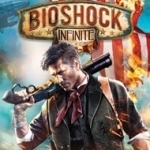


After a few delays the third game in the Bioshock series has arrived from 2K Games and he continues the amazing legacy of the series in grand style. Playing as Booker DeWitt players embark on an epic rescue adventure to the floating city of Columbia in the early 1900s.
Booker is anxious to erase his massive gambling debts and has been told that recovering a girl named Elizabeth from the floating city will clear his accounts. Upon arrival, Booker notes the grand spectacle of the city as well as the Steampunk themes that combine technology, science, and fiction.
Playing from a first person perspective, Booker is able to interact with his environment from looting ammunition, food, health, power ups, money, and other items necessary for survival in a hostile city. Booker can also obtain needed supplies from various mechanical vending machines located throughout the city.
This is a very good thing as despite the beauty of Columbia, it is rife with all manner of dangers as the self-proclaimed savior Comstock has an endless supply of enemies to throw at you to keep you from recovering Elizabeth.
The narration of the story kicks into high gear once you encounter Elizabeth as many of the missions become escort and protect in nature but the back story of the central characters as well as the social strife in Columbia become more and more evident.
An underlying tone of racial tension and labor unrest is threatening the status quo and Booker finds himself squarely in the middle of both factions.
Elizabeth has some amazing abilities of her own such as being able to open tears in time and space which would explain Comstock’s obsession with her. Aside from an arsenal of weapons which includes pistols, shotguns, machine guns, rocket launchers, and various rifles, Booker can gain special powers through the use of vigors that are located throughout the game. While only able to wield to it time, the ability to telekinetic please send enemies flying, blast them with water, fry them to a crisp, and other spectacular feats are absolutely essential to the game as well is highly satisfying. In order to power the special powers, Booker must constantly replenish assault supply which adds a new element to the game strategy.
One of the greatest features of the game was the magnetic melee weapon which also doubles as a magnetic hook. This allows Booker to travel via rail Skyway by taking spectacular leaps and sliding along the rails. The sheer rush of whipping through the city especially during combat situations is a remarkable achievement from both a visual and gameplay perspective.
Graphically the game is fantastic as the amount of detail is simply breathtaking. If one was to nitpick they could state that the character facial animations seem a bit dated but they are definitely in keeping with the previous two games and in my opinion do not detract from the game in any way shape or form.
When death happens in the game, players are able to be resurrected at a nearby point for little bit of their money which allows for a smoother gameplay experience. Some moments the game on normal setting were quite difficult and for gamers who need a break, players can choose to lower or raise the difficulty setting in game.
Unlike the previous games the storyline is more linear and your decisions do not drastically change the outcome of the game unless you are playing the game in the optional 1999 mode where decisions can in deed change the outcome of the game including placing the character in no-win situations.
The voice acting and sound of the game are first rate and I especially enjoyed the nostalgic music and primitive recording and playback devices the time which added a very unique perspective to the game. There is no multiplayer aspect of the game so players who complete the game will have to look forward to the planned DLC content which will be offered in the future.
The immersive factor of the game really captured me and in my opinion sets a new standard for storytelling and player interaction. While enemies tended to be for the most part mindless foes who charged headlong to their doom, this did change as the game went along as some enemies presented some real challenges and displayed some very interesting and clever strategies.
Upon completion of the game, I found myself pausing to reflect on the twist and turns of the storyline as well as look ahead with great anticipation for the next installment of this epic series. Bioshock Infinite is a must own for fans of the series as well as action games and is definitely an early candidate for game of the year awards.
http://sknr.net/2013/04/02/bioshock-infinite/
Booker is anxious to erase his massive gambling debts and has been told that recovering a girl named Elizabeth from the floating city will clear his accounts. Upon arrival, Booker notes the grand spectacle of the city as well as the Steampunk themes that combine technology, science, and fiction.
Playing from a first person perspective, Booker is able to interact with his environment from looting ammunition, food, health, power ups, money, and other items necessary for survival in a hostile city. Booker can also obtain needed supplies from various mechanical vending machines located throughout the city.
This is a very good thing as despite the beauty of Columbia, it is rife with all manner of dangers as the self-proclaimed savior Comstock has an endless supply of enemies to throw at you to keep you from recovering Elizabeth.
The narration of the story kicks into high gear once you encounter Elizabeth as many of the missions become escort and protect in nature but the back story of the central characters as well as the social strife in Columbia become more and more evident.
An underlying tone of racial tension and labor unrest is threatening the status quo and Booker finds himself squarely in the middle of both factions.
Elizabeth has some amazing abilities of her own such as being able to open tears in time and space which would explain Comstock’s obsession with her. Aside from an arsenal of weapons which includes pistols, shotguns, machine guns, rocket launchers, and various rifles, Booker can gain special powers through the use of vigors that are located throughout the game. While only able to wield to it time, the ability to telekinetic please send enemies flying, blast them with water, fry them to a crisp, and other spectacular feats are absolutely essential to the game as well is highly satisfying. In order to power the special powers, Booker must constantly replenish assault supply which adds a new element to the game strategy.
One of the greatest features of the game was the magnetic melee weapon which also doubles as a magnetic hook. This allows Booker to travel via rail Skyway by taking spectacular leaps and sliding along the rails. The sheer rush of whipping through the city especially during combat situations is a remarkable achievement from both a visual and gameplay perspective.
Graphically the game is fantastic as the amount of detail is simply breathtaking. If one was to nitpick they could state that the character facial animations seem a bit dated but they are definitely in keeping with the previous two games and in my opinion do not detract from the game in any way shape or form.
When death happens in the game, players are able to be resurrected at a nearby point for little bit of their money which allows for a smoother gameplay experience. Some moments the game on normal setting were quite difficult and for gamers who need a break, players can choose to lower or raise the difficulty setting in game.
Unlike the previous games the storyline is more linear and your decisions do not drastically change the outcome of the game unless you are playing the game in the optional 1999 mode where decisions can in deed change the outcome of the game including placing the character in no-win situations.
The voice acting and sound of the game are first rate and I especially enjoyed the nostalgic music and primitive recording and playback devices the time which added a very unique perspective to the game. There is no multiplayer aspect of the game so players who complete the game will have to look forward to the planned DLC content which will be offered in the future.
The immersive factor of the game really captured me and in my opinion sets a new standard for storytelling and player interaction. While enemies tended to be for the most part mindless foes who charged headlong to their doom, this did change as the game went along as some enemies presented some real challenges and displayed some very interesting and clever strategies.
Upon completion of the game, I found myself pausing to reflect on the twist and turns of the storyline as well as look ahead with great anticipation for the next installment of this epic series. Bioshock Infinite is a must own for fans of the series as well as action games and is definitely an early candidate for game of the year awards.
http://sknr.net/2013/04/02/bioshock-infinite/

Emma @ The Movies (1786 KP) rated Breakthrough (2019) in Movies
Jun 22, 2019 (Updated Sep 25, 2019)
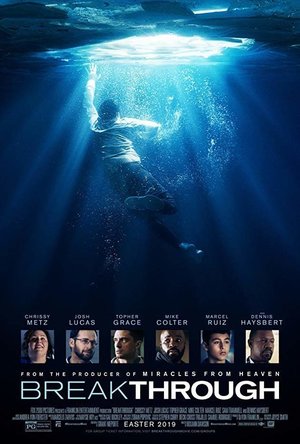

The fact that this film is based on a true story is incredible to think about. I haven't read the book that was written by the boy's mother or read about the actual incident and events online, I'm not sure I want to. I usually like finding out the differences to the actual stories but I wonder if in this instance it might make me change the way I feel about the film.
John is off with his friends having fun, and what's more fun than playing out on a frozen lake? By the time they hear the crack it's too late, the three boys go under. With the emergency services on their way it's a countdown to rescuing them. Two of them have their head above water, but John, knocked unconscious while trying to help his friend out of the water, is sinking. When water rescue appears it may already be too late. They take the search slowly, but John could be anywhere, it's almost certainly too late. Tommy is about to call an end to the search when he hears someone telling him to go back, and there he is.
Rushed to the hospital, the doctors and staff work on trying to bring him back, but as the time elapses there is nothing to do but continue until his family arrive. Joyce, his mother, is devastated and not willing to accept that it's the end... and she prays, asking god to save her son... the monitor beeps to life.
Everywhere I see descriptions of this it says "christian drama". I honestly don't see that the word "christian" needs to be in there. Sure, Joyce prays a fair bit, and their pastor is in it a lot too, but it's still just a drama about something miraculous happening.
By far the best performance for me was Chrissy Metz. Joyce comes across as a very determined woman in everything that she does, and Metz really makes that stand out. From the happiness to the heartbreak, it's all believeable, which sometimes doesn't happen with films that are based on true stories.
I enjoyed Mike Colter as Tommy too. As a non-religious man trying to deal with what happened to him, and what he sees happening to John, the thought process was clear on his face and I liked how he visually interacted with those around him in those moments.
By far the strongest scene for me was the one I mentioned above in the hospital. I think it's always quite challenging to create something that has an impact on the viewer when they already know what the outcome is going to be. In this instance we already know that John doesn't die, we just don't know how the situation is remedied. The hospital staff have left the room and Joyce is with her son, she doesn't want to accept what's before her eyes. We cut between her and the staff outside in the hall in what builds up to an incredible moment. The staff reacting to Joyce as she wails in pain is something that was just stuck in my chest, I could really feel it.
While some are saying that Breakthrough is a christian film, but personally it feels more like a film about community. It's about family, about friends, about everyone around us. It also captures some of the things you have to deal with in these situations. Although fleeting at the end of the film, we see John coming to terms with the fact he survived, his miracle is hard to take for other people and they feel like they need answers, but from where? Him?
Everything about the film felt thoughtful and real, even though some bits felt a little cramped at times. By that I mean they clearly wanted to show the "negativity" and realistic thinking of those around John, he didn't have good odds and everyone would be talking about that. But getting that in felt a little cluttered with everything else going on.
I enjoyed this "christian" film, or as I like to call it "film". I spent a significant amount of time with my sleeves pressed up under my eyes, and when the doctors on screen were telling people to breathe I was doing it to recover. It's not a pushy film, I didn't feel the urge to go and join a congregation after watching it, it's just a wonderful reminder that miracles can happen, and while you wait for them there will be people all around you for support even when you don't expect it.
What you should do
It may not be a film to watch for some, I imagine the content may bring back memories that are difficult, but if you're up to it then it's well worth a watch.
Movie thing you wish you could take home
Just a smidge of Joyce's determination would be good.
John is off with his friends having fun, and what's more fun than playing out on a frozen lake? By the time they hear the crack it's too late, the three boys go under. With the emergency services on their way it's a countdown to rescuing them. Two of them have their head above water, but John, knocked unconscious while trying to help his friend out of the water, is sinking. When water rescue appears it may already be too late. They take the search slowly, but John could be anywhere, it's almost certainly too late. Tommy is about to call an end to the search when he hears someone telling him to go back, and there he is.
Rushed to the hospital, the doctors and staff work on trying to bring him back, but as the time elapses there is nothing to do but continue until his family arrive. Joyce, his mother, is devastated and not willing to accept that it's the end... and she prays, asking god to save her son... the monitor beeps to life.
Everywhere I see descriptions of this it says "christian drama". I honestly don't see that the word "christian" needs to be in there. Sure, Joyce prays a fair bit, and their pastor is in it a lot too, but it's still just a drama about something miraculous happening.
By far the best performance for me was Chrissy Metz. Joyce comes across as a very determined woman in everything that she does, and Metz really makes that stand out. From the happiness to the heartbreak, it's all believeable, which sometimes doesn't happen with films that are based on true stories.
I enjoyed Mike Colter as Tommy too. As a non-religious man trying to deal with what happened to him, and what he sees happening to John, the thought process was clear on his face and I liked how he visually interacted with those around him in those moments.
By far the strongest scene for me was the one I mentioned above in the hospital. I think it's always quite challenging to create something that has an impact on the viewer when they already know what the outcome is going to be. In this instance we already know that John doesn't die, we just don't know how the situation is remedied. The hospital staff have left the room and Joyce is with her son, she doesn't want to accept what's before her eyes. We cut between her and the staff outside in the hall in what builds up to an incredible moment. The staff reacting to Joyce as she wails in pain is something that was just stuck in my chest, I could really feel it.
While some are saying that Breakthrough is a christian film, but personally it feels more like a film about community. It's about family, about friends, about everyone around us. It also captures some of the things you have to deal with in these situations. Although fleeting at the end of the film, we see John coming to terms with the fact he survived, his miracle is hard to take for other people and they feel like they need answers, but from where? Him?
Everything about the film felt thoughtful and real, even though some bits felt a little cramped at times. By that I mean they clearly wanted to show the "negativity" and realistic thinking of those around John, he didn't have good odds and everyone would be talking about that. But getting that in felt a little cluttered with everything else going on.
I enjoyed this "christian" film, or as I like to call it "film". I spent a significant amount of time with my sleeves pressed up under my eyes, and when the doctors on screen were telling people to breathe I was doing it to recover. It's not a pushy film, I didn't feel the urge to go and join a congregation after watching it, it's just a wonderful reminder that miracles can happen, and while you wait for them there will be people all around you for support even when you don't expect it.
What you should do
It may not be a film to watch for some, I imagine the content may bring back memories that are difficult, but if you're up to it then it's well worth a watch.
Movie thing you wish you could take home
Just a smidge of Joyce's determination would be good.

Phil Leader (619 KP) rated Art of Hunting (The Gravedigger Chronicles #2) in Books
Nov 8, 2019
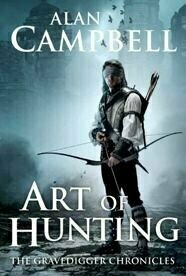
I read the first installment of the Gravedigger Chronicles, Sea Of Ghosts a little while ago and the sheer imagination really grabbed my attention. While waiting for the second book I read Campbell's first trilogy and this confirmed a grasp for creating very different, if very dark, fantasy worlds.
The first book follows the story of Thomas Granger, ex-Colonel with the elite 'Gravediggers' army unit now the owner and warden of a decrepit prison in a world that is literally drowning. Humans share the world with the intelligent and long-lived Unmer, for centuries their slaves until a band of telepaths overthrew them. In revenge the Unmer seeded the sees with thousands of small bottles - icusae - which are constantly producing poisonous 'brine', making the seas toxic and raising the sea level.
Granger sets off on a quest to find is estranged daughter Ianthe - herself an incredibly powerful but blind telepath - and so we see this strange and often brutal world, meeting Briana Marks the arrogant head of the telepaths and Ethan Maskeleyne, metaphysicist and hunter of Unmer treasure.
The book ends cataclysmically with Ianthe all but destroying the telepaths' power with her mind and setting the trapped Unmer prince Marquetta free at the same time as her father - now with magical armour and sword - arrives to rescue her himself.
The second book carried straight on from the first, detailing the aftermath of the battle and the Unmer's plans to once again rule, beginning with Marquetta's plan to marry Ianthe. Granger is naturally suspicious of his motives towards his only daughter. Marquetta also needs to eliminate another Unmer lord, Conquillas, who has been hired as an assassin by Briana Marks to kill Marquetta and his uncle. Conquillas is an Unmer rebel who has studied war and hunting until it is an art form to him. Marquetta plans to eliminate him by challenging him to a tournament which is rigged so that Conquillas cannot survive.
Learning of the plans, Granger decides to leave his daughter and travel to find Conquillas and warn him. But soon he has more to worry about as his Unmer sword literally has a mind of its own. Meanwhile Maskeleyne is on his own quest to discover why the unfortunate people who have 'drowned' in the brine seas (but still have a sort of life) are bringing him keys.
As can be seen from the brief description above this is a complex book. Although the story is told from four viewpoints - Granger, Ianthe, Maskeleyne and Briana Marks - the bulk of the story is carried by Granger (on his own quest) and Ianthe (following with the Unmer). Granger is a terrific character - he is gruff and insentimental and is not always a sympathetic character. But he is also very driven and always sees the solution to anything as a straight line, regardless of any obstacles on that path he will just bulldoze straight through them. Ianthe is more subtle as a character because she is essentially tagging along with Marquetta and apart from the marriage plot doesn't really contribute very much.
The world they inhabit is excellent. This is a different kind of fantasy world. Rather than being stuck in medieval worlds as tends to be the case, there is a lot of technology. There are guns and gas cutting torches for example. Everything seems to be very very old and anything enchanted by the Unmer is as dangerous to the innocent wielder as their target.
After the first book it is interesting to see more of the Unmer in action. Marquetta is a proud and determined prince, his uncle fills the role of scheming manipulator well and it is not clear if Marquetta follows his uncle or is merely another pawn in the play. Conquillas is also well drawn for the few scenes he is in, the consumate warrior and hunter while still being otherworldly and cold towards the humans that he deals with. Maskeleyne also comes to the fore in this book after being something of a villain in the first book in this book he is not at odds with the other main characters and so is a much more rounded person rather than a cipher to explain Unmer artifacts and move the plot along.
Yes this is a hard read; the chapters are long (there are only 8 chapters in the book) which means it is a long time between breaks in the narrative and the start does take a long long time to get going although a lot of the information is vital in setting up the rest of the book. Once it gets going however it flows well. In fact I would say the tournament at the end was a little rushed - some more insight into the early rounds would have been interesting I think - but as the main point is to get the final showdown this can be excused.
Overall, a fantastic second part and I eagerly look forward the the third installment.
Rating: Some slight swearing and crude references
The first book follows the story of Thomas Granger, ex-Colonel with the elite 'Gravediggers' army unit now the owner and warden of a decrepit prison in a world that is literally drowning. Humans share the world with the intelligent and long-lived Unmer, for centuries their slaves until a band of telepaths overthrew them. In revenge the Unmer seeded the sees with thousands of small bottles - icusae - which are constantly producing poisonous 'brine', making the seas toxic and raising the sea level.
Granger sets off on a quest to find is estranged daughter Ianthe - herself an incredibly powerful but blind telepath - and so we see this strange and often brutal world, meeting Briana Marks the arrogant head of the telepaths and Ethan Maskeleyne, metaphysicist and hunter of Unmer treasure.
The book ends cataclysmically with Ianthe all but destroying the telepaths' power with her mind and setting the trapped Unmer prince Marquetta free at the same time as her father - now with magical armour and sword - arrives to rescue her himself.
The second book carried straight on from the first, detailing the aftermath of the battle and the Unmer's plans to once again rule, beginning with Marquetta's plan to marry Ianthe. Granger is naturally suspicious of his motives towards his only daughter. Marquetta also needs to eliminate another Unmer lord, Conquillas, who has been hired as an assassin by Briana Marks to kill Marquetta and his uncle. Conquillas is an Unmer rebel who has studied war and hunting until it is an art form to him. Marquetta plans to eliminate him by challenging him to a tournament which is rigged so that Conquillas cannot survive.
Learning of the plans, Granger decides to leave his daughter and travel to find Conquillas and warn him. But soon he has more to worry about as his Unmer sword literally has a mind of its own. Meanwhile Maskeleyne is on his own quest to discover why the unfortunate people who have 'drowned' in the brine seas (but still have a sort of life) are bringing him keys.
As can be seen from the brief description above this is a complex book. Although the story is told from four viewpoints - Granger, Ianthe, Maskeleyne and Briana Marks - the bulk of the story is carried by Granger (on his own quest) and Ianthe (following with the Unmer). Granger is a terrific character - he is gruff and insentimental and is not always a sympathetic character. But he is also very driven and always sees the solution to anything as a straight line, regardless of any obstacles on that path he will just bulldoze straight through them. Ianthe is more subtle as a character because she is essentially tagging along with Marquetta and apart from the marriage plot doesn't really contribute very much.
The world they inhabit is excellent. This is a different kind of fantasy world. Rather than being stuck in medieval worlds as tends to be the case, there is a lot of technology. There are guns and gas cutting torches for example. Everything seems to be very very old and anything enchanted by the Unmer is as dangerous to the innocent wielder as their target.
After the first book it is interesting to see more of the Unmer in action. Marquetta is a proud and determined prince, his uncle fills the role of scheming manipulator well and it is not clear if Marquetta follows his uncle or is merely another pawn in the play. Conquillas is also well drawn for the few scenes he is in, the consumate warrior and hunter while still being otherworldly and cold towards the humans that he deals with. Maskeleyne also comes to the fore in this book after being something of a villain in the first book in this book he is not at odds with the other main characters and so is a much more rounded person rather than a cipher to explain Unmer artifacts and move the plot along.
Yes this is a hard read; the chapters are long (there are only 8 chapters in the book) which means it is a long time between breaks in the narrative and the start does take a long long time to get going although a lot of the information is vital in setting up the rest of the book. Once it gets going however it flows well. In fact I would say the tournament at the end was a little rushed - some more insight into the early rounds would have been interesting I think - but as the main point is to get the final showdown this can be excused.
Overall, a fantastic second part and I eagerly look forward the the third installment.
Rating: Some slight swearing and crude references

Lee (2222 KP) rated Star Wars: Episode IX - The Rise of Skywalker (2019) in Movies
Dec 20, 2019
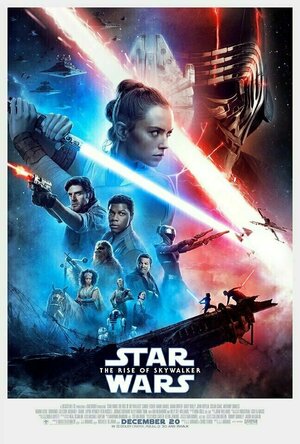

I have very mixed feelings following The Rise of Skywalker, the concluding chapter of not just another trilogy of Star Wars movies but also the conclusion of the Skywalker saga. Starting this trilogy, I was comforted by the familiarity presented in The Force Awakens and I felt that movie got the balance right between it's handling of the past and the introduction of new characters, scenarios and threats. But, I’m one of those people that was ultimately disappointed by The Last Jedi. Not the kind that fanboy rages about Star Wars and my entire childhood being ruined, as there are actually a lot of things I liked about it, but I do feel it deviated too much from some of the direction introduced in the previous movie and the movies prior to that. So I went into The Rise of Skywalker not quite as excited as I've been previously, but still cautiously optimistic following a trailer which managed to give me goosebumps pretty much every time I saw it.
As a final chapter, The Rise of Skywalker has a lot resting on it's shoulders. Concluding, and wrapping things up, while not completely ignoring the ideas put forth in The Last Jedi, JJ Abrams is however clearly more interested in revisiting some of his own ideas from The Force Awakens. But I felt that maybe he was relying a little too much on that familiarity aspect at times, as he tries to please everyone.
In The Rise of Skywalker, the resistance are still outnumbered by the First Order and Kylo Ren is now Supreme Leader. Meanwhile, Rey is training with Leia, becoming more confident and powerful, while Finn, Poe and Chewie are out in the Millennium Falcon gathering intel from spies. But an old threat from the past has returned, as a message goes out across the galaxy from an unknown region - Emperor Palpatine is warning of revenge, supported by a powerful fleet of ships.
To go into much more detail would involve spoilers, but lets just say that the first half of the movie involves a search to find something which is going to help them find something else, which is going to lead to the location of the emperor. The quest takes us from location to location, with the odd rescue along the way and the occasional new character popping up. Rey and Ren still have a bond which means that they can manipulate and battle each other from anywhere in the galaxy as Ren and his knights seek out Rey and her team in order to destroy them. There's a lot going on in that first half, and it all felt a bit messy. It's fair to say, I was very bored by this first half.
Around that half way mark though, the journey takes us to a world in the Endor system, where the remains of the second Death Star lies out at sea, among towering waves. It's there that an epic battle between Rey and Ren takes place, which you no doubt will have seen snippets of in the trailers or marketing material. Waves crash around them and the visuals, the choreography, the score, it all came together and really kick started the second half off for me. I still can't quite put my finger on it, but from that point on I felt a real shift (in the force?) and I began to really enjoy the rest of the movie, right up until the huge, inevitable and breathtaking final battle.
As mentioned earlier, there are certainly a lot of characters to take care of in this movie, including plenty of newcomers, all fighting for attention and screen-time. Some of the seemingly important characters introduced to us previously in this trilogy feel a bit lost at times, while we do still manage to find time for a very welcome return by Landon Calrissian. Rey and Ren are both outstanding once again and a special mention goes out to Richard E Grant, who I thought was brilliant as head of the First Order fleet, Allegiant General Pride. Scenes involving Carrie Fisher are beautifully handled, but I felt that the fan service went a little bit too far with some of the scenes involving Luke Skywalker.
The level of craftsmanship and design that goes into a Star Wars movie is always incredible and The Rise of Skywalker is no exception, elevated by a powerful John Williams score and some amazing visuals. I'm really not sure what I was expecting from this final chapter but, despite it all coming good for me in the end, I do feel slightly disappointed overall by the wildly differing halves of the movie. Still, there's nothing quite like seeing a new Star Wars movie on the big screen at Christmas time!
As a final chapter, The Rise of Skywalker has a lot resting on it's shoulders. Concluding, and wrapping things up, while not completely ignoring the ideas put forth in The Last Jedi, JJ Abrams is however clearly more interested in revisiting some of his own ideas from The Force Awakens. But I felt that maybe he was relying a little too much on that familiarity aspect at times, as he tries to please everyone.
In The Rise of Skywalker, the resistance are still outnumbered by the First Order and Kylo Ren is now Supreme Leader. Meanwhile, Rey is training with Leia, becoming more confident and powerful, while Finn, Poe and Chewie are out in the Millennium Falcon gathering intel from spies. But an old threat from the past has returned, as a message goes out across the galaxy from an unknown region - Emperor Palpatine is warning of revenge, supported by a powerful fleet of ships.
To go into much more detail would involve spoilers, but lets just say that the first half of the movie involves a search to find something which is going to help them find something else, which is going to lead to the location of the emperor. The quest takes us from location to location, with the odd rescue along the way and the occasional new character popping up. Rey and Ren still have a bond which means that they can manipulate and battle each other from anywhere in the galaxy as Ren and his knights seek out Rey and her team in order to destroy them. There's a lot going on in that first half, and it all felt a bit messy. It's fair to say, I was very bored by this first half.
Around that half way mark though, the journey takes us to a world in the Endor system, where the remains of the second Death Star lies out at sea, among towering waves. It's there that an epic battle between Rey and Ren takes place, which you no doubt will have seen snippets of in the trailers or marketing material. Waves crash around them and the visuals, the choreography, the score, it all came together and really kick started the second half off for me. I still can't quite put my finger on it, but from that point on I felt a real shift (in the force?) and I began to really enjoy the rest of the movie, right up until the huge, inevitable and breathtaking final battle.
As mentioned earlier, there are certainly a lot of characters to take care of in this movie, including plenty of newcomers, all fighting for attention and screen-time. Some of the seemingly important characters introduced to us previously in this trilogy feel a bit lost at times, while we do still manage to find time for a very welcome return by Landon Calrissian. Rey and Ren are both outstanding once again and a special mention goes out to Richard E Grant, who I thought was brilliant as head of the First Order fleet, Allegiant General Pride. Scenes involving Carrie Fisher are beautifully handled, but I felt that the fan service went a little bit too far with some of the scenes involving Luke Skywalker.
The level of craftsmanship and design that goes into a Star Wars movie is always incredible and The Rise of Skywalker is no exception, elevated by a powerful John Williams score and some amazing visuals. I'm really not sure what I was expecting from this final chapter but, despite it all coming good for me in the end, I do feel slightly disappointed overall by the wildly differing halves of the movie. Still, there's nothing quite like seeing a new Star Wars movie on the big screen at Christmas time!

Darren (1599 KP) rated Fast & Furious Presents: Hobbs & Shaw (2019) in Movies
Aug 1, 2019
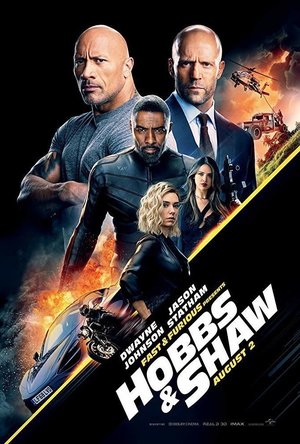
Verdict: Stunt Work of the Year
Story: Fast & Furious Presents: Hobbs & Shaw starts when MI6 Agent Hattie Shaw (Kirby) is framed for stealing a deadly virus that Brixton (Elba) is after, using her ability to go into hiding comes in handy, Luke Hobbs (Johnson) and Deckard (Statham) are recruited to work together to help find her and get the virus out of her before it becomes a threat to the world.
With the three teaming up, they must use their connections to stay ahead of Brixton who has been enhanced to make a deadly threat that neither can defeat on their own, can they put aside their different and save the world again?
Thoughts on Fast & Furious Presents: Hobbs & Shaw
Characters – Hobbs is still working in the field to hunt down bad guys, but he remains family based with his daughter being the most important part of his life, he gets the call to save the world once again and doesn’t say no, heading to London to team up with an old enemy and friend in Deckard. He does play the I am bigger than you card, as the two constantly try to play the alpha male card. Deckard must come out of hiding to rescue his own little sister, he is better designed to the spy like side of this mission, we do get to learn a lot more about his past in this film too. Brixton is the big bad, he even introduces himself as ‘the bad guy’ he has been enhanced, making him a proper deadly weapon that will win any one on one fight, he isn’t afraid to fight with his men, though he is only part of a bigger plan going on. Hattie is the MI6 agent that gets framed, she is Deckard sister and knows how to get off the grid, she can handle herself in a fight and isn’t afraid to use a few tricks she learnt from her mother to get out of a sticky situation.
Performances – Dwayne Johnson and Jason Statham must be looked at as one, they are excellent when it comes to the action sequences, you wouldn’t expect anything less, when they have a moment of serious material they do well, it is part of the back and forth between them which does get slightly tiresome after a while. It is almost like the film must stop for 30 seconds to a minute so they can go at each with insults. Idris Elba does look like he is having a hell of a time as the villainous figure, while Vanessa Kirby keeps up with the action heavy stars with ease bring another aspect to the styles of the three.
Story – The story here follows Hobbs and Shaw as they must once again put their differences a side to help Shaw’s sister get away from a deadly enhanced soldier and the virus he is threatening the world with. Breaking down this story, it does feel like any Fast & Furious film, there is no questions there, we get everything we expect with cheesy dialogue to match. If we do look at the story it is strange because we could easily have had this as a Hobbs or Shaw solo film with the way everything unfolds, with only one aspect of the film truly needing them to work together. The pair do seem to lose certain parts of the chemistry and respect for one an other they got from Fast 8, which again confuses why we need so much bickering between the two, as they are both the alpha, neither comes off as the comical side of the buddy relationship, meaning a lot of the jokes just hold up the film. It is nice this story could build on both the pairs backgrounds more, with slightly more focus on Deckard. If we are being honest, we don’t need a deep story here, we just come for the action.
Action/Adventure – The action in this film is huge, the fights, the chases and the explosions, though when it comes to the fights we do get a lot of cuts in them, which just doesn’t work as well as other action heavy films. The adventure does take the crew from London, to Russian to Samoa proving it to be an international mission.
Settings – The film uses the tight streets of London for the spy side of the movie, along with one big car chase, we use the other cities for the wide-open big action sequences in the film.
Special Effects – The effects in the film are also a mixed bad, certain bits look wonderful, including how Brixton is almost attached to his motorbike, it is the couple of moments which you can see the CGI effects at work which let it down.
Scene of the Movie – The base escape.
That Moment That Annoyed Me – The bickering gets tiresome.
Final Thoughts – This is everything you expect in a Fast & Furious film, it is big, the action is ridiculous, and you can just sit back and enjoy.
Overall: Big dumb fun
Rating
Story: Fast & Furious Presents: Hobbs & Shaw starts when MI6 Agent Hattie Shaw (Kirby) is framed for stealing a deadly virus that Brixton (Elba) is after, using her ability to go into hiding comes in handy, Luke Hobbs (Johnson) and Deckard (Statham) are recruited to work together to help find her and get the virus out of her before it becomes a threat to the world.
With the three teaming up, they must use their connections to stay ahead of Brixton who has been enhanced to make a deadly threat that neither can defeat on their own, can they put aside their different and save the world again?
Thoughts on Fast & Furious Presents: Hobbs & Shaw
Characters – Hobbs is still working in the field to hunt down bad guys, but he remains family based with his daughter being the most important part of his life, he gets the call to save the world once again and doesn’t say no, heading to London to team up with an old enemy and friend in Deckard. He does play the I am bigger than you card, as the two constantly try to play the alpha male card. Deckard must come out of hiding to rescue his own little sister, he is better designed to the spy like side of this mission, we do get to learn a lot more about his past in this film too. Brixton is the big bad, he even introduces himself as ‘the bad guy’ he has been enhanced, making him a proper deadly weapon that will win any one on one fight, he isn’t afraid to fight with his men, though he is only part of a bigger plan going on. Hattie is the MI6 agent that gets framed, she is Deckard sister and knows how to get off the grid, she can handle herself in a fight and isn’t afraid to use a few tricks she learnt from her mother to get out of a sticky situation.
Performances – Dwayne Johnson and Jason Statham must be looked at as one, they are excellent when it comes to the action sequences, you wouldn’t expect anything less, when they have a moment of serious material they do well, it is part of the back and forth between them which does get slightly tiresome after a while. It is almost like the film must stop for 30 seconds to a minute so they can go at each with insults. Idris Elba does look like he is having a hell of a time as the villainous figure, while Vanessa Kirby keeps up with the action heavy stars with ease bring another aspect to the styles of the three.
Story – The story here follows Hobbs and Shaw as they must once again put their differences a side to help Shaw’s sister get away from a deadly enhanced soldier and the virus he is threatening the world with. Breaking down this story, it does feel like any Fast & Furious film, there is no questions there, we get everything we expect with cheesy dialogue to match. If we do look at the story it is strange because we could easily have had this as a Hobbs or Shaw solo film with the way everything unfolds, with only one aspect of the film truly needing them to work together. The pair do seem to lose certain parts of the chemistry and respect for one an other they got from Fast 8, which again confuses why we need so much bickering between the two, as they are both the alpha, neither comes off as the comical side of the buddy relationship, meaning a lot of the jokes just hold up the film. It is nice this story could build on both the pairs backgrounds more, with slightly more focus on Deckard. If we are being honest, we don’t need a deep story here, we just come for the action.
Action/Adventure – The action in this film is huge, the fights, the chases and the explosions, though when it comes to the fights we do get a lot of cuts in them, which just doesn’t work as well as other action heavy films. The adventure does take the crew from London, to Russian to Samoa proving it to be an international mission.
Settings – The film uses the tight streets of London for the spy side of the movie, along with one big car chase, we use the other cities for the wide-open big action sequences in the film.
Special Effects – The effects in the film are also a mixed bad, certain bits look wonderful, including how Brixton is almost attached to his motorbike, it is the couple of moments which you can see the CGI effects at work which let it down.
Scene of the Movie – The base escape.
That Moment That Annoyed Me – The bickering gets tiresome.
Final Thoughts – This is everything you expect in a Fast & Furious film, it is big, the action is ridiculous, and you can just sit back and enjoy.
Overall: Big dumb fun
Rating
Gareth von Kallenbach (980 KP) rated Django Unchained (2012) in Movies
Aug 7, 2019
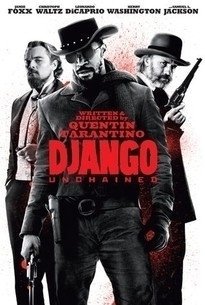
Writer-director Quentin Tarantino has returned in a big way with “Django Unchained” his homage to spaghetti Westerns. The film stars Jamie Foxx as a slave named Django who is part of a convoy of slaves being transported through Texas two years before the start of the Civil War. Django is unaware that his life is about to take a monumental turn when his caravan encounters Dr. King Schultz (Christoph Waltz) one dark evening. Schultz wishes to purchase Django, and when his current owners make the mistake of threatening the good doctor, he quickly turns the table on them and sets Django and his fellow slaves free. Schultz reveals to Django that he is in fact a bounty hunter and needs him to help identify three potential targets. Since Django last lived at the plantation where the three targets worked as overseers, he is essential to Schultz’s hunt. Schultz offers to free Django and pay him $75.00 for his assistance and the duo set off on their mission.
Some truly action-packed and hysterical scenes later, Schultz realizes that Django is an absolute natural for the business and decides to take him on for the winter as an assistant, even going so far as to offer to share one third of his bounties with them. In return, Schultz also offers to help Django reclaim his wife who was sold to a plantation somewhere in Tennessee. Schultz rationalizes that to show up now would be extremely dangerous, therefore the duo must wait out the winter earning money before embarking on their rescue mission.
The hard work of the team pays off and they learn that Django’s wife has been sold to one of the largest plantations under the ownership of Calvin Candie (Leonardo di Caprio), a despotic plantation owner who is as greedy as he is cruel. Despite having more money than he could ever use, Calvin likes to force certain members of his slaves to fight to the death. Schultz and Django decide to use this angle as their chance to get close to Calvin so they can verify that Django’s wife is indeed at the plantation and determine what it will take to buy or obtain her freedom. This proves to be no easy task as not only is Calvin surrounded by an army hired guns, but he also has a very surly and suspicious head of a household named Stephen (Samuel L. Jackson), eyeing every move that the strangers make and questioning their actions.
What follows is a hyperkinetic storm of violence, fury, music, and color in the true Tarantino style. The director is never one to shy away from blood and violence and there are tons of it in the film. The amazing thing about it is despite being graphic and, in some cases, borderline gratuitous, it does not distract from the enjoyment of the film and its characters. The performances were absolutely amazing, especially the work of Waltz, Foxx, and diCaprio. Jackson also does very solid supporting work as does Don Johnson in his appearance as an uber-racist plantation owner. Waltz worked previously with Tarantino on “Inglorious Bastards”, and this is where the Austrian actor really gained notice by Hollywood. This time out he gives a captivating performance as the complex killer with a heart of gold.
While I understand Tarantino’s style is not for everybody, it’s hard not to be impressed with the way he is able to paint a picture, fill it with interesting and quirky characters, and quickly tear it all apart as things descend into utter chaos and destruction. You alternate between laughing, cheering, and being shocked all the way through the film’s nearly three-hour runtime. Yet rarely did the film ever seem to drag on unnecessarily. There was some loss of pacing as the characters converged on Calvin’s plantation, and some may question some of the character changes or gaps in logic in the film’s finale.
I believe this film is one of the best films of the year. It captured so much of what an action film and drama should have: interesting, complex and well-acted characters, a good story, and plenty of action. Those who are easily offended will want to take note that the language in the film is extremely rough and there is frequent uses of racials lurs, as well is derogatory comments made about the black characters in the film. While this is intended to show the mindset and lifestyle of the 1860s in which the film is set, some may find it unsettling if they go in unprepared.
That being said I can honestly say that this was the most enjoyable Tarantino film I have ever seen and could be his best work to date.
Some truly action-packed and hysterical scenes later, Schultz realizes that Django is an absolute natural for the business and decides to take him on for the winter as an assistant, even going so far as to offer to share one third of his bounties with them. In return, Schultz also offers to help Django reclaim his wife who was sold to a plantation somewhere in Tennessee. Schultz rationalizes that to show up now would be extremely dangerous, therefore the duo must wait out the winter earning money before embarking on their rescue mission.
The hard work of the team pays off and they learn that Django’s wife has been sold to one of the largest plantations under the ownership of Calvin Candie (Leonardo di Caprio), a despotic plantation owner who is as greedy as he is cruel. Despite having more money than he could ever use, Calvin likes to force certain members of his slaves to fight to the death. Schultz and Django decide to use this angle as their chance to get close to Calvin so they can verify that Django’s wife is indeed at the plantation and determine what it will take to buy or obtain her freedom. This proves to be no easy task as not only is Calvin surrounded by an army hired guns, but he also has a very surly and suspicious head of a household named Stephen (Samuel L. Jackson), eyeing every move that the strangers make and questioning their actions.
What follows is a hyperkinetic storm of violence, fury, music, and color in the true Tarantino style. The director is never one to shy away from blood and violence and there are tons of it in the film. The amazing thing about it is despite being graphic and, in some cases, borderline gratuitous, it does not distract from the enjoyment of the film and its characters. The performances were absolutely amazing, especially the work of Waltz, Foxx, and diCaprio. Jackson also does very solid supporting work as does Don Johnson in his appearance as an uber-racist plantation owner. Waltz worked previously with Tarantino on “Inglorious Bastards”, and this is where the Austrian actor really gained notice by Hollywood. This time out he gives a captivating performance as the complex killer with a heart of gold.
While I understand Tarantino’s style is not for everybody, it’s hard not to be impressed with the way he is able to paint a picture, fill it with interesting and quirky characters, and quickly tear it all apart as things descend into utter chaos and destruction. You alternate between laughing, cheering, and being shocked all the way through the film’s nearly three-hour runtime. Yet rarely did the film ever seem to drag on unnecessarily. There was some loss of pacing as the characters converged on Calvin’s plantation, and some may question some of the character changes or gaps in logic in the film’s finale.
I believe this film is one of the best films of the year. It captured so much of what an action film and drama should have: interesting, complex and well-acted characters, a good story, and plenty of action. Those who are easily offended will want to take note that the language in the film is extremely rough and there is frequent uses of racials lurs, as well is derogatory comments made about the black characters in the film. While this is intended to show the mindset and lifestyle of the 1860s in which the film is set, some may find it unsettling if they go in unprepared.
That being said I can honestly say that this was the most enjoyable Tarantino film I have ever seen and could be his best work to date.

Debbiereadsbook (1829 KP) rated Val (The Hawks #2) in Books
May 12, 2021

I can't wait for what comes next, because I'm not seeing the whole picture yet!
Independent reviewer for Archaeolibrarian, I was gifted my copy of this book. I also won a signed copy!
OK SO! This is book 2 in The Hawks series, and you really REALLY MUST read Tristan, book 1, before this one. This book picks up immediately after that one, and you need, you really NEED that book to get the full picture of what's happened before. You get the most of it recapped, but personally, I don't think it ALL comes across.
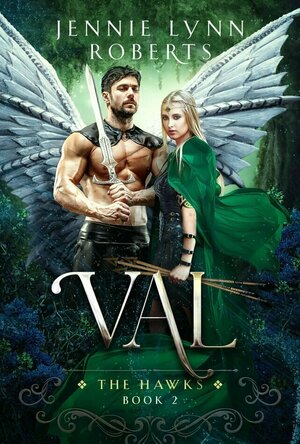
Lanval was rescued, along with his sister Nim and Keeley, the Queen's maid. The Queen, however, was not and Val needs to rescue Alanna before her despot of a husband hangs her for treason she did not commit. But Val is broken, inside and out, and his Hawk friends hate him for what they thought he did. Lanni is glad Val is free, she can die knowing he is safe. Then, he's there, rescuing her and whisking her away! Ballinor won't stop though, and with a new chancellor at his side, things get mighty difficult for everyone.
In case you missed it, when you read my review for Tristan, I LOVED that book. And I wanted to love this one as much as that one, but I can't, as much as it pains me, I really can't.
Why?? Cos I LOVED THIS ONE MORE!!
OH my freaking gosh, this book! Full of so much! So much pain, for both Lanni and Val. So much love between them, even if it takes them such a long time to finally, FINALLY come together fully. So much discovered, by The hawks, about what happened before, and so much guilt from everyone!
I cried, a lot in this book. Val and Lanni are perfect for each other, but they know they can never be free to be together, while the King listens to his newest Chancellor. Oh I did NOT like him. The last one was just trying to get his hands on Lanni, but this one?? He's after so much more than that. What exactly, I'm not entirely sure yet, but I'm sure all will be revealed, eventually! I love being kept in the dark!
I shouted a lot too! Lanni has a lot of ideas about honour, as does Val, but some of it is misplaced. I swore, a few choice words a sailor would be proud of, or rather, words a soldier in the barracks would be proud of! These men, this group, right? They love hard, they fight hard, and they *think* they mess up hard, but actually, THEY don't! Reece, oh he needs such a hug. He thinks he caused most of the group to be captured, but he didn't. Even the Chancellor says so, but Reece feels he did. His book is gonna be painful reading, I reckon!
Both Lanni and Val get a say, along with Mathos, who has his book next. I did see him with someone else, to be honest, but given what was discovered here, then reading what it says at the end of this one, I was made to see my error. Mathos is not Mabin, like Val and Nim, but something else. Something with a beast inside him. With scales. Dragon-type beast? Not 100% certain, I may have missed all the clues, but Mathos the man is a bit of a player. He thinks he won't fall like Tristan and Val, so when he meets his lady in the next book, there is sure to be fireworks.
Said lady also gets the epilogue. When she was revealed in this book, I wasn't expecting her, and she has quite a tale to tell, I'm sure. How she will react to Mathos should be amusing, given these men have protective streaks a canyon wide, and she has been where she has all her life.
I said in my review for Tristan that I thought this would be a much darker read than that one, and it is, it really is. The level of violence Ballinor steps up to is given in great detail, and you can feel every lash given, every punch taken and every injury to Lanni at the hands of her husband. Val too, but it's mostly Lanni who suffers here.
I can't wait for what comes next, because I'm not seeing the whole picture yet. I can't see where this is all going and I love that! Mostly, though, because I'm loving these guys, watching them fall one by one, and meeting the strong women who take their hearts.
Write quicker, Ms Roberts.
Write.
Quicker!
5 stars, but more if I could!
**same worded review will appear elsewhere**
OK SO! This is book 2 in The Hawks series, and you really REALLY MUST read Tristan, book 1, before this one. This book picks up immediately after that one, and you need, you really NEED that book to get the full picture of what's happened before. You get the most of it recapped, but personally, I don't think it ALL comes across.
Lanval was rescued, along with his sister Nim and Keeley, the Queen's maid. The Queen, however, was not and Val needs to rescue Alanna before her despot of a husband hangs her for treason she did not commit. But Val is broken, inside and out, and his Hawk friends hate him for what they thought he did. Lanni is glad Val is free, she can die knowing he is safe. Then, he's there, rescuing her and whisking her away! Ballinor won't stop though, and with a new chancellor at his side, things get mighty difficult for everyone.
In case you missed it, when you read my review for Tristan, I LOVED that book. And I wanted to love this one as much as that one, but I can't, as much as it pains me, I really can't.
Why?? Cos I LOVED THIS ONE MORE!!
OH my freaking gosh, this book! Full of so much! So much pain, for both Lanni and Val. So much love between them, even if it takes them such a long time to finally, FINALLY come together fully. So much discovered, by The hawks, about what happened before, and so much guilt from everyone!
I cried, a lot in this book. Val and Lanni are perfect for each other, but they know they can never be free to be together, while the King listens to his newest Chancellor. Oh I did NOT like him. The last one was just trying to get his hands on Lanni, but this one?? He's after so much more than that. What exactly, I'm not entirely sure yet, but I'm sure all will be revealed, eventually! I love being kept in the dark!
I shouted a lot too! Lanni has a lot of ideas about honour, as does Val, but some of it is misplaced. I swore, a few choice words a sailor would be proud of, or rather, words a soldier in the barracks would be proud of! These men, this group, right? They love hard, they fight hard, and they *think* they mess up hard, but actually, THEY don't! Reece, oh he needs such a hug. He thinks he caused most of the group to be captured, but he didn't. Even the Chancellor says so, but Reece feels he did. His book is gonna be painful reading, I reckon!
Both Lanni and Val get a say, along with Mathos, who has his book next. I did see him with someone else, to be honest, but given what was discovered here, then reading what it says at the end of this one, I was made to see my error. Mathos is not Mabin, like Val and Nim, but something else. Something with a beast inside him. With scales. Dragon-type beast? Not 100% certain, I may have missed all the clues, but Mathos the man is a bit of a player. He thinks he won't fall like Tristan and Val, so when he meets his lady in the next book, there is sure to be fireworks.
Said lady also gets the epilogue. When she was revealed in this book, I wasn't expecting her, and she has quite a tale to tell, I'm sure. How she will react to Mathos should be amusing, given these men have protective streaks a canyon wide, and she has been where she has all her life.
I said in my review for Tristan that I thought this would be a much darker read than that one, and it is, it really is. The level of violence Ballinor steps up to is given in great detail, and you can feel every lash given, every punch taken and every injury to Lanni at the hands of her husband. Val too, but it's mostly Lanni who suffers here.
I can't wait for what comes next, because I'm not seeing the whole picture yet. I can't see where this is all going and I love that! Mostly, though, because I'm loving these guys, watching them fall one by one, and meeting the strong women who take their hearts.
Write quicker, Ms Roberts.
Write.
Quicker!
5 stars, but more if I could!
**same worded review will appear elsewhere**

Bob Mann (459 KP) rated Let Him Go (2020) in Movies
Dec 23, 2020
Feud for Thought
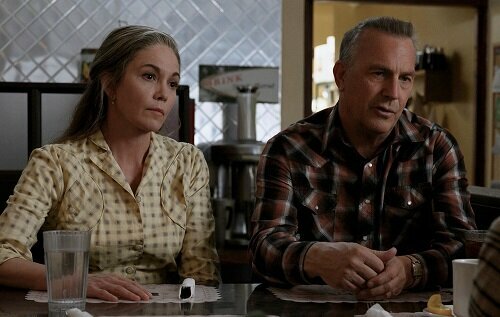
After a family tragedy for the Blackledge family, grandparents George (Kevin Costner) and Margaret (Diane Lane) are left to bring up baby Jimmy (Bram and Otto Hornung) with mother/daughter-in-law Lorna (Kayli Carter). But a few years later, Lorna marries bad-un Donnie Weboy (Will Brittain) and disappears back to Donnie's hillbilly extended family in the wilds of North Dakota, led by the fearsome Blanche Weboy (Lesley Manville). Fearing for the child's wellbeing, Margaret drags retired Sheriff George on a dangerous journey to rescue the child.
There are strong similarities in this story with a sub-plot of the excellent "Ozark", where the psychopathic Darlene Snell (Lisa Emery) is intent on having a child to grow up with on her remote ranch. The sense of tension there is recreated here, exacerbated by the movie's extremely slow (read "glacial") pace in its early stages. It's the same sort of rising dread that I felt with "Nocturnal Animals". This reaches its peak at a tense standoff over lamb chops at the Weboy ranch, but we are probably half-way into the film by then.
The slow pace however is broken by a couple of extremely violent scenes that earn the movie its UK-15 certificate. One (no spoilers here!) harks back to another Kevin Costner blockbuster where he was a bit luckier! And the finale turns a slightly sleepy tale of "two old folks" into an 'all guns blazing' action western that's highly unexpected. Although you could argue that this is tonally extremely uneven, it works and makes the movie a lot more memorable than it otherwise would be.
The standout leading performance here is the one from Diane Lane as the mentally tortured Granny pursuing her convictions across the country. Here writer/director Thomas Bezucha gives the character full rein. It's a memorable 'strong female' part, that would have been dominated by the male lead in the writing of films a few years back. Lane delivers a dramatic and rock-solid performance that has Oscar nomination written all over it.
I'm also a big fan of Kevin Costner, not just because he's a solid and reliable actor over many years. I always remember him gamely appearing as "The Postman"/'propeller-guy' in Billy Crystal's hilarious montage opening for the 70th Academy Awards. Anyhow, here he has his meatiest dramatic role in many years, and delivers fully on it. Top job, although I suspect this may not be his year for his elusive Best Actor award.
Finally, rounding out the Oscar hopefuls is the brilliant Lesley Manville as Blanche Weboy. It's a dream of a role for the Brighton-born star, nominated of course for the Best Supporting Actress two years ago for "Phantom Thread". And she is genuinely chilling here, firing on all cylinders like some sort of deranged Bette Davis on speed. She's used sparingly in the movie, but that makes her scenes all the more memorable. Another nomination perhaps? I'd predict so, yes.
I found this to be an uncomfortable watch, since I found myself in a moral quandary with the storyline. It's clear that Margaret is genuinely concerned for the safety of Jimmy (and less so, Lorna). Yet, what she is ultimately prepared to do is consider child abduction, when the law if probably on the side of the other party. Sure, the lifestyle and attitudes of the Weboys are alien to this more traditional "Granny". But although Blanche rules with a Victorian-level of grit, isn't she - at least before any of her more vicious tendencies emerge - entitled to do that? The film firmly roots itself behind the Blackledge's as "the good guys", but the script cleverly has you questioning that at various points,
Two technical categories in "Let Him Go" are also worthy of note. The cinematography is by Guy Godfree, and the sweeping vistas of Montana and North Dakota (actually Alberta in Canada!) are gloriously delivered. And the music by Michael Giacchino - one of my favourite composers - is cello-heavy and fitting for the sombre storyline. I always assess the quality of a score by whether I annoy the cinema cleaners by sitting until the last of the end credits have rolled, and this is one I did that to.
As the last movie I see before Christmas, "Let Him Go" is not exactly a feelgood festive offering. It's a well-crafted and thoughtful story, but not one to make you feel good inside, for the reasons outlined above. If you are a movie-lover though, then it's an interesting watch, if only for the fine acting performances on offer.
(For the full graphical review, please check out the "Bob the Movie Man" review on the web here - https://bob-the-movie-man.com/2020/12/23/let-him-go-is-not-a-joyous-affair-but-delivers-oscar-worthy-performances/. Thanks.)
There are strong similarities in this story with a sub-plot of the excellent "Ozark", where the psychopathic Darlene Snell (Lisa Emery) is intent on having a child to grow up with on her remote ranch. The sense of tension there is recreated here, exacerbated by the movie's extremely slow (read "glacial") pace in its early stages. It's the same sort of rising dread that I felt with "Nocturnal Animals". This reaches its peak at a tense standoff over lamb chops at the Weboy ranch, but we are probably half-way into the film by then.
The slow pace however is broken by a couple of extremely violent scenes that earn the movie its UK-15 certificate. One (no spoilers here!) harks back to another Kevin Costner blockbuster where he was a bit luckier! And the finale turns a slightly sleepy tale of "two old folks" into an 'all guns blazing' action western that's highly unexpected. Although you could argue that this is tonally extremely uneven, it works and makes the movie a lot more memorable than it otherwise would be.
The standout leading performance here is the one from Diane Lane as the mentally tortured Granny pursuing her convictions across the country. Here writer/director Thomas Bezucha gives the character full rein. It's a memorable 'strong female' part, that would have been dominated by the male lead in the writing of films a few years back. Lane delivers a dramatic and rock-solid performance that has Oscar nomination written all over it.
I'm also a big fan of Kevin Costner, not just because he's a solid and reliable actor over many years. I always remember him gamely appearing as "The Postman"/'propeller-guy' in Billy Crystal's hilarious montage opening for the 70th Academy Awards. Anyhow, here he has his meatiest dramatic role in many years, and delivers fully on it. Top job, although I suspect this may not be his year for his elusive Best Actor award.
Finally, rounding out the Oscar hopefuls is the brilliant Lesley Manville as Blanche Weboy. It's a dream of a role for the Brighton-born star, nominated of course for the Best Supporting Actress two years ago for "Phantom Thread". And she is genuinely chilling here, firing on all cylinders like some sort of deranged Bette Davis on speed. She's used sparingly in the movie, but that makes her scenes all the more memorable. Another nomination perhaps? I'd predict so, yes.
I found this to be an uncomfortable watch, since I found myself in a moral quandary with the storyline. It's clear that Margaret is genuinely concerned for the safety of Jimmy (and less so, Lorna). Yet, what she is ultimately prepared to do is consider child abduction, when the law if probably on the side of the other party. Sure, the lifestyle and attitudes of the Weboys are alien to this more traditional "Granny". But although Blanche rules with a Victorian-level of grit, isn't she - at least before any of her more vicious tendencies emerge - entitled to do that? The film firmly roots itself behind the Blackledge's as "the good guys", but the script cleverly has you questioning that at various points,
Two technical categories in "Let Him Go" are also worthy of note. The cinematography is by Guy Godfree, and the sweeping vistas of Montana and North Dakota (actually Alberta in Canada!) are gloriously delivered. And the music by Michael Giacchino - one of my favourite composers - is cello-heavy and fitting for the sombre storyline. I always assess the quality of a score by whether I annoy the cinema cleaners by sitting until the last of the end credits have rolled, and this is one I did that to.
As the last movie I see before Christmas, "Let Him Go" is not exactly a feelgood festive offering. It's a well-crafted and thoughtful story, but not one to make you feel good inside, for the reasons outlined above. If you are a movie-lover though, then it's an interesting watch, if only for the fine acting performances on offer.
(For the full graphical review, please check out the "Bob the Movie Man" review on the web here - https://bob-the-movie-man.com/2020/12/23/let-him-go-is-not-a-joyous-affair-but-delivers-oscar-worthy-performances/. Thanks.)
Versusyours (757 KP) rated Star Wars: Episode IX - The Rise of Skywalker (2019) in Movies
Dec 30, 2019 (Updated Dec 30, 2019)
Another film ruined by Endgame's splendour
Contains spoilers, click to show
The Rise of Skywalker
Some endings are welcomed whilst others are heart-breaking and sudden, then there is this movie that closes a curtain that’s older than my very bones. In the time from 1977 there has been highs, lows and Jar Jar Binks a plenty and lots and lots of toys, lunchboxes and soap sets in all shapes of droids. The film itself opens and quickly reintroduces all the main characters and sets up the plot lines for each person and they embark on a path that is destined for them all to meet later. Kylo Ren is on a solo Gooniesesque mission to retrieve something darker than One Eyed Willies rich stuff with the aid of a Toblerone shaped virtual map. Helmetless and emotionless he encounters the Emperor you in fact is not dead but just chilling out with many engineers, Sith corpses and a big evil throne that he may use to do dark side Sudoku. Kylo Ren must kill Rey and then he and Palpatine might both crack a smile and take turns on the evil throne as all powerful rulers.
Is it a bird? Is it plane? Well its half bird in name alone it’s the Millennium Falcon doing what it does best and being chased and escaping for the numerous time but this time they are light speed jumping even though they are told not to, naughty naughty. Po and Finn get some gossip and head to the planet the Rebels are all hiding on to share their news. Enter the heroine its Rey in a new outfit and floating up high but failing to entice the Jedi spirits to appear but why would they this early on in a film. The hero’s all use the gossip from the Empire spy and Rey, Finn, Poe, Chewbacca, BB-8, and C-3PO depart in the Millennium Falcon. Space trip!!!
They head for a Space desert that is like Mardi Gras with sand, it’s so lucky that these sandy terrains are common in space like they are common on Earth as Star Wars loves these arid landscapes. They get into a scrape as they always seem to do but with Stormtroopers being inept and despite being airborne, they now fail on both land and air to do anything other than being a source for explosions. C3-PO finally gets the chance to be of actual use but in his golden and splendid way he is unable to translate a Sith message orally and it remains unheard and unseen in his memory banks. Kylo Ren mentally Skype calls Rey and she forgets to turn off her location settings and he turns up. In the ensuing melee Rey turns up the bad ass levels and destroys an Empire ship containing the Wookie we all fell in love with Chewbacca. In a big fiery furball of fire he is gone, Rey is beside herself with regret and they all escape on board Not the Millennium Falcon. Another planet another mission to add to the collection sees the group hoping to find a brain surgeon to extract the Sith message from C3-PO. On planet Jim Henson we see a large collection of weird and wonderful puppets and cosplay experts. The downside of the brain surgery is it will format C3-PO to the factory settings so he can learn to be annoying to everyone all over again. A little shaved Mogwai turns out to be the master surgeon and he completes the job easily enough and they retrieve the message, but the worst fears are realised as C3-PO remembers no one.
From the furry flames Chewbacca, we find out is not dead but merely being pampered in the Empires many hair and nail bars. Sensing this fashion disaster waiting to happen Rey organises a rescue mission and they break into the Star Destroyer with relative ease until Poe, Finn are caught and assigned to death. Rey is on her own mission and breaks into Kylo Ren’s bachelor pad and has a look around and gets the Sith dagger and another Skype call from Kylo Ren is taken where he tells her some missing parts of her childhood and about her true lineage as a pesky Palpatine. The age-old Star Wars family is not who you think it is trope is wheeled out once more. Learning from her previous failures of her location services she refuses to tell Kylo but when the melted helmet of the original absent father Darth Vader falls at Kylo’s feet he knows she is in his room. Enraged in case he left any interspace porn lying around his room he quickly makes a run for his awesome ship.
With certain execution facing Poe, Finn and the now unlucky Chewie and the blasters set to wipe them out General Hux turns Rouge One and saves the heroes at the last second. With his turncoat and spy status ensured he shows his true childish colours and he wants Kylo Ren to lose because he has longer and hair on the darker side of black (maybe). Before allowing them to escape he asked for a blaster wound to give his story of them overpowering the guards some weight, surely a fool proof plan with your boss being able to mind read. He takes a blaster to the knee before hobbling to explain himself before being shot as the traitorous Rebel scum he is. If only he had lived long enough, he may have seen his wish come true. They well-travelled hero’s travel to space Astoria for another Goonies part of the quest where they see the remnants of the second Death Star and use the dagger doubloon to perfectly line up where the way finder is located. A big source of luck as the waves that engulf the planet and are crashing all around the wreck of the Deathstar have avoided any damage over the years. It’s deemed impossible to traverse the giant waves until morning but when Rey sees her opportunity she sails over the waves with relative ease while the rest of the heroes are chatting to a local about zero hour Strom trooper contracts and a lack of a good sickness benefit policy. As Rey makes it to the wreckage, she is met with Kylo Ren and they have a lightsaber battle after he smashes the way finder and asks her to join him in getting rid of Papa Palpatine and being the Sith power couple. Kylo seems to be building up the anger in Rey and trying to temp her to give in to her rage. Some great action shots and some force leaps make this a memorable fight scene until Leia ‘force times’ Kylo distracting him enough for Rey to become the victor. This is the last stand for Leia as she gives up the ghost and therefore becomes one of those ghost Jedi figures. With a sudden change of heart and with the wound barely open Rey uses her force healing abilities to fill Kylo’s hole right up before stealing his ship and leaving him stranded on Goonieland. With all this free time Kylo throws away his lightsaber and becomes Ben Solo once more and squeezes in a catch up with his old dad Han in dreamworld or memoryland.
Rey is now on a mission to destroy the Sith and the Emperor on the hidden planet now she has the map but only after setting Kylo’s sweet spaceship on fire and then realising her error. This impulsive nature may be leading to the dark side!! She heads to Exegol the Sith planet just as Palpatine is setting his sights on getting on with ending the Rebellion once and for all. If a job is worth doing its worth doing it yourself and orders the destruction of planet by a weapon that’s on each Star Destroyer. When Rey catches up with the Emperor, he is happy to see her and he invites her to strike him down, probably to become more powerful than we can imagine. Rey leaves a trail of cosmic breadcrumbs and she is followed by the resistance and they have a plan to take on the Final Order by destroying a central communication tower, so again a rather simple way to stop some heavy duty weaponry; the old classics are the best!!! It becomes a bit Star Wars of the Rings with space horses appearing and galloping to the rescue, not since the ill-fated days of the Phantom Menace has wildlife shocked me in such a manner. Back to the will she, won’t she, Rey and the Emperor are still wanting different things and Palpatine has invited the ghosts of Sith past to witness his greatest triumph. Rey has a choice of lightsaber’s due to Leia giving her an extra, maybe there was a reason for this!! Oh, wait Ben Solo has arrived lightsaberless what a stroke of luck!! Palpatine has had enough and he decides to drain both the Jedi’s of their life force and levels ups and gets back to rage mode and gets his lightning on. He dispatches Ben and then takes out the full resistance fleet with an impressive lightning show. Rey in her weakened state finally perfects the connection with the Jedi spirits that she failed at early in the film. Armed with the x-factor of crossed lightsabers she pushes the Emperor back and turns his own electricity and his face is melted off Raiders of the Lost Ark style. Ben then comes back into the mix and repays the force healing from earlier and gives Rey the gift of life followed by a kiss. This is a kiss of death literally and he fades away into nothingness. In scenes not seen since the Avengers help arrives when all hope is gone, and the fight is won by the good guys again.
I felt that this film was too fast paced and had too many storylines that were quickly explored and this was at a detriment to what could have been. Maybe on repeat viewing there will be the chance to slow down and explore the potential of the film. Some scenes were for the older generation and some were for the newbies to the galaxy far, far away and this again was at a cost to the whole experience. This all being said the watch was enjoyable and had its genuine emotional moments and humour was used to break the tension at times with C3-PO having a few choice lines for once.
Some endings are welcomed whilst others are heart-breaking and sudden, then there is this movie that closes a curtain that’s older than my very bones. In the time from 1977 there has been highs, lows and Jar Jar Binks a plenty and lots and lots of toys, lunchboxes and soap sets in all shapes of droids. The film itself opens and quickly reintroduces all the main characters and sets up the plot lines for each person and they embark on a path that is destined for them all to meet later. Kylo Ren is on a solo Gooniesesque mission to retrieve something darker than One Eyed Willies rich stuff with the aid of a Toblerone shaped virtual map. Helmetless and emotionless he encounters the Emperor you in fact is not dead but just chilling out with many engineers, Sith corpses and a big evil throne that he may use to do dark side Sudoku. Kylo Ren must kill Rey and then he and Palpatine might both crack a smile and take turns on the evil throne as all powerful rulers.
Is it a bird? Is it plane? Well its half bird in name alone it’s the Millennium Falcon doing what it does best and being chased and escaping for the numerous time but this time they are light speed jumping even though they are told not to, naughty naughty. Po and Finn get some gossip and head to the planet the Rebels are all hiding on to share their news. Enter the heroine its Rey in a new outfit and floating up high but failing to entice the Jedi spirits to appear but why would they this early on in a film. The hero’s all use the gossip from the Empire spy and Rey, Finn, Poe, Chewbacca, BB-8, and C-3PO depart in the Millennium Falcon. Space trip!!!
They head for a Space desert that is like Mardi Gras with sand, it’s so lucky that these sandy terrains are common in space like they are common on Earth as Star Wars loves these arid landscapes. They get into a scrape as they always seem to do but with Stormtroopers being inept and despite being airborne, they now fail on both land and air to do anything other than being a source for explosions. C3-PO finally gets the chance to be of actual use but in his golden and splendid way he is unable to translate a Sith message orally and it remains unheard and unseen in his memory banks. Kylo Ren mentally Skype calls Rey and she forgets to turn off her location settings and he turns up. In the ensuing melee Rey turns up the bad ass levels and destroys an Empire ship containing the Wookie we all fell in love with Chewbacca. In a big fiery furball of fire he is gone, Rey is beside herself with regret and they all escape on board Not the Millennium Falcon. Another planet another mission to add to the collection sees the group hoping to find a brain surgeon to extract the Sith message from C3-PO. On planet Jim Henson we see a large collection of weird and wonderful puppets and cosplay experts. The downside of the brain surgery is it will format C3-PO to the factory settings so he can learn to be annoying to everyone all over again. A little shaved Mogwai turns out to be the master surgeon and he completes the job easily enough and they retrieve the message, but the worst fears are realised as C3-PO remembers no one.
From the furry flames Chewbacca, we find out is not dead but merely being pampered in the Empires many hair and nail bars. Sensing this fashion disaster waiting to happen Rey organises a rescue mission and they break into the Star Destroyer with relative ease until Poe, Finn are caught and assigned to death. Rey is on her own mission and breaks into Kylo Ren’s bachelor pad and has a look around and gets the Sith dagger and another Skype call from Kylo Ren is taken where he tells her some missing parts of her childhood and about her true lineage as a pesky Palpatine. The age-old Star Wars family is not who you think it is trope is wheeled out once more. Learning from her previous failures of her location services she refuses to tell Kylo but when the melted helmet of the original absent father Darth Vader falls at Kylo’s feet he knows she is in his room. Enraged in case he left any interspace porn lying around his room he quickly makes a run for his awesome ship.
With certain execution facing Poe, Finn and the now unlucky Chewie and the blasters set to wipe them out General Hux turns Rouge One and saves the heroes at the last second. With his turncoat and spy status ensured he shows his true childish colours and he wants Kylo Ren to lose because he has longer and hair on the darker side of black (maybe). Before allowing them to escape he asked for a blaster wound to give his story of them overpowering the guards some weight, surely a fool proof plan with your boss being able to mind read. He takes a blaster to the knee before hobbling to explain himself before being shot as the traitorous Rebel scum he is. If only he had lived long enough, he may have seen his wish come true. They well-travelled hero’s travel to space Astoria for another Goonies part of the quest where they see the remnants of the second Death Star and use the dagger doubloon to perfectly line up where the way finder is located. A big source of luck as the waves that engulf the planet and are crashing all around the wreck of the Deathstar have avoided any damage over the years. It’s deemed impossible to traverse the giant waves until morning but when Rey sees her opportunity she sails over the waves with relative ease while the rest of the heroes are chatting to a local about zero hour Strom trooper contracts and a lack of a good sickness benefit policy. As Rey makes it to the wreckage, she is met with Kylo Ren and they have a lightsaber battle after he smashes the way finder and asks her to join him in getting rid of Papa Palpatine and being the Sith power couple. Kylo seems to be building up the anger in Rey and trying to temp her to give in to her rage. Some great action shots and some force leaps make this a memorable fight scene until Leia ‘force times’ Kylo distracting him enough for Rey to become the victor. This is the last stand for Leia as she gives up the ghost and therefore becomes one of those ghost Jedi figures. With a sudden change of heart and with the wound barely open Rey uses her force healing abilities to fill Kylo’s hole right up before stealing his ship and leaving him stranded on Goonieland. With all this free time Kylo throws away his lightsaber and becomes Ben Solo once more and squeezes in a catch up with his old dad Han in dreamworld or memoryland.
Rey is now on a mission to destroy the Sith and the Emperor on the hidden planet now she has the map but only after setting Kylo’s sweet spaceship on fire and then realising her error. This impulsive nature may be leading to the dark side!! She heads to Exegol the Sith planet just as Palpatine is setting his sights on getting on with ending the Rebellion once and for all. If a job is worth doing its worth doing it yourself and orders the destruction of planet by a weapon that’s on each Star Destroyer. When Rey catches up with the Emperor, he is happy to see her and he invites her to strike him down, probably to become more powerful than we can imagine. Rey leaves a trail of cosmic breadcrumbs and she is followed by the resistance and they have a plan to take on the Final Order by destroying a central communication tower, so again a rather simple way to stop some heavy duty weaponry; the old classics are the best!!! It becomes a bit Star Wars of the Rings with space horses appearing and galloping to the rescue, not since the ill-fated days of the Phantom Menace has wildlife shocked me in such a manner. Back to the will she, won’t she, Rey and the Emperor are still wanting different things and Palpatine has invited the ghosts of Sith past to witness his greatest triumph. Rey has a choice of lightsaber’s due to Leia giving her an extra, maybe there was a reason for this!! Oh, wait Ben Solo has arrived lightsaberless what a stroke of luck!! Palpatine has had enough and he decides to drain both the Jedi’s of their life force and levels ups and gets back to rage mode and gets his lightning on. He dispatches Ben and then takes out the full resistance fleet with an impressive lightning show. Rey in her weakened state finally perfects the connection with the Jedi spirits that she failed at early in the film. Armed with the x-factor of crossed lightsabers she pushes the Emperor back and turns his own electricity and his face is melted off Raiders of the Lost Ark style. Ben then comes back into the mix and repays the force healing from earlier and gives Rey the gift of life followed by a kiss. This is a kiss of death literally and he fades away into nothingness. In scenes not seen since the Avengers help arrives when all hope is gone, and the fight is won by the good guys again.
I felt that this film was too fast paced and had too many storylines that were quickly explored and this was at a detriment to what could have been. Maybe on repeat viewing there will be the chance to slow down and explore the potential of the film. Some scenes were for the older generation and some were for the newbies to the galaxy far, far away and this again was at a cost to the whole experience. This all being said the watch was enjoyable and had its genuine emotional moments and humour was used to break the tension at times with C3-PO having a few choice lines for once.

Alice (12 KP) rated War Dogs: Ares Rising in Books
Jul 3, 2018
<i>I received a copy of this book from the publisher in exchange for an honest review</i>
War Dogs was so far out of my comfort zone I expected to not enjoy it. I’m pleased to say that I did enjoy this, not only was this a new style of writing for me, it was also a new author. At first I was a little sceptic of a book set on Mars (I haven’t read The Martian yet so the topic of being stuck on Mars is new!) this book was set in the perspective of Master Sergeant Michael Venn (Vinnie), a veteran Marine trained in off-world combat.
The book opens with Vinnie being back on Earth after a shit-storm of a Mars mission throws everything for a loop:
<blockquote>I’m trying to go home. As the poet said, if you don’t know where you are, you don’t know who you are. Home is where you go to get all that sorted out.</blockquote>
The chapters flick between Earth now and Mars then which is, in reality probably only about 2 weeks or so. Michael Venn has been on multiple tours of the Red Planet in his six years as a Skyrine and this is likely to be his last. There’s a good setting of Seattle in the beginning of the book where he’s just got out of the military base he touched down in a little while ago, it’s told from first person perspective and lots of memories are forth coming to the reader.
The basis of the Skyrine and their missions to Mars is from the Gurus – an alien race who made their presence known thirteen years ago when they touched down in the desert and spoke with some camel herders, it then progresses to the Gurus sneaking into the telecoms and satlinks, making a lot of money and then being “spotted” by some really clever computer folks. The Gurus then provide us humans with lots of technological advances for seemingly nothing, at least until they break the news that they have their own enemies – the Antagonists or Antags – and it’s now up the humans to go to war with the Antags.
After this little bit of background the story flicks to Mars with what has got to be one of my favourite lines in this book:
<blockquote>Physics is what kills you, but biology is what wants you dead.</blockquote>
Another favourite is:
<blockquote>…and share a silent fear that here, buckaroos, there are far too many cowboys and not nearly enough Indians.</blockquote>
The story then continues with Michael Venn’s tale of how their mission went tits up and describes various settings on Mars where they are thrown in the deep end and are at risk of dying. I didn’t quite understand why the book was called War Dogs until page 75 when it was explained to a point:
<blockquote>We’re all War Dogs, adopted by a very tall, strong ranch wife.</blockquote>
The descriptions of the characters and the settings in this book are wonderfully done and you actually feel like you’re there on Mars suffering along with Venn, Tak, Kazak and the rest of the Skyrines (a Skyrine is a Marine who is ‘sky-bound’ to Mars) while they wait out the possibility of death before Teal the ranch wife from the above quote comes to their rescue and then while they discover that their mission was compromised from the very beginning long before they actually launched.
Throughout the book there is a character called Alice who comes to Seattle on behalf of Joe (another Skyrine) who is there to help Michael come to terms with being back on Earth after the blow out of Mars. She’s a sort of psychotherapist I suppose who is there to listen to Michael’s story of what happened on Mars (which is basically how the book is written, the storytelling of what happened on Mars but through visions or flashbacks) and she eventually takes him to see Joe only they get caught by the military police. Michael ends up being taken “prisoner” as a fugitive.
This book was – though short – incredibly well written and I definitely want to read the next one which is lucky as I have that as well. This one book has made me want to read more of Greg Bear’s work and I’m on the hunt for the next series to read. As mentioned before the characters were brilliant although there is lots of unique jargon that both does and doesn’t make sense (SNKRAZ for one), the Muskie lingo (Teal’s people) is a little hard going to understand.
The chapter switches between past and present, with the past represented as memories or hallucinations/visions; ultimately War Dogs is a humorous but dramatic tale of Mars from the POV of a Marine that can’t swear. Michael Venn is a great main character with plenty of well presented secondary characters and a good ecclectic mix of plots.
I will leave you with a parting quote:
<blockquote>Ant farm stories are just like life. We have no idea why we’re here, what we’re doing alive, or even where we are, but here we are, doing our best to make do.</blockquote>
War Dogs was so far out of my comfort zone I expected to not enjoy it. I’m pleased to say that I did enjoy this, not only was this a new style of writing for me, it was also a new author. At first I was a little sceptic of a book set on Mars (I haven’t read The Martian yet so the topic of being stuck on Mars is new!) this book was set in the perspective of Master Sergeant Michael Venn (Vinnie), a veteran Marine trained in off-world combat.
The book opens with Vinnie being back on Earth after a shit-storm of a Mars mission throws everything for a loop:
<blockquote>I’m trying to go home. As the poet said, if you don’t know where you are, you don’t know who you are. Home is where you go to get all that sorted out.</blockquote>
The chapters flick between Earth now and Mars then which is, in reality probably only about 2 weeks or so. Michael Venn has been on multiple tours of the Red Planet in his six years as a Skyrine and this is likely to be his last. There’s a good setting of Seattle in the beginning of the book where he’s just got out of the military base he touched down in a little while ago, it’s told from first person perspective and lots of memories are forth coming to the reader.
The basis of the Skyrine and their missions to Mars is from the Gurus – an alien race who made their presence known thirteen years ago when they touched down in the desert and spoke with some camel herders, it then progresses to the Gurus sneaking into the telecoms and satlinks, making a lot of money and then being “spotted” by some really clever computer folks. The Gurus then provide us humans with lots of technological advances for seemingly nothing, at least until they break the news that they have their own enemies – the Antagonists or Antags – and it’s now up the humans to go to war with the Antags.
After this little bit of background the story flicks to Mars with what has got to be one of my favourite lines in this book:
<blockquote>Physics is what kills you, but biology is what wants you dead.</blockquote>
Another favourite is:
<blockquote>…and share a silent fear that here, buckaroos, there are far too many cowboys and not nearly enough Indians.</blockquote>
The story then continues with Michael Venn’s tale of how their mission went tits up and describes various settings on Mars where they are thrown in the deep end and are at risk of dying. I didn’t quite understand why the book was called War Dogs until page 75 when it was explained to a point:
<blockquote>We’re all War Dogs, adopted by a very tall, strong ranch wife.</blockquote>
The descriptions of the characters and the settings in this book are wonderfully done and you actually feel like you’re there on Mars suffering along with Venn, Tak, Kazak and the rest of the Skyrines (a Skyrine is a Marine who is ‘sky-bound’ to Mars) while they wait out the possibility of death before Teal the ranch wife from the above quote comes to their rescue and then while they discover that their mission was compromised from the very beginning long before they actually launched.
Throughout the book there is a character called Alice who comes to Seattle on behalf of Joe (another Skyrine) who is there to help Michael come to terms with being back on Earth after the blow out of Mars. She’s a sort of psychotherapist I suppose who is there to listen to Michael’s story of what happened on Mars (which is basically how the book is written, the storytelling of what happened on Mars but through visions or flashbacks) and she eventually takes him to see Joe only they get caught by the military police. Michael ends up being taken “prisoner” as a fugitive.
This book was – though short – incredibly well written and I definitely want to read the next one which is lucky as I have that as well. This one book has made me want to read more of Greg Bear’s work and I’m on the hunt for the next series to read. As mentioned before the characters were brilliant although there is lots of unique jargon that both does and doesn’t make sense (SNKRAZ for one), the Muskie lingo (Teal’s people) is a little hard going to understand.
The chapter switches between past and present, with the past represented as memories or hallucinations/visions; ultimately War Dogs is a humorous but dramatic tale of Mars from the POV of a Marine that can’t swear. Michael Venn is a great main character with plenty of well presented secondary characters and a good ecclectic mix of plots.
I will leave you with a parting quote:
<blockquote>Ant farm stories are just like life. We have no idea why we’re here, what we’re doing alive, or even where we are, but here we are, doing our best to make do.</blockquote>