

Astrological Charts Pro
Lifestyle and Utilities
App
Astrological Charts Pro is a professional astrological program for iOS, which reports 12 types of...
The Ince Blundell Collection of Classical Sculpture: Volume 3 : The Ideal Sculpture
Book
This book investigates the important antiquities collection formed by Henry Blundell of Ince...

Pony Coloring Pages for Girls
Entertainment and Games
App
◊ Coloring Book For Girls! Musical coloring pages made especially for girls! Download Now for...

Merissa (14192 KP) rated The Cleansing in Books
Jul 9, 2026
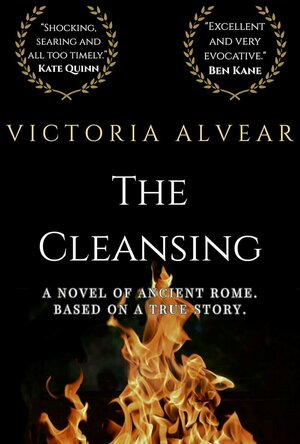

Mia was best friends with Attius until she was 'chosen' at six years old to serve a 30-year term as a Vestal Virgin. This isn't something she wants, as she wants to be like Diana, the Huntress. Being demure doesn't come easily to her. Attius follows his own path, which leads him to the Roman infantry, fighting under General Paullus.
After the defeat at Cannae, the Romans were desperate to blame someone. General Varro has done what he can to blame the now-deceased General Paullus, but they need something else. Something for the Roman people to get behind. They need a sacrifice.
Through the 'current' time and a series of flashbacks, we see Mia grow into her role, and the political machinations that lead to her being accused. While she didn't want to be a Vestal Virgin, she also wasn't prepared to take any chances; although she could be persuaded to bend the rules, as with Prisca. While history has recorded a different ending for Opimia, I loved the version in this book!
There is an amazing supporting cast of characters, from Floronia and Prisca, to the Virgo Maxima, Lucius Cantilius, and Cornelius Lentulus. One of my favourite characters (and places) was the Sibyl of Cumae. I thought she raised some interesting points, and the commune was fantastic.
The research for this book is in-depth and fascinating, so please ensure you read the Author's Note and the Historical Notes. I also read them simply because I wasn't ready for the story to end. This was an outstanding read that held my attention from beginning to end. HIGHLY RECOMMENDED by me.
** The same worded review will appear elsewhere. **
* A copy of this book was provided to me with no requirements for a review. I voluntarily read this book; the comments here are my honest opinion. *
Merissa
Archaeolibrarian
Jul 9th, 2026

Cody Cook (8 KP) rated The Everlasting Man in Books
Jun 29, 2018



David McK (3921 KP) rated The Legion (Eagle, #10) in Books
Jan 30, 2019
Unlike 'The Gladiator', however, I reckon it would be possible (maybe not advisable, but possible) to read this as stand-alone: although reference is made to previous events, they aren't quite as central to the story in this book as the events in 'Centurion' are to 'The Gladiator'. This particular novel is set in Egypt - Rome's bread-basket - and follows Cato (who, for the first time in the series as a whole, has more responsibility than Macro) and Macro's search to hunt down the renegade Gladiator Ajax, who escaped from Crete at the end of the previous novel. As before, when you pick up one of these books: you pretty much know what to expect - bloody battles, a little bit of suspense, and a few loose ends for the sequels ...

Otway93 (580 KP) rated What? (1972) in Movies
Nov 15, 2019

Unfortunately, this 1972 x-rated comedy doesn't come up to their standards, it's rumoured that the whole point of the film was so he could see Sydne Rome naked, which would explain the lack of effort put into this film.
The film itself has very little story, a woman (Sydne Rome) escapes from 3 rapists and comes to a luxurious Italian house full of strange sexual deviants, all of whom fit perfectly in with 1970s sex-comedies, but couldn't really do serious acting. That's basically the film.
The script itself is for the most improvised, and the humour from this is probably the best thing about this film, and does cause some funny moments.
For the most part though, the film is only good for those with a particular sense of humour, not dry, but also not crude, somewhere inbetween.
David McK (3921 KP) rated Traitors or Rome (Eagle #18) in Books
Mar 29, 2020
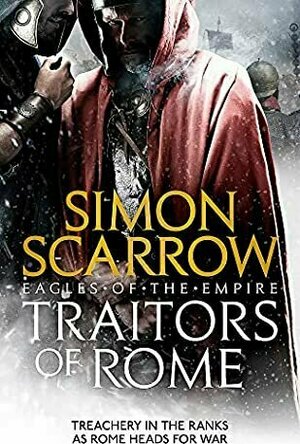

Following on from the previous novel ("The Blood of Rome"), Macro and Cato are still in charge of the Praetorians, and still on the eastern fringes of the Roman Empire (Syria), with Cato then tasked with making a dangerous journey into Parthia to deliver Rome's demands to the ruler of that nation while the recently-married (at the start of the novel) Macro, under General Corbulo, lays siege to the small kingdom of Thapsis in the mountains which has risen in revolt against Rome.
I have to say, with a title like 'Traitors of Rome' and with the extremely mercenary (historical) nature of the Praetorian Guard, I first thought - when I saw the title - that the Traitors of Rome would themselves prove to be the Praetorians themselves!
That's not the case, however, read the novel to finds out what is ...
Illiterate Apostles: Uneducated Early Christians and the Literates Who Loved Them
Book
Pagan critics ridiculed the early Christians for being uneducated. We know this, because a few...

Walking in the Cotswolds
Book
A guidebook to 30 circular walks in the Cotswolds, the largest Area of Outstanding Natural Beauty in...