
Search
Search results

Lucy Buglass (45 KP) rated Jojo Rabbit (2019) in Movies
Oct 14, 2019
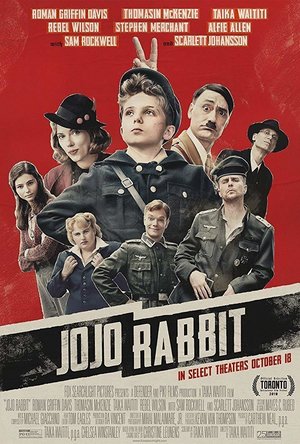


The premise of Jojo Rabbit is a bold one, and something that could have very easily been executed terribly on-screen.
Whilst you might feel some apprehension about the concept of a 10-year-old boy who has Hitler as an imaginary friend, Taika Waititi has turned it into something brilliant and poignant.
As mentioned above, the film follows Johannes ‘Jojo’ Betzler, who lives in Nazi Germany. He’s a fanatic and is driven by his desire to serve Adolf Hitler in the German army during World War II, even joining a Hitler Youth Camp which is run by Captain Klenzendorf (Sam Rockwell).
Jojo is unlike any other child protagonist I’ve seen, because it’s easy to have very mixed feelings about who he is as a person. He’s a child and his everyday behaviour is indicative of someone who lacks maturity, resulting in some laugh out loud moments.
However, a lot of what he says happens to be horrendous insults towards the Jewish community. He’s fuelled by a love of Hitler (even going as far as to describe him as his ‘best friend’).
Throughout the film, he imagines scenarios in which Hitler is there with him, such as when he’s looking in the mirror and giving himself a pep-talk.
The strength of Jojo Rabbit‘s protagonist is a testament to actor Roman Griffin Davis, and I found it hard to believe that this was his first ever film performance. He’s funny, flawed, and a very well-rounded character brilliantly brought to life.
As for Jojo’s imaginary Hitler, he’s hysterically funny and not at all how you’d imagine the real man to be. Played brilliantly by director Taika Waititi, he is a caricature of a deplorable historical figure, and fuels Jojo’s delusions of how wonderful he is.
He’s simply someone’s interpretation of a political leader, created by a child who has been brainwashed into believing Nazi propaganda by adults in his life.
This bubbly oversimplification of a dictator is what you’d expect from a naive child, who isn’t fully aware of the atrocities around him.
The fact Taika Waititi plays this version of Hitler feels important, because he’s mocking him in the best possible way. As a Jewish man, it feels very appropriate that he criticises Hitler’s ideology through his satirical performance. It was brilliant.
Adding jokes to such a horrific situation is difficult, but this is where Jojo Rabbit really excels. The balance between humour and gut-punching reality checks is beautifully done, and there were times when I wasn’t sure whether my tears were from laughing or because I was genuinely sad at what I’d just seen.
Relationships are an important part of the film, particularly the one between Jojo and his mother Rosie (Scarlett Johansson). However, this becomes strained when he finds out that his mother is hiding a young Jewish woman in their home.
Jojo’s meeting with Elsa Korr (Thomasin McKenzie) is central to the story and gives us a real insight into the horrific treatment of Jewish people during this period, and the extreme lengths they’d go to keep themselves safe.
Despite Elsa’s life constantly being in jeopardy, she’s very sassy and gives young Jojo a run for his money once the two meet. The way the two characters bounce off each other is exceptional, and again, you’ll laugh and cry in equal measure.
I was also impressed by some brief appearances in the film such as Rebel Wilson as Fraulein Rahm, who I found hilarious in this film. I must admit I’m not always a fan of her work, but here she really delivered.
Stephen Merchant as Captain Deertz and Archie Yates as young Yorki are also worthy of praise, as every time they were on screen I found them delightful to watch. Much like Roman Griffin Davis, this was Archie’s first film, and he stole the show every time he was in a scene.
Jojo Rabbit is, simply put, political satire at its finest. As a result of this, it’s an emotional rollercoaster and one that I am excited to revisit whenever I get the chance.
It’s darkly funny with an important overall message of confronting ideologies, and I’d urge you to seek it out ASAP.

graveyardgremlin (7194 KP) rated Seize the Night (Dark-Hunter, #5) in Books
Feb 15, 2019


Another absolutely wonderful addition to the Dark-Hunter series - I loved it! Tabitha was way better than I expected (I was worried she would be too much) and Valerius was as great as I had hoped. What can I say? I love tortured heroes, and he's one of the best. I felt so much for him and hated how horrid the others treated him for no good reason - other than being judgmental @$$es anyway, especially Kyrian. Now I don't remember much about <i>Night Pleasures</i> for some reason, probably because it is my least favorite in the series, but I thought Kyrian was such a you-know-what with how he treated Valerius. I mean, come on, he was just a five-year-old for crying out loud. Jerk. Same goes with Zarek, but I understand that a bit more. But really, couldn't these idiots have gotten over something that happened 2,000 years ago, instead of acting like children? Grow up already and face facts, he was just a kid who didn't do anything to Kyrian, tried to help Zarek, and was born a Roman. Poor guy. He never knew kindness until Tabitha.
Closer to the end there were some real shockers and since Nick was featured in <i>Night Pleasures</i>, I need to get my hands on that book to re-read it, so I can reacquaint myself to him and the story. Maybe then I'd like it better and be able to remember more from it. I don't want to spoil anything for anyone who has not read it yet, but this is one well-paced and plotted book! :)
As much as I loved the book, I was rather disappointed with the ending. It was rushed and was a good thirty or more pages shorter than other Dark-Hunter books. I felt that there needed to be more. The truce was rather lame and anti-climatic and so was the soul thing (or whatever it should be called) with Tabitha and Valerius. However, I loved the epilogue, and overall it is one of my faves of the series, I just wish more justice could have been done to the end of Valerius's story.

Molly J (Cover To Cover Cafe) (106 KP) rated The Masterpiece in Books
Feb 27, 2019

I've only read Redeeming Love and the Marta's Legacy books by Ms. Rivers. Her work is amazing with those books. They have all the feels within them and just make you want to come back for more. So, when I saw she was releasing The Masterpiece, I didn't pass on it. I was anxious to be taken to a writing style that only Ms. Rivers knows how to do. I was absolutely pleased with all that I felt with this book!
This book has amazing characters. Roman and Grace are created with such depth and complexity. They were true-to-life and really nestled into my soul. The way they interacted, the way their story unfolds on the pages, really shined for me. As someone who was in Honors Art 4 for four years of highschool, I always fall for books that center around the world of art. I could feel Roman's artistic ways flow freely off the pages. And Grace, being a single mom, really nudged at me. I love when I connect with the characters on a deeper level.
This book is beyond 5 stars. I wasn't able to put it down once I picked it up. The pages kept turning, the feelings kept being felt. I smiled, I cried, I smiled again. The inspiration that Ms. Rivers weaves into this romance novel is incredible. It really brings to light the ultimate Masterpiece from above. If you are looking for a book that will be easy reading, this isn't for you. If you are looking for a book that will make you laugh throughout, this isn't for you. If you are looking for a book that will sweep you off your feet, spin you in a million directions, twist your soul, and throw you down with a bam, this is absolutely the book for you. You'll think about this book long after you've closed the cover. Well done, Ms. Rivers! Fantabulous job!
*I received a complimentary copy of this book from Publisher/Tyndale Blog Network and was under no obligation to post a review, positive or negative.*

StorybookConfectionary (1 KP) rated Call Me by Your Name (2017) in Movies
Mar 9, 2018


The pace is supposed to feel languid like the summer vacation they are having. (11 more)
The characters are developed early on, like Oliver's knowledge of etymology that would be a cliché of the "protagonist as genius" had it not been a simply test.
Elio's name comes from 'helios' or sun and fits his personality in the sense that he is generous with his time, brilliant by definition of his current state of youth in mind and body, and he is restless in love.
The peach scene is heartbreaking.
The fireplace is a cinematographic style we don't see a lot as an Ameeican audience, where the camera stays in one place and we look through Elios for a long time. It should feel discomforting.
Elios' girl approaches him first even though she recognizes he used her and even when she said she was most afraid of getting hurt. She tells him she's sorry to see him sad, that she loves him, and then extends her hand for a reconciliation.
Elios takes her hand only when she promises her friendship is forever. So while romance is fleeting and he has the courage to proceed, he cannot give up the commitment of duration as prerequisite in a friendship.
The flies throughout the movie feel natural to the countryside but can also signify the attraction to: the sweetness of fruit, the rotting of fruit, and the indiscriminatory chances that warmth gives to living things.
These flies deserve an additional block for their amount of screentime, a motif of desire that obstructs the viewer's sight and buzzes us into a haze. We are, unbeknownst to ourselves, directed towards empathy for the characters.
Romance should be prolonged. Teased until it hits a climax and cannot be resisted anymore. Elio and everyone else hits a note of ecstasy once Oliver gives into the beauty of a body.
It's amazing how this story is founded on and driven by the conversations between Greek philosophy and Roman conquests. The Greeks thought sculpture could answer their question about knowledge/beauty.
Romance, because it ends, remains so good, nostalgic, and desirable.
Summer love

Hazel (1853 KP) rated Who Do You Love in Books
Dec 7, 2018

<i>This ARC was provided by the publisher via NetGalley in exchange for an honest review
Who Do You Love</i> is the latest contemporary romance by the author Jennifer Weiner. Beginning in 1985 it tells the story of two contrasting characters up until the year 2015. Rachel was born with a congenital heart condition that resulted in her being hospitalized a number of times during her childhood. When she was eight years old she met an injured boy named Andy and struck up a very brief friendship. Later she coincidently meets him again during her teens, and the pair fall in love, resulting in an on and off long distance relationship over the following years.
Despite their love for each other, the two main characters come from completely different backgrounds. Putting her heart condition aside, Rachel had a fairly pleasant Jewish upbringing, with well off parents, a pool in her back yard, the chance to go to any college she wished to. Andy, on the other hand, attended a Roman Catholic school where he was constantly getting in to trouble for fighting when others teased him about his poor, single parent home life, or his deceased black father. However, regardless of their upbringing, Rachel grows up to become a fairly successful social worker, and Andy an Olympic athlete.
The reader gets the chance to learn about each character through the alternating points of view. Ultimately we wish that Andy and Rachel could live happily ever after together, but as we read, life and differences often get in the way. This will they, won’t they idea exists throughout the entire novel making the ending rather predictable, although not at all disappointing.
Personally I preferred the narrative toward the beginning of the story. It was interesting to read about Rachel’s heart problems, and Andy’s struggles growing up. Once they reached adulthood their relationship became more sexual, something that was written about in far too much detail.
<i>Who Do You Love</i> is the kind of book suitable for women to read over the summer, or anytime they have the opportunity to sit back and relax. It is not a quick read due to its lengthy chapters, therefore the less distractions the better!

Phil Leader (619 KP) rated The Tiger Warrior (Jack Howard #4) in Books
Nov 26, 2019
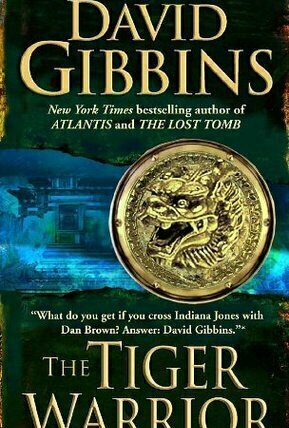
The Tiger Warrior follows archaeologist and adventurer Jack Howard as he follows a tantalising clue that perhaps some escaped Roman legionaries had found themselves pitched against the bodyguard of the First Emperor of China and one had taken refuge in the jungles of India.
This might sound far-fetched but Gibbins knows his archaeology and comes up with a plausible (if tenuous) story to make this work. The story is then taken up at the end of the 19th century in India when Howard's great great grandfather is part of the British Royal Engineers Corps trying to push roads - and hence British rule - into the jungle. He stumbles across an old temple that contains a secret.
The story roves around the the world showing us some incredible - but real - historic sites across Asia. Genuine books and records are quoted to back up the (modern day) Howard's quest to find out what happened - to both the Romans and his antecedant. Everything has very solid historical underpinnings with the more fantastic elements of the story cleverly weaved between them.
I did enjoy the book but it wasn't an unqualified success. There isn't really much menace, threat or drama in what happens to Jack Howard and his associates as they follow the past (told in a series of flashback chapters), uncovering clues one step at a time. Yes there are 'bad guys' but they seem quite ineffectual and the 'big boss' is in fact never seen at all but only mentioned in passing towards the end of the book. Judging by the notes from the author this is a very personal book - the character and story of Jack's ancestor in India is very much based on his own forebear - and this limits the scope for making the pieces fit into a pleasing whole.
That isn't to say I didn't enjoy reading it - as a subtle way of introducing surprising archaeological facts it works well (I didn't know that Ancient Rome traded with India but apparently so) and some of the set pieces are gripping to read. I will certainly be finding another Jack Howard book to read, but I suspect this was too personal a project for my first taste, which is s shame.

Marcus Agrippa: Right-Hand Man of Caesar Augustus
Book
Marcus Agrippa personified the term 'right-hand man'. As Emperor Augustus' deputy, he waged wars,...

Museums 101
Book
Looking for an A-Z, one-stop, comprehensive book on museums? Wish you were able to have one of the...

Marseille
Book
The reality of Marseille, with its secret life and scarred beauty, has little in common with its...

Tripoli: A History
Book
It has been called a "Noble Possession", abused as "A Nest of Corsairs" and extolled as "The Pearl...