Search
Search results
Ivana A. | Diary of Difference (1171 KP) rated Circe in Books
Jul 3, 2018
WHEN I WAS BORN, the name for what I was did not exist.
I was waiting for two whole months to get this book from the library. And I finally had a chance to read Circe from Madeline Miller. A book that everyone was talking about. The only thing you were gonna see on Instagram. Well, here I am – sitting with the cool kids now, I’ve read this book.
The reason I wanted to read this book wasn’t because I wanted to be part of the cool kids. Actually, it was because Greek Mythology has a special place in my heart. See, I was born in Macedonia, a country full of history, and so very close to Greece, where histories and cultures and traditions match and mix.
When I was in school, our teachers focused hard on history. Especially Roman and Greek Mythology. So yes, I grew up with Homer’s Iliad and Odyssey and yes, I know all the gods out there, what they do, who they married, who their children are.
I have read about Circe, but I have never given her any meaning, as she is not mentioned a lot in Homer’s works, as you might already know. And then suddenly, there is a book about her life. I had to read it!
AND I ABSOLUTELY LOVED IT! FROM THE BOTTOM OF MY HEART!
This might be my favorite book of 2018!
I enjoyed Madeline’s writing style. It was so explanatory and calm, and soothing, like swimming in nice calm waters. You would just gulp her words as you read, and before you know it, you have read 200 pages.
Circe, oh Circe! Her character was so well described – such a strong powerful woman. We start with her childhood, to her growing up, and we follow the process of how she learned things the hard way, how she is naive, and then suddenly isn’t, how she discovers the power she holds within, despite everyone else mocking her and saying otherwise. We see how she decides to say no, how she is not afraid to be a rebel, and how she suffers, and loves, and protects, and cares, and survives, and lives!
You will read a story about the love a mother has toward her child, the love a woman has toward her man, the love a son has towards her mother, the love for freedom, the love for glory…
If you love Greek Mythology, you will get the chance to say hi to some of your favourite gods, nymphs, titans, monsters – Zeus, Athena, Poseidon, Prometheus, Odysseus and many more which I will fail to reveal.
I hardly believe that this is a great book for introducing Greek Mythology to new young readers. I also hardly believe that this book will change the thoughts of many people, the way they see things, the way they live, the way they think.
It was one of my favorite things about him: how he always fought for his chance.
There are a lot of side characters that give their own meaning to the story as well, and there is also Odysseus, and at times it feels as this is his story, but in the end you realized that this story belongs to Circe only.
Do not listen to your enemy, Odysseus had once told me. Look at them. It will tell you everything.
I looked. Armed and armored, she was (Athena), from head to foot, helmet, spear, aegis, greaves. A terrifying vision: the goddess of war, ready for battle. But why had she assembled such a panoply against me, who knew nothing of combat? Unless there was something else she feared, something that made her feel somehow stripped and weak.
Instinct carried me forward, the thousand hours I had spent in my father’s halls, and with Odysseus polymetis, man of so many wiles.
To all of you out there – please take your time to read this book! It will leave you breathless, inspired, motivated and it will change your life forever. It changed my life – that’s for certain!
1 like
I was waiting for two whole months to get this book from the library. And I finally had a chance to read Circe from Madeline Miller. A book that everyone was talking about. The only thing you were gonna see on Instagram. Well, here I am – sitting with the cool kids now, I’ve read this book.
The reason I wanted to read this book wasn’t because I wanted to be part of the cool kids. Actually, it was because Greek Mythology has a special place in my heart. See, I was born in Macedonia, a country full of history, and so very close to Greece, where histories and cultures and traditions match and mix.
When I was in school, our teachers focused hard on history. Especially Roman and Greek Mythology. So yes, I grew up with Homer’s Iliad and Odyssey and yes, I know all the gods out there, what they do, who they married, who their children are.
I have read about Circe, but I have never given her any meaning, as she is not mentioned a lot in Homer’s works, as you might already know. And then suddenly, there is a book about her life. I had to read it!
AND I ABSOLUTELY LOVED IT! FROM THE BOTTOM OF MY HEART!
This might be my favorite book of 2018!
I enjoyed Madeline’s writing style. It was so explanatory and calm, and soothing, like swimming in nice calm waters. You would just gulp her words as you read, and before you know it, you have read 200 pages.
Circe, oh Circe! Her character was so well described – such a strong powerful woman. We start with her childhood, to her growing up, and we follow the process of how she learned things the hard way, how she is naive, and then suddenly isn’t, how she discovers the power she holds within, despite everyone else mocking her and saying otherwise. We see how she decides to say no, how she is not afraid to be a rebel, and how she suffers, and loves, and protects, and cares, and survives, and lives!
You will read a story about the love a mother has toward her child, the love a woman has toward her man, the love a son has towards her mother, the love for freedom, the love for glory…
If you love Greek Mythology, you will get the chance to say hi to some of your favourite gods, nymphs, titans, monsters – Zeus, Athena, Poseidon, Prometheus, Odysseus and many more which I will fail to reveal.
I hardly believe that this is a great book for introducing Greek Mythology to new young readers. I also hardly believe that this book will change the thoughts of many people, the way they see things, the way they live, the way they think.
It was one of my favorite things about him: how he always fought for his chance.
There are a lot of side characters that give their own meaning to the story as well, and there is also Odysseus, and at times it feels as this is his story, but in the end you realized that this story belongs to Circe only.
Do not listen to your enemy, Odysseus had once told me. Look at them. It will tell you everything.
I looked. Armed and armored, she was (Athena), from head to foot, helmet, spear, aegis, greaves. A terrifying vision: the goddess of war, ready for battle. But why had she assembled such a panoply against me, who knew nothing of combat? Unless there was something else she feared, something that made her feel somehow stripped and weak.
Instinct carried me forward, the thousand hours I had spent in my father’s halls, and with Odysseus polymetis, man of so many wiles.
To all of you out there – please take your time to read this book! It will leave you breathless, inspired, motivated and it will change your life forever. It changed my life – that’s for certain!
1 like
Lee (2222 KP) rated Once Upon a Time in Hollywood (2019) in Movies
Aug 16, 2019
Quentin Tarantino is known for his lengthy, self-indulgent movies - some of which I've loved, some not so much. Once Upon a Time in Hollywood is a nostalgic homage to 1960s Hollywood and, at 2 hours 41 minutes, it is certainly lengthy and self-indulgent. But, despite some outstanding performances, it's probably at least an hour too long, and proved to be a real test of my patience and endurance.
Leonardo DiCaprio is Rick Dalton, a TV and movie star best known for repeatedly saving the day in the now cancelled TV show 'Bounty Law', where he played a classic screen cowboy. Rick is struggling to come to terms with his fading career, and the feeling that Hollywood is moving on without him. His best, and only friend, is Cliff Booth (Brad Pitt), who has been Rick's stunt double over the years. Work for Cliff has dried up following rumours that he murdered his wife and Cliff now spends his days as Rick's driver, odd-job man and general shoulder to cry on. He seems fairly relaxed about his simple lifestyle though - returning each evening to his trailer, and faithful canine companion Brandy, before picking Rick up bright and early the next day in order to drive him to whatever production set he's currently working at.
Meanwhile, successful young actor Sharon Tate (Margot Robbie) has moved in next door to Rick along with her husband, director Roman Polanski. This is the area where Tarantino weaves fact with fiction and if you're not familiar with the Manson murders of 1969, it's probably worth reading up on a little bit before heading into the movie. On the night of 9 August 1969, three followers of cult leader Charles Manson entered the home of a heavily pregnant Sharon Tate and brutally murdered her and the friends who were with her at the time. Once Upon a Time in Hollywood begins a few months before those events, and then takes its sweet time in slowly building towards it.
If it weren't for the performances of everyone involved, this would have been a much harder watch for me. Brad Pitt is the best I've seen him for a long time here, all smiles and laid-back charm, a real interesting and enjoyable character. Leonardo DiCaprio is also on fine form as the broken man struggling to cling to fame and when the two are together, they're a lot of fun. Margot Robbie, has far less to do in her parallel story-line, but still manages to shine in her charismatic portrayal of Tate.
What does make the movie harder to watch is the run-time and, as I said right at the start, I feel this definitely could have benefited from at least an hour being chopped. Sunny LA during the 1960s is beautiful to look at, and when we're following Rick and Cliff as they cruise around town in their car it's nostalgic, vibrant and wonderful to watch. But, we get to follow the characters around town in their cars quite a lot in this movie. And, on top of that, literally every scene, no matter how significant, irrelevant or weak it may be, is dragged out far longer than it needs to be. The great scenes become diluted, and the scenes where nothing much was happening anyway, just become frustrating and hard work to hold your attention.
Along the way, our characters occasionally and unknowingly cross paths with the hippies who form Charles Manson's cult at Spahn Ranch. Cliff even has a uneasy standoff with a group of them at the ranch itself in one of the better scenes of the movie. It's these suspenseful moments that increase the tension perfectly, stoking the sense of foreboding and providing a constant reminder of the death and destruction set to come. The final 15 minutes or so do provide us with some intense, violent madness - a real wake up call after the meandering, often floundering, plot-lines of the movie up until that point. As always with Tarantino movies, there's plenty to digest, dissect and discuss but I certainly won't be revisiting this one any time soon.
Leonardo DiCaprio is Rick Dalton, a TV and movie star best known for repeatedly saving the day in the now cancelled TV show 'Bounty Law', where he played a classic screen cowboy. Rick is struggling to come to terms with his fading career, and the feeling that Hollywood is moving on without him. His best, and only friend, is Cliff Booth (Brad Pitt), who has been Rick's stunt double over the years. Work for Cliff has dried up following rumours that he murdered his wife and Cliff now spends his days as Rick's driver, odd-job man and general shoulder to cry on. He seems fairly relaxed about his simple lifestyle though - returning each evening to his trailer, and faithful canine companion Brandy, before picking Rick up bright and early the next day in order to drive him to whatever production set he's currently working at.
Meanwhile, successful young actor Sharon Tate (Margot Robbie) has moved in next door to Rick along with her husband, director Roman Polanski. This is the area where Tarantino weaves fact with fiction and if you're not familiar with the Manson murders of 1969, it's probably worth reading up on a little bit before heading into the movie. On the night of 9 August 1969, three followers of cult leader Charles Manson entered the home of a heavily pregnant Sharon Tate and brutally murdered her and the friends who were with her at the time. Once Upon a Time in Hollywood begins a few months before those events, and then takes its sweet time in slowly building towards it.
If it weren't for the performances of everyone involved, this would have been a much harder watch for me. Brad Pitt is the best I've seen him for a long time here, all smiles and laid-back charm, a real interesting and enjoyable character. Leonardo DiCaprio is also on fine form as the broken man struggling to cling to fame and when the two are together, they're a lot of fun. Margot Robbie, has far less to do in her parallel story-line, but still manages to shine in her charismatic portrayal of Tate.
What does make the movie harder to watch is the run-time and, as I said right at the start, I feel this definitely could have benefited from at least an hour being chopped. Sunny LA during the 1960s is beautiful to look at, and when we're following Rick and Cliff as they cruise around town in their car it's nostalgic, vibrant and wonderful to watch. But, we get to follow the characters around town in their cars quite a lot in this movie. And, on top of that, literally every scene, no matter how significant, irrelevant or weak it may be, is dragged out far longer than it needs to be. The great scenes become diluted, and the scenes where nothing much was happening anyway, just become frustrating and hard work to hold your attention.
Along the way, our characters occasionally and unknowingly cross paths with the hippies who form Charles Manson's cult at Spahn Ranch. Cliff even has a uneasy standoff with a group of them at the ranch itself in one of the better scenes of the movie. It's these suspenseful moments that increase the tension perfectly, stoking the sense of foreboding and providing a constant reminder of the death and destruction set to come. The final 15 minutes or so do provide us with some intense, violent madness - a real wake up call after the meandering, often floundering, plot-lines of the movie up until that point. As always with Tarantino movies, there's plenty to digest, dissect and discuss but I certainly won't be revisiting this one any time soon.
BankofMarquis (1832 KP) rated Jojo Rabbit (2019) in Movies
Jan 15, 2020
Inventive, funny and poignant
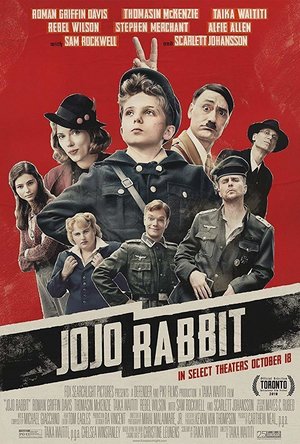
Writer/Director/Actor Taika Waititi is one of the most original voices working in Film/Television today. He skewered the Vampire flick (at the height of the Twilight craze) in WHAT WE DO IN THE SHADOWS. He revived the sagging Thor saga (and some would say the Marvel Cinematic Universe) with a comedic approach to the material in THOR: RAGNAROK, and now with his latest film, JOJO RABBIT, he takes his sense of humor to a subject that is difficult to satire - Adolph Hitler and life in Nazi Germany during WW II.
And, darn it all, if he doesn't pull it off.
As seen through the eyes of a zealous 10 year old Hitler Youth named JoJo, this film follows Jojo's journey from an idealistic follower of all things Nazi Germany to the harsher realities of the world - and what the 3rd Reich means to the world.
Young Roman Griffin Davis does a marvelous job as the titular character slowly changing his character from an all out innocent devotion to Hitler (his imaginary friend as played by Waititi) to a somewhat less innocent soul. His journey is at the heart of this film and he is a winning personality to follow along with. I was drawn into his struggles and was rooting for him to "come to his senses" throughout the course of this film.
Helping him in this journey is his Mother, played in an Oscar nominated turn by Scarlett Johannson. This character has an idealism all of her own and is willing to let her child "get there in his own time". It is a strong turn by Johannson...but Oscar nominated worthy? I'm not sure.
Also joining in for fun, frolic and (by turns) seriousness is the always great Sam Rockwell (Oscar winner for 3 BILLBOARDS...)as a disillusioned German Officer, comedian Stephen Merchant (LOGAN) in an unlikely mostly serious turn as a Nazi who likes to say "Heil Hitler" and Alfie Allen (GAME OF THRONES) as a devoted German soldier (at least devoted to Rockwell's character). Waititi also uses Rebel Wilson sparingly - as she should be used - as another devouted-to-the-cause German citizen.
Adding heft and pathos to this film is Thomasin MacKenzie (THE KING) in a role that would be a spoiler to say what she is playing, but...I WILL say that she needs to succeed in this role for the film to succeed (and she does).
Also, special notice needs to be made of the performance of cherubic Archie Yates (soon to be Kevin in the reboot of the HOME ALONE franchise) as JoJo's friend Yorki - who keeps getting knocked down and steps back up over and over again. I would LOVE to see the film that would have focused on this character (in addition to this film).
And, finally, there is the Writer/Director himself, Taika Waititi as JoJo's imaginary friend, Adolph Hitler. He is all fun loving and gay at the beginning becoming more and more frantic as the film progresses - mimicking the real life events that are happening around him.
Waititi's style in this film is reminiscent of Wes Anderson in such films as THE GRAND BUDAPEST HOTEL and MOONRISE KINGDOM and this works well here, giving this film more of a "fable" than a "realistic" look - and that is important to help set the tone for the events that follow. Waititi has a sure hand on the material (that he wrote) as the Director. He knows the tone he wants to strike and knows how to get there. He is nominated for Adapted Screenplay for his script (deservedly so) and was NOT nominated for Best Director - but his work in this area is just as good.
I did not know what to expect from this film when I walked into it, and I was more than pleasantly surprised. Give this little comedy/drama a try - I think you will be glad you did.
Letter Grade: A
9 stars (out of 10) and you can take that to the Bank(ofMarquis)
And, darn it all, if he doesn't pull it off.
As seen through the eyes of a zealous 10 year old Hitler Youth named JoJo, this film follows Jojo's journey from an idealistic follower of all things Nazi Germany to the harsher realities of the world - and what the 3rd Reich means to the world.
Young Roman Griffin Davis does a marvelous job as the titular character slowly changing his character from an all out innocent devotion to Hitler (his imaginary friend as played by Waititi) to a somewhat less innocent soul. His journey is at the heart of this film and he is a winning personality to follow along with. I was drawn into his struggles and was rooting for him to "come to his senses" throughout the course of this film.
Helping him in this journey is his Mother, played in an Oscar nominated turn by Scarlett Johannson. This character has an idealism all of her own and is willing to let her child "get there in his own time". It is a strong turn by Johannson...but Oscar nominated worthy? I'm not sure.
Also joining in for fun, frolic and (by turns) seriousness is the always great Sam Rockwell (Oscar winner for 3 BILLBOARDS...)as a disillusioned German Officer, comedian Stephen Merchant (LOGAN) in an unlikely mostly serious turn as a Nazi who likes to say "Heil Hitler" and Alfie Allen (GAME OF THRONES) as a devoted German soldier (at least devoted to Rockwell's character). Waititi also uses Rebel Wilson sparingly - as she should be used - as another devouted-to-the-cause German citizen.
Adding heft and pathos to this film is Thomasin MacKenzie (THE KING) in a role that would be a spoiler to say what she is playing, but...I WILL say that she needs to succeed in this role for the film to succeed (and she does).
Also, special notice needs to be made of the performance of cherubic Archie Yates (soon to be Kevin in the reboot of the HOME ALONE franchise) as JoJo's friend Yorki - who keeps getting knocked down and steps back up over and over again. I would LOVE to see the film that would have focused on this character (in addition to this film).
And, finally, there is the Writer/Director himself, Taika Waititi as JoJo's imaginary friend, Adolph Hitler. He is all fun loving and gay at the beginning becoming more and more frantic as the film progresses - mimicking the real life events that are happening around him.
Waititi's style in this film is reminiscent of Wes Anderson in such films as THE GRAND BUDAPEST HOTEL and MOONRISE KINGDOM and this works well here, giving this film more of a "fable" than a "realistic" look - and that is important to help set the tone for the events that follow. Waititi has a sure hand on the material (that he wrote) as the Director. He knows the tone he wants to strike and knows how to get there. He is nominated for Adapted Screenplay for his script (deservedly so) and was NOT nominated for Best Director - but his work in this area is just as good.
I did not know what to expect from this film when I walked into it, and I was more than pleasantly surprised. Give this little comedy/drama a try - I think you will be glad you did.
Letter Grade: A
9 stars (out of 10) and you can take that to the Bank(ofMarquis)
Better than Suicide Squad
Did you catch the 2016 DCEU disappointment SUICIDE SQUAD with Will Smith as Deadshot and Jared Leto as the Joker? Many people (myself included) thought that that film was "just fine, nothing special" but were impressed with the way Margot Robbie handled the Harley Quinn character and wished for a standalone film that featured the Harley Quinn character.
Be careful what you wish for.
BIRDS OF PREY (AND THE FANTABULOUS EMANCIPATION OF ONE HARLEY QUINN) is the answer to that wish and while it is slightly better than SUICIDE SQUAD, it still isn't all that....well...Fantabulous... of a film.
BIRDS OF PREY (which I hear is now being relabeled HARLEY QUINN: BIRDS OF PREY) is produced by Margot Robbie's production company and features an all female lead cast (the villain is a male) and a female Writer and a female Director. Consequently, this is a "female empowerment" film where the self-described "tough chicks" band together to defeat the male villain.
I applaud the effort and the idea behind the movie, but as a film, this one didn't quite work for me.
I start with the main focus of this film - Harley Quinn. This is just not a character, I discovered, that I want to spend an entire film with. She is, at it turns out, a very good SUPPORTING character, but not one that is interesting enough (at least for me) to carry a whole movie. I will give Margot Robbie credit...her interpretation of the character is interesting and that performance kept me focused throughout.
The other Birds of Prey are just as interesting. For the first time in I can't tell you, Rosie Perez did not annoy me in her role. She played earnest, frustrated Police Officer Renee Montoya and I found myself rooting for her when she was on the screen. Same goes for Jurnee Smollett-Bell's interpretation of Black Canary a character I knew very little about and was intrigued (though her "Super Power" was suddenly sprung on the audience with very little foreshadowing - foreshadowing that could have helped). And, finally, Mary Elizabeth Winstead almost steals the film as the revenge-seeking Huntress, a character I really enjoyed and hope I see again (though, I'm learning my lesson - let it be as a supporting character in another film and not her own, standalone film).
So, this film has 4 interesting characters at the top, but the issue is that they don't come together as a team until VERY late in the film (in a finale showdown that was the highlight of the film for me), so I really couldn't tell if there was any chemistry between these characters/actresses. I think there MIGHT have been, but no real sample size to tell.
Fairing less well as a character was Ewan McGregor's one-note take on super-narcissistic Roman Sionis/Black Mask. The character was pretty much in front of you at the start of the film and was still the same one-note character at the end. Also not "doing it for me" was Ella Jay Basco as Cassandra Cain, the street kid that becomes the focal point of the bad guys in the film (and the character the Birds of Prey must band together to save). I didn't much care for this character - or the performance - so I had no real emotional investment in whether or not the Birds of Prey could save her.
The Direction by Cathy Yan is professional and competent and the final showdown does show signs of originality and brilliance. I'll give her credit, she caught my attention with the last 1/2 hour of this film - much more so than she did with the first 79 minutes.
A better effort at this type of anti-hero comic book adventure (certainly better than SUICIDE SQUAD) but the DCEU still has not stuck the landing on this.
I encourage them to keep trying.
Letter Grade: B
7 stars (out of 10) and you can take that to the Bank(ofMarquis)
Be careful what you wish for.
BIRDS OF PREY (AND THE FANTABULOUS EMANCIPATION OF ONE HARLEY QUINN) is the answer to that wish and while it is slightly better than SUICIDE SQUAD, it still isn't all that....well...Fantabulous... of a film.
BIRDS OF PREY (which I hear is now being relabeled HARLEY QUINN: BIRDS OF PREY) is produced by Margot Robbie's production company and features an all female lead cast (the villain is a male) and a female Writer and a female Director. Consequently, this is a "female empowerment" film where the self-described "tough chicks" band together to defeat the male villain.
I applaud the effort and the idea behind the movie, but as a film, this one didn't quite work for me.
I start with the main focus of this film - Harley Quinn. This is just not a character, I discovered, that I want to spend an entire film with. She is, at it turns out, a very good SUPPORTING character, but not one that is interesting enough (at least for me) to carry a whole movie. I will give Margot Robbie credit...her interpretation of the character is interesting and that performance kept me focused throughout.
The other Birds of Prey are just as interesting. For the first time in I can't tell you, Rosie Perez did not annoy me in her role. She played earnest, frustrated Police Officer Renee Montoya and I found myself rooting for her when she was on the screen. Same goes for Jurnee Smollett-Bell's interpretation of Black Canary a character I knew very little about and was intrigued (though her "Super Power" was suddenly sprung on the audience with very little foreshadowing - foreshadowing that could have helped). And, finally, Mary Elizabeth Winstead almost steals the film as the revenge-seeking Huntress, a character I really enjoyed and hope I see again (though, I'm learning my lesson - let it be as a supporting character in another film and not her own, standalone film).
So, this film has 4 interesting characters at the top, but the issue is that they don't come together as a team until VERY late in the film (in a finale showdown that was the highlight of the film for me), so I really couldn't tell if there was any chemistry between these characters/actresses. I think there MIGHT have been, but no real sample size to tell.
Fairing less well as a character was Ewan McGregor's one-note take on super-narcissistic Roman Sionis/Black Mask. The character was pretty much in front of you at the start of the film and was still the same one-note character at the end. Also not "doing it for me" was Ella Jay Basco as Cassandra Cain, the street kid that becomes the focal point of the bad guys in the film (and the character the Birds of Prey must band together to save). I didn't much care for this character - or the performance - so I had no real emotional investment in whether or not the Birds of Prey could save her.
The Direction by Cathy Yan is professional and competent and the final showdown does show signs of originality and brilliance. I'll give her credit, she caught my attention with the last 1/2 hour of this film - much more so than she did with the first 79 minutes.
A better effort at this type of anti-hero comic book adventure (certainly better than SUICIDE SQUAD) but the DCEU still has not stuck the landing on this.
I encourage them to keep trying.
Letter Grade: B
7 stars (out of 10) and you can take that to the Bank(ofMarquis)
Kirk Bage (1775 KP) rated Jojo Rabbit (2019) in Movies
Jan 22, 2021
Another favourite from the awards season that came with some strong acclaim from amongst friends and trusted reviewers, WWII satire Jojo Rabbit, from the likeable and unique mind of Taika Waititi, was always high on my list as a must see movie.
I have followed the Kiwi’s original output since way back, and always enjoyed his quirky sense of humour and childlike charm. Either Eagle vs Shark or The Flight of the Conchords would have been my first encounter; and by the time of Hunt for the Wilderpeople and Thor: Ragnarok I had become a tentative fan. Never entirely bowled over by his style and content in the same way as, say, Wes Anderson (to whom some compare his outlook on the creative world), and never rolling around on the floor in hysterics at his naivety and comedy of manners, nevertheless, I like the guy a lot.
So when I heard he had adapted a fantasy novel about Nazi Germany from the point of view of a child, and would be playing Hitler himself, I knew instantly where he would be pitching this. The idea of it being offensive in any way was not a concern or even a thought, and anyone that did react that way is just… ridiculous and deliberately missing the point for the sake of finding something to be outraged about.
Of course subjects of genocide, political repression and evil existing in the world should and must be treated with a sensitivity to a degree, and amongst the silly lampooning and most extreme moments of satire that care is evident. There are moments of real gravity and tenderness in the mix here, thanks in large to some wonderful performances from the adult actors, notably the ever reliable Sam Rockwell and the increasingly strong and impressive Scarlett Johansson, who picked up her second Oscar nomination for this, after Marriage Story ticked the box for true drama.
The film focuses and relies on young Roman Griffin Davis as the eponymous Jojo, a happy little boy who sees goodness and light in an ever darkening world around him. Waititi as director works well with kids, placing the idea of charm and likability above acting prowess per se. And that is both the strength and ultimate weakness of this premise. He is charming and likeable, and cute and sweet and very watchable, but his inexperience in front of the camera and ability to find a range of emotions is often tested beyond his tender years, and can therefore break the magic spell that is woven in the best scenes.
The humour itself also doesn’t always hit the mark. Sometimes it is merely amusing rather than something laugh out loud funny, much as an average Mel Brooks film always was. And that can lead to a feel of something uneven and rambling, as the story struggles to find what it really wants to say. In its final moments it does land on an overlying message that leaves you with a winning impression, and you leave feeling that you saw something you enjoyed, but not something you would unreservedly recommend to everyone. In fact if someone said they didn’t enjoy it, or get the joke at all, then I would respect that view.
Under a microscope of scrutiny it doesn’t hold up that well, and I wonder how a few years of distance will treat it, once our sensibilities shift again with time. There are a few moments when the heart of the film connects with it’s silly bone and resonates, but not nearly enough. I personally wanted more of that. But, sadly, whenever JoJo threatens to grow up it retreats back into childhood and shies away from commenting on anything serious or truly meaningful. But, of course, that is not the point. As an entertainment it is a wonderful, unique and lovely film. And that should really be all that it is judged by.
In conclusion, a curiosity I will look forward to watching again, but don’t think quite makes the grade as an instant classic. It only reinforced however how much I like Rockwell and Johansson, and will always be curious about what Waititi is up to next.
I have followed the Kiwi’s original output since way back, and always enjoyed his quirky sense of humour and childlike charm. Either Eagle vs Shark or The Flight of the Conchords would have been my first encounter; and by the time of Hunt for the Wilderpeople and Thor: Ragnarok I had become a tentative fan. Never entirely bowled over by his style and content in the same way as, say, Wes Anderson (to whom some compare his outlook on the creative world), and never rolling around on the floor in hysterics at his naivety and comedy of manners, nevertheless, I like the guy a lot.
So when I heard he had adapted a fantasy novel about Nazi Germany from the point of view of a child, and would be playing Hitler himself, I knew instantly where he would be pitching this. The idea of it being offensive in any way was not a concern or even a thought, and anyone that did react that way is just… ridiculous and deliberately missing the point for the sake of finding something to be outraged about.
Of course subjects of genocide, political repression and evil existing in the world should and must be treated with a sensitivity to a degree, and amongst the silly lampooning and most extreme moments of satire that care is evident. There are moments of real gravity and tenderness in the mix here, thanks in large to some wonderful performances from the adult actors, notably the ever reliable Sam Rockwell and the increasingly strong and impressive Scarlett Johansson, who picked up her second Oscar nomination for this, after Marriage Story ticked the box for true drama.
The film focuses and relies on young Roman Griffin Davis as the eponymous Jojo, a happy little boy who sees goodness and light in an ever darkening world around him. Waititi as director works well with kids, placing the idea of charm and likability above acting prowess per se. And that is both the strength and ultimate weakness of this premise. He is charming and likeable, and cute and sweet and very watchable, but his inexperience in front of the camera and ability to find a range of emotions is often tested beyond his tender years, and can therefore break the magic spell that is woven in the best scenes.
The humour itself also doesn’t always hit the mark. Sometimes it is merely amusing rather than something laugh out loud funny, much as an average Mel Brooks film always was. And that can lead to a feel of something uneven and rambling, as the story struggles to find what it really wants to say. In its final moments it does land on an overlying message that leaves you with a winning impression, and you leave feeling that you saw something you enjoyed, but not something you would unreservedly recommend to everyone. In fact if someone said they didn’t enjoy it, or get the joke at all, then I would respect that view.
Under a microscope of scrutiny it doesn’t hold up that well, and I wonder how a few years of distance will treat it, once our sensibilities shift again with time. There are a few moments when the heart of the film connects with it’s silly bone and resonates, but not nearly enough. I personally wanted more of that. But, sadly, whenever JoJo threatens to grow up it retreats back into childhood and shies away from commenting on anything serious or truly meaningful. But, of course, that is not the point. As an entertainment it is a wonderful, unique and lovely film. And that should really be all that it is judged by.
In conclusion, a curiosity I will look forward to watching again, but don’t think quite makes the grade as an instant classic. It only reinforced however how much I like Rockwell and Johansson, and will always be curious about what Waititi is up to next.
Film tie-in
I received this book for free through Goodreads First Reads.
Nominated for an Oscar, BAFTA and Golden Globe,Trumbo is a recent film based on the original biography Dalton Trumbo written by Bruce Cook in 1977. Its adaptation to film provided the perfect opportunity to republish this extremely well researched book. With a forward written by John McNamara, the screenwriter of the motion picture, the story of Dalton Trumbo’s life is just as intriguing as it was almost forty years ago. But who is Trumbo?
If, like me, you have never heard of Trumbo or even the infamous “Hollywood Ten,” it may take a while for it to become clear as to why it was worth Cook’s time to produce a book about the man. Dalton Trumbo was a well-known screenwriter of films such as Papillon, Lonely Are The Brave and Roman Holiday as well as author of the novel Johnny Got His Gun. However these are not all he is famous for. During his life, Trumbo became a member of the Communist Party, which Hollywood branded as an Un-American Activity and thus blacklisted him, as well as other screenwriters, directors and actors. Ten of these men, Trumbo included, were imprisoned for their political beliefs – yet nothing prevented Trumbo from continuing his fairly successful career.
Interestingly, Cook begins the book with the final stages of Trumbo’s life. At time of writing Trumbo was still alive, although rather poorly. After contracting lung cancer, having a lung removed, and suffering a heart attack, Trumbo was a very sick man; nonetheless he was still enthusiastic about being interviewed and telling his personal story.
From his childhood, to his evening shifts at a bakery, Cook details Trumbo’s early life, emphasizing the hard upbringing he had before he found himself in the world of Hollywood. Although roughly 75% of the book focuses on Trumbo’s career, Cook highlights Trumbo as a family man, with both a wife and three children who he absolutely adores.
Cook constantly refers to the Hollywood Ten as a concept that the reader should already be familiar with. Granted, someone who picks up this book is more likely to do so having a prior interest in the central figure, and thus already know about his background; however those ignorant on the topic eventually gather a better understanding on the topic once reaching the relevant chapters. It also becomes clearer why Trumbo is worth reading/writing about – he may have been blacklisted, but he managed to break through all the barriers and reinstate his name and many others.
Reading this half a century after the event, it seems strange that Trumbo was imprisoned. He had not done anything intrinsically wrong, it was purely prejudice against his political beliefs that got him into the mess he found himself. But when you consider the events of the time: World War Two, the Cold War, the Korean War, and Vietnam; it is understandable why many feared those who claimed to be Communists.
Cook’s narrative does not flow as a story, and much of it is broken up with quotes from various people he interviewed. The timeline jumps about between past and present (1970s), which occasionally gets a bit confusing. A large part of the book is spent analyzing many of Trumbo’s works – both for screen and written formats – which, unless you have a particular interest, can be a little tedious.
It has got to be said that Bruce Cook was an exemplary writer with a great eye for detail. He did not jump to conclusions or only talk about things from his point of view. Instead he interviewed, what seems like, everyone who ever met Trumbo, and based his writing on fact backed up with numerous quotes and citations.
This edition of Trumbo contains a selection of photographs taken on the set of the movie. Disappointingly it does not contain any of Trumbo himself – you would think that some photos could have been tracked down!
Trumbo is not a book that will interest everyone. Most people today – particularly in England – will probably be unaware of who Dalton Trumbo was, and thus would only seek out this publication due to a fascination with film production. I have not seen the film, but after reading this and discovering how books go from novels, to screenplays to moving image, it would be interesting to find out which parts of Trumbo’s life made it onto the big screen.
Nominated for an Oscar, BAFTA and Golden Globe,Trumbo is a recent film based on the original biography Dalton Trumbo written by Bruce Cook in 1977. Its adaptation to film provided the perfect opportunity to republish this extremely well researched book. With a forward written by John McNamara, the screenwriter of the motion picture, the story of Dalton Trumbo’s life is just as intriguing as it was almost forty years ago. But who is Trumbo?
If, like me, you have never heard of Trumbo or even the infamous “Hollywood Ten,” it may take a while for it to become clear as to why it was worth Cook’s time to produce a book about the man. Dalton Trumbo was a well-known screenwriter of films such as Papillon, Lonely Are The Brave and Roman Holiday as well as author of the novel Johnny Got His Gun. However these are not all he is famous for. During his life, Trumbo became a member of the Communist Party, which Hollywood branded as an Un-American Activity and thus blacklisted him, as well as other screenwriters, directors and actors. Ten of these men, Trumbo included, were imprisoned for their political beliefs – yet nothing prevented Trumbo from continuing his fairly successful career.
Interestingly, Cook begins the book with the final stages of Trumbo’s life. At time of writing Trumbo was still alive, although rather poorly. After contracting lung cancer, having a lung removed, and suffering a heart attack, Trumbo was a very sick man; nonetheless he was still enthusiastic about being interviewed and telling his personal story.
From his childhood, to his evening shifts at a bakery, Cook details Trumbo’s early life, emphasizing the hard upbringing he had before he found himself in the world of Hollywood. Although roughly 75% of the book focuses on Trumbo’s career, Cook highlights Trumbo as a family man, with both a wife and three children who he absolutely adores.
Cook constantly refers to the Hollywood Ten as a concept that the reader should already be familiar with. Granted, someone who picks up this book is more likely to do so having a prior interest in the central figure, and thus already know about his background; however those ignorant on the topic eventually gather a better understanding on the topic once reaching the relevant chapters. It also becomes clearer why Trumbo is worth reading/writing about – he may have been blacklisted, but he managed to break through all the barriers and reinstate his name and many others.
Reading this half a century after the event, it seems strange that Trumbo was imprisoned. He had not done anything intrinsically wrong, it was purely prejudice against his political beliefs that got him into the mess he found himself. But when you consider the events of the time: World War Two, the Cold War, the Korean War, and Vietnam; it is understandable why many feared those who claimed to be Communists.
Cook’s narrative does not flow as a story, and much of it is broken up with quotes from various people he interviewed. The timeline jumps about between past and present (1970s), which occasionally gets a bit confusing. A large part of the book is spent analyzing many of Trumbo’s works – both for screen and written formats – which, unless you have a particular interest, can be a little tedious.
It has got to be said that Bruce Cook was an exemplary writer with a great eye for detail. He did not jump to conclusions or only talk about things from his point of view. Instead he interviewed, what seems like, everyone who ever met Trumbo, and based his writing on fact backed up with numerous quotes and citations.
This edition of Trumbo contains a selection of photographs taken on the set of the movie. Disappointingly it does not contain any of Trumbo himself – you would think that some photos could have been tracked down!
Trumbo is not a book that will interest everyone. Most people today – particularly in England – will probably be unaware of who Dalton Trumbo was, and thus would only seek out this publication due to a fascination with film production. I have not seen the film, but after reading this and discovering how books go from novels, to screenplays to moving image, it would be interesting to find out which parts of Trumbo’s life made it onto the big screen.
My rating: 3.5
<i>I received this book for free through Goodreads First Reads.</i>
Nominated for an Oscar, BAFTA and Golden Globe, <i>Trumbo</i> is a recent film based on the original biography <i>Dalton Trumbo</i> written by Bruce Cook in 1977. Its adaptation to film provided the perfect opportunity to republish this extremely well researched book. With a forward written by John McNamara, the screenwriter of the motion picture, the story of Dalton Trumbo’s life is just as intriguing as it was almost forty years ago. But who is Trumbo?
If, like me, you have never heard of Trumbo or even the infamous “Hollywood Ten,” it may take a while for it to become clear as to why it was worth Cook’s time to produce a book about the man. Dalton Trumbo was a well-known screenwriter of films such as <i>Papillon, Lonely Are The Brave</i> and <i>Roman Holiday</i> as well as author of the novel <i>Johnny Got His Gun</i>. However these are not all he is famous for. During his life, Trumbo became a member of the Communist Party, which Hollywood branded as an Un-American Activity and thus blacklisted him, as well as other screenwriters, directors and actors. Ten of these men, Trumbo included, were imprisoned for their political beliefs – yet nothing prevented Trumbo from continuing his fairly successful career.
Interestingly, Cook begins the book with the final stages of Trumbo’s life. At time of writing Trumbo was still alive, although rather poorly. After contracting lung cancer, having a lung removed, and suffering a heart attack, Trumbo was a very sick man; nonetheless he was still enthusiastic about being interviewed and telling his personal story.
From his childhood, to his evening shifts at a bakery, Cook details Trumbo’s early life, emphasizing the hard upbringing he had before he found himself in the world of Hollywood. Although roughly 75% of the book focuses on Trumbo’s career, Cook highlights Trumbo as a family man, with both a wife and three children who he absolutely adores.
Cook constantly refers to the Hollywood Ten as a concept that the reader should already be familiar with. Granted, someone who picks up this book is more likely to do so having a prior interest in the central figure, and thus already know about his background; however those ignorant on the topic eventually gather a better understanding on the topic once reaching the relevant chapters. It also becomes clearer why Trumbo is worth reading/writing about – he may have been blacklisted, but he managed to break through all the barriers and reinstate his name and many others.
Reading this half a century after the event, it seems strange that Trumbo was imprisoned. He had not done anything intrinsically wrong, it was purely prejudice against his political beliefs that got him into the mess he found himself. But when you consider the events of the time: World War Two, the Cold War, the Korean War, and Vietnam; it is understandable why many feared those who claimed to be Communists.
Cook’s narrative does not flow as a story, and much of it is broken up with quotes from various people he interviewed. The timeline jumps about between past and present (1970s), which occasionally gets a bit confusing. A large part of the book is spent analyzing many of Trumbo’s works – both for screen and written formats – which, unless you have a particular interest, can be a little tedious.
It has got to be said that Bruce Cook was an exemplary writer with a great eye for detail. He did not jump to conclusions or only talk about things from his point of view. Instead he interviewed, what seems like, everyone who ever met Trumbo, and based his writing on fact backed up with numerous quotes and citations.
This edition of <i>Trumbo</i> contains a selection of photographs taken on the set of the movie. Disappointingly it does not contain any of Trumbo himself – you would think that some photos could have been tracked down!
<i>Trumbo</i> is not a book that will interest everyone. Most people today – particularly in England – will probably be unaware of who Dalton Trumbo was, and thus would only seek out this publication due to a fascination with film production. I have not seen the film, but after reading this and discovering how books go from novels, to screenplays to moving image, it would be interesting to find out which parts of Trumbo’s life made it onto the big screen.
<i>I received this book for free through Goodreads First Reads.</i>
Nominated for an Oscar, BAFTA and Golden Globe, <i>Trumbo</i> is a recent film based on the original biography <i>Dalton Trumbo</i> written by Bruce Cook in 1977. Its adaptation to film provided the perfect opportunity to republish this extremely well researched book. With a forward written by John McNamara, the screenwriter of the motion picture, the story of Dalton Trumbo’s life is just as intriguing as it was almost forty years ago. But who is Trumbo?
If, like me, you have never heard of Trumbo or even the infamous “Hollywood Ten,” it may take a while for it to become clear as to why it was worth Cook’s time to produce a book about the man. Dalton Trumbo was a well-known screenwriter of films such as <i>Papillon, Lonely Are The Brave</i> and <i>Roman Holiday</i> as well as author of the novel <i>Johnny Got His Gun</i>. However these are not all he is famous for. During his life, Trumbo became a member of the Communist Party, which Hollywood branded as an Un-American Activity and thus blacklisted him, as well as other screenwriters, directors and actors. Ten of these men, Trumbo included, were imprisoned for their political beliefs – yet nothing prevented Trumbo from continuing his fairly successful career.
Interestingly, Cook begins the book with the final stages of Trumbo’s life. At time of writing Trumbo was still alive, although rather poorly. After contracting lung cancer, having a lung removed, and suffering a heart attack, Trumbo was a very sick man; nonetheless he was still enthusiastic about being interviewed and telling his personal story.
From his childhood, to his evening shifts at a bakery, Cook details Trumbo’s early life, emphasizing the hard upbringing he had before he found himself in the world of Hollywood. Although roughly 75% of the book focuses on Trumbo’s career, Cook highlights Trumbo as a family man, with both a wife and three children who he absolutely adores.
Cook constantly refers to the Hollywood Ten as a concept that the reader should already be familiar with. Granted, someone who picks up this book is more likely to do so having a prior interest in the central figure, and thus already know about his background; however those ignorant on the topic eventually gather a better understanding on the topic once reaching the relevant chapters. It also becomes clearer why Trumbo is worth reading/writing about – he may have been blacklisted, but he managed to break through all the barriers and reinstate his name and many others.
Reading this half a century after the event, it seems strange that Trumbo was imprisoned. He had not done anything intrinsically wrong, it was purely prejudice against his political beliefs that got him into the mess he found himself. But when you consider the events of the time: World War Two, the Cold War, the Korean War, and Vietnam; it is understandable why many feared those who claimed to be Communists.
Cook’s narrative does not flow as a story, and much of it is broken up with quotes from various people he interviewed. The timeline jumps about between past and present (1970s), which occasionally gets a bit confusing. A large part of the book is spent analyzing many of Trumbo’s works – both for screen and written formats – which, unless you have a particular interest, can be a little tedious.
It has got to be said that Bruce Cook was an exemplary writer with a great eye for detail. He did not jump to conclusions or only talk about things from his point of view. Instead he interviewed, what seems like, everyone who ever met Trumbo, and based his writing on fact backed up with numerous quotes and citations.
This edition of <i>Trumbo</i> contains a selection of photographs taken on the set of the movie. Disappointingly it does not contain any of Trumbo himself – you would think that some photos could have been tracked down!
<i>Trumbo</i> is not a book that will interest everyone. Most people today – particularly in England – will probably be unaware of who Dalton Trumbo was, and thus would only seek out this publication due to a fascination with film production. I have not seen the film, but after reading this and discovering how books go from novels, to screenplays to moving image, it would be interesting to find out which parts of Trumbo’s life made it onto the big screen.
BookblogbyCari (345 KP) rated A Short History of the World in Books
Aug 5, 2018
Best known for his classic fiction, HG Wells also wrote a non-fiction book summarising the history of the world, going from the history of the solar system, right up to the date the book was published in 1922.
As I hoped, the book often reads like a novel, with 67 distinct sections, each like a mini story. In order to fit the history of the whole world into one book, by nature the story telling ranges from nice and rapid, to a little too rapid. I found it rather like a catalogue of numerous interesting little nuggets of information. Despite covering events from all over the world, the topics often flow seamlessly from one topic to the next. Due to so many overlapping topics, this history of the world isn't told in a linear purely chronological pattern, but has to go backwards a little, now and again.
At various times throughout, the stories are gripping and Wells successfully brings history to life. I particularly liked the various sections on religious leaders. Appropriately, Wells tackles religion as would any unbiased historian-become storyteller. I also enjoyed the beginning, where Wells paints a crystal clear picture of our solar system and the vast empty space that our dramas are within. His description of our galaxy sounds nothing short of beautiful.
The book was meant to be predominantly factual, but Wells did include a substantial amount of speculation and opinion. This does not distract from the storyline, but adds value in generating the concepts of the time periods.
It covers progress and prosperity as much as carnage and decimation, and provides good explanations of everything it covers. (Although it would benefit from more illustrations). At times it feels detail heavy but also gives the reader a feel for each age - the book is not limited to which country went to war with which country and when, but also examines changes in ways of thinking through the ages. Including the Ancient Greek philosophers, Arabian progress in maths and science, the advent of experimental science, and the development of political and social ideas in Wells’ time.
I was reassured to learn that despite not studying the history of the world in its entirety in school, I was already familiar with much of the book’s content. Having said that, there were also topics where I really felt I was learning something. I read Wells’ opinion on why the Roman Empire fell, and how the industrial revolution was not merely a revolution in machinery, but rather a revolution in how people conducted their everyday lives. There were also some important figures from history described that were never mentioned in my school days, particularly Charlemagne and Roger Bacon.
Towards the end of the book, Wells correctly predicts another war like that of the Great War. However his final message was one of faith and hope in humanity’s progress.
With such a huge scope, Wells must have struggled with deciding what topics to include and what to exclude. I thought he ought to have included a touch more detail on Ancient Egypt, and on the causes of the Great War (World War 1). As a British person myself I would have liked to have seen more on British history.
Likewise, if the book were written now rather than 1922 I began to speculate on what he would and wouldn’t have included. I imagine there would certainly be a section on World War 2, rockets into space, the internet, and 9/11. He would have provided an excellently conducted section on how humans are destroying the planet.
One of the beauties of this book has to be its availability. If you type “short history of the world” into Google, the free PDF of this book takes up much of the first 2 pages of results. If you’re sketchy on world history, this book will fill in the main blanks, and is worth a read if this is your aim, especially if you wish to do so quickly. The fact that it’s split up into so many succinct sections also means that you can pick up and put down the book as often as opportunity allows. It also works well as a reference book, as it does not need to be read from cover to cover in order to look up one particular event or time period.
In summary, this book would be a welcome addition to bookshelf (or ebook library) of the general non-fiction fan or historian.
Find more of my book review on www.bookblogbycari.com
As I hoped, the book often reads like a novel, with 67 distinct sections, each like a mini story. In order to fit the history of the whole world into one book, by nature the story telling ranges from nice and rapid, to a little too rapid. I found it rather like a catalogue of numerous interesting little nuggets of information. Despite covering events from all over the world, the topics often flow seamlessly from one topic to the next. Due to so many overlapping topics, this history of the world isn't told in a linear purely chronological pattern, but has to go backwards a little, now and again.
At various times throughout, the stories are gripping and Wells successfully brings history to life. I particularly liked the various sections on religious leaders. Appropriately, Wells tackles religion as would any unbiased historian-become storyteller. I also enjoyed the beginning, where Wells paints a crystal clear picture of our solar system and the vast empty space that our dramas are within. His description of our galaxy sounds nothing short of beautiful.
The book was meant to be predominantly factual, but Wells did include a substantial amount of speculation and opinion. This does not distract from the storyline, but adds value in generating the concepts of the time periods.
It covers progress and prosperity as much as carnage and decimation, and provides good explanations of everything it covers. (Although it would benefit from more illustrations). At times it feels detail heavy but also gives the reader a feel for each age - the book is not limited to which country went to war with which country and when, but also examines changes in ways of thinking through the ages. Including the Ancient Greek philosophers, Arabian progress in maths and science, the advent of experimental science, and the development of political and social ideas in Wells’ time.
I was reassured to learn that despite not studying the history of the world in its entirety in school, I was already familiar with much of the book’s content. Having said that, there were also topics where I really felt I was learning something. I read Wells’ opinion on why the Roman Empire fell, and how the industrial revolution was not merely a revolution in machinery, but rather a revolution in how people conducted their everyday lives. There were also some important figures from history described that were never mentioned in my school days, particularly Charlemagne and Roger Bacon.
Towards the end of the book, Wells correctly predicts another war like that of the Great War. However his final message was one of faith and hope in humanity’s progress.
With such a huge scope, Wells must have struggled with deciding what topics to include and what to exclude. I thought he ought to have included a touch more detail on Ancient Egypt, and on the causes of the Great War (World War 1). As a British person myself I would have liked to have seen more on British history.
Likewise, if the book were written now rather than 1922 I began to speculate on what he would and wouldn’t have included. I imagine there would certainly be a section on World War 2, rockets into space, the internet, and 9/11. He would have provided an excellently conducted section on how humans are destroying the planet.
One of the beauties of this book has to be its availability. If you type “short history of the world” into Google, the free PDF of this book takes up much of the first 2 pages of results. If you’re sketchy on world history, this book will fill in the main blanks, and is worth a read if this is your aim, especially if you wish to do so quickly. The fact that it’s split up into so many succinct sections also means that you can pick up and put down the book as often as opportunity allows. It also works well as a reference book, as it does not need to be read from cover to cover in order to look up one particular event or time period.
In summary, this book would be a welcome addition to bookshelf (or ebook library) of the general non-fiction fan or historian.
Find more of my book review on www.bookblogbycari.com
Ivana A. | Diary of Difference (1171 KP) rated Circe in Books
Aug 21, 2018
<a href="https://diaryofdifference.com/">Blog</a> | <a href="https://www.facebook.com/diaryofdifference/">Facebook</a> | <a href="https://twitter.com/DiaryDifference">Twitter</a> | <a href="http://innahcrazy.tumblr.com/">Tumblr</a> | <a href="https://www.instagram.com/diaryofdifference/">Instagram</a> | <a href="https://www.pinterest.co.uk/diaryofdifference/pins/">Pinterest</a> |
<b><i>WHEN I WAS BORN, the name for what I was did not exist.<i/></b>
<img src="https://gipostcards.files.wordpress.com/2018/07/maxresdefault.jpg?w=636"/>
I was waiting for two whole months to get this book from the library. And I finally had a chance to read Circe from Madeline Miller. A book that everyone was talking about. The only thing you were gonna see on Instagram. Well, here I am – sitting with the cool kids now, I’ve read this book.
The reason I wanted to read this book wasn’t because I wanted to be part of the cool kids. Actually, it was because Greek Mythology has a special place in my heart. See, I was born in Macedonia, a country full of history, and so very close to Greece, where histories and cultures and traditions match and mix.
When I was in school, our teachers focused hard on history. Especially Roman and Greek Mythology. So yes, I grew up with Homer’s Iliad and Odyssey and yes, I know all the gods out there, what they do, who they married, who their children are.
I have read about Circe, but I have never given her any meaning, as she is not mentioned a lot in Homer’s works, as you might already know. And then suddenly, there is a book about her life. I had to read it!!!
<b><i>AND I ABSOLUTELY LOVED IT! FROM THE BOTTOM OF MY HEART!</i></b>
This might be my favorite book of 2018!
<img src="https://gipostcards.files.wordpress.com/2018/07/img_20180625_200755_238.jpg?w=636"/>
I enjoyed Madeline’s writing style. It was so explanatory and calm, and soothing, like swimming in nice calm waters. You would just gulp her words as you read, and before you know it, you have read 200 pages.
Circe, oh Circe! Her character was so well described – such a strong powerful woman. We start with her childhood, to her growing up, and we follow the process of how she learned things the hard way, how she is naive, and then suddenly isn’t, how she discovers the power she holds within, despite everyone else mocking her and saying otherwise. We see how she decides to say no, how she is not afraid to be a rebel, and how she suffers, and loves, and protects, and cares, and survives, and lives!
You will read a story about the love a mother has toward her child, the love a woman has toward her man, the love a son has towards her mother, the love for freedom, the love for glory…
If you love Greek Mythology, you will get the chance to say hi to some of your favourite gods, nymphs, titans, monsters – Zeus, Athena, Poseidon, Prometheus, Odysseus and many more which I will fail to reveal.
I hardly believe that this is a great book for introducing Greek Mythology to new young readers. I also hardly believe that this book will change the thoughts of many people, the way they see things, the way they live, the way they think.
It was one of my favorite things about him: how he always fought for his chance.
There are a lot of side characters that give their own meaning to the story as well, and there is also Odysseus, and at times it feels as this is his story, but in the end you realized that this story belongs to Circe only.
<b><i>Do not listen to your enemy, Odysseus had once told me. Look at them. It will tell you everything.
I looked. Armed and armored, she was (Athena), from head to foot, helmet, spear, aegis, greaves. A terrifying vision: the goddess of war, ready for battle. But why had she assembled such a panoply against me, who knew nothing of combat? Unless there was something else she feared, something that made her feel somehow stripped and weak.
Instinct carried me forward, the thousand hours I had spent in my father’s halls, and with Odysseus polymetis, man of so many wiles.</i></b>
To all of you out there – please take your time to read this book! It will leave you breathless, inspired, motivated and it will change your life forever. It changed my life – that’s for certain!
<b><i>WHEN I WAS BORN, the name for what I was did not exist.<i/></b>
<img src="https://gipostcards.files.wordpress.com/2018/07/maxresdefault.jpg?w=636"/>
I was waiting for two whole months to get this book from the library. And I finally had a chance to read Circe from Madeline Miller. A book that everyone was talking about. The only thing you were gonna see on Instagram. Well, here I am – sitting with the cool kids now, I’ve read this book.
The reason I wanted to read this book wasn’t because I wanted to be part of the cool kids. Actually, it was because Greek Mythology has a special place in my heart. See, I was born in Macedonia, a country full of history, and so very close to Greece, where histories and cultures and traditions match and mix.
When I was in school, our teachers focused hard on history. Especially Roman and Greek Mythology. So yes, I grew up with Homer’s Iliad and Odyssey and yes, I know all the gods out there, what they do, who they married, who their children are.
I have read about Circe, but I have never given her any meaning, as she is not mentioned a lot in Homer’s works, as you might already know. And then suddenly, there is a book about her life. I had to read it!!!
<b><i>AND I ABSOLUTELY LOVED IT! FROM THE BOTTOM OF MY HEART!</i></b>
This might be my favorite book of 2018!
<img src="https://gipostcards.files.wordpress.com/2018/07/img_20180625_200755_238.jpg?w=636"/>
I enjoyed Madeline’s writing style. It was so explanatory and calm, and soothing, like swimming in nice calm waters. You would just gulp her words as you read, and before you know it, you have read 200 pages.
Circe, oh Circe! Her character was so well described – such a strong powerful woman. We start with her childhood, to her growing up, and we follow the process of how she learned things the hard way, how she is naive, and then suddenly isn’t, how she discovers the power she holds within, despite everyone else mocking her and saying otherwise. We see how she decides to say no, how she is not afraid to be a rebel, and how she suffers, and loves, and protects, and cares, and survives, and lives!
You will read a story about the love a mother has toward her child, the love a woman has toward her man, the love a son has towards her mother, the love for freedom, the love for glory…
If you love Greek Mythology, you will get the chance to say hi to some of your favourite gods, nymphs, titans, monsters – Zeus, Athena, Poseidon, Prometheus, Odysseus and many more which I will fail to reveal.
I hardly believe that this is a great book for introducing Greek Mythology to new young readers. I also hardly believe that this book will change the thoughts of many people, the way they see things, the way they live, the way they think.
It was one of my favorite things about him: how he always fought for his chance.
There are a lot of side characters that give their own meaning to the story as well, and there is also Odysseus, and at times it feels as this is his story, but in the end you realized that this story belongs to Circe only.
<b><i>Do not listen to your enemy, Odysseus had once told me. Look at them. It will tell you everything.
I looked. Armed and armored, she was (Athena), from head to foot, helmet, spear, aegis, greaves. A terrifying vision: the goddess of war, ready for battle. But why had she assembled such a panoply against me, who knew nothing of combat? Unless there was something else she feared, something that made her feel somehow stripped and weak.
Instinct carried me forward, the thousand hours I had spent in my father’s halls, and with Odysseus polymetis, man of so many wiles.</i></b>
To all of you out there – please take your time to read this book! It will leave you breathless, inspired, motivated and it will change your life forever. It changed my life – that’s for certain!
Gareth von Kallenbach (980 KP) rated The Da Vinci Code (2006) in Movies
Aug 14, 2019
No film since “The Last Temptation of Christ” has invoked as much controversy as The Da Vinci Code based on the book of the same name by Dan Brown. Prior to the film even being screened for the press, cries ran out to ban the film and its message that some find blasphemous. Fortunately calmer heads have prevailed and the film by Director Ron Howard has arrived in a wash of media frenzy not seen since Mel Gibson’s The Passion of the Christ.
If you are seeing a pattern forming, you would be correct as it seems that few topics can raise ire and wrath more than the topic of religion, especially if the film proposes a viewpoint that differs from the traditional beliefs that are given by the church, bible, and history.
In the film, a monk appears to murder an elderly man who with his last ounces of strength, manages to leave a cryptic riddle on his body. The bizarre nature of the crime prompts French police inspector Fache (Jean Reno) to travel to the Louvre to investigate the crime. A clue at the crime scene causes the police to summer Robert Langdon (Tom Hanks) from a lecture hall where he is signing his latest book on symbols. Since the deceased was supposed to meet Langdon earlier in the day Langdon has fallen under suspicion for the crime.
As he attempts to decipher the message at the crime scene, Langdon encounters a police cryptologists named Sophie (Audrey Tautou), who informs Robert that he is in danger and soon the duo are fleeing from the police after deciphering some hidden clues at the crime scene.
Before either Robert or Audrey knows what is happening, they are being accused of multiple murders and on the run. As the clues begin to mount, the mystery takes an even stranger turn by the discovery of an artifact that when unlocked, should contain a map.
Seeking refuge and help, the duo arrive at the estate of Sir Leigh Teabing (Sir Ian Mc Kellen), who proceeds to tell Robert and Sophie that the clues they have uncovered are part of a cover-up that segments of the church will stop at nothing to keep secret. The nature of this secret is such that should it become public knowledge, then they very foundations of history, faith, and the church could be shaken to their core.
As the mystery becomes clearer, the group are attacked by a Monk named Silas (Paul Bettany), who has been doing the violent work of someone know as The Teacher in an effort to discover the location of artifacts and those attempting to uncover the mystery.
What follows is a frantic race that travels from Paris to London in an effort to get to the bottom of the mystery and unravel the true nature of the mystery and the secret that people are willing to kill for in order to protect.
While some may find the mystery, the players, and their motivations confusing, the film does grab hold and moves along at a solid pace. Ron Howard once again shows his skill by directing a film that is different from his other works, yet rich in its visuals and complexity. The scenic locales of the film enhance the mystery (For those who have not read the book), as they attempt to decipher the clues along with the characters.
The work from the cast was solid as Hanks gives a very good if restrained performance in his portrayal. Mc Kellen is a very nice blend of elegance and old world charm that lifts up every scene in which he is in.
While there are those who will lambaste the film for the message it provides, I chose to look at it as a film that does what movies should, entertain and make you think. The film is not saying its assertions are hard and cold facts, what it is doing is providing a vehicle for debate.
In college I was told that through debate comes knowledge and growth for a society. This was common in ancient Greek and Roman society where issues of the day would be debated in open forums. It seems that we as a society have become too insistent to take things at face value and have forgotten that the very nature of the human experience is to question, grow, and seek our own answers. As such the film is a great example of how Hollywood at times gets it right and provides solid entertainment that will stimulate as well as entertain.
If you are seeing a pattern forming, you would be correct as it seems that few topics can raise ire and wrath more than the topic of religion, especially if the film proposes a viewpoint that differs from the traditional beliefs that are given by the church, bible, and history.
In the film, a monk appears to murder an elderly man who with his last ounces of strength, manages to leave a cryptic riddle on his body. The bizarre nature of the crime prompts French police inspector Fache (Jean Reno) to travel to the Louvre to investigate the crime. A clue at the crime scene causes the police to summer Robert Langdon (Tom Hanks) from a lecture hall where he is signing his latest book on symbols. Since the deceased was supposed to meet Langdon earlier in the day Langdon has fallen under suspicion for the crime.
As he attempts to decipher the message at the crime scene, Langdon encounters a police cryptologists named Sophie (Audrey Tautou), who informs Robert that he is in danger and soon the duo are fleeing from the police after deciphering some hidden clues at the crime scene.
Before either Robert or Audrey knows what is happening, they are being accused of multiple murders and on the run. As the clues begin to mount, the mystery takes an even stranger turn by the discovery of an artifact that when unlocked, should contain a map.
Seeking refuge and help, the duo arrive at the estate of Sir Leigh Teabing (Sir Ian Mc Kellen), who proceeds to tell Robert and Sophie that the clues they have uncovered are part of a cover-up that segments of the church will stop at nothing to keep secret. The nature of this secret is such that should it become public knowledge, then they very foundations of history, faith, and the church could be shaken to their core.
As the mystery becomes clearer, the group are attacked by a Monk named Silas (Paul Bettany), who has been doing the violent work of someone know as The Teacher in an effort to discover the location of artifacts and those attempting to uncover the mystery.
What follows is a frantic race that travels from Paris to London in an effort to get to the bottom of the mystery and unravel the true nature of the mystery and the secret that people are willing to kill for in order to protect.
While some may find the mystery, the players, and their motivations confusing, the film does grab hold and moves along at a solid pace. Ron Howard once again shows his skill by directing a film that is different from his other works, yet rich in its visuals and complexity. The scenic locales of the film enhance the mystery (For those who have not read the book), as they attempt to decipher the clues along with the characters.
The work from the cast was solid as Hanks gives a very good if restrained performance in his portrayal. Mc Kellen is a very nice blend of elegance and old world charm that lifts up every scene in which he is in.
While there are those who will lambaste the film for the message it provides, I chose to look at it as a film that does what movies should, entertain and make you think. The film is not saying its assertions are hard and cold facts, what it is doing is providing a vehicle for debate.
In college I was told that through debate comes knowledge and growth for a society. This was common in ancient Greek and Roman society where issues of the day would be debated in open forums. It seems that we as a society have become too insistent to take things at face value and have forgotten that the very nature of the human experience is to question, grow, and seek our own answers. As such the film is a great example of how Hollywood at times gets it right and provides solid entertainment that will stimulate as well as entertain.


lally (11 KP) Feb 4, 2019
Ivana A. | Diary of Difference (1171 KP) Feb 9, 2019