

HelloTalk Language Exchange
Education and Social Networking
7.0 Rate It
App
HelloTalk, the 1st global language and culture exchange community, connects you with native speakers...
Sass Perilla (36 KP) rated The Master and Margarita in Books
Aug 9, 2019
Firstly, I didn’t intend to write an essay on this novel. However, once started I found I had a lot to say, and the more I thought about the plot and characters, the more ideas and parallels were sparked, so I am hopeful that the verbosity of this review can be forgiven.
At the risk of sounding both ignorant and uncultured, I found this novel (at least at first) bloody hard slog; not least because the Russian characters have three names, plus a nickname, plus a pun on their name (none of which work particularly well in translation and all of which sound rather similar to the English untrained ear). As an example- Ivan Nikolaevich Ponyrev (who seems to be referred to by any and all of these names) is also known as “Homeless” and “the poet” is a key character in the opening section of the novel. To further demonstrate: there are 17 different names that start with A that are used to refer to 15 different characters with Andreyevich used as the middle name of a bereaved uncle, who makes a journey from Kiev after his nephew is beheaded in a freak tram accident- and Andrey the buffet manager at a Moscow theatre. Clear as mud right? And that is before starting on similarly named characters with the initials M, P, L and S! At my last count there were 45 distinct characters, and I am fairly sure there will be some that I have missed. Hence, I did a lot of re-reading to work out exactly who was doing what to whom.
Additionally, I would suggest you need to be wary of the different translations. The distinct changes in meaning are subtle but important. To triangulate I had three versions at my disposal: Hugh Aplin’s translation (available for free on Kindle), the audiobook version translated by Richard Pevear and Larissa Volokhonsky (which I listened to simultaneously when reading the book to come to my own interpretation, and the subtitles for the Russian TV miniseries from 2005 when I gave up trying to work out who was who from name alone!
So those were my “technical” issues (if you like) with engaging with this novel, and this lack of clarity and understanding (and my own lack of contextual knowledge of Stalinist Russia) meant I missed many of the (what I am sure are hysterically funny to those in the know) satirical jokes in the opening section. That said, the random action and quick changes of focus, undercurrent of chaos in Moscow despite entrenched hierarchal structures and clear threat that (any) one could go missing at any time, for an unclear reason gave a clear insight into the mind and fears of a 1930s Russian citizen. No wonder it was available only in censored form for so long.
Despite these hardships, there were some genuinely laugh out loud moments in the first Moscow based part of the novel. The citizens have not lost their individuality, as they scrabble and fight for bank notes in the theatre, which are later revealed to be worthless. Nor have they lost their sense of pride and vanity, which we see in the female theatre goers, so desperate to attain the fashionable French couture (which later literally disappears from their bodies leaving semi-naked citizenesses desperately trying to cover themselves in a scene reminiscent of “Allo Allo” meets “Benny Hill”). When Professor Woland says his show will “expose” what the locals have failed to realise is that it is their (moral) shortcomings that are about to be revealed. The message is clearly, that no government can successfully legislate against human nature.
Oooh- and another fun fact, apparently Woland (later revealed- or perhaps is implied- to be Satan) was the inspiration to the Rolling Stones 1968 hit “Sympathy for the Devil”, well at least that is what my Google-Fu tells me.
Obviously, there were substantial hurdles to leap, however, I found by the second half of the novel, when we finally meet the eponymous characters, I had got in to the swing of things and begun to embrace the farcical surrealism of the novel.
The second “book” marks a change in tone, although it continues to cut away to scenes of Jesus’ sentencing by Pilate and execution (here known in the Aramaic form Yeshua). Ironically it is these scenes that are the most “real” and substantially human, as Pilate’s decision weighs head achingly heavily on him throughout. The Master and Margarita seem to be the only two characters fully invested in the authenticity of literature, and serve as a counterpoint to the heavily censored “monstrous” writing of Ivan and the rest of the writers’ union Massolit, more interested in fine dining and what their positions can do for them then the production of quality writing.
And it is Margarita’s journey of discovery and liberation from the stodgy, miserable societal expectations of that leads her back to her Master. Bulgakov mixes classical myth, Russian folklore and Bible stories to give us an impression of the timelessness of the central romance. As the worlds of communist Moscow and the inner worlds of the Master and Margarita collide, we are informed of the former’s desire to excuse all magic (and mischief) as the product of mass hypnosis, when the latter (and the reader) are fully aware of the spiritual significance and dimension of the events.
Clever, astute and in places laugh out loud funny, this novel none-the-less requires a level of dedication from the non-Russian speaking reader. Worth a read? Yes. Worth a re-read? Maybe not.
MnemoLingo Pro - The Word Trainer
Education
App
"I've learned 3000 words with MnemoLingo!" - The developer's mom Seriously, you just download it...
Quran Majeed - Sheikh Abdul Basit
Reference and Book
App
● ● ● This app contains full recitation of Sheikh Sheikh Abdul Basit (no download is needed...

Quran Majeed - Sheikh Mahir
Reference and Book
App
● ● ● This app contains full recitation of Sheikh Mahir-al-Muayqali (no download is needed for...
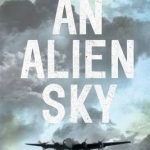
An Alien Sky: The Story of One Man's Remarkable Adventure in Bomber Command During the Second World War
Book
By any measure, Andy Wiseman (born Weizman) is a lucky man. The only son of a Polish father and an...

Popcorn Time - Your Favorite Movies & TV Shows
Entertainment and Lifestyle
App
POPCORN TIME HAS REACHED 100.000 DOWNLOADS! WE'D LIKE TO THANK YOU FOR THAT AND IN EXCHANGE FOR...

Tap & Say - Speak Phrase Book for travelling the world
Travel and Education
App
We just added Spanish Latin, Arabic, Brazilian, Portuguese, Russian to make up 17 languages in the...
iHandy Translator Pro
Reference and Utilities
App
iHandy Translator Pro is the most powerful translation tool on your iPhone/iPod touch. Translate any...
Toddler Counting 123
Education and Games
App
"simple and well executed with straightforward menus and good graphics." -- The New York Times ...