
Search
Search results

Lindsay (1818 KP) rated Idaho Brides in Books
Feb 15, 2018


I loved this book. It got some romance in it but it based on the actions and the wild west kinda sett The McConnell brothers all face trouble. It starts with Alec McConnell and Cattle steeling. Clara get involved and things start to happen. Cattle start to disappear. But can Alec save the ranch and Clara? to find out you need to read it for yourself.
The second story is about Trace McConnell. He goes on a kidnapping case once Lilly niece gets kidnapped by two men. This stories connected with the first for their a Boss and they are looking for him and his gang. This story starts in Money Creek and then goes to Jardin and once other place. Lilly is determined to find her niece after she loose her sister. Wondering what happens to Trace and Lilly? Do they save the children that were kidnapped. Find out by reading this book.
The third story is about Cal McConnell. This story is really base in the town of Money Creek. This story is some fun and scary for they find the Boss and where he been staying. They also stage a McConnell. Cal is the stage Coach driver. Trace is away and Alec is at the ranch. Maggie Davis comes and things get a little strange. Will Maggie help Cal out? Do they find who the Big Boss is and his Helper is? You need to read this book for yourself to decide. I dislike giving surprises to anyone about the end of the story. The only thing I will say is that the three stories connect to each other.
The second story is about Trace McConnell. He goes on a kidnapping case once Lilly niece gets kidnapped by two men. This stories connected with the first for their a Boss and they are looking for him and his gang. This story starts in Money Creek and then goes to Jardin and once other place. Lilly is determined to find her niece after she loose her sister. Wondering what happens to Trace and Lilly? Do they save the children that were kidnapped. Find out by reading this book.
The third story is about Cal McConnell. This story is really base in the town of Money Creek. This story is some fun and scary for they find the Boss and where he been staying. They also stage a McConnell. Cal is the stage Coach driver. Trace is away and Alec is at the ranch. Maggie Davis comes and things get a little strange. Will Maggie help Cal out? Do they find who the Big Boss is and his Helper is? You need to read this book for yourself to decide. I dislike giving surprises to anyone about the end of the story. The only thing I will say is that the three stories connect to each other.

Dana (24 KP) rated Saga, Vol. 2 in Books
Mar 23, 2018
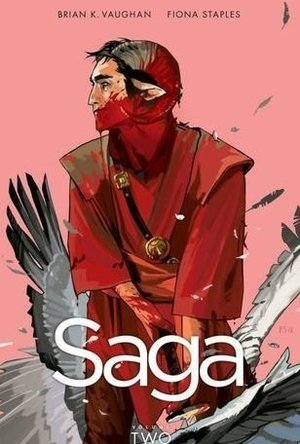

Here's another review that is 4.5 stars.
I love Alana's obsession with that book. I feel like that is me on the page because I do the same thing: push a book at people until they begrudgingly read it and then tell me to piss off. Well, except for Marco, he liked it, but everyone else was so exasperated with her, it was too real. I died laughing at the parts where she got over excited about it! And the backstory of how Marco and Alana met: so freaking cute, but still kinda scary in the fact that it's illegal as hell.
We get Marco's origin story! I loved seeing him as a wee little bab. SO adorable! I enjoyed getting to know Marco's past and his parents. They are very interesting because they show a lot more of the issues that are going on between the races in the war. It gives more insight into why the war is going on itself.
I also love Izabel. She is so sweet and sassy and cares about the trio. It was really cool that she got a lot more page time in this issue, which I appreciated.
I do like reading the other characters' story lines, but I'm not going to lie, I will always be more interested in the main characters, at least in this series. While everyone else is very compelling and have interesting aspects to their story, I felt like I was just trying to rush through their parts to be able to get to Hazel, Alana, and Marco.
I am still really excited to read more of the series!
I love Alana's obsession with that book. I feel like that is me on the page because I do the same thing: push a book at people until they begrudgingly read it and then tell me to piss off. Well, except for Marco, he liked it, but everyone else was so exasperated with her, it was too real. I died laughing at the parts where she got over excited about it! And the backstory of how Marco and Alana met: so freaking cute, but still kinda scary in the fact that it's illegal as hell.
We get Marco's origin story! I loved seeing him as a wee little bab. SO adorable! I enjoyed getting to know Marco's past and his parents. They are very interesting because they show a lot more of the issues that are going on between the races in the war. It gives more insight into why the war is going on itself.
I also love Izabel. She is so sweet and sassy and cares about the trio. It was really cool that she got a lot more page time in this issue, which I appreciated.
I do like reading the other characters' story lines, but I'm not going to lie, I will always be more interested in the main characters, at least in this series. While everyone else is very compelling and have interesting aspects to their story, I felt like I was just trying to rush through their parts to be able to get to Hazel, Alana, and Marco.
I am still really excited to read more of the series!

Amanda (30 KP) rated Weekends with Daisy in Books
Jun 21, 2018
This is one of the best books that I've read in a while, to be honest. I was pleased with the lovely Daisy. There's a grouping of pictures in the middle of the book, so I paused to look at them when I came across them and was happy to see that Daisy had been matched with a little boy (their picture was included), but disappointed to have the ending ruined for me because at that point in the book, they were still wondering if Daisy was going to make it through the training.
It's one thing to say to lock a murderer or another inmate up forever and throw away the key, but it's another thing to have a name and a face to that story. Thinking of Keith still in jail for the crime that he committed so long ago really was scary. While obviously he needed to pay for what he had done, it is amazing to think that one decision had so many consequences. Fortunately for Keith, I believe that dogs like Daisy are a great outlet for people in his situation. With their need to pass the time doing something positive, I think training dogs for the disabled is an excellent way to help not only the inmates themselves, but the community around all of us.
I've always said that one day I wanted to train a service dog puppy, however, I will have to keep this in mind when I reach that point in my life. Being a weekend puppy raiser sounds hard as hell, but so fulfilling.
It's one thing to say to lock a murderer or another inmate up forever and throw away the key, but it's another thing to have a name and a face to that story. Thinking of Keith still in jail for the crime that he committed so long ago really was scary. While obviously he needed to pay for what he had done, it is amazing to think that one decision had so many consequences. Fortunately for Keith, I believe that dogs like Daisy are a great outlet for people in his situation. With their need to pass the time doing something positive, I think training dogs for the disabled is an excellent way to help not only the inmates themselves, but the community around all of us.
I've always said that one day I wanted to train a service dog puppy, however, I will have to keep this in mind when I reach that point in my life. Being a weekend puppy raiser sounds hard as hell, but so fulfilling.
LeftSideCut (3776 KP) rated It (2017) in Movies
Aug 9, 2019
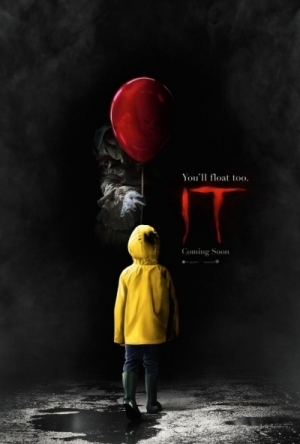


The best way to describe the most recent adaption of Stephen King's It, is that it feels like a ghost train.
It's one scene after the next of spooky imagery and mild jump scares - it's not overly terrifying, but it's an enjoyable time.
I didn't find It to be particularly scary - there were parts here and there that were uncomfortable (the old woman in the background of the library scene - no focus on her whatsoever, but it gave me chills) and of course, the already infamous scene at the beginning with Georgie is hard to watch considering the age of the child.
But it's lack of all out terror is not a bad thing - the movie can concentrate on a hugely important aspect of the original book - the friendship shared betweens The Losers Club.
The young actors in this are great, all hugely believable, and likable, as they set off on their quest to stop Pennywise and his reign over the town of Derry.
In a world transfixed with Stranger Things, the atmosphere of It treads familiar turf, the 80s setting hitting the right nostalgic spots.
Bill Skarsgård makes a great Pennywise. He doesn't try to copy what the great Tim Curry did in the original TV movie, he makes it his own. He's not quite as sinister as Tim Curry, but he's damn entertaining, and his costume and make up make for a creepy enough clown.
I'm really looking forward to the upcoming Chapter 2, to see if Andy Muschietti can pull off the ending as well as he pulled off the beginning.
It's one scene after the next of spooky imagery and mild jump scares - it's not overly terrifying, but it's an enjoyable time.
I didn't find It to be particularly scary - there were parts here and there that were uncomfortable (the old woman in the background of the library scene - no focus on her whatsoever, but it gave me chills) and of course, the already infamous scene at the beginning with Georgie is hard to watch considering the age of the child.
But it's lack of all out terror is not a bad thing - the movie can concentrate on a hugely important aspect of the original book - the friendship shared betweens The Losers Club.
The young actors in this are great, all hugely believable, and likable, as they set off on their quest to stop Pennywise and his reign over the town of Derry.
In a world transfixed with Stranger Things, the atmosphere of It treads familiar turf, the 80s setting hitting the right nostalgic spots.
Bill Skarsgård makes a great Pennywise. He doesn't try to copy what the great Tim Curry did in the original TV movie, he makes it his own. He's not quite as sinister as Tim Curry, but he's damn entertaining, and his costume and make up make for a creepy enough clown.
I'm really looking forward to the upcoming Chapter 2, to see if Andy Muschietti can pull off the ending as well as he pulled off the beginning.


This one's a bit too close for comfort...
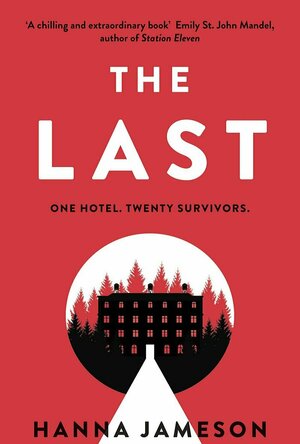
Well, this was a bit of a disconcerting and frankly worrying book. but it's one that made me really think.
Set in present day, it follows Jon Keller, an American Historian, and his fellow guests at a hotel in Switzerland, following a nuclear war. Pretty much every major city in the world has been bombed. The majority of guests have left, trying to get back to their homes even thought the media has advised them against doing so (no aeroplanes, no public transport). Jon and a small group of other guests decide to stay and make the best of it.
Whilst checking water supplies in the roof storage tanks, they find the body of a child, and Jon decides to investigate.
The book is written in Jon's voice as he writes a diary, a history, of his and the other guests survival, and his investigation.
I really liked this. It wasn't sensationalised, it all seemed so reasonable, and in our current worldwide political climate, so plausible - which is what made it really scary. It did have a bit of the "Huis Clos" (a play by Jean Paul Sartre) feeling about it: a feeling of being trapped with the same day coming around again and again, no escape, stuck with the same people that you neither particularly like or trust. And I liked that about it.
By the way, in the advent of a nuclear holocaust, Switzerland would seem to be a pretty civilised place to be 'stuck'.
Many thanks to NetGalley and Viking for the copy of this book to read and review!
Set in present day, it follows Jon Keller, an American Historian, and his fellow guests at a hotel in Switzerland, following a nuclear war. Pretty much every major city in the world has been bombed. The majority of guests have left, trying to get back to their homes even thought the media has advised them against doing so (no aeroplanes, no public transport). Jon and a small group of other guests decide to stay and make the best of it.
Whilst checking water supplies in the roof storage tanks, they find the body of a child, and Jon decides to investigate.
The book is written in Jon's voice as he writes a diary, a history, of his and the other guests survival, and his investigation.
I really liked this. It wasn't sensationalised, it all seemed so reasonable, and in our current worldwide political climate, so plausible - which is what made it really scary. It did have a bit of the "Huis Clos" (a play by Jean Paul Sartre) feeling about it: a feeling of being trapped with the same day coming around again and again, no escape, stuck with the same people that you neither particularly like or trust. And I liked that about it.
By the way, in the advent of a nuclear holocaust, Switzerland would seem to be a pretty civilised place to be 'stuck'.
Many thanks to NetGalley and Viking for the copy of this book to read and review!
Russ Troutt (291 KP) rated Won't You Be My Neighbor? (2018) in Movies
Jul 2, 2019
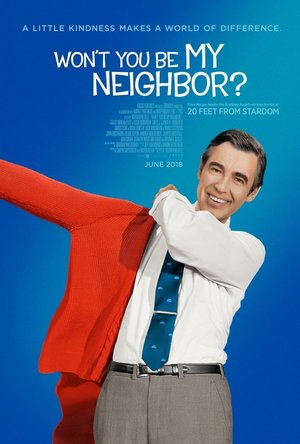
It's always a beautiful day in the neighborhood,
For in the worst of times you always made me see the good.
You would walk in with a smile on your face,
I knew that I was welcome at your place.
And no matter the weather,
You would put on your sweater.
Then you would sit down to put on more comfortable shoes,
Making me comfortable knowing I had a neighbor like you.
Together we would feed the fish,
Sometimes go to the kitchen and make a dish.
It was always my brain and heart that you were feeding,
As a kid you knew exactly what I was needing.
Messages would come from Mr. McFeely,
Who would show up with a speedy delivery.
When I'd hear the bell of the trolley,
I'd get excited and feel jolly.
For I knew we were off to visit our puppetry friends,
On the other side of the tunnel in make believe land.
You taught me what to do with my mad,
And that it was okay to be sad.
You helped in dealing with the bad and serious issues of the world,
But at the end of everyday in me the good you had restored.
In our daily meetings on television with me there is so much that you left,
I am special, amazing the way I am, and in the scary to be the one that helps.
It was in your words that I did find,
The key to success is being kind.
In many ways you were a savior whose love will always be savored,
Mister Rogers I will be forever grateful that you were my neighbor.
For in the worst of times you always made me see the good.
You would walk in with a smile on your face,
I knew that I was welcome at your place.
And no matter the weather,
You would put on your sweater.
Then you would sit down to put on more comfortable shoes,
Making me comfortable knowing I had a neighbor like you.
Together we would feed the fish,
Sometimes go to the kitchen and make a dish.
It was always my brain and heart that you were feeding,
As a kid you knew exactly what I was needing.
Messages would come from Mr. McFeely,
Who would show up with a speedy delivery.
When I'd hear the bell of the trolley,
I'd get excited and feel jolly.
For I knew we were off to visit our puppetry friends,
On the other side of the tunnel in make believe land.
You taught me what to do with my mad,
And that it was okay to be sad.
You helped in dealing with the bad and serious issues of the world,
But at the end of everyday in me the good you had restored.
In our daily meetings on television with me there is so much that you left,
I am special, amazing the way I am, and in the scary to be the one that helps.
It was in your words that I did find,
The key to success is being kind.
In many ways you were a savior whose love will always be savored,
Mister Rogers I will be forever grateful that you were my neighbor.

Phil Leader (619 KP) rated An Angel Came Down: The Angel of All Cannings in Books
Nov 8, 2019
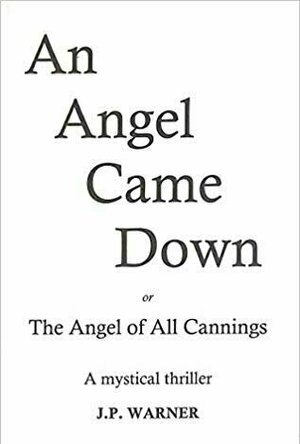
My wife was the assistant manager of the little community shop in All Cannings (a small village in Wiltshire) and the author was a regular customer. When he couldn't get any interest in his story set around the village from a publisher he decided to publish it himself - and so we are the proud owners of a copy of this work. It doesn't feature any cover art - the book is simply white with the title writtien in black writing, something that is more effective and chilling than any picture could be.
Written for young adults, this tells the story of a group of friends who investigate the appearance of an 'angel' - a white mark on the hillside near their home, which intriguingly they are warned away from by some officials. The area is famous for its crop circles and soon it becomes clear there is a link between crop circles and secret military testing. Despite the danger the children pursue the truth.
The plot works well with the children (and the reader) wanting to find out more as each part of the conspiracy is uncovered and it is immensely readable. The children are likeable and the adults they encounter are by turns helpful and friendly or threatening and scary.
There are faults - the children sometimes act older than their ages and there is an event late in the book which is morally questionable. But overall this is a very sound and credible novel. It is such a shame that it was written a few years before eBooks took off, when it might have seen a much wider audience.
Written for young adults, this tells the story of a group of friends who investigate the appearance of an 'angel' - a white mark on the hillside near their home, which intriguingly they are warned away from by some officials. The area is famous for its crop circles and soon it becomes clear there is a link between crop circles and secret military testing. Despite the danger the children pursue the truth.
The plot works well with the children (and the reader) wanting to find out more as each part of the conspiracy is uncovered and it is immensely readable. The children are likeable and the adults they encounter are by turns helpful and friendly or threatening and scary.
There are faults - the children sometimes act older than their ages and there is an event late in the book which is morally questionable. But overall this is a very sound and credible novel. It is such a shame that it was written a few years before eBooks took off, when it might have seen a much wider audience.

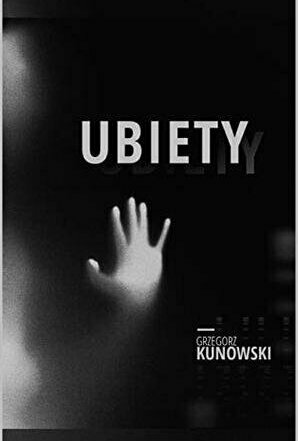

How can you prove what is real? This is essentially what Grzegorz Kunowski is asking in his novellaUbiety. The title relates to the state of existing and being in a localised space, which is what the protagonist Adam Johnson is challenging throughout the story. Designed to help people face up to reality and question endless possibilities about what could or should be, Adam finds himself in many bizarre situations that blur the lines between reality and fantasy.
Quite frankly difficult to follow, Ubiety includes many dream scenes that border on madness. “Since the dawn of time common folk and wise men have scratched their heads as they asked about topics to do with dreams, such as why do we have them?” (Page 9, PDF version) Through his dreams, Adam’s brilliant mind creates scenes based on human fears and curiosity, however, it is difficult to tell which parts of the novel are “reality” since everything is equally absurd.
Adam is a person who thinks too much, resulting in overanalysing every aspect of life. The imaginary monsters that haunt his dreams begin to seem less scary than the hidden evils in the real world. Through his writing, Kunowski questions whether we are truly free or are we slaves? Slaves to machines, slaves to technology, slaves to social norms and so forth.
Unfortunately, Ubiety is difficult to read, however, within the confusion, there are a couple of gems that make you think and philosophise about life, the world and reality. Heading each chapter with a quote from a historical thinker, Kunowski draws our attention to the “realities” of the past, present and future, encouraging us to challenge what we know and believe.
Quite frankly difficult to follow, Ubiety includes many dream scenes that border on madness. “Since the dawn of time common folk and wise men have scratched their heads as they asked about topics to do with dreams, such as why do we have them?” (Page 9, PDF version) Through his dreams, Adam’s brilliant mind creates scenes based on human fears and curiosity, however, it is difficult to tell which parts of the novel are “reality” since everything is equally absurd.
Adam is a person who thinks too much, resulting in overanalysing every aspect of life. The imaginary monsters that haunt his dreams begin to seem less scary than the hidden evils in the real world. Through his writing, Kunowski questions whether we are truly free or are we slaves? Slaves to machines, slaves to technology, slaves to social norms and so forth.
Unfortunately, Ubiety is difficult to read, however, within the confusion, there are a couple of gems that make you think and philosophise about life, the world and reality. Heading each chapter with a quote from a historical thinker, Kunowski draws our attention to the “realities” of the past, present and future, encouraging us to challenge what we know and believe.

Virtual Villagers 5
Games and Entertainment
App
Virtual Villagers: New Believers is the fifth chapter in the award-winning Virtual Villagers series...
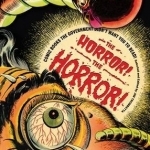
The Horror! The Horror!: Comic Books the Government Didn't Want You to Read!
Book
For the first time in over fifty years, author Jim Trombetta uncovers a rare visual treasury of some...