
Search

Hazel (1853 KP) rated Valley of the Moon in Books
Dec 17, 2018

<i>I received this book for free through Goodreads First Reads.</i>
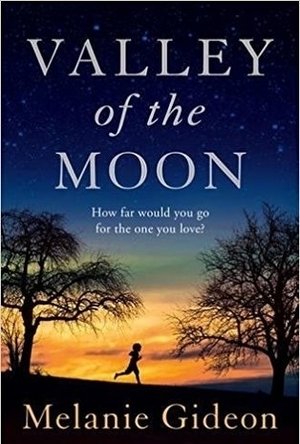
For fans of <i>The Time Traveler’s Wife</i> (Niffenegger, 2003) this captivating story by Melanie Gideon is an alluring, spellbinding work of fiction about loving, being loved and finding somewhere you belong. With a touch of time travel in an otherwise typical reality,<i> Valley of the Moon </i>will excite, enrapture and touch readers’ hearts.
It is difficult to give a synoptic review without giving too much of the plot away. In short, the book contains the two lives of complete strangers who meet under extremely unlikely circumstances. It is 1975 and Lux Lysander is struggling to make ends meet as a single mother in San Francisco. Estranged from her parents, Benno has become her life; Lux would do anything for him. The other half of the story begins in 1906 in the Californian Sonoma Valley. Joseph has achieved his dream of creating an Edenic community where races and classes can live in harmony. Greengage is a self-sufficient society where everyone is seen as equal, however, something happens to shake up the peace – literally. A huge earthquake mysteriously leaves the valley unharmed but completely surrounded by a deadly fog. No one can leave and no one can enter, that is until Lux does.
Until the two characters’ lives collide, the narrative is fairly typical, but it quickly takes on a theme that most minds would attempt to debunk. Through a wall of fog, Lux can pass between 1975 and 1906, whereas Joseph and his friends can only stay in their own timeline. Lux begins to live a double life: one with her son Benno and one with the antiquated lifestyle of the Greengage community. Unfortunately, it is only possible to pass through the fog on a fall moon, and not necessarily every month.
Lux’s modern appearance and colloquialisms baffle the community but she soon finds herself a place amongst the inhabitants. For a while, Lux is able to keep her two lives separate, but one slip up causes her to temporarily lose the love and trust of her only son. Torn between her own flesh and blood and the only place she feels she belongs, Lux has to decide how far she would go for the people she loves.
One of the key themes of the novel is relationship. Although romance develops toward the latter stages of the story, the majority is focused on familial love and love between friends. Lux and Benno’s relationship is particularly important, especially when their love becomes strained by Lux’s secret dalliance with the past. The other significant theme is about finding oneself. Lux lives in an era where, despite developments in women’s equality, single mothers are still shunned. Conversely, in 1906 where historically things were worse for women, the egalitarian society feels much more like home.
Lux’s temerity is to be admired as she continues to visit the past despite it being beyond the bounds of possibility. More applaudable is her determination to win back her son as well as her distant parents.
Despite being set for the most part in the 1970s and 80s, <i>Valley of the Moon</i> has a futuristic air about it, with an element of fantasy and science fiction. It is almost a version of <i>The Lion, the Witch and the Wardrobe</i> (Lewis, 1950) but for adults, with more realistic themes. Melanie Gideon admits that she got the idea for the novel from the film <i>Brigadoon</i> (1954) in which the protagonist stumbles across a magical land in the woods. With similarities, Gideon has created her own version of this fairy-tale-like scenario.
Journeying through a range of emotions, <i>Valley of the Moon</i> is a story that engages readers from beginning to end. With ups and downs, the author explores the lives and personalities of the main characters, which develop beautifully over time. This book is not one likely to disappoint its readers.
For fans of <i>The Time Traveler’s Wife</i> (Niffenegger, 2003) this captivating story by Melanie Gideon is an alluring, spellbinding work of fiction about loving, being loved and finding somewhere you belong. With a touch of time travel in an otherwise typical reality,<i> Valley of the Moon </i>will excite, enrapture and touch readers’ hearts.
It is difficult to give a synoptic review without giving too much of the plot away. In short, the book contains the two lives of complete strangers who meet under extremely unlikely circumstances. It is 1975 and Lux Lysander is struggling to make ends meet as a single mother in San Francisco. Estranged from her parents, Benno has become her life; Lux would do anything for him. The other half of the story begins in 1906 in the Californian Sonoma Valley. Joseph has achieved his dream of creating an Edenic community where races and classes can live in harmony. Greengage is a self-sufficient society where everyone is seen as equal, however, something happens to shake up the peace – literally. A huge earthquake mysteriously leaves the valley unharmed but completely surrounded by a deadly fog. No one can leave and no one can enter, that is until Lux does.
Until the two characters’ lives collide, the narrative is fairly typical, but it quickly takes on a theme that most minds would attempt to debunk. Through a wall of fog, Lux can pass between 1975 and 1906, whereas Joseph and his friends can only stay in their own timeline. Lux begins to live a double life: one with her son Benno and one with the antiquated lifestyle of the Greengage community. Unfortunately, it is only possible to pass through the fog on a fall moon, and not necessarily every month.
Lux’s modern appearance and colloquialisms baffle the community but she soon finds herself a place amongst the inhabitants. For a while, Lux is able to keep her two lives separate, but one slip up causes her to temporarily lose the love and trust of her only son. Torn between her own flesh and blood and the only place she feels she belongs, Lux has to decide how far she would go for the people she loves.
One of the key themes of the novel is relationship. Although romance develops toward the latter stages of the story, the majority is focused on familial love and love between friends. Lux and Benno’s relationship is particularly important, especially when their love becomes strained by Lux’s secret dalliance with the past. The other significant theme is about finding oneself. Lux lives in an era where, despite developments in women’s equality, single mothers are still shunned. Conversely, in 1906 where historically things were worse for women, the egalitarian society feels much more like home.
Lux’s temerity is to be admired as she continues to visit the past despite it being beyond the bounds of possibility. More applaudable is her determination to win back her son as well as her distant parents.
Despite being set for the most part in the 1970s and 80s, <i>Valley of the Moon</i> has a futuristic air about it, with an element of fantasy and science fiction. It is almost a version of <i>The Lion, the Witch and the Wardrobe</i> (Lewis, 1950) but for adults, with more realistic themes. Melanie Gideon admits that she got the idea for the novel from the film <i>Brigadoon</i> (1954) in which the protagonist stumbles across a magical land in the woods. With similarities, Gideon has created her own version of this fairy-tale-like scenario.
Journeying through a range of emotions, <i>Valley of the Moon</i> is a story that engages readers from beginning to end. With ups and downs, the author explores the lives and personalities of the main characters, which develop beautifully over time. This book is not one likely to disappoint its readers.

Alien Slave Masters: Part One
3.5 Rate It
Book
The Captain's Pet When a distant planet’s ownership is in dispute, conquering aliens turn...
Science Fiction Erotica MM Dark

Hadley (567 KP) rated American Gods in Books
Jun 5, 2020


Mad Sweeney (1 more)
Gaiman's writing and descriptions
No character development (2 more)
Dehumanizes women
The ending
The gods of the old world still exist in Neil Gaiman's 2001 novel "American Gods."
A science fiction/ fantasy story set in today's America, American Gods tries to answer the question of what happens when people stop believing in the past gods, and start worshiping new ones?
Shadow is our main character, who we meet while he's attempting to get released from prison after three years of incarceration - - - afterall, he has a job, wife and life waiting for him on the outside. And even though he's built up a strong exterior while in prison, everything comes crashing down after he receives news that his wife and best friend have died in a car accident.
Cue Wednesday, an old, odd man who gives Shadow a job after his release from prison - - - with strings attached: Shadow can't ask any questions, he must protect his employer at all costs, and if people need to be hurt, he must hurt them. Although Wednesday doesn't tell him exactly what is going on, Shadow agrees to his duties and begins a road trip with the eccentric old man, meeting an array of colorful characters along the way. But soon, Shadow begins to realize that his employer may be a mythical god in disguise, yet, oddly Shadow never really questions it or anything in the entire book for that matter.
The novel takes an odd turn early on when Shadow's dead wife, Laura, comes back to life in a zombified way. While Shadow is staying in a cheap hotel room, and Wednesday sharing a room with a young hotel employee in another, Shadow sees his wife in the clothing she was buried in, but he doesn't flinch - - - he carries a very calm conversation with dead Laura, he even goes down to the lobby to buy her a pack of cigarettes, and the next morning, he still doesn't seem bothered by it when he sees her muddy footprints on the floor. Wednesday tries to convince Shadow it was a dream, but makes snarky remarks that tells Shadow that even he knows it wasn't a dream. The two simply move on on their road trip, no questions asked.
But during this road trip, Shadow's suspicions are confirmed. He gets to see not only Wednesday, but two others in their true god-form, and afterwards, Wednesday confirms that he is indeed the Norse god, Odin.
Gaiman's take on mythological gods living in today's society is interesting, but disappointing. From recognizable gods to the forgotten ones, readers with a liking to history would probably enjoy this story most.
American Gods centers on the question of what happens to gods when they are no longer worshipped, and Gaiman merely focuses on male gods, while making all female characters (gods and humans) either prostitutes and/or sexual objects which is really off-putting for me as a female reader. And Gaiman's character development in the novel for gods and humans is nowhere to be seen thus lending very little plot development that is actually believable or enjoyable. I was unable to bring myself to care about our main character, Shadow, nor the plight with his zombie wife.And speaking of Laura, the disappointing character traits makes her not just unlikable, but also an unnecessary character overall.
I just can't recommend this book: the novel is good for the first 100 pages, but you could easily skip the next 450 pages that is just filler, and not miss much of the story. Gaiman also dehumanizes women, introduces characters in a way that would make them seem an important part of the story to only drop them out of it as quickly as they came in, and the ending is just a huge disappointment. All in all, Gaiman had a great idea, but the execution he used was poorly done - - - some parts even seem like Gaiman wrote them in a completely different state of mind, contradicting story lines and character traits altogether.
I did, however, have three favorite characters that weren't utilized enough for me to rate the story higher than I have: Mad Sweeney, Ibis and Jacquel. Mad Sweeney is a giant leprechaun that can pull gold coins out of the air; Ibis and Jacquel are Anubis and Jackel from Egyptian mythology, who run a funeral home in Cairo, Illinois today.
American Gods takes place only over a few months, which is surprising with how long the novel is. But the story is a buildup with no climax. Most characters come and go before readers can even decide if they like them or not,and that paired up with severe lack of character development leaves most of the main characters pretty forgettable. With this special edition containing 1200 more words, the story is still not worth it in the end. Gaiman is still a great writer, but this is not the book to recommend to anyone who wants to begin reading his work.
A science fiction/ fantasy story set in today's America, American Gods tries to answer the question of what happens when people stop believing in the past gods, and start worshiping new ones?
Shadow is our main character, who we meet while he's attempting to get released from prison after three years of incarceration - - - afterall, he has a job, wife and life waiting for him on the outside. And even though he's built up a strong exterior while in prison, everything comes crashing down after he receives news that his wife and best friend have died in a car accident.
Cue Wednesday, an old, odd man who gives Shadow a job after his release from prison - - - with strings attached: Shadow can't ask any questions, he must protect his employer at all costs, and if people need to be hurt, he must hurt them. Although Wednesday doesn't tell him exactly what is going on, Shadow agrees to his duties and begins a road trip with the eccentric old man, meeting an array of colorful characters along the way. But soon, Shadow begins to realize that his employer may be a mythical god in disguise, yet, oddly Shadow never really questions it or anything in the entire book for that matter.
The novel takes an odd turn early on when Shadow's dead wife, Laura, comes back to life in a zombified way. While Shadow is staying in a cheap hotel room, and Wednesday sharing a room with a young hotel employee in another, Shadow sees his wife in the clothing she was buried in, but he doesn't flinch - - - he carries a very calm conversation with dead Laura, he even goes down to the lobby to buy her a pack of cigarettes, and the next morning, he still doesn't seem bothered by it when he sees her muddy footprints on the floor. Wednesday tries to convince Shadow it was a dream, but makes snarky remarks that tells Shadow that even he knows it wasn't a dream. The two simply move on on their road trip, no questions asked.
But during this road trip, Shadow's suspicions are confirmed. He gets to see not only Wednesday, but two others in their true god-form, and afterwards, Wednesday confirms that he is indeed the Norse god, Odin.
Gaiman's take on mythological gods living in today's society is interesting, but disappointing. From recognizable gods to the forgotten ones, readers with a liking to history would probably enjoy this story most.
American Gods centers on the question of what happens to gods when they are no longer worshipped, and Gaiman merely focuses on male gods, while making all female characters (gods and humans) either prostitutes and/or sexual objects which is really off-putting for me as a female reader. And Gaiman's character development in the novel for gods and humans is nowhere to be seen thus lending very little plot development that is actually believable or enjoyable. I was unable to bring myself to care about our main character, Shadow, nor the plight with his zombie wife.And speaking of Laura, the disappointing character traits makes her not just unlikable, but also an unnecessary character overall.
I just can't recommend this book: the novel is good for the first 100 pages, but you could easily skip the next 450 pages that is just filler, and not miss much of the story. Gaiman also dehumanizes women, introduces characters in a way that would make them seem an important part of the story to only drop them out of it as quickly as they came in, and the ending is just a huge disappointment. All in all, Gaiman had a great idea, but the execution he used was poorly done - - - some parts even seem like Gaiman wrote them in a completely different state of mind, contradicting story lines and character traits altogether.
I did, however, have three favorite characters that weren't utilized enough for me to rate the story higher than I have: Mad Sweeney, Ibis and Jacquel. Mad Sweeney is a giant leprechaun that can pull gold coins out of the air; Ibis and Jacquel are Anubis and Jackel from Egyptian mythology, who run a funeral home in Cairo, Illinois today.
American Gods takes place only over a few months, which is surprising with how long the novel is. But the story is a buildup with no climax. Most characters come and go before readers can even decide if they like them or not,and that paired up with severe lack of character development leaves most of the main characters pretty forgettable. With this special edition containing 1200 more words, the story is still not worth it in the end. Gaiman is still a great writer, but this is not the book to recommend to anyone who wants to begin reading his work.
Hadley (567 KP) rated The Amazing Crime and Trial of Leopold and Loeb in Books
Apr 13, 2019
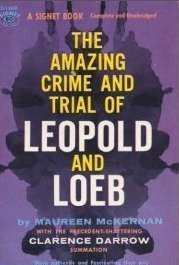

"The crime itself was indefensible. The brilliant, spoiled and bored sons of two of Chicago's wealthiest families planned to commit the perfect crime both for the thrill of and to prove their perverse misunderstanding of Friedrich Nietzsche's philosophy of the 'superman,' who was above all law so long as he made no mistake. Their plan, worked out over several months, was to kidnap and immediately kill one of their younger neighbors and hide his body. They would then demand and collect a ransom. The body would never be discovered, the crime would never be solved and only they would know that they had prevailed over ordinary human beings and their simple-minded legal system. But far from being the 'perfect crime,' the murder of 14-year-old Bobby Franks turned out to be amateurishly botched. Before any ransom could be paid, the boy's body was discovered in a culvert near where Nathan Leopold often went bird-watching. A pair of telltale glasses were found adjacent to the body. They were easily traced to Leopold who first came up with a paper-thin alibi and soon thereafter confessed to the crime. His fellow murderer likewise confessed. Each of the 'superboys' placed blame for the actual killing on the other." - Alan M. Dershowitz
If you mentioned the names Leopold and Loeb today, many people wouldn't know who you were talking about, but if you had mentioned them just thirty years ago, many people would recall the 'murder of the century.'
If you are a fan of the True Crime genre, you'll come across the case of two wealthy Chicago boys who thought they could get away with murder. (The trial is probably the most talked about trial to-date because this is the first time that psychology was brought before a court room.)
For a good part of the late 1920's, Leopold and Loeb were household names for good reason: they came from millionaire families, they were college graduates before they were 18-years-old, and their trial was the first time in history that the world saw psychology put in front of a judge. The trial was even more unforgettable due to a closing speech given by famous defense attorney, Clarence Darrow, which is reprinted in its entirety,spanning a hefty 93 pages.
Nathan Leopold, Jr. and Richard Loeb were two people who should have never met, according to the courtroom. The two met at about the age of fifteen, soon after they began to embark on criminal acts together, ranging from theft to arson. It's stated in 'the Amazing Crime and Trial of Leopold and Loeb' that Loeb had created a fantasy world where he was a crime ringleader that was too smart for the police to catch. Readers get to judge for themselves whether or not they believe Loeb was the cause of their crimes, or if Leopold was the one really in charge.
After robbing Loeb's fraternity house together, Leopold and Loeb came up with a plan to kidnap a wealthy child that they could then ransom. "They began to devise elaborate plans for this kidnapping, and soon the planning became the all-important thing. They gave up the idea of kidnapping this particular person [a young man named William], and settled on the idea of kidnapping anyone who would fit in their kidnapping plans." Throughout the book, we find out that the boys were pretty desperate for a kidnapping victim, that they even thought about kidnapping one of their close friends:
"The plan of kidnaping Dick Rubel was given up because Dick Rubel's father was so tight we might not get any money from him."
Leopold and Loeb discussed everything from how they would receive the ransom, what weapons they would use, how they would get the victim inside a rented vehicle, and what they would do with the body afterwards. "In March, 1924, the patient [Loeb] conceived the idea of securing the money by having it thrown off a moving train. This idea was discussed in great detail, and gradually developed into a carefully systematized plan. As time wore on the plan became greatly modified from the original one. They discussed at considerable length the choice of a suitable subject for kidnapping. The patient's companion [Leopold] suggested that they kidnap a young girl instead of a boy, but the patient [Loeb] objected to this. His companion [Leopold] also suggested that they kidnap the patient's [Loeb] younger brother, but the patient apparently did not seriously consider doing this. They then considered half a dozen boys, any one of whom would do, for the following reasons: that they were physically small enough to be easily handled and their parents were extremely wealthy and would have no difficulty or disinclination to pay ransom money."
During the trial, Leopold and Loeb's psychological evaluations became the forefront of their guilty plea, stating that they were not responsible for their actions due to their upbringing and environment. "I submit the facts do not rest on the evidence of these boys alone. It is proven by the writings; it is proven by every act. It is proven by their companions, and there can by no question about it." Clarence Darrow explains in his famous closing statement. "We brought into this courtroom a number of their boy friends, whom they had known day by day, who had associated with them in the club house, were their constant companions, and they tell the same stories. They tell the story that neither of these two boys was responsible for his conduct."
'The Amazing Crime and Trial of Leopold and Loeb' contains the portions of the psychiatric evaluations that were submitted in court,but the testimony of character witnesses is omitted. For a factual telling of a real life trial, this book is okay. If the reader pays attention, they may notice that some of the book contradicts itself, such as one page states that the car robe used to wrap up Franks' body was found buried near Lake Michigan,but then pages later, the book states it had been burned at Loeb's home.
The psychiatric reports are very repetitive,just using different words to describe the same things. Yet, these reports are the backbone of the trial and well worth a read. The evaluations and Darrow's extensive speech were what saved Leopold and Loeb from a death sentence.
There are very few books written about the 'murder of the century,' and even less about the 'lawyer of the century.' Leopold and Loeb, as well as Darrow, have faded into the obscurity of the True Crime genre, but because the boys' mental state was brought into question, we now accept forensic science/psychology in the court room today. I feel that only people who are truly interested in True Crime, or even have a fascination for the court room are the only ones who will enjoy 'The Amazing Crime and Trial of Leopold and Loeb.'
If you mentioned the names Leopold and Loeb today, many people wouldn't know who you were talking about, but if you had mentioned them just thirty years ago, many people would recall the 'murder of the century.'
If you are a fan of the True Crime genre, you'll come across the case of two wealthy Chicago boys who thought they could get away with murder. (The trial is probably the most talked about trial to-date because this is the first time that psychology was brought before a court room.)
For a good part of the late 1920's, Leopold and Loeb were household names for good reason: they came from millionaire families, they were college graduates before they were 18-years-old, and their trial was the first time in history that the world saw psychology put in front of a judge. The trial was even more unforgettable due to a closing speech given by famous defense attorney, Clarence Darrow, which is reprinted in its entirety,spanning a hefty 93 pages.
Nathan Leopold, Jr. and Richard Loeb were two people who should have never met, according to the courtroom. The two met at about the age of fifteen, soon after they began to embark on criminal acts together, ranging from theft to arson. It's stated in 'the Amazing Crime and Trial of Leopold and Loeb' that Loeb had created a fantasy world where he was a crime ringleader that was too smart for the police to catch. Readers get to judge for themselves whether or not they believe Loeb was the cause of their crimes, or if Leopold was the one really in charge.
After robbing Loeb's fraternity house together, Leopold and Loeb came up with a plan to kidnap a wealthy child that they could then ransom. "They began to devise elaborate plans for this kidnapping, and soon the planning became the all-important thing. They gave up the idea of kidnapping this particular person [a young man named William], and settled on the idea of kidnapping anyone who would fit in their kidnapping plans." Throughout the book, we find out that the boys were pretty desperate for a kidnapping victim, that they even thought about kidnapping one of their close friends:
"The plan of kidnaping Dick Rubel was given up because Dick Rubel's father was so tight we might not get any money from him."
Leopold and Loeb discussed everything from how they would receive the ransom, what weapons they would use, how they would get the victim inside a rented vehicle, and what they would do with the body afterwards. "In March, 1924, the patient [Loeb] conceived the idea of securing the money by having it thrown off a moving train. This idea was discussed in great detail, and gradually developed into a carefully systematized plan. As time wore on the plan became greatly modified from the original one. They discussed at considerable length the choice of a suitable subject for kidnapping. The patient's companion [Leopold] suggested that they kidnap a young girl instead of a boy, but the patient [Loeb] objected to this. His companion [Leopold] also suggested that they kidnap the patient's [Loeb] younger brother, but the patient apparently did not seriously consider doing this. They then considered half a dozen boys, any one of whom would do, for the following reasons: that they were physically small enough to be easily handled and their parents were extremely wealthy and would have no difficulty or disinclination to pay ransom money."
During the trial, Leopold and Loeb's psychological evaluations became the forefront of their guilty plea, stating that they were not responsible for their actions due to their upbringing and environment. "I submit the facts do not rest on the evidence of these boys alone. It is proven by the writings; it is proven by every act. It is proven by their companions, and there can by no question about it." Clarence Darrow explains in his famous closing statement. "We brought into this courtroom a number of their boy friends, whom they had known day by day, who had associated with them in the club house, were their constant companions, and they tell the same stories. They tell the story that neither of these two boys was responsible for his conduct."
'The Amazing Crime and Trial of Leopold and Loeb' contains the portions of the psychiatric evaluations that were submitted in court,but the testimony of character witnesses is omitted. For a factual telling of a real life trial, this book is okay. If the reader pays attention, they may notice that some of the book contradicts itself, such as one page states that the car robe used to wrap up Franks' body was found buried near Lake Michigan,but then pages later, the book states it had been burned at Loeb's home.
The psychiatric reports are very repetitive,just using different words to describe the same things. Yet, these reports are the backbone of the trial and well worth a read. The evaluations and Darrow's extensive speech were what saved Leopold and Loeb from a death sentence.
There are very few books written about the 'murder of the century,' and even less about the 'lawyer of the century.' Leopold and Loeb, as well as Darrow, have faded into the obscurity of the True Crime genre, but because the boys' mental state was brought into question, we now accept forensic science/psychology in the court room today. I feel that only people who are truly interested in True Crime, or even have a fascination for the court room are the only ones who will enjoy 'The Amazing Crime and Trial of Leopold and Loeb.'

EmersonRose (320 KP) rated The Buried Giant in Books
Nov 20, 2019
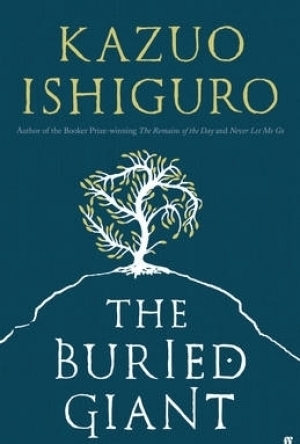
The winner of the 2017 Nobel Prize for Literature, Kazuo Ishiguro was born in 1954 in Nagasaki Japan, but he and his family moved in England in 1960. These two places and cultures have profoundly affected Ishiguro’s writing throughout his career. His first book, A Pale View of Hills, was published in 1982 and won the Winifred Holtby Memorial Prize, and he has since written seven novels and numerous short stories. His most recent book was The Buried Giant in 2015.
It is hard to pinpoint a genre to which Kazuo Ishiguro sticks to as he writes in fantasy, science-fiction, and historical. It can be said that all of his novels have the feeling of being set in the past even when the time period is not explicitly described, but the core theme that connects all of his writing together is memory. In each of his stories, Ishiguro examines how people use memory, how memory affects people, and who we are with or without memory.
Ishiguro explores many different ways in which memory affects people throughout his books ranging from memory loss to dream like memory distortion. In his books Never Let Me Go and The Remains of the Day the stories are told by narrators looking back at crucial moments in their lives. In letting us know that they are remembering their own pasts they admit that they are saying their perspective and their memory might be lacking. In this way letting the reader know that they are unreliable narrators. In The Remains of the Day the narrator, the butler Mr. Stevens decides to go on a journey to visit an old friend and along the way shows his unreliability in several ways. First in acknowledging how memory can change and fade over time.
“It occurs to me that elsewhere in attempting to gather such recollections, I may well have asserted that this memory derived from the minute immediately after Miss Kenton receiving news of her aunt’s death….But now, having thought further, I believed I may have been a little confused about this matter; that in fact, this fragment of memory derives from events that took place on an evening at least a few months after the death of Miss Kenton’s aunt” (212).
In this way, Steven’s is acknowledging human error which both shows his unreliability but gives a level of trust in the acknowledgment that he is doing his best to be truthful. This, however, is challenged because Steven’s informs us that he lies, at the very least through omission, to other characters. A clear case of this is when he allows himself to be considered a gentleman rather than a butler on several occasions throughout his journey. This becomes complex because he is allowing the reader in on the truth, but the very fact of admitting that he can lie further reveals his unreliability.
In Ishiguro’s most recent book, The Buried Giant, he looks at memory in a way that is similar to these previous stories but takes a new approach. His central two characters in this book, Axle, and Beatrice are an elderly couple setting out on a journey with almost no memory of who they are. Throughout the story, they remember or think they remember pieces of their pasts and in the process making them question who they really are. This uncertainty in themselves creates interesting questions of whether or not they want to remember their lives if they are happier not knowing, and if they can continue to live their lives the way they are with their new/old information?
“Yet are you so certain, good mistress, you wish to be free of this mist? Is it not better some things remain hidden from our minds?”
“It may be for some, father, but not for us. Axl and I wish to have again the happy moments we shared together. To be robbed of them is as if a thief came in the night and took what’s most precious from us.”
“Yet the mist covers all memories, the bad as well as the good. Isn’t that so, mistress?”
“We’ll have the bad ones come back too, even if they make us weep or shake with anger. For isn’t it the life we’ve shared?” (172).
In some of Ishiguro’s other work, he chooses to explore memory through the lens of a dreamlike state or surreal views, such as his short story A Village After Dark and the novel The Unconsoled. In these stories, the narrator enters into a new place and finds that they have slowly emerging memories connected to the places and people they meet. The Unconsoled creates a strange dynamic where the lead character Mr. Ryder has never been to this town before but finds himself confronted by childhood acquaintances as well as meeting a woman and child who treat him like husband and father and memories that support this begin to come back to him. In an interview Ishiguro did on the book in 1995, he summarizes the story as “an anxiety dream” as Mr. Ryder continually finds himself confronted with the expectation of him without being told anything in advance. At the beginning of the story, Mr. Ryder arrives at his hotel knowing that he will be playing at a concert in few days and is told he has a busy schedule up till then. At this point in the story, the anxiety dream state sets in Mr. Ryder continuously finds himself late to engagements, leaving people behind by accident and being dragged around town. As the story progresses, Mr. Ryder begins to have memories of a past associated with some of the people he has met, despite being introduced as completely new to the town. Some of these can be explained by the fact that as a reader we are dropped into a story after it has started but the memories of these instances only come back to Ryder after he has been told things have happened. This means that throughout the story it impossible to know whether or not the narrator has forgotten and is remembering or if the town is merely a dream limbo and nothing he is being told is real, to begin with.
Whether taking the more fantastical approach or the those that fall closer to realism, Ishiguro’s play with memory remains relatable to the readers. Each journey Ishiguro writes is designed to tackle something different about memory. The stories ask us questions about what memory and how much it affects who we are and our ability to live in our world. From whether or not we can know who we are without memory to how trustworthy our memories actually are. These questions, however fantastically asked, offer something to the reader that they can relate to. For memory is almost a fanatical force on its own that we all share and try to understand. It can play with us when we take it for granted and offer vulnerability and connection when shared with others. Ishiguro delves into these ideas in each of his works, ever exploring its uncertainty and power.
It is hard to pinpoint a genre to which Kazuo Ishiguro sticks to as he writes in fantasy, science-fiction, and historical. It can be said that all of his novels have the feeling of being set in the past even when the time period is not explicitly described, but the core theme that connects all of his writing together is memory. In each of his stories, Ishiguro examines how people use memory, how memory affects people, and who we are with or without memory.
Ishiguro explores many different ways in which memory affects people throughout his books ranging from memory loss to dream like memory distortion. In his books Never Let Me Go and The Remains of the Day the stories are told by narrators looking back at crucial moments in their lives. In letting us know that they are remembering their own pasts they admit that they are saying their perspective and their memory might be lacking. In this way letting the reader know that they are unreliable narrators. In The Remains of the Day the narrator, the butler Mr. Stevens decides to go on a journey to visit an old friend and along the way shows his unreliability in several ways. First in acknowledging how memory can change and fade over time.
“It occurs to me that elsewhere in attempting to gather such recollections, I may well have asserted that this memory derived from the minute immediately after Miss Kenton receiving news of her aunt’s death….But now, having thought further, I believed I may have been a little confused about this matter; that in fact, this fragment of memory derives from events that took place on an evening at least a few months after the death of Miss Kenton’s aunt” (212).
In this way, Steven’s is acknowledging human error which both shows his unreliability but gives a level of trust in the acknowledgment that he is doing his best to be truthful. This, however, is challenged because Steven’s informs us that he lies, at the very least through omission, to other characters. A clear case of this is when he allows himself to be considered a gentleman rather than a butler on several occasions throughout his journey. This becomes complex because he is allowing the reader in on the truth, but the very fact of admitting that he can lie further reveals his unreliability.
In Ishiguro’s most recent book, The Buried Giant, he looks at memory in a way that is similar to these previous stories but takes a new approach. His central two characters in this book, Axle, and Beatrice are an elderly couple setting out on a journey with almost no memory of who they are. Throughout the story, they remember or think they remember pieces of their pasts and in the process making them question who they really are. This uncertainty in themselves creates interesting questions of whether or not they want to remember their lives if they are happier not knowing, and if they can continue to live their lives the way they are with their new/old information?
“Yet are you so certain, good mistress, you wish to be free of this mist? Is it not better some things remain hidden from our minds?”
“It may be for some, father, but not for us. Axl and I wish to have again the happy moments we shared together. To be robbed of them is as if a thief came in the night and took what’s most precious from us.”
“Yet the mist covers all memories, the bad as well as the good. Isn’t that so, mistress?”
“We’ll have the bad ones come back too, even if they make us weep or shake with anger. For isn’t it the life we’ve shared?” (172).
In some of Ishiguro’s other work, he chooses to explore memory through the lens of a dreamlike state or surreal views, such as his short story A Village After Dark and the novel The Unconsoled. In these stories, the narrator enters into a new place and finds that they have slowly emerging memories connected to the places and people they meet. The Unconsoled creates a strange dynamic where the lead character Mr. Ryder has never been to this town before but finds himself confronted by childhood acquaintances as well as meeting a woman and child who treat him like husband and father and memories that support this begin to come back to him. In an interview Ishiguro did on the book in 1995, he summarizes the story as “an anxiety dream” as Mr. Ryder continually finds himself confronted with the expectation of him without being told anything in advance. At the beginning of the story, Mr. Ryder arrives at his hotel knowing that he will be playing at a concert in few days and is told he has a busy schedule up till then. At this point in the story, the anxiety dream state sets in Mr. Ryder continuously finds himself late to engagements, leaving people behind by accident and being dragged around town. As the story progresses, Mr. Ryder begins to have memories of a past associated with some of the people he has met, despite being introduced as completely new to the town. Some of these can be explained by the fact that as a reader we are dropped into a story after it has started but the memories of these instances only come back to Ryder after he has been told things have happened. This means that throughout the story it impossible to know whether or not the narrator has forgotten and is remembering or if the town is merely a dream limbo and nothing he is being told is real, to begin with.
Whether taking the more fantastical approach or the those that fall closer to realism, Ishiguro’s play with memory remains relatable to the readers. Each journey Ishiguro writes is designed to tackle something different about memory. The stories ask us questions about what memory and how much it affects who we are and our ability to live in our world. From whether or not we can know who we are without memory to how trustworthy our memories actually are. These questions, however fantastically asked, offer something to the reader that they can relate to. For memory is almost a fanatical force on its own that we all share and try to understand. It can play with us when we take it for granted and offer vulnerability and connection when shared with others. Ishiguro delves into these ideas in each of his works, ever exploring its uncertainty and power.