
Search
Search results

David McK (3918 KP) rated Arthur (The Arthurian Tales #3) in Books
Jun 30, 2024 (Updated Jun 30, 2024)
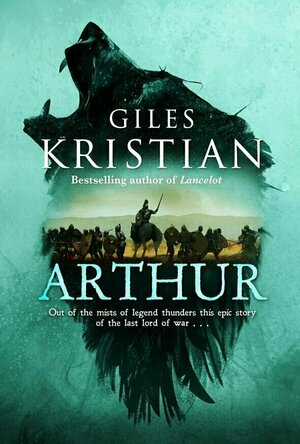

This is the final entry in Giles Kristian's 'Arthurian Tales' trilogy, set after both 'Lancelot' and 'Camelot', and now told in the third person instead of the first person view of both those former works.
It's also the first one - I believe - to so heavily rely on flashbacks, paralleling the 'now' of the story with the background to one of the main characters Beran (whose identity I, personally, found quite easy to grok early on).
As a whole, I have to say, this trilogy is one of the best retellings of the Arthurian myths I have come across although retelling, however, may be too strong a word; perhaps a better on would be re-imagining as there's no mystical Green Knight (reimagined in 'Camelot'), search for the Holy Grails (again, see 'Camelot'), or mysterious women lying in ponds and distributing swords ("that's no basis for sound government..."), but which does cover the whole Arthur/Lancelot/Guinevere love triangle (see, in particular, 'Lancelot') and the fall out thereof.
In short, all three novels are well worth a read - personally, I found I enjoyed these more than the 'Blood Eye' series by the same author.
It's also the first one - I believe - to so heavily rely on flashbacks, paralleling the 'now' of the story with the background to one of the main characters Beran (whose identity I, personally, found quite easy to grok early on).
As a whole, I have to say, this trilogy is one of the best retellings of the Arthurian myths I have come across although retelling, however, may be too strong a word; perhaps a better on would be re-imagining as there's no mystical Green Knight (reimagined in 'Camelot'), search for the Holy Grails (again, see 'Camelot'), or mysterious women lying in ponds and distributing swords ("that's no basis for sound government..."), but which does cover the whole Arthur/Lancelot/Guinevere love triangle (see, in particular, 'Lancelot') and the fall out thereof.
In short, all three novels are well worth a read - personally, I found I enjoyed these more than the 'Blood Eye' series by the same author.

Mark @ Carstairs Considers (2662 KP) rated A Trace of Poison in Books
Aug 14, 2025
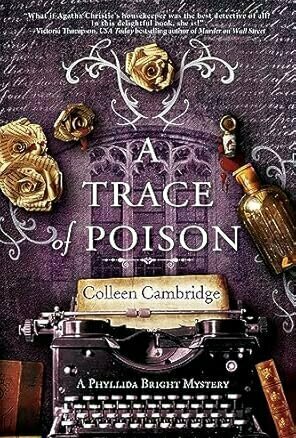

Murderous Mystery Fete
The local mystery writers are hosting a Murder Fete to raise funds for the local orphanage, and they have convinced Agatha Christie to invite some of her famous friends. The weekend will include talks about the craft of mystery writing, author signings, and a short story contest where the winner gets a publishing contract on both sides of the Atlantic. However, the opening night’s cocktail reception ends with a murder. Since Phyllida is helping make sure the event is a success, she’s on hand. Can she solve a second real life murder?
Those who fell in love with the main characters in the first book in the series will be glad to be spending more time with them and seeing how their relationships develop. The supporting players and suspects could have been stronger. That means, the mystery could have been stronger as well, although there were some twists that kept me entertained. And things made sense once Phyllida had solved things. While the mystery could be stronger, this is still an entertaining book that will please mystery fans, especially fans of Agatha Christie.
Those who fell in love with the main characters in the first book in the series will be glad to be spending more time with them and seeing how their relationships develop. The supporting players and suspects could have been stronger. That means, the mystery could have been stronger as well, although there were some twists that kept me entertained. And things made sense once Phyllida had solved things. While the mystery could be stronger, this is still an entertaining book that will please mystery fans, especially fans of Agatha Christie.
Hazel (2934 KP) rated Standing Alone (Matt Standing #2) in Books
Jan 9, 2022
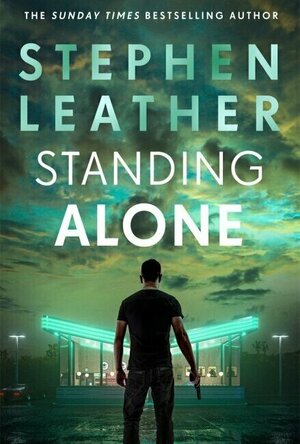
I am a huge fan of Mr Leather's Dan "Spider" Shepherd series and although I haven't read the first in this series (how the heck did I miss that!!!!), I was pretty sure I was in for a treat and I wasn't wrong.
Matt "Lastman" Standing is being blackmailed to do a job for "The Pool", a shady organisation; his mission is to hunt down and assassinate Ryan French, an ex-Navy Seal who hires himself out to the highest bidder. This is not going to be an easy mission and Matt finds himself in the depths of the wilderness in western America knee deep in cannabis and up to his neck in trouble within a very short period of time.
With excellent and strong characters, an immersive plot and full of action, this is a great story. I also learnt a heck of a lot about cannabis farming - not that it'll do me much good but it was interesting nonetheless.
I very much look forward to reading more in this series and my thanks must go to Hodder & Stoughton and NetGalley for my copy in return for an honest, unbiased and unedited review.
Matt "Lastman" Standing is being blackmailed to do a job for "The Pool", a shady organisation; his mission is to hunt down and assassinate Ryan French, an ex-Navy Seal who hires himself out to the highest bidder. This is not going to be an easy mission and Matt finds himself in the depths of the wilderness in western America knee deep in cannabis and up to his neck in trouble within a very short period of time.
With excellent and strong characters, an immersive plot and full of action, this is a great story. I also learnt a heck of a lot about cannabis farming - not that it'll do me much good but it was interesting nonetheless.
I very much look forward to reading more in this series and my thanks must go to Hodder & Stoughton and NetGalley for my copy in return for an honest, unbiased and unedited review.
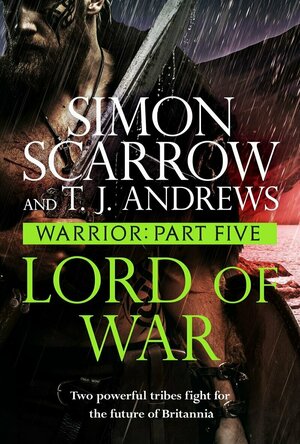
Lord of War (Warrior #5)
6.0 Rate It
Book
LORD OF WAR is the fifth and final ebook novella in the WARRIOR series, telling the dramatic story...

Lyndsey Gollogly (2893 KP) rated Next Door in Books
Jun 10, 2021
82 of 250
Kindle
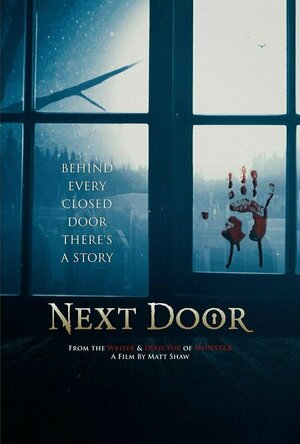
Next Door
Compiled by Matt Shaw
Once read a review will be written via Smashbomb and link posted in comments
From the mind behind "MASTERS OF HORROR" comes a new horror anthology to keep you up at night!
Whilst Matt Shaw is busy producing, writing and directing the feature film NEXT DOOR he decided to put together a horror anthology of the same name, and with the same theme as the motion picture. None of the stories in this collection feature in the film; the two products are completely separate other than the central concept of exploring who does live NEXT DOOR to us?
Given the fact these are some of the biggest names in horror, you can bet that whomever is living next door probably won't be the friendliest of characters...
The year is 2019 and technology has come so far that we spend more time staring at our mobile devices, and screens in general, than getting to know our next door neighbour. Gone are the days of knowing everyone who lives on the same street, or in the same village. Instead we leave our houses, avoid eye-contact or give the bare minimum of grunts to those we see and go about our daily lives without a care for anyone else. No more street parties, no more kindly neighbours checking in on you, no more Christmas cards from the little old lady who lives across the street. There's only "us" and our technology.
This anthology takes a look at who lives NEXT DOOR and what secrets they may be keeping. And who knows, maybe it will serve as warning to you that, really, you should be paying attention to those living close-by. After all, Fred West was someone's neighbour once...
Featuring stories by:
Tim Lebbon
Shaun Hutson
Ryan C. Thomas
Jeremy Bates
David Moody
Guy N. Smith
Matthew Stokoe
Justin Woodward
Gary McMahon
Rich Hawkins
Jim Goforth
Matt Shaw
1. A Family-Friendly Neighbourhood by Ryan C Thomas
This was actually quite funny and sweet in a gruesome clever way. All the toys turning into little knife wielding creepy thing only to find out they are their kids souls! They just want to be together 😂
2. Final Feast by Guy N. Smith
Quick little story of the cannibal next door! I loved it!
3. Insurgents by Rich Hawkins
A story of a war ruined mind, a soldier dealing with his demons. Well written just not my normal read.
4. Mirror Image by David Moody
A couple move into a new house with an extra handy neighbour. I enjoyed this one funny how my husband is so crap at DIY too 😂😂
5. Neighbour Hood by Tim Lebbon
Omg this has to be the creepiest one so far and the whole reason I never use my attics’!!!
6. Dinner Date by Jeremy Bates
A bit slower than the others think I just got a little bored. Never accept dinner invitations before getting to know the guy no matter how hot he is! Silly girl!
7. Why Does Randolph Draw by Matthew Stokeoe
Got to be honest I didn’t finish it I just got so bored after page 5! Just wasn’t catching me.
8. Saturday Night Whiskey by Justin M.Woodward
This was really god and well put together a kids last cry for help from his dodgy uncle!
9. Sixteen by Jim Goforth
This felt so rushed even for a short story! Although it’s a good lesson of don’t get involved with swinging neighbours 😂
10. Pornography by Matt Saw
Haha she didn’t see that coming
11. Somewhere in Here by Gary McMahon
This was one creepy ass story and for one so short I’m throughly creeped out!!
12 By Darkness Hidden by Shaun Hutson
This was pretty good a urban legend type story. Villages can be super strange places.
I really enjoyed this compilation got some great new authors added to my list too.
Kindle
Next Door
Compiled by Matt Shaw
Once read a review will be written via Smashbomb and link posted in comments
From the mind behind "MASTERS OF HORROR" comes a new horror anthology to keep you up at night!
Whilst Matt Shaw is busy producing, writing and directing the feature film NEXT DOOR he decided to put together a horror anthology of the same name, and with the same theme as the motion picture. None of the stories in this collection feature in the film; the two products are completely separate other than the central concept of exploring who does live NEXT DOOR to us?
Given the fact these are some of the biggest names in horror, you can bet that whomever is living next door probably won't be the friendliest of characters...
The year is 2019 and technology has come so far that we spend more time staring at our mobile devices, and screens in general, than getting to know our next door neighbour. Gone are the days of knowing everyone who lives on the same street, or in the same village. Instead we leave our houses, avoid eye-contact or give the bare minimum of grunts to those we see and go about our daily lives without a care for anyone else. No more street parties, no more kindly neighbours checking in on you, no more Christmas cards from the little old lady who lives across the street. There's only "us" and our technology.
This anthology takes a look at who lives NEXT DOOR and what secrets they may be keeping. And who knows, maybe it will serve as warning to you that, really, you should be paying attention to those living close-by. After all, Fred West was someone's neighbour once...
Featuring stories by:
Tim Lebbon
Shaun Hutson
Ryan C. Thomas
Jeremy Bates
David Moody
Guy N. Smith
Matthew Stokoe
Justin Woodward
Gary McMahon
Rich Hawkins
Jim Goforth
Matt Shaw
1. A Family-Friendly Neighbourhood by Ryan C Thomas
This was actually quite funny and sweet in a gruesome clever way. All the toys turning into little knife wielding creepy thing only to find out they are their kids souls! They just want to be together 😂
2. Final Feast by Guy N. Smith
Quick little story of the cannibal next door! I loved it!
3. Insurgents by Rich Hawkins
A story of a war ruined mind, a soldier dealing with his demons. Well written just not my normal read.
4. Mirror Image by David Moody
A couple move into a new house with an extra handy neighbour. I enjoyed this one funny how my husband is so crap at DIY too 😂😂
5. Neighbour Hood by Tim Lebbon
Omg this has to be the creepiest one so far and the whole reason I never use my attics’!!!
6. Dinner Date by Jeremy Bates
A bit slower than the others think I just got a little bored. Never accept dinner invitations before getting to know the guy no matter how hot he is! Silly girl!
7. Why Does Randolph Draw by Matthew Stokeoe
Got to be honest I didn’t finish it I just got so bored after page 5! Just wasn’t catching me.
8. Saturday Night Whiskey by Justin M.Woodward
This was really god and well put together a kids last cry for help from his dodgy uncle!
9. Sixteen by Jim Goforth
This felt so rushed even for a short story! Although it’s a good lesson of don’t get involved with swinging neighbours 😂
10. Pornography by Matt Saw
Haha she didn’t see that coming
11. Somewhere in Here by Gary McMahon
This was one creepy ass story and for one so short I’m throughly creeped out!!
12 By Darkness Hidden by Shaun Hutson
This was pretty good a urban legend type story. Villages can be super strange places.
I really enjoyed this compilation got some great new authors added to my list too.
BookInspector (124 KP) rated Paris for One and Other Stories in Books
Sep 24, 2020
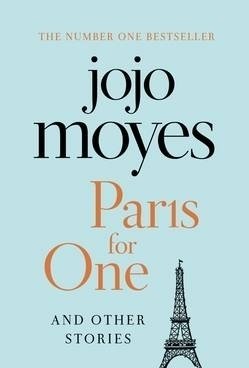
I don’t remember when the last time I read a collection of short stories, but I had to try this one. I have to tell you, it was quite entertaining and attractive. In the book I received, there were eleven short stories, in other publications there might be only nine. I never tried to write a review for short stories, so don’t really know how to do it. I will begin by trying my best to share a short description of each of them.
Paris for One: When reliable Nell is tricked by her boyfriend, and ends up in Paris by herself she is shocked at the beginning. Strange place with no language knowledge makes her stressed at the beginning, but she finds herself, new love, and new adventures during this weekend stay in Paris.
Between the Tweets: When a person named Becca, accuses a known person of cheating on his wife, on twitter, Frank is hired to find out who Becca is. But he is really surprised when he finds out who this girl is, and it brings even bigger twist in the story.
Love in the Afternoon: When the couple, who is exhausted from daily family life, decide to spend a weekend for two in the hotel, they notice, that they actually forgot how to be alone. So, they need to learn it again.
A Bird in the Hand: When Beth and her husband go to a friend’s party, she suddenly meets a man with whom she had an affair. There has been years since they seen each other, but they find out why they fell apart in the first place. Now, Beth has another difficult decision to make.
Crocodile Shoes: When Sam’s gym bag gets mixed up with a rich lady’s one, all she finds in it is a pair of crocodile leather shoes. She doesn’t have any option but to wear them, and it turns her ordinary life around.
Holdups: The Jewellery shop where Alice was working is being robbed by burglars. If there were three according to the owner, why there were only two according to Alice? Mini detective story with unexpected twist.
Honeymoon in Paris: This story is one of my favourites in this book. There are two stories which are happening in Paris. One happens in 2012 and another one in 1912. Latest story is about a couple on honeymoon, where the groom chooses work over his Mrs. The second story is about a newlywed couple, where wife’s mind gets poisoned by an evil woman. These two stories cross each other and shows, that true love always wins.
Last Year's Coat: Evie desperately needs a new coat, but the one she likes cost fortune, and their family can’t afford it. All you need to do is really wish for something, and in some way it will reach you.
Thirteen Days with John C.: One day Miranda finds a phone. Suddenly she starts getting texts from John. She gets very intrigued, even though she is married; she still decides to meet him. The meeting goes not the way she expected it to go, so in the end she has to take some decisions.
Margot: When Em gets stranded in the airport due to delayed flight, she meets this old lady Margot. They spend some quality time together at the airport, and after that go different ways. Only after a while, Em figures out why Margot lives her life to the fullest.
The Christmas List: While running around London for that perfect Christmas dinner with the in law’s, Chrissie ends up in a black taxi. While talking with the driver, she realises, that pleasing needy in law’s, who doesn’t like her, is not what she wants to do this season. And she takes an impulsive decision instead, which might change her life.
All the stories in this book are really different, but at the same time similar. Some of them are about love, some of them about family, others, about making those hard decisions of who you really are. Most of the stories have an interesting twist at the end, or as I call it “the right thing to do” action. Even if the situation is not the best one, there is still that action to take, to make it right for everybody. I enjoyed the variety of characters used in this book, that doesn’t make it boring and keeps interest going. I tend to believe, that author has great love for Paris, as some of the plots are set in the city of lights. My most favourite were “Paris for one” and “Honeymoon in Paris”, they were the longest ones, and for me, the most interesting ones. It is a very easy read. The writing style used in this book is easy and understandable; the stories are not dragging, so it is lovely one sitting read. I really enjoyed the topics author was discussing in this book, she found those little day to day problems, and showed possible solutions to them. I enjoyed this book, and if you looking for something light and entertaining but with great meaning to read, give it a try.
Paris for One: When reliable Nell is tricked by her boyfriend, and ends up in Paris by herself she is shocked at the beginning. Strange place with no language knowledge makes her stressed at the beginning, but she finds herself, new love, and new adventures during this weekend stay in Paris.
Between the Tweets: When a person named Becca, accuses a known person of cheating on his wife, on twitter, Frank is hired to find out who Becca is. But he is really surprised when he finds out who this girl is, and it brings even bigger twist in the story.
Love in the Afternoon: When the couple, who is exhausted from daily family life, decide to spend a weekend for two in the hotel, they notice, that they actually forgot how to be alone. So, they need to learn it again.
A Bird in the Hand: When Beth and her husband go to a friend’s party, she suddenly meets a man with whom she had an affair. There has been years since they seen each other, but they find out why they fell apart in the first place. Now, Beth has another difficult decision to make.
Crocodile Shoes: When Sam’s gym bag gets mixed up with a rich lady’s one, all she finds in it is a pair of crocodile leather shoes. She doesn’t have any option but to wear them, and it turns her ordinary life around.
Holdups: The Jewellery shop where Alice was working is being robbed by burglars. If there were three according to the owner, why there were only two according to Alice? Mini detective story with unexpected twist.
Honeymoon in Paris: This story is one of my favourites in this book. There are two stories which are happening in Paris. One happens in 2012 and another one in 1912. Latest story is about a couple on honeymoon, where the groom chooses work over his Mrs. The second story is about a newlywed couple, where wife’s mind gets poisoned by an evil woman. These two stories cross each other and shows, that true love always wins.
Last Year's Coat: Evie desperately needs a new coat, but the one she likes cost fortune, and their family can’t afford it. All you need to do is really wish for something, and in some way it will reach you.
Thirteen Days with John C.: One day Miranda finds a phone. Suddenly she starts getting texts from John. She gets very intrigued, even though she is married; she still decides to meet him. The meeting goes not the way she expected it to go, so in the end she has to take some decisions.
Margot: When Em gets stranded in the airport due to delayed flight, she meets this old lady Margot. They spend some quality time together at the airport, and after that go different ways. Only after a while, Em figures out why Margot lives her life to the fullest.
The Christmas List: While running around London for that perfect Christmas dinner with the in law’s, Chrissie ends up in a black taxi. While talking with the driver, she realises, that pleasing needy in law’s, who doesn’t like her, is not what she wants to do this season. And she takes an impulsive decision instead, which might change her life.
All the stories in this book are really different, but at the same time similar. Some of them are about love, some of them about family, others, about making those hard decisions of who you really are. Most of the stories have an interesting twist at the end, or as I call it “the right thing to do” action. Even if the situation is not the best one, there is still that action to take, to make it right for everybody. I enjoyed the variety of characters used in this book, that doesn’t make it boring and keeps interest going. I tend to believe, that author has great love for Paris, as some of the plots are set in the city of lights. My most favourite were “Paris for one” and “Honeymoon in Paris”, they were the longest ones, and for me, the most interesting ones. It is a very easy read. The writing style used in this book is easy and understandable; the stories are not dragging, so it is lovely one sitting read. I really enjoyed the topics author was discussing in this book, she found those little day to day problems, and showed possible solutions to them. I enjoyed this book, and if you looking for something light and entertaining but with great meaning to read, give it a try.

Heather Cranmer (2721 KP) rated Spine Chillers: Empty Eyes in Books
Nov 14, 2018

Well Written Plot (2 more)
Believable Characters
Lots of Spookiness
A Spooky Read
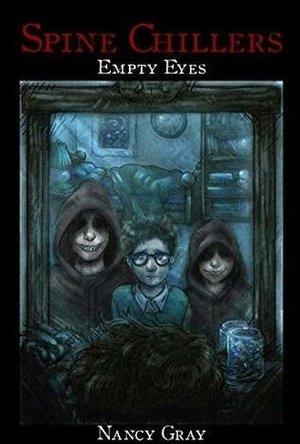
I'm a sucker for a good horror story. When I saw that Spine Chillers: Empty Eyes by Nancy Gray was available for review, I knew it was a story I would be interested in. Luckily, it was a great read.
Empty Eyes is a short read, and the chapters are also fairly short. Combine that with a book that has great pacing, and you've got the recipe for a winner. I found myself so enthralled in this book that I never wanted to stop reading. I was always wanting to know what would happen next. Not once did I find myself becoming bored with Empty Eyes, nor do I think it's too fast paced where it becomes difficult to understand what's going on. The pacing was perfect and consistent throughout.
This is a middle grade novel, and the world building suits this age group. Even though I'm not in the middle grade age group, the plot still felt realistic and spooky! There were a couple of plot twists which I enjoyed, and all my questions were answered by the end of the book. Everything is explained perfectly throughout the book for a middle grade student. Nothing was dumbed down either. I did enjoy the plot immensely. Ian is at a school carnival one night when he encounters some bullies. Desperate to get away from them, he runs into an abandoned house. While hiding in the house, he is confronted by two children wearing gray hoodies with black eyes. They want to be Ian's friend, but Ian is terrified. The children decide they will be Ian's friend regardless of if he wants them too. He develops a black mark near his heart that pulses. Grown ups can't really see the mark, but Ian and his best friend can. Soon, Ian is behaving in a way that he never has before. Will Ian ever return to his former self or are the black eyed children controlling him?
I found the characters in Empty Eyes to be enjoyable. They also acted their age instead of coming across as sounding younger than their actual ages. I think many children (and adults) can relate to the character of Ian who is constantly bullied in school. I admired Duane, Ian's best friend. I loved how loyal he was to Ian throughout the whole ordeal. The black eyed children were very creepy characters, and I was really impressed with how they were written.
Trigger warnings for Empty Eyes include some swearing, some violence, thoughts of murder (although this isn't graphic), sneaking out, and bullying.
All in all, Empty Eyes was a very enjoyable spooky read. Even though it is written with a middle grade audience in mind, I found myself really getting pulled into the story. I would definitely recommend Spine Chillers: Empty Eyes by Nancy Gray. I believe any age group aged 12 and above would find this story to be a creepy read that will draw them in immediately from the very first page and not let go until it's over.
-
(A special thank you to Lola's Blog Tours for providing me with an eBook of Spine Chillers: Empty Eyes by Nancy Gray in exchange for an honest and unbiased review.)
Empty Eyes is a short read, and the chapters are also fairly short. Combine that with a book that has great pacing, and you've got the recipe for a winner. I found myself so enthralled in this book that I never wanted to stop reading. I was always wanting to know what would happen next. Not once did I find myself becoming bored with Empty Eyes, nor do I think it's too fast paced where it becomes difficult to understand what's going on. The pacing was perfect and consistent throughout.
This is a middle grade novel, and the world building suits this age group. Even though I'm not in the middle grade age group, the plot still felt realistic and spooky! There were a couple of plot twists which I enjoyed, and all my questions were answered by the end of the book. Everything is explained perfectly throughout the book for a middle grade student. Nothing was dumbed down either. I did enjoy the plot immensely. Ian is at a school carnival one night when he encounters some bullies. Desperate to get away from them, he runs into an abandoned house. While hiding in the house, he is confronted by two children wearing gray hoodies with black eyes. They want to be Ian's friend, but Ian is terrified. The children decide they will be Ian's friend regardless of if he wants them too. He develops a black mark near his heart that pulses. Grown ups can't really see the mark, but Ian and his best friend can. Soon, Ian is behaving in a way that he never has before. Will Ian ever return to his former self or are the black eyed children controlling him?
I found the characters in Empty Eyes to be enjoyable. They also acted their age instead of coming across as sounding younger than their actual ages. I think many children (and adults) can relate to the character of Ian who is constantly bullied in school. I admired Duane, Ian's best friend. I loved how loyal he was to Ian throughout the whole ordeal. The black eyed children were very creepy characters, and I was really impressed with how they were written.
Trigger warnings for Empty Eyes include some swearing, some violence, thoughts of murder (although this isn't graphic), sneaking out, and bullying.
All in all, Empty Eyes was a very enjoyable spooky read. Even though it is written with a middle grade audience in mind, I found myself really getting pulled into the story. I would definitely recommend Spine Chillers: Empty Eyes by Nancy Gray. I believe any age group aged 12 and above would find this story to be a creepy read that will draw them in immediately from the very first page and not let go until it's over.
-
(A special thank you to Lola's Blog Tours for providing me with an eBook of Spine Chillers: Empty Eyes by Nancy Gray in exchange for an honest and unbiased review.)

Gareth von Kallenbach (980 KP) rated Jack Ryan: Shadow Recruit (2014) in Movies
Aug 6, 2019
This is not your father’s Jack Ryan; but it should’ve been.
Chris Pine stars as the famed Jack Ryan in this reboot of the character. We open the movie with Ryan
attending school in London on the day many won’t soon forget: September 11, 2001. The events
this day push Ryan into enlisting in the Marines and we join him 3 years later where we see Ryan in
a helicopter with some brothers-in-arms. It doesn’t take long for the helo to be shot down, but not
without Ryan becoming a hero. After extensive rehab from a broken spine, Mr. Ryan is approached by
Thomas Harper (Kevin Costner) to join the CIA as an analyst.
This intro to the movie was short. But what lacks in length it makes up for in the eloquence in which
it delivers the back story for Jack Ryan, thus setting up a whole new franchise and getting new viewers
ready for the ride. After this intro, we flash forward 10 years later to find Ryan working on Wall Street,
but he’s undercover and is an analyst for the CIA. He is with his one-time physical therapist, Cathy
Muller (Keira Knightley), and he discovers the details of a planned economic attack against the USA.
It isn’t long before he is whisked away to Russia to do some wet work, and he bumbles into the life
of a field agent facing off against the mastermind of the villainy in the film, Viktor Cherevin (Kenneth
Branagh).
Some may find that the movie lacks the quick-paced, non-stop action that we have seen from spy
movies these days (including the famous 007), but it does keep a good pace and puts an intelligent story
line on the screen and actually entices the audience to think, all the while including some action for the
adrenaline-junkies.
Pine plays a very believable Jack Ryan. He portrays a character that is more closely linked to Tom
Clancy’s original stories and vision for the character than even Harrison Ford did in Patriot Games (which
I thought was an excellent movie). He nailed the bumbling analyst-turned-field-agent in such a way that
you’d believe it was really his personality. They explain his ability to handle himself with the military
background so expertly set up at the beginning of the movie. Adding Costner to the cast was a stroke
of genius as he plays the mentor/superior part extremely well, but he wasn’t in the film so much as
to distract from the focus of Ryan. Branagh (who also directed the film) played an excellent Russian
adversary to Ryan, who was nothing short of a genius in the way he delivered his character’s stoic
responses and reactions.
If I had to name one gripe with the movie, which believe me was no small feat, it was the Cathy
Muller character. Don’t get me wrong, the character was amazing and Knightley did an admirable job
portraying her. I just felt that she seemed to accept things that most people would question a little too
quickly, and without any reservation.
Other than that, the movie rocked. The action scenes were gripping and the actual story-line was
intelligent. The best thing is that story was plausible. It was not over the top or wildly impossible in the
real world. The scary part is just that. The plot of this movie could actually happen. I would definitely
recommend checking it out in theaters, and it most certainly made my “gotta buy it on bluray” list.
Chris Pine stars as the famed Jack Ryan in this reboot of the character. We open the movie with Ryan
attending school in London on the day many won’t soon forget: September 11, 2001. The events
this day push Ryan into enlisting in the Marines and we join him 3 years later where we see Ryan in
a helicopter with some brothers-in-arms. It doesn’t take long for the helo to be shot down, but not
without Ryan becoming a hero. After extensive rehab from a broken spine, Mr. Ryan is approached by
Thomas Harper (Kevin Costner) to join the CIA as an analyst.
This intro to the movie was short. But what lacks in length it makes up for in the eloquence in which
it delivers the back story for Jack Ryan, thus setting up a whole new franchise and getting new viewers
ready for the ride. After this intro, we flash forward 10 years later to find Ryan working on Wall Street,
but he’s undercover and is an analyst for the CIA. He is with his one-time physical therapist, Cathy
Muller (Keira Knightley), and he discovers the details of a planned economic attack against the USA.
It isn’t long before he is whisked away to Russia to do some wet work, and he bumbles into the life
of a field agent facing off against the mastermind of the villainy in the film, Viktor Cherevin (Kenneth
Branagh).
Some may find that the movie lacks the quick-paced, non-stop action that we have seen from spy
movies these days (including the famous 007), but it does keep a good pace and puts an intelligent story
line on the screen and actually entices the audience to think, all the while including some action for the
adrenaline-junkies.
Pine plays a very believable Jack Ryan. He portrays a character that is more closely linked to Tom
Clancy’s original stories and vision for the character than even Harrison Ford did in Patriot Games (which
I thought was an excellent movie). He nailed the bumbling analyst-turned-field-agent in such a way that
you’d believe it was really his personality. They explain his ability to handle himself with the military
background so expertly set up at the beginning of the movie. Adding Costner to the cast was a stroke
of genius as he plays the mentor/superior part extremely well, but he wasn’t in the film so much as
to distract from the focus of Ryan. Branagh (who also directed the film) played an excellent Russian
adversary to Ryan, who was nothing short of a genius in the way he delivered his character’s stoic
responses and reactions.
If I had to name one gripe with the movie, which believe me was no small feat, it was the Cathy
Muller character. Don’t get me wrong, the character was amazing and Knightley did an admirable job
portraying her. I just felt that she seemed to accept things that most people would question a little too
quickly, and without any reservation.
Other than that, the movie rocked. The action scenes were gripping and the actual story-line was
intelligent. The best thing is that story was plausible. It was not over the top or wildly impossible in the
real world. The scary part is just that. The plot of this movie could actually happen. I would definitely
recommend checking it out in theaters, and it most certainly made my “gotta buy it on bluray” list.

BankofMarquis (1832 KP) rated House of Gucci (2021) in Movies
May 14, 2022

Not As Bad As You Heard
“It’s Not As Bad As You Heard” is the very definition of damning with faint praise, but that phrase accurately describes one of the highest profile film failures of 2021 - HOUSE OF GUCCI.
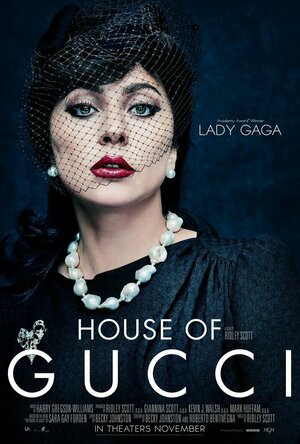
Directed by Ridley Scott with a screenplay by Becky Johnson and Roberto Bentivegna (based on the book by Sara Gay Forden), HOUSE OF GUCCI tells the tale of the Gucci family and their fashion empire as the family sees a transition from the older generation to the new - and the outsider who stirred the pot.
This film is filled with stars - Lady Gaga, Adam Driver, Al Pacino, Jeremy Irons and Jared Leto - and is Directed by the great Ridley Scott, so why didn’t this film work?
Ultimately, films rise and fall with the script and the direction thereof, and unfortunately, both of these fall well short of good…but above bad.
Ridley Scott seemed to direct this film with the attitude of “the actors will fill out the thinness of the script, so I’ll just leave them to their own devices”, and this approach just doesn’t work.
Lady Gaga, so good in A STAR IS BORN, is just a little lost as Patricia Reggiani - the outsider (some would say Gold Digger) who digs her claws into a hapless Maurizio Gucci (Adam Driver). The first part of this film is mostly interesting as we watch Patricia manipulate Maurizio into marrying her - much to the dismay of his unapproving father, Rodolfo Gucci (Jeremy Irons, in the only characterization of this film that works from beginning to end). Driver is mostly good as the milquetoast heir who grows into a Business Mogul, but his character is mostly dealing with internal turmoil that turns into blank expressions on screen - NOT a good move for a movie.
And then the film takes a turn into burlesque with the introduction of Rodolfo’s brother and business partner, Aldo Gucci (Al Pacino) and his “idiot son”, Paolo Gucci (Jared Leto, unrecognizable under his make-up). It’s not often that you can say that Pacino is “out-over-acted” by another performer, but Leto mops the floor with him. While Pacino, actually, dials back his usual tendency to over-act, Leto goes all in on the over-acting front - so much so that one has to wonder what type of film that Leto thought he was acting in.
Ultimately, the film falls short because of a lack of focus. The movie (kind of) tries to tell the story from every characters’ point of view and in that attempt, fails, and ends up telling the story from no one’s point of view. The film starts with Gaga’s character being the entry point into the story for the viewer, but then we kareem off into Driver’s story, somewhat, and them (maybe) Pacino and Leto’s before coming back to Gaga (for a small bit) and then jumping over to Driver’s…
Well, you get the point. House of Gucci loses it’s focus along the way so you are left wishing you could get more from these characters - except for Leto’s - you wish there was a lot less.
Letter Grade: C+
5 stars (out of 10) and you can take that to the Bank(ofMarquis)
Directed by Ridley Scott with a screenplay by Becky Johnson and Roberto Bentivegna (based on the book by Sara Gay Forden), HOUSE OF GUCCI tells the tale of the Gucci family and their fashion empire as the family sees a transition from the older generation to the new - and the outsider who stirred the pot.
This film is filled with stars - Lady Gaga, Adam Driver, Al Pacino, Jeremy Irons and Jared Leto - and is Directed by the great Ridley Scott, so why didn’t this film work?
Ultimately, films rise and fall with the script and the direction thereof, and unfortunately, both of these fall well short of good…but above bad.
Ridley Scott seemed to direct this film with the attitude of “the actors will fill out the thinness of the script, so I’ll just leave them to their own devices”, and this approach just doesn’t work.
Lady Gaga, so good in A STAR IS BORN, is just a little lost as Patricia Reggiani - the outsider (some would say Gold Digger) who digs her claws into a hapless Maurizio Gucci (Adam Driver). The first part of this film is mostly interesting as we watch Patricia manipulate Maurizio into marrying her - much to the dismay of his unapproving father, Rodolfo Gucci (Jeremy Irons, in the only characterization of this film that works from beginning to end). Driver is mostly good as the milquetoast heir who grows into a Business Mogul, but his character is mostly dealing with internal turmoil that turns into blank expressions on screen - NOT a good move for a movie.
And then the film takes a turn into burlesque with the introduction of Rodolfo’s brother and business partner, Aldo Gucci (Al Pacino) and his “idiot son”, Paolo Gucci (Jared Leto, unrecognizable under his make-up). It’s not often that you can say that Pacino is “out-over-acted” by another performer, but Leto mops the floor with him. While Pacino, actually, dials back his usual tendency to over-act, Leto goes all in on the over-acting front - so much so that one has to wonder what type of film that Leto thought he was acting in.
Ultimately, the film falls short because of a lack of focus. The movie (kind of) tries to tell the story from every characters’ point of view and in that attempt, fails, and ends up telling the story from no one’s point of view. The film starts with Gaga’s character being the entry point into the story for the viewer, but then we kareem off into Driver’s story, somewhat, and them (maybe) Pacino and Leto’s before coming back to Gaga (for a small bit) and then jumping over to Driver’s…
Well, you get the point. House of Gucci loses it’s focus along the way so you are left wishing you could get more from these characters - except for Leto’s - you wish there was a lot less.
Letter Grade: C+
5 stars (out of 10) and you can take that to the Bank(ofMarquis)
graveyardgremlin (7194 KP) rated Coyote Moon (Buffy the Vampire Slayer: Season 1, #3) in Books
Feb 15, 2019

<b>3.5 stars
A carnival full of odd workers comes to Sunnydale, Buffy's friends are preoccupied dating a couple of these workers, and a pack of strange coyotes are running amok in the streets. Buffy suspects all of these events are related but has no proof. What's a slayer to do?</b>
Set in the summer between the first and second seasons of <b>Buffy the Vampire Slayer</b>, <b><u>Coyote Moon</u></b> is a short and concise story that conveys the spirit of the show without too many noticeable inaccuracies. The major anachronism was Buffy staying in Sunnydale for the summer, which didn't happen during this time. Since this was written before any of the major angst occurred in the series, this has a lighter feel that carries through to the end. The author manages to get the characters and dialogue right via few lines and passages. The only misstep I caught was Giles' wrong definition of a blue moon -- I don't believe that's something he wouldn't have known. Otherwise everyone (Buffy, Willow, Xander, and Giles) rings true to their early incarnations, though more as a basic outline of their characters than anything too substantial. At first the plot reminded me slightly of the episode "The Pack," though this had to do with coyotes instead of hyenas, but once I got into it the story was completely different. The pace was brisk, and though the Big Bad's defeat was over in the blink of an eye, it was a solid read. I can easily see this fitting right in on screen and it's a good companion piece to read in between re-watching episodes.
A carnival full of odd workers comes to Sunnydale, Buffy's friends are preoccupied dating a couple of these workers, and a pack of strange coyotes are running amok in the streets. Buffy suspects all of these events are related but has no proof. What's a slayer to do?</b>
Set in the summer between the first and second seasons of <b>Buffy the Vampire Slayer</b>, <b><u>Coyote Moon</u></b> is a short and concise story that conveys the spirit of the show without too many noticeable inaccuracies. The major anachronism was Buffy staying in Sunnydale for the summer, which didn't happen during this time. Since this was written before any of the major angst occurred in the series, this has a lighter feel that carries through to the end. The author manages to get the characters and dialogue right via few lines and passages. The only misstep I caught was Giles' wrong definition of a blue moon -- I don't believe that's something he wouldn't have known. Otherwise everyone (Buffy, Willow, Xander, and Giles) rings true to their early incarnations, though more as a basic outline of their characters than anything too substantial. At first the plot reminded me slightly of the episode "The Pack," though this had to do with coyotes instead of hyenas, but once I got into it the story was completely different. The pace was brisk, and though the Big Bad's defeat was over in the blink of an eye, it was a solid read. I can easily see this fitting right in on screen and it's a good companion piece to read in between re-watching episodes.