
ClareR (6256 KP) rated The Silence of the Girls in Books
Nov 14, 2018
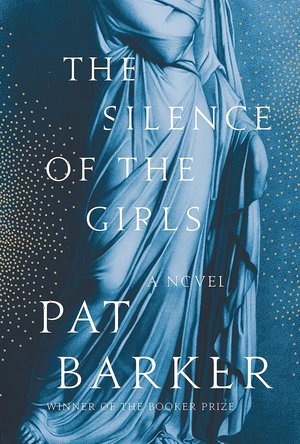


The violence of war is so graphically described in this novel. Briseis, along with the other slave women, are supposed to care for these mens wounds and fulfil their every (sexual) wish - the very men who had murdered their husbands, fathers and sons.
I've never read a Greek myth from the point of view of the women - they were supposed to be silent. Their stories are forgotten, but Pat Barker brings them to life in this book. We hear their sadness, their worries, their opinions of their masters. I could almost smell the filth, smoke, food and sweat of the Greek camp (in reality, I would imagine that I'd walk in the other direction!).
I've always loved the Greek Myths: I read them as a child and a teenager, and I'm really enjoying the resurgence of these stories at the moment. This novel adds another dimension to these stories, which I really loved. I'd highly recommend this book.
Many thanks to NetGalley and Hamish Hamilton for my copy of this book.

Mark @ Carstairs Considers (2690 KP) rated The First Rule (Elvis Cole, #13; Joe Pike, #2) in Books
Dec 13, 2018


I tend to think of Joe Pike as the strong, silent type, probably because he famously doesn't like to talk. The plot of this book shows us a different side of the character. He's still not a talker, but he is much more active and driven in his quest to avenge his friend. Unfortunately, the result didn't quite work for me. Part of it is me since I'm not a fan of revenge stories in general. The book is dark and violent, even for this series, and the twists weren't as good, some of them feeling forced into the story. Since it was the next in the series for me to read, I'm not sorry I read it, but it isn't author Robert Crais at this best. I suspect the fans who love the character of Joe Pike will enjoy this book more than I did.


Not that long ago, I picked up the sequel (for want of a better word) of this on Audible, as part of their 30 day trial. That was The Silent Guides, and largely wasn't really all the relevant to me. However, it did have a short section in which the author summarised his previous work (this), enough to arouse my curiosity.
After finishing it, I still had some credit left, so thought I would pick that earlier work.
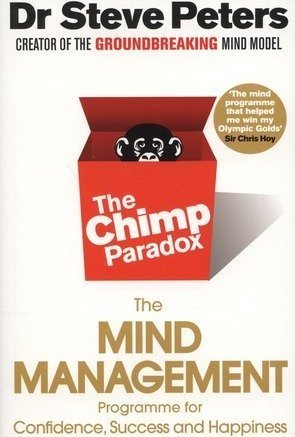
So, what is the Chimp Paradox? Basically, it's a metaphor: Dr Steve Peters has us imagining our minds as (largely) split into 3: The 'Computer' where we store experiences and information, the Chimp (who always acts first and is the emotional part of our mind) and the Human (or us, the more logical part).
This work then provides more details on each of these, and on how they affect our day-to-day life along with theories and suggestions on how to improve said day-to-day life through (and I quote) 'managing our chimp'.
This, I felt, was more relevant to me and my circumstances than the later work (which I picked up first): there were elements in this where I could find myself going "oh, that's an idea … maybe I'll do that …" or "oh, right, I see what he's getting at here …".
Maybe not life changing or the be-all-to-end-all, but it does have some useful suggestions, yes (it's just a pity that Steve Peter's voice is a bit monotone!)

The Pointless Book 3 App
Book, Entertainment and Stickers
App
***From the creators of the #1 bestselling apps THE POINTLESS BOOK and THE POINTLESS BOOK 2 comes...

Sleep Songs
Medical and Music
App
Sleep Songs offers 12 STUDIO QUALITY, lossless instrumental song tracks to put you in a relaxed...

Wounds: A Memoir of Love and War
Book
A family story of a murder, blood and betrayal that tore an Irish town apart and causes men to be...

Pound for Pound: A Story of One Woman's Recovery and the Shelter Dogs Who Loved Her Back to Life
Book
The brave, inspiring story of one woman's recovery from a debilitating eating disorder, and the...

The Ice Museum: In Search of the Lost Land of Thule
Book
Joanna Kavenna went north in search of the Atlantis of the Arctic, the mythical land of Thule. Seen...

The Quest for the Christ Child in the Later Middle Ages
Book
Beginning in the twelfth century, clergy and laity alike started wondering with intensity about the...
