
Search
I Used to be in Pictures: An Untold Story of Hollywood
Austin Mutti-Mewse and Howard Mutti-Mewse
Book
I Used to be in Pictures is a collection of unpublished correspondence between English born...
AH

Alfred Hitchcock: Interviews
Book
Even twenty years after his death and nearly fifty or more years after his creative peak, Alfred...

BankofMarquis (1832 KP) rated The Graduate (1967) in Movies
Jun 16, 2019


Career Defining Turn by Bancroft
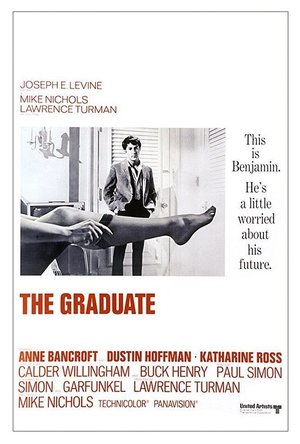
On the surface, THE GRADUATE is a story of a young college graduate who has an affair with an older woman. But look beneath the surface and this film becomes much, much more.
Directed by Mike Nichols, THE GRADUATE tells the tale of Benjamin Braddock a recent College Graduate who returns home to figure out what to do with his life. He enters the film in a malaise and is paralyzed into inaction by no clear direction to his life. Taking advantage of this young man's vulnerability, family friend, Mrs. Robinson, seduces Benjamin but Benjamin realizes that he is in love with Mrs. Robinson's daughter, Elaine.
Sounds pretty straight forward, right? But under the smart, understated Direction of Mike Nichols (who won an Oscar for his work), this film becomes much, much more - subverting the notion of love and lust while driving a narrative that shines a light on the generational gap between parents and adult children in a time of great change in America - oh...and doing it in a subtly comedic way (the screenplay was wonderfully written by the great Buck Henry who makes a cameo in this film as a Hotel clerk).
Nichols, smartly, casts then relative unknown Dustin Hoffman as Benjamin because he was able to play the comedy of the awkwardness of the character (especially early on in the seduction/sex scenes with Mrs. Robinson) as well as showing emotion in emotionlessness. His Benjamin is empty - but not lacking of personality or interest - a tough tightrope to walk, but Hoffman plays it well and earned an Academy Award nomination for his work. His character does become...if I'm being honest...less interesting and more "stalker-ish" (certainly from a 21st Century perspective) as he pursues Elaine in the 2nd half of the film, so this diminishes this performance just a bit.
Also earning an Academy Award nomination is Anne Bancroft who dons a career-defining role as Mrs. Robinson. She was having trouble with the part until Director Nichols reminded her that Mrs. Robinson is seducing Benjamin not out of love or lust, but out of anger at the direction her life has drifted. We find out that Mrs. Robinson was an Art Major in College but gave up anything resembling a career when she got pregnant shortly before marrying Mr. Robinson. You can see the seething anger and resentment in the way Bancroft performs this character, with just a tinge of regret. This is a woman trying to take some control over her life - by controlling her relationship with Benjamin. And, when Benjamin decides it is time to take control of his own life, she resents it and digs her claws in deeper. It is a tour-de-force performance, one of the all-time great female performances in film.
The third side to this triangle is Elaine Robinson and as written - and portrayed by Katherine Ross - this is the most problematic of the characters. Elaine appears to be a well adjusted young woman finishing off her college career and is forced into a "date" with Benjamin at the insistence of Benjamin's parents and Elaine's father (Elaine's mother - Mrs. Robinson - is, understandably, silent on this). There is a good scene in the middle of the film where Benjamin and Elaine make a connection (which spurs Benjamin into his obsession with Elaine) but I couldn't really see what was in it for Elaine. Sure, there is the "break away from the carefully crafted life that my parents have set up for me" angle (and, surely, her desire to NOT marry the pre-Med student that she is engaged to lines right up with that) but I just didn't understand/buy her infatuation with Benjamin. Despite this, Ross earned the 3rd acting Nomination from this film.
Credit all 3 of these performances to Director Nichols who finds the right balance in every scene along with an interesting visual style that punctuates the loneliness and isolation that Benjamin is feeling. Add to that the haunting songs/sounds of the Simon and Garfunkel soundtrack - just about the only music in this film - and you have a funny, haunting and important film that is an interesting look at a time in America (the late '60's) where great change was happening and the "Generation Gap" was never more noticeable.
One last note - I LOVED the closing shot of this film. Nichols let the camera roll just a little longer than the actors expected and the look on their faces change, subtly, from surety of their decision and direction to a more "unsure" look. It is a perfect, ambiguous, way to end and I applaud Nichols for making this strong choice.
Come for the seduction, stay for the subtle humor and to watch a Director at the top of his game.
Letter Grade: A
9 stars (out of 10) and you can take that to the Bank (ofMarquis)
Directed by Mike Nichols, THE GRADUATE tells the tale of Benjamin Braddock a recent College Graduate who returns home to figure out what to do with his life. He enters the film in a malaise and is paralyzed into inaction by no clear direction to his life. Taking advantage of this young man's vulnerability, family friend, Mrs. Robinson, seduces Benjamin but Benjamin realizes that he is in love with Mrs. Robinson's daughter, Elaine.
Sounds pretty straight forward, right? But under the smart, understated Direction of Mike Nichols (who won an Oscar for his work), this film becomes much, much more - subverting the notion of love and lust while driving a narrative that shines a light on the generational gap between parents and adult children in a time of great change in America - oh...and doing it in a subtly comedic way (the screenplay was wonderfully written by the great Buck Henry who makes a cameo in this film as a Hotel clerk).
Nichols, smartly, casts then relative unknown Dustin Hoffman as Benjamin because he was able to play the comedy of the awkwardness of the character (especially early on in the seduction/sex scenes with Mrs. Robinson) as well as showing emotion in emotionlessness. His Benjamin is empty - but not lacking of personality or interest - a tough tightrope to walk, but Hoffman plays it well and earned an Academy Award nomination for his work. His character does become...if I'm being honest...less interesting and more "stalker-ish" (certainly from a 21st Century perspective) as he pursues Elaine in the 2nd half of the film, so this diminishes this performance just a bit.
Also earning an Academy Award nomination is Anne Bancroft who dons a career-defining role as Mrs. Robinson. She was having trouble with the part until Director Nichols reminded her that Mrs. Robinson is seducing Benjamin not out of love or lust, but out of anger at the direction her life has drifted. We find out that Mrs. Robinson was an Art Major in College but gave up anything resembling a career when she got pregnant shortly before marrying Mr. Robinson. You can see the seething anger and resentment in the way Bancroft performs this character, with just a tinge of regret. This is a woman trying to take some control over her life - by controlling her relationship with Benjamin. And, when Benjamin decides it is time to take control of his own life, she resents it and digs her claws in deeper. It is a tour-de-force performance, one of the all-time great female performances in film.
The third side to this triangle is Elaine Robinson and as written - and portrayed by Katherine Ross - this is the most problematic of the characters. Elaine appears to be a well adjusted young woman finishing off her college career and is forced into a "date" with Benjamin at the insistence of Benjamin's parents and Elaine's father (Elaine's mother - Mrs. Robinson - is, understandably, silent on this). There is a good scene in the middle of the film where Benjamin and Elaine make a connection (which spurs Benjamin into his obsession with Elaine) but I couldn't really see what was in it for Elaine. Sure, there is the "break away from the carefully crafted life that my parents have set up for me" angle (and, surely, her desire to NOT marry the pre-Med student that she is engaged to lines right up with that) but I just didn't understand/buy her infatuation with Benjamin. Despite this, Ross earned the 3rd acting Nomination from this film.
Credit all 3 of these performances to Director Nichols who finds the right balance in every scene along with an interesting visual style that punctuates the loneliness and isolation that Benjamin is feeling. Add to that the haunting songs/sounds of the Simon and Garfunkel soundtrack - just about the only music in this film - and you have a funny, haunting and important film that is an interesting look at a time in America (the late '60's) where great change was happening and the "Generation Gap" was never more noticeable.
One last note - I LOVED the closing shot of this film. Nichols let the camera roll just a little longer than the actors expected and the look on their faces change, subtly, from surety of their decision and direction to a more "unsure" look. It is a perfect, ambiguous, way to end and I applaud Nichols for making this strong choice.
Come for the seduction, stay for the subtle humor and to watch a Director at the top of his game.
Letter Grade: A
9 stars (out of 10) and you can take that to the Bank (ofMarquis)
Radio Three Sixty ACC
Podcast
MUSIC DISCOVERY***IPOD, IPAD, IPHONE AND HEADPHONE FRIENDLY. WELCOME TO THE WORLD OF RADIO THREE...

Animation: A World History: Volume I: Foundations - The Golden Age
Book
A continuation of 1994's groundbreaking Cartoons, Giannalberto Bendazzi's Animation: A World History...

Jon Savage recommended It (1927) in Movies (curated)

Emma @ The Movies (1786 KP) rated Bad Times at the El Royale (2018) in Movies
Sep 25, 2019
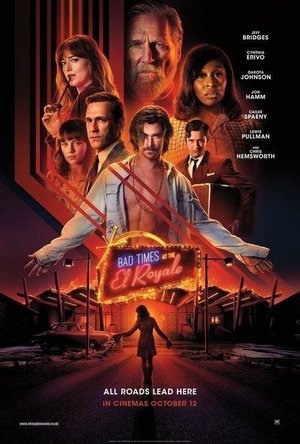

What can I say about this one? I left the cinema pondering. I'm still pondering this morning trying to work out what to score it. I wasn't bored, yet I wasn't enthralled. It felt long, but not too long. I could follow the story lines, but some of them didn't quite make sense... It's definitely a contender for Goldilocks of the Year.
I was keen on watching this after seeing the trailer. A star studded cast and an intriguing idea really is all you need to hook people in. I can't decide (I know, it's happening a lot this review) if the trailer gave too much away. Could they have kept more elements back as a surprise? Possibly that wouldn't have left such a sense of anticipation about the film.
Being set in 1969 we're obviously given a lot of classic tunes through the jukebox and singing of Darlene Sweet. The latter is goosebump inducing at times and magical to listen to.
The way this movie is told is very reminiscent of a lot of things to me. I was getting flashes of Kill Bill and Lost, and as Drew Goddard was involved with Lost that's probably not a coincidence. The scenario also made me think of the 2003 film Identity and an episode of Criminal Minds called Paradise.
I enjoyed seeing each person's journey that led them up to the El Royale. You feel much more involved in the story because you switch allegiances between the characters every time you see a new perspective. It also gives you just enough of teaser to something that's going to happen to draw you further in.
The use of intertitle cards felt a little out of place, it's not really a sixties thing and the style of them didn't seem to fit with the film itself. They do their job which is to say "now for a bit of back story on this person" but looking a little less silent movie and a little more El Royale wouldn't have gone amiss.
A whole section of story line seemed to have no conclusion, for reasons that will be partly obvious to you when you see the film. What I can't work out is if I missed something about it that would have left me less confused. This movie could definitely do with a second watch.
What you should do
I'd probably recommend watching this one at home on DVD or streaming with a bunch of movie friends. It feels like it needs discussing more than watching.
You should also probably watch this gif a lot. I'm only sorry that I can't find a longer version without other distractions in it... like the rest of the film.
Movie thing you wish you could take home
I'd quite like the El Royale to live in. Although I think I'd convert the spying corridor into a regular corridor and make the whole place a home rather than a playground for snooping and murder.
I was keen on watching this after seeing the trailer. A star studded cast and an intriguing idea really is all you need to hook people in. I can't decide (I know, it's happening a lot this review) if the trailer gave too much away. Could they have kept more elements back as a surprise? Possibly that wouldn't have left such a sense of anticipation about the film.
Being set in 1969 we're obviously given a lot of classic tunes through the jukebox and singing of Darlene Sweet. The latter is goosebump inducing at times and magical to listen to.
The way this movie is told is very reminiscent of a lot of things to me. I was getting flashes of Kill Bill and Lost, and as Drew Goddard was involved with Lost that's probably not a coincidence. The scenario also made me think of the 2003 film Identity and an episode of Criminal Minds called Paradise.
I enjoyed seeing each person's journey that led them up to the El Royale. You feel much more involved in the story because you switch allegiances between the characters every time you see a new perspective. It also gives you just enough of teaser to something that's going to happen to draw you further in.
The use of intertitle cards felt a little out of place, it's not really a sixties thing and the style of them didn't seem to fit with the film itself. They do their job which is to say "now for a bit of back story on this person" but looking a little less silent movie and a little more El Royale wouldn't have gone amiss.
A whole section of story line seemed to have no conclusion, for reasons that will be partly obvious to you when you see the film. What I can't work out is if I missed something about it that would have left me less confused. This movie could definitely do with a second watch.
What you should do
I'd probably recommend watching this one at home on DVD or streaming with a bunch of movie friends. It feels like it needs discussing more than watching.
You should also probably watch this gif a lot. I'm only sorry that I can't find a longer version without other distractions in it... like the rest of the film.
Movie thing you wish you could take home
I'd quite like the El Royale to live in. Although I think I'd convert the spying corridor into a regular corridor and make the whole place a home rather than a playground for snooping and murder.

Gareth von Kallenbach (980 KP) rated Mad Max: Fury Road (2015) in Movies
Jun 19, 2019
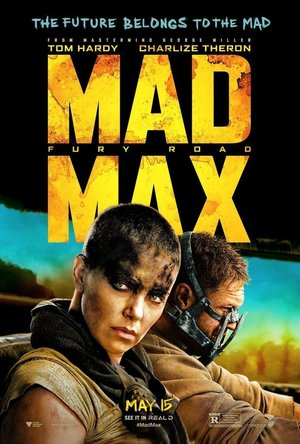
When we last saw former cop turned wasteland warrior Max, it was nearly 30 years ago. Writer/Director George Miller had envisioned a follow up back in 2000, but various factors delayed the film so much that star Mel Gibson believed he had become too old to play the character which opened the door for Tom Hardy to don the knee brace of the famous character.
In “Fury Road”, fans are given a lavish spectacle that is one non-stop ride of intensity that is as my wife put it, “pushing me so far back into my seat that I am almost in the row behind us”.
When Max is captured by a vicious group lead by Immortal Joe, he stumbles into a true hell on earth as Joe has legions of warriors, most of whom have various health issues, it is assumed from the post nuclear world in which they live. They use captured individuals as blood donors to help make the sick live longer and Joe himself controls a large supply of fresh water as well as oversees what he considers his breeding stock of women.
When Imperator Furiosa (Charlize Theron), goes rogue and abducts Joe’s harem, this begins a breakneck and deadly pursuit across the wastelands where Max finds himself literally chained to the front of a car as a blood bag for the driver.
Amidst the eventually carnage that follows, Max is able to free himself and forges an uneasy alliance with Furiosa as she is attempting to lead the women she has liberated from Joe to safety.
With Joe and his large band of followers hot on their heels, Max must once again face overwhelming odds to save the day.
The film does an amazing job of creating an intense visual spectacle as the car chases and combat take up a good half the film and they are absolutely breathtaking to watch. CGI is kept to a minimum and what you see on the screen is a clash of metal as vehicles flip through the air, crash, and explode in spectacular fashion.
The film though is light on details as much of the story is left for you to read between the lines and fill in the blanks. Theron has explained her characters motivations very well in interviews but in the film it is at times murky. The limited dialogue in the film can at times be hard to understand due to accent and a form of “New Speak” but it is Hardy himself who is most interesting. He plays Max as a strong and silent type who is haunted by ghosts of his past, the people he could not save are a constant presence in his life as he sees them in his dreams and when he is awake, this leads to a character who is reduced to little more than pure survival instinct and does not allow for much in the way of character development.
In many ways this is a reintroduction of Max to a new generation so much of the charisma and intensity that was a part of Gibson’s portrayal has been scaled back to a world weary individual who has pretty much given up on finding the better life that he lost many years ago.
Miller has said he has enough material for two more films and if they are in the same league as this one, I would love to see further adventures for Max, let us just hope the wait is not as long next time out.
http://sknr.net/2015/05/14/mad-max-fury-road/
In “Fury Road”, fans are given a lavish spectacle that is one non-stop ride of intensity that is as my wife put it, “pushing me so far back into my seat that I am almost in the row behind us”.
When Max is captured by a vicious group lead by Immortal Joe, he stumbles into a true hell on earth as Joe has legions of warriors, most of whom have various health issues, it is assumed from the post nuclear world in which they live. They use captured individuals as blood donors to help make the sick live longer and Joe himself controls a large supply of fresh water as well as oversees what he considers his breeding stock of women.
When Imperator Furiosa (Charlize Theron), goes rogue and abducts Joe’s harem, this begins a breakneck and deadly pursuit across the wastelands where Max finds himself literally chained to the front of a car as a blood bag for the driver.
Amidst the eventually carnage that follows, Max is able to free himself and forges an uneasy alliance with Furiosa as she is attempting to lead the women she has liberated from Joe to safety.
With Joe and his large band of followers hot on their heels, Max must once again face overwhelming odds to save the day.
The film does an amazing job of creating an intense visual spectacle as the car chases and combat take up a good half the film and they are absolutely breathtaking to watch. CGI is kept to a minimum and what you see on the screen is a clash of metal as vehicles flip through the air, crash, and explode in spectacular fashion.
The film though is light on details as much of the story is left for you to read between the lines and fill in the blanks. Theron has explained her characters motivations very well in interviews but in the film it is at times murky. The limited dialogue in the film can at times be hard to understand due to accent and a form of “New Speak” but it is Hardy himself who is most interesting. He plays Max as a strong and silent type who is haunted by ghosts of his past, the people he could not save are a constant presence in his life as he sees them in his dreams and when he is awake, this leads to a character who is reduced to little more than pure survival instinct and does not allow for much in the way of character development.
In many ways this is a reintroduction of Max to a new generation so much of the charisma and intensity that was a part of Gibson’s portrayal has been scaled back to a world weary individual who has pretty much given up on finding the better life that he lost many years ago.
Miller has said he has enough material for two more films and if they are in the same league as this one, I would love to see further adventures for Max, let us just hope the wait is not as long next time out.
http://sknr.net/2015/05/14/mad-max-fury-road/

Bob Mann (459 KP) rated On Chesil Beach (2018) in Movies
Sep 29, 2021

Flawed but moving tale of a bygone sexual era.
As you might notice from my lack of recent posts, the day job is getting in a way a bit at the moment. But one film I wanted to catch was this adaptation of Ian McEwan’s novel. What’s both an advantage and a disadvantage of catching a film late is that you can’t help avoid absorbing some of the reviews of others: Kevin Maher of the Times gave this a rather sniffy two stars; Amy from “Oh That Film Blog” was much more measured (an excellent review: man, that girl can write!). Last night, I actually ended up enjoying the film much more than I was expecting to.
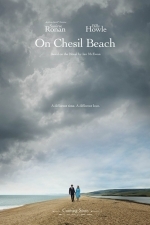
Set against Dorset’s spectacular shingle bank of Chesil Beach (which is a bitch to walk along!) the story, set primarily in 1962, joins two newly-weds Florence (Saoirse Ronan, “Brooklyn“, “Lady Bird“) and Edward (Billy Howle, “Dunkirk“) about to embark on the sexual adventure of their consummation at a seaside hotel. The timing of the film is critical: 1962 really marked the watershed between the staid conservatism and goody-two-shoes-ness of the 50’s and the sexual liberation of the swinging sixties. Sex before marriage was frowned upon. The problem for Florence and Edward is that sex after marriage is looking pretty unlikely too! For the inexperienced couple have more hang-ups about sex than there are pebbles on the beach.
The lead-up to their union is squirm-inducing to watch: a silent silver-service meal in their room; incompetent fumbling with zippers; shoes that refuse to come off. To prolong the agony for the viewer, we work through flashbacks of their first meeting at Oxford University and their dysfunctional family lives: for Florence a bullying father and mother (Samuel West and Emily Watson) and for Edward a loving but stressed father (TV regular, Adrian Scarborough) due to a mentally impaired mother (Anne-Marie Duff, “Suffragette“, “Before I Go To Sleep“).
As Ian McEwan is known to do (as per the end of “Atonement” for example), there are a couple of clever “Oh My God” twists in the tale: one merely hinted at in flashback; another involving a record-buying child that is also unresolved but begs a massive question.
The first half of the film is undoubtedly better than the last: while the screenplay is going for the “if only” twist of films like “Sliding Doors” and “La La Land“, the film over-stretches with some dodgy make-up where alternative actors would have been a far better choice. The ending still had the power to move me though.
Saoirse Ronan is magnificent: I don’t think I’ve seen the young Irish-American in a film I didn’t enjoy. Here she is back with a McEwan adaptation again and bleeds discomfort with every line of her face. Her desperate longing to talk to someone – such as the kindly probing vicar – is constantly counteracted by her shame and embarassment. Howle also holds his own well (no pun intended) but when up against the acting tour de force of Ronan he is always going to appear in second place.
A brave performance comes from Anne-Marie Duff who shines as the mentally wayward mother. The flashback where we see how she came to be that way is wholly predicatable but still manages to shock. And Duff is part of a strong ensemble cast who all do their bit.
Another star of the show for me is the photography by Sean Bobbitt (“12 Years a Slave“) which portrays the windswept Dorset beach beautifully but manages to get the frame close and claustrophobic when it needs to be. Wide panoramas with characters barely on the left and right of the frame will play havoc with DVD ratios on TV, but work superbly on the big screen.
Directed by stage-director Dominic Cooke, in his movie-directing debut, this is a brave story to try to move from page to screen and while it is not without faults it is a ball-achingly sad tale that moved me. Recommended if you enjoyed the similarly sad tale of “Atonement”.
Set against Dorset’s spectacular shingle bank of Chesil Beach (which is a bitch to walk along!) the story, set primarily in 1962, joins two newly-weds Florence (Saoirse Ronan, “Brooklyn“, “Lady Bird“) and Edward (Billy Howle, “Dunkirk“) about to embark on the sexual adventure of their consummation at a seaside hotel. The timing of the film is critical: 1962 really marked the watershed between the staid conservatism and goody-two-shoes-ness of the 50’s and the sexual liberation of the swinging sixties. Sex before marriage was frowned upon. The problem for Florence and Edward is that sex after marriage is looking pretty unlikely too! For the inexperienced couple have more hang-ups about sex than there are pebbles on the beach.
The lead-up to their union is squirm-inducing to watch: a silent silver-service meal in their room; incompetent fumbling with zippers; shoes that refuse to come off. To prolong the agony for the viewer, we work through flashbacks of their first meeting at Oxford University and their dysfunctional family lives: for Florence a bullying father and mother (Samuel West and Emily Watson) and for Edward a loving but stressed father (TV regular, Adrian Scarborough) due to a mentally impaired mother (Anne-Marie Duff, “Suffragette“, “Before I Go To Sleep“).
As Ian McEwan is known to do (as per the end of “Atonement” for example), there are a couple of clever “Oh My God” twists in the tale: one merely hinted at in flashback; another involving a record-buying child that is also unresolved but begs a massive question.
The first half of the film is undoubtedly better than the last: while the screenplay is going for the “if only” twist of films like “Sliding Doors” and “La La Land“, the film over-stretches with some dodgy make-up where alternative actors would have been a far better choice. The ending still had the power to move me though.
Saoirse Ronan is magnificent: I don’t think I’ve seen the young Irish-American in a film I didn’t enjoy. Here she is back with a McEwan adaptation again and bleeds discomfort with every line of her face. Her desperate longing to talk to someone – such as the kindly probing vicar – is constantly counteracted by her shame and embarassment. Howle also holds his own well (no pun intended) but when up against the acting tour de force of Ronan he is always going to appear in second place.
A brave performance comes from Anne-Marie Duff who shines as the mentally wayward mother. The flashback where we see how she came to be that way is wholly predicatable but still manages to shock. And Duff is part of a strong ensemble cast who all do their bit.
Another star of the show for me is the photography by Sean Bobbitt (“12 Years a Slave“) which portrays the windswept Dorset beach beautifully but manages to get the frame close and claustrophobic when it needs to be. Wide panoramas with characters barely on the left and right of the frame will play havoc with DVD ratios on TV, but work superbly on the big screen.
Directed by stage-director Dominic Cooke, in his movie-directing debut, this is a brave story to try to move from page to screen and while it is not without faults it is a ball-achingly sad tale that moved me. Recommended if you enjoyed the similarly sad tale of “Atonement”.