
Search

Zuky the BookBum (15 KP) rated Let's Go Play At The Adams' in Books
Mar 15, 2018


<b><i>Warning, this review is kind-of spoilery.</i></b>
Im not even sure where to start with this review what a disturbing, strange, and violent novel.
I had so many different thoughts running through my head with this novel, that I actually had to start myself a little review notebook where I could put all my thoughts on paper. This is going to be a long review I can already feel it.
I should start by saying, this book turned out to be nothing like I thought it would be, but that hasnt let me down. This is a very uncomfortable 4 star read. Where American Psycho was 5 stars because I enjoyed the reading experience and Patrick Batemans deranged, dorky character (in the least sadistic way possible), this is the complete opposite. This was an unenjoyable 4 stars because it was just so dark and disturbing am I making sense?
What struck me about this novel at the beginning was that I disliked our victim, Barbara. She awoke gagged and tied up, and was merely annoyed, if not amused by the childrens game. Even later, when she realised that she really was a prisoner, she was snooty and still thought herself better than the children. Obviously, as the torture progressed and got worse, my opinion of her did change, as she changed too.
While this book sounds like its going to be a quick, dark story about the kidnapping and torture of a babysitter, its actually a lot slower than that and there isnt a huge amount of the torture in front of our eyes. It goes on behind closed doors and is only hinted towards this doesnt make it any less skin crawling, however! This novel is largely focused on the characters and their thoughts throughout the week-long crime.
A lot of peoples reviews mentioned how the characters in this werent believable, but I think otherwise. Yes, maybe the idea that 5 kids all come together and mutually agree to kidnap and torture an adult is a little strange, but as individual people, I think its easy to assume they all really exist.
The eldest of the group is Dianne, at the age of 17, and I personally think she was the least likable but also least believe character. Her involvement in the kidnapping went no further than just because she was in charge of all the children simply because she was the oldest and she let them do whatever they wanted. She had no motive to want to hurt Barbara, she was simply cruel for crueltys sake.
Secondly, theres John, aged 16, and his involvement in the kidnapping went a lot further and was a lot more controversial. He had a motive, and that was simply lust. A sexually frustrated teenager is definitely easy to imagine and while only a teeny tiny amount go on to commit sex crimes, its totally plausible.
Afterwards comes Paul, aged 12, whose presence in the story is very strange. Hes not really got any motive other than his own dark desires. A weirdo 12 year old with violent tendencies is really nothing new Paul was just a little more over the top!
Next is Bobby, aged 10, the only kid of the bunch who shows any remorse at what theyve done. I personally feel that Bobby was the subject of peer-pressure. He thought kidnapping an adult would be fun, and as a young child, couldnt comprehend the consequences of his actions. Other reviewers didnt feel sorry for Bobby, but in a way, I did.
Lastly is Cindy, the youngest of the group at 9 years old. Cindy doesnt feature in the novel an awful lot, but when she does shes simply a bored young girl who doesnt fully understand the reality of whats happening. Even at the end, when things are getting more and more violent, Cindy doesnt care. Shes just going along with the rest of her friends.
As I mentioned before, there isnt a huge amount of on screen torture and violence, but when it is there, its grotesque and nightmarish. Johnson really did know how to write horrifying descriptions. Reading bits and pieces got really dark and at times I felt pretty squeamish.
One quick thing to say about the writing is that it really would have been nice to have more paragraph breaks! When the story is so dark and heavy, you need a bit of a breather sometimes, and you didnt get much of that with this novel.
Right, sorry this review has been a bit of a long, messy ramble! I really wasnt sure how to go about reviewing this weird, sinister book. If you like horrible books that are going to make you feel uncomfortable, and you can get your hands on this for cheap, I think its worth reading even just to be able to say youve read it! But its definitely, definitely not for everyone not even every horror reader.
<i>Thanks to Virginia on Goodreads for lending me her copy to read!</i>
Im not even sure where to start with this review what a disturbing, strange, and violent novel.
I had so many different thoughts running through my head with this novel, that I actually had to start myself a little review notebook where I could put all my thoughts on paper. This is going to be a long review I can already feel it.
I should start by saying, this book turned out to be nothing like I thought it would be, but that hasnt let me down. This is a very uncomfortable 4 star read. Where American Psycho was 5 stars because I enjoyed the reading experience and Patrick Batemans deranged, dorky character (in the least sadistic way possible), this is the complete opposite. This was an unenjoyable 4 stars because it was just so dark and disturbing am I making sense?
What struck me about this novel at the beginning was that I disliked our victim, Barbara. She awoke gagged and tied up, and was merely annoyed, if not amused by the childrens game. Even later, when she realised that she really was a prisoner, she was snooty and still thought herself better than the children. Obviously, as the torture progressed and got worse, my opinion of her did change, as she changed too.
While this book sounds like its going to be a quick, dark story about the kidnapping and torture of a babysitter, its actually a lot slower than that and there isnt a huge amount of the torture in front of our eyes. It goes on behind closed doors and is only hinted towards this doesnt make it any less skin crawling, however! This novel is largely focused on the characters and their thoughts throughout the week-long crime.
A lot of peoples reviews mentioned how the characters in this werent believable, but I think otherwise. Yes, maybe the idea that 5 kids all come together and mutually agree to kidnap and torture an adult is a little strange, but as individual people, I think its easy to assume they all really exist.
The eldest of the group is Dianne, at the age of 17, and I personally think she was the least likable but also least believe character. Her involvement in the kidnapping went no further than just because she was in charge of all the children simply because she was the oldest and she let them do whatever they wanted. She had no motive to want to hurt Barbara, she was simply cruel for crueltys sake.
Secondly, theres John, aged 16, and his involvement in the kidnapping went a lot further and was a lot more controversial. He had a motive, and that was simply lust. A sexually frustrated teenager is definitely easy to imagine and while only a teeny tiny amount go on to commit sex crimes, its totally plausible.
Afterwards comes Paul, aged 12, whose presence in the story is very strange. Hes not really got any motive other than his own dark desires. A weirdo 12 year old with violent tendencies is really nothing new Paul was just a little more over the top!
Next is Bobby, aged 10, the only kid of the bunch who shows any remorse at what theyve done. I personally feel that Bobby was the subject of peer-pressure. He thought kidnapping an adult would be fun, and as a young child, couldnt comprehend the consequences of his actions. Other reviewers didnt feel sorry for Bobby, but in a way, I did.
Lastly is Cindy, the youngest of the group at 9 years old. Cindy doesnt feature in the novel an awful lot, but when she does shes simply a bored young girl who doesnt fully understand the reality of whats happening. Even at the end, when things are getting more and more violent, Cindy doesnt care. Shes just going along with the rest of her friends.
As I mentioned before, there isnt a huge amount of on screen torture and violence, but when it is there, its grotesque and nightmarish. Johnson really did know how to write horrifying descriptions. Reading bits and pieces got really dark and at times I felt pretty squeamish.
One quick thing to say about the writing is that it really would have been nice to have more paragraph breaks! When the story is so dark and heavy, you need a bit of a breather sometimes, and you didnt get much of that with this novel.
Right, sorry this review has been a bit of a long, messy ramble! I really wasnt sure how to go about reviewing this weird, sinister book. If you like horrible books that are going to make you feel uncomfortable, and you can get your hands on this for cheap, I think its worth reading even just to be able to say youve read it! But its definitely, definitely not for everyone not even every horror reader.
<i>Thanks to Virginia on Goodreads for lending me her copy to read!</i>
Hadley (567 KP) rated The Other Mrs. in Books
Apr 4, 2020


Mental illness done correctly (1 more)
Addictive
Mental illness.
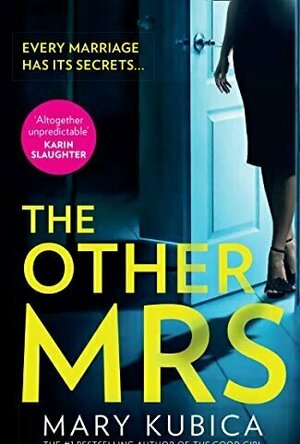
I've read a lot of horror books that cover this subject, watched horror movies covering this subject, listened to music covering this subject, but none of them have covered mental illness as well and correctly as Mary Kubica's "The Other Mrs.."
So, with that said, if you have any type of PTSD, this book may be hard for you to read. Otherwise, this novel is very addicting, filled with so many twists and turns that you won't be able to set it down for long. For me, someone who deals with C-PTSD, 'The Other Mrs.' by Mary Kubica has been a heartache to read, but also very fulfilling to finish.
Kubica is known for her best-selling novel 'the Good Girl' - - - a thriller following a mother and a detective in search of the the former's missing daughter that leads them down a twisted tale of family secrets. From highly acclaimed critics, 'the Other Mrs.' has out-done 'the Good Girl' as Kubica's best novel so far. Kubica sticks with her psychological thriller writing that she is known for in this newest novel. She keeps the reader guessing at what will happen next, and she plays out mental illnesses in a way that most who suffer can relate while winding in a mystery well enough that the reader won't be able to guess everything before the ending.
I can't give such a heavy review on this book because, to do so, would give away a lot of the ending, so I'll stick to talking about noteworthy characters that make up the novel. The main character is a woman named Sadie, whose family is being uprooted from Chicago and moved to a small island in Maine after her husband's sister dies, which leaves them with not only a house in the will, but a sixteen-year-old niece named Imogen.
Sadie is already a mother of two sons, both younger than sixteen, when she suddenly finds herself in-charge of the stereo-typical edgy teenager, Imogen. Sadie describes her the first time she sees Imogen: " But there she stands, a morose figure dressed in black. Black jeans, a black shirt, bare feet. Her hair is black, long with bangs that slant sideways across her face. Her eyes are outlined in a thick slash of black eyeliner. Everything black, aside from the white lettering on her shirt, which reads, I want to die. The septum of her nose is pierced. Her skin, in contrast to everything else, is white, pallid, ghostlike. She's thin. "
Early one morning when Sadie is heading off to work, she finds a word spelled on her car window. The word reads: "Die." Sadie, as most readers, quickly assumes that Imogen is responsibly for this, as she tries to explain: "I've tried to be understanding because of how awful the situation must be for her. Her life has been upended. She lost her mother and now must share her home with people she doesn't know. But that doesn't justify threatening me. Because Imogen doesn't mince words. She means just what she said. She wants me to die."
The next character that makes up a big part of this story is a confident, self-centered woman, whose name is Camille,and is also the 'other woman' in this story. Camille is a woman who gets what and who she wants, and won't let anyone get in her way, including Sadie, whose husband is someone Camille wants. I can't go much into the things that Camille's character does because it would give away a lot of the surprises in this novel - - - I can say though that there is murder and mystery throughout; the book will leave most readers guessing until the very end.
One other character who deserves mentioning is a little girl- - - with the nickname 'Mouse' - - - who finds herself suddenly dealing with a horrific stepmother, who abuses her physically and mentally unbeknownst to Mouse's father. One time, in which Mouse shows how smart she is to her the stepmother while being in front of her father (who Mouse likes to call 'Fake Mom'), later that night, when Mouse's father isn't looking, Fake Mom lets Mouse know how she felt about that:
" But later that night, when he father wasn't looking, Fake Mom got down into Mouse's face and told her if she ever made her look stupid again in front of her father, there would be hell to pay. Fake Mom's face got all red. She bared her teeth like a dog does when it's mad. A vein stuck out of her forehead. It throbbed. Fake Mom spit when she spoke, like she was so mad she couldn't stop herself from spitting. Like she was spitting mad. She spit on Mouse's face but Mouse didn't dare raise a hand to wipe it away."
Mental and physical abuse make up all that The Other Mrs. is about. So far, this is the best story I have read in a long time. My only problem with it is it's written like a YA novel, where it seems Kubica tried to keep that from happening by throwing in some heavy syllable words to make it more fitting for adults. But, luckily, she left out most of the wishy-washy elements that make up YA novels, so I believe most adults will enjoy this. I highly recommend this book to people who love murder mysteries!
I've read a lot of horror books that cover this subject, watched horror movies covering this subject, listened to music covering this subject, but none of them have covered mental illness as well and correctly as Mary Kubica's "The Other Mrs.."
So, with that said, if you have any type of PTSD, this book may be hard for you to read. Otherwise, this novel is very addicting, filled with so many twists and turns that you won't be able to set it down for long. For me, someone who deals with C-PTSD, 'The Other Mrs.' by Mary Kubica has been a heartache to read, but also very fulfilling to finish.
Kubica is known for her best-selling novel 'the Good Girl' - - - a thriller following a mother and a detective in search of the the former's missing daughter that leads them down a twisted tale of family secrets. From highly acclaimed critics, 'the Other Mrs.' has out-done 'the Good Girl' as Kubica's best novel so far. Kubica sticks with her psychological thriller writing that she is known for in this newest novel. She keeps the reader guessing at what will happen next, and she plays out mental illnesses in a way that most who suffer can relate while winding in a mystery well enough that the reader won't be able to guess everything before the ending.
I can't give such a heavy review on this book because, to do so, would give away a lot of the ending, so I'll stick to talking about noteworthy characters that make up the novel. The main character is a woman named Sadie, whose family is being uprooted from Chicago and moved to a small island in Maine after her husband's sister dies, which leaves them with not only a house in the will, but a sixteen-year-old niece named Imogen.
Sadie is already a mother of two sons, both younger than sixteen, when she suddenly finds herself in-charge of the stereo-typical edgy teenager, Imogen. Sadie describes her the first time she sees Imogen: " But there she stands, a morose figure dressed in black. Black jeans, a black shirt, bare feet. Her hair is black, long with bangs that slant sideways across her face. Her eyes are outlined in a thick slash of black eyeliner. Everything black, aside from the white lettering on her shirt, which reads, I want to die. The septum of her nose is pierced. Her skin, in contrast to everything else, is white, pallid, ghostlike. She's thin. "
Early one morning when Sadie is heading off to work, she finds a word spelled on her car window. The word reads: "Die." Sadie, as most readers, quickly assumes that Imogen is responsibly for this, as she tries to explain: "I've tried to be understanding because of how awful the situation must be for her. Her life has been upended. She lost her mother and now must share her home with people she doesn't know. But that doesn't justify threatening me. Because Imogen doesn't mince words. She means just what she said. She wants me to die."
The next character that makes up a big part of this story is a confident, self-centered woman, whose name is Camille,and is also the 'other woman' in this story. Camille is a woman who gets what and who she wants, and won't let anyone get in her way, including Sadie, whose husband is someone Camille wants. I can't go much into the things that Camille's character does because it would give away a lot of the surprises in this novel - - - I can say though that there is murder and mystery throughout; the book will leave most readers guessing until the very end.
One other character who deserves mentioning is a little girl- - - with the nickname 'Mouse' - - - who finds herself suddenly dealing with a horrific stepmother, who abuses her physically and mentally unbeknownst to Mouse's father. One time, in which Mouse shows how smart she is to her the stepmother while being in front of her father (who Mouse likes to call 'Fake Mom'), later that night, when Mouse's father isn't looking, Fake Mom lets Mouse know how she felt about that:
" But later that night, when he father wasn't looking, Fake Mom got down into Mouse's face and told her if she ever made her look stupid again in front of her father, there would be hell to pay. Fake Mom's face got all red. She bared her teeth like a dog does when it's mad. A vein stuck out of her forehead. It throbbed. Fake Mom spit when she spoke, like she was so mad she couldn't stop herself from spitting. Like she was spitting mad. She spit on Mouse's face but Mouse didn't dare raise a hand to wipe it away."
Mental and physical abuse make up all that The Other Mrs. is about. So far, this is the best story I have read in a long time. My only problem with it is it's written like a YA novel, where it seems Kubica tried to keep that from happening by throwing in some heavy syllable words to make it more fitting for adults. But, luckily, she left out most of the wishy-washy elements that make up YA novels, so I believe most adults will enjoy this. I highly recommend this book to people who love murder mysteries!
Hadley (567 KP) rated The Dark Descent of Elizabeth Frankenstein in Books
Apr 6, 2019

Contains spoilers, click to show
The most amazing thing about classic horror stories is how they still influence many writers today.
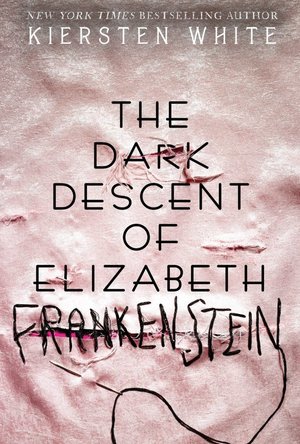
To read 'the Dark Descent of Elizabeth Frankenstein,' you don't have to know anything about Mary Shelley's original creation. No, this book seems to take the story of Dr. Frankenstein in a completely different direction than what was known 200 years ago. I, personally, haven't read Shelley's book, but after reading this one, I certainly want to now. Victor Frankenstein is the most interesting character I have read about in a long time.
'The Dark Descent of Elizabeth Frankenstein' takes us to Victor's childhood, where we observe him becoming the insane doctor that he was in 'Frankenstein' - but this one doesn't pass Victor's 21st birthday, and his creation of a 'creature' is much earlier than in Shelley's version. This book was still very enjoyable,even if it doesn't line up with the classic. But instead of following Victor's descent into darkness, we follow Elizabeth's ascension from darkness through her need to be taken care of for the remainder of her life - 'And if Victor did not seem to respond to my sweetness,I would simply cry. He never could stand it when I cried. It would hurt him. I smiled in anticipation, letting the meanness at my core stretch like ill-used muscles' Another interesting part of this book is seeing how well the author, White, creates a sociopathic lead female character, who has tailored herself to wearing the right faces and acting a certain way to get what she wants.
We enter the book with Elizabeth and her good friend, Justine, on a trip to find Victor, who has stopped writing from school some months before - Victor's mother had died before he left, and now Elizabeth was questioning whether or not his father was going to keep her around. We get flash backs here and there of Elizabeth and Victor as children together. The reader is shown that Elizabeth is the only person who can calm Victor during his 'rages,' and she seems to be the only person he allowed inside his world. We're led to believe that Elizabeth truly cares for Victor,but quickly we are told that she only cares if she has a roof over her head or not. Eventually, Elizabeth finds Victor, but he is in the midst of a fever - an ailment he falls under quite often whenever his studies would keep him from eating, drinking and sleeping - he whispers in a fever state 'Do not tell Elizabeth.' and 'It worked.' The horror quickly takes place when Elizabeth explores his surroundings to find a makeshift lab with body parts,both human and animal.
The book spends a lot of time with Elizabeth waiting on Victor, usually for him to return home to the Frankenstein estate. Although White does an amazing job of bringing back words and writing that was of 200 years ago, sometimes it seems she's too busy concentrating on that rather than paying attention to consistency. The story had me glued to the book from part one, but what really kept me going was the character, Victor. If this entire story had been from his point of view, I would have put this book at the top of my favorite books list. This also should have been titled 'the Dark Descent of Victor Frankenstein,' because it's Victor who seems to slowly descend into madness, not Elizabeth, she seems to know what he is going to become, but because she is so occupied with keeping her place at the Frankenstein household, she does nothing to stop it.
Victor, by today's standards, is a murderer in the making:
"The deer stopped keening. It did not die as Victor tugged the knife through the skin over its stomach. I had imagined it parting like the crust of a loaf of bread,but it was tough, resistant. The sound of tearing made me sick. I turned away as Victor strained to make progress with blood coating his hands and making the knife slippery."
Elizabeth takes great measures to keep Victor out of trouble,even when he nearly severs the arm of his little brother out of curiosity. She focuses on keeping the little brother alive, then placing blame on the nursemaid by planting a pair of scissors from her sewing supplies. Elizabeth was not only a good liar, but she was also an antagonist. When Victor seems to not be able to cope with what he did to his little brother, she quickly tells him what they will say to his father: " ' We know what happened. It was the nursemaid's fault for leaving out her sewing supplies. She is stupid and lazy and still sleeping. She will be punished and relieved of her duties. Ernest will be fine.' I paused to be sure Victor understood that this was our story,no matter what. 'And we are fortunate that she is stupid and lazy and convenient, and nothing like this will happen again. Will it?' " She may have very well been the reason Victor did the things he did.
Victor, of course, ends up making a monster, but White didn't try to retell the Shelley novel, instead she tried to give it a different spin from a different perspective. As a storyteller, White did an impressive job with wording and flashbacks. For die-hard fans of Shelley's 'Frankenstein,' I wouldn't recommend ' the Dark Decent of Elizabeth Frankenstein' unless you are willing to read it with an open mind. I only wish there had been more scenes with Victor - an unforgettable character.
To read 'the Dark Descent of Elizabeth Frankenstein,' you don't have to know anything about Mary Shelley's original creation. No, this book seems to take the story of Dr. Frankenstein in a completely different direction than what was known 200 years ago. I, personally, haven't read Shelley's book, but after reading this one, I certainly want to now. Victor Frankenstein is the most interesting character I have read about in a long time.
'The Dark Descent of Elizabeth Frankenstein' takes us to Victor's childhood, where we observe him becoming the insane doctor that he was in 'Frankenstein' - but this one doesn't pass Victor's 21st birthday, and his creation of a 'creature' is much earlier than in Shelley's version. This book was still very enjoyable,even if it doesn't line up with the classic. But instead of following Victor's descent into darkness, we follow Elizabeth's ascension from darkness through her need to be taken care of for the remainder of her life - 'And if Victor did not seem to respond to my sweetness,I would simply cry. He never could stand it when I cried. It would hurt him. I smiled in anticipation, letting the meanness at my core stretch like ill-used muscles' Another interesting part of this book is seeing how well the author, White, creates a sociopathic lead female character, who has tailored herself to wearing the right faces and acting a certain way to get what she wants.
We enter the book with Elizabeth and her good friend, Justine, on a trip to find Victor, who has stopped writing from school some months before - Victor's mother had died before he left, and now Elizabeth was questioning whether or not his father was going to keep her around. We get flash backs here and there of Elizabeth and Victor as children together. The reader is shown that Elizabeth is the only person who can calm Victor during his 'rages,' and she seems to be the only person he allowed inside his world. We're led to believe that Elizabeth truly cares for Victor,but quickly we are told that she only cares if she has a roof over her head or not. Eventually, Elizabeth finds Victor, but he is in the midst of a fever - an ailment he falls under quite often whenever his studies would keep him from eating, drinking and sleeping - he whispers in a fever state 'Do not tell Elizabeth.' and 'It worked.' The horror quickly takes place when Elizabeth explores his surroundings to find a makeshift lab with body parts,both human and animal.
The book spends a lot of time with Elizabeth waiting on Victor, usually for him to return home to the Frankenstein estate. Although White does an amazing job of bringing back words and writing that was of 200 years ago, sometimes it seems she's too busy concentrating on that rather than paying attention to consistency. The story had me glued to the book from part one, but what really kept me going was the character, Victor. If this entire story had been from his point of view, I would have put this book at the top of my favorite books list. This also should have been titled 'the Dark Descent of Victor Frankenstein,' because it's Victor who seems to slowly descend into madness, not Elizabeth, she seems to know what he is going to become, but because she is so occupied with keeping her place at the Frankenstein household, she does nothing to stop it.
Victor, by today's standards, is a murderer in the making:
"The deer stopped keening. It did not die as Victor tugged the knife through the skin over its stomach. I had imagined it parting like the crust of a loaf of bread,but it was tough, resistant. The sound of tearing made me sick. I turned away as Victor strained to make progress with blood coating his hands and making the knife slippery."
Elizabeth takes great measures to keep Victor out of trouble,even when he nearly severs the arm of his little brother out of curiosity. She focuses on keeping the little brother alive, then placing blame on the nursemaid by planting a pair of scissors from her sewing supplies. Elizabeth was not only a good liar, but she was also an antagonist. When Victor seems to not be able to cope with what he did to his little brother, she quickly tells him what they will say to his father: " ' We know what happened. It was the nursemaid's fault for leaving out her sewing supplies. She is stupid and lazy and still sleeping. She will be punished and relieved of her duties. Ernest will be fine.' I paused to be sure Victor understood that this was our story,no matter what. 'And we are fortunate that she is stupid and lazy and convenient, and nothing like this will happen again. Will it?' " She may have very well been the reason Victor did the things he did.
Victor, of course, ends up making a monster, but White didn't try to retell the Shelley novel, instead she tried to give it a different spin from a different perspective. As a storyteller, White did an impressive job with wording and flashbacks. For die-hard fans of Shelley's 'Frankenstein,' I wouldn't recommend ' the Dark Decent of Elizabeth Frankenstein' unless you are willing to read it with an open mind. I only wish there had been more scenes with Victor - an unforgettable character.
Mandy and G.D. Burkhead (26 KP) rated The Grey Bastards in Books
May 20, 2018
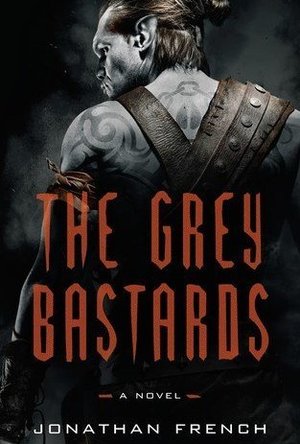
Shelf Life – The Grey Bastards Exemplifies Grimdark Fantasy at Its Damn Finest
Contains spoilers, click to show
The Grey Bastards is a fun, foul-mouthed read. If you’re turned off by bad language, steamy sex, or a good plot with plenty of action and twists, then this book isn’t for you. The Grey Bastards falls into the fantasy sub-genre known as grimdark. Where high fantasy has your Tolkien beautiful and noble elves, dwarves, humans, and wizards with epic battles between good and evil, grimdark takes all of that and covers it in shit, pus, and blood. Notice how in high fantasy nobody ever takes a piss or fucks? In grimdark, everyone does.
But don’t be fooled into thinking this book will be any less intelligent, epic, or heartfelt for it. The Grey Bastards is all of that and more. The novel follows Jackal, a half-breed orc living in the Lot Lands, the barren desert wasteland of Hispartha. He is a Grey Bastard, one of many half-orc hoofs, each protecting its own small town in the Lots. Members of a hoof are elite warriors that ride out on their Barbarians—giant warthogs—and slaughter invading bands of orcs.
Hispartha is a vibrant world, with a mix of fantastical species (orcs, half-orcs, elves, humans, halflings, and centaurs) with unique cultures and religions. Hispartha itself takes influences from Reconquista Spain, which is especially noticeable in the nomenclature, geography, and architecture.
The primarily atheistic half-orcs recently won their freedom from slavery at the hands of humans. Humans treat the half-orcs like second-class citizens, but tolerate them because of their strength, using them as a shield from the orcs. The elves are beautiful, reclusive, and probably the most cliché; there is one important elf character, but for the most part, we don’t get a good look into their culture in the first book. The centaurs worship Romanesque deities and go on crazed, Bacchanalian killing sprees during the blood moon.
Besides the half-orcs, the halflings are perhaps the most interesting. I still have a hard time visualizing them, trying to figure out if they are thin, pixie-like creatures or more stocky like dwarves. Their small stature and black skin makes me think of pygmies. They worship a god they expect will reincarnate someday, (view spoiler)
One thing that has always annoyed me about fantasy is that many authors feel that the characters of their world, being pre-industrial and thus “medieval,” must all be white, straight, Christian (or proto-Christian), cisgender males. If a woman appears at all is to act as the damsel, prize, or, if she’s lucky, a mystical enchantress to guide the heroes or provide a maguffin. It has come to the point in which this has become a tired and accepted baseline for fantasy. I don’t necessarily think that these fantasy authors are intentionally trying to be uninclusive, so much as they just seem to forget that other groups of people can exist in fantasy thanks to its fathers, Tolkien and Lewis.
But enough with my rant, the purpose of which is to highlight why I am often drawn to grimdark fantasy: at the very least I know that women, people of color, lgbt people, and other religions will be present, even if they are often victimized. This is because grimdark fantasy honestly depicts the horrors of rape, war, murder, slavery, and racism (or rather, speciesism in most cases) and has heroes and villains that are morally grey.
However, many authors describe these atrocities and then leave it at that, assuming that simply depicting them is enough to make a book mature and meaningful. They often fail to make any sort of statement on evil, and thus can seem to be, at best, blindly accepting it and, at worst, glorifying it (this often happens in the cases of magnificent bastard characters, who are absolute monsters but are so charming you almost respect or like them).
Jonathan French, however, does not fall short of the mark as many authors do, and for two main reasons: humor and humanity.
Let’s start with the humor. This book is hilarious. I mean in the I literally laughed out loud while reading it way. Sure, the jokes are often crass, but I have a dirty mind, so inappropriate humor is my favorite kind. The dialogue is especially top-notch, and the interactions between Jackal and his friends Fetching and Oats feel genuine, full of in-jokes, insults, and sexually-charged humor, all of which are exactly how I interact with my own close friends. And every major character in this book is so damn witty that I’m honestly jealous of them. If I could be quick enough to make even one of their zingers at the right time in a conversation, I would feel proud of myself for the rest of the day.
Humor is necessary to prevent any grimdark fantasy from becoming too over-the-top or depressing. And honestly, humor is needed most when the world is a dark and frightening place. But too much humor could accidentally downplay the point of grimdark: the brutally honest depiction of the atrocities that people are capable of.
And this is where it is important to have an element of humanity. By this I mean that the “good guys” must make some action or statement on those atrocities. Too often I read or watch hardened badass characters with no emotion who can watch a person get tortured and killed without flinching (maybe even do it themselves) and who never stop to question the nature of their society (even as part of their character growth), and I have difficulty finding them at all relatable or even the least bit interesting.
Now, often for this type of character, he or she is dead inside as a coping mechanism and part of their character arc is learning to allow themselves to feel their repressed emotions: heartbreak, anger, fear, etc. This can be done very well (see The Hunger Games for a great example—dystopian scifi and grimdark fantasy have very similar undertones). But most times it just ends up falling flat.
But Jackal already starts out with more personality than most grimdark protagonists. He is a humorous and light-hearted person. Sure, he lives in a desert wasteland, his race is entirely created by rape, he’s treated as a second-class citizen, and his life and the lives of those around him are in constant danger of rape and/or murder by invading orcs or blood-crazed centaurs. But despite all of that, he still has a sense of humor, people he loves, a community, ambitions, moral code, and all of the other things that these protagonists are often lacking.
Don’t get me wrong, he can be an asshole, and he’s often acts rashly before he thinks. But the scene that really stuck with me the most was [when Jackal and the wizard Crafty come across an unconscious elf sex-slave. I was expecting him to say something along the lines of “There’s nothing we can do for her, we have to save ourselves” or “This isn’t any of our business” or “It would be best to just put her out of her mercy.” These are the typical lines that a grimdark protagonist might utter while their companion—accused of being a bleeding heart—frees the slave. But this was not the case. Jackal and Crafty both immediately set out to free the girl and steal her away from her owner, despite the danger to themselves. And when he comes across an entire castle-full of these women, Jackal again sets about freeing them without a moment’s hesitation. (hide spoiler)]
And it’s no surprise that Jackal has a serious problem with rape. As I’ve mentioned before, half-orcs are entirely the product of roving bands of orcs raping human, elven, or even half-orc women. [When Jackal learns that Starling, the elf slave he rescued, is pregnant with a half-orc baby, he is not only furious with the orcs that gang-raped her, but also disturbed by the fact that elven society shuns any of their women who have been raped, and that these victims often end up taking their own lives rather than give birth to an impure half-elf. (hide spoiler)]
Furthermore, Jackal, unlike many people in Hispartha, does not buy into misogyny or sexism. His best friend Fetching is the first female half-orc to have joined a group of riders. Not only does Jackal respect Fetching, he understands the emotional turmoil that she is dealing with being the first female rider and how she overcompensates as a result to earn the respect of the other men.
While there is quite a bit of speciesism (pretty much none of the species get along with one another), the inhabitants of Hispartha come in every skin color and nobody gives a damn. Furthermore, sexuality is primarily treated as each person’s individual preference and nobody else’s business. While characters may make jokes about acting “backy” (gay), these are made in good humor between friends, and nobody gets particularly offended by them. Fetching is herself openly bisexual (though she seems to suppress her heterosexual desires more than her homosexual ones out of that same need to be “one of the boys”), and Oats and Jackal are one of my favorite bromantic pairings.
Grimdark fantasy can often be depressing to read. But Jonathan French does an excellent job of infusing hope into his narrative. The story actually has a happier ending than I was expecting. [I was especially pleased when Jackal chooses Fetching to be the new leader of the hoof (she is voted in unanimously by the other riders). I find it incredibly annoying in books and movies when revolutionaries/usurpers decide to appoint themselves leaders, as the former does not qualify you for the latter. Part of Jackal’s arc is realizing that he is not meant to lead the hoof like he’d once desired. (hide spoiler)]
For the sequel, The True Bastards, I’m hoping to see [if a cure can be found for the thrice-blood child now infected with plague, how Fetching is doing leading the hoof, and what the mysterious Starling is up to (I don’t buy for a second that she’s killed herself). And of course, I fully expect that Jackal is going to have to fulfill his empty promise to the halfling’s resurrected god, Belico.
But don’t be fooled into thinking this book will be any less intelligent, epic, or heartfelt for it. The Grey Bastards is all of that and more. The novel follows Jackal, a half-breed orc living in the Lot Lands, the barren desert wasteland of Hispartha. He is a Grey Bastard, one of many half-orc hoofs, each protecting its own small town in the Lots. Members of a hoof are elite warriors that ride out on their Barbarians—giant warthogs—and slaughter invading bands of orcs.
Hispartha is a vibrant world, with a mix of fantastical species (orcs, half-orcs, elves, humans, halflings, and centaurs) with unique cultures and religions. Hispartha itself takes influences from Reconquista Spain, which is especially noticeable in the nomenclature, geography, and architecture.
The primarily atheistic half-orcs recently won their freedom from slavery at the hands of humans. Humans treat the half-orcs like second-class citizens, but tolerate them because of their strength, using them as a shield from the orcs. The elves are beautiful, reclusive, and probably the most cliché; there is one important elf character, but for the most part, we don’t get a good look into their culture in the first book. The centaurs worship Romanesque deities and go on crazed, Bacchanalian killing sprees during the blood moon.
Besides the half-orcs, the halflings are perhaps the most interesting. I still have a hard time visualizing them, trying to figure out if they are thin, pixie-like creatures or more stocky like dwarves. Their small stature and black skin makes me think of pygmies. They worship a god they expect will reincarnate someday, (view spoiler)
One thing that has always annoyed me about fantasy is that many authors feel that the characters of their world, being pre-industrial and thus “medieval,” must all be white, straight, Christian (or proto-Christian), cisgender males. If a woman appears at all is to act as the damsel, prize, or, if she’s lucky, a mystical enchantress to guide the heroes or provide a maguffin. It has come to the point in which this has become a tired and accepted baseline for fantasy. I don’t necessarily think that these fantasy authors are intentionally trying to be uninclusive, so much as they just seem to forget that other groups of people can exist in fantasy thanks to its fathers, Tolkien and Lewis.
But enough with my rant, the purpose of which is to highlight why I am often drawn to grimdark fantasy: at the very least I know that women, people of color, lgbt people, and other religions will be present, even if they are often victimized. This is because grimdark fantasy honestly depicts the horrors of rape, war, murder, slavery, and racism (or rather, speciesism in most cases) and has heroes and villains that are morally grey.
However, many authors describe these atrocities and then leave it at that, assuming that simply depicting them is enough to make a book mature and meaningful. They often fail to make any sort of statement on evil, and thus can seem to be, at best, blindly accepting it and, at worst, glorifying it (this often happens in the cases of magnificent bastard characters, who are absolute monsters but are so charming you almost respect or like them).
Jonathan French, however, does not fall short of the mark as many authors do, and for two main reasons: humor and humanity.
Let’s start with the humor. This book is hilarious. I mean in the I literally laughed out loud while reading it way. Sure, the jokes are often crass, but I have a dirty mind, so inappropriate humor is my favorite kind. The dialogue is especially top-notch, and the interactions between Jackal and his friends Fetching and Oats feel genuine, full of in-jokes, insults, and sexually-charged humor, all of which are exactly how I interact with my own close friends. And every major character in this book is so damn witty that I’m honestly jealous of them. If I could be quick enough to make even one of their zingers at the right time in a conversation, I would feel proud of myself for the rest of the day.
Humor is necessary to prevent any grimdark fantasy from becoming too over-the-top or depressing. And honestly, humor is needed most when the world is a dark and frightening place. But too much humor could accidentally downplay the point of grimdark: the brutally honest depiction of the atrocities that people are capable of.
And this is where it is important to have an element of humanity. By this I mean that the “good guys” must make some action or statement on those atrocities. Too often I read or watch hardened badass characters with no emotion who can watch a person get tortured and killed without flinching (maybe even do it themselves) and who never stop to question the nature of their society (even as part of their character growth), and I have difficulty finding them at all relatable or even the least bit interesting.
Now, often for this type of character, he or she is dead inside as a coping mechanism and part of their character arc is learning to allow themselves to feel their repressed emotions: heartbreak, anger, fear, etc. This can be done very well (see The Hunger Games for a great example—dystopian scifi and grimdark fantasy have very similar undertones). But most times it just ends up falling flat.
But Jackal already starts out with more personality than most grimdark protagonists. He is a humorous and light-hearted person. Sure, he lives in a desert wasteland, his race is entirely created by rape, he’s treated as a second-class citizen, and his life and the lives of those around him are in constant danger of rape and/or murder by invading orcs or blood-crazed centaurs. But despite all of that, he still has a sense of humor, people he loves, a community, ambitions, moral code, and all of the other things that these protagonists are often lacking.
Don’t get me wrong, he can be an asshole, and he’s often acts rashly before he thinks. But the scene that really stuck with me the most was [when Jackal and the wizard Crafty come across an unconscious elf sex-slave. I was expecting him to say something along the lines of “There’s nothing we can do for her, we have to save ourselves” or “This isn’t any of our business” or “It would be best to just put her out of her mercy.” These are the typical lines that a grimdark protagonist might utter while their companion—accused of being a bleeding heart—frees the slave. But this was not the case. Jackal and Crafty both immediately set out to free the girl and steal her away from her owner, despite the danger to themselves. And when he comes across an entire castle-full of these women, Jackal again sets about freeing them without a moment’s hesitation. (hide spoiler)]
And it’s no surprise that Jackal has a serious problem with rape. As I’ve mentioned before, half-orcs are entirely the product of roving bands of orcs raping human, elven, or even half-orc women. [When Jackal learns that Starling, the elf slave he rescued, is pregnant with a half-orc baby, he is not only furious with the orcs that gang-raped her, but also disturbed by the fact that elven society shuns any of their women who have been raped, and that these victims often end up taking their own lives rather than give birth to an impure half-elf. (hide spoiler)]
Furthermore, Jackal, unlike many people in Hispartha, does not buy into misogyny or sexism. His best friend Fetching is the first female half-orc to have joined a group of riders. Not only does Jackal respect Fetching, he understands the emotional turmoil that she is dealing with being the first female rider and how she overcompensates as a result to earn the respect of the other men.
While there is quite a bit of speciesism (pretty much none of the species get along with one another), the inhabitants of Hispartha come in every skin color and nobody gives a damn. Furthermore, sexuality is primarily treated as each person’s individual preference and nobody else’s business. While characters may make jokes about acting “backy” (gay), these are made in good humor between friends, and nobody gets particularly offended by them. Fetching is herself openly bisexual (though she seems to suppress her heterosexual desires more than her homosexual ones out of that same need to be “one of the boys”), and Oats and Jackal are one of my favorite bromantic pairings.
Grimdark fantasy can often be depressing to read. But Jonathan French does an excellent job of infusing hope into his narrative. The story actually has a happier ending than I was expecting. [I was especially pleased when Jackal chooses Fetching to be the new leader of the hoof (she is voted in unanimously by the other riders). I find it incredibly annoying in books and movies when revolutionaries/usurpers decide to appoint themselves leaders, as the former does not qualify you for the latter. Part of Jackal’s arc is realizing that he is not meant to lead the hoof like he’d once desired. (hide spoiler)]
For the sequel, The True Bastards, I’m hoping to see [if a cure can be found for the thrice-blood child now infected with plague, how Fetching is doing leading the hoof, and what the mysterious Starling is up to (I don’t buy for a second that she’s killed herself). And of course, I fully expect that Jackal is going to have to fulfill his empty promise to the halfling’s resurrected god, Belico.
Kyera (8 KP) rated Tales from the Shadowhunter Academy in Books
Jan 31, 2018
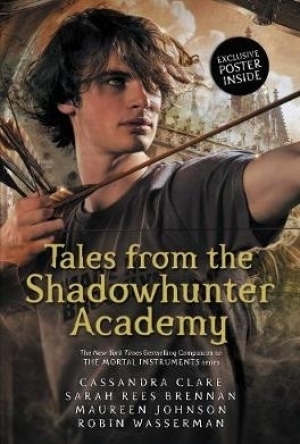
Tales from the Shadowhunter Academy is a collection of short stories or novellas that delve deeper into the Shadow World. It follows Simon’s time at Shadowhunter Academy but is rife with additional fascinating information. Overall, it is a highly entertaining installment in the Shadowhunter Chronicles and I would definitely recommend that you read it prior to the Dark Artifices series. Please do not read this review if you have not yet read the Infernal Devices or the Mortal Instruments series as there will be plot points mentioned.
The first novella is Welcome to Shadowhunter Academy, where Simon decides that he wants to become a Shadowhunter. After losing his memories, Simon must decide who he wants to be – a mundane that does not remember the Shadow World or a future Shadowhunter that may regain some of his memories. He meets a collection of students, both Shadowhunter and mundane that will be with him for the next two years as they train to become proper Shadowhunters. Although we know these characters for less time than those we’ve grown to love in the other series, they are still likable and well-developed. Over the course of the two years that the novellas take place, each character learns what it means to be a Shadowhunter, to be loyal to their friends, and to not always take the Law at face value (thanks to Simon’s incessant dialogues that Downworlders are not lesser people.) Of course, we’ve loved Simon since we met him in the Mortal Instruments but this was a great series of stories that allowed us to get to know him better (even though he was missing his memories).
The second is The Lost Herondale, in which we learn more about the beliefs of the Shadowhunters. Deserting your fellow Shadowhunters is considered the worst thing that you can do – so the punishment is severe. This novella tells us the story of Tobias Herondale and shows Simon that not every story is as black and white as it may be presented. We also learn that Catarina Loss, Magnus’ friend and current teacher at Shadowhunter Academy, saved Tobias’ child – which means that there may be a lost Herondale in the world. This plot line is mentioned first in the Mortal Instruments and pursued more in the Dark Artifices, so that is one reason why I believe this series of novellas should be read prior to beginning Lady Midnight.
The third is the Whitechapel Fiend, in which Tessa comes to Shadowhunter Academy to teach a lesson. It was lovely to see more of our favourite characters from the Infernal Devices, especially because this was a later period in time than the books so we got a glimpse into their future lives. The fourth is Nothing but Shadows, which chronicles James Herondale’s time at the Academy. It made me miss the Infernal Devices and impatient for the next series that Cassandra Clare will be writing featuring the children we got glimpses of.
The fifth is The Evil We Love and a tale from the time of Valentine’s Circle. The Circle’s history is considered a dark time and infrequently talked about in the series. Most Shadowhunters who were involved are either ashamed of their actions and largely refuse to talk about it, or dead. It’s always fascinating to see what the power and influence of a charismatic leader can get people to do. Simon learns that he knows better than to just go along with the crowd and speaks out against ideas that he doesn’t agree with. It makes him even more likable as a character because I’m sure we all have experienced times when we disagreed with someone we cared about and how difficult it might be not to just follow their lead.
The sixth is Pale Kings and Princes, which creates some foundation for the world we will experience in the Dark Artifices. We learn how Mark and Helen Blackthorn came to be, with their half-faerie lineage. It is a heart-wrenching tale and makes you question the harshness of the Cold Peace. Helen is no longer trusted, and essentially banished, because of her heritage and that action fractures her entire family – as the Blackthorn parents were murdered during the War. Helen was willing to take care of her family, but she was torn away and those kinds of wounds will certainly affect the characters of the Dark Artifices in the future.
The seventh is Bitter of Tongue essentially just reiterates the point that Downworlders are not lesser beings than mundanes or Shadowhunters. We get to see more of the Blackthorn clan, the utterly repulsive treatment of the half-fae children Mark and Helen, and a lovely wedding.
The eighth is The Fiery Trial, in which Simon and Clary are asked to serve at witnesses for Julian and Emma’s parabatai ceremony. The story focuses more on the relationship between Simon and Clary than Julian and Emma but it was nice to see the ceremony. Jace and Alec became parabati prior to the Mortal Instruments, so until now, we had not seen the ceremony performed. It also made Simon and Clary evaluation their own friendship and the depth of their connection.
The ninth is Born to Endless Night and revolves around the beloved Malec, as well as Magnus Banes short tenure at Shadowhunter Academy. The character development shown in this novella was a culmination of Alec’s experiences throughout the Mortal Instruments and how he grew as a person. While not confident and cocky like Jace, he had become secure in his own skin and learned to love (romantically). It was the most normal of the novellas, showing a behind-the-scenes type look into the lives of our favourite Mortal Instruments characters.
The final novella in the collection is Angels Twice Descending in which Simon and the other mundanes of the Academy have their Ascension. Simon must decide whether he is ready to face the risks, to give up his mundane life and embrace the dangers and responsibility of being a Shadowhunter. It was a beautiful wrap up to the series, allowing Simon the time to explore the life he was leaving behind and the family that he was gaining. As I mentioned before, I would highly recommend reading this series of novellas as it only enhances the Shadowhunter experience (and deepens the world).
The first novella is Welcome to Shadowhunter Academy, where Simon decides that he wants to become a Shadowhunter. After losing his memories, Simon must decide who he wants to be – a mundane that does not remember the Shadow World or a future Shadowhunter that may regain some of his memories. He meets a collection of students, both Shadowhunter and mundane that will be with him for the next two years as they train to become proper Shadowhunters. Although we know these characters for less time than those we’ve grown to love in the other series, they are still likable and well-developed. Over the course of the two years that the novellas take place, each character learns what it means to be a Shadowhunter, to be loyal to their friends, and to not always take the Law at face value (thanks to Simon’s incessant dialogues that Downworlders are not lesser people.) Of course, we’ve loved Simon since we met him in the Mortal Instruments but this was a great series of stories that allowed us to get to know him better (even though he was missing his memories).
The second is The Lost Herondale, in which we learn more about the beliefs of the Shadowhunters. Deserting your fellow Shadowhunters is considered the worst thing that you can do – so the punishment is severe. This novella tells us the story of Tobias Herondale and shows Simon that not every story is as black and white as it may be presented. We also learn that Catarina Loss, Magnus’ friend and current teacher at Shadowhunter Academy, saved Tobias’ child – which means that there may be a lost Herondale in the world. This plot line is mentioned first in the Mortal Instruments and pursued more in the Dark Artifices, so that is one reason why I believe this series of novellas should be read prior to beginning Lady Midnight.
The third is the Whitechapel Fiend, in which Tessa comes to Shadowhunter Academy to teach a lesson. It was lovely to see more of our favourite characters from the Infernal Devices, especially because this was a later period in time than the books so we got a glimpse into their future lives. The fourth is Nothing but Shadows, which chronicles James Herondale’s time at the Academy. It made me miss the Infernal Devices and impatient for the next series that Cassandra Clare will be writing featuring the children we got glimpses of.
The fifth is The Evil We Love and a tale from the time of Valentine’s Circle. The Circle’s history is considered a dark time and infrequently talked about in the series. Most Shadowhunters who were involved are either ashamed of their actions and largely refuse to talk about it, or dead. It’s always fascinating to see what the power and influence of a charismatic leader can get people to do. Simon learns that he knows better than to just go along with the crowd and speaks out against ideas that he doesn’t agree with. It makes him even more likable as a character because I’m sure we all have experienced times when we disagreed with someone we cared about and how difficult it might be not to just follow their lead.
The sixth is Pale Kings and Princes, which creates some foundation for the world we will experience in the Dark Artifices. We learn how Mark and Helen Blackthorn came to be, with their half-faerie lineage. It is a heart-wrenching tale and makes you question the harshness of the Cold Peace. Helen is no longer trusted, and essentially banished, because of her heritage and that action fractures her entire family – as the Blackthorn parents were murdered during the War. Helen was willing to take care of her family, but she was torn away and those kinds of wounds will certainly affect the characters of the Dark Artifices in the future.
The seventh is Bitter of Tongue essentially just reiterates the point that Downworlders are not lesser beings than mundanes or Shadowhunters. We get to see more of the Blackthorn clan, the utterly repulsive treatment of the half-fae children Mark and Helen, and a lovely wedding.
The eighth is The Fiery Trial, in which Simon and Clary are asked to serve at witnesses for Julian and Emma’s parabatai ceremony. The story focuses more on the relationship between Simon and Clary than Julian and Emma but it was nice to see the ceremony. Jace and Alec became parabati prior to the Mortal Instruments, so until now, we had not seen the ceremony performed. It also made Simon and Clary evaluation their own friendship and the depth of their connection.
The ninth is Born to Endless Night and revolves around the beloved Malec, as well as Magnus Banes short tenure at Shadowhunter Academy. The character development shown in this novella was a culmination of Alec’s experiences throughout the Mortal Instruments and how he grew as a person. While not confident and cocky like Jace, he had become secure in his own skin and learned to love (romantically). It was the most normal of the novellas, showing a behind-the-scenes type look into the lives of our favourite Mortal Instruments characters.
The final novella in the collection is Angels Twice Descending in which Simon and the other mundanes of the Academy have their Ascension. Simon must decide whether he is ready to face the risks, to give up his mundane life and embrace the dangers and responsibility of being a Shadowhunter. It was a beautiful wrap up to the series, allowing Simon the time to explore the life he was leaving behind and the family that he was gaining. As I mentioned before, I would highly recommend reading this series of novellas as it only enhances the Shadowhunter experience (and deepens the world).
Zuky the BookBum (15 KP) rated Nightmares: A New Decade of Modern Horror in Books
Mar 15, 2018

Also read my review here: http://bookbum.weebly.com/book-reviews/nightmares-a-new-decade-of-modern-horror-by-various-authors
NOW AVAILABLE IN THE UK!
I decided that instead of rating this book overall, it would be better to rate each individual story, so that’s what I’ve done. Obviously I had to rate the overall book so I actually calculated the average of all the ratings lol.
<b><u>Shallaballah</b></u> by Mark Samuels
<i>1 star</i>
Not a good start to the book for me. I was over the stitched up face appearance, creepy hospital, shady operations kind of horror story long ago, so this did pretty much nothing for me. Yes there were creepy elements to it but not enough. I also get what it was trying to do with the whole vanity, television thing, but it didn’t really work and so for me, added nothing to the overall plot.
<b><u>Sob in the Silence</b></u> by Gene Wolfe
<i>3 stars</i>
This was a pretty good creepy story, I much prefer stories that don't really have any paranormal elements to them and are more about the madness of the human brain. This short story had a bit of both to it so it was much preferable to the last! Didn't like the weird abrupt ending though, it felt like the story had been cut short.
<b><u>Our Turn Too Will One Day Come</b></u> by Brian Hodge
<i>4 stars</i>
This definitely had my skin crawling a bit. I love this kind of horror story that incorporates creatures and family secrets, kind of gave me The Village vibes… Is that the name of that film? Anyway, yes, great short!
<b><u>Dead Sea Fruit</b></u> by Kaaron Warren
<i>3 stars</i>
This short was pretty good, the Ash Mouth Man was pretty freaky but the writing was a bit all over the place and I felt too much was squeezed into such a small story. I'd love to read a full length story about this Ash Man, that would definitely be disturbing to read!
<b><u>Closet Dreams</b></u> by Lisa Tuttle
<i>4 stars</i>
Really well written and completely terrifying! I hate abduction stories so much because it could happen to anyone. It's not like the demonic ghost stories that you choose to believe or not believe, men who rape and steal little girls are <b>real.</b> The ending was… Predictable… Done before… Boring… But the rest of it was good enough to warrant it 4 stars!
<b><u>Spectral Evidence</b></u> by Gemma Files
<i>1 star</i>
?????????????????????????????????????????????????????????????????
I didn’t like the way this was set out, very frustrating to read on a Kindle! Also, I didn’t really get it, it was so all over the place I forgot what was happening previously.
<b><u>Hushabye</b></u> by Simon Bestwick
<i>2 stars.</i>
I wanted to like this one but there was too much missing from the story, maybe it was meant to be mysterious but in my eyes it just felt unfinished. Like what was the man sucking out of the children? And what really happened to Hardiman? Also I thought the narrator was a woman until we finally learnt his name was Paul, don’t know why, I just imagined him that way.
<b><u>Very Low-Flying Aircraft</b></u> by Nicholas Royle
<i>3 stars</i>
I’m not really a big fan of war based novels / stories so from the get go I knew I wasn’t going to get on that well with this story but it wasn’t so bad. I didn’t feel like this story explained itself enough or maybe it did and I just didn’t get it? Like why did it matter that Frankie looked like Victoria and why did Flynn go to the clinic? Also, I didn’t think it of a horror story really, though it was scary and horrible, it didn’t give me the heeby-jeebys like some of the others have done.
<b><u>The Goosle</b></u> by Margo Lanagan
<i>2 stars</i>
Seriously, seriously grotesque. If you have a weak stomach, <i>avoid this.</i> A very peculiar branch off the traditional Hansel and Gretel story we all know. This isn’t my kind of horror at all. I much prefer scary, mysterious human crime and occasionally a paranormal story. Torture porn is not at all my thing. This was very well written though, so props to Lanagan for that.
<b><u>The Clay Party</b></u> by Steve Duffy
<i>4 stars</i>
Again, not exactly what I’d classify as a horror story, but a great read nonetheless. Excellently written and enjoyable the whole way through, up until the end… the ending definitely wasn’t my kind of style so that was disappointing for me personally, but I’m sure others would love it!
<b><u>Strappado</b></u> by Laird Barron
<i>3 stars</i>
Definitely one of the strangest of the shorts in this novel. I thought it was excellently written but I didn’t quite get it? Maybe I was just having an off day when I read this but it didn’t really do anything for me.
<b><u>Lonegan’s Luck</b></u> by Stephen Graham Jones
<i>4 stars</i>
This is one of those stories I don’t know why I like. I never used to be into these kinds of rural town, religious apocalyptic kind of books, but ever since reading Mammoth, I’ve begun to enjoy reading them. Admittedly this had me a little confused to begin with, there were what felt like a lot of characters, but in the end none of the mattered anyway, they were just there to set the scene.
<b><u>Mr Pigsny</b></u> by Reggie Oliver
<i>3 stars</i>
I feel like I’ve read this book a million times. It’s one of those stories that's been redone time and time again with just slight changes here and there. It isn’t a bad plot per say, I certainly enjoyed it, it just had nothing unique about it.
<b><u>At Night, When the Demons Come by</b></u> by Ray Cluley
<i>4 stars</i>
One of the longer stories in this book but also one of the best. It had a pleasing twist to it and some interesting characters. I guess I quite like the whole apocalyptic feel when it comes to stories. I personally don’t feel this one was a horror story, more like a fantasy thriller.
<b><u>Was She Wicked? Was She Good?</b></u> by Mary Rickert
<i>4 stars</i>
This was a sad horror story, but in a way, it was also quite beautiful. I really liked the plot, it was something quite different to all the others in this collection and I thought the way it was written flowed well. Enjoyable short story!
<b><u>The Shallows</b></u> by John Langan
<i>2 stars</i>
I liked how this was written but I didn’t get it? I got bored halfway through it too, it was a half an hour read and I just couldn’t understand it so I skimmed the last 10 minutes or so. Yawn.
<b><u>Little Pig</b></u> by Anna Taborska
<i>3 stars</i>
Meh. This was well written and very different to the rest of the stories in this collection but was it a horror story? No. It was tragic, but not scary. Disappointing because whenever I see the word “pig” in relation to something “scary” I think of AHS.
<b><u>Omphalos</b></u> by Livia Llewellyn
<i>3 stars</i>
<b>TRIGGER WARNING: SEXUAL ABUSE</b>
This story was definitely very unique to the rest of the stories in this collection in the terms that this was a horror story that focused more on the real life horrors of families rather than made up monsters and ghouls. This story isn’t for the faint-hearted, it was horrific and gruesome and very upsetting. It wasn’t the best story in the collection when it came to plot or writing style, but it did bring out strong emotions in me, which other stories have been unable to do.
<b><u>How We Escaped Our Certain Fate</b></u> by Dan Chaon
<i>5 stars</i>
I liked how this was a different take on a classic zombie story - <b><i>”It wasn’t the end of the world… of course, a bite would infect you, but they weren’t terribly aggressive, in general.”</b></i> This was by far my favourite story in the entire book, it was so sad and emotional. It was beautiful.
<b><u>That Tiny Flutter of the Heart I Used to Call Love</b></u> by Robert Shearman
<i>4 stars</i>
Creepy, creepy, creepy. Dolls terrify me thanks to modern horror, although, really, I’ve always felt unsettled by them. Enjoyable story though. Poor Julian.
(This story almost had my name in it! “Suki” is close enough to Zuky.)
<b><u>Interstate Love Song (Murder Ballad No.8)</b></u> by Caitlin R. Kiernan
<i>3 stars</i>
Hmm, why did the shorts at the end of this book get all meaningful and loved up? I think that kinda ruined this for me. Granted it was disturbed and pretty grotesque at times but sadness of the ending ruined that creepy effect of the book and just left this kind of hanging in the space between horror and tragedy.
<b><u>Shay Corsham Worsted</b></u> by Garth Nix
<i>4 stars</i>
This was an interesting story and I liked our harsh but caring main character, Sir David. I wish this story was a little longer so we could find out more about Shay because I feel the missing backstory left this plot wide open. Enjoyable nonetheless.
<b><u>The Atlas of Hell</b></u> by Nathan Ballingrud
<i>3 stars</i>
I really enjoyed this to begin with though I thought it had a little David Wong influence, a writing style I’m not into. All was going well for this story until I got towards the end of it, where it completely lost me. Whether this is down to the annoying man sat on the train next to me, speaking into his phone at 32596 decibels, or just because the plot went AWOL, we’ll never know.
<b><u>Ambitious Boys Like You</b></u> by Richard Kadrey
<i>4 stars</i>
I like these kinds of creepy stories! They’re not particularly unique anymore, because they’ve been done so many different times in so many different, but similar ways, but they’re still fun to read. The old man was especially disturbing just because he was so witty and chilled out. I liked that this story had elements of humour to it, it made a nice change to the more recent emotion filled stories.
I’d like to thank Netgalley and Tachyon Publications for giving me the opportunity to read this in an exchange for an honest review.
NOW AVAILABLE IN THE UK!
I decided that instead of rating this book overall, it would be better to rate each individual story, so that’s what I’ve done. Obviously I had to rate the overall book so I actually calculated the average of all the ratings lol.
<b><u>Shallaballah</b></u> by Mark Samuels
<i>1 star</i>
Not a good start to the book for me. I was over the stitched up face appearance, creepy hospital, shady operations kind of horror story long ago, so this did pretty much nothing for me. Yes there were creepy elements to it but not enough. I also get what it was trying to do with the whole vanity, television thing, but it didn’t really work and so for me, added nothing to the overall plot.
<b><u>Sob in the Silence</b></u> by Gene Wolfe
<i>3 stars</i>
This was a pretty good creepy story, I much prefer stories that don't really have any paranormal elements to them and are more about the madness of the human brain. This short story had a bit of both to it so it was much preferable to the last! Didn't like the weird abrupt ending though, it felt like the story had been cut short.
<b><u>Our Turn Too Will One Day Come</b></u> by Brian Hodge
<i>4 stars</i>
This definitely had my skin crawling a bit. I love this kind of horror story that incorporates creatures and family secrets, kind of gave me The Village vibes… Is that the name of that film? Anyway, yes, great short!
<b><u>Dead Sea Fruit</b></u> by Kaaron Warren
<i>3 stars</i>
This short was pretty good, the Ash Mouth Man was pretty freaky but the writing was a bit all over the place and I felt too much was squeezed into such a small story. I'd love to read a full length story about this Ash Man, that would definitely be disturbing to read!
<b><u>Closet Dreams</b></u> by Lisa Tuttle
<i>4 stars</i>
Really well written and completely terrifying! I hate abduction stories so much because it could happen to anyone. It's not like the demonic ghost stories that you choose to believe or not believe, men who rape and steal little girls are <b>real.</b> The ending was… Predictable… Done before… Boring… But the rest of it was good enough to warrant it 4 stars!
<b><u>Spectral Evidence</b></u> by Gemma Files
<i>1 star</i>
?????????????????????????????????????????????????????????????????
I didn’t like the way this was set out, very frustrating to read on a Kindle! Also, I didn’t really get it, it was so all over the place I forgot what was happening previously.
<b><u>Hushabye</b></u> by Simon Bestwick
<i>2 stars.</i>
I wanted to like this one but there was too much missing from the story, maybe it was meant to be mysterious but in my eyes it just felt unfinished. Like what was the man sucking out of the children? And what really happened to Hardiman? Also I thought the narrator was a woman until we finally learnt his name was Paul, don’t know why, I just imagined him that way.
<b><u>Very Low-Flying Aircraft</b></u> by Nicholas Royle
<i>3 stars</i>
I’m not really a big fan of war based novels / stories so from the get go I knew I wasn’t going to get on that well with this story but it wasn’t so bad. I didn’t feel like this story explained itself enough or maybe it did and I just didn’t get it? Like why did it matter that Frankie looked like Victoria and why did Flynn go to the clinic? Also, I didn’t think it of a horror story really, though it was scary and horrible, it didn’t give me the heeby-jeebys like some of the others have done.
<b><u>The Goosle</b></u> by Margo Lanagan
<i>2 stars</i>
Seriously, seriously grotesque. If you have a weak stomach, <i>avoid this.</i> A very peculiar branch off the traditional Hansel and Gretel story we all know. This isn’t my kind of horror at all. I much prefer scary, mysterious human crime and occasionally a paranormal story. Torture porn is not at all my thing. This was very well written though, so props to Lanagan for that.
<b><u>The Clay Party</b></u> by Steve Duffy
<i>4 stars</i>
Again, not exactly what I’d classify as a horror story, but a great read nonetheless. Excellently written and enjoyable the whole way through, up until the end… the ending definitely wasn’t my kind of style so that was disappointing for me personally, but I’m sure others would love it!
<b><u>Strappado</b></u> by Laird Barron
<i>3 stars</i>
Definitely one of the strangest of the shorts in this novel. I thought it was excellently written but I didn’t quite get it? Maybe I was just having an off day when I read this but it didn’t really do anything for me.
<b><u>Lonegan’s Luck</b></u> by Stephen Graham Jones
<i>4 stars</i>
This is one of those stories I don’t know why I like. I never used to be into these kinds of rural town, religious apocalyptic kind of books, but ever since reading Mammoth, I’ve begun to enjoy reading them. Admittedly this had me a little confused to begin with, there were what felt like a lot of characters, but in the end none of the mattered anyway, they were just there to set the scene.
<b><u>Mr Pigsny</b></u> by Reggie Oliver
<i>3 stars</i>
I feel like I’ve read this book a million times. It’s one of those stories that's been redone time and time again with just slight changes here and there. It isn’t a bad plot per say, I certainly enjoyed it, it just had nothing unique about it.
<b><u>At Night, When the Demons Come by</b></u> by Ray Cluley
<i>4 stars</i>
One of the longer stories in this book but also one of the best. It had a pleasing twist to it and some interesting characters. I guess I quite like the whole apocalyptic feel when it comes to stories. I personally don’t feel this one was a horror story, more like a fantasy thriller.
<b><u>Was She Wicked? Was She Good?</b></u> by Mary Rickert
<i>4 stars</i>
This was a sad horror story, but in a way, it was also quite beautiful. I really liked the plot, it was something quite different to all the others in this collection and I thought the way it was written flowed well. Enjoyable short story!
<b><u>The Shallows</b></u> by John Langan
<i>2 stars</i>
I liked how this was written but I didn’t get it? I got bored halfway through it too, it was a half an hour read and I just couldn’t understand it so I skimmed the last 10 minutes or so. Yawn.
<b><u>Little Pig</b></u> by Anna Taborska
<i>3 stars</i>
Meh. This was well written and very different to the rest of the stories in this collection but was it a horror story? No. It was tragic, but not scary. Disappointing because whenever I see the word “pig” in relation to something “scary” I think of AHS.
<b><u>Omphalos</b></u> by Livia Llewellyn
<i>3 stars</i>
<b>TRIGGER WARNING: SEXUAL ABUSE</b>
This story was definitely very unique to the rest of the stories in this collection in the terms that this was a horror story that focused more on the real life horrors of families rather than made up monsters and ghouls. This story isn’t for the faint-hearted, it was horrific and gruesome and very upsetting. It wasn’t the best story in the collection when it came to plot or writing style, but it did bring out strong emotions in me, which other stories have been unable to do.
<b><u>How We Escaped Our Certain Fate</b></u> by Dan Chaon
<i>5 stars</i>
I liked how this was a different take on a classic zombie story - <b><i>”It wasn’t the end of the world… of course, a bite would infect you, but they weren’t terribly aggressive, in general.”</b></i> This was by far my favourite story in the entire book, it was so sad and emotional. It was beautiful.
<b><u>That Tiny Flutter of the Heart I Used to Call Love</b></u> by Robert Shearman
<i>4 stars</i>
Creepy, creepy, creepy. Dolls terrify me thanks to modern horror, although, really, I’ve always felt unsettled by them. Enjoyable story though. Poor Julian.
(This story almost had my name in it! “Suki” is close enough to Zuky.)
<b><u>Interstate Love Song (Murder Ballad No.8)</b></u> by Caitlin R. Kiernan
<i>3 stars</i>
Hmm, why did the shorts at the end of this book get all meaningful and loved up? I think that kinda ruined this for me. Granted it was disturbed and pretty grotesque at times but sadness of the ending ruined that creepy effect of the book and just left this kind of hanging in the space between horror and tragedy.
<b><u>Shay Corsham Worsted</b></u> by Garth Nix
<i>4 stars</i>
This was an interesting story and I liked our harsh but caring main character, Sir David. I wish this story was a little longer so we could find out more about Shay because I feel the missing backstory left this plot wide open. Enjoyable nonetheless.
<b><u>The Atlas of Hell</b></u> by Nathan Ballingrud
<i>3 stars</i>
I really enjoyed this to begin with though I thought it had a little David Wong influence, a writing style I’m not into. All was going well for this story until I got towards the end of it, where it completely lost me. Whether this is down to the annoying man sat on the train next to me, speaking into his phone at 32596 decibels, or just because the plot went AWOL, we’ll never know.
<b><u>Ambitious Boys Like You</b></u> by Richard Kadrey
<i>4 stars</i>
I like these kinds of creepy stories! They’re not particularly unique anymore, because they’ve been done so many different times in so many different, but similar ways, but they’re still fun to read. The old man was especially disturbing just because he was so witty and chilled out. I liked that this story had elements of humour to it, it made a nice change to the more recent emotion filled stories.
I’d like to thank Netgalley and Tachyon Publications for giving me the opportunity to read this in an exchange for an honest review.