

Suswatibasu (1703 KP) rated The Ethics of Ambiguity in Books
Aug 30, 2017
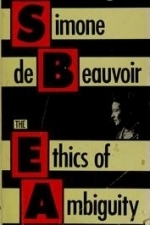

As free, we have the ability to take note of ourselves and choose what to do. As factic, we are constrained by physical limits, social barriers and the expectations and political power of others. She has quite a Hobbesian approach saying human beings are responsible for their own actions and therefore have to work at creating concrete ideals rather than following an abstract notion of freedom.
She also criticises approaches that require grasping for freedom at the expense of others - adding that inadvertently reduces gaining freedom down to another form of slavery ie. Communism, Capitalism and Democracies.
She concludes that the only way you can will yourself free is to will others free in the process.
While the sentiment is there, her writing style was very repetitive in this book, and at times a little tangential. Not her best work, but still very relevant for current times.

David McK (3874 KP) rated The Horse and His Boy (Chronicles of Narnia, #5) in Books
Jan 28, 2019
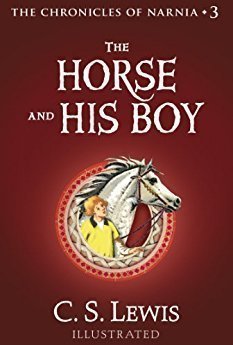

The answer to that is whether you go by chronological setting (in which case it's the third), or by publication date (it's the fifth).
This is also a story that I didn't remember reading as a child; however, when I was recently re-reading it I was finding plot elements to be a little-bit-more-familiar than I was otherwise expecting: perhaps I did, and had just forgotten.
Unlike [b: The Lion, The Witch and The Wardrobe|100915|The Lion, the Witch, and the Wardrobe (Chronicles of Narnia, #1)|C.S. Lewis|https://d.gr-assets.com/books/1353029077s/100915.jpg|4790821], this does not follow the Pevensie children, but rather the journey of a young boy named Shasta who discovers he was adopted and is running away to Narnia when his adoptive father is about to sell him into slavery; running away alongside/with the help of the talking horse Bree. Along the way they fall in with a girl named Aravis and her talking horse Hwin, who are also making the same escape.
While I've heard arguments recently that, in this book, CS Lewis is displaying his own racist xenophobia ('fair and white ... accursed but beautiful Barbarians'), personally I think that is reading too much into what is simply intended to be a children's Arabian Nights esque fairytale
Clouds of Glory: The Life and Legend of Robert E. Lee
Book
New York Times bestselling author Michael Korda's fresh, contemporary single volume historical...
Plantation Kingdom: The American South and its Global Commodities
Richard Follett, Sven Beckert, Peter Coclanis and Barbara M. Hahn
Book
In 1850, America's plantation economy reigned supreme. U.S. cotton dominated world markets, and...
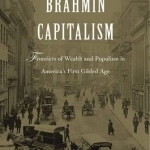
Brahmin Capitalism: Frontiers of Wealth and Populism in America's First Gilded Age
Book
Tracking the movement of finance capital toward far-flung investment frontiers, Noam Maggor...
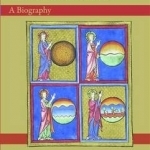
The Book of Genesis: A Biography
Book
During its 2,500-year life, the book of Genesis has been the keystone to almost every important...
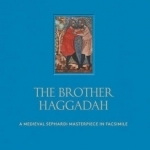
The Brother Haggadah: A Medieval Sephardi Masterpiece in Facsimile
Marc Michael Epstein, Raphael Loewe and Jeremy Schonfield
Book
The Haggadot commissioned by wealthy patrons in the Middle Ages are among the most beautifully...

Blackstone's Police Operational Handbook: 2017
Police National Legal Database, Mark Hartley and Fraser Sampson
Book
Blackstone's Police Operational Handbook 2017 is designed specifically to meet the reference needs...
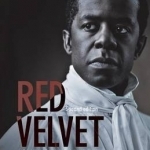
Red Velvet
Book
It's like being at a crossroads - a point of absolute, unequivocal change. It makes the blood rush....
Captive in the Dark (The Dark Duet, #1)
7.6 Rate It
Book
Caleb is a man with a singular interest in revenge. Kidnapped as a young boy and sold into slavery...