
Search
Search results
Sheridan (209 KP) rated Slime Rancher in Video Games
Oct 9, 2018

Fun & Creative (4 more)
Colourful Graphics
Leisurely Gameplay
Relaxing to Play
Beautiful Worlds
Game Mechanics are sometimes a little screwy (2 more)
Lose Inventory when you get 'Knocked Out'
Only 4 Inventory Slots & can only carry one stack of a particular item
An Adorable Adventure
The playing of this game came about when my 8 yr old wanted to watch me play a game on the Xbox, my usual FPS range of games obviously not being suitable for her to watch, I dug this one out of my digital game pile. I've got to say, this is a pretty awesome game. It's cute, it's fun and it allows you to get creative. As you play you open up new areas using Slime Keys, and each one is just - *so* pretty. In each of these areas you have the opportunity to catch new slime breeds, work through new challenges, and find treasure. I recommend opening up the Slime Science area of the map as soon as you can because this allows you to make gadgets that make your Ranching life tons easier. As it's not an overly expensive game, the mechanics are a little screwy sometimes, especially with the jet pack and that can become frustrating, and if you get knocked out by falling in the Slime Sea or being attacked by Feral Slimes you lose everything in your inventory and you lose a day (which means the slimes in your Ranch get grumpy if they run out of food). The only other thing I found super annoying was you only have 4 inventory slots and can only carry one stack of a particular item (so if you have 50 Carrots, you can't carry any more even if you have open slots), if you're exploring away from your Ranch you run out of space *really* fast. Overall, the game is fun and relaxing to play - with the exception of a few minor issues. I would recommend if you enjoy chilled out games or just want a break from your regular playing style :)

Roxanne (13 KP) rated Life Before Death in Books
Nov 14, 2018

<b>4 Stars!</b>
I must say that I very much enjoy reading these sort of books, I find them incredibly moving and sometimes even life changing.
Life Before Death by Colin Fry happens to be one of those books that just turned me into a blubbering mess!
I would recommend this book to all of those who are interested in spirituality and the paranormal...and to those who may have lost close family members or friends and need a place of comfort and solace. I personally found this book to be very moving in the sense that it teaches you to remain positive in certain situations and to forgive in order to move on in your life before it is too late.
This book is very different compared to his other books as it deals more with life BEFORE death rather than focusing on the spirit world...so if you would prefer to read more about the authors psychic connections then I would say read one of his other books instead of this one. I myself prefer a book more focused on the after life which made me knock a star off of this one, not because it is a bad book in any way but because I would prefer some of his other work. He does document a small amount of his readings, however, it is not the book's main focus. Fry talks about some of the little things we could do in order to enrich our lives and to follow our dreams.
Once I finished this book I was deep in thought reflecting about my own life which is why I recommend buying a copy of this book to keep so you can keep referring back to it time and time again. I understand how easy it is to get wrapped up in the negativity of life sometimes, this is one of those books that may help you to focus on some positive aspects.
I must say that I very much enjoy reading these sort of books, I find them incredibly moving and sometimes even life changing.
Life Before Death by Colin Fry happens to be one of those books that just turned me into a blubbering mess!
I would recommend this book to all of those who are interested in spirituality and the paranormal...and to those who may have lost close family members or friends and need a place of comfort and solace. I personally found this book to be very moving in the sense that it teaches you to remain positive in certain situations and to forgive in order to move on in your life before it is too late.
This book is very different compared to his other books as it deals more with life BEFORE death rather than focusing on the spirit world...so if you would prefer to read more about the authors psychic connections then I would say read one of his other books instead of this one. I myself prefer a book more focused on the after life which made me knock a star off of this one, not because it is a bad book in any way but because I would prefer some of his other work. He does document a small amount of his readings, however, it is not the book's main focus. Fry talks about some of the little things we could do in order to enrich our lives and to follow our dreams.
Once I finished this book I was deep in thought reflecting about my own life which is why I recommend buying a copy of this book to keep so you can keep referring back to it time and time again. I understand how easy it is to get wrapped up in the negativity of life sometimes, this is one of those books that may help you to focus on some positive aspects.
Merissa (14190 KP) rated Two-Faced in Books
Dec 17, 2018

I received this book from Mark My Words Publicity in return for a fair and honest review.
We rejoin Caity and Eric as they go through their first year at college. Not only does Caity have the usual stresses of college - completely opposite roommate, disliking certain teachers, frat parties, etc - but she also has to cope with her ability to "de-mask" people. She is trying to have a 'normal' life but sometimes the mask will take over and she will do what she thinks is right, even if sometimes it isn't.
She is getting more used to being able to handle her ability but there is friction between herself and Eric as he struggles to understand and appreciate her ability. On the one hand, he accepts and relies on what she has to say she has seen 'behind the mask' but only when it suits him. He doesn't want to have his illusions shattered when it is about someone he likes, respects or cares about.
This is the start of a tumultuous time for them both as they try to figure out who is doing what, who is saying what, how something could be happening as well as dealing with a suddenly rocky relationship and helping their friends too.
This is the second story in the Masks series and you will need to read book 1 first but I can highly recommend both books. I turned the first page of both books and was immediately sucked into Caity's world as she deals with her ability and friends alike. It was really good to see 'old' friends in Two-Faced and to see how they have progressed during the time we've been gone.And that is how the books feels. Like it's real, like these characters are friends that you know and care about.
Excellently written and well-paced building up to the climax, I really can't recommend this highly enough.
We rejoin Caity and Eric as they go through their first year at college. Not only does Caity have the usual stresses of college - completely opposite roommate, disliking certain teachers, frat parties, etc - but she also has to cope with her ability to "de-mask" people. She is trying to have a 'normal' life but sometimes the mask will take over and she will do what she thinks is right, even if sometimes it isn't.
She is getting more used to being able to handle her ability but there is friction between herself and Eric as he struggles to understand and appreciate her ability. On the one hand, he accepts and relies on what she has to say she has seen 'behind the mask' but only when it suits him. He doesn't want to have his illusions shattered when it is about someone he likes, respects or cares about.
This is the start of a tumultuous time for them both as they try to figure out who is doing what, who is saying what, how something could be happening as well as dealing with a suddenly rocky relationship and helping their friends too.
This is the second story in the Masks series and you will need to read book 1 first but I can highly recommend both books. I turned the first page of both books and was immediately sucked into Caity's world as she deals with her ability and friends alike. It was really good to see 'old' friends in Two-Faced and to see how they have progressed during the time we've been gone.And that is how the books feels. Like it's real, like these characters are friends that you know and care about.
Excellently written and well-paced building up to the climax, I really can't recommend this highly enough.

Hara05 (11 KP) rated The Haunting of Hill House in TV
Jun 30, 2019
The Haunting Of Hill House has brought horror back.
In an era of horrors which use chewed up, over used clichés - ridiculous, poorly times jump scares, unrealistic gore and mundane character profiles, to name a few - this Netflix series was both nostalgic and fresh at the same time.
From the moment the series started, I was on the edge of my seat. It does such a good job of building tension and fear that it's impossible to take everything in, indeed, on second viewing I noticed things I had completely missed during my first viewing. This series doesn't rely on simple jump scares and musical scores to make the view scared - it's so much more polished and intricate than that. It isn't just a series of blood and gore, of murderers chasing pretty girls with a kitchen knife or teenagers playing with ouija boards. Yes, there are ghosts. Yes, it's based in a haunted house but there is so much more to it!
The depths this series goes to draws you in from minute one. The well fleshed out characters, the great acting, the clever dialogue all mingles together to create an atmosphere the viewer gets lost in and a family the viewer grows to love. The family which this series is centred around is relatable, charasmatic and mysterious all at the same time. The horror is sometimes simple, sometimes obvious but always believable.
It's not very often that a series can have you crying from fear and heartbreak at the same time. The Haunting of Hill House not only manages this but does it splendidly. It's beautiful, harrowing and haunting all at the same time.
This series should be welcomed by anybody who loves the horror genre. It echoes some of the classics and is capable of redefining modern horrors at the same time. It's so refreshing to see the genre stripped back and cleverly delivered. So much of the genre is so repetitive now that my expectations for this series were low. Needless to say, it smashes those expectations.
In an era of horrors which use chewed up, over used clichés - ridiculous, poorly times jump scares, unrealistic gore and mundane character profiles, to name a few - this Netflix series was both nostalgic and fresh at the same time.
From the moment the series started, I was on the edge of my seat. It does such a good job of building tension and fear that it's impossible to take everything in, indeed, on second viewing I noticed things I had completely missed during my first viewing. This series doesn't rely on simple jump scares and musical scores to make the view scared - it's so much more polished and intricate than that. It isn't just a series of blood and gore, of murderers chasing pretty girls with a kitchen knife or teenagers playing with ouija boards. Yes, there are ghosts. Yes, it's based in a haunted house but there is so much more to it!
The depths this series goes to draws you in from minute one. The well fleshed out characters, the great acting, the clever dialogue all mingles together to create an atmosphere the viewer gets lost in and a family the viewer grows to love. The family which this series is centred around is relatable, charasmatic and mysterious all at the same time. The horror is sometimes simple, sometimes obvious but always believable.
It's not very often that a series can have you crying from fear and heartbreak at the same time. The Haunting of Hill House not only manages this but does it splendidly. It's beautiful, harrowing and haunting all at the same time.
This series should be welcomed by anybody who loves the horror genre. It echoes some of the classics and is capable of redefining modern horrors at the same time. It's so refreshing to see the genre stripped back and cleverly delivered. So much of the genre is so repetitive now that my expectations for this series were low. Needless to say, it smashes those expectations.
Kelly Knows (95 KP) rated White Squall (1996) in Movies
Jul 3, 2019


Skipper Kills All The Waves
The fantastic telling of the true story of the ill-fated Albatross. Sometimes you watch a movie at a young age, and the power of it sticks with you well into adulthood. White Squall is such a movie for me, and I imagine, many others. A sailor once, and a sailor someday to be, my father and I first watched this movie together when I was a youngster. Those silvered memories can be tarnished if a movie doesn't age well. Not the case with White Squall. Jeff Bridges is a powerhouse as the indomitable Skipper. You will instantly become caught up in the story of these young men learning what it means to indeed be called a man, especially on the sea. Some of the tropes are clunky, but merely a product of the time. You still buy in to the plot with little to no eye rolling. The archetypes of the characters run from Oscar level to 2D flat, but with a main cast of over a dozen, that is to be expected. Again, Jeff Bridges is amazing and more than carries the slack, performance wise. Parents be warned, this is based on a tragedy at sea. Do the math on that one, and adjust accordingly for the kids. The plot is fairly tame for the first half of the movie. The reason this movie gets high marks from me is the incredible direction from Ridley Scott, and the powerhouse sea visuals. The effects department really went to town on this one. You can feel the fury of the ocean, for she is a fickle mistress. They even used a full-scale mock-up of the ship in a horizon tank. Google that. It's awesome. With an amazing story, cast, score, all the above, this movie will always be the perfect with side of popcorn and a comfy recliner.

Kristy H (1252 KP) rated Josh and Hazel's Guide to Not Dating in Books
Apr 23, 2020
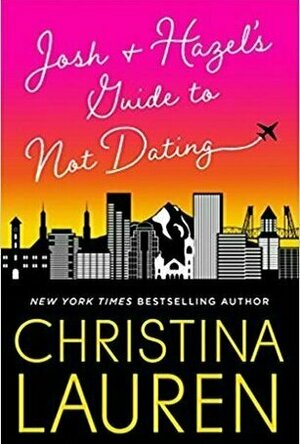
I've read a variety of Christina Lauren novels by now, and this was one of my favorites. For a short minute, I thought Hazel was going to be too zany and over the top for me, and then I got to know her. I then fell in love with her, and I was immediately rooting for our caring, funny, and yes, sometimes, crazy heroine. The best part was that Josh was great in his own reliable, sweet way, too. There's nothing better than a romance where you care for both partners. They were an excellent couple, and I wanted nothing more than to see Josh and Hazel get together. The two had wonderful chemistry and the whole book just had me grinning goofily.
Josh and Hazel are both damaged and wary, but not in that annoying way that has you rolling your eyes and wishing they'd just get over it all. Josh's girlfriend has hurt him and Hazel is constantly passed over by guys who think she's too over the top. Neither deserve this pain, and you quickly want them to get together and be healed. Of course it isn't that easy. When they come up with the double date angle (but not dating each other), laughter ensues, as well as some heartbreak.
There aren't too many side characters in this one: the focus is on Hazel and Josh, but I really enjoyed Hazel's mom, as well as Josh's sister, Emily. And there's plenty of fun to be had with some of the folks we encounter on the blind dates. Josh and Hazel seem so real; our writing duo capture them quite well. Hazel's zest for life coupled with her vulnerability, for instance, shine brightly. And Josh, well, I just wanted to hug him sometimes.
In the end this a really fun, sweet book. It's humorous yet realistic and tender. I adored Hazel and Josh-they were one of my favorite couples in a while. 4+ stars.
Josh and Hazel are both damaged and wary, but not in that annoying way that has you rolling your eyes and wishing they'd just get over it all. Josh's girlfriend has hurt him and Hazel is constantly passed over by guys who think she's too over the top. Neither deserve this pain, and you quickly want them to get together and be healed. Of course it isn't that easy. When they come up with the double date angle (but not dating each other), laughter ensues, as well as some heartbreak.
There aren't too many side characters in this one: the focus is on Hazel and Josh, but I really enjoyed Hazel's mom, as well as Josh's sister, Emily. And there's plenty of fun to be had with some of the folks we encounter on the blind dates. Josh and Hazel seem so real; our writing duo capture them quite well. Hazel's zest for life coupled with her vulnerability, for instance, shine brightly. And Josh, well, I just wanted to hug him sometimes.
In the end this a really fun, sweet book. It's humorous yet realistic and tender. I adored Hazel and Josh-they were one of my favorite couples in a while. 4+ stars.
Oral Pathology Exam Questions 2017 Edition
Education
App
PASS YOUR EXAM IN THE FIRST TRY WITH THE FOLLOWING REASONS: +) BREAK hundreds of practice...
Persepolis I & II
Book
Wise, often funny, sometimes heartbreaking, Persepolis: The Story of a Childhood tells the story of...
Secret Lives of Teachers
Book
Welcome to "East Hudson," an elite private school in New York where the students are attentive, the...
Kristina Rihanoff: Dancing Out of Darkness: My Story
Book
Kristina was born in 1977 in Vladivostok, East Russia, a bleak naval town closed to foreigners under...