Search
Search results
ClareR (5996 KP) rated Confessions in Books
Sep 10, 2025
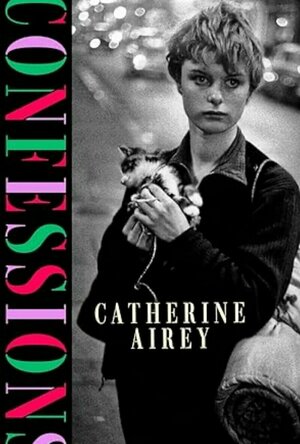
I wouldn’t be at all surprised if Catherine Airey’s book Confessions didn’t end up on some prize lists this year. It’s so well written, engaging, unputdownable (I read it in a day - I was ill!), and it has a lot to say about loss, purpose, family, secrets and women’s experiences.
I love a multi-generational story, and this starts with Cora Brady, the Twin Towers disaster and how she wanders the streets of New York afterwards. Her estranged aunt comes to her rescue in a letter, offering Cora a home with her in Ireland.
Some parts of the book are about Cora’s mother, an artist, her aunt and her own daughter.
I was pretty much transfixed by this book; I was completely immersed in the lives of these women. Sometimes it was heartbreaking, and at other times there was a real hope for the future.
It’s a great read, and I’d highly recommend it.

I love a multi-generational story, and this starts with Cora Brady, the Twin Towers disaster and how she wanders the streets of New York afterwards. Her estranged aunt comes to her rescue in a letter, offering Cora a home with her in Ireland.
Some parts of the book are about Cora’s mother, an artist, her aunt and her own daughter.
I was pretty much transfixed by this book; I was completely immersed in the lives of these women. Sometimes it was heartbreaking, and at other times there was a real hope for the future.
It’s a great read, and I’d highly recommend it.
Purple Phoenix Games (2266 KP) rated The Mind in Tabletop Games
Nov 26, 2019
What IS a game? That’s a question that had never crossed my stream of consciousness until The Mind was released. And even then, I just sat idly by, snacking on my popcorn, watching all definitions and sides emerge in the great debate. So what’s the verdict? That’s ultimately up to you.
The Mind is a card game in which the players are trying to play their cards in ascending numerical order. That’s it. No, seriously. The ONLY catch is that players are not allowed to communicate in any way which cards they hold in their hands. No talking, no noises, and no gesturing of any kind. That’s how they getcha. Here’s how it works – at Level 1 (start of the game), each player is dealt one card. When the level officially begins, you must decide when is the right time to play your card. If the cards are played in order, then you move to Level 2 and receive 2 cards to start the round. Level 3 gives you 3 cards, and so on. Players win the game if they successfully complete a certain number of Levels.
I’m not here to comment on the “Is The Mind a game or not” debate, I’m just here to let you know our thoughts! The Mind is definitely an interesting experience, to say the least. A game that often begins timidly usually turns into a high-energy (and sometimes high-stress) atmosphere of fun. Although it might feel like pure luck, or even hidden telepathic connections, The Mind is ultimately a game of timing. The subtitle says it all – “Let’s become one…” Can you and your friends synchronize your timing well enough to make progress? Or will there be someone amongst the group who inadvertently throws off the groove?
Is The Mind my favorite game? No. But it’s one that I enjoy playing. I think it’s a unique game that keeps everyone on their toes, despite its appearance of simplicity. One thing I really enjoy is playing The Mind several times with the same group of people. It’s neat to see how the group learns the nuances of how everyone plays, and keeping that flow going between games and sessions. I also enjoy playing The Mind with a totally new group of people too for the same reason – everyone has a different play style and you’ve got to be able to learn and adapt to any given player.
The hardest rule is perhaps the one that makes the game most interesting, and that is the no communication rule. Admittedly, I do sometimes accidentally throw up a gesture or two to signal to other players, but even those are sometimes hilariously misunderstood and lead to some close calls or devastating defeats.
Overall, I think The Mind is a pretty neat game. It’s not one that I play too often, but it’s one that is simple enough to teach and play that I like playing it with newer gamers. The Mind plays fairly quickly too, so that makes it a good filler between some heavier games. Purple Phoenix Games (with input from guest score Tony) gives The Mind a thoughtful 14 / 24.
The Mind is a card game in which the players are trying to play their cards in ascending numerical order. That’s it. No, seriously. The ONLY catch is that players are not allowed to communicate in any way which cards they hold in their hands. No talking, no noises, and no gesturing of any kind. That’s how they getcha. Here’s how it works – at Level 1 (start of the game), each player is dealt one card. When the level officially begins, you must decide when is the right time to play your card. If the cards are played in order, then you move to Level 2 and receive 2 cards to start the round. Level 3 gives you 3 cards, and so on. Players win the game if they successfully complete a certain number of Levels.
I’m not here to comment on the “Is The Mind a game or not” debate, I’m just here to let you know our thoughts! The Mind is definitely an interesting experience, to say the least. A game that often begins timidly usually turns into a high-energy (and sometimes high-stress) atmosphere of fun. Although it might feel like pure luck, or even hidden telepathic connections, The Mind is ultimately a game of timing. The subtitle says it all – “Let’s become one…” Can you and your friends synchronize your timing well enough to make progress? Or will there be someone amongst the group who inadvertently throws off the groove?
Is The Mind my favorite game? No. But it’s one that I enjoy playing. I think it’s a unique game that keeps everyone on their toes, despite its appearance of simplicity. One thing I really enjoy is playing The Mind several times with the same group of people. It’s neat to see how the group learns the nuances of how everyone plays, and keeping that flow going between games and sessions. I also enjoy playing The Mind with a totally new group of people too for the same reason – everyone has a different play style and you’ve got to be able to learn and adapt to any given player.
The hardest rule is perhaps the one that makes the game most interesting, and that is the no communication rule. Admittedly, I do sometimes accidentally throw up a gesture or two to signal to other players, but even those are sometimes hilariously misunderstood and lead to some close calls or devastating defeats.
Overall, I think The Mind is a pretty neat game. It’s not one that I play too often, but it’s one that is simple enough to teach and play that I like playing it with newer gamers. The Mind plays fairly quickly too, so that makes it a good filler between some heavier games. Purple Phoenix Games (with input from guest score Tony) gives The Mind a thoughtful 14 / 24.
Ellie Moore (38 KP) rated Pocket Library in Apps
Apr 13, 2019
I love this app. There are a few things that I feel may need a little tweaking (like the web search lag and the fact that there isn't a wish list option yet), but the app developer is very responsive and eager to make this a successful option for everyone.
This app allows you to scan barcodes for easy uploading, type in ISBNs, web search, and add manually if all else fails. It counts how many books you have in your collection, as well as how many you have read or not read. You can mark each finished book with the red bookmark to indicate that you've read it and you also have the ability to keep track of who you lent your books out to, which comes in very handy for me because I don't want to lose track of my babies!
You can search through your shelf by the easy access search bar at the very top of the app. Allows for origination by A-Z title or A-Z author, and even most recently added. You have the ability to search with a filter selection of either the author, language, read status, lent to, and favorites.
After adding your books to your virtual shelf, there is an edit tab that lets users customize the added information, even allowing for image change of the book covers by adding your own photos or downloaded images. I love that idea because sometimes after you have added a book by the web search action, it uploads a cover that may not be the same as the one that you have on your shelf, so, for me, having the ability to change it out is a must.
There is, for those who worry about something going wrong, a backup and restore option in the left side menu.
So what are you waiting for? Check out "Pocket Library: Book Organizer"
https://play.google.com/store/apps/details?id=com.ajaxmobiletech.pocketlibrary
This app allows you to scan barcodes for easy uploading, type in ISBNs, web search, and add manually if all else fails. It counts how many books you have in your collection, as well as how many you have read or not read. You can mark each finished book with the red bookmark to indicate that you've read it and you also have the ability to keep track of who you lent your books out to, which comes in very handy for me because I don't want to lose track of my babies!
You can search through your shelf by the easy access search bar at the very top of the app. Allows for origination by A-Z title or A-Z author, and even most recently added. You have the ability to search with a filter selection of either the author, language, read status, lent to, and favorites.
After adding your books to your virtual shelf, there is an edit tab that lets users customize the added information, even allowing for image change of the book covers by adding your own photos or downloaded images. I love that idea because sometimes after you have added a book by the web search action, it uploads a cover that may not be the same as the one that you have on your shelf, so, for me, having the ability to change it out is a must.
There is, for those who worry about something going wrong, a backup and restore option in the left side menu.
So what are you waiting for? Check out "Pocket Library: Book Organizer"
https://play.google.com/store/apps/details?id=com.ajaxmobiletech.pocketlibrary
Kyera (8 KP) rated Hunting Prince Dracula in Books
Feb 1, 2018
Hunting Prince Dracula is the second book in the Stalking Jack the Ripper series, which is a fantastic Victorian-era forensics mystery that takes its readers on a harrowing journey with its main characters. In Hunting, Audrey Rose and Thomas travel to Romania to study at one of Europe's foremost schools on forensic science. Although they expected to examine cadavers, they never thought the bodies would belong to victims of a killer in the midst of their spree.
I found the plot of Hunting Prince Dracula to be more enjoyable than its predecessor, Stalking Jack the Ripper. There was a new cast of supporting characters which brought a depth to the storyline that wasn't as prevalent previously. There were more characters that had been introduced and developed that you formed bonds with or questioned their intentions - could they be the killer or the next victim?
By far my favourite aspect of the series was the Holmes/Watson-esque relationship between Thomas and Audrey Rose. Thomas' quips and barbs were the most enjoyable parts of the book, despite his sometimes rakish manner. He was my favourite character in both the first and second book. It was nice to see his emotional development over the course of the novel as he had previously been hiding that aspect of himself.
Audrey Rose continues to monologue incessantly in her head, both chastizing herself profusely for her feelings and reliving the events of Stalking Jack the Ripper. It is clear that she is suffering from a traumatic event, but is unable to determine how to deal with it. It was interesting to see her attempting to cope, yet sometimes falling prey to fits of her imagination as she was unable to process the events completely. Stalking pushed Audrey Rose in ways that she was not equipped to deal with and her struggle throughout the book feels authentic.
I felt that the mystery was very well done and the culprit wasn't obvious from the first few pages, rather you questioned everything up until the very end. Our heroes conclude the story with the news that they will be traveling once more and Escaping from Houdini in the third book in this series.
I found the plot of Hunting Prince Dracula to be more enjoyable than its predecessor, Stalking Jack the Ripper. There was a new cast of supporting characters which brought a depth to the storyline that wasn't as prevalent previously. There were more characters that had been introduced and developed that you formed bonds with or questioned their intentions - could they be the killer or the next victim?
By far my favourite aspect of the series was the Holmes/Watson-esque relationship between Thomas and Audrey Rose. Thomas' quips and barbs were the most enjoyable parts of the book, despite his sometimes rakish manner. He was my favourite character in both the first and second book. It was nice to see his emotional development over the course of the novel as he had previously been hiding that aspect of himself.
Audrey Rose continues to monologue incessantly in her head, both chastizing herself profusely for her feelings and reliving the events of Stalking Jack the Ripper. It is clear that she is suffering from a traumatic event, but is unable to determine how to deal with it. It was interesting to see her attempting to cope, yet sometimes falling prey to fits of her imagination as she was unable to process the events completely. Stalking pushed Audrey Rose in ways that she was not equipped to deal with and her struggle throughout the book feels authentic.
I felt that the mystery was very well done and the culprit wasn't obvious from the first few pages, rather you questioned everything up until the very end. Our heroes conclude the story with the news that they will be traveling once more and Escaping from Houdini in the third book in this series.
Zuky the BookBum (15 KP) rated Copycat in Books
Mar 15, 2018
Sometimes you come across a really easy to read and exciting thriller novel, that doesn’t take up too much head space, and is alotta fun… Copycat is exactly that! This one really helped me out of a reading slump, hallelujah!
I can’t turn around to you and say this is the most menacing, gripping and terrific thriller I’ve ever read, but I can say that it’s worth picking up if you’re looking for a non-challenging but exciting read.
The characters in this one are nicely developed, but there was a bit of a lack of connection between me and our main character Sarah. I think if I’d been able to get to know her better, I might have had more sympathy for her in parts, but alas. I found a lot of the family related situations to be very realistic, and liked the dynamic between husband and wife.
As for the rest of the story, the plot wasn’t particularly realistic, but that didn’t ruin the book in any way. Sometimes you just need a story to take you away from real life and give you a fun fictional tale to follow. Now, just because I didn’t feel like this one was extremely realistic, doesn’t mean I didn’t find parts of it creepy! Some of the “stalkers” ploys at getting Sarah nervous and afraid were really creative and menacing!
In the end, I had guessed how the story was going to play out, but I didn’t have a reason as to why it was going to play out that way. Even though I had my theory on the “stalker”, which turned out to be correct, I didn’t find this took away from the excitement of the end of the novel. I still got to enjoy the now knowing of how the book was going to conclude.
Overall, I really enjoyed this thriller and would definitely say it’s one to look out for if you’re looking for something a little less challenging, but still just as exciting to read as some other darker, more meaningful thrillers on the market (like Watching Edie or My Sister’s Bones, for example).
Thanks to HarperCollins for sending me an ARC in exchange for an honest review.
I can’t turn around to you and say this is the most menacing, gripping and terrific thriller I’ve ever read, but I can say that it’s worth picking up if you’re looking for a non-challenging but exciting read.
The characters in this one are nicely developed, but there was a bit of a lack of connection between me and our main character Sarah. I think if I’d been able to get to know her better, I might have had more sympathy for her in parts, but alas. I found a lot of the family related situations to be very realistic, and liked the dynamic between husband and wife.
As for the rest of the story, the plot wasn’t particularly realistic, but that didn’t ruin the book in any way. Sometimes you just need a story to take you away from real life and give you a fun fictional tale to follow. Now, just because I didn’t feel like this one was extremely realistic, doesn’t mean I didn’t find parts of it creepy! Some of the “stalkers” ploys at getting Sarah nervous and afraid were really creative and menacing!
In the end, I had guessed how the story was going to play out, but I didn’t have a reason as to why it was going to play out that way. Even though I had my theory on the “stalker”, which turned out to be correct, I didn’t find this took away from the excitement of the end of the novel. I still got to enjoy the now knowing of how the book was going to conclude.
Overall, I really enjoyed this thriller and would definitely say it’s one to look out for if you’re looking for something a little less challenging, but still just as exciting to read as some other darker, more meaningful thrillers on the market (like Watching Edie or My Sister’s Bones, for example).
Thanks to HarperCollins for sending me an ARC in exchange for an honest review.
Katie Guinn (34 KP) rated Goodbye Days in Books
Dec 7, 2018
Where do I start with this book? I read Jeff Zentner’s debut novel, The Serpent King, last year and I absolutely loved it, I’m talking one of my favorite reads of the year. And after finishing his follow-up novel, it’s safe to say that he’s becoming an auto-read author for me. The story opens with Carver Briggs (named after Raymond Carver and nicknamed Blade, how cool is that?) attending the funerals of his three best friends who were killed in an auto accident while texting Carver. As you can imagine, Carver is constantly plagued by guilt, grief, and the threat of possible prosecution. Every time I picked up this book, I immediately had a lump in my throat, the emotion was so real and so raw. Throughout the course of the book, Carver has “goodbye days” with each of his friends’ families, sharing memories and trying to make peace with his loss. They were the hardest parts to read, but also the most beautiful, where you could really feel Carver’s love for his friends and the depth of his grief.
One of my favorite things about Jeff Zentner is how he writes his characters. Carver and his friends, The Sauce Crew, feel like real teenage boys, sometimes cringingly so. Zentner writes misfits and outcasts as only someone who has been there can; honestly and compassionately. His prose sometimes feels almost poetical, lyrical; which makes sense. He’s also a guitarist and songwriter with five albums under his belt, who’s recorded with Iggy Pop and Debbie Harry. His love for music is a common thread in his books, both of which feature musicians and the power of music to heal and inspire. (The music-related Serpent King cameo was possibly my favorite thing in this novel)
While I didn’t love this one quite as much as The Serpent King, it was still a five star read for me and I recommend it if you’re a YA contemporary fan or if you just enjoy having your heart ripped out of your chest and shredded into confetti multiple times.
One of my favorite things about Jeff Zentner is how he writes his characters. Carver and his friends, The Sauce Crew, feel like real teenage boys, sometimes cringingly so. Zentner writes misfits and outcasts as only someone who has been there can; honestly and compassionately. His prose sometimes feels almost poetical, lyrical; which makes sense. He’s also a guitarist and songwriter with five albums under his belt, who’s recorded with Iggy Pop and Debbie Harry. His love for music is a common thread in his books, both of which feature musicians and the power of music to heal and inspire. (The music-related Serpent King cameo was possibly my favorite thing in this novel)
While I didn’t love this one quite as much as The Serpent King, it was still a five star read for me and I recommend it if you’re a YA contemporary fan or if you just enjoy having your heart ripped out of your chest and shredded into confetti multiple times.
Goddess in the Stacks (553 KP) rated Darius the Great is Not Okay in Books
Dec 25, 2018
This novel got a lot of hype before and after its release - and it deserves it. It has great minority representation, from Persian (and bi-racial!) to Zoroastrian and Baha'i, to clinical depression and male friendship. You could also read gay and/or asexual into it, but that's not explicitly mentioned. Romantic love is just never addressed; perhaps because the story just doesn't involve it, but you could definitely read the main character as ace.
Darius is a great main character. He's funny, self-deprecating, and complex. He has clinical depression, is medicated for it, and can sometimes tell when it's the depression making him think a certain way, but sometimes he can't. He's biracial, visiting Iran and his mother's Persian family for the first time, and adjusting to Persian social norms and traditions while trying not to lose sight of his American life. His connection with his father is tenuous and fraught with miscommunication, and lot of the book is spent wrestling with that relationship. His new friend, Sohrab, is a great foil to that, as his father is completely absent from his life, having been arrested and thrown in jail prior to the start of the story, largely for being in the wrong place at the wrong time, and being part of a minority religion.
There are so many small things touched on this book - suspicion at customs when flying through, bullying at school for being Persian, not speaking his family's language because his mother didn't teach it to him (and feeling cut off because of it) - all little things that a lot of immigrant children deal with.
Aside from the cultural things the book addresses, there's also the mental health aspect. Both Darius and his father have clinical depression, and there's stigma attached to having the diagnosis, and to taking pills for it. We see how their mental states affects their relationship with each other and with the rest of their family, and it's quite powerful. The author talks about having clinical depression in an afterword, and includes some resources that helped him. This is an #ownvoices novel in more ways than one, and it really shows. Excellent book.
You can find all my reviews at http://goddessinthestacks.com
Darius is a great main character. He's funny, self-deprecating, and complex. He has clinical depression, is medicated for it, and can sometimes tell when it's the depression making him think a certain way, but sometimes he can't. He's biracial, visiting Iran and his mother's Persian family for the first time, and adjusting to Persian social norms and traditions while trying not to lose sight of his American life. His connection with his father is tenuous and fraught with miscommunication, and lot of the book is spent wrestling with that relationship. His new friend, Sohrab, is a great foil to that, as his father is completely absent from his life, having been arrested and thrown in jail prior to the start of the story, largely for being in the wrong place at the wrong time, and being part of a minority religion.
There are so many small things touched on this book - suspicion at customs when flying through, bullying at school for being Persian, not speaking his family's language because his mother didn't teach it to him (and feeling cut off because of it) - all little things that a lot of immigrant children deal with.
Aside from the cultural things the book addresses, there's also the mental health aspect. Both Darius and his father have clinical depression, and there's stigma attached to having the diagnosis, and to taking pills for it. We see how their mental states affects their relationship with each other and with the rest of their family, and it's quite powerful. The author talks about having clinical depression in an afterword, and includes some resources that helped him. This is an #ownvoices novel in more ways than one, and it really shows. Excellent book.
You can find all my reviews at http://goddessinthestacks.com
Micky Barnard (542 KP) rated An American Marriage in Books
Jan 18, 2019
Gut punching read
AN AMERICAN MARRIAGE has been on my radar for a while, I knew it was going to be a tough read so I had to be ready to go in. This isn’t a love story, it is a life story. It was a tough read but I am all the richer for having read this story and the world of literature is richer for this realistic representation of hell raining down on an innocent black man.
Celestine and Roy didn’t have the perfect marriage but it was real, they argued, they communicated and they worked on it; they were happy. All that was stolen from them in an instant in a cruel and unjust way. What plays out is the passing of years and their experiences and those of their families and friends.
The trials Roy existed through were brutally tough to read but I felt transported to his lived experience and I was willing his position to a place of improvement. Celestine was a feminist, I admired her tenacity and ability to exist and continue...until I didn’t. What happened with these characters that I became so very invested in, made me feel very conflicted. Their decisions, their journeys were painful but real and I felt crushed at various junctures.
Sometimes love just isn’t enough, sometimes there isn’t enough love. My mind is still knotted, wondering about the what-ifs and the maybe if... One thing is for sure, this injustice happens, most likely on a daily basis and so this was an important story to tell.
I’ve come out of this read not feeling in love with these characters because, guess what, they were flawed. I have come out of this read incredibly impressed by the narrative voice of Tayari Jones and her ability to tell the tough tale with heart, passion and grit.
“Much of life is timing and circumstance, I see that now. Roy came into my life at the time when I needed a man like him...But how you feel love and understand love are two very different things.”
Celestine and Roy didn’t have the perfect marriage but it was real, they argued, they communicated and they worked on it; they were happy. All that was stolen from them in an instant in a cruel and unjust way. What plays out is the passing of years and their experiences and those of their families and friends.
The trials Roy existed through were brutally tough to read but I felt transported to his lived experience and I was willing his position to a place of improvement. Celestine was a feminist, I admired her tenacity and ability to exist and continue...until I didn’t. What happened with these characters that I became so very invested in, made me feel very conflicted. Their decisions, their journeys were painful but real and I felt crushed at various junctures.
Sometimes love just isn’t enough, sometimes there isn’t enough love. My mind is still knotted, wondering about the what-ifs and the maybe if... One thing is for sure, this injustice happens, most likely on a daily basis and so this was an important story to tell.
I’ve come out of this read not feeling in love with these characters because, guess what, they were flawed. I have come out of this read incredibly impressed by the narrative voice of Tayari Jones and her ability to tell the tough tale with heart, passion and grit.
“Much of life is timing and circumstance, I see that now. Roy came into my life at the time when I needed a man like him...But how you feel love and understand love are two very different things.”
Phil Leader (619 KP) rated Havana Storm in Books
Nov 14, 2019
I've been reading some pretty demanding books recently and needed something a bit more lightweight and the Cussler template usually fits the bill. You always know what you are going to get and sometimes that's just what you need. I didn't expect this book to blow me away and it didn't - but it was better than my expectations.
This is another collaboration with Dirk Cussler and as usual it's hard to know how much of the book is down to Clive and how much to Dirk. But that's not the point. In this book you get lots of underwater action, 'bad guys' intent on making money and creating environmental disaster in the process and Cuban political intrigue.
In previous installments the children of Dirk Pitt (called Dirk and Summer) have sometimes appeared to have written in just to make sure they appear in the series leaving the actual meat of the story progression to the familiar team of Pitt and Giordino. But this is quite notable for the ensemble cast that get their hands dirty in the course of the story, especially when the usual pairings are split up and Pitt works with his daughter and Dirk is with Giordino.
There are the usual scrapes and death-defying escapes but again the reader is kept guessing as sometime the escapes leave the heroes free to continue their task of thwarting the bad guys but other times ingenious and risky plans work but end up with their almost immediate recapture.
Overall the book is indeed a little more realistic that previous ones (although still pretty far fetched). The threat is localised rather than global and the motivation of political power and greed seems plausible, as does the way the NUMA team pull the threads together to work out what is going on.
This is never going to be a must read book or on any kind of literary shortlist for me but for pure escapist adventure, it's really hard to beat.
Possibly one for Dirk Pitt fans only as the first few books are far superior, but a lot better than some installments in the series.
Rating: Some violence but not excessive
This is another collaboration with Dirk Cussler and as usual it's hard to know how much of the book is down to Clive and how much to Dirk. But that's not the point. In this book you get lots of underwater action, 'bad guys' intent on making money and creating environmental disaster in the process and Cuban political intrigue.
In previous installments the children of Dirk Pitt (called Dirk and Summer) have sometimes appeared to have written in just to make sure they appear in the series leaving the actual meat of the story progression to the familiar team of Pitt and Giordino. But this is quite notable for the ensemble cast that get their hands dirty in the course of the story, especially when the usual pairings are split up and Pitt works with his daughter and Dirk is with Giordino.
There are the usual scrapes and death-defying escapes but again the reader is kept guessing as sometime the escapes leave the heroes free to continue their task of thwarting the bad guys but other times ingenious and risky plans work but end up with their almost immediate recapture.
Overall the book is indeed a little more realistic that previous ones (although still pretty far fetched). The threat is localised rather than global and the motivation of political power and greed seems plausible, as does the way the NUMA team pull the threads together to work out what is going on.
This is never going to be a must read book or on any kind of literary shortlist for me but for pure escapist adventure, it's really hard to beat.
Possibly one for Dirk Pitt fans only as the first few books are far superior, but a lot better than some installments in the series.
Rating: Some violence but not excessive
Sophia (Bookwyrming Thoughts) (530 KP) rated Twerp in Books
Jan 23, 2020
Original Review posted on <a title="Twerp by Mark Goldblatt" href="http://bookwyrming-thoughts.blogspot.com/2013/05/arc-review-twerp-by-mark-goldblatt.html">Bookwyrming Thoughts</a>
Original Rating: 3.5 out of 5 Owls
Note: Formatting is lost due to copy and paste
<i><b>Disclaimer:</b> I received an ARC copy of the book from the publisher via Netgalley. My review is not influenced in any way.</i>
In the 1960s of Queens, New York, 6th grader Julian Twerski takes an incident too far with his group of friends and gets suspended as a result. He's asked by his English teacher to write a journal about the incident just to get out of writing a report. Instead, he writes about other incidents because he isn't really ready to talk about the incident that gets him a suspension.
Julian and his group of friends, Lonnie, Quentin, Sholomo, Eric and Howie, tend to get away with a lot of pranks after doing them. I love how Goldblatt writes Julian's life in a very realistic way that Twerp reminds me a lot of my 6th grade year in some way. It's pretty dramatic, with people holding grudges longer than necessary and when you look back, it somehow just reminds of some decisions where there was more than just one route... I feel pretty naive looking back now. If I could go back in time and rethink things through, there are just some things I probably wouldn't have done, even if I don't get in trouble for it.
Twerp is basically about taking responsibility for your actions. When you mess up terribly, sometimes apologizing is the right thing to do to make up for your actions (and sometimes, even apologizing doesn't work).
While I can't go back in time myself to rethink awkward/funny moments and situations, I'm really glad Julian finally realizes how far he took the incident and con fesses about what really happened instead of lying just to get out of it. I'm also really glad that he convinces his friends that what they did was wrong and they should, at the least, apologize about the incident. It's nice to know that after evaluating the situation and actions, it lifts a burden off someone's shoulders.
Original Rating: 3.5 out of 5 Owls
Note: Formatting is lost due to copy and paste
<i><b>Disclaimer:</b> I received an ARC copy of the book from the publisher via Netgalley. My review is not influenced in any way.</i>
In the 1960s of Queens, New York, 6th grader Julian Twerski takes an incident too far with his group of friends and gets suspended as a result. He's asked by his English teacher to write a journal about the incident just to get out of writing a report. Instead, he writes about other incidents because he isn't really ready to talk about the incident that gets him a suspension.
Julian and his group of friends, Lonnie, Quentin, Sholomo, Eric and Howie, tend to get away with a lot of pranks after doing them. I love how Goldblatt writes Julian's life in a very realistic way that Twerp reminds me a lot of my 6th grade year in some way. It's pretty dramatic, with people holding grudges longer than necessary and when you look back, it somehow just reminds of some decisions where there was more than just one route... I feel pretty naive looking back now. If I could go back in time and rethink things through, there are just some things I probably wouldn't have done, even if I don't get in trouble for it.
Twerp is basically about taking responsibility for your actions. When you mess up terribly, sometimes apologizing is the right thing to do to make up for your actions (and sometimes, even apologizing doesn't work).
While I can't go back in time myself to rethink awkward/funny moments and situations, I'm really glad Julian finally realizes how far he took the incident and con fesses about what really happened instead of lying just to get out of it. I'm also really glad that he convinces his friends that what they did was wrong and they should, at the least, apologize about the incident. It's nice to know that after evaluating the situation and actions, it lifts a burden off someone's shoulders.