
The World of Myth: An Anthology
Book
Since its publication in 1991, The World of Myth has provided thousands of students with a...

Cougar: Ecology and Conservation
Maurice Hornocker, Sharon Negri and Alan Rabinowitz
Book
The cougar is one of the most beautiful, enigmatic, and majestic animals in the Americas. Eliciting...

Foundations of Restoration Ecology
Margaret A. Palmer, Joy B. Zedler and Donald A. Falk
Book
The practice of ecological restoration, firmly grounded in the science of restoration ecology,...
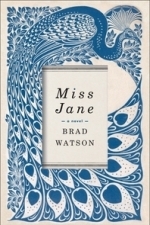
Miss Jane
8.0 Rate It
Book
Longlisted for the National Book Award for Fiction: Astonishing prose brings to life a forgotten...
Biography memoir social issues

The Republic for Which It Stands: The United States during Reconstruction and the Gilded Age, 1865-1896
Book
The Oxford History of the United States is the most respected multivolume history of the American...
History Politics

Stolen Goods (To Catch a Thief #2)
Book
Catch Me If You Can meets Tangled in this funny and feel-good romantic comedy, new from bestselling...
Contemporary Romance Comedy

Bluee Free International Calls
Social Networking and Productivity
App
Bluee - International Calls and SMS App • Earn UNLIMITED FREE CREDITS and CALL FOR FREE (no...

Lucktastic - Win Prizes. Earn & Redeem Rewards.
Lifestyle
8.0
Rate It
App
Lucktastic offers free scratch card style games and real world prizes. Play daily for chances to win...

Suswatibasu (1703 KP) rated Inferior: How Science Got Women Wrong in Books
Nov 12, 2017


Saini systemically pulls this assertion apart, showing how many of the apparent brain differences - and even physical modification of the brain - can be the result of cultural influences. She highlights that although there maybe some differences, they are significantly smaller between male to female, and that each individual should be looked at on a case by case basis.
After a shocking opening demonstrating just how recently women's brains were genuinely considered inferior - Saini quotes Darwin in a letter making it clear that even as a leading evolutionist, he also believed this to be the situation - which is why it's hardly surprising research continues to be skewed.
We also see remarkable bias in the development of anthropological ideas pushing through to the evolutionary field, discussing how men had been seen as hunter gatherers - though this clearly isn't the case in many closed societies. She speaks.to leading scientists who have studied women's roles in tribes across China, South America and Africa, who completely turn this theory on its head.
What she shows is that any interpretation can be possible if you have an agenda, whether consciously or unconsciously, hence research needs to be scrutinised analytically from every perspective. A fascinating and essential read.

ClareR (6256 KP) rated Beneath the World, a Sea in Books
Jul 26, 2019 (Updated Jul 28, 2019)

The writing style and the language used in this book really appealed to me - it’s poetic, descriptive and the story meanders along as we learn about the characters and the Submundo Delta. This is no action packed story, and that’s just fine with me. Instead it looks at how these characters deal with knowing their innermost thoughts, desires and fears. It also briefly looks at the morals of bringing science and technology to a shut off part of the world.
What really appealed to me, is how our memories construct our views of ourselves, and how we portray ourselves to others. It also looks at those parts that we keep hidden from others, and what happens when they are laid open to everyone. Rather scary, to be honest! We don’t always like those parts of ourselves.
This was my first Chris Beckett book, and I don’t think it will be my last.
Many thanks to Readers First for my copy of this book.