
Search
Search results
Jordan Binkerd (567 KP) rated Gideon's Angel in Books
Aug 15, 2019

Note: this review is transposted from my personal review blog, and so was originally written several years ago. I figured if I reposted it here, someone might actually read it….
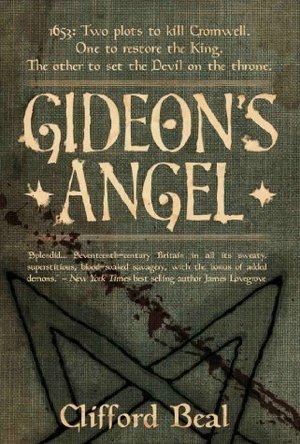
I received my copy of Gideon’s Angel through the Goodreads FirstReads program. This in no way influences my review, except to ensure that I was able to get ahold of this book and thus review it. I have to say, I really enjoyed this one. I want to describe it as “steampunk,” but my understanding is that steampunk is usually set in the 1800s (or at least that level of tech and society) whereas this work is firmly set in 1653. If there’s already a term for pseudo-historical fiction with a fantasy touch set in that timeframe, I apologize for not knowing what it is and using it accordingly.
Things are not going well for Richard Treadwell. The English Civil War is over, the King’s Cavaliers lost to the forces of Parliament and Oliver Cromwell, and Charles I has been executed. Treadwell has managed to escape the destruction of his cause, and has spent the past eight years in exile in France, performing a delicate balancing act between loyalty to his exiled king* and his employer, Cardinal Mazarin. When Mazarin informs him that someone is using the forces of Hell to tip the balance in their favor and asks him to spy on the exile court to find out if it is one of the king’s supporters, Treadwell decides that it’s time to get out of Paris. He accepts a mission for one of the king’s more militant supporters that will take him back to his beloved England–to lead a Royalist uprising, one last try to oust Cromwell and his Puritan cronies. Treadwell has other business to tend to as well, including a wife who by now probably considers herself a widow. Unfortunately for Treadwell’s simple worldview, it soon becomes clear that Cromwell’s power is the only thing preventing the more radical Puritan elements from running roughshod over the whole country. Worse still, a demon from the pits of Hell has appeared to a radical Puritan sect masquerading as an angel of light and ordering the death of Cromwell so that the Kingdom of God may be fulfilled. Now instead of assassinating Cromwell Treadwell will be forced to save him–if he can find a way to fight the forces of Hell, gain some allies in his quest, and avoid d’Artagnan, a young Musketeer dispatched by the Cardinal to bear him back to Paris….
I really enjoyed this book. It’s not exactly “high literature,” but I think I’ve very well established that I care far more about a work’s entertainment value than whatever it is critics look for. The world Beal creates here feels very real, slipping in background historical information without making you feel like you’ve been lectured. Some readers will probably wish for more background on the English Civil War, and that’s fine. If they care that much, there are numerous good books on the subject. If they don’t, there’s a Wikipedia article that should give you a good rundown on what happened. Beal manages to evoke seventeenth-century London in all its grimy glory, much as it would have actually been aside from the fact that all the magic we dismiss as superstition is actually going on behind the scenes. Moreover, this magic very much resembles what you would find depicted in the folklore of the era without obvious modern embellishment. I’m not really all that well versed in the history of the Freemasons, so I can’t accurately speak to how they were portrayed here except to say that I very much doubt their claim to date back to the builders of the pyramids. Then again, I doubt they have the tools to summon demons too, so maybe I shouldn’t be too critical. Secondary characters generally proved to be interestingly complex, especially Billy Chard, but I am seeing criticism of how the female characters in the book act. They aren’t weak characters by any means, but they are constrained by their roles in society. Treadwell’s wife has pragmatically joined her fate to that of the officer who took over Treadwell’s land when he was banished and is pregnant with his child. Is she weak for this? Or is she a strong female doing what she has to in order to protect what is left of her family? Treadwell’s Parisian mistress follows him to England rather than stay in Paris and face the scandal of their liasion alone. Weak, for needing Treadwell by her side? Or strong, for following him into whatever dangers he may be facing? Finally, Isabelle decides to follow her father and the rest of Treadwell’s band into battle against the forces of Darkness, deciding that it would be better to fall by his side than live on without him. Possibly a sign of weakness, but look at her situation realistically. She and her father were driven from Spain for their Jewish heritage, her mother dying along the way. Jews do not fare well in the Christian world of the seventeenth century, not even in England. The lot of a young woman alone in the world is already hard enough in this time without adding the burden of religious and ethnic persecution. She would have no respectable means of supporting herself, and could conceivably find herself forced into prostitution–on her own if she was lucky, as no more than a slave if she was not. Is preferring death in battle to such a fate a sign of weakness or of strength? She certainly has no trouble speaking her mind, and in fact berates Treadwell severely for endangering her father when they first meet. I suppose I can understand where some people would find these characters and their portrayal to be weak and sexist, but I respectfully disagree. I submit that instead they are strong characters reacting realistically to a world where women are not treated equally–in fact, I would have more of a problem with them if they demonstrated anachronistic modern sensibilities.** The ending was a little deus ex machina, but on the whole I didn’t mind. I would say that I want to read a sequel, but I don’t think the author could come up with anything to top this in terms of personal impact on the characters–Treadwell’s internal conflict between hating Cromwell and having to save him is very well done, and I fear Beal would prove unable to find something equally interesting as a follow up. We never really got to find out what happened to Treadwell back during the Thirty Years War that introduced him to the world of angels and demons, so I could see maybe writing that up….I’d buy it, anyway.
CONTENT: R-rated language, occasionally harsh but I would argue not gratuitous. Moderately explicit sexual content, as you would expect from a work in this vein.*** A fair amount of violence, from both man and demon. Not usually too gory in its description. There is also a good deal of occult content, as the villains are summoning a demon they believe to be an angel. This demon’s lesser minions dog Treadwell and his friends, and there are multiple encounters with them. One is implied to be a golem, others appear as strange amalgamations of beast(s) and man. For me, this is adequately balanced by the recognition that, as powerful as the forces of Darkness are, God is far more powerful than they. Bottom line: if you’re mature enough to handle the other content, I don’t believe the occult elements should prove to be an issue.
*Charles I was executed, while his son Charles II went into exile. Just in case you were concerned with the historical accuracy of the book. So far as I can tell, this is pretty accurate. You know, aside from the demons and fictional characters roaming London…..
**Please understand, I’m neither defending nor endorsing the inequality of the seventeenth century. Neither is Clifford Beal, for that matter. I’m simply pointing out that it was how it was, and this was the world the characters would have come from. I’m all for equality, but to whitewash history and pretend it was different from it was….that way lies dangerous waters.
***This evokes more than anything a supernatural-tinged Alexandre Dumas novel for me….and you know how bawdry his musketeers could be when they wanted to be.
Original post: https://jordanbinkerd.wordpress.com/2013/10/24/review-gideons-angel-by-clifford-beal/
I received my copy of Gideon’s Angel through the Goodreads FirstReads program. This in no way influences my review, except to ensure that I was able to get ahold of this book and thus review it. I have to say, I really enjoyed this one. I want to describe it as “steampunk,” but my understanding is that steampunk is usually set in the 1800s (or at least that level of tech and society) whereas this work is firmly set in 1653. If there’s already a term for pseudo-historical fiction with a fantasy touch set in that timeframe, I apologize for not knowing what it is and using it accordingly.
Things are not going well for Richard Treadwell. The English Civil War is over, the King’s Cavaliers lost to the forces of Parliament and Oliver Cromwell, and Charles I has been executed. Treadwell has managed to escape the destruction of his cause, and has spent the past eight years in exile in France, performing a delicate balancing act between loyalty to his exiled king* and his employer, Cardinal Mazarin. When Mazarin informs him that someone is using the forces of Hell to tip the balance in their favor and asks him to spy on the exile court to find out if it is one of the king’s supporters, Treadwell decides that it’s time to get out of Paris. He accepts a mission for one of the king’s more militant supporters that will take him back to his beloved England–to lead a Royalist uprising, one last try to oust Cromwell and his Puritan cronies. Treadwell has other business to tend to as well, including a wife who by now probably considers herself a widow. Unfortunately for Treadwell’s simple worldview, it soon becomes clear that Cromwell’s power is the only thing preventing the more radical Puritan elements from running roughshod over the whole country. Worse still, a demon from the pits of Hell has appeared to a radical Puritan sect masquerading as an angel of light and ordering the death of Cromwell so that the Kingdom of God may be fulfilled. Now instead of assassinating Cromwell Treadwell will be forced to save him–if he can find a way to fight the forces of Hell, gain some allies in his quest, and avoid d’Artagnan, a young Musketeer dispatched by the Cardinal to bear him back to Paris….
I really enjoyed this book. It’s not exactly “high literature,” but I think I’ve very well established that I care far more about a work’s entertainment value than whatever it is critics look for. The world Beal creates here feels very real, slipping in background historical information without making you feel like you’ve been lectured. Some readers will probably wish for more background on the English Civil War, and that’s fine. If they care that much, there are numerous good books on the subject. If they don’t, there’s a Wikipedia article that should give you a good rundown on what happened. Beal manages to evoke seventeenth-century London in all its grimy glory, much as it would have actually been aside from the fact that all the magic we dismiss as superstition is actually going on behind the scenes. Moreover, this magic very much resembles what you would find depicted in the folklore of the era without obvious modern embellishment. I’m not really all that well versed in the history of the Freemasons, so I can’t accurately speak to how they were portrayed here except to say that I very much doubt their claim to date back to the builders of the pyramids. Then again, I doubt they have the tools to summon demons too, so maybe I shouldn’t be too critical. Secondary characters generally proved to be interestingly complex, especially Billy Chard, but I am seeing criticism of how the female characters in the book act. They aren’t weak characters by any means, but they are constrained by their roles in society. Treadwell’s wife has pragmatically joined her fate to that of the officer who took over Treadwell’s land when he was banished and is pregnant with his child. Is she weak for this? Or is she a strong female doing what she has to in order to protect what is left of her family? Treadwell’s Parisian mistress follows him to England rather than stay in Paris and face the scandal of their liasion alone. Weak, for needing Treadwell by her side? Or strong, for following him into whatever dangers he may be facing? Finally, Isabelle decides to follow her father and the rest of Treadwell’s band into battle against the forces of Darkness, deciding that it would be better to fall by his side than live on without him. Possibly a sign of weakness, but look at her situation realistically. She and her father were driven from Spain for their Jewish heritage, her mother dying along the way. Jews do not fare well in the Christian world of the seventeenth century, not even in England. The lot of a young woman alone in the world is already hard enough in this time without adding the burden of religious and ethnic persecution. She would have no respectable means of supporting herself, and could conceivably find herself forced into prostitution–on her own if she was lucky, as no more than a slave if she was not. Is preferring death in battle to such a fate a sign of weakness or of strength? She certainly has no trouble speaking her mind, and in fact berates Treadwell severely for endangering her father when they first meet. I suppose I can understand where some people would find these characters and their portrayal to be weak and sexist, but I respectfully disagree. I submit that instead they are strong characters reacting realistically to a world where women are not treated equally–in fact, I would have more of a problem with them if they demonstrated anachronistic modern sensibilities.** The ending was a little deus ex machina, but on the whole I didn’t mind. I would say that I want to read a sequel, but I don’t think the author could come up with anything to top this in terms of personal impact on the characters–Treadwell’s internal conflict between hating Cromwell and having to save him is very well done, and I fear Beal would prove unable to find something equally interesting as a follow up. We never really got to find out what happened to Treadwell back during the Thirty Years War that introduced him to the world of angels and demons, so I could see maybe writing that up….I’d buy it, anyway.
CONTENT: R-rated language, occasionally harsh but I would argue not gratuitous. Moderately explicit sexual content, as you would expect from a work in this vein.*** A fair amount of violence, from both man and demon. Not usually too gory in its description. There is also a good deal of occult content, as the villains are summoning a demon they believe to be an angel. This demon’s lesser minions dog Treadwell and his friends, and there are multiple encounters with them. One is implied to be a golem, others appear as strange amalgamations of beast(s) and man. For me, this is adequately balanced by the recognition that, as powerful as the forces of Darkness are, God is far more powerful than they. Bottom line: if you’re mature enough to handle the other content, I don’t believe the occult elements should prove to be an issue.
*Charles I was executed, while his son Charles II went into exile. Just in case you were concerned with the historical accuracy of the book. So far as I can tell, this is pretty accurate. You know, aside from the demons and fictional characters roaming London…..
**Please understand, I’m neither defending nor endorsing the inequality of the seventeenth century. Neither is Clifford Beal, for that matter. I’m simply pointing out that it was how it was, and this was the world the characters would have come from. I’m all for equality, but to whitewash history and pretend it was different from it was….that way lies dangerous waters.
***This evokes more than anything a supernatural-tinged Alexandre Dumas novel for me….and you know how bawdry his musketeers could be when they wanted to be.
Original post: https://jordanbinkerd.wordpress.com/2013/10/24/review-gideons-angel-by-clifford-beal/
Mandy and G.D. Burkhead (26 KP) rated The Grey Bastards in Books
May 20, 2018

Shelf Life – The Grey Bastards Exemplifies Grimdark Fantasy at Its Damn Finest
Contains spoilers, click to show
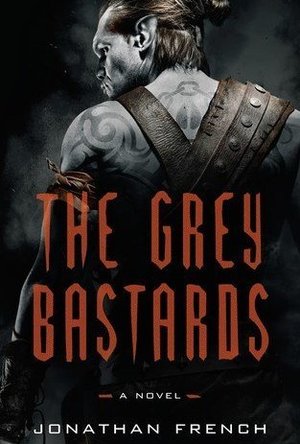
The Grey Bastards is a fun, foul-mouthed read. If you’re turned off by bad language, steamy sex, or a good plot with plenty of action and twists, then this book isn’t for you. The Grey Bastards falls into the fantasy sub-genre known as grimdark. Where high fantasy has your Tolkien beautiful and noble elves, dwarves, humans, and wizards with epic battles between good and evil, grimdark takes all of that and covers it in shit, pus, and blood. Notice how in high fantasy nobody ever takes a piss or fucks? In grimdark, everyone does.
But don’t be fooled into thinking this book will be any less intelligent, epic, or heartfelt for it. The Grey Bastards is all of that and more. The novel follows Jackal, a half-breed orc living in the Lot Lands, the barren desert wasteland of Hispartha. He is a Grey Bastard, one of many half-orc hoofs, each protecting its own small town in the Lots. Members of a hoof are elite warriors that ride out on their Barbarians—giant warthogs—and slaughter invading bands of orcs.
Hispartha is a vibrant world, with a mix of fantastical species (orcs, half-orcs, elves, humans, halflings, and centaurs) with unique cultures and religions. Hispartha itself takes influences from Reconquista Spain, which is especially noticeable in the nomenclature, geography, and architecture.
The primarily atheistic half-orcs recently won their freedom from slavery at the hands of humans. Humans treat the half-orcs like second-class citizens, but tolerate them because of their strength, using them as a shield from the orcs. The elves are beautiful, reclusive, and probably the most cliché; there is one important elf character, but for the most part, we don’t get a good look into their culture in the first book. The centaurs worship Romanesque deities and go on crazed, Bacchanalian killing sprees during the blood moon.
Besides the half-orcs, the halflings are perhaps the most interesting. I still have a hard time visualizing them, trying to figure out if they are thin, pixie-like creatures or more stocky like dwarves. Their small stature and black skin makes me think of pygmies. They worship a god they expect will reincarnate someday, (view spoiler)
One thing that has always annoyed me about fantasy is that many authors feel that the characters of their world, being pre-industrial and thus “medieval,” must all be white, straight, Christian (or proto-Christian), cisgender males. If a woman appears at all is to act as the damsel, prize, or, if she’s lucky, a mystical enchantress to guide the heroes or provide a maguffin. It has come to the point in which this has become a tired and accepted baseline for fantasy. I don’t necessarily think that these fantasy authors are intentionally trying to be uninclusive, so much as they just seem to forget that other groups of people can exist in fantasy thanks to its fathers, Tolkien and Lewis.
But enough with my rant, the purpose of which is to highlight why I am often drawn to grimdark fantasy: at the very least I know that women, people of color, lgbt people, and other religions will be present, even if they are often victimized. This is because grimdark fantasy honestly depicts the horrors of rape, war, murder, slavery, and racism (or rather, speciesism in most cases) and has heroes and villains that are morally grey.
However, many authors describe these atrocities and then leave it at that, assuming that simply depicting them is enough to make a book mature and meaningful. They often fail to make any sort of statement on evil, and thus can seem to be, at best, blindly accepting it and, at worst, glorifying it (this often happens in the cases of magnificent bastard characters, who are absolute monsters but are so charming you almost respect or like them).
Jonathan French, however, does not fall short of the mark as many authors do, and for two main reasons: humor and humanity.
Let’s start with the humor. This book is hilarious. I mean in the I literally laughed out loud while reading it way. Sure, the jokes are often crass, but I have a dirty mind, so inappropriate humor is my favorite kind. The dialogue is especially top-notch, and the interactions between Jackal and his friends Fetching and Oats feel genuine, full of in-jokes, insults, and sexually-charged humor, all of which are exactly how I interact with my own close friends. And every major character in this book is so damn witty that I’m honestly jealous of them. If I could be quick enough to make even one of their zingers at the right time in a conversation, I would feel proud of myself for the rest of the day.
Humor is necessary to prevent any grimdark fantasy from becoming too over-the-top or depressing. And honestly, humor is needed most when the world is a dark and frightening place. But too much humor could accidentally downplay the point of grimdark: the brutally honest depiction of the atrocities that people are capable of.
And this is where it is important to have an element of humanity. By this I mean that the “good guys” must make some action or statement on those atrocities. Too often I read or watch hardened badass characters with no emotion who can watch a person get tortured and killed without flinching (maybe even do it themselves) and who never stop to question the nature of their society (even as part of their character growth), and I have difficulty finding them at all relatable or even the least bit interesting.
Now, often for this type of character, he or she is dead inside as a coping mechanism and part of their character arc is learning to allow themselves to feel their repressed emotions: heartbreak, anger, fear, etc. This can be done very well (see The Hunger Games for a great example—dystopian scifi and grimdark fantasy have very similar undertones). But most times it just ends up falling flat.
But Jackal already starts out with more personality than most grimdark protagonists. He is a humorous and light-hearted person. Sure, he lives in a desert wasteland, his race is entirely created by rape, he’s treated as a second-class citizen, and his life and the lives of those around him are in constant danger of rape and/or murder by invading orcs or blood-crazed centaurs. But despite all of that, he still has a sense of humor, people he loves, a community, ambitions, moral code, and all of the other things that these protagonists are often lacking.
Don’t get me wrong, he can be an asshole, and he’s often acts rashly before he thinks. But the scene that really stuck with me the most was [when Jackal and the wizard Crafty come across an unconscious elf sex-slave. I was expecting him to say something along the lines of “There’s nothing we can do for her, we have to save ourselves” or “This isn’t any of our business” or “It would be best to just put her out of her mercy.” These are the typical lines that a grimdark protagonist might utter while their companion—accused of being a bleeding heart—frees the slave. But this was not the case. Jackal and Crafty both immediately set out to free the girl and steal her away from her owner, despite the danger to themselves. And when he comes across an entire castle-full of these women, Jackal again sets about freeing them without a moment’s hesitation. (hide spoiler)]
And it’s no surprise that Jackal has a serious problem with rape. As I’ve mentioned before, half-orcs are entirely the product of roving bands of orcs raping human, elven, or even half-orc women. [When Jackal learns that Starling, the elf slave he rescued, is pregnant with a half-orc baby, he is not only furious with the orcs that gang-raped her, but also disturbed by the fact that elven society shuns any of their women who have been raped, and that these victims often end up taking their own lives rather than give birth to an impure half-elf. (hide spoiler)]
Furthermore, Jackal, unlike many people in Hispartha, does not buy into misogyny or sexism. His best friend Fetching is the first female half-orc to have joined a group of riders. Not only does Jackal respect Fetching, he understands the emotional turmoil that she is dealing with being the first female rider and how she overcompensates as a result to earn the respect of the other men.
While there is quite a bit of speciesism (pretty much none of the species get along with one another), the inhabitants of Hispartha come in every skin color and nobody gives a damn. Furthermore, sexuality is primarily treated as each person’s individual preference and nobody else’s business. While characters may make jokes about acting “backy” (gay), these are made in good humor between friends, and nobody gets particularly offended by them. Fetching is herself openly bisexual (though she seems to suppress her heterosexual desires more than her homosexual ones out of that same need to be “one of the boys”), and Oats and Jackal are one of my favorite bromantic pairings.
Grimdark fantasy can often be depressing to read. But Jonathan French does an excellent job of infusing hope into his narrative. The story actually has a happier ending than I was expecting. [I was especially pleased when Jackal chooses Fetching to be the new leader of the hoof (she is voted in unanimously by the other riders). I find it incredibly annoying in books and movies when revolutionaries/usurpers decide to appoint themselves leaders, as the former does not qualify you for the latter. Part of Jackal’s arc is realizing that he is not meant to lead the hoof like he’d once desired. (hide spoiler)]
For the sequel, The True Bastards, I’m hoping to see [if a cure can be found for the thrice-blood child now infected with plague, how Fetching is doing leading the hoof, and what the mysterious Starling is up to (I don’t buy for a second that she’s killed herself). And of course, I fully expect that Jackal is going to have to fulfill his empty promise to the halfling’s resurrected god, Belico.
But don’t be fooled into thinking this book will be any less intelligent, epic, or heartfelt for it. The Grey Bastards is all of that and more. The novel follows Jackal, a half-breed orc living in the Lot Lands, the barren desert wasteland of Hispartha. He is a Grey Bastard, one of many half-orc hoofs, each protecting its own small town in the Lots. Members of a hoof are elite warriors that ride out on their Barbarians—giant warthogs—and slaughter invading bands of orcs.
Hispartha is a vibrant world, with a mix of fantastical species (orcs, half-orcs, elves, humans, halflings, and centaurs) with unique cultures and religions. Hispartha itself takes influences from Reconquista Spain, which is especially noticeable in the nomenclature, geography, and architecture.
The primarily atheistic half-orcs recently won their freedom from slavery at the hands of humans. Humans treat the half-orcs like second-class citizens, but tolerate them because of their strength, using them as a shield from the orcs. The elves are beautiful, reclusive, and probably the most cliché; there is one important elf character, but for the most part, we don’t get a good look into their culture in the first book. The centaurs worship Romanesque deities and go on crazed, Bacchanalian killing sprees during the blood moon.
Besides the half-orcs, the halflings are perhaps the most interesting. I still have a hard time visualizing them, trying to figure out if they are thin, pixie-like creatures or more stocky like dwarves. Their small stature and black skin makes me think of pygmies. They worship a god they expect will reincarnate someday, (view spoiler)
One thing that has always annoyed me about fantasy is that many authors feel that the characters of their world, being pre-industrial and thus “medieval,” must all be white, straight, Christian (or proto-Christian), cisgender males. If a woman appears at all is to act as the damsel, prize, or, if she’s lucky, a mystical enchantress to guide the heroes or provide a maguffin. It has come to the point in which this has become a tired and accepted baseline for fantasy. I don’t necessarily think that these fantasy authors are intentionally trying to be uninclusive, so much as they just seem to forget that other groups of people can exist in fantasy thanks to its fathers, Tolkien and Lewis.
But enough with my rant, the purpose of which is to highlight why I am often drawn to grimdark fantasy: at the very least I know that women, people of color, lgbt people, and other religions will be present, even if they are often victimized. This is because grimdark fantasy honestly depicts the horrors of rape, war, murder, slavery, and racism (or rather, speciesism in most cases) and has heroes and villains that are morally grey.
However, many authors describe these atrocities and then leave it at that, assuming that simply depicting them is enough to make a book mature and meaningful. They often fail to make any sort of statement on evil, and thus can seem to be, at best, blindly accepting it and, at worst, glorifying it (this often happens in the cases of magnificent bastard characters, who are absolute monsters but are so charming you almost respect or like them).
Jonathan French, however, does not fall short of the mark as many authors do, and for two main reasons: humor and humanity.
Let’s start with the humor. This book is hilarious. I mean in the I literally laughed out loud while reading it way. Sure, the jokes are often crass, but I have a dirty mind, so inappropriate humor is my favorite kind. The dialogue is especially top-notch, and the interactions between Jackal and his friends Fetching and Oats feel genuine, full of in-jokes, insults, and sexually-charged humor, all of which are exactly how I interact with my own close friends. And every major character in this book is so damn witty that I’m honestly jealous of them. If I could be quick enough to make even one of their zingers at the right time in a conversation, I would feel proud of myself for the rest of the day.
Humor is necessary to prevent any grimdark fantasy from becoming too over-the-top or depressing. And honestly, humor is needed most when the world is a dark and frightening place. But too much humor could accidentally downplay the point of grimdark: the brutally honest depiction of the atrocities that people are capable of.
And this is where it is important to have an element of humanity. By this I mean that the “good guys” must make some action or statement on those atrocities. Too often I read or watch hardened badass characters with no emotion who can watch a person get tortured and killed without flinching (maybe even do it themselves) and who never stop to question the nature of their society (even as part of their character growth), and I have difficulty finding them at all relatable or even the least bit interesting.
Now, often for this type of character, he or she is dead inside as a coping mechanism and part of their character arc is learning to allow themselves to feel their repressed emotions: heartbreak, anger, fear, etc. This can be done very well (see The Hunger Games for a great example—dystopian scifi and grimdark fantasy have very similar undertones). But most times it just ends up falling flat.
But Jackal already starts out with more personality than most grimdark protagonists. He is a humorous and light-hearted person. Sure, he lives in a desert wasteland, his race is entirely created by rape, he’s treated as a second-class citizen, and his life and the lives of those around him are in constant danger of rape and/or murder by invading orcs or blood-crazed centaurs. But despite all of that, he still has a sense of humor, people he loves, a community, ambitions, moral code, and all of the other things that these protagonists are often lacking.
Don’t get me wrong, he can be an asshole, and he’s often acts rashly before he thinks. But the scene that really stuck with me the most was [when Jackal and the wizard Crafty come across an unconscious elf sex-slave. I was expecting him to say something along the lines of “There’s nothing we can do for her, we have to save ourselves” or “This isn’t any of our business” or “It would be best to just put her out of her mercy.” These are the typical lines that a grimdark protagonist might utter while their companion—accused of being a bleeding heart—frees the slave. But this was not the case. Jackal and Crafty both immediately set out to free the girl and steal her away from her owner, despite the danger to themselves. And when he comes across an entire castle-full of these women, Jackal again sets about freeing them without a moment’s hesitation. (hide spoiler)]
And it’s no surprise that Jackal has a serious problem with rape. As I’ve mentioned before, half-orcs are entirely the product of roving bands of orcs raping human, elven, or even half-orc women. [When Jackal learns that Starling, the elf slave he rescued, is pregnant with a half-orc baby, he is not only furious with the orcs that gang-raped her, but also disturbed by the fact that elven society shuns any of their women who have been raped, and that these victims often end up taking their own lives rather than give birth to an impure half-elf. (hide spoiler)]
Furthermore, Jackal, unlike many people in Hispartha, does not buy into misogyny or sexism. His best friend Fetching is the first female half-orc to have joined a group of riders. Not only does Jackal respect Fetching, he understands the emotional turmoil that she is dealing with being the first female rider and how she overcompensates as a result to earn the respect of the other men.
While there is quite a bit of speciesism (pretty much none of the species get along with one another), the inhabitants of Hispartha come in every skin color and nobody gives a damn. Furthermore, sexuality is primarily treated as each person’s individual preference and nobody else’s business. While characters may make jokes about acting “backy” (gay), these are made in good humor between friends, and nobody gets particularly offended by them. Fetching is herself openly bisexual (though she seems to suppress her heterosexual desires more than her homosexual ones out of that same need to be “one of the boys”), and Oats and Jackal are one of my favorite bromantic pairings.
Grimdark fantasy can often be depressing to read. But Jonathan French does an excellent job of infusing hope into his narrative. The story actually has a happier ending than I was expecting. [I was especially pleased when Jackal chooses Fetching to be the new leader of the hoof (she is voted in unanimously by the other riders). I find it incredibly annoying in books and movies when revolutionaries/usurpers decide to appoint themselves leaders, as the former does not qualify you for the latter. Part of Jackal’s arc is realizing that he is not meant to lead the hoof like he’d once desired. (hide spoiler)]
For the sequel, The True Bastards, I’m hoping to see [if a cure can be found for the thrice-blood child now infected with plague, how Fetching is doing leading the hoof, and what the mysterious Starling is up to (I don’t buy for a second that she’s killed herself). And of course, I fully expect that Jackal is going to have to fulfill his empty promise to the halfling’s resurrected god, Belico.