Gareth von Kallenbach (980 KP) rated The Maze Runner (2014) in Movies
Aug 6, 2019



In the film, the action starts right out of the gate with a boy in a cage being delivered up to a strange place. Upon his arrival, he encounters a group of boys, each of which arrived in the same way. The boys created a sort of primitive community in a beautiful green glade. Each boy is assigned a specific role in order to contribute to their survival. None of them are able to remember where they came from or their life before arriving.
The plot quickly begins to revolve around the boys who have been deemed maze runners. The glade in which the community resides is surrounded, or I should say enclosed, by a gigantic stone maze. The maze runners run through the maze trying to find out more about it in order to eventually escape. But, the maze is unsolvable because it changes shape each day and is too dangerous to stay in overnight.
The main protagonist Thomas (Dylan O’Brien) quickly interjects himself into the maze runner role, against the wishes of the community. But it isn’t long until he proves himself capable of the role when he becomes the first boy to kill what they call a “griever.” His arrival marks the beginning of new hope for the boys’ escape. At this point, one must wonder why none of the boys had ever killed a “griever” before the arrival of Thomas.
The “grievers” are cyborg spiders residing within the maze. They are the main threat keeping the boys confined to the glade, and they come off as an incredibly hokey aspect of the film. However, this may be really enjoyable for fans of corny science fiction.
I have not had a chance to read the series myself, but something tells me details were left out of the film which would have brought the quality of the plot up a level.
Unfortunately, the plot is poorly developed in crucial areas which could have made the film great, had they been further developed. For example, the creators of the strange place and the robotic spiders are not given much depth. The lack of detail in this area is what gives the execution of the plot a make-believe feel. Perhaps this part of the plot is purposefully left open to lay the ground work for the rest of the series to be made into film.
All criticism aside, what makes “The Maze Runner” enjoyable is that it stems from a unique idea. It takes the audience on a new adventure. However, I would hardly say the film aims to please a young adult audience. Its execution seems tailored for tweens. It lacks any real graphic violence, staying well within its PG rating.
I give “Maze Runner” 3 out of 5 stars.

Darren (1599 KP) rated The Girl in the Spider's Web (2018) in Movies
Oct 2, 2019
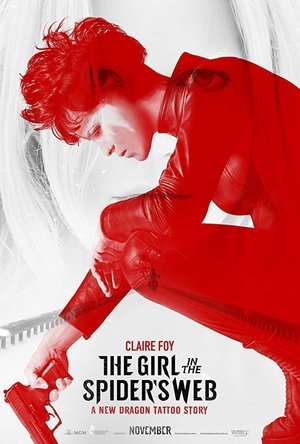

Performances – Claire Foy does feel mis-cast in this role, she doesn’t seem to have a tough enough look to make this character effect as the two previous stars. Sverrir Gudnason had large shoes to fill and he doesn’t do a strong enough job in the Mikael role, while Sylvia Hoeks does what she can with her role without being anything overly special, while LaKeith Stanfield doesn’t seem to feel like the character he is meant to be playing.
Story – The story here is the fourth story in the Dragon Tattoo world, the second in English and is the first not written by the original author. We follow Lisbeth who once again finds herself needing to take on secret organisation that what something that could put the world in danger and this time it becomes more personal, with her sister being the enemy. This story does feel like it has borrowed from many other films and while it still puts Lisbeth is an anti-hero role, we only seem to find ourselves in one direction where Lisbeth is always one step ahead of everything happening, despite the fact we get to see just how twisted the Spiders are, it paints one image of them only to leave us facing a different softer enemy.
Action/Crime – The action was pretty much all given away in the trailer, we have the motorbike chase across the ice, the car chases and shoot outs, each feels very similar and doesn’t have the suspense required in a thriller.
Settings – The film does try to bring everything back to Lisbeth’s backstory with the settings showing the off the grid life she current lives compared to the one she could have lived, the snowy roads add a little to the chases, but not that much overall.
Scene of the Movie – Ice lake escape.
That Moment That Annoyed Me – The Spider’s not hinting at wanting to do to what they did to the guy without a nose, to the new Lisbeth group.
Final Thoughts – This does feel like a cash grab on a franchise that has never taken off on the American side of things, we get everything scaled back leaving us feeling disappointed by the end of the film.
Overall: No thrills to be seen here.

Goddess in the Stacks (553 KP) rated The Bees in Books
Dec 24, 2018
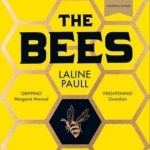

SO MUCH.
My fears were completely ungrounded because this book is AMAZING. Flora 717 is a sanitation bee, tasked with taking dead bodies out of the hive, cleaning up wax cells after new bees have hatched, and other duties to keep the hive clean. Somewhat extraordinarily, it is discovered that she can produce the liquid needed to feed bee larva, and is taken to serve in the nursery for a bit, where she starts to develop a mind of her own.
As Flora develops new abilities and works her way through the ranks of the hive, we start to learn that something in the governing of the hive is not quite what it should be. Something is wrong. But the strictly enforced castes and other outside factors, like weather and predators, delay Flora's quest to ferret it out.
Between lying wasps, conniving spiders, and a conspiracy within the ranks of her own hive, Flora bounces from danger to danger trying to protect what she loves in an engrossing story of bravery and sacrifice.
I absolutely loved this book. I especially liked that anywhere possible, actual bee behavior was described and used to further the plot. This is definitely one of my favorite reads this year!
You can find all my reviews at http://goddessinthestacks.com

Joe Goodhart (27 KP) rated Faction Paradox: The Book of the Enemy in Books
Nov 30, 2020
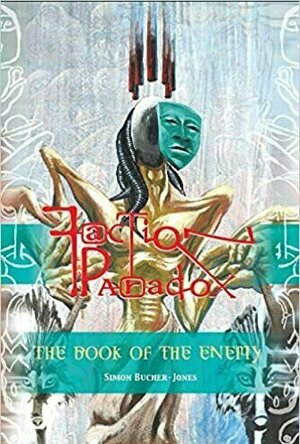
<b>"Interlock" and "The Annotated Autopsy of Agent A" Simon Bucher-Jones
"Cobweb and Ivory" Nate Bumber
"The Book of the Enemy" Andrew Hickey
T.memeticus: A Morphology" Philip Purser-Hallard
"The Short Briefing Sergeant's Tale" Simon Bucher-Jones
"A Bloody (And Public) Domaine" Jacob Black
"Life-Cycle" Grant Springford
"First Draft" Nick Wallace
"Eyes" Christian Read
"We are the Enemy" Lawrence Burton
"Timeshare" Helen Angove
"A Choice of Houses" Simon Bucher-Jones
"Houses of Cards" Lisa Sarah Good
"The Enemy - The Hole in Everything" Simon Bucher-Jones
"The Enemy of My Enemy Is My Enemy" Jay Eales
"No Enemy But Despair" Simon Bucher-Jones
"The Map and the Spiders" Wilhelm Liebknecht</b>
I quite enjoyed the book as a whole, even though there was some weak pieces that did not really seem to fit, like Helen Angove's "Timeshare". Overall, it was a fitting collection for what it was intended to be. Of particular interest were Simon Bucher-Jones' interconnecting briefs that tie it all together. Quite brilliant, despite some of the weaker stories.
And, yes, as some people have remarked in their reviews, there were some noticeable punctuation and formatting errors. However, the stories are good enough to overlook and not focus on those shortcomings.
Recommended to all fans of Faction Paradox as a whole!!
What the Hell Did I Just Read: A Novel of Cosmic Horror
8.0 Rate It
Book
It's the story "They" don't want you to read. Though, to be fair, "They" are probably right about...
Comedy science fiction fantasy

The Bug Butcher
Games
5.0 Rate It
App
*** WARNING: DUE TO HEAVY GRAPHIC AND PROCESSING REQUIREMENTS, THE BUG BUTCHER IS ONLY COMPATIBLE...

Deadly Intent (I-Team #8)
10.0 Rate It
Book
Secrets buried in the sand… Former US Army Captain Mia Starr has built a new life for herself...
Romance Romanctic Suspense
The Dangerous Book for Boys
Book
If ever there were a book to make you switch off your television set, The Dangerous Book for Boys is...

Gaz Coombes recommended The Man Who Sold The World by David Bowie in Music (curated)