
Children's Bible Daily Prayers for Family & School
Book and Reference
App
Children's Prayer is an app for Christian families, teachers and catechists with kids of all ages....

Medicine Of Prophet (SWS) ( Islam Quran Hadith - Ramadan Islamic Apps )
Book and Education
App
One of TOP Ranking Islamic Apps on APPLE APPSTORE ! Al-Khawarizmi is a trusted name in Islamic Apps...

Remindfulness
Lifestyle and Health & Fitness
App
Beautiful and simple yet powerful practice reminders can be customized to arrive randomly or at...

Meditation Sounds and Ambient Music to Meditate
Health & Fitness and Lifestyle
App
We believe that the term "meditation" is a result of differing sets of practices that are found...

YuppTV - Live TV & Movies
Entertainment and News
App
Live TV, Catch-up TV, Movies, TV Shows, News, Bazaar - Short films, Web series, Music Videos YuppTV...

Hazel (1853 KP) rated God: A Human History in Books
Nov 5, 2017
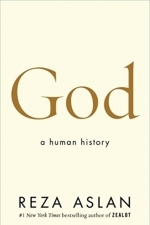


Where did religion come from? This is the question Reza Aslan, a scholar of religions, attempts to answer in his latest publication, God: A Human History. To date, Aslan has tackled subjects such as the life of Jesus of Nazareth, and the origins, evolution and future of Islam. In this book, the author journeys back to the earliest evidence of human existence and, using a mix of resources, theories and investigations, tries to determine how our ancestors conceived the idea of gods and souls. Maintaining the idea that the majority of humans think of God as a divine version of ourselves, Aslan also looks at the way our perception of life after death has altered due to the changes in our governments and cultures.
Reza Aslan claims that he, a Muslim-devout-Christian-convert-turned-Sufi, is neither trying to prove or disprove the existence of God or gods. Instead, he is providing readers with a thorough history of religion with a strong suggestion that we, as believers, have fashioned God in our image, and not the other way around.
Insisting that belief systems are inherited from each previous generation, Aslan takes a look at ancient cave drawings where he, and many other theorists, surmise that a form of religion was already well underway. Lack of written word results in a lot of speculation and hypothesis as to what these, usually animal-like, drawings represent, however, many have come to the conclusion that early humans had some form of animistic belief system.
Although not a dig at religion, after all, the author is religious himself, the following chapters bring in to question the authenticity of past and present beliefs. With reference to various psychologists, Aslan poses the theory that ancient humans may have misinterpreted dreams as evidence of a spirit realm. With no one qualified to clarify the things they did not understand, anything without a clear explanation may have been attributed to a god or gods.
As the author describes how religious ideas may have developed from these primitive beliefs to the fully detailed faiths of today, he labels the human race as anthropocentric creatures that have based their religions on human traits and emotions. By reporting in this way, it comes across that the past ideas of the soul, spiritual realms, gods and so forth could not possibly be true, yet, as the final chapters suggest, Aslan is still adamant about the existence of God.
Aslan’s narrative speeds up, finally reaching the recognizable religions of today. Beginning with the Israelites, enslaved by the Egyptians, the author explains, using biblical references, how the first successful monotheistic religion came about. However, researchers have studied the early Bible texts and are inconclusive as to whether the God worshipped by the Jews was the only divine being or whether there were others of a similar standing.
Next, Aslan explores Christianity, posing more questions than he solves, for example, is God one or is God three (i.e. the Holy Trinity)? He defines and compares the definitions of monotheism and pantheism, eventually bringing in Islam and the development of Sufism, which he is not afraid of admitting he agrees with.
God: A Human History is disappointingly short, ending with the feeble conclusion that humans are born with the ability to be convinced of the existence of a divine being and the soul, but it is our own choice to decide whether or not to believe in them. The remaining third of the book is an abundance of notes on the texts, bibliographical references, and Reza Aslan’s personal opinions about the ideas and theories mentioned in his history of religion.
Although an extensive history on the origins of religion, God: A Human History leaves readers none the wiser as to whether their belief is founded in truth or whether it is something that has evolved over time due to lack of understanding about the world. Granted, it was not the aim of the book to prove or disprove the existence of God, however, it may unintentionally sow seeds of doubt or, potentially, anger devout believers. However, there is no attempt at persuading readers to believe one thing or another, thus making it suitable for people of all religion and none.

Bong Mines Entertainment (15 KP) rated Eargasms for Short-Sighted Post-Truth Era People by Helsinki Headnod Convention in Music
Jun 7, 2019


WHO’S MAKING YOU?
Mellow and subtle. This jazzy tune poses a series of interesting questions.
At the end of the day, it’s you and only you. You keep trying to place the blame on somebody else but it’s you. Also, you and only you are can make you or break you.
OUR TIME IS NOW
This 30 seconds clip tells listeners that their time is now. Also, it’s short, representing that time is short on earth and it shouldn’t be taken for granted.
SORROW AND PAIN
A mixture of Negro Spiritual mixed with Blues and elements of ‘60s Soul.
The black and white video shows an African-American woman walking in the evening. Also, a vehicle with its headlights on approaches and a Caucasian cop parks it.
The following scene shows the woman running away while the cop, dressed as a terrorist, is chasing her with a lit smoke screen in his hand.
The courageous woman falls to the ground, grabs a handful of snow, and throws it in her attacker’s face. Momentarily, it blinds him and she gets up and runs away.
But she can’t see where she’s going because of the smoke. Then, she’s confronted by another Caucasian man, dressed in riot gear. Also, he’s walking towards her while her other attacker is gaining ground behind her.
In the end, while snow is falling and visibility is blurry, the rioter beats the woman with the stick in his hand.
The suggestive video implies that those who are supposed to protect and serve urban communities contain an uncertain amount of national terrorists within their organizations.
Also, some things from the past have changed, but on the other hand, some things have remained the same.
SOLIDARITY
Mellow and smooth. One minute and 13 seconds of conscious therapy, which begins with a calming voice, “We glorify war when we should glorify peace.”
The title is a unity campaign that binds people together as one. Also, its aim is social change within a racist power structure.
DOWN ON BENDED KNEE
The poem is based on Colin Kaepernick’s epic gesture of bending his knee during the National Anthem to protest social injustices happening in urban communities. Also, it speaks on reasons humanity, equality, civility, decency, justice, and other rights.
ANOTHER DAY IN PARADISE
An instrument plays in solitude against a vacant backdrop, where paradise is imagined as an ordinary day in hell, where being cautious is the best way to proceed.
Also, a story is told about a woman who is begging on the street, but the man she is seeking help from doesn’t even acknowledge her.
She calls out to a man on the street, “Sir, can you help me. It’s cold and I have nowhere to sleep. Is there somewhere you can tell me?”
He walks on doesn’t look back. He pretends he can’t hear her. Starts to whistle as he crosses the street. Seems embarrassed to be there.
This story paints a perfect picture of people frowning down on the have-nots, who oftentimes get overlooked while seeking monetary help or begging for information in public.
THE BIGGER PICTURE
With so many points of views to look from, what’s really the bigger picture?
The artist raps, “Watch me step it up. Cape blowing in the wind standing tough. Can’t give up.”
The song implies what’s necessary to see the bigger picture. One must have the courage to not get blown away by the world-wind and its influences.
Also, it implies taking a step up, by elevating your mind, body, and soul. Only then, will you be able to see the bigger picture, which is quite an exquisite view?
HUMAN KINDNESS
Beings with a jazzy fiesta of affectionate sounds perfumed with love. It depicts the hustle and bustle of an inner-city boulevard. It’s fast-paced and warm like the blood flowing in our veins.
CONCLUSION
“Eargasms for Short-Sighted Post-Truth Era People” is an undiluted audible ear drop solution, perfumed with nostalgia. It’s revolutionary but its non-violence approach in combating social inequality is highly effective.
https://www.bongminesentertainment.com/helsinki-headnod-eargasms/
Hazel (1853 KP) rated God: A Human History in Books
Dec 7, 2018
</i>
Where did religion come from? This is the question Reza Aslan, a scholar of religions, attempts to answer in his latest publication, <i>God: A Human History.</i> To date, Aslan has tackled subjects such as the life of Jesus of Nazareth, and the origins, evolution and future of Islam. In this book, the author journeys back to the earliest evidence of human existence and, using a mix of resources, theories and investigations, tries to determine how our ancestors conceived the idea of gods and souls. Maintaining the idea that the majority of humans think of God as a divine version of ourselves, Aslan also looks at the way our perception of life after death has altered due to the changes in our governments and cultures.
Reza Aslan claims that he, a Muslim-devout-Christian-convert-turned-Sufi, is neither trying to prove or disprove the existence of God or gods. Instead, he is providing readers with a thorough history of religion with a strong suggestion that we, as believers, have fashioned God in our image, and not the other way around.
Insisting that belief systems are inherited from each previous generation, Aslan takes a look at ancient cave drawings where he, and many other theorists, surmise that a form of religion was already well underway. Lack of written word results in a lot of speculation and hypothesis as to what these, usually animal-like, drawings represent, however, many have come to the conclusion that early humans had some form of animistic belief system.
Although not a dig at religion, after all, the author is religious himself, the following chapters bring in to question the authenticity of past and present beliefs. With reference to various psychologists, Aslan poses the theory that ancient humans may have misinterpreted dreams as evidence of a spirit realm. With no one qualified to clarify the things they did not understand, anything without a clear explanation may have been attributed to a god or gods.
As the author describes how religious ideas may have developed from these primitive beliefs to the fully detailed faiths of today, he labels the human race as anthropocentric creatures that have based their religions on human traits and emotions. By reporting in this way, it comes across that the past ideas of the soul, spiritual realms, gods and so forth could not possibly be true, yet, as the final chapters suggest, Aslan is still adamant about the existence of God.
Aslan’s narrative speeds up, finally reaching the recognizable religions of today. Beginning with the Israelites, enslaved by the Egyptians, the author explains, using biblical references, how the first successful monotheistic religion came about. However, researchers have studied the early Bible texts and are inconclusive as to whether the God worshipped by the Jews was the only divine being or whether there were others of a similar standing.
Next, Aslan explores Christianity, posing more questions than he solves, for example, is God one or is God three (i.e. the Holy Trinity)? He defines and compares the definitions of monotheism and pantheism, eventually bringing in Islam and the development of Sufism, which he is not afraid of admitting he agrees with.
<i>God: A Human History </i>is disappointingly short, ending with the feeble conclusion that humans are born with the ability to be convinced of the existence of a divine being and the soul, but it is our own choice to decide whether or not to believe in them. The remaining third of the book is an abundance of notes on the texts, bibliographical references, and Reza Aslan’s personal opinions about the ideas and theories mentioned in his history of religion.
Although an extensive history on the origins of religion, <i>God: A Human History </i>leaves readers none the wiser as to whether their belief is founded in truth or whether it is something that has evolved over time due to lack of understanding about the world. Granted, it was not the aim of the book to prove or disprove the existence of God, however, it may unintentionally sow seeds of doubt or, potentially, anger devout believers. However, there is no attempt at persuading readers to believe one thing or another, thus making it suitable for people of all religion and none.

Achieve Your Dream Life with the Law of Attraction
Lifestyle and Business
App
Get Money And Success Flowing Constantly Into Your Life… Like Water From A Broken Faucet! Would...

Hadley (567 KP) rated Soul Drinker in Books
Jul 25, 2020


That, along with a little romance, mystery, and historical elements make up this novel that features three main characters who are stuck in a struggle between good and evil while having to face mistakes from the past.
Welcome to the hellish world of Soul Drinker by newcomer, Matthew Yard.
Deep description is what makes up Yard's storytelling, so much so that the book is extremely hard to read. Only 132 pages long, Yard spends most paragraphs describing one single thing in many different ways, such as a young woman's hair, which only needs one sentence to tell such a detail, but instead, took an entire paragraph.
During an ancient civilization, a deity appeared named Destroyer, it found a way to break through the boundaries that separates realms and universes - - - finding our realm, Destroyer leaves his son Luther to build powerful followings through cults run by Pagans.
The novel's villain, Luther, isn't present enough to feel like a real threat for the reader. And the three main characters, other than their physical descriptions, are lifeless because of the extreme lack of character development.
Our main character, Devin, is a college student who constantly has nightmares of his best friend's murder. He also lives at house in the woods which he has no idea how he attained it and this is never explained. After Devin and a classmate named Vic have an encounter with a supernatural cloud, they end up at this house, where readers find out that Devin isn't the only one who has been having nightmares.
Vic is a beautiful, young woman, who Devin seems to be enamoured with, but she is still busy getting over her first love. A few chapters in, readers get flashbacks of Vic's father and mother before she was born. Vic's father was also haunted by this supernatural cloud, which seems to have had a tighter grip on him than Vic - - - her father's flashbacks are the most interesting part of this story.
Vic's father, Jacob, is fast asleep next to his wife when a giant face wakes him up, telling him that there is work to do. Jacob follows the face out into the hallway, when it begins to sway, as if through the eyes of a drunk. Jacob fights the urge to continue to the stairs, wanting to turn back and protect his sleeping wife.
A little while later, we find out that Jacob is psychic: he can see the dead and/or the past. But for anymore development on that interesting piece of information, readers get one glimpse of what Jacob sees - - - and that's it. Jacob's wife, Nina, is an even flatter character, which we only get to see in bed either asleep or waking up. Even Jacob's mental and spiritual fight with the 'face' is disappointingly short with no real tension, no climax, or feelings of betrayal when something finally happens in the end of that scene.
Love, the supernatural, and Pagan cults are what make up the plot of this book. The story jumps between Devin, Vic and Jacob, but the story gets caught up in moments that shouldn't be more than a paragraph, which caused me to become bored with the story. And Yard's writing made this book read like a fan fiction: a lot of inconsistencies throughout, tons of misspellings, and a major overuse of the same words, sometimes even in the same sentence.
Unfortunately, this book was almost unreadable, and the heavy descriptions were extremely off-putting, as was the end of the story- - - the book ended suddenly, and with no sequel in sight. I can't recommend this book to anyone.