

TheDefunctDiva (304 KP) rated The Outsider in Books
Oct 7, 2018
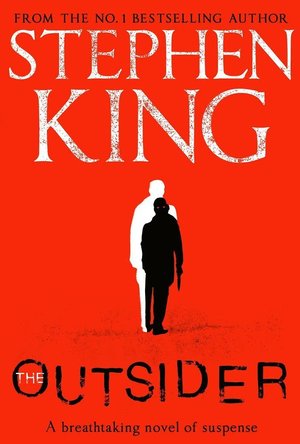

A gruesome crime, involving a child (and complete with elements of cannibalism) is committed. The alleged murderer, damned by seemingly undeniable forensic proof, is then very publicly apprehended. And then the twists and turns begin. Though eyewitnesses also put beloved schoolteacher Terry Maitland at the scene of the horrific crime, the accused was actually at a conference in another city, where he was seen on camera no less. Then comes a series of events that threatens not only the man’s quality of life but his very existence.
The novel then expands into a whodunnit with a notably creepy character, a morphing being known as the Outsider. As the true perpetrator of this and other crimes against children and their families, he is at once very human and very otherworldly.
This novel is set in the southwest, which is an unusual departure for Stephen King. Therefore, the descriptions of places were perhaps a bit less detailed and authentic than I would have liked. But having lived in San Antonio, I can say he did a pretty good job and the scenery offered certainly didn’t detract from the story.
In some respects, the monster in the Outsider echoed back to Kafka’s The Metamorphosis. The descriptions of the constantly morphing Outsider character had an eerie element. In the end, the flesh of the outsider consisted of nightmarish worms. And there was a particularly nasty substance he used to morph into his intended victims, some unidentifiable black substance which seems the stuff nightmares are made of. Appropriate, since he went around “eating sorrow” like some unhinged emo kid. Leaving entire families in his wake with his vile need to satiate himself. In his default shape, he resembled a man with “straws for eyes” which is haunting, but not nearly as terrifying as some of King’s other humanoid villains.
This book had several scenes that are now ingrained in my memory. The scene that stole the show for me was when bereaved Arlene Peterson, the victim’s mother, pours funeral leftovers on her head before ultimately succumbing to a heart attack. But the arraignment scene was definitely one that offered more action and intrigue than previously seen in the book. Chaos is one of the things King does best, and this section was remarkable. The book up to this point dragged a little, but the arraignment reigns as a pivotal point that brings many horrors sharply into focus.
I especially enjoyed the murder mystery elements of the book, as I am a sucker for a good detective story. Holly, an investigator who worked with lead detective Ralph Anderson, was my favorite character. Throughout the novel, she is depicted as smart, shrewd, and socially inept. She is also a tad obsessive-compulsive, which I related to on a personal level.
Throughout, the book seems to focus on the dual nature of man, especially in the concluding scene. It seems every man in his lifetime, by choice or fate, wears more than one face. The Outsider was a quality thriller and mystery. It is at once mysterious and devastating, and a testament to the tenacity of the human spirit.

#Organicjesus: Finding Your Way to an Unprocessed, Gmo-Free Christianity
6.0 Rate It
Book
If Generation Next is supposed to question everything and trust no one, where does faith fit...

The Natural and Handmade Soap Book: 20 Delightful and Delicate Soap Recipes for Bath, Kids and Home
Book
Make beautiful handmade soap without the all the chemicals found in commercial products...and not...
Einstein on the Beach: Opera Beyond Drama
John Richardson and Jelena Novak
Book
Philip Glass and Robert Wilson's most celebrated collaboration, the landmark opera Einstein on the...

The Fifth Letter
4.0 Rate It
Book
A fun vacation game turns destructive, exposing dark secrets, deeply buried grudges, and a shocking...

Blackwater
Book
THE NEW ESSEX-BASED CRIME SERIES FROM THE BESTSELLING AUTHOR OF THE DI JACK FROST PREQUELS. 'A...

The Sugar Detox: Lose Weight, Feel Great and Look Years Younger
Brooke Alpert and Patricia Farris
Book
Sugar is the new controlled substance. More addictive than cocaine, the deadly white stuff has...
Crisis and Constitutionalism: Roman Political Thought from the Fall of the Republic to the Age of Revolution
Book
Crisis and Constitutionalism argues that the late Roman Republic saw, for the first time in the...

LoganCrews (2861 KP) rated Three Colors: Blue (Trois Couleurs: Bleu) (1993) in Movies
Jul 4, 2021



LeftSideCut (3776 KP) rated 300 (2007) in Movies
Oct 3, 2020
Some of the shots are expertly crafted recreations of the graphic novel by Frank Miller and Lynn Varley, and as such, is a damn faithful adaption of a cult classic comic series.
The visual effects are stunning at times, and the sepia tone it's draped in lends a lot to its overall feel (even if it's a subject of criticism from many)
Gerard Butler takes the lead as King Leonidas of Sparta, in what has arguably become his most well known roll in the years following. It's easy to look over his thick Scottish accent (in ancient Greece...) when he's playing the character with such enthusiasm. Most of his lines have become highly quotable, even familiar to those who have never seen the film. 300 would be a much lesser film without his involvement.
Rodrigo Santoro carves a striking figure as primary antagonist Xerxes, his androgynous look and demonic-like voice providing a memorable villain.
The cast is rounded out by the likes of Lena Headey, David Wenham, Dominic West, and an early role for Michael Fassbender, a sturdy ensemble cast.
The set pieces are pretty thrilling, and results in a movie that blurs the fantastical, with a real life historic battle. It's an interesting mix that works well.
300 is a film that throws big sloppy buckets of testosterone at its audience, whilst simultaneously flaunting a silly amount of homoerotic undertones and CGI pectoral muscles, and it's great.