
Search
Search results

Gareth von Kallenbach (980 KP) rated Climax (2018) in Movies
Jul 2, 2019


If you’re going to see this film, it likely won’t be a huge surprise to you. Those that will buy a ticket already know who Gaspar Noé is and what he’s all about. Films like Irreversible and Enter the Void have defined him as an artist of scandal, evil and the extreme. Climax follows directly in the footsteps of those films, but at this point it does leave us wondering if there’s any room for growth in this writer/director or if we’ll just continue to get more of the same until we’re sufficiently numb to his offerings.
The setting for Noé’s latest tour of human horrors is the final rehearsal of a French dance troupe set to tour internationally. The film begins with the final scene of the movie and the ending credits. Then, just as your confusion has built to appropriate levels, things actually begin with videotaped interviews of all 22 members in an attempt to give you some semblance of character introduction. Shown on an older TV, the screen is surrounded by books and plays focused on ultra-negative philosophical views and subjects such as schizophrenia and suicide. So, despite the rather upbeat and optimistic responses of the prospective dancers, the tone is already being set for the madness that is about to commence.
From there we are taken to the big dance number. A ten-minute single shot involving the entire cast choreographed to 90’s EDM music. While this scene felt a little bit long, it did nearly as much to introduce the characters as the audition tapes shown earlier. Each dancer has a unique style and flair that executes a certain character development. Once the dance is complete it feels like the movie finally begins and the cast starts their post-rehearsal party. The soiree involves dancing (of course), drinking (homemade sangria) and some minor cocaine use. But it mostly consists of quick shots between different cast members taking part in some intergroup gossip. We are treated to one more (non-choreographed) dance scene with each individual showing their talents in a circle of their comrades, then we break again for more conversation. As the party continues on everyone starts to feel a little bit funny. They quickly deduce that the sangria has been spiked with LSD, but cannot determine who drugged them.
And this is where the hour-long journey into hell embarks from. The realization that they have been drugged seems to worry them very little, but does instantly turn them all against each other. The effects of the LSD ramp up rather quickly and as the cast members descend into madness the audience is treated to a myriad of trauma and depravity including: rape, incest, self-mutilation, child electrocution and an attempted abortion via a swift kick to the stomach. None of this should be any surprise to someone familiar with Noé’s work. But if this is your first experience with his particular brand of filmmaking, then be prepared to leave no perverted stone unturned.
One of the most impressive things about this film is how little preparation actually went into it. The entire film was shot in 15 days and edited to completion in only 3 months after that in order to meet the Cannes festival deadline. In addition, it was shot with a mere 5 pages of script. The majority of the film consists of both dancing and psychotic undulations inspired by web videos of people high on crack, ecstasy and acid which were hand-selected by Noé. So, despite the assumed need for structure that comes with extended tracking shots such as these, the whole movie is (surprisingly) mostly ad-libbed. Only the opening dance scene is choreographed with all of the remaining ones being the result of the how the dancers chose to express themselves through dance.
In the end you’ll be left wondering if all of the shock and awe that’s been served to you actually meant something, or if it was simply sensory overload for the sake of itself. And that’s where the movie really falls short. If Noé had meant for any sort of deeper meaning in this film, it was ultimately lost to extreme subtlety. I did my best to find the clever allegory here (French history and culture, biblical stories, etc.) and I admittedly fell short. “Birth is a unique opportunity. Life is an impossible collective. Death is an extraordinary experience,” read three title cards which flash throughout the journey of Climax. Although these sayings are poetic and beautiful, they seem to have little or loose application to the actual storyline.
The strongest feelings in this film are not evoked from any sort of meaning or fable-style lesson. They come from the distress and disgust brought about by the actions of the characters and, more so, the beautifully executed cinematography. Every filming technique meant to cause discomfort is present here including: long tracking shots, inverted imagery, black screen with nonlinear sounds and subliminal images. The application and combination of all of these effects means that much credit for this film should most likely go to Noé’s DP, Benoit Debie.
Fundamentally, the judgement for a Gaspar Noé film exists on a different scale than any other film. And while that concept can be new and exciting when the first shocking film debuts, you quickly realize that subsequent ones have to continue to push the boundaries that were originally broken. Otherwise you run the risk of becoming stale. We may have gotten to that point now with Noé. Climax brings very little new shock to the table for a director who has developed his reputation as a purveyor of wickedness. Those who attend this movie will be looking for him to push their horror to new levels, but will likely end up unfulfilled. Although the lack of a new frontier doesn’t remove all of the value for the film, Noé has made implicit promises through his other work which he has failed to deliver upon with Climax.
The setting for Noé’s latest tour of human horrors is the final rehearsal of a French dance troupe set to tour internationally. The film begins with the final scene of the movie and the ending credits. Then, just as your confusion has built to appropriate levels, things actually begin with videotaped interviews of all 22 members in an attempt to give you some semblance of character introduction. Shown on an older TV, the screen is surrounded by books and plays focused on ultra-negative philosophical views and subjects such as schizophrenia and suicide. So, despite the rather upbeat and optimistic responses of the prospective dancers, the tone is already being set for the madness that is about to commence.
From there we are taken to the big dance number. A ten-minute single shot involving the entire cast choreographed to 90’s EDM music. While this scene felt a little bit long, it did nearly as much to introduce the characters as the audition tapes shown earlier. Each dancer has a unique style and flair that executes a certain character development. Once the dance is complete it feels like the movie finally begins and the cast starts their post-rehearsal party. The soiree involves dancing (of course), drinking (homemade sangria) and some minor cocaine use. But it mostly consists of quick shots between different cast members taking part in some intergroup gossip. We are treated to one more (non-choreographed) dance scene with each individual showing their talents in a circle of their comrades, then we break again for more conversation. As the party continues on everyone starts to feel a little bit funny. They quickly deduce that the sangria has been spiked with LSD, but cannot determine who drugged them.
And this is where the hour-long journey into hell embarks from. The realization that they have been drugged seems to worry them very little, but does instantly turn them all against each other. The effects of the LSD ramp up rather quickly and as the cast members descend into madness the audience is treated to a myriad of trauma and depravity including: rape, incest, self-mutilation, child electrocution and an attempted abortion via a swift kick to the stomach. None of this should be any surprise to someone familiar with Noé’s work. But if this is your first experience with his particular brand of filmmaking, then be prepared to leave no perverted stone unturned.
One of the most impressive things about this film is how little preparation actually went into it. The entire film was shot in 15 days and edited to completion in only 3 months after that in order to meet the Cannes festival deadline. In addition, it was shot with a mere 5 pages of script. The majority of the film consists of both dancing and psychotic undulations inspired by web videos of people high on crack, ecstasy and acid which were hand-selected by Noé. So, despite the assumed need for structure that comes with extended tracking shots such as these, the whole movie is (surprisingly) mostly ad-libbed. Only the opening dance scene is choreographed with all of the remaining ones being the result of the how the dancers chose to express themselves through dance.
In the end you’ll be left wondering if all of the shock and awe that’s been served to you actually meant something, or if it was simply sensory overload for the sake of itself. And that’s where the movie really falls short. If Noé had meant for any sort of deeper meaning in this film, it was ultimately lost to extreme subtlety. I did my best to find the clever allegory here (French history and culture, biblical stories, etc.) and I admittedly fell short. “Birth is a unique opportunity. Life is an impossible collective. Death is an extraordinary experience,” read three title cards which flash throughout the journey of Climax. Although these sayings are poetic and beautiful, they seem to have little or loose application to the actual storyline.
The strongest feelings in this film are not evoked from any sort of meaning or fable-style lesson. They come from the distress and disgust brought about by the actions of the characters and, more so, the beautifully executed cinematography. Every filming technique meant to cause discomfort is present here including: long tracking shots, inverted imagery, black screen with nonlinear sounds and subliminal images. The application and combination of all of these effects means that much credit for this film should most likely go to Noé’s DP, Benoit Debie.
Fundamentally, the judgement for a Gaspar Noé film exists on a different scale than any other film. And while that concept can be new and exciting when the first shocking film debuts, you quickly realize that subsequent ones have to continue to push the boundaries that were originally broken. Otherwise you run the risk of becoming stale. We may have gotten to that point now with Noé. Climax brings very little new shock to the table for a director who has developed his reputation as a purveyor of wickedness. Those who attend this movie will be looking for him to push their horror to new levels, but will likely end up unfulfilled. Although the lack of a new frontier doesn’t remove all of the value for the film, Noé has made implicit promises through his other work which he has failed to deliver upon with Climax.

Emma @ The Movies (1786 KP) rated Valerian and the City of a Thousand Planets (2017) in Movies
Sep 25, 2019


The story of Valerian is a good one. We open on Mül, a idyllic place of peace and a simple life. But this peace is shattered when fire rains from the sky devastating the entire planet. The last moment of Mül sees the Princess, doomed to die in the explosion, release her energy into the universe, through time and space.
Valerian, sunning himself on his ship, is hit with a sudden vision of the cataclysm on Mül. Unsure about it's meaning he goes back to the task at hand, retrieving a relic from some disreputable people on the black market. The "converter" is the last of it's kind in the universe, it will eat anything and rapidly replicate it, and as such is a very valuable commodity.
The mission is to return the converter to Alpha station. But when they arrive they discover that the station has been infected with something right at its heart. It's spreading, and all those that enter do not come back. When events lead to Valerian being drawn into the infected area, Laureline isn't willing to give up hope, and she battles her way in. Once she's reunited with Valerian they work travel to the centre of the station and discover the shocking truth about how the infection began...
The film is based on Valerian and Laureline, a French sci-fi comic series written by Pierre Christin and illustrated by Jean-Claude Mézières. I have got the first one to read, but as is my tradition, I have yet to do so. The first one is available free on Kindle at the moment if anybody is that way inclined. I expect that it will get a much better reaction in Europe than it seem to have done in the States, which is a bit of a shame. Possibly the way to go would have been with bigger stars, but *shrugs shoulders* it's too late now.
As I said, the story itself is a good one, and while people are nit picking and saying there are plot holes... there aren't if you don't look for them. I have this horrible ability to just watch a film for what it is, if you just go and see something to have some fun you don't notice any of that. It's a horribly nice way to be able to live my life, I enjoy a lot more things that way.
What I'm about to say is going to contradict my overall feeling for the film... I didn't really enjoy Dane DeHaan or Cara Delevingne. I had originally thought that I hadn't seen DeHaan in anything before, but was soon getting recollections of The Amazing Spider-Man 2. Scrolling through Delevingne's few years of films I've only seen Suicide Squad, and her acting as a "real person" is quite a small piece in that. While I can't think of anyone who would have perfectly suited either role, I feel like many other actors could have done an equal, or better, performance.
You get a wonderful introduction to what the station is, and has become. And we're treated to the potted history of alien species, several of which would sit quite nicely in the Whoniverse. I'm quite looking forward to reading the graphic novel. I can see stories unfolding in the different sections of the station, and that works. It almost feels like it would have made an amazing TV series, because it is essentially Star Trek with glitzier aliens and ecosystems.
As far as the secondary characters go we're treated to several memorable moments. Including Ethan Hawke as Jolly the Pimp, which is as flamboyant as you'd expect. Clive Owen as Commander Filitt, stern and ruthless, the sort who would stab you in the back (or the front) for his own gain. Sam Spruell as General Okto-Bar, who acted his part incredibly well... I'm honestly surprised I've not seen any of the other things he's been in, but I will be checking them out. Rihanna as Bubble, I'm a little surprised about how much I heard about her being in this considering how short her role is. But the same is true of a few things I've seen recently. We first meet her at Jolly's den of iniquity, where the music video training definitely came in handy.
As a whole the film moves along smoothly, with only a few little bits that seemed like they didn't belong, or could have been cut out. Unlike other films though, these little additions didn't harm the overall product.
Here is where my love for the film takes a steep nose-drive. Imagine crying with joy to resting bitch-face in the space of a few seconds. The 3D was hideous. I can't even think of a nice thing to say about it.
When the scenes were general crowd shots or indoors, everything was fine... although these shots didn't really benefit from the effect. The exterior shots however, in my not so expert opinion, were a terrible idea. I found some of them actually painful to watch, particularly long range shots of Alpha with ships coming in to dock. It was near on impossible to deal with the perspective as there was so much happening. For the last half of the film I took my 3D glasses off every time these shots appeared on screen as my head was rapidly starting to hurt, and I wasn't the only one having trouble.
If it wasn't for the painful exterior shots I honestly would have forgotten I was watching the film in 3D. Unlike other 3D films, you weren't aware that things were coming out of the screen at you. Not once.
I really don't want to be so negative about this film, it was an enjoyable watch (without the optical illusion created by the 3D). I would recommend it to anyone who has a passing interest in sci-fi and adaptations of comics. And I feel like, if nothing else, it might get the graphic novels themselves more circulation outside of Europe.
But please... watch it in 2D.
Valerian, sunning himself on his ship, is hit with a sudden vision of the cataclysm on Mül. Unsure about it's meaning he goes back to the task at hand, retrieving a relic from some disreputable people on the black market. The "converter" is the last of it's kind in the universe, it will eat anything and rapidly replicate it, and as such is a very valuable commodity.
The mission is to return the converter to Alpha station. But when they arrive they discover that the station has been infected with something right at its heart. It's spreading, and all those that enter do not come back. When events lead to Valerian being drawn into the infected area, Laureline isn't willing to give up hope, and she battles her way in. Once she's reunited with Valerian they work travel to the centre of the station and discover the shocking truth about how the infection began...
The film is based on Valerian and Laureline, a French sci-fi comic series written by Pierre Christin and illustrated by Jean-Claude Mézières. I have got the first one to read, but as is my tradition, I have yet to do so. The first one is available free on Kindle at the moment if anybody is that way inclined. I expect that it will get a much better reaction in Europe than it seem to have done in the States, which is a bit of a shame. Possibly the way to go would have been with bigger stars, but *shrugs shoulders* it's too late now.
As I said, the story itself is a good one, and while people are nit picking and saying there are plot holes... there aren't if you don't look for them. I have this horrible ability to just watch a film for what it is, if you just go and see something to have some fun you don't notice any of that. It's a horribly nice way to be able to live my life, I enjoy a lot more things that way.
What I'm about to say is going to contradict my overall feeling for the film... I didn't really enjoy Dane DeHaan or Cara Delevingne. I had originally thought that I hadn't seen DeHaan in anything before, but was soon getting recollections of The Amazing Spider-Man 2. Scrolling through Delevingne's few years of films I've only seen Suicide Squad, and her acting as a "real person" is quite a small piece in that. While I can't think of anyone who would have perfectly suited either role, I feel like many other actors could have done an equal, or better, performance.
You get a wonderful introduction to what the station is, and has become. And we're treated to the potted history of alien species, several of which would sit quite nicely in the Whoniverse. I'm quite looking forward to reading the graphic novel. I can see stories unfolding in the different sections of the station, and that works. It almost feels like it would have made an amazing TV series, because it is essentially Star Trek with glitzier aliens and ecosystems.
As far as the secondary characters go we're treated to several memorable moments. Including Ethan Hawke as Jolly the Pimp, which is as flamboyant as you'd expect. Clive Owen as Commander Filitt, stern and ruthless, the sort who would stab you in the back (or the front) for his own gain. Sam Spruell as General Okto-Bar, who acted his part incredibly well... I'm honestly surprised I've not seen any of the other things he's been in, but I will be checking them out. Rihanna as Bubble, I'm a little surprised about how much I heard about her being in this considering how short her role is. But the same is true of a few things I've seen recently. We first meet her at Jolly's den of iniquity, where the music video training definitely came in handy.
As a whole the film moves along smoothly, with only a few little bits that seemed like they didn't belong, or could have been cut out. Unlike other films though, these little additions didn't harm the overall product.
Here is where my love for the film takes a steep nose-drive. Imagine crying with joy to resting bitch-face in the space of a few seconds. The 3D was hideous. I can't even think of a nice thing to say about it.
When the scenes were general crowd shots or indoors, everything was fine... although these shots didn't really benefit from the effect. The exterior shots however, in my not so expert opinion, were a terrible idea. I found some of them actually painful to watch, particularly long range shots of Alpha with ships coming in to dock. It was near on impossible to deal with the perspective as there was so much happening. For the last half of the film I took my 3D glasses off every time these shots appeared on screen as my head was rapidly starting to hurt, and I wasn't the only one having trouble.
If it wasn't for the painful exterior shots I honestly would have forgotten I was watching the film in 3D. Unlike other 3D films, you weren't aware that things were coming out of the screen at you. Not once.
I really don't want to be so negative about this film, it was an enjoyable watch (without the optical illusion created by the 3D). I would recommend it to anyone who has a passing interest in sci-fi and adaptations of comics. And I feel like, if nothing else, it might get the graphic novels themselves more circulation outside of Europe.
But please... watch it in 2D.

Hadley (567 KP) rated The Institute in Books
Oct 24, 2019
Likable characters (1 more)
Paranormal
Sexualizing children (1 more)
Not a regular King story
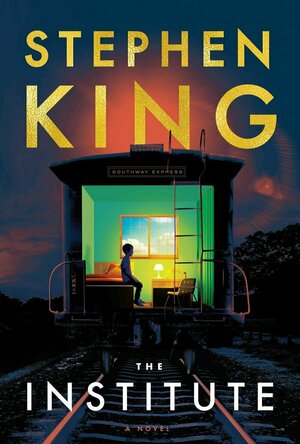
At around 95 novels, Stephen King, who is one of the most well-known authors of our time, debuts a possible new novel series about psychic children. 'The Institute' mostly takes place in a hidden facility located in a wooded area of Maine,where readers follow a kidnapped child prodigy named Luke Ellis, and the government experiments that are inflicted on him to heighten his psychic powers.
So why is the government kidnapping children to conduct psychic research on them? At first, it may seem just that: psychic research, because psychic powers seem to be more powerful in young children than adults, but nothing is what it seems. As the boss of this Institute says to the children: " ' There's a war going on, and you have been called upon to serve your country.' " A few sentences later, and she explains it a little more in depth for Ellis: " ' This is not an arms race but a mind race, and if we lose, the consequences would be more than dire; they would be unimaginable. You may only be twelve, but you are a soldier in an undeclared war. The same is true of Kalisha and the others. Do you like it? Of course not. Draftees never do, and draftees sometimes need to be taught that there are consequences for not following orders. I believe you've already had one lesson in that regard. If you're as bright as your records say you are, perhaps you won't need another. If you do, however, you'll get it. This is not your home. This is not your school. You will not simply be given an extra chore or sent to the principal's office or given detention; you will be punished. Clear? ' "
King writes in a third-person point-of-view, which makes it a little disturbing that when any female character he introduces (including girls as young as 11-years-old) are usually introduced by their breast size. It's not uncommon for male writers to introduce female characters this way, but when most of them are children, it can be very off putting for readers. One scene, King makes Ellis notice that Kalisha has 'her hands on her mostly nonexistent hips,' then writes about the character Helen in the same scene: " Another door opened and Helen Simms appeared, clad - - - sort of - - - in what Luke believed were called babydoll pajamas. She had hips, plus other interesting equipment. " Both of these characters are only twelve-years-old.
Aside from the children, King also introduces an important character named Tim Jamieson. This character starts the novel off before readers meet Ellis; we learn that he is a former cop who is traveling to New York while taking odd jobs on his way there, including a night knocker job in DuPray, South Carolina (which becomes very important later on in the story) .
Avery, my personal favorite character in the book, is a ten-year-old who acts like a five-year-old, " The screamer was a little boy in Star Wars pajamas, hammering on doors with small fists that went up and down like pistons. Ten? Avery Dixon looked six, seven at most. The crotch and one leg of his pajama pants were wet and sticking to him. " Dixon and Kalisha are both in the Institute for telepathy. " 'You know so,' Kalisha said, and began to stroke the little boy's [Dixon] hair again. Like had a sense - - - maybe bullshit, maybe not - - - that a lot was going on between them. Inside traffic. " And quickly, the group of children become protective of Dixon, " 'But you need to take care of this one for as long as you can. When I think of Tony or Zeke or that bitch Winona hitting Avery, it makes me want to cry. ' " Kalisha confides in Ellis.
Kalisha, one of the other children that has been kidnapped, is another very likable character that seems to keep all of the other kids' spirits up by either keeping them out of trouble with advice or stopping small fights between them. Another kid named Nicky, the troublemaker of the group, is the stereo-typical bad boy. He gets involved in fistfights with the orderlies that work at the Institute, taking quite a bit of abuse in return. But eventually, the rebelliousness catches up with him, leading him to be moved from Front Half to the dreaded Back Half.
Readers later learn that Back Half is worse than Front Half. Most questions we may have about why the Institute is abusing these children are all answered when readers get to see into Back Half from Kalisha's point-of-view. But what is left unanswered is exactly how many children have been through the Institute? From the amount of children seen just in this story, the numbers could be in the hundreds of thousands!
But, as expected, the children come up with a plan to escape - - - with giving as little detail as possible, an orderlie at the Institute is helped by one of the children with a personal problem, and in return, this orderlie decides to help one of them escape and reveal everything that is the Institute. The instance the escape starts being discussed is when the book really picks up.
King's writing of the abuse our characters sustain is very real (" When Stevie Whipple asked where he'd been and what was wrong, Luke just shook his head. He didn't want to talk about the tank. Not now, not ever. He supposed it was like being in a war. You got drafted, you went, but you didn't want to talk about what you'd seen, or what had happened to you there." ) The scene in which Ellis refuses to speak of is where the orderlie Zeke is trying to make Ellis confess that he is not only telekinesis, but also telepathic: "Zeke hauled him up by the hair. His white tunic was soaked. He looked fixedly at Luke. 'I'm going to put you down again, Luke. Again and again and again. I'll put you down until you drown and then we'll resuscitate you and drown you again and resuscitate you again. Last chance: what number am I thinking of?' "
King brings up a fictional belief that strikes fear in parents everywhere: children being kidnapped for government experiments. Readers witness Ellis' parents being killed, Kalisha being a surrogate mother to kids she barely knows, Nicky being beaten by adults when he refuses to get 'shots for dots,' night terrors, suicide, zap sticks and murder.
This book doesn't read like a regular King book; even with the paranormal aspects occurring in it, it doesn't add up to much. The horror aspect is more in the form of child abuse then paranormal moments. I would only recommend this book to fans of Netflix's 'Stranger Things' and Patterson's 'Maximum Ride.' I don't think I would read this again.
So why is the government kidnapping children to conduct psychic research on them? At first, it may seem just that: psychic research, because psychic powers seem to be more powerful in young children than adults, but nothing is what it seems. As the boss of this Institute says to the children: " ' There's a war going on, and you have been called upon to serve your country.' " A few sentences later, and she explains it a little more in depth for Ellis: " ' This is not an arms race but a mind race, and if we lose, the consequences would be more than dire; they would be unimaginable. You may only be twelve, but you are a soldier in an undeclared war. The same is true of Kalisha and the others. Do you like it? Of course not. Draftees never do, and draftees sometimes need to be taught that there are consequences for not following orders. I believe you've already had one lesson in that regard. If you're as bright as your records say you are, perhaps you won't need another. If you do, however, you'll get it. This is not your home. This is not your school. You will not simply be given an extra chore or sent to the principal's office or given detention; you will be punished. Clear? ' "
King writes in a third-person point-of-view, which makes it a little disturbing that when any female character he introduces (including girls as young as 11-years-old) are usually introduced by their breast size. It's not uncommon for male writers to introduce female characters this way, but when most of them are children, it can be very off putting for readers. One scene, King makes Ellis notice that Kalisha has 'her hands on her mostly nonexistent hips,' then writes about the character Helen in the same scene: " Another door opened and Helen Simms appeared, clad - - - sort of - - - in what Luke believed were called babydoll pajamas. She had hips, plus other interesting equipment. " Both of these characters are only twelve-years-old.
Aside from the children, King also introduces an important character named Tim Jamieson. This character starts the novel off before readers meet Ellis; we learn that he is a former cop who is traveling to New York while taking odd jobs on his way there, including a night knocker job in DuPray, South Carolina (which becomes very important later on in the story) .
Avery, my personal favorite character in the book, is a ten-year-old who acts like a five-year-old, " The screamer was a little boy in Star Wars pajamas, hammering on doors with small fists that went up and down like pistons. Ten? Avery Dixon looked six, seven at most. The crotch and one leg of his pajama pants were wet and sticking to him. " Dixon and Kalisha are both in the Institute for telepathy. " 'You know so,' Kalisha said, and began to stroke the little boy's [Dixon] hair again. Like had a sense - - - maybe bullshit, maybe not - - - that a lot was going on between them. Inside traffic. " And quickly, the group of children become protective of Dixon, " 'But you need to take care of this one for as long as you can. When I think of Tony or Zeke or that bitch Winona hitting Avery, it makes me want to cry. ' " Kalisha confides in Ellis.
Kalisha, one of the other children that has been kidnapped, is another very likable character that seems to keep all of the other kids' spirits up by either keeping them out of trouble with advice or stopping small fights between them. Another kid named Nicky, the troublemaker of the group, is the stereo-typical bad boy. He gets involved in fistfights with the orderlies that work at the Institute, taking quite a bit of abuse in return. But eventually, the rebelliousness catches up with him, leading him to be moved from Front Half to the dreaded Back Half.
Readers later learn that Back Half is worse than Front Half. Most questions we may have about why the Institute is abusing these children are all answered when readers get to see into Back Half from Kalisha's point-of-view. But what is left unanswered is exactly how many children have been through the Institute? From the amount of children seen just in this story, the numbers could be in the hundreds of thousands!
But, as expected, the children come up with a plan to escape - - - with giving as little detail as possible, an orderlie at the Institute is helped by one of the children with a personal problem, and in return, this orderlie decides to help one of them escape and reveal everything that is the Institute. The instance the escape starts being discussed is when the book really picks up.
King's writing of the abuse our characters sustain is very real (" When Stevie Whipple asked where he'd been and what was wrong, Luke just shook his head. He didn't want to talk about the tank. Not now, not ever. He supposed it was like being in a war. You got drafted, you went, but you didn't want to talk about what you'd seen, or what had happened to you there." ) The scene in which Ellis refuses to speak of is where the orderlie Zeke is trying to make Ellis confess that he is not only telekinesis, but also telepathic: "Zeke hauled him up by the hair. His white tunic was soaked. He looked fixedly at Luke. 'I'm going to put you down again, Luke. Again and again and again. I'll put you down until you drown and then we'll resuscitate you and drown you again and resuscitate you again. Last chance: what number am I thinking of?' "
King brings up a fictional belief that strikes fear in parents everywhere: children being kidnapped for government experiments. Readers witness Ellis' parents being killed, Kalisha being a surrogate mother to kids she barely knows, Nicky being beaten by adults when he refuses to get 'shots for dots,' night terrors, suicide, zap sticks and murder.
This book doesn't read like a regular King book; even with the paranormal aspects occurring in it, it doesn't add up to much. The horror aspect is more in the form of child abuse then paranormal moments. I would only recommend this book to fans of Netflix's 'Stranger Things' and Patterson's 'Maximum Ride.' I don't think I would read this again.

The Bandersnatch (199 KP) rated Goodnight Mister Tom in Books
Nov 7, 2019
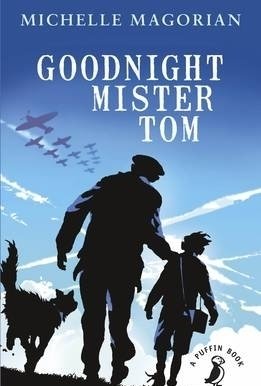


In September 1939, as Britain stands on the brink of the war, many young children from the cities are evacuated tot he countryside to escape an imminent German bombardment. Willie Beech, a boy from Deptford who is physically and emotionally abused by his mother, arrives at the home of Tom Oakley, a widower in his sixties who lives in the village of Little Weirwold. The boy is thinly clad, underfed and covered with painful bruises, and believes he is full of sin, a result of his upbringing by his mother, a domineering, insane, God-fearing widow.
"Mister Tom", as William christens his new guardian, is reclusive and bad-tempered, and as such is avoided by the community. Willie lives with him as his Mother wants him to live with someone who is either religious or lives next to a church. Though initially distant, he is touched after discovering William's home-life and treats him with kindness and understanding, helping to educate him. Under his care, William begins to thrive, forming a small circle of friends at school among his classmates including fellow-evacuee Zach. He also becomes proficient in drawing and dramatics. As William is changed by Tom, so is Tom transformed by William's presence in his home. It is revealed that Tom lost his wife and baby son to Scarlatina some 40 years previously, and he has become reclusive because of this.
The growing bond between William and Tom is threatened when William's mother requests that the boy returns to her in the city, telling him she is sick. At first, William thinks this will be a good thing, as he can be helpful to his mother. However, his mother is not pleased to learn the details of his time with Tom, feeling that he has not been disciplined properly. While William has been away, she has become pregnant and had a girl, but is neglecting the baby. After a bad reunion, where his mother becomes furious upon learning the details of her son's life with Tom, abhorring his association with the Jewish Zach among other things, she hits William and puts him in the under-stairs cupboard, chains him to the piping. William regains consciousness briefly to find himself in the cupboard – he has been stripped of his clothes, minus his underwear, and his ankle is twisted. He quietly sobs for Tom, before he falls asleep.
Back in Little Weirwold, Tom has a premonition that something is not right with William. Although he has never travelled beyond his immediate locality, he ventures into London and eventually locates William's neighbourhood of Deptford and his home. He persuades a local policeman to break down the door of the apparently empty home, to be greeted with a vile stench. They find William in the closet with the baby, who had also been locked under the stairs by William's mother and has now died. William is malnourished and badly bruised as he had been locked under the stairs for a number of days. William is hospitalised, but whilst there suffers horrific nightmares and is drugged simply to prevent his screams from disturbing other children. Tom is warned that it is likely that William will be taken to a children's home, and, unable to observe William's distress any longer, kidnaps him from the hospital and takes him back to Little Weirwold.
Back with Mister Tom, William is much damaged by his ordeal and is also blaming himself for the death of his sister as he had not been able to provide enough milk to feed her whilst locked away, and becomes very depressed. Later, when his favourite teacher Annie Hartridge has a baby, William is shocked to learn from Zach that a woman cannot conceive a child on her own, and realises that his mother was having a relationship with a man, even though she had previously told him that it was wrong for unmarried couples to live together or have children together (something which society in general had regarded as unacceptable at this time). Tom is traced by the authorities, who have come to tell William that his mother is dead, having committed suicide. They also offer him a place in a children's home, as they've been unable to trace any other relatives who may have been able to take care of him. Luckily the authorities realise that William has already found a good home and allow Tom to adopt him.
Tom, William and Zach then enjoy a holiday at the seaside village of Salmouth, where they stay in the house of a widow whose sons have been sent out to war. Zach then receives news that his father has been injured by a German bomb in London and he hurries home on the next train saying farewell to all his friends. Unfortunately this is the last time they see him. William later learns that Zach has been killed and is grief-stricken for some time, but his grief is later healed by another recluse, Geoffery Sanderton. Geoffery, a young man who had lost a leg during the war and takes William for private art lessons,recognises the signs of grief and gives William a pipe to paint along with a picture of two smiling young men. One of the men is Geoffery and he tells William about the loss of his own best friend, the other man in the picture and the owner of the pipe. This is when William starts to come to terms with Zach's death. Adding to this, Doctor Little, the village doctor, who was Zach's guardian while he was evacuated, is surprised but pleased when William asks to have Zach's bike. Through learning to ride it, William realises that Zach lives on inside him and he will never forget his wonderful companion that Zach was.
In the months following, William grows closer to Carrie, one of his friends. One night, on returning home to Tom (whom he now calls "Dad"), he thinks back on how much he has changed since arriving in Little Weirwold and realises that he is growing.
Goodnight Mr Tom Wiki.
Goodnight Mr Tom was published by Kestrel in 1981 and later on in that same year in the US by Harper and Row. The book won Author Michelle Magorian the annual Guardian Children's fiction prize. Magorian was also a runner up for the Carnegie Medal. The book has been adapted as a Movie, a play and a musical. The most recent theatrical adaption won the Laurence Olivier award for Best Entertainment.
I came across the book when I was 10/11 years old. I needed the book for English at primary school, since we needed to read the book and complete a series of assignments for our teacher. I have in the subsequent years read and re-read the book. The book is rather good and I recommand it for children from the ages of 9/10 upwards. The book is a good representation of what happened during WW2 in a fictional setting. And William and Mr Tom healing each other from what they both experienced (Tom loosing family to Scarlatina and William being abused by his mother). I give the book an 8/10.
"Mister Tom", as William christens his new guardian, is reclusive and bad-tempered, and as such is avoided by the community. Willie lives with him as his Mother wants him to live with someone who is either religious or lives next to a church. Though initially distant, he is touched after discovering William's home-life and treats him with kindness and understanding, helping to educate him. Under his care, William begins to thrive, forming a small circle of friends at school among his classmates including fellow-evacuee Zach. He also becomes proficient in drawing and dramatics. As William is changed by Tom, so is Tom transformed by William's presence in his home. It is revealed that Tom lost his wife and baby son to Scarlatina some 40 years previously, and he has become reclusive because of this.
The growing bond between William and Tom is threatened when William's mother requests that the boy returns to her in the city, telling him she is sick. At first, William thinks this will be a good thing, as he can be helpful to his mother. However, his mother is not pleased to learn the details of his time with Tom, feeling that he has not been disciplined properly. While William has been away, she has become pregnant and had a girl, but is neglecting the baby. After a bad reunion, where his mother becomes furious upon learning the details of her son's life with Tom, abhorring his association with the Jewish Zach among other things, she hits William and puts him in the under-stairs cupboard, chains him to the piping. William regains consciousness briefly to find himself in the cupboard – he has been stripped of his clothes, minus his underwear, and his ankle is twisted. He quietly sobs for Tom, before he falls asleep.
Back in Little Weirwold, Tom has a premonition that something is not right with William. Although he has never travelled beyond his immediate locality, he ventures into London and eventually locates William's neighbourhood of Deptford and his home. He persuades a local policeman to break down the door of the apparently empty home, to be greeted with a vile stench. They find William in the closet with the baby, who had also been locked under the stairs by William's mother and has now died. William is malnourished and badly bruised as he had been locked under the stairs for a number of days. William is hospitalised, but whilst there suffers horrific nightmares and is drugged simply to prevent his screams from disturbing other children. Tom is warned that it is likely that William will be taken to a children's home, and, unable to observe William's distress any longer, kidnaps him from the hospital and takes him back to Little Weirwold.
Back with Mister Tom, William is much damaged by his ordeal and is also blaming himself for the death of his sister as he had not been able to provide enough milk to feed her whilst locked away, and becomes very depressed. Later, when his favourite teacher Annie Hartridge has a baby, William is shocked to learn from Zach that a woman cannot conceive a child on her own, and realises that his mother was having a relationship with a man, even though she had previously told him that it was wrong for unmarried couples to live together or have children together (something which society in general had regarded as unacceptable at this time). Tom is traced by the authorities, who have come to tell William that his mother is dead, having committed suicide. They also offer him a place in a children's home, as they've been unable to trace any other relatives who may have been able to take care of him. Luckily the authorities realise that William has already found a good home and allow Tom to adopt him.
Tom, William and Zach then enjoy a holiday at the seaside village of Salmouth, where they stay in the house of a widow whose sons have been sent out to war. Zach then receives news that his father has been injured by a German bomb in London and he hurries home on the next train saying farewell to all his friends. Unfortunately this is the last time they see him. William later learns that Zach has been killed and is grief-stricken for some time, but his grief is later healed by another recluse, Geoffery Sanderton. Geoffery, a young man who had lost a leg during the war and takes William for private art lessons,recognises the signs of grief and gives William a pipe to paint along with a picture of two smiling young men. One of the men is Geoffery and he tells William about the loss of his own best friend, the other man in the picture and the owner of the pipe. This is when William starts to come to terms with Zach's death. Adding to this, Doctor Little, the village doctor, who was Zach's guardian while he was evacuated, is surprised but pleased when William asks to have Zach's bike. Through learning to ride it, William realises that Zach lives on inside him and he will never forget his wonderful companion that Zach was.
In the months following, William grows closer to Carrie, one of his friends. One night, on returning home to Tom (whom he now calls "Dad"), he thinks back on how much he has changed since arriving in Little Weirwold and realises that he is growing.
Goodnight Mr Tom Wiki.
Goodnight Mr Tom was published by Kestrel in 1981 and later on in that same year in the US by Harper and Row. The book won Author Michelle Magorian the annual Guardian Children's fiction prize. Magorian was also a runner up for the Carnegie Medal. The book has been adapted as a Movie, a play and a musical. The most recent theatrical adaption won the Laurence Olivier award for Best Entertainment.
I came across the book when I was 10/11 years old. I needed the book for English at primary school, since we needed to read the book and complete a series of assignments for our teacher. I have in the subsequent years read and re-read the book. The book is rather good and I recommand it for children from the ages of 9/10 upwards. The book is a good representation of what happened during WW2 in a fictional setting. And William and Mr Tom healing each other from what they both experienced (Tom loosing family to Scarlatina and William being abused by his mother). I give the book an 8/10.

Ivana A. | Diary of Difference (1171 KP) rated The Bane Chronicles in Books
Aug 3, 2020
<a href="https://amzn.to/2Wi7amb">Wishlist</a>; | <a
<a href="https://diaryofdifference.com/">Blog</a>; | <a href="https://www.facebook.com/diaryofdifference/">Facebook</a>; | <a href="https://twitter.com/DiaryDifference">Twitter</a>; | <a href="https://www.instagram.com/diaryofdifference/">Instagram</a>; | <a href="https://www.pinterest.co.uk/diaryofdifference/pins/">Pinterest</a>;
<img src="https://diaryofdifference.com/wp-content/uploads/2020/07/Book-Review-Banner-66.png"/>;
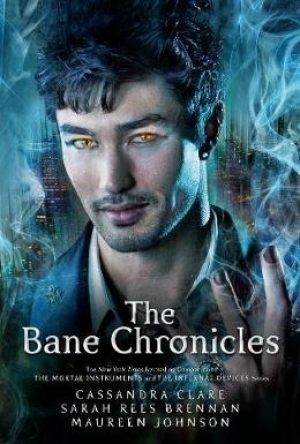
The Bane Chronicles is a collection of short stories, all featuring the famous Warlock - Magnus Bane. Throughout the ages, we get to see him develop to the character that we know. We read more about the moments that made Magnus who he is today.
I really enjoyed diving into this book, and I am glad I read it. Some stories I loved, some not so much, but I overall loved this book and will treasure it forever. It is written by Cassandra Clare, Sarah Rees Brennan and Maureen Johnson. <a href="https://diaryofdifference.com/2018/10/22/city-of-bones-the-mortal-instruments-1-by-cassandra-clare-book-review/">Read my review of City of Bones,</a> in case you are interested what I think about the first book of the Shadowhunter universe.
<b><i>1. What Really Happened in Peru by Cassandra Clare and Sarah Rees Brennan - ★★★★ </i></b>
A perfect introduction of the Magnus we all love reading about. We witness a couple of adventures Magnus has in Peru. We meet Ragnor and Catarina and witness a few of Magnus’s love interests. I loved how the characters were written and the stories made me giggle. Especially the scene of how the town reacts to Magnus’ lack of talent to play an instrument.
<b><i>2. The Runaway Queen by Cassandra Clare and Maureen Johnson - ★★★★</i></b>
Set in Paris. Hot air balloon ride. Magnus decides to assist to get the Queen Marie Antoinette to escape Paris. He also has a quite interesting encounter with a bunch of vampires. Fast-faced and beautifully written. I love that it captured a certain period of history, and really focused to get the facts accurate for those times.
<b><i>3. Vampires, Scones and Edmund Herondale by Cassandra Clare and Sarah Rees Brennan - ★★★★★</i></b>
Set in London. In this short story, Magnus realises how unfair the Shadowhunter laws are. And how the Nephilim have to obey them. When Edmund Herondale falls in love with a mundane, the Shadowhunters don’t care at all. He is stripped from his runes. For me, it was very emotional to watch Magnus fall in love, but sacrifice a few years of his happiness so Camille can give love to a werewolf, who will age and then eventually die. Also, the necklace he makes for her means so much and I can’t even cope! I loved the cryptic future prophecy in the end - I think it brought some emotion to the story.
<b><i>4. The Midnight Heir by Cassandra Clare and Sarah Rees Brennan - ★★★★</i></b>
Very action-driven story, that didn’t leave me too impressed. I liked the fact that some important characters are featured, but it feels like the writing of the characters was poor. Set in London again, Magnus tries to help the Herondales. He also gets to meet Tatiana Blackthorn again. Magnus learns the hard way that even though he wants to help Shadowhunters, sometimes there’s nothing he can do.
<b><i>5. The Rise of Hotel Dumort by Cassandra Clare and Maureen Johnson - ★★★★★</i></b>
Hotel Dumort in New York is quite a well-known place in the Shadowhunter universe. Warned by a vampire that danger is lurking, Magnus finds himself into another adventure. He helps the Shadowhunters again. And he also meets with a very old warlock, who opens up a portal to Hell. Magnus is called to go, possibly speaking to his father, before he finds the strength in him to close the portal. He helps a human forget and therefore prevents him from committing suicide. He also finds art that Camille is somehow involved with what happened. It kept me glued to my sofa in anticipation.
<b><i>6. Saving Raphael Santiago by Cassandra Clare and Sarah Rees Brennan - ★★★★★</i></b>
Raphael is one of my dearest characters, I have to admit. He was turned into what he despised the most. He never would have chosen blood and immortality. The fact that Magnus is there to help him save himself is so powerful. I really enjoyed this short story! Very emotional!
<b><i>7. The Fall of the Hotel Dumort by Cassandra Clare and Maureen Johnson - ★★★★</i></b>
This is probably the most emotional story of them all. It also might be the most important one for Magnus’s character development. His relationship with Camille is brought back and he has to do something very scary and brave to be finally able to move on.
<b><i>8. What to Buy the Shadowhunter Who Has Everything (And Who You’re Not Officially Dating Anyway) by Cassandra Clare and Sarah Rees Brennan - ★★★★</i></b>
Definitely the cutest story so far! Magnus and Alec are dating. It’s also Alec’s birthday and Magnus is thinking of a gift. Isabelle’s visit was also quite emotional to me. To see how much she cares for Alex and would be there for him. Also, the birthday gift that Magnus chooses in the end is too precious!
<b><i>9. The Last Stand of the New York Institute by Cassandra Clare, Sarah Rees Brennan and Maureen Johnson - ★★★★★</i></b>
A powerful story with a lot of Easter Eggs. We are reminded of the Circle and of a couple of fights. The Shadowhunters will help out the Downworlders against other Shadowhunters. We witness Valentine’s cruelty in a new light. And we read about Magnus meeting Jocelyn and Clary.
<b><i>10. The Course of True Love (And First Dates) by Cassandra Clare - ★★★★★</i></b>
A story written only by Cassandra Clare. This story will probably be the most popular one, as it features Alec and Magnus on their first date. The writing is good and I really enjoyed how real the date was. It had all those awkward moments that I’ve experienced. Moments that help you get to know the person better than a few rehearsed questions. This short story shows how much Cassandra Clare knows her characters and cares for them, and it is very eminent to see the difference, compared to the rest of this book.
<b><i>11. The Voicemail of Magnus Bane by Cassandra Clare, Sarah Rees Brennan and Maureen Johnson - ★★★★</i></b>
In this short story, we read a couple of interesting voicemails. They are all sent to Magnus, by different people, when he and Alec break up. It is emotional and humorous at the same time, as you see people react in different ways. Isabelle’s voicemails are pure passion and I love it.
<b><i>The Bane Chronicles is a book I will cherish, for it introduced me to a side of Magnus I never knew. The Bane Chronicles is worth reading, especially if you are a fan of the Shadowhunter universe. I would recommend The Bane Chronicles to everyone that loves fantasy and magic.</i></b>
<a href="https://amzn.to/2Wi7amb">Wishlist</a>; | <a
<a href="https://diaryofdifference.com/">Blog</a>; | <a href="https://www.facebook.com/diaryofdifference/">Facebook</a>; | <a href="https://twitter.com/DiaryDifference">Twitter</a>; | <a href="https://www.instagram.com/diaryofdifference/">Instagram</a>; | <a href="https://www.pinterest.co.uk/diaryofdifference/pins/">Pinterest</a>;
<a href="https://diaryofdifference.com/">Blog</a>; | <a href="https://www.facebook.com/diaryofdifference/">Facebook</a>; | <a href="https://twitter.com/DiaryDifference">Twitter</a>; | <a href="https://www.instagram.com/diaryofdifference/">Instagram</a>; | <a href="https://www.pinterest.co.uk/diaryofdifference/pins/">Pinterest</a>;
<img src="https://diaryofdifference.com/wp-content/uploads/2020/07/Book-Review-Banner-66.png"/>;
The Bane Chronicles is a collection of short stories, all featuring the famous Warlock - Magnus Bane. Throughout the ages, we get to see him develop to the character that we know. We read more about the moments that made Magnus who he is today.
I really enjoyed diving into this book, and I am glad I read it. Some stories I loved, some not so much, but I overall loved this book and will treasure it forever. It is written by Cassandra Clare, Sarah Rees Brennan and Maureen Johnson. <a href="https://diaryofdifference.com/2018/10/22/city-of-bones-the-mortal-instruments-1-by-cassandra-clare-book-review/">Read my review of City of Bones,</a> in case you are interested what I think about the first book of the Shadowhunter universe.
<b><i>1. What Really Happened in Peru by Cassandra Clare and Sarah Rees Brennan - ★★★★ </i></b>
A perfect introduction of the Magnus we all love reading about. We witness a couple of adventures Magnus has in Peru. We meet Ragnor and Catarina and witness a few of Magnus’s love interests. I loved how the characters were written and the stories made me giggle. Especially the scene of how the town reacts to Magnus’ lack of talent to play an instrument.
<b><i>2. The Runaway Queen by Cassandra Clare and Maureen Johnson - ★★★★</i></b>
Set in Paris. Hot air balloon ride. Magnus decides to assist to get the Queen Marie Antoinette to escape Paris. He also has a quite interesting encounter with a bunch of vampires. Fast-faced and beautifully written. I love that it captured a certain period of history, and really focused to get the facts accurate for those times.
<b><i>3. Vampires, Scones and Edmund Herondale by Cassandra Clare and Sarah Rees Brennan - ★★★★★</i></b>
Set in London. In this short story, Magnus realises how unfair the Shadowhunter laws are. And how the Nephilim have to obey them. When Edmund Herondale falls in love with a mundane, the Shadowhunters don’t care at all. He is stripped from his runes. For me, it was very emotional to watch Magnus fall in love, but sacrifice a few years of his happiness so Camille can give love to a werewolf, who will age and then eventually die. Also, the necklace he makes for her means so much and I can’t even cope! I loved the cryptic future prophecy in the end - I think it brought some emotion to the story.
<b><i>4. The Midnight Heir by Cassandra Clare and Sarah Rees Brennan - ★★★★</i></b>
Very action-driven story, that didn’t leave me too impressed. I liked the fact that some important characters are featured, but it feels like the writing of the characters was poor. Set in London again, Magnus tries to help the Herondales. He also gets to meet Tatiana Blackthorn again. Magnus learns the hard way that even though he wants to help Shadowhunters, sometimes there’s nothing he can do.
<b><i>5. The Rise of Hotel Dumort by Cassandra Clare and Maureen Johnson - ★★★★★</i></b>
Hotel Dumort in New York is quite a well-known place in the Shadowhunter universe. Warned by a vampire that danger is lurking, Magnus finds himself into another adventure. He helps the Shadowhunters again. And he also meets with a very old warlock, who opens up a portal to Hell. Magnus is called to go, possibly speaking to his father, before he finds the strength in him to close the portal. He helps a human forget and therefore prevents him from committing suicide. He also finds art that Camille is somehow involved with what happened. It kept me glued to my sofa in anticipation.
<b><i>6. Saving Raphael Santiago by Cassandra Clare and Sarah Rees Brennan - ★★★★★</i></b>
Raphael is one of my dearest characters, I have to admit. He was turned into what he despised the most. He never would have chosen blood and immortality. The fact that Magnus is there to help him save himself is so powerful. I really enjoyed this short story! Very emotional!
<b><i>7. The Fall of the Hotel Dumort by Cassandra Clare and Maureen Johnson - ★★★★</i></b>
This is probably the most emotional story of them all. It also might be the most important one for Magnus’s character development. His relationship with Camille is brought back and he has to do something very scary and brave to be finally able to move on.
<b><i>8. What to Buy the Shadowhunter Who Has Everything (And Who You’re Not Officially Dating Anyway) by Cassandra Clare and Sarah Rees Brennan - ★★★★</i></b>
Definitely the cutest story so far! Magnus and Alec are dating. It’s also Alec’s birthday and Magnus is thinking of a gift. Isabelle’s visit was also quite emotional to me. To see how much she cares for Alex and would be there for him. Also, the birthday gift that Magnus chooses in the end is too precious!
<b><i>9. The Last Stand of the New York Institute by Cassandra Clare, Sarah Rees Brennan and Maureen Johnson - ★★★★★</i></b>
A powerful story with a lot of Easter Eggs. We are reminded of the Circle and of a couple of fights. The Shadowhunters will help out the Downworlders against other Shadowhunters. We witness Valentine’s cruelty in a new light. And we read about Magnus meeting Jocelyn and Clary.
<b><i>10. The Course of True Love (And First Dates) by Cassandra Clare - ★★★★★</i></b>
A story written only by Cassandra Clare. This story will probably be the most popular one, as it features Alec and Magnus on their first date. The writing is good and I really enjoyed how real the date was. It had all those awkward moments that I’ve experienced. Moments that help you get to know the person better than a few rehearsed questions. This short story shows how much Cassandra Clare knows her characters and cares for them, and it is very eminent to see the difference, compared to the rest of this book.
<b><i>11. The Voicemail of Magnus Bane by Cassandra Clare, Sarah Rees Brennan and Maureen Johnson - ★★★★</i></b>
In this short story, we read a couple of interesting voicemails. They are all sent to Magnus, by different people, when he and Alec break up. It is emotional and humorous at the same time, as you see people react in different ways. Isabelle’s voicemails are pure passion and I love it.
<b><i>The Bane Chronicles is a book I will cherish, for it introduced me to a side of Magnus I never knew. The Bane Chronicles is worth reading, especially if you are a fan of the Shadowhunter universe. I would recommend The Bane Chronicles to everyone that loves fantasy and magic.</i></b>
<a href="https://amzn.to/2Wi7amb">Wishlist</a>; | <a
<a href="https://diaryofdifference.com/">Blog</a>; | <a href="https://www.facebook.com/diaryofdifference/">Facebook</a>; | <a href="https://twitter.com/DiaryDifference">Twitter</a>; | <a href="https://www.instagram.com/diaryofdifference/">Instagram</a>; | <a href="https://www.pinterest.co.uk/diaryofdifference/pins/">Pinterest</a>;
Hadley (567 KP) rated The Devil in the White City: Murder, Magic, and Madness in Books
Jan 18, 2021
History (1 more)
Well-written
H.H. Holmes had many aliases and lives.
He's been a doctor and a licensed pharmacist, who then conned an old couple into selling their drug store to him where he preyed on young girls and ignorant customers that would buy whatever Holmes would tell them to buy, whether it were real or fake tonics.
He was a building owner who had a murder hotel secretly built with " a wooden chute that would descend from a secret location on the second floor all the way to the basement... ", "a room next to his office fitted with a large walk-in vault, with airtight seams and asbestos-coated iron walls. A gas jet embedded in one wall would be controlled from his closet...", "a large basement with hidden chambers and a sub-basement for the permanent storage of sensitive material. "
He owned and ran an alcohol-treatment company known as the Silver Ash Institute that claimed to have the cure for alcoholism.
He was a traveling business man, who had two wives and two children. He established the Campbell-Yates Manufacturing Company, which made nothing and sold nothing.
He was also labeled as America's first serial killer. His body count is unknown even today; his victims were frequently young women, which included stenographers and house wives. He was best known for convincing people who trusted him to sign him as the beneficiary of their life insurance policies, only to kill them and make it seem an accident so he could collect the money.
Holmes grew up in a small farming village in New Hampshire, where he briefly spoke about an early fear of a human skeleton that hung in a doctor's office: " 'I had daily to pass the office of one village doctor, the door of which was seldom if ever barred,' he wrote in a later memoir. 'Partly from its being associated in my mind as the source of all the nauseous mixtures that had been my childish terror (for this was before the day of children's medicines), and partly because of vague rumors I had heard regarding its contents, this place was one of peculiar abhorrence to me.' "... "Two children discovered Mudgett's [Holmes' real last name] fear and one day captured him and dragged him 'struggling and shrieking' into the doctor's office. 'Nor did they desist,' Mudgett wrote, 'until I had been brought face to face with one of its grinning skeletons, which, with arms outstretched, seemed ready in its turn to seize me. It was a wicked and dangerous thing to do to a child of tender years and health,' he wrote, ' but it proved an heroic method of treatment, destined ultimately to cure me of my fears, and to inculcate in me, first, a strong feeling of curiosity, and, later, a desire to learn, which resulted years afterwards in my adopting medicine as a profession.' "
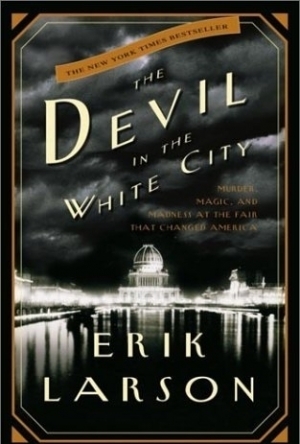
Erik Larson's fourth book, the Devil in the White City, is only partly about Holmes and his dark trail of murder and lies. The story told is mostly centered around the planning and building of the 1893 World's Fair. The prologue opens with one of the architects aboard a ship long after the fair has ended - - - 1912 to be exact- - - where he begins to write of the fair in his diary. The next chapter continues on with Chicago competing against other major cities to win the rights to host the World's Fair. Chicago was not the ideal place for the fair because it was known for it's crime and slaughter houses - - - this was exactly why the politicians wanted it so badly there, so it would help to lighten the image of Chicago for the rest of the world. Even the local Whitechapel Club that had sprouted up after the infamous murders by Jack the Ripper, were excited to win the rights to host the fair in their city, and celebrated in a macabre way:
"Upon learning that Chicago had won the fair, the men of the Whitechapel Club composed a telegram to Chauncey Depew, who more than any other man symbolized New York and its campaign to win the fair. Previously Depew had promised the members of the Whitechapel Club that if Chicago prevailed he would present himself at the club's next meeting, to be hacked apart by the Ripper himself - - - metaphorically, he presumed, although at the Whitechapel Club could one ever be certain? The club's coffin, for example, had once been used to transport the body of a member who had committed suicide. After claiming his body, the club hauled it to the Indiana Dunes on Lake Michigan, where members erected an immense pyre. They placed the body on top, then set it alight. Carrying torches and wearing black hooded robes, they circled the fire singing hymns to the dead between sips of whiskey. The club also had a custom of sending robed members to kidnap visiting celebrities and steal them away in a black coach with covered windows, all without saying a word.
The club's telegram reached Depew in Washington twenty minutes after the final ballot, just as Chicago's congressional delegation began celebrating at the Willard Hotel near the White House. The telegram asked, 'When may we see you at our dissecting table?' "
There are chapters in-between, technically reading like a side story, that tell us about Holmes and his misdeeds in Chicago, but there just wasn't enough about Holmes that I could consider this a True Crime book, nor an informative book about Holmes. Unfortunately, when the reader begins to really dwell into the story of Holmes, it's quickly ended by having two or more chapters about the building of the World's Fair. One interesting point about the story is that the reader does get to see how many inventions were brought to light because of the Fair, such as the invention of the Ferris Wheel. Larson's writing is very coherent and the descriptions are so well done that the reader is practically transported back to the late 1800s, yet, before I finished the book, I felt misled by the title... then coming across everything that happened to not only the Fair, but the people who were involved with it, it's hard not to wonder if the whole thing was cursed, thus the Devil being in the White City.
One of the side stories I did really enjoy was the slow unfolding of a man named Prendergast. A delusional young man who ran one of the groups of paperboys in Chicago, who was also obsessed with politics, became a determined supporter of Mayor Harrison; after Harrison was voted into office again, Prendergast believed it was because of him and the letters he sent out to numerous politicians and potential voters. Prendergast also believed he deserved a chair on the council for Harrison's re-election, for which he even showed up at City Hall to take over. This incident was the straw that broke the camel's back for Prendergast - - - he was humiliated when the people there laughed in his face. Prendergast then decided to take matters into his own hands, and bought a revolver. The day before the Fair would end, Prendergast showed up at Harrison's home and shot him. Harrison died minutes later. Prendergast turned himself in for the murder as soon as he left Harrison's residence. When asked why he had done it, Prendergast responded: " ' Because he betrayed my confidence. I supported him through his campaign and he promised to appoint me corporation counsel. He didn't live up to his word.' "
This book has been voted as a top True Crime must-read novel. I don't agree with this. As I said before: Holmes' chapters are few; eighty percent of this book is about the building of the World's Fair. As a True Crime junkie, I didn't enjoy this one, but also as a history junkie, I enjoyed learning about the Fair and everything that happened. I can't recommend this book to TC fans or horror fans. It's mostly history and architecture.
He's been a doctor and a licensed pharmacist, who then conned an old couple into selling their drug store to him where he preyed on young girls and ignorant customers that would buy whatever Holmes would tell them to buy, whether it were real or fake tonics.
He was a building owner who had a murder hotel secretly built with " a wooden chute that would descend from a secret location on the second floor all the way to the basement... ", "a room next to his office fitted with a large walk-in vault, with airtight seams and asbestos-coated iron walls. A gas jet embedded in one wall would be controlled from his closet...", "a large basement with hidden chambers and a sub-basement for the permanent storage of sensitive material. "
He owned and ran an alcohol-treatment company known as the Silver Ash Institute that claimed to have the cure for alcoholism.
He was a traveling business man, who had two wives and two children. He established the Campbell-Yates Manufacturing Company, which made nothing and sold nothing.
He was also labeled as America's first serial killer. His body count is unknown even today; his victims were frequently young women, which included stenographers and house wives. He was best known for convincing people who trusted him to sign him as the beneficiary of their life insurance policies, only to kill them and make it seem an accident so he could collect the money.
Holmes grew up in a small farming village in New Hampshire, where he briefly spoke about an early fear of a human skeleton that hung in a doctor's office: " 'I had daily to pass the office of one village doctor, the door of which was seldom if ever barred,' he wrote in a later memoir. 'Partly from its being associated in my mind as the source of all the nauseous mixtures that had been my childish terror (for this was before the day of children's medicines), and partly because of vague rumors I had heard regarding its contents, this place was one of peculiar abhorrence to me.' "... "Two children discovered Mudgett's [Holmes' real last name] fear and one day captured him and dragged him 'struggling and shrieking' into the doctor's office. 'Nor did they desist,' Mudgett wrote, 'until I had been brought face to face with one of its grinning skeletons, which, with arms outstretched, seemed ready in its turn to seize me. It was a wicked and dangerous thing to do to a child of tender years and health,' he wrote, ' but it proved an heroic method of treatment, destined ultimately to cure me of my fears, and to inculcate in me, first, a strong feeling of curiosity, and, later, a desire to learn, which resulted years afterwards in my adopting medicine as a profession.' "
Erik Larson's fourth book, the Devil in the White City, is only partly about Holmes and his dark trail of murder and lies. The story told is mostly centered around the planning and building of the 1893 World's Fair. The prologue opens with one of the architects aboard a ship long after the fair has ended - - - 1912 to be exact- - - where he begins to write of the fair in his diary. The next chapter continues on with Chicago competing against other major cities to win the rights to host the World's Fair. Chicago was not the ideal place for the fair because it was known for it's crime and slaughter houses - - - this was exactly why the politicians wanted it so badly there, so it would help to lighten the image of Chicago for the rest of the world. Even the local Whitechapel Club that had sprouted up after the infamous murders by Jack the Ripper, were excited to win the rights to host the fair in their city, and celebrated in a macabre way:
"Upon learning that Chicago had won the fair, the men of the Whitechapel Club composed a telegram to Chauncey Depew, who more than any other man symbolized New York and its campaign to win the fair. Previously Depew had promised the members of the Whitechapel Club that if Chicago prevailed he would present himself at the club's next meeting, to be hacked apart by the Ripper himself - - - metaphorically, he presumed, although at the Whitechapel Club could one ever be certain? The club's coffin, for example, had once been used to transport the body of a member who had committed suicide. After claiming his body, the club hauled it to the Indiana Dunes on Lake Michigan, where members erected an immense pyre. They placed the body on top, then set it alight. Carrying torches and wearing black hooded robes, they circled the fire singing hymns to the dead between sips of whiskey. The club also had a custom of sending robed members to kidnap visiting celebrities and steal them away in a black coach with covered windows, all without saying a word.
The club's telegram reached Depew in Washington twenty minutes after the final ballot, just as Chicago's congressional delegation began celebrating at the Willard Hotel near the White House. The telegram asked, 'When may we see you at our dissecting table?' "
There are chapters in-between, technically reading like a side story, that tell us about Holmes and his misdeeds in Chicago, but there just wasn't enough about Holmes that I could consider this a True Crime book, nor an informative book about Holmes. Unfortunately, when the reader begins to really dwell into the story of Holmes, it's quickly ended by having two or more chapters about the building of the World's Fair. One interesting point about the story is that the reader does get to see how many inventions were brought to light because of the Fair, such as the invention of the Ferris Wheel. Larson's writing is very coherent and the descriptions are so well done that the reader is practically transported back to the late 1800s, yet, before I finished the book, I felt misled by the title... then coming across everything that happened to not only the Fair, but the people who were involved with it, it's hard not to wonder if the whole thing was cursed, thus the Devil being in the White City.
One of the side stories I did really enjoy was the slow unfolding of a man named Prendergast. A delusional young man who ran one of the groups of paperboys in Chicago, who was also obsessed with politics, became a determined supporter of Mayor Harrison; after Harrison was voted into office again, Prendergast believed it was because of him and the letters he sent out to numerous politicians and potential voters. Prendergast also believed he deserved a chair on the council for Harrison's re-election, for which he even showed up at City Hall to take over. This incident was the straw that broke the camel's back for Prendergast - - - he was humiliated when the people there laughed in his face. Prendergast then decided to take matters into his own hands, and bought a revolver. The day before the Fair would end, Prendergast showed up at Harrison's home and shot him. Harrison died minutes later. Prendergast turned himself in for the murder as soon as he left Harrison's residence. When asked why he had done it, Prendergast responded: " ' Because he betrayed my confidence. I supported him through his campaign and he promised to appoint me corporation counsel. He didn't live up to his word.' "
This book has been voted as a top True Crime must-read novel. I don't agree with this. As I said before: Holmes' chapters are few; eighty percent of this book is about the building of the World's Fair. As a True Crime junkie, I didn't enjoy this one, but also as a history junkie, I enjoyed learning about the Fair and everything that happened. I can't recommend this book to TC fans or horror fans. It's mostly history and architecture.

Ryan Hill (152 KP) rated Wonder Woman (2017) in Movies
May 18, 2019
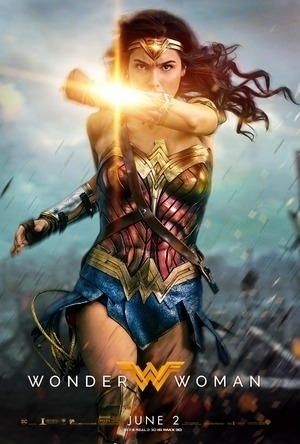
"I can save today, you can save the world"
Remember when some trickster claiming to be a former worker from Warner Bros. wrote an open letter saying that Wonder Woman was just another mess of a DC movie, et cetera? I remember how Patty Jenkins responded to that. She tweeted: "Just wait and you'll see".
Honestly, I don't know how anyone could even consider that there was the slightest chance of this movie not being good, and I'm gonna tell you why: this is the very first big female-led superhero movie, in which the title character also happens to be the greatest female superhero in history. If you really think that Patty Jenkins, also the first woman to ever direct a superhero movie of this caliber in a industry where women barely stand any chances to get to direct major blockbusters, would let this movie be anything less than great... You've got another thing coming, mate.
Wonder Woman is a traditional, oldschool superhero movie, but the first essentially feminist one at it, and they couldn't have chosen a better setting to tell this story, or a better character to star in it. The movie's social comments are strong and constantly present, but never forced, because it is only natural: by placing Diana, a princess raised in an island of warrior women, in the middle of the reality of World War I, the absurdities of the feminine role in the world - and so many other human corruptions - automatically come to light. The way Diana reacts to this world raises a great sense of awareness, with a touch of poignant humor to it. There is a very funny subtle arc of her wanting to take out her cloak, but not being able to because her armor is "barely any clothes", hinting not only at society's sexist feminine dressing code - which is still a thing today -, but also gradually adding power to the iconography of Wonder Woman in full costume; this is Wonder Woman's much awaited debut on the big screen in a solo movie, and like Superman and Batman before her, her first appearance needed to be something incredibly striking. Patty knew that, Gal knew that, and they made it happen. Even if we already saw her in BVS, the very first time Wonder Woman walks up in full costume here is undoubtedly one of the most iconic moments in superhero cinema.
Jenkins is extremely devoted to giving Wonder Woman the iconic debut film she deserves, and she nails it - there's quite a bit of remarkable shots and set pieces that let out the same imagetic power as in Donner's Superman, Burton's Batman or even Raimi's Spider-Man, and I must highlight the No Man's Land sequence. It's my favorite part of the movie; Jenkins and Heinberg carefully work on Diana's mindset as she first witness the horrors of human war, not being able to help everyone, horses being hurt so they can move faster, a mother and a child begging for help, and it all leads up to the powerful moment of a woman crossing the land no man could cross - and Heinberg's dialogue doesn't rely on obvious statements such as "fortunately I'm a woman" (I'm looking at you, Batwoman trailer), it simply lets the image strike us, because it is powerful enough by itself, and boy did that cause some serious goosebumps.
Speaking of dialogue... It's so terrific, so well written. The exchanges between Diana and Steve Trevor are very clever and funny, but most of all natural. All the characters are also extremely likable; Allan Heinberg's writing knows that not all of them can be given deep development, but nonetheless he gives them stories, personalities and purposes, and that - plus the charismatic performances - makes them very empathetic. The villains are not as remarkable as in some of the other DCEU films, but they didn't need to be; the movie doesn't require in-depth arcs from its villains. They have a strong presence when they're in scene and a well elaborated lore, and that's everything they need.
Contrary to the Nordic mythology depicted in the MCU, here we are talking about real gods, true deities, not superpowerful aliens that only strike a similar image - and that also brings a few narrative dangers along with it, after all, it was in greek mythological stories that the concept of Deus Ex Machina first appeared. Heinberg's screenplay, though, makes a few clever twists in that mythology to avoid easy solutions, which adds to the storytelling, the world building and the developing of the themes as well. The lore surrounding the God of War Ares, for example, is not a simple Diabolus Ex Machina as "he influences men to war and if you kill him every man goes back to being good and everything's alright", no, it's more narratively complicated and socially engaging than that.
And Gal Gadot... I'm at a loss for words. I'll confess right here that when she was first announced as Wonder Woman, I was one of the few who were very opposed to that casting. I've never been so wrong in my life, and I've never been so happy about it. She really is Wonder Woman. She's so graceful and adorable, but a major badass when she needs to be. The way she moves, the way she curiously looks at things, the way she speaks, and the way she incarnates Diana's evolving from her naive beginnings to the wise warrior... She's not only an icon, she's a true hero. Comparisons to Christopher Reeve's Superman were made for good reasons.
Chris Pine is also great, he walks perfectly in the line between funny and serious, Steve Trevor is a darling character and his chemistry with Gal is on point. Their relationship is very well constructed and becomes highly emotional by the end - there are scenes that filled my heart with joy, and others that made it ache.
The action is exciting and full of originality, and I like how Jenkins uses slow-motion differently than Zack Snyder. I know that Snyder helped her direct some of the action sequences, which is understandable since Jenkins had no experience with this type of movie, but you can tell it's not the same. In the fights themselves, there's this feel of sensibility to how these people react to Diana, and it's slightly different from the typical "regular people react to superhumans among them" trope. The cinematography is very keen on portraying the difference between Themyscira - an island of colors and natural beauty - and "jolly ol' London" - desaturated and smoggy, a scenario in which Diana's colorful armor shines in a most beautiful contrast.
And the soundtrack. Rupert Gregson-Williams made a beautiful score that brings out the best in every scene. It's heroic, very heartfelt, and loyal to the foundations of what makes superhero music so memorable. Gregson-Williams adds new themes to compose Wonder Woman's musical identity, but Hans Zimmer's main theme from BVS still lives, and it plays in some heart-pounding scenes. I love that they're dedicating that much attention to the musical continuity, because amongst Marvel's many qualities, they're doing a lousy job in that area. Wonder Woman's theme is the most catchy superhero theme in a long time, it quickly gained a lot of appreciation and by continuing on using it, Gregson-Williams collaborates to making Wonder Woman the strong cinematic icon she's setting out to be.
The irregular reception of previous DCEU movies also extols the impact of Wonder Woman, as do the distinct styles between the films. One of the DCEU's biggest virtues is that singularity of each film; be it a near disaster movie epic such as Man Of Steel, a complex deconstruction of heroic values such as Batman v Superman, an stylish chaos such as Suicide Squad or a traditional, graceful superhero film such as Wonder Woman, these movies are all in the same universe, and that very fact is an example of its richness. A lot of people will think Wonder Woman is the best DCEU movie of the lot, some will stick to BVS, others to MOS, maybe for some it's Shazam, but that's the fun of it: we can discuss this forever. Each of these movies mean different things to different people, we're way past simply labelling one as "better" and the other as "worse".
Wonder Woman, however, is not simply a movie about a very strong woman. It's an achievement for every woman. There were tons of girls dressed up as Wonder Woman in the theater, and just seeing how ecstatic they were after the movie brought me joy. There were tons of applause. It's a mark. Be that as it may, Wonder Woman will be remembered as the most impactful superhero film of its time. In 1978, Superman showed to the world how a man could fly; in 2017, Wonder Woman showed to the world how a woman can fight.
Honestly, I don't know how anyone could even consider that there was the slightest chance of this movie not being good, and I'm gonna tell you why: this is the very first big female-led superhero movie, in which the title character also happens to be the greatest female superhero in history. If you really think that Patty Jenkins, also the first woman to ever direct a superhero movie of this caliber in a industry where women barely stand any chances to get to direct major blockbusters, would let this movie be anything less than great... You've got another thing coming, mate.
Wonder Woman is a traditional, oldschool superhero movie, but the first essentially feminist one at it, and they couldn't have chosen a better setting to tell this story, or a better character to star in it. The movie's social comments are strong and constantly present, but never forced, because it is only natural: by placing Diana, a princess raised in an island of warrior women, in the middle of the reality of World War I, the absurdities of the feminine role in the world - and so many other human corruptions - automatically come to light. The way Diana reacts to this world raises a great sense of awareness, with a touch of poignant humor to it. There is a very funny subtle arc of her wanting to take out her cloak, but not being able to because her armor is "barely any clothes", hinting not only at society's sexist feminine dressing code - which is still a thing today -, but also gradually adding power to the iconography of Wonder Woman in full costume; this is Wonder Woman's much awaited debut on the big screen in a solo movie, and like Superman and Batman before her, her first appearance needed to be something incredibly striking. Patty knew that, Gal knew that, and they made it happen. Even if we already saw her in BVS, the very first time Wonder Woman walks up in full costume here is undoubtedly one of the most iconic moments in superhero cinema.
Jenkins is extremely devoted to giving Wonder Woman the iconic debut film she deserves, and she nails it - there's quite a bit of remarkable shots and set pieces that let out the same imagetic power as in Donner's Superman, Burton's Batman or even Raimi's Spider-Man, and I must highlight the No Man's Land sequence. It's my favorite part of the movie; Jenkins and Heinberg carefully work on Diana's mindset as she first witness the horrors of human war, not being able to help everyone, horses being hurt so they can move faster, a mother and a child begging for help, and it all leads up to the powerful moment of a woman crossing the land no man could cross - and Heinberg's dialogue doesn't rely on obvious statements such as "fortunately I'm a woman" (I'm looking at you, Batwoman trailer), it simply lets the image strike us, because it is powerful enough by itself, and boy did that cause some serious goosebumps.
Speaking of dialogue... It's so terrific, so well written. The exchanges between Diana and Steve Trevor are very clever and funny, but most of all natural. All the characters are also extremely likable; Allan Heinberg's writing knows that not all of them can be given deep development, but nonetheless he gives them stories, personalities and purposes, and that - plus the charismatic performances - makes them very empathetic. The villains are not as remarkable as in some of the other DCEU films, but they didn't need to be; the movie doesn't require in-depth arcs from its villains. They have a strong presence when they're in scene and a well elaborated lore, and that's everything they need.
Contrary to the Nordic mythology depicted in the MCU, here we are talking about real gods, true deities, not superpowerful aliens that only strike a similar image - and that also brings a few narrative dangers along with it, after all, it was in greek mythological stories that the concept of Deus Ex Machina first appeared. Heinberg's screenplay, though, makes a few clever twists in that mythology to avoid easy solutions, which adds to the storytelling, the world building and the developing of the themes as well. The lore surrounding the God of War Ares, for example, is not a simple Diabolus Ex Machina as "he influences men to war and if you kill him every man goes back to being good and everything's alright", no, it's more narratively complicated and socially engaging than that.
And Gal Gadot... I'm at a loss for words. I'll confess right here that when she was first announced as Wonder Woman, I was one of the few who were very opposed to that casting. I've never been so wrong in my life, and I've never been so happy about it. She really is Wonder Woman. She's so graceful and adorable, but a major badass when she needs to be. The way she moves, the way she curiously looks at things, the way she speaks, and the way she incarnates Diana's evolving from her naive beginnings to the wise warrior... She's not only an icon, she's a true hero. Comparisons to Christopher Reeve's Superman were made for good reasons.
Chris Pine is also great, he walks perfectly in the line between funny and serious, Steve Trevor is a darling character and his chemistry with Gal is on point. Their relationship is very well constructed and becomes highly emotional by the end - there are scenes that filled my heart with joy, and others that made it ache.
The action is exciting and full of originality, and I like how Jenkins uses slow-motion differently than Zack Snyder. I know that Snyder helped her direct some of the action sequences, which is understandable since Jenkins had no experience with this type of movie, but you can tell it's not the same. In the fights themselves, there's this feel of sensibility to how these people react to Diana, and it's slightly different from the typical "regular people react to superhumans among them" trope. The cinematography is very keen on portraying the difference between Themyscira - an island of colors and natural beauty - and "jolly ol' London" - desaturated and smoggy, a scenario in which Diana's colorful armor shines in a most beautiful contrast.
And the soundtrack. Rupert Gregson-Williams made a beautiful score that brings out the best in every scene. It's heroic, very heartfelt, and loyal to the foundations of what makes superhero music so memorable. Gregson-Williams adds new themes to compose Wonder Woman's musical identity, but Hans Zimmer's main theme from BVS still lives, and it plays in some heart-pounding scenes. I love that they're dedicating that much attention to the musical continuity, because amongst Marvel's many qualities, they're doing a lousy job in that area. Wonder Woman's theme is the most catchy superhero theme in a long time, it quickly gained a lot of appreciation and by continuing on using it, Gregson-Williams collaborates to making Wonder Woman the strong cinematic icon she's setting out to be.
The irregular reception of previous DCEU movies also extols the impact of Wonder Woman, as do the distinct styles between the films. One of the DCEU's biggest virtues is that singularity of each film; be it a near disaster movie epic such as Man Of Steel, a complex deconstruction of heroic values such as Batman v Superman, an stylish chaos such as Suicide Squad or a traditional, graceful superhero film such as Wonder Woman, these movies are all in the same universe, and that very fact is an example of its richness. A lot of people will think Wonder Woman is the best DCEU movie of the lot, some will stick to BVS, others to MOS, maybe for some it's Shazam, but that's the fun of it: we can discuss this forever. Each of these movies mean different things to different people, we're way past simply labelling one as "better" and the other as "worse".
Wonder Woman, however, is not simply a movie about a very strong woman. It's an achievement for every woman. There were tons of girls dressed up as Wonder Woman in the theater, and just seeing how ecstatic they were after the movie brought me joy. There were tons of applause. It's a mark. Be that as it may, Wonder Woman will be remembered as the most impactful superhero film of its time. In 1978, Superman showed to the world how a man could fly; in 2017, Wonder Woman showed to the world how a woman can fight.