
Search

Kristy H (1252 KP) rated Now Is Everything in Books
Dec 24, 2017

breathtaking (3 more)
powerful
suspenseful
heartbreaking
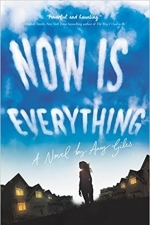
Hadley's life looks perfect from the outside. Her family is wealthy, and she's a successful athlete and student. What you don't see is that Hadley's father works at breaking her down, day after day, forcing her into playing lacrosse and taking flying lessons (his two passions), monitoring her whereabouts and food intake, berating and belittling her constantly, and much worse. Hadley endures it all though, if it keeps the spotlight off her beloved spitfire of a little sister, Lila. Hadley would do anything to keep her father's focus off of Lila. Lila's only ten--the age her father targeted his laser beam on her. Hadley's life improves, however, when she secretly starts dating Charlie Simmons. On the surface, Charlie's life isn't anything like hers--he's the son of a poor single mom, but the two quickly find they have more in common than they realize. Even better, Charlie gives Hadley something she hasn't had in a long time: hope. Then, Hadley is in a plane crash, which tragically leaves her family is dead. Only Hadley can tell everyone what happened, but she isn't divulging the details. What happened that day in the plane? And why would it cause Hadley--the only survivor--to want to take her own life?
This book. Oh this book. Wow. I completely overlooked this one on my ARC shelf, and for that, I deeply apologize. But, I'm so, so, so glad I did pick it up! This is an amazing, powerful, and heartbreaking book and easily one of my favorite books I've read this year.
Part of the power comes via its format, which seems simple on the surface. The novel and its details are all a slow build via a "then" and "now" format plus transcripts and bits of evidence from the crash investigator. All of our "then" and "now" portions come from Hadley's point of view and leave us constantly wondering. Why is her dad all over her? What makes him so evil? You are also left in utter confusion and suspense over exactly what happened during the crash (and why it happened). I read the second half in one sitting, staying up late to finish it. I simply had to know what happened to Hadley.
I credit this to Giles' writing, which is superb. You will get sucked in by Hadley extremely early. She's a well-written, compelling character, and it's nearly impossible not to become part of her life. In fact, rarely have I felt so strongly for characters in a novel in a long time. If I could have, I would have gone and rescued those children myself! I simply loved Hadley and her wonderful, feisty sister, Lila. The hate I felt for their horrible, abusive father--and, sometimes, their apathetic, passive mother, was insane. They felt like real people. I was completely involved.
In fact, those poor kids. The book actually made me feel tense just reading about their lives. It was so well-done that I read portions of it with a knot in my stomach. (As a note, there's definitely a trigger for abuse.) Watching Hadley try to protect her sister and live up to adult expectations far beyond her teen years--seriously, guys, it was heartbreaking and yet amazing to read. You will find yourself rooting for Hadley and Lila in an inexplicable way.
The ending on this one is interesting. I'm still pondering it. The fascinating thing about this book is that you know *something* has to have happened up in that plane, but you don't know exactly what, or how it all goes down. The ending made me go "wow." I'm not exactly sure it's what I would have chosen, but it still felt right somehow. Although I was so attached to Hadley, that I wish there was a sequel of sorts, because I still feel bonded to the girl. That's how well-done this novel was!
Overall, this is just a lovely book. Very, very rarely does a book make me cry. This one did. This is not a light read, no, but there are still funny moments, beautiful moments, and heartwarming moments among all the dark ones. You will not regret reading this book. Huge kudos to Amy Giles for writing such a powerful and wonderful novel that so deftly deals with abuse and aspects of mental illness. I feel like Hadley and Lila will stay with me for a long time. 4.5 stars.
This book. Oh this book. Wow. I completely overlooked this one on my ARC shelf, and for that, I deeply apologize. But, I'm so, so, so glad I did pick it up! This is an amazing, powerful, and heartbreaking book and easily one of my favorite books I've read this year.
Part of the power comes via its format, which seems simple on the surface. The novel and its details are all a slow build via a "then" and "now" format plus transcripts and bits of evidence from the crash investigator. All of our "then" and "now" portions come from Hadley's point of view and leave us constantly wondering. Why is her dad all over her? What makes him so evil? You are also left in utter confusion and suspense over exactly what happened during the crash (and why it happened). I read the second half in one sitting, staying up late to finish it. I simply had to know what happened to Hadley.
I credit this to Giles' writing, which is superb. You will get sucked in by Hadley extremely early. She's a well-written, compelling character, and it's nearly impossible not to become part of her life. In fact, rarely have I felt so strongly for characters in a novel in a long time. If I could have, I would have gone and rescued those children myself! I simply loved Hadley and her wonderful, feisty sister, Lila. The hate I felt for their horrible, abusive father--and, sometimes, their apathetic, passive mother, was insane. They felt like real people. I was completely involved.
In fact, those poor kids. The book actually made me feel tense just reading about their lives. It was so well-done that I read portions of it with a knot in my stomach. (As a note, there's definitely a trigger for abuse.) Watching Hadley try to protect her sister and live up to adult expectations far beyond her teen years--seriously, guys, it was heartbreaking and yet amazing to read. You will find yourself rooting for Hadley and Lila in an inexplicable way.
The ending on this one is interesting. I'm still pondering it. The fascinating thing about this book is that you know *something* has to have happened up in that plane, but you don't know exactly what, or how it all goes down. The ending made me go "wow." I'm not exactly sure it's what I would have chosen, but it still felt right somehow. Although I was so attached to Hadley, that I wish there was a sequel of sorts, because I still feel bonded to the girl. That's how well-done this novel was!
Overall, this is just a lovely book. Very, very rarely does a book make me cry. This one did. This is not a light read, no, but there are still funny moments, beautiful moments, and heartwarming moments among all the dark ones. You will not regret reading this book. Huge kudos to Amy Giles for writing such a powerful and wonderful novel that so deftly deals with abuse and aspects of mental illness. I feel like Hadley and Lila will stay with me for a long time. 4.5 stars.
Kristy H (1252 KP) rated A Cold Day in Hell in Books
Jan 29, 2018


Engaging characters (2 more)
Great courtroom scene
Strong female lead
Engaging debut mystery
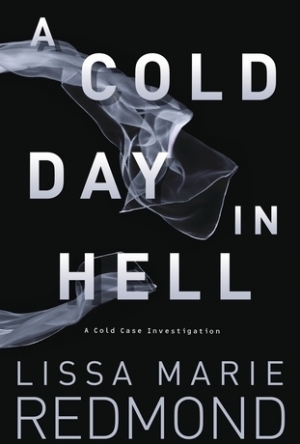
Lauren Riley is a thirty-eight-year-old twice-divorced mother of two college age daughters, working cold case homicides. She has a great, younger cold case partner, Reese, and carries a torch for her ex-husband, Mark. Meanwhile, her ex, Joe Wheeler, is a Garden Valley homicide detective and a total (excuse my language) a-hole, who brazenly punches Lauren in the mouth after learning she's working against him on a case. Lauren's working two jobs -- her daytime gig on cold cases and also as a certified Private Investigator (PI). Lauren is hired by her nemesis, attorney Frank Violanti, to work the high-profile case of David, who is accused of murdering Katherine Vine, the beautiful, younger wife of Anthony Vine, who runs a successful chain of gyms. Lauren knows taking the case could stir up some issues in her department, with the DA, and with Reese. But in her gut, she feels that David is innocent. Can she and Frank make peace and prove it?
I read a lot of mysteries and while there are thankfully more strong female detectives coming on the scene (see Kristen Lepionka's Roxanne Weary and Emily Littlejohn's Gemma Monroe, for instance), they are still few and far between. While Lauren Riley may still be finding herself (there's a lot of side coverage of emotional entanglements and relationships here), I still love finding and championing a complicated, real, strong female detective.
Lauren's PI case is really the star of the show, and it's interesting and engaging throughout the entire novel. It keeps you guessing throughout, questioning whether David did it or not, and who else played a key role in Katherine and Anthony Vine lives. Nothing is cut or dried.
Also fascinating is Lauren's main cold case. While you could argue some of it ties up neatly, it doesn't go as expected, per se, if that makes sense, and the characters involved are intriguing and different. All the cases kept me interested as I read. A lot certainly happens in this novel, between Lauren's work and personal life. Nothing is boring, and there's never really a dull moment, especially once you get into the swing of things and realize that the book covers both her personal life and her work life in-depth. It also tells the story from more than Lauren's POV, even if she's the main focus, which works surprisingly well.
I don't think it's a spoiler to say that the book culminates in a trial related to Lauren's PI case, and it's a great, suspenseful, incredibly well-written piece of work. The courtroom scenes were so well-done and really had me on the edge of my seat. One of the things I loved about this novel was how I could so easily picture each of these characters-- each is well-described and fleshed out. Redmond writes darn good trial scenes (and a darn good book), and I was frantically flipping the pages to see how things would turn out.
It wasn't until I finished the book that I learned the author is a retired homicide detective, but it definitely shows as you read. The novel is written expertly in terms of police and courtroom procedure, but still enjoyable in terms of the characters. There is a lot of personal "stuff" in terms of Lauren; this will be a little different if you are used to the Bosch type of detective (the love of my life and my hero). Still, it's completely refreshing to see a complicated female lead detective, and, as mentioned, so nice to be reading more of these stories. I grew to really love Lauren.
The courtroom scenes are great, and a lot will keep you guessing. Sure, some of the cold cases wrap up what seem a little easily, but even Lauren addresses that as she works. I read some reviews that Joe Wheeler is a cliche character, and I guess I could see where people get that, but for me, society as of late seems to be showing us everyday that these sort of angry, abusive men truly exist. Everywhere. To me, Joe was a sadly realistic portrayal of a horrible man, and his slow, boiling anger only added to the tension of the entire novel.
Overall, I really enjoyed this one. It looks like it's going to be a series, and it ends with some unfinished issues that make me even more eager for book two.
I received a copy of this novel from the publisher and Netgalley in return for an unbiased review.
I read a lot of mysteries and while there are thankfully more strong female detectives coming on the scene (see Kristen Lepionka's Roxanne Weary and Emily Littlejohn's Gemma Monroe, for instance), they are still few and far between. While Lauren Riley may still be finding herself (there's a lot of side coverage of emotional entanglements and relationships here), I still love finding and championing a complicated, real, strong female detective.
Lauren's PI case is really the star of the show, and it's interesting and engaging throughout the entire novel. It keeps you guessing throughout, questioning whether David did it or not, and who else played a key role in Katherine and Anthony Vine lives. Nothing is cut or dried.
Also fascinating is Lauren's main cold case. While you could argue some of it ties up neatly, it doesn't go as expected, per se, if that makes sense, and the characters involved are intriguing and different. All the cases kept me interested as I read. A lot certainly happens in this novel, between Lauren's work and personal life. Nothing is boring, and there's never really a dull moment, especially once you get into the swing of things and realize that the book covers both her personal life and her work life in-depth. It also tells the story from more than Lauren's POV, even if she's the main focus, which works surprisingly well.
I don't think it's a spoiler to say that the book culminates in a trial related to Lauren's PI case, and it's a great, suspenseful, incredibly well-written piece of work. The courtroom scenes were so well-done and really had me on the edge of my seat. One of the things I loved about this novel was how I could so easily picture each of these characters-- each is well-described and fleshed out. Redmond writes darn good trial scenes (and a darn good book), and I was frantically flipping the pages to see how things would turn out.
It wasn't until I finished the book that I learned the author is a retired homicide detective, but it definitely shows as you read. The novel is written expertly in terms of police and courtroom procedure, but still enjoyable in terms of the characters. There is a lot of personal "stuff" in terms of Lauren; this will be a little different if you are used to the Bosch type of detective (the love of my life and my hero). Still, it's completely refreshing to see a complicated female lead detective, and, as mentioned, so nice to be reading more of these stories. I grew to really love Lauren.
The courtroom scenes are great, and a lot will keep you guessing. Sure, some of the cold cases wrap up what seem a little easily, but even Lauren addresses that as she works. I read some reviews that Joe Wheeler is a cliche character, and I guess I could see where people get that, but for me, society as of late seems to be showing us everyday that these sort of angry, abusive men truly exist. Everywhere. To me, Joe was a sadly realistic portrayal of a horrible man, and his slow, boiling anger only added to the tension of the entire novel.
Overall, I really enjoyed this one. It looks like it's going to be a series, and it ends with some unfinished issues that make me even more eager for book two.
I received a copy of this novel from the publisher and Netgalley in return for an unbiased review.

Joe Julians (221 KP) rated A Quiet Place (2018) in Movies
Apr 9, 2018
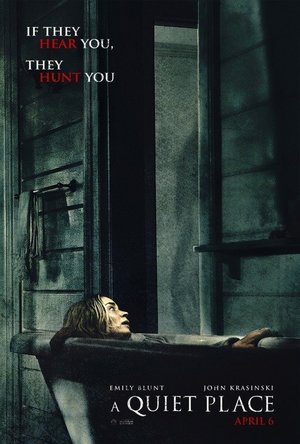
Well, that was an experience. A Quiet Place is one heck of a ride that rarely eases up on the tension throughout. You know those moments in horror where you know that something bad isn’t just about to happen? The moments where you can breathe and relax for a minute? This really doesn’t have many of those- perhaps only about four of five. The rest of the time is spent fully in the middle of the horrors of this world and it’s an almost breathless experience.
We don’t really get much background to the characters or the situation that has unfolded on the planet when these creatures arrive. As such, it’s a disorientating experience to be dropped in almost in the middle of the story. That disorientation works to the movie’s effect though. We, the audience, are playing catch up and trying to piece together what is happening. That makes the first appearance of one of the creatures that much more frightening. As for the creatures, they’re a great design and whilst we don’t spend too much time with them, they’re wonderfully effective. These are the sort of creatures that I don’t want to be explained, I don’t want any backstory or sequels delving further into them; the mystery makes them far scarier.
And boy is this film scary. It’s not a typical horror movie that’s filled to the brim with jump scares (though it does have them). Instead, it’s a movie that uses its premise to make a terrible situation that much worse. Given that noise is what attracts these creatures (and they do attack within seconds of hearing something), it is to be expected that a lot of A Quiet Place would involve not making much noise. What I didn’t expect was for there to be almost none throughout the entire thing. Characters don’t really talk here and when they do it’s extremely rare. They all communicate via sign language that I assume they all learned due to having a deaf child in the family. If they do talk, it’s normally at such a whisper that subtitles are needed to let us know what they are saying. That makes the whole film so much more tense and suspenseful. When we do hear a noise, we know that something bad will most likely be descending on them in a matter of moments. I actually found myself scanning the rooms they were in, checking for things that could fall. One thing I noticed from having next to no dialogue was how much I was able to hear all the other sounds. Everything was heightened as a result and that only made the tension that much worse.
As great as all this is, it would be nothing if there wasn’t a great cast to anchor it. A Quiet Place definitely has that. All four leads are superb and they are pretty much the only human characters for the entire running time. Everyone needed to bring their A game and that they did. Krasinski and Blunt are both fantastic actors and this is some of their best work. The two obviously have a head start when it comes to having chemistry and the ease they have with one another makes the characters come across as real and genuine people. As for the kids, well there are two stars in the making here. Both of them are given some really serious material to work with and they absolutely pull it off. Nothing is oversold by anyone here. Every second of fear and terror is played perfectly and as such, I found myself sharing these emotions alongside each one of them.
A Quiet Place does have a few issues. It’s never clear what the ultimate plan is for the family, particularly with a baby on the way. What are they planning to do with it in the long term when it’s born? Babies are known for crying and not being quiet, so it was a little distracting to not have that addressed. There is also a moment to do with that pregnancy that felt extremely glossed over, but I’ll avoid specifying exactly what at the risk of spoilers. These are minor niggles though. This is a great movie that is a blast to watch. I do have a feeling that there are some that may find the ending to be a little frustrating, for me though, I thought it was perfect.
Oh, and as for John Krasinski who was on starring and directing duties, this is a great project for him that he comes out of brilliantly on both counts. This could be the film that throws him into A-list movie status and whether it’s in front or behind the camera, I’m eager to see what he does next.
We don’t really get much background to the characters or the situation that has unfolded on the planet when these creatures arrive. As such, it’s a disorientating experience to be dropped in almost in the middle of the story. That disorientation works to the movie’s effect though. We, the audience, are playing catch up and trying to piece together what is happening. That makes the first appearance of one of the creatures that much more frightening. As for the creatures, they’re a great design and whilst we don’t spend too much time with them, they’re wonderfully effective. These are the sort of creatures that I don’t want to be explained, I don’t want any backstory or sequels delving further into them; the mystery makes them far scarier.
And boy is this film scary. It’s not a typical horror movie that’s filled to the brim with jump scares (though it does have them). Instead, it’s a movie that uses its premise to make a terrible situation that much worse. Given that noise is what attracts these creatures (and they do attack within seconds of hearing something), it is to be expected that a lot of A Quiet Place would involve not making much noise. What I didn’t expect was for there to be almost none throughout the entire thing. Characters don’t really talk here and when they do it’s extremely rare. They all communicate via sign language that I assume they all learned due to having a deaf child in the family. If they do talk, it’s normally at such a whisper that subtitles are needed to let us know what they are saying. That makes the whole film so much more tense and suspenseful. When we do hear a noise, we know that something bad will most likely be descending on them in a matter of moments. I actually found myself scanning the rooms they were in, checking for things that could fall. One thing I noticed from having next to no dialogue was how much I was able to hear all the other sounds. Everything was heightened as a result and that only made the tension that much worse.
As great as all this is, it would be nothing if there wasn’t a great cast to anchor it. A Quiet Place definitely has that. All four leads are superb and they are pretty much the only human characters for the entire running time. Everyone needed to bring their A game and that they did. Krasinski and Blunt are both fantastic actors and this is some of their best work. The two obviously have a head start when it comes to having chemistry and the ease they have with one another makes the characters come across as real and genuine people. As for the kids, well there are two stars in the making here. Both of them are given some really serious material to work with and they absolutely pull it off. Nothing is oversold by anyone here. Every second of fear and terror is played perfectly and as such, I found myself sharing these emotions alongside each one of them.
A Quiet Place does have a few issues. It’s never clear what the ultimate plan is for the family, particularly with a baby on the way. What are they planning to do with it in the long term when it’s born? Babies are known for crying and not being quiet, so it was a little distracting to not have that addressed. There is also a moment to do with that pregnancy that felt extremely glossed over, but I’ll avoid specifying exactly what at the risk of spoilers. These are minor niggles though. This is a great movie that is a blast to watch. I do have a feeling that there are some that may find the ending to be a little frustrating, for me though, I thought it was perfect.
Oh, and as for John Krasinski who was on starring and directing duties, this is a great project for him that he comes out of brilliantly on both counts. This could be the film that throws him into A-list movie status and whether it’s in front or behind the camera, I’m eager to see what he does next.
Black Rabbit Hall
6.0 Rate It
Book
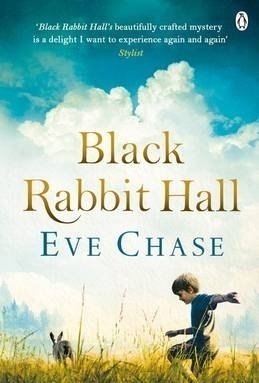
One golden family. One fateful summer. Four lives changed forever. Amber Alton knows that the hours...

BankofMarquis (1832 KP) rated Psycho (1960) in Movies
Oct 29, 2018
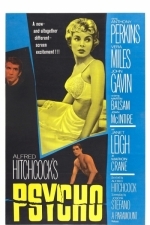
An all-time great performance by Anthony Perkins
I'm sure all of you have (at least) heard of the 1960 Alfred Hitchcock film, PSYCHO. And I'm sure most of you have seen (at least in part) the famous "shower scene". But when was the last time you really sat down and watched this film? It had been awhile for me and I walked away with the following impression:
PSYCHO is not all that scary, but it is suspenseful as heck with strong Direction by the "Master of Suspense" and very strong performances anchoring the front and back end of the film.
PSYCHO was billed when it came out as a "Janet Leigh Film". So, to give this review context, let's look at who Janet Leigh was at the time. Before shooting PSYCHO, Leigh was generally cast as the ingenue and/or love interest in mainstream fair such as LITTLE WOMEN, ANGELS IN THE OUTFIELD and HOUDINI (a modern "comp" to her might be someone like Anne Hathaway before she started doing "edgier" work). Leigh did show that there was more to her than just being an ingenue when she played the morally ambiguous wife of Charlton Heston's character in Orson Welles' TOUCH OF EVIL. This film (probably) gave Hitchcock the idea to cast Leigh in PSYCHO.
When 1960's audiences first saw Leigh on screen in PSYCHO, I'm sure that most of them were shocked for, instead of being the pure and wholesome ingenue and wife, she plays the entire first scene in a bra and slip. Her character, Marion Crane, is not morally ambiguous, she is morally corrupt - and when Leigh's character has a chance to act on her moral corruptness, she jumps at the chance. The rest of the first half of this film is Leigh trying to get away with her "crime". She is quite good in this part of the film and was nominated for an Oscar for Best Supporting Actress (deservedly so).
And then...Anthony Perkins shows up.
We are about 45 minutes into the 1 hour and 49 minute film when Perkins' Norman Bates first appears on screen and an interesting thing happened - I couldn't take my eyes off of him. I was enjoying Leigh's performance but instantly pushed her aside (and to the background) when Perkins shows up. Without giving plot away, let me say that there is much, much going behind Norman's eyes and the performance by Perkins strongly suggests this, without going over-the-top or being melodramatic. It is a perfect blend of actor, character and performance and I was shocked that he was not even NOMINATED for an Oscar (Peter Ustinov would win for SPARTACUS). Perkins performance is one of the all-time greats with one of the most interesting and unusual characters - and portrayals - of all time.
Much of the credit for Perkins' and Leigh's strong performances have to go to Director Hitchcock who was at the height of his Directing powers (and power). From the "get go", you can feel the Director's hand in this film, building suspense from scene to scene and shot to shot, first with Leigh's character and, later, with Perkins. Both characters are trying to get away with something and Hitchcock pulls his camera in close to make a point - from a distance all seems good, but when you get up close, you can tell that things are very bad, indeed.
The filming of the famous "shower scene" is well documented and is a Master Class in film and editing. It is worth the price of admission on it's own - as is a scene on a staircase with Private Detective Arbogast, played by Martin Balsam. Hitchcock chooses to heighten the realism in this scene on the staircase by going a more esoteric route (rather than traditional filming of the events) and, one can argue, it doesn't belong in this film. Until, that is, you think about it and then it makes great sense and absolutely, positively has to be in this film in that way.
Another aspect of this film that begs to be mentioned is the Film Score by the great Bernard Herrmann - Hitchcock's regular collaborator. The music in this film punctuates the action on the screen - from the persistent beat and pacing of the opening credits music - driving the audience forward into the action - that does not let go, reaching it's peak and crescendo in the shower scene and then floating down gently like an animal catching it's breath after great activity.
Does the entire film hold up almost 60 years later? Almost...but not quite. Most annoying to me was the "wrap-up" scene at the end where a character spells out everything for the audience. As if we are not smart enough to "get it" - and perhaps the audiences in 1960 weren't.
But that is a quibble for a film that is a classic and is one that, if you have not seen (or seen for awhile), begs to be seen. Check out this film, not for the scares, but rather, the suspense that is generated by Hitchcock and his performers throughout. A GREAT entree into the world of Alfred Hitchcock films.
Letter Grade: A
9 (out of 10) stars and you can take that to the Bank (ofMarquis)
PSYCHO is not all that scary, but it is suspenseful as heck with strong Direction by the "Master of Suspense" and very strong performances anchoring the front and back end of the film.
PSYCHO was billed when it came out as a "Janet Leigh Film". So, to give this review context, let's look at who Janet Leigh was at the time. Before shooting PSYCHO, Leigh was generally cast as the ingenue and/or love interest in mainstream fair such as LITTLE WOMEN, ANGELS IN THE OUTFIELD and HOUDINI (a modern "comp" to her might be someone like Anne Hathaway before she started doing "edgier" work). Leigh did show that there was more to her than just being an ingenue when she played the morally ambiguous wife of Charlton Heston's character in Orson Welles' TOUCH OF EVIL. This film (probably) gave Hitchcock the idea to cast Leigh in PSYCHO.
When 1960's audiences first saw Leigh on screen in PSYCHO, I'm sure that most of them were shocked for, instead of being the pure and wholesome ingenue and wife, she plays the entire first scene in a bra and slip. Her character, Marion Crane, is not morally ambiguous, she is morally corrupt - and when Leigh's character has a chance to act on her moral corruptness, she jumps at the chance. The rest of the first half of this film is Leigh trying to get away with her "crime". She is quite good in this part of the film and was nominated for an Oscar for Best Supporting Actress (deservedly so).
And then...Anthony Perkins shows up.
We are about 45 minutes into the 1 hour and 49 minute film when Perkins' Norman Bates first appears on screen and an interesting thing happened - I couldn't take my eyes off of him. I was enjoying Leigh's performance but instantly pushed her aside (and to the background) when Perkins shows up. Without giving plot away, let me say that there is much, much going behind Norman's eyes and the performance by Perkins strongly suggests this, without going over-the-top or being melodramatic. It is a perfect blend of actor, character and performance and I was shocked that he was not even NOMINATED for an Oscar (Peter Ustinov would win for SPARTACUS). Perkins performance is one of the all-time greats with one of the most interesting and unusual characters - and portrayals - of all time.
Much of the credit for Perkins' and Leigh's strong performances have to go to Director Hitchcock who was at the height of his Directing powers (and power). From the "get go", you can feel the Director's hand in this film, building suspense from scene to scene and shot to shot, first with Leigh's character and, later, with Perkins. Both characters are trying to get away with something and Hitchcock pulls his camera in close to make a point - from a distance all seems good, but when you get up close, you can tell that things are very bad, indeed.
The filming of the famous "shower scene" is well documented and is a Master Class in film and editing. It is worth the price of admission on it's own - as is a scene on a staircase with Private Detective Arbogast, played by Martin Balsam. Hitchcock chooses to heighten the realism in this scene on the staircase by going a more esoteric route (rather than traditional filming of the events) and, one can argue, it doesn't belong in this film. Until, that is, you think about it and then it makes great sense and absolutely, positively has to be in this film in that way.
Another aspect of this film that begs to be mentioned is the Film Score by the great Bernard Herrmann - Hitchcock's regular collaborator. The music in this film punctuates the action on the screen - from the persistent beat and pacing of the opening credits music - driving the audience forward into the action - that does not let go, reaching it's peak and crescendo in the shower scene and then floating down gently like an animal catching it's breath after great activity.
Does the entire film hold up almost 60 years later? Almost...but not quite. Most annoying to me was the "wrap-up" scene at the end where a character spells out everything for the audience. As if we are not smart enough to "get it" - and perhaps the audiences in 1960 weren't.
But that is a quibble for a film that is a classic and is one that, if you have not seen (or seen for awhile), begs to be seen. Check out this film, not for the scares, but rather, the suspense that is generated by Hitchcock and his performers throughout. A GREAT entree into the world of Alfred Hitchcock films.
Letter Grade: A
9 (out of 10) stars and you can take that to the Bank (ofMarquis)

Bob Mann (459 KP) rated Rear Window (1954) in Movies
Sep 29, 2021
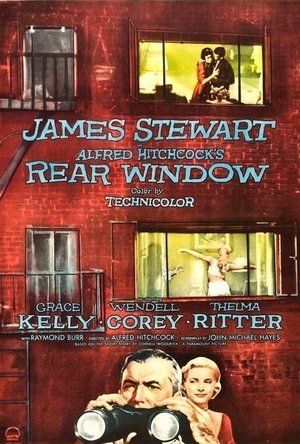
“Hmm… must have splattered a lot”.
Maddy at Maddy Loves Her Classic Films is hosting The Alfred Hitchcockblogathon. A fine idea, celebrating the life and works of the “Master of Suspense”. My contribution comes from his 1954 masterpiece “Rear Window” starring James Stewart and Grace Kelly.
rw-poster
In one pan around his small apartment, and without a word of dialogue required, Hitchcock deftly fills in all the back-story you need: Stewart plays ace photo-journalist L.B. Jefferies, laid up from jetting the world to worn-torn regions by a broken leg in a full-cast with only his courtyard view to entertain him. In sweltering summer temperatures all the apartments are open to the elements, so he can be well entertained by the menagerie before him: “Miss Torso”, the scantily-clad and frequently showering ballerina; a sculptress with an eye towards Henry Moore; a struggling composer (who has his clock wound by someone very familiar!); a newly-wedded bride threatening to wear out the groom; a salesman and his bed-ridden wife; a dog-loving and balcony-sleeping couple; and “Miss Lonelyhearts” – a hard-drinking spinster forced to create imaginary male dinner-guests.
Stewart plays his usual ‘Mr Ordinary’ watching perfectly ordinary goings on in a perfectly ordinary apartment block.
Or not. Jefferies is drawn to some odd-events in the apartment of the salesman (Raymond Burr, still 13 years before his career-defining role in TV’s “Ironside”). His rampant suspicions infect not only his cranky middle-aged physiotherapist Stella (Thelma Ritter) but also his perfect (“too perfect”) girlfriend, the fashion expert Lisa (Grace Kelly). Of course his police friend Doyle (Wendell Corey) is having none of it… there is no evidence of any crime being committed. And the “murdered” wife has been seen being put on a train by her husband, and is sending him letters from the countryside.
Is Jefferies just going stir-crazy? Or is there really something to it?
The set for this film is masterly. Although depicting a genuine location in New York’s Greenwich village the huge set was constructed on the Paramount lot in Hollywood, and you can just imagine the army of carpenters and artists building the multi-layered structure.
It’s one of the stars of the film, allowing for a wealth of detail to be populated: in the apartments; in the street behind; even in the cafe over the other side of the street. And it’s this detail that really makes what could be a highly static film come alive. There are a half dozen films-within-the-film going on at once, with Stewart’s character – and you as the fellow-voyeur – having a multi-pass to watch them all simultaneously.
And watch he does. As what could be perceived as a seriously pervy character – something he is called out on by Stella – Jeffries gets to see an eyeful in particular of the shapely and scantily-clad ballerina (Georgine Darcy, agent-less and only paid $350 for the role!). These scenes must have been deemed quite risque for the year of release.
Where the film rather falters is in the bickering romance between Stewart and Kelly. As a hot-blooded man, I will declare that even today Kelly’s first dream-like appearance (with Vaseline lightly coating the lens) is breathtaking. She’s just the ‘girl-next-door’: if you live next to a palace that is! And yet (with Kelly 21 years Stewart’s junior) she’s just “too perfect” for L.B. , who feels (against her protestations) that she’s ‘too girly’ to hack the life of a war photographer on the road. The mysogeny, common for the day, is gasp-making: “If a girl’s pretty enough, she just has to ‘be'” intones Stewart, to no howls of protest or throwing of saucepans! In fact Kelly is greatly encouraged: “Preview of coming attractions” purrs Kelly, flaunting what she has around the apartment in a negligee.
These scenes though are rather overlong and somewhat get in the way of the murder mystery plot-line. Things really start to warm up when a death occurs, to piercing screams in the night: “Which one of you did it?” shouts a woman to the neighbourhood, as everything – momentarily – stops. “WHICH ONE OF YOU DID IT?”. Given your emotional involvement in the ongoing voyeurism, it’s hard as a viewer not to feel discomforted…. (“well, it wasn’t me”…. shifts uneasily in the seat).
From then on, Hitchcock proceeds to pile on suspenseful jolt after jolt, with first Lisa and then L.B. placed in harms way. While the perpetrator may seem clueless and incompetent, as most murderers of passion probably are, the denouement is satisfying, with a great trial use of green-screen ‘falling’ that would be perfected by Hitchcock for “Vertigo” four years later.
What’s curious for such as classic is that there are a number of fluffed lines in the piece: with two notable ones by Stewart and Kelly. Hitchcock was the master of long and uninterrupted takes, but did he not believe in re-shooting scenes when such errors occurred? Most odd.
Although tighter and more claustrophobic that some of his better known films, this is a firm favourite of mine. If you’ve never seen it, its well worth you checking out.
rw-poster
In one pan around his small apartment, and without a word of dialogue required, Hitchcock deftly fills in all the back-story you need: Stewart plays ace photo-journalist L.B. Jefferies, laid up from jetting the world to worn-torn regions by a broken leg in a full-cast with only his courtyard view to entertain him. In sweltering summer temperatures all the apartments are open to the elements, so he can be well entertained by the menagerie before him: “Miss Torso”, the scantily-clad and frequently showering ballerina; a sculptress with an eye towards Henry Moore; a struggling composer (who has his clock wound by someone very familiar!); a newly-wedded bride threatening to wear out the groom; a salesman and his bed-ridden wife; a dog-loving and balcony-sleeping couple; and “Miss Lonelyhearts” – a hard-drinking spinster forced to create imaginary male dinner-guests.
Stewart plays his usual ‘Mr Ordinary’ watching perfectly ordinary goings on in a perfectly ordinary apartment block.
Or not. Jefferies is drawn to some odd-events in the apartment of the salesman (Raymond Burr, still 13 years before his career-defining role in TV’s “Ironside”). His rampant suspicions infect not only his cranky middle-aged physiotherapist Stella (Thelma Ritter) but also his perfect (“too perfect”) girlfriend, the fashion expert Lisa (Grace Kelly). Of course his police friend Doyle (Wendell Corey) is having none of it… there is no evidence of any crime being committed. And the “murdered” wife has been seen being put on a train by her husband, and is sending him letters from the countryside.
Is Jefferies just going stir-crazy? Or is there really something to it?
The set for this film is masterly. Although depicting a genuine location in New York’s Greenwich village the huge set was constructed on the Paramount lot in Hollywood, and you can just imagine the army of carpenters and artists building the multi-layered structure.
It’s one of the stars of the film, allowing for a wealth of detail to be populated: in the apartments; in the street behind; even in the cafe over the other side of the street. And it’s this detail that really makes what could be a highly static film come alive. There are a half dozen films-within-the-film going on at once, with Stewart’s character – and you as the fellow-voyeur – having a multi-pass to watch them all simultaneously.
And watch he does. As what could be perceived as a seriously pervy character – something he is called out on by Stella – Jeffries gets to see an eyeful in particular of the shapely and scantily-clad ballerina (Georgine Darcy, agent-less and only paid $350 for the role!). These scenes must have been deemed quite risque for the year of release.
Where the film rather falters is in the bickering romance between Stewart and Kelly. As a hot-blooded man, I will declare that even today Kelly’s first dream-like appearance (with Vaseline lightly coating the lens) is breathtaking. She’s just the ‘girl-next-door’: if you live next to a palace that is! And yet (with Kelly 21 years Stewart’s junior) she’s just “too perfect” for L.B. , who feels (against her protestations) that she’s ‘too girly’ to hack the life of a war photographer on the road. The mysogeny, common for the day, is gasp-making: “If a girl’s pretty enough, she just has to ‘be'” intones Stewart, to no howls of protest or throwing of saucepans! In fact Kelly is greatly encouraged: “Preview of coming attractions” purrs Kelly, flaunting what she has around the apartment in a negligee.
These scenes though are rather overlong and somewhat get in the way of the murder mystery plot-line. Things really start to warm up when a death occurs, to piercing screams in the night: “Which one of you did it?” shouts a woman to the neighbourhood, as everything – momentarily – stops. “WHICH ONE OF YOU DID IT?”. Given your emotional involvement in the ongoing voyeurism, it’s hard as a viewer not to feel discomforted…. (“well, it wasn’t me”…. shifts uneasily in the seat).
From then on, Hitchcock proceeds to pile on suspenseful jolt after jolt, with first Lisa and then L.B. placed in harms way. While the perpetrator may seem clueless and incompetent, as most murderers of passion probably are, the denouement is satisfying, with a great trial use of green-screen ‘falling’ that would be perfected by Hitchcock for “Vertigo” four years later.
What’s curious for such as classic is that there are a number of fluffed lines in the piece: with two notable ones by Stewart and Kelly. Hitchcock was the master of long and uninterrupted takes, but did he not believe in re-shooting scenes when such errors occurred? Most odd.
Although tighter and more claustrophobic that some of his better known films, this is a firm favourite of mine. If you’ve never seen it, its well worth you checking out.
Bob Mann (459 KP) rated Life (2017) in Movies
Sep 29, 2021
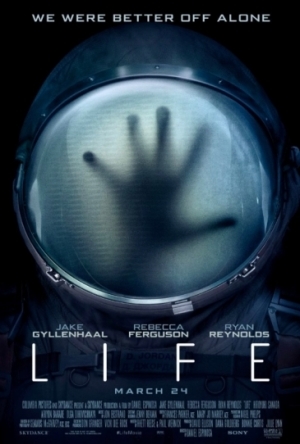
Life after Gravity.
Mankind is on the verge of a major milestone. The “Pilgrim” probe is returning from Mars containing soil samples that might spell the discovery of the first palpable evidence of life beyond earth. Proving that earth scientists are not completely incompetent, the probe is being returned not to earth but to a lab on the International Space Station where strict quarantine can be maintained. This key mission requirement is the responsibility of Miranda North (Rebecca Ferguson, “Mission Impossible: Rogue Nation”). Supporting her is an international crew including fellow doctor David Harris (Jake Gyllenhaal, “Source Code”), professional astronaut Rory Adams (Ryan Reynolds, “Deadpool”) and Hugh Derry (Ariyon Bakare), the lead scientist studying the samples. Needless to say, the soil samples yield more promise than Derry could have ever hoped for (or North could have feared). A crisis of growth and death ensues in a manner that fans of “Alien” will be suitably familiar with. Can the crew survive against all the odds?
Jake Gyllenhaal is one of my favourite actors with a raft of quality films in his CV such as “Nightcrawler” and last year’s hugely underrated (and almost Oscar-ignored) “Nocturnal Animals”. Rebecca Ferguson is also a class act and one of my favourite actresses of the moment. Here they are starring together for the first time and they don’t disappoint. Whilst neither gets enough quality screentime to really hammer their roles home, both connect to the audience in different ways: Harris is heading for an ISS endurance record, and starting to mentally disconnect from earthly connections as his body also starts to atrophy. North, with a clear attraction to him, tries to hold both him and everything together with steely determination, while carrying more knowledge of the mission directives than anyone else has.
The supporting ensemble cast also work well, portraying a real mixture of nationalities from the cock-sure American played by Reynolds to the sultry Russian commander Golovkina, played by the lovely Olga Dihovichnaya. A special note should also be added in the margin for one of the most surprising portrayals of a disabled character in a recent film.
Unfortunately the material the actors get to deliver, by Rhett Reese and Paul Wernick (co-writers of “Deadpool” and “Zombieland”) doesn’t match their ability. The first 30 minutes or so of the film I found to be totally gripping, but even here some of the dialogue is sufficiently clunky to distract you from the ongoing narrative. Some of the rest of the dialogue becomes head-in-the-hands awful in places: a scene during a de-pressurization episode being particularly painful.
Some dodgy dialogue might be forgivable in an action movie if supported by a strong story. Unfortunately, while the premise of the film is sound (if not original), the story leaps from inconsistency to inconsistency from beginning to end. The writers never seem to settle on whether the ‘being’ needs oxygen, likes oxygen, likes hot, likes cold, etc. and this lack of credibility distracts from the whole film. While the screenplay delivers some seriously suspenseful moments, and some decent jump scares, this is not satisfactory enough to serve up a cohesive movie meal.
This is not helped by ‘bad science’. As I have commented upon before, I’m a physicist by training and unscientific scenes annoy me to distraction. I’ve had to learn to live with the basics of explosions and other ‘noise’ in space (something “Star Wars” started 40 years ago, damn those TIE fighters). But there is a scene in “Life” involving an airlock breach that just completely beggers belief, acted out as if it’s a stiff breeze on the front at Skegness! It’s almost – (almost) – as bonkers as the ‘reactor venting’ scene with Chris Pratt in “Passengers“.
However, the film has its strong points too. Like “Gravity”, this is another special effects triumph with the scenes outside the ISS being gorgeously rendered. “Gravity” was a clear 10/10; this is probably at least a 7, and a reason for seeing the film on the big screen. A key question though is why there wasn’t a 3D version of the film released? Heaven knows I’m no fan of 3D, but “Gravity” was one of the few films that was genuinely enhanced by the format: in fact it is currently the only 3D Blu-ray that I own!
In general, the whole film seems a little half-cocked and lacking in its own conviction. You wonder whether the production company (Skydance) got rather cold-feet about the film in releasing it when it did. Yes, “Deadpool” did very well with its February release, but this is a much more suitable film for a summer audience than a release in this post-Oscars doldrums.
In summary, its a moderately entertaining watch, but at heart just another retelling of the old ‘something nasty in the woodshed’ yarn that we’ve seen played out countless times before. Here though the swanky setting and special effects are diminished by a lack of credibility and consistency in the storytelling. Redemption was on hand though, for while it was heading for a middling 3-Fad rating, it managed to salvage another half Fad in the final 60 seconds: a memorable movie ending that might prove hard to beat during 2017.
Jake Gyllenhaal is one of my favourite actors with a raft of quality films in his CV such as “Nightcrawler” and last year’s hugely underrated (and almost Oscar-ignored) “Nocturnal Animals”. Rebecca Ferguson is also a class act and one of my favourite actresses of the moment. Here they are starring together for the first time and they don’t disappoint. Whilst neither gets enough quality screentime to really hammer their roles home, both connect to the audience in different ways: Harris is heading for an ISS endurance record, and starting to mentally disconnect from earthly connections as his body also starts to atrophy. North, with a clear attraction to him, tries to hold both him and everything together with steely determination, while carrying more knowledge of the mission directives than anyone else has.
The supporting ensemble cast also work well, portraying a real mixture of nationalities from the cock-sure American played by Reynolds to the sultry Russian commander Golovkina, played by the lovely Olga Dihovichnaya. A special note should also be added in the margin for one of the most surprising portrayals of a disabled character in a recent film.
Unfortunately the material the actors get to deliver, by Rhett Reese and Paul Wernick (co-writers of “Deadpool” and “Zombieland”) doesn’t match their ability. The first 30 minutes or so of the film I found to be totally gripping, but even here some of the dialogue is sufficiently clunky to distract you from the ongoing narrative. Some of the rest of the dialogue becomes head-in-the-hands awful in places: a scene during a de-pressurization episode being particularly painful.
Some dodgy dialogue might be forgivable in an action movie if supported by a strong story. Unfortunately, while the premise of the film is sound (if not original), the story leaps from inconsistency to inconsistency from beginning to end. The writers never seem to settle on whether the ‘being’ needs oxygen, likes oxygen, likes hot, likes cold, etc. and this lack of credibility distracts from the whole film. While the screenplay delivers some seriously suspenseful moments, and some decent jump scares, this is not satisfactory enough to serve up a cohesive movie meal.
This is not helped by ‘bad science’. As I have commented upon before, I’m a physicist by training and unscientific scenes annoy me to distraction. I’ve had to learn to live with the basics of explosions and other ‘noise’ in space (something “Star Wars” started 40 years ago, damn those TIE fighters). But there is a scene in “Life” involving an airlock breach that just completely beggers belief, acted out as if it’s a stiff breeze on the front at Skegness! It’s almost – (almost) – as bonkers as the ‘reactor venting’ scene with Chris Pratt in “Passengers“.
However, the film has its strong points too. Like “Gravity”, this is another special effects triumph with the scenes outside the ISS being gorgeously rendered. “Gravity” was a clear 10/10; this is probably at least a 7, and a reason for seeing the film on the big screen. A key question though is why there wasn’t a 3D version of the film released? Heaven knows I’m no fan of 3D, but “Gravity” was one of the few films that was genuinely enhanced by the format: in fact it is currently the only 3D Blu-ray that I own!
In general, the whole film seems a little half-cocked and lacking in its own conviction. You wonder whether the production company (Skydance) got rather cold-feet about the film in releasing it when it did. Yes, “Deadpool” did very well with its February release, but this is a much more suitable film for a summer audience than a release in this post-Oscars doldrums.
In summary, its a moderately entertaining watch, but at heart just another retelling of the old ‘something nasty in the woodshed’ yarn that we’ve seen played out countless times before. Here though the swanky setting and special effects are diminished by a lack of credibility and consistency in the storytelling. Redemption was on hand though, for while it was heading for a middling 3-Fad rating, it managed to salvage another half Fad in the final 60 seconds: a memorable movie ending that might prove hard to beat during 2017.

Mandy and G.D. Burkhead (26 KP) rated Flightless Falcon in Books
May 20, 2018
Shelf Life – Flightless Falcon Still Glides Pretty Well
Flightless Falcon is a light DAW fantasy by Mickey Zucker Reichert that first came out in paperback in July of 2001. Set in your typical fantasy land – lightly coated in magic but sans any fantastical creatures such as dragons, elves, dwarves, and the like – it follows the sad, luckless exploits of an ex-miner named Tamison made useless after a cave in kills his father and brother and leaves him trapped deep in the mine for a few days.
Afterwards, with a debilitating fear of both the dark and being underground, he’s unable to continue as a miner, yet too unskilled to get any other job. As such, he and his family live in dirt poverty for a decade or so until he finally decides to try stealing what they need instead of earning the money to buy it. Unfortunately he’s just as horrible at this as anything else he tries and ends up in jail for two years.
When he finally gets out, his family’s disappeared, so he adopts a stray dog and lives on the streets for a while. Then one day a guard finds him and tells him, “Hey, I know where your family is, and it’s bad, man, we should go save ’em.” So Tamison saves a fortune teller from some different guards, just for good measure, and the three of them go off to get his family back.
The plot evolves from there – I won’t go into much greater detail because I don’t want to give anything away. And while it’s an entertaining read, it does have its share of snags, though not often or strong enough to derail the overall experience. Still, might was well talk about ’em.
The majority of these moments occur due to the protagonist himself; Tamison’s constant suffering and depression and worthlessness gets a bit irritating after a while (and not a very long while). But you do end up genuinely sympathizing with him, at least for the most part – his self-pitying and constant sobbing are offset, personality-wise, by his intense love and devotion to his family’s welfare (though apparently it still isn’t strong enough for him to suck up his phobia and go back to working in the mines). The end result is a character that, while whiny enough that you want to reach into the pages and smack him, is still believable. The fact that a lot of his misfortune is brought on by bad luck and the overwhelming apathy of the world around him, instead of just his own sad uselessness, also helps save what might have been an otherwise excruciatingly sad-sack protagonist.
But ignore what Miss Reichert and the back cover of the book say – the real star of this story isn’t Tamison, the guard (Dallan), or the fortune teller (Rifkah). It’s the weasely bastard of a con man that Tamison can’t stop running into, the aptly-named Con. This guy’s selfish lack of a moral compass and unwillingness to sugarcoat anything for anyone is a breath of fresh air amidst the hopeful optimism and general boyscout do-goodery of the rest of the starring party, and his quick wit and blunt, sarcastic dialogue are at once impressive and entertaining to read in the circumstances. His back story’s also far more interesting than anything Tamison, Dallan, and Rifkah can come up with.
The story itself also grows past a simple “save some good guys from some bad guys” fetch quest to envelope a degree of political intrigue, subterfuge, loyalty dilemmas, and good ol’ fashion backstabbery. I won’t say anything more past the obvious (there’s a twist, you know there’s gonna be a twist, there’s always a twist) other than to say that the generic good-guy-bad-guy feeling the book’s own synopsis offers slips slowly into a more realistic, more satisfying realm of uncertain grayness that accompanies all conflicts between the world’s two rival governments, the one Tamison belongs to and the one he’s told is harboring his missing family.
Basically, each time you think this book is going to march the plot or one of the characters into Generic Land (and you will occasionally think this multiple times), the direction skews off at the last moment to surprise you. The result is that you end up reading the book in two minds: one for soaking up the story and being entertained, and one with a critical eye turned always on the author’s style, to see where it threatens to stray into unimpressiveness and how it keeps saving itself.
But don’t focus overly much on my criticisms – that’s just how I’ve been trained to talk about good writing, to search for the roughest spots and pick at them in order to see how the whole thing might be polished even more. The reason this book is so easy to criticize is because its weak spots are few and manageable and therefor easy to cover and be done with in the length of a blog post. The overall impression I came away with is still one of a fun, thoughtful, imaginative tale, at times suspenseful, at times moving, and always deeply visual. I didn’t mention the detailed visual descriptions did I? Oh well, I just did. Now you know they’re there.
It’s not going to turn into the next blockbuster fantasy franchise, but if you find it in your used book store, there are less-enjoyable ways to spend your reading time. I recommend Flightless Falcon to anyone who enjoys well-written, character-driven fantasy and doesn’t need it to last through a dozen sequels.
Afterwards, with a debilitating fear of both the dark and being underground, he’s unable to continue as a miner, yet too unskilled to get any other job. As such, he and his family live in dirt poverty for a decade or so until he finally decides to try stealing what they need instead of earning the money to buy it. Unfortunately he’s just as horrible at this as anything else he tries and ends up in jail for two years.
When he finally gets out, his family’s disappeared, so he adopts a stray dog and lives on the streets for a while. Then one day a guard finds him and tells him, “Hey, I know where your family is, and it’s bad, man, we should go save ’em.” So Tamison saves a fortune teller from some different guards, just for good measure, and the three of them go off to get his family back.
The plot evolves from there – I won’t go into much greater detail because I don’t want to give anything away. And while it’s an entertaining read, it does have its share of snags, though not often or strong enough to derail the overall experience. Still, might was well talk about ’em.
The majority of these moments occur due to the protagonist himself; Tamison’s constant suffering and depression and worthlessness gets a bit irritating after a while (and not a very long while). But you do end up genuinely sympathizing with him, at least for the most part – his self-pitying and constant sobbing are offset, personality-wise, by his intense love and devotion to his family’s welfare (though apparently it still isn’t strong enough for him to suck up his phobia and go back to working in the mines). The end result is a character that, while whiny enough that you want to reach into the pages and smack him, is still believable. The fact that a lot of his misfortune is brought on by bad luck and the overwhelming apathy of the world around him, instead of just his own sad uselessness, also helps save what might have been an otherwise excruciatingly sad-sack protagonist.
But ignore what Miss Reichert and the back cover of the book say – the real star of this story isn’t Tamison, the guard (Dallan), or the fortune teller (Rifkah). It’s the weasely bastard of a con man that Tamison can’t stop running into, the aptly-named Con. This guy’s selfish lack of a moral compass and unwillingness to sugarcoat anything for anyone is a breath of fresh air amidst the hopeful optimism and general boyscout do-goodery of the rest of the starring party, and his quick wit and blunt, sarcastic dialogue are at once impressive and entertaining to read in the circumstances. His back story’s also far more interesting than anything Tamison, Dallan, and Rifkah can come up with.
The story itself also grows past a simple “save some good guys from some bad guys” fetch quest to envelope a degree of political intrigue, subterfuge, loyalty dilemmas, and good ol’ fashion backstabbery. I won’t say anything more past the obvious (there’s a twist, you know there’s gonna be a twist, there’s always a twist) other than to say that the generic good-guy-bad-guy feeling the book’s own synopsis offers slips slowly into a more realistic, more satisfying realm of uncertain grayness that accompanies all conflicts between the world’s two rival governments, the one Tamison belongs to and the one he’s told is harboring his missing family.
Basically, each time you think this book is going to march the plot or one of the characters into Generic Land (and you will occasionally think this multiple times), the direction skews off at the last moment to surprise you. The result is that you end up reading the book in two minds: one for soaking up the story and being entertained, and one with a critical eye turned always on the author’s style, to see where it threatens to stray into unimpressiveness and how it keeps saving itself.
But don’t focus overly much on my criticisms – that’s just how I’ve been trained to talk about good writing, to search for the roughest spots and pick at them in order to see how the whole thing might be polished even more. The reason this book is so easy to criticize is because its weak spots are few and manageable and therefor easy to cover and be done with in the length of a blog post. The overall impression I came away with is still one of a fun, thoughtful, imaginative tale, at times suspenseful, at times moving, and always deeply visual. I didn’t mention the detailed visual descriptions did I? Oh well, I just did. Now you know they’re there.
It’s not going to turn into the next blockbuster fantasy franchise, but if you find it in your used book store, there are less-enjoyable ways to spend your reading time. I recommend Flightless Falcon to anyone who enjoys well-written, character-driven fantasy and doesn’t need it to last through a dozen sequels.
KittyMiku (138 KP) rated Anything For Love in Books
Apr 10, 2019
Relatable characters (1 more)
Full of mystery and action
Contains spoilers, click to show
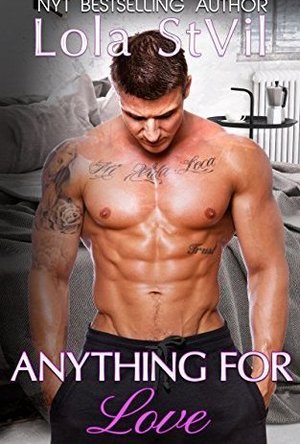
I would first like to say I don't normally like these short little romance novels, but I really enjoyed this one. I often find the short romance novels like this are rushed or leaves something to be desired at the end. In Anything for Love, I found that the story was relatable and quite enjoyable to read. It left you smiling at the end and it felt complete. I don't have many complaints, just a few grammatical errors that are easily overlooked, as there might have been at most five in total. It was the characters that made the story for me, especially Winter.
Winter's past was rough, especially where her ex, Danny, was concerned. With the betrayal and manipulative nature he had, I wouldn't have blamed Winter for closing herself off to the world of dating. Even though you don't get the full extent of what he did to her, besides being a jerk, until she tells Wyatt why she is so closed off to him, you can't help but understand what she is going through. Most women swear off dating when they break up with a particular nasty relationship. Though, it rarely sticks, its not hard to see Winter is a vary realistic character, that many women can relate to. It was very nice to see that she had made up her mind and did everything in her power to stay away from Wyatt, knowing she wasn't ready for a relationship or to trust another man. It wasn't just her heart and how I could relate to her in the romance department that got me, it was her strength and determination to protect the children she helped. Her concern and kindness for the kids who are in group homes waiting to be adopted, melted my heart. It was very clear that those kids meant the world to her, even more than her own life. Not many people would stand up to a gang and even deny them a new recruit, putting their life at risk, to protect a child that wasn't theirs and yet she did. She not only kept the kid, Carlos, safe from the gang life, but she made sure she got him into an art class, so that he would be able to further his education on that which he loves. It made it easy to see how someone could fall in love with her.
While Winter is a little closed off to dating and more focused on the kids that attend her center, Wyatt is more determined to win her over while being the cop he is. At first you want to hate him. He comes off arrogant and career oriented, as well as a horn dog. It is clear he wants to be with her sexually and his determination makes you slightly wonder if he would do anything unsavory to achieve this. However, that opinion dissolves quickly after Winter allows him to take her out to hang out a bit during a Halloween party her co-worker and bestfriend throws. Wyatt shows genuine interest in Winter and even appears to be a really good guy, but what amazed me was that fact he never did anything to push her into kissing him, having sex or anything. He was patient, kind and understanding, even before Winter finally told him what Danny had done to her in her past. Though he seemed demanding and a bit of someone who would be controlling, it was nice to see the softer side of him too. To be able to find someone who won't take no as an answer, but also be patient and considerate of another's feelings is a rare trait to have. Normally, you don't see both those traits in a single person, but Wyatt has them and it makes for interesting guy. Your heart automatically goes out to him as you watch him be patient with Winter. At points, I found myself yelling at Winter because of how broken she was. I understand where she was coming from, having been in horrid relationships myself, but I would like to think if I was her, I would have been a bit more willing to trust him sooner than she did. Wyatt is a definite dream hunk and will be your book boyfriend if you only let him love you.
I have say that this book kept me thirsty for more, especially since so much was left out to keep it a bit suspenseful. I loved how the gang, Street Kings, was left alone after Winter confronts them to leave Carlos alone, that you nearly forget about them being in the picture. It made for a nice little dramatic event when they pop back up. Or when you learn more about Wyatt that is kept being hinted at throughout the story. I found this all to make quite a compelling story. It had the right amount of suspense, mystery and action to make this romance novel that perfect read in my opinion. I would recommend it to all my romance readers. I would rate this book 4 stars out of 5 stars simply because of the few grammar errors I had found while reading, Though they didn't take away from enjoying the book, I still wish they hadn't been present. It can ruin any grammar freak's day.
Anything for Love is free for the Kindle, and that's without Kinde Unlimited. It is also the first book in the series "The Hunter Brothers." I do hope you go to check it out and grab your copy from Amazon while it is free to grab. Happy Reading!
Winter's past was rough, especially where her ex, Danny, was concerned. With the betrayal and manipulative nature he had, I wouldn't have blamed Winter for closing herself off to the world of dating. Even though you don't get the full extent of what he did to her, besides being a jerk, until she tells Wyatt why she is so closed off to him, you can't help but understand what she is going through. Most women swear off dating when they break up with a particular nasty relationship. Though, it rarely sticks, its not hard to see Winter is a vary realistic character, that many women can relate to. It was very nice to see that she had made up her mind and did everything in her power to stay away from Wyatt, knowing she wasn't ready for a relationship or to trust another man. It wasn't just her heart and how I could relate to her in the romance department that got me, it was her strength and determination to protect the children she helped. Her concern and kindness for the kids who are in group homes waiting to be adopted, melted my heart. It was very clear that those kids meant the world to her, even more than her own life. Not many people would stand up to a gang and even deny them a new recruit, putting their life at risk, to protect a child that wasn't theirs and yet she did. She not only kept the kid, Carlos, safe from the gang life, but she made sure she got him into an art class, so that he would be able to further his education on that which he loves. It made it easy to see how someone could fall in love with her.
While Winter is a little closed off to dating and more focused on the kids that attend her center, Wyatt is more determined to win her over while being the cop he is. At first you want to hate him. He comes off arrogant and career oriented, as well as a horn dog. It is clear he wants to be with her sexually and his determination makes you slightly wonder if he would do anything unsavory to achieve this. However, that opinion dissolves quickly after Winter allows him to take her out to hang out a bit during a Halloween party her co-worker and bestfriend throws. Wyatt shows genuine interest in Winter and even appears to be a really good guy, but what amazed me was that fact he never did anything to push her into kissing him, having sex or anything. He was patient, kind and understanding, even before Winter finally told him what Danny had done to her in her past. Though he seemed demanding and a bit of someone who would be controlling, it was nice to see the softer side of him too. To be able to find someone who won't take no as an answer, but also be patient and considerate of another's feelings is a rare trait to have. Normally, you don't see both those traits in a single person, but Wyatt has them and it makes for interesting guy. Your heart automatically goes out to him as you watch him be patient with Winter. At points, I found myself yelling at Winter because of how broken she was. I understand where she was coming from, having been in horrid relationships myself, but I would like to think if I was her, I would have been a bit more willing to trust him sooner than she did. Wyatt is a definite dream hunk and will be your book boyfriend if you only let him love you.
I have say that this book kept me thirsty for more, especially since so much was left out to keep it a bit suspenseful. I loved how the gang, Street Kings, was left alone after Winter confronts them to leave Carlos alone, that you nearly forget about them being in the picture. It made for a nice little dramatic event when they pop back up. Or when you learn more about Wyatt that is kept being hinted at throughout the story. I found this all to make quite a compelling story. It had the right amount of suspense, mystery and action to make this romance novel that perfect read in my opinion. I would recommend it to all my romance readers. I would rate this book 4 stars out of 5 stars simply because of the few grammar errors I had found while reading, Though they didn't take away from enjoying the book, I still wish they hadn't been present. It can ruin any grammar freak's day.
Anything for Love is free for the Kindle, and that's without Kinde Unlimited. It is also the first book in the series "The Hunter Brothers." I do hope you go to check it out and grab your copy from Amazon while it is free to grab. Happy Reading!
KittyMiku (138 KP) rated Say You're Sorry in Books
May 23, 2019

Contains spoilers, click to show
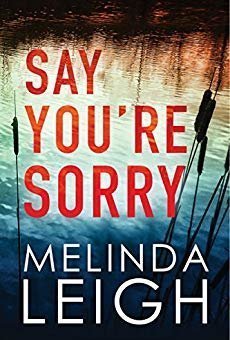
Say Your Sorry by Melinda Leigh is a suspenseful murder mystery that keeps you guessing up to the very end. With all the characters involved in the story, the secrets and secrets and issues each character has, it isn't hard to find someone to hate, love, or relate to in one way or another. The severity of the crimes can be a little sickening, especially if you sometimes think of how that could happen to your or someone you love, but to watch how an innocent man is convicted the troubles he may face, as well as seeing how the law system can be wrong in some cases, can really bring light to how certain things can go on without anyone even knowing what is actually going on behind the sense.
I found that I really enjoyed watching Morgan and Lance, a private detective, investigate the crimes committed and pinned on a man. It helped solved a missing person's case and get other secrets revealed. In one particular case, a military veteran, who shot at Morgan and Lance, is found to be suffering from some mental issues. To see how killing someone, even though deployed, can really affect the mind of a man and break his spirit, was truly heart wrenching and yet real. It was very interesting to see how something in the news can trigger an onset of guilt and paranoia in such a brave man. It is characters and developments like this, that can make the story feel all to real and even hit close to home in some people. To have such details on how certain things can trigger certain emotions and outcomes in a variety of ways, made Leigh's storytelling a bit chilling.
It wasn't just a single character that made the book feel more life like, it was all the characters, the thoughts and ideas they had, and how they felt so convicted by what they thought and felt. Take Morgan for example, it is clear on many occasions in the beginning that she doesn't every want to be a defense attorney, but when someone she knows is arrested for a crime she believes he couldn't do, she is more than happy to get to the bottom of the story, even if she finds out the person is trying to protect is guilty. To have such strong feelings that you are willing to risk your dream career is truly a human feat as well as a desirable trait to have. I really found her to be someone to admire, even if fictional. It wasn't easy to see her struggle with the case or to even have images in her mind of her own little girls having been the victim, but it was something that made her all the more likeable. I feel that woman who work in law and who see the murder victims and crime photos think the same thing and find that having a character who would show this, makes it all the better. Even though the reader may know that this book was fictional, to have such real life emotions and thoughts put into the characters can make a book all more desirable to read. But it doesn't just stop there.
As the case unfolds, it is easy to see how a community can come together and even be judgmental based on what is said in the news and what is believed by those who are there to serve and protect the community was a pleasant surprised. Even though things were being rushed without a deeper investigation based on a few pieces of planted evidence and just a few ideas, it became clear that maybe things we see on the news or hear happen in our own communities aren't all that them seem to be. I am not dissing law enforcers, as I know they are overworked and spread thin as is, I am just saying sometimes just because something seems one way it isn't always the case. And to see a community go against one of their own because of how the media portrays things was slightly unsettling, even though it was accurate.
I also really enjoyed how there was some love interest between two characters who didn't feel ready for a relationship. We all know how hard it can to do deal with love after a loss of someone, whether the person died, or just left you. So it didn't come as shock to see Morgan struggle with her feelings when she realized they had been there, growing and waiting for her acknowledgment. However, to see someone so invested with taking care of their parent that they don't wish to burden another, was a even more of a delight. Though it was a very long battle of a will they won't they, I found it to be delightful and quite endearing. To want to be loved and cared for a is basic human want and in some case need, but to love someone in a way that you wouldn't want to have anything in your life burden them or create some kind of obstacle for them to hurdle over, was just delightful and pleasant to see.
Needless to say I could probably go on for days about all the things this particular book brings into light. With all the real world problems different characters had and everything else that made it feel all too real to be thought of as fictional, it was an extremely delightful read. I would rate this book 5 stars out of 5 stars for how will it portray how easily humanity can give up on itself and how it can take courage, determination and a bit of stubbornness to do exactly what you feel is right. I would recommend this book to anyone wanting to read a murder mystery.
I found that I really enjoyed watching Morgan and Lance, a private detective, investigate the crimes committed and pinned on a man. It helped solved a missing person's case and get other secrets revealed. In one particular case, a military veteran, who shot at Morgan and Lance, is found to be suffering from some mental issues. To see how killing someone, even though deployed, can really affect the mind of a man and break his spirit, was truly heart wrenching and yet real. It was very interesting to see how something in the news can trigger an onset of guilt and paranoia in such a brave man. It is characters and developments like this, that can make the story feel all to real and even hit close to home in some people. To have such details on how certain things can trigger certain emotions and outcomes in a variety of ways, made Leigh's storytelling a bit chilling.
It wasn't just a single character that made the book feel more life like, it was all the characters, the thoughts and ideas they had, and how they felt so convicted by what they thought and felt. Take Morgan for example, it is clear on many occasions in the beginning that she doesn't every want to be a defense attorney, but when someone she knows is arrested for a crime she believes he couldn't do, she is more than happy to get to the bottom of the story, even if she finds out the person is trying to protect is guilty. To have such strong feelings that you are willing to risk your dream career is truly a human feat as well as a desirable trait to have. I really found her to be someone to admire, even if fictional. It wasn't easy to see her struggle with the case or to even have images in her mind of her own little girls having been the victim, but it was something that made her all the more likeable. I feel that woman who work in law and who see the murder victims and crime photos think the same thing and find that having a character who would show this, makes it all the better. Even though the reader may know that this book was fictional, to have such real life emotions and thoughts put into the characters can make a book all more desirable to read. But it doesn't just stop there.
As the case unfolds, it is easy to see how a community can come together and even be judgmental based on what is said in the news and what is believed by those who are there to serve and protect the community was a pleasant surprised. Even though things were being rushed without a deeper investigation based on a few pieces of planted evidence and just a few ideas, it became clear that maybe things we see on the news or hear happen in our own communities aren't all that them seem to be. I am not dissing law enforcers, as I know they are overworked and spread thin as is, I am just saying sometimes just because something seems one way it isn't always the case. And to see a community go against one of their own because of how the media portrays things was slightly unsettling, even though it was accurate.
I also really enjoyed how there was some love interest between two characters who didn't feel ready for a relationship. We all know how hard it can to do deal with love after a loss of someone, whether the person died, or just left you. So it didn't come as shock to see Morgan struggle with her feelings when she realized they had been there, growing and waiting for her acknowledgment. However, to see someone so invested with taking care of their parent that they don't wish to burden another, was a even more of a delight. Though it was a very long battle of a will they won't they, I found it to be delightful and quite endearing. To want to be loved and cared for a is basic human want and in some case need, but to love someone in a way that you wouldn't want to have anything in your life burden them or create some kind of obstacle for them to hurdle over, was just delightful and pleasant to see.
Needless to say I could probably go on for days about all the things this particular book brings into light. With all the real world problems different characters had and everything else that made it feel all too real to be thought of as fictional, it was an extremely delightful read. I would rate this book 5 stars out of 5 stars for how will it portray how easily humanity can give up on itself and how it can take courage, determination and a bit of stubbornness to do exactly what you feel is right. I would recommend this book to anyone wanting to read a murder mystery.