
Search
Search results
mostlyinpyjamas (13 KP) rated Geekerella (Once Upon a Con #1) in Books
Nov 28, 2017


Fairytale meets fandom.
The blurb: ANYTHING CAN HAPPEN ONCE UPON A CON. When geek girl Elle Wittimer sees a cosplay contest sponsored by the producers of Starfield she has to enter.
First prize is an invitation to the Excelsicon Cosplay Ball and a meet-and-greet with the actor slated to play Federation Prince Carmindor in the reboot.
Elle’s been scraping together tips from her gig at the Magic Pumpkin food truck behind her stepmothers back, and winning this contest could be her ticket out once and for all. Not to mention a fan girls dream come true.
Teen actor Darien Freeman is less than thrilled about this year’s Excelsicon. He used to live for conventions, but know they’re nothing but jaw-aching photo sessions and awkward meet-and-greets.
Playing Federation Prince Carmindor is all he’s ever wanted, but the die-hard Starfield fandom has already dismissed him as just another heartthrob.
As Excelsicon draws near, closet nerd Darien feels more and more like a fake – until he meets a girl who shows him otherwise.
Part romance, part love letter to nerd culture, and all totally adorbs, GEEKERELLA is a fairy tale for anyone who believes in the magic of fandom. ~~
Fairytale meets fandom in this modern day retelling of Cinderella.
I am always here for a new take on a well loved story, and Ashley Poston has delivered a faithful to the original story that also makes for a good tale on its own right.
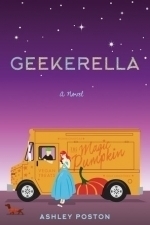
I have to start by saying look at that cover! When I saw it on the shelf in Waterstones *other bookshops are available* I knew I had to buy it.
I love the modern versions of the well known characters, Elle is a Starfield nerd. Her love of the classic tv show comes from her parents, who originally founded the Starfield convention.
Catherine, the stepmother, and the stepsisters, Chloe and Cal are perfectly spiteful as overwork and under appreciate Elle.
The prince in this version is Darien, a young Hollywood golden boy with insured abs, while the fairy godmother role is filled by Sage, the punk wannabe-fashion-designer. I love Sage!
There’s also a canine sidekick, Franco, a.k.a Frank the tank, any story that includes a very good boy has the makings of a winner for me.
Ashley Poston gives a nod to the coach from the original story with The magic pumpkin, Sage’s vegan food van and the ending is perfect with the ball and even the glass shoe.
Obviously we all know how Cinderella goes but Ashley Poston gets us to the end via a geek-tastic tale of fandoms, fan blogs, cosplay conventions and the movie making world.
The way that Elle and Darien begin to get to know each other via text makes for a sweet romance, each not knowing who the other is – Darien, who Elle doesn’t believe will make a good Carmindor, and Elle, being rebelgunner the blogger who slated Darien – I’ve seen some reviews saying it’s not realistic that they fall for each other via text, and so quickly, but it does happen, and anyway, come on! This is Cinderella, and in the original her and the prince fall in love after just a dance.
Geekerella is such a heartwarming story, it’s not often I read a book again, but this is one I’ll definitely turn to when I need cheering up.
I’m giving Geekerella 5/5 stars and I can’t wait to read more of Ashley Poston’s work. ⭐️⭐️⭐️⭐️⭐️
First prize is an invitation to the Excelsicon Cosplay Ball and a meet-and-greet with the actor slated to play Federation Prince Carmindor in the reboot.
Elle’s been scraping together tips from her gig at the Magic Pumpkin food truck behind her stepmothers back, and winning this contest could be her ticket out once and for all. Not to mention a fan girls dream come true.
Teen actor Darien Freeman is less than thrilled about this year’s Excelsicon. He used to live for conventions, but know they’re nothing but jaw-aching photo sessions and awkward meet-and-greets.
Playing Federation Prince Carmindor is all he’s ever wanted, but the die-hard Starfield fandom has already dismissed him as just another heartthrob.
As Excelsicon draws near, closet nerd Darien feels more and more like a fake – until he meets a girl who shows him otherwise.
Part romance, part love letter to nerd culture, and all totally adorbs, GEEKERELLA is a fairy tale for anyone who believes in the magic of fandom. ~~
Fairytale meets fandom in this modern day retelling of Cinderella.
I am always here for a new take on a well loved story, and Ashley Poston has delivered a faithful to the original story that also makes for a good tale on its own right.
I have to start by saying look at that cover! When I saw it on the shelf in Waterstones *other bookshops are available* I knew I had to buy it.
I love the modern versions of the well known characters, Elle is a Starfield nerd. Her love of the classic tv show comes from her parents, who originally founded the Starfield convention.
Catherine, the stepmother, and the stepsisters, Chloe and Cal are perfectly spiteful as overwork and under appreciate Elle.
The prince in this version is Darien, a young Hollywood golden boy with insured abs, while the fairy godmother role is filled by Sage, the punk wannabe-fashion-designer. I love Sage!
There’s also a canine sidekick, Franco, a.k.a Frank the tank, any story that includes a very good boy has the makings of a winner for me.
Ashley Poston gives a nod to the coach from the original story with The magic pumpkin, Sage’s vegan food van and the ending is perfect with the ball and even the glass shoe.
Obviously we all know how Cinderella goes but Ashley Poston gets us to the end via a geek-tastic tale of fandoms, fan blogs, cosplay conventions and the movie making world.
The way that Elle and Darien begin to get to know each other via text makes for a sweet romance, each not knowing who the other is – Darien, who Elle doesn’t believe will make a good Carmindor, and Elle, being rebelgunner the blogger who slated Darien – I’ve seen some reviews saying it’s not realistic that they fall for each other via text, and so quickly, but it does happen, and anyway, come on! This is Cinderella, and in the original her and the prince fall in love after just a dance.
Geekerella is such a heartwarming story, it’s not often I read a book again, but this is one I’ll definitely turn to when I need cheering up.
I’m giving Geekerella 5/5 stars and I can’t wait to read more of Ashley Poston’s work. ⭐️⭐️⭐️⭐️⭐️

Movie Metropolis (309 KP) rated The BFG (2016) in Movies
Jun 10, 2019

Spielberg, where are you?
Roald Dahl’s inspiring novels have had a chequered history when it comes to turning them into films. Danny DeVito’s Matilda is widely regarded as one of the best adaptations, with Tim Burton’s Charlie & the Chocolate Factory rendered a monstrosity by fans of the author and movie critics alike.
So when Steven Spielberg was announced as director of The BFG, my personal favourite of all Dahl’s novels, I was equal parts pleased and wary. Could my favourite filmmaker really do this amazing book justice?
Partially is the short answer. Spielberg proves a safe pair of hands as usual, but it lacks his trademark flair, losing the darker, more brooding elements of the source material in the process.
Ten-year-old Sophie (Ruby Barnhill) experiences the adventure of a lifetime when she meets the Big Friendly Giant (Mark Rylance). Naturally scared at first, she soon realizes that the 24-foot behemoth is actually gentle and charming. As their friendship grows, Sophie’s presence attracts the unwanted attention of Bloodbottler, Fleshlumpeater and other giants. After traveling to London, Sophie and the BFG must convince the Queen to help them get rid of all the bad giants once and for all.
Casting wise, The BFG is practically spot on with Mark Rylance being exceptional in the titular role. It was always going to be hard to fill the shoes of David Jason, who tackled the character in the 1989 TV film, but he is perfect; getting the mannerisms and voice down to a tee. The motion capture used to render Rylance’s face onto the giant is breath-taking and some of the best I’ve seen. Elsewhere, Ruby Barnhill certainly has the look of Sophie, but lacks the acting finesse of some child actors.
The cinematography is both beautiful and at times hard to stomach. The opening sequence in which Sophie is taken from her bed to Giant Country is stunning, climaxing in a first-person view of the far-away land. Unfortunately, Spielberg’s avoidance of shaky cam lends an almost video-game feel to the scene that proves nauseating after a few minutes.
The BFG also suffers when both its main characters share a close-up. In particular, when Sophie is being carried by the giant, the motions look continuously jerky and spoil an otherwise impeccably rendered film – you can see where the $140million was spent.
Unfortunately, John Williams’ score lacks any sort of punch and feels sorely out of place in certain parts of the film. This is even more unusual considering the pairing of Spielberg and Williams has given us greats like Jurassic Park, E.T. and Indiana Jones.
Nevertheless, this is a sweet film that children and adults should enjoy. The themes of friendship and loneliness can resonate with all generations and a packed-out cinema proves just what a draw Roald Dahl still is to this day.
Overall, The BFG is everything most families will want from a summer holiday blockbuster. It’s sugary sweet, with great special effects, engaging acting and a wonderful story that follows its source material reasonably well. However, for Spielberg fans, it’s puzzling because the director’s presence feels a little lost. There’s a lot to like, but not a lot to love.
https://moviemetropolis.net/2016/07/28/spielberg-where-are-you-the-bfg-review/
So when Steven Spielberg was announced as director of The BFG, my personal favourite of all Dahl’s novels, I was equal parts pleased and wary. Could my favourite filmmaker really do this amazing book justice?
Partially is the short answer. Spielberg proves a safe pair of hands as usual, but it lacks his trademark flair, losing the darker, more brooding elements of the source material in the process.
Ten-year-old Sophie (Ruby Barnhill) experiences the adventure of a lifetime when she meets the Big Friendly Giant (Mark Rylance). Naturally scared at first, she soon realizes that the 24-foot behemoth is actually gentle and charming. As their friendship grows, Sophie’s presence attracts the unwanted attention of Bloodbottler, Fleshlumpeater and other giants. After traveling to London, Sophie and the BFG must convince the Queen to help them get rid of all the bad giants once and for all.
Casting wise, The BFG is practically spot on with Mark Rylance being exceptional in the titular role. It was always going to be hard to fill the shoes of David Jason, who tackled the character in the 1989 TV film, but he is perfect; getting the mannerisms and voice down to a tee. The motion capture used to render Rylance’s face onto the giant is breath-taking and some of the best I’ve seen. Elsewhere, Ruby Barnhill certainly has the look of Sophie, but lacks the acting finesse of some child actors.
The cinematography is both beautiful and at times hard to stomach. The opening sequence in which Sophie is taken from her bed to Giant Country is stunning, climaxing in a first-person view of the far-away land. Unfortunately, Spielberg’s avoidance of shaky cam lends an almost video-game feel to the scene that proves nauseating after a few minutes.
The BFG also suffers when both its main characters share a close-up. In particular, when Sophie is being carried by the giant, the motions look continuously jerky and spoil an otherwise impeccably rendered film – you can see where the $140million was spent.
Unfortunately, John Williams’ score lacks any sort of punch and feels sorely out of place in certain parts of the film. This is even more unusual considering the pairing of Spielberg and Williams has given us greats like Jurassic Park, E.T. and Indiana Jones.
Nevertheless, this is a sweet film that children and adults should enjoy. The themes of friendship and loneliness can resonate with all generations and a packed-out cinema proves just what a draw Roald Dahl still is to this day.
Overall, The BFG is everything most families will want from a summer holiday blockbuster. It’s sugary sweet, with great special effects, engaging acting and a wonderful story that follows its source material reasonably well. However, for Spielberg fans, it’s puzzling because the director’s presence feels a little lost. There’s a lot to like, but not a lot to love.
https://moviemetropolis.net/2016/07/28/spielberg-where-are-you-the-bfg-review/

Darren (1599 KP) rated Always Be My Maybe (2019) in Movies
Dec 26, 2019

Verdict: Rom Com 101
Story: Always Be My Maybe starts when we get to meet two friends Sasha and Marcus who have grown up as best friends into their high school era where they almost become a couple, only their friendship falls apart. 15 years later Sasha (Wong) has become a major celebrity chef, heading back home for the latest restaurant opening. Marcus (Park) has followed his father Harry (Saito) into the family business, getting high on the side.
When the two reunite they see the changes they have both been through and start looking at what could once have been between the two despite having their own relationships on the side.
Thoughts on Always Be My Maybe
Characters – Sasha was once Marcus best friend before becoming one of the biggest celebrity chefs in America, she has restaurants across America and now looks to return home for the latest one. She starts to see her relationship crumble and with her old best friend walking back into her life, she is left to wonder what if. Marcus was Sasha best friend too, he never made too much of his life, working with his father, getting high and being part of his small band, never leave San Francisco. With Sasha back in his life, he must decide if it is finally time to take a chance on life. Harry is Marcus father that has always let him do his own thing, they both lost his wife and mother to Marcus. Veronica is Sasha best friend who is always there for business and personal issues, she knows about the previous friendship.
Performances – Randall Park and Ali Wong are both fine in the leading roles, they do struggle with balancing the ideas of their stand-up routines, with realistic conversations, which shows through the film. The supporting performers do get the better laughs, with more realistic nature to everything happening.
Story – The story follows two childhood friends that almost became more that have gone onto live very different lives until they get a chance to meet up again 15-years-later to put forward the question once more about what could have been. We do have deeper side to the story, which explores the ideas of not taking chances in life, when you meet somebody who will go everywhere. The idea that the two get a second chance does make most of the story feel like a straight to TV level of storytelling and while it doesn’t completely fall into relying on stand-up jokes, we do get more than we need to. The story does have a proper heart which is the important factor needed, only it just doesn’t do much more outside of this.
Comedy/Romance – The comedy is mostly miss until Keanu Reeves arrives on the scene, where he will give laughs through the scenes with ease, while the romance elements are everything we have seen before.
Settings – The film is mostly set in San Francisco which is always a nice backdrop, it does show the different lifestyles the two are living with where they feel more comfortable.
Scene of the Movie – Double date.
That Moment That Annoyed Me – It offers nothing new to the rom com.
Final Thoughts – This is a by the book rom com that does get saved by an outrageous cameo, which is the clear highlight of the film.
Overall: Simple and Fun.
Story: Always Be My Maybe starts when we get to meet two friends Sasha and Marcus who have grown up as best friends into their high school era where they almost become a couple, only their friendship falls apart. 15 years later Sasha (Wong) has become a major celebrity chef, heading back home for the latest restaurant opening. Marcus (Park) has followed his father Harry (Saito) into the family business, getting high on the side.
When the two reunite they see the changes they have both been through and start looking at what could once have been between the two despite having their own relationships on the side.
Thoughts on Always Be My Maybe
Characters – Sasha was once Marcus best friend before becoming one of the biggest celebrity chefs in America, she has restaurants across America and now looks to return home for the latest one. She starts to see her relationship crumble and with her old best friend walking back into her life, she is left to wonder what if. Marcus was Sasha best friend too, he never made too much of his life, working with his father, getting high and being part of his small band, never leave San Francisco. With Sasha back in his life, he must decide if it is finally time to take a chance on life. Harry is Marcus father that has always let him do his own thing, they both lost his wife and mother to Marcus. Veronica is Sasha best friend who is always there for business and personal issues, she knows about the previous friendship.
Performances – Randall Park and Ali Wong are both fine in the leading roles, they do struggle with balancing the ideas of their stand-up routines, with realistic conversations, which shows through the film. The supporting performers do get the better laughs, with more realistic nature to everything happening.
Story – The story follows two childhood friends that almost became more that have gone onto live very different lives until they get a chance to meet up again 15-years-later to put forward the question once more about what could have been. We do have deeper side to the story, which explores the ideas of not taking chances in life, when you meet somebody who will go everywhere. The idea that the two get a second chance does make most of the story feel like a straight to TV level of storytelling and while it doesn’t completely fall into relying on stand-up jokes, we do get more than we need to. The story does have a proper heart which is the important factor needed, only it just doesn’t do much more outside of this.
Comedy/Romance – The comedy is mostly miss until Keanu Reeves arrives on the scene, where he will give laughs through the scenes with ease, while the romance elements are everything we have seen before.
Settings – The film is mostly set in San Francisco which is always a nice backdrop, it does show the different lifestyles the two are living with where they feel more comfortable.
Scene of the Movie – Double date.
That Moment That Annoyed Me – It offers nothing new to the rom com.
Final Thoughts – This is a by the book rom com that does get saved by an outrageous cameo, which is the clear highlight of the film.
Overall: Simple and Fun.

Emma @ The Movies (1786 KP) rated Clemency (2019) in Movies
Nov 7, 2019
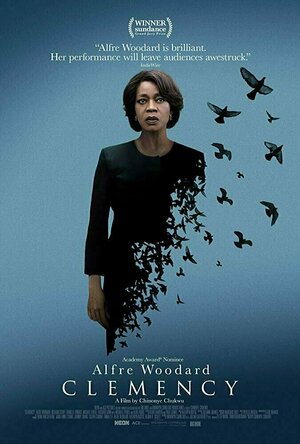
Clemency was high up on my list to see during the festival so I was slightly annoyed to not get the opportunity to see it initially... but it was day one and I was feeling bold with enthusiasm and joine the queue for last minute tickets. It's a great system if it isn't raining, and after some loitering, chatting, and spotting Wendell Pierce on his way to the cinema for the screening I managed to get a spare ticket.
Bernadine has spent years of her life dedicated to giving prisoners the chance to better themselves and live up to their potential, with the death row inmates she tries to give them respect and comfort in their last days. After an execution goes wrong the whole team is affected and with another coming closer Bernadine starts to feel the pressure.
Her life is turned upside down as she starts to interact with Anthony Woods, she can't sleep, she can't be a wife, her only real escape is drink and her colleagues. Where will everything lead her?
My main pull to this was Aldis Hodge, while I tried to avoid seeing who was in each film when I read the synopsis it was difficult on occasion and so this one zipped to my top picks list. He will always be Hardison to me but I've enjoyed seeing him in films recently.
Anthony Woods is obviously on a rollercoaster of emotions and Hodge brings out the sense of desperation his character is feeling. The swing from hope and emptiness to elation gave him several opportunities to surprise and shock us. One of those moments particularly drew a reaction from a lot of people around me and I'll touch on that in a moment.
Alfre Woodard as Warden Bernadine Williams was very powerful, subtle with her emotions when needed but as the film concludes we see an incredibly difficult moment of pain. That moment is ugly and honest, it really hits you.
The film leaves you with a few uncertain points, you can work things out from context but it never says it outright. It also allows you to slowly unfold what's going on and what's still to come.
As you know, I watch a lot (excessive amounts some might say) of movies and it's very rare from something to surprise me. A lot of things are easy to see coming, a characters's actions can show you something violent coming. There are two moments in Clemency that had the audience react much stronger that I expected, I was also surprised by the reaction of the other press delegates who I thought might be in a similar place a me. Both scenes involved blood and when everyone gasped I actually looked around and wondered how it had earned that reaction. Perhaps I wasn't as engaged with it as they were but I didn't find those moments to be gratuitous or all that shocking given the context and the nature of the scenes. It was this point that I had to ponder the thought that seeing too many films and TV shows might have a detrimental effect on my reactions to some sorts of films.
Clemency deals with some fairly heavy topics but it handles them well and in a captivating way, I've glad I managed to get to see this.
What you should do
It's a moving film and I would recommend trying to catch it.
Movie thing you wish you could take home
Another film where I probably don't need anything to take home from it.
Bernadine has spent years of her life dedicated to giving prisoners the chance to better themselves and live up to their potential, with the death row inmates she tries to give them respect and comfort in their last days. After an execution goes wrong the whole team is affected and with another coming closer Bernadine starts to feel the pressure.
Her life is turned upside down as she starts to interact with Anthony Woods, she can't sleep, she can't be a wife, her only real escape is drink and her colleagues. Where will everything lead her?
My main pull to this was Aldis Hodge, while I tried to avoid seeing who was in each film when I read the synopsis it was difficult on occasion and so this one zipped to my top picks list. He will always be Hardison to me but I've enjoyed seeing him in films recently.
Anthony Woods is obviously on a rollercoaster of emotions and Hodge brings out the sense of desperation his character is feeling. The swing from hope and emptiness to elation gave him several opportunities to surprise and shock us. One of those moments particularly drew a reaction from a lot of people around me and I'll touch on that in a moment.
Alfre Woodard as Warden Bernadine Williams was very powerful, subtle with her emotions when needed but as the film concludes we see an incredibly difficult moment of pain. That moment is ugly and honest, it really hits you.
The film leaves you with a few uncertain points, you can work things out from context but it never says it outright. It also allows you to slowly unfold what's going on and what's still to come.
As you know, I watch a lot (excessive amounts some might say) of movies and it's very rare from something to surprise me. A lot of things are easy to see coming, a characters's actions can show you something violent coming. There are two moments in Clemency that had the audience react much stronger that I expected, I was also surprised by the reaction of the other press delegates who I thought might be in a similar place a me. Both scenes involved blood and when everyone gasped I actually looked around and wondered how it had earned that reaction. Perhaps I wasn't as engaged with it as they were but I didn't find those moments to be gratuitous or all that shocking given the context and the nature of the scenes. It was this point that I had to ponder the thought that seeing too many films and TV shows might have a detrimental effect on my reactions to some sorts of films.
Clemency deals with some fairly heavy topics but it handles them well and in a captivating way, I've glad I managed to get to see this.
What you should do
It's a moving film and I would recommend trying to catch it.
Movie thing you wish you could take home
Another film where I probably don't need anything to take home from it.
Emma @ The Movies (1786 KP) rated The Addams Family (2019) in Movies
Dec 8, 2019
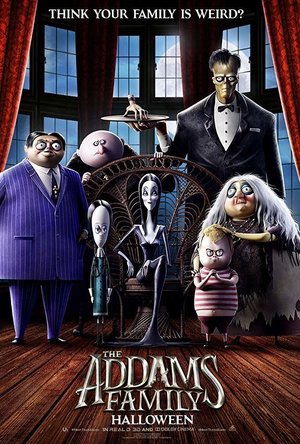
Can anyone ever say the name of this film without finger snapping?
When their home life is dislodged by pitchfork-wielding townsfolk the Addams pack up their car and hit the road for a new beginning. They come across a mansion on a hill, it's creepy and it's kooky, mysterious and spooky... it's perfect for the Addams family.
Years of idyllic isolation fly by but the outside world is closer than ever. Wednesday is intrigued by the perils that lay beyond their gates and the family can no longer ignore their neighbours in the valley, their very perky neighbours who live in their little cookie cuttered dream houses below.
What's not to love about the madness of the Addams family? You can pretty much guarantee entertainment, and that's what you get from this film.
There's a gripe... there's always a gripe... so let me get it out of the way first. It annoys me more because it's accurate to the source material so I should love that, but modern adaptations have ruined me! Gomez Addams, he's not what you see when you think Gomez. I have been brainwashed by films and it annoys me. He is a perfect representation of the original cartoons by Charles Addams, he's still suave, sophisticated and playful like we know him to be, but he's no Raul Julia or John Astin.
On a similar note, when I heard Oscar Isaac and Charlize Theron were playing Gomez and Morticia I was elated, imagine my disappointment to discover they were to be animated and not live action. You couldn't get better casting for a live action couple if you tried! Anyway, moving on.
The voice cast is littered with famous faces including Elsie Fisher of Eighth Grade fame and Bette Midler... BETTE MIDLER!! We've also got Allison Janney as out saccharine sweet villain, Janney has a knack for the villain roles and I wouldn't mind seeing more of them.
There's just one role I object to, and I found it to be an incredibly lazy decision on someone's part. Nick Kroll as Uncle Fester. While I understand the nice-but-dim style voice is perfect for Fester it has basically been recycled from Big Mouth's Coach Steve. There will be no real issues with this for the intended audience as Big Mouth comes in at a 15 compared to The Addams Family's more subtle PG, but as someone who's old enough to watch both, I was annoyed.
The artwork on this really does play a great homage to the cartoons and despite their age it works really well for a modern audience. The story also brings it nicely up to date with its reality TV slant and the perfect American dream town. There are lots of great touches throughout that amuse.
I understand that each new adaptation has to do its own thing, and I like how it brought an original story (of sorts) to us but I didn't feel like it took previous iterations of the characters into consideration... this is a daft thing to complain about too, I know that, but the Addams family are iconic. Wednesday has always been my spirit animal, but to see a rather lacklustre version here made me a little sad.
But, ultimately I still enjoyed my time watching it, I just don't think I'll be placing it higher up the ranking than any of the previous ghoulish outings.
Originally posted on: https://emmaatthemovies.blogspot.com/2019/11/the-addams-family-movie-review.html
When their home life is dislodged by pitchfork-wielding townsfolk the Addams pack up their car and hit the road for a new beginning. They come across a mansion on a hill, it's creepy and it's kooky, mysterious and spooky... it's perfect for the Addams family.
Years of idyllic isolation fly by but the outside world is closer than ever. Wednesday is intrigued by the perils that lay beyond their gates and the family can no longer ignore their neighbours in the valley, their very perky neighbours who live in their little cookie cuttered dream houses below.
What's not to love about the madness of the Addams family? You can pretty much guarantee entertainment, and that's what you get from this film.
There's a gripe... there's always a gripe... so let me get it out of the way first. It annoys me more because it's accurate to the source material so I should love that, but modern adaptations have ruined me! Gomez Addams, he's not what you see when you think Gomez. I have been brainwashed by films and it annoys me. He is a perfect representation of the original cartoons by Charles Addams, he's still suave, sophisticated and playful like we know him to be, but he's no Raul Julia or John Astin.
On a similar note, when I heard Oscar Isaac and Charlize Theron were playing Gomez and Morticia I was elated, imagine my disappointment to discover they were to be animated and not live action. You couldn't get better casting for a live action couple if you tried! Anyway, moving on.
The voice cast is littered with famous faces including Elsie Fisher of Eighth Grade fame and Bette Midler... BETTE MIDLER!! We've also got Allison Janney as out saccharine sweet villain, Janney has a knack for the villain roles and I wouldn't mind seeing more of them.
There's just one role I object to, and I found it to be an incredibly lazy decision on someone's part. Nick Kroll as Uncle Fester. While I understand the nice-but-dim style voice is perfect for Fester it has basically been recycled from Big Mouth's Coach Steve. There will be no real issues with this for the intended audience as Big Mouth comes in at a 15 compared to The Addams Family's more subtle PG, but as someone who's old enough to watch both, I was annoyed.
The artwork on this really does play a great homage to the cartoons and despite their age it works really well for a modern audience. The story also brings it nicely up to date with its reality TV slant and the perfect American dream town. There are lots of great touches throughout that amuse.
I understand that each new adaptation has to do its own thing, and I like how it brought an original story (of sorts) to us but I didn't feel like it took previous iterations of the characters into consideration... this is a daft thing to complain about too, I know that, but the Addams family are iconic. Wednesday has always been my spirit animal, but to see a rather lacklustre version here made me a little sad.
But, ultimately I still enjoyed my time watching it, I just don't think I'll be placing it higher up the ranking than any of the previous ghoulish outings.
Originally posted on: https://emmaatthemovies.blogspot.com/2019/11/the-addams-family-movie-review.html
Kirk Bage (1775 KP) rated Black Mirror: Bandersnatch (2018) in Movies
Mar 3, 2020
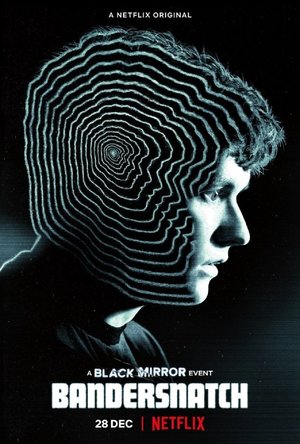
Over a year on from this novelty being the first fully interactive film released by Netflix there is still no evidence of a similarly user controlled show out there. The streaming service had promised, after scooping a primetime Emmy for outstanding TV movie, that it was commissioning many more like it. But as of January 2020 they are nowhere to be seen.
Could it be that without the context of being a Black Mirror mind game, wrapped in Charlie Brooker’s clever if flimsy script, that it would just feel too intrusive and unnecessary for a mainstream drama audience? Not to mention the extra cost and hassle of filming multiple scenarios on a production. It’s fine as a distracting experiment, but would we want to have choices as a normal part of watching something?
Especially when looking back on Bandersnatch and realising that without this gimmick it is probably one of the weaker entries under the banner of Black Mirror quality. I can see how it would work well in children’s programming, as a way of keeping young audiences engaged. But beyond that, why not just play an actual video game, if an immersive interactive story that you control is what you want?
Fionn Whitehead of Dunkirk fame, does a fine job as 80s teen computer geek Stefan, as does the versatile yet under-used Will Poulter, in roles that in a straight drama would feel massively under-written. The impressive thing is how smooth the whole experience is. And you do feel increasingly uncomfortable the more you begin to influence Stefan, choosing more and more sinister actions simply out of a dark curiosity of where that will take him, and you!
The idea of reaching a dead end and having to go back to relive a moment, whilst cleverly woven in here to reflect a “choose your own adventure” book, does become a fault and a bit annoying. Something of a cheat! What would be truly impressive would be to branch the story in ways that never allow you to go back, but still results in the story making sense. Although the logistics of that script boggles the mind.
I do like the idea of no two people ever watching the same film, sort of. I also hate it. Because a good film has enough ambiguity to encourage debate anyway, and knowing everyone has watched the same story as you feels like a shared experience. No matter how interesting it might be in theory, you can’t escape the fact that Xbox and Playstation have this covered, especially as VR gaming becomes more common.
And that is the ultimate failing of Bandersnatch, in that you can’t really talk about the story in any other way than to wonder which ending you got? Apparently, it has five possible outcomes. By the time I had gone over it and found three, I was pretty much done with it. My curiosity certainly didn’t extend to going back and discovering the consequences of every possible choice.
Would I still recommend it? Well, yes. Anyone that hasn’t tried it probably should, at least have a go, to be able to say been there, done that. Would I like to see interaction as a part of my favourite shows? Definitely not.
Could it be that without the context of being a Black Mirror mind game, wrapped in Charlie Brooker’s clever if flimsy script, that it would just feel too intrusive and unnecessary for a mainstream drama audience? Not to mention the extra cost and hassle of filming multiple scenarios on a production. It’s fine as a distracting experiment, but would we want to have choices as a normal part of watching something?
Especially when looking back on Bandersnatch and realising that without this gimmick it is probably one of the weaker entries under the banner of Black Mirror quality. I can see how it would work well in children’s programming, as a way of keeping young audiences engaged. But beyond that, why not just play an actual video game, if an immersive interactive story that you control is what you want?
Fionn Whitehead of Dunkirk fame, does a fine job as 80s teen computer geek Stefan, as does the versatile yet under-used Will Poulter, in roles that in a straight drama would feel massively under-written. The impressive thing is how smooth the whole experience is. And you do feel increasingly uncomfortable the more you begin to influence Stefan, choosing more and more sinister actions simply out of a dark curiosity of where that will take him, and you!
The idea of reaching a dead end and having to go back to relive a moment, whilst cleverly woven in here to reflect a “choose your own adventure” book, does become a fault and a bit annoying. Something of a cheat! What would be truly impressive would be to branch the story in ways that never allow you to go back, but still results in the story making sense. Although the logistics of that script boggles the mind.
I do like the idea of no two people ever watching the same film, sort of. I also hate it. Because a good film has enough ambiguity to encourage debate anyway, and knowing everyone has watched the same story as you feels like a shared experience. No matter how interesting it might be in theory, you can’t escape the fact that Xbox and Playstation have this covered, especially as VR gaming becomes more common.
And that is the ultimate failing of Bandersnatch, in that you can’t really talk about the story in any other way than to wonder which ending you got? Apparently, it has five possible outcomes. By the time I had gone over it and found three, I was pretty much done with it. My curiosity certainly didn’t extend to going back and discovering the consequences of every possible choice.
Would I still recommend it? Well, yes. Anyone that hasn’t tried it probably should, at least have a go, to be able to say been there, done that. Would I like to see interaction as a part of my favourite shows? Definitely not.
Emma @ The Movies (1786 KP) rated Vivarium (2020) in Movies
Mar 8, 2020
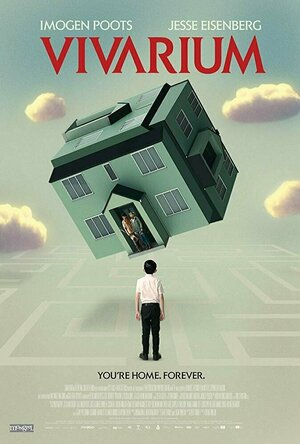
I like the idea of these weird and wonderful takes, when I saw the synopsis I knew it needed to make my LFF shortlist.
Tom and Gemma are looking to take the next step in their relationship, getting their very own home. On a whim they visit an oddly minimal estate agents where they meet Martin. Martin is enthusiastic about the chance to show them the perfect home in the perfect community, Yonder.
When they arrive in the deserted town it's instantly strange. Every house looks like the last, every street looks like the next, and Martin's enthusiasm never waivers. They decide to "dine and dash", politely look around and then leave to laugh about the whole experience on the way home, but as they complete their tour they realise that Martin has gone.
As the couple head home in their car they realise they're somehow lost, the simply designed neighbourhood has become a labyrinth that keeps leading them back to that same house. Maybe this is home after all.
Writing that extended synopsis was an exciting reminder of the idea at the core of Vivarium. Its story would definitely fit well into the recent trends of Black Mirror, Dimension 404 and Twilight Zone, and that was something that slightly hindered my enjoyment. Those formats work well in a compact episode size chunk, the film is only 97 minutes long but the content seems to have been stretched out to fit that runtime.
Towards the end of Vivarium we're introduced to a lot of information that you don't really have enough time to process, so much so that it feels like a rather unsatisfying development. That's where the similarities to the TV show idea ends, could it have benefitted from a sharper end? I'm not sure, perhaps that is all just part of the intrigue.
Jesse Eisenberg and Imogen Poots made quite a good match in the leads, from the off you can see their nature coming through, they're in sync and happy. As the situation deepens and they get more confused and frustrated you see them pulling apart while simultaneously clinging to each other because they're all that they have in the world. It's a lot of ups and downs for the characters to go through and yet the pair manage to make it work, with so much of (basically all of) the film relying on this dynamic I'm pleased that there was such a strong performance from them both.
It's difficult to express the way I feel about this film, I love the idea, the acting was great and the design of the town and the sets were picture perfect in that agonising horror kind of way (it reminded me of the fake 1950s towns they'd set up for atomic bomb testing), where I'm on the fence is the ending. Throwing in the scene that was out of tune with the rest of the film didn't add intrigue for me, but that being said, I'm still thinking about the film months after seeing it so... did it?
While my score might not necessarily seem like a recommendation I honestly think that everyone will take something different away from this about a wide range of things. I swing wildly between remembering the film without that ending to with it, and I don't know which version of the town I prefer seeing in my head...
Originally posted on: https://emmaatthemovies.blogspot.com/2020/03/vivarium-movie-review.html
Tom and Gemma are looking to take the next step in their relationship, getting their very own home. On a whim they visit an oddly minimal estate agents where they meet Martin. Martin is enthusiastic about the chance to show them the perfect home in the perfect community, Yonder.
When they arrive in the deserted town it's instantly strange. Every house looks like the last, every street looks like the next, and Martin's enthusiasm never waivers. They decide to "dine and dash", politely look around and then leave to laugh about the whole experience on the way home, but as they complete their tour they realise that Martin has gone.
As the couple head home in their car they realise they're somehow lost, the simply designed neighbourhood has become a labyrinth that keeps leading them back to that same house. Maybe this is home after all.
Writing that extended synopsis was an exciting reminder of the idea at the core of Vivarium. Its story would definitely fit well into the recent trends of Black Mirror, Dimension 404 and Twilight Zone, and that was something that slightly hindered my enjoyment. Those formats work well in a compact episode size chunk, the film is only 97 minutes long but the content seems to have been stretched out to fit that runtime.
Towards the end of Vivarium we're introduced to a lot of information that you don't really have enough time to process, so much so that it feels like a rather unsatisfying development. That's where the similarities to the TV show idea ends, could it have benefitted from a sharper end? I'm not sure, perhaps that is all just part of the intrigue.
Jesse Eisenberg and Imogen Poots made quite a good match in the leads, from the off you can see their nature coming through, they're in sync and happy. As the situation deepens and they get more confused and frustrated you see them pulling apart while simultaneously clinging to each other because they're all that they have in the world. It's a lot of ups and downs for the characters to go through and yet the pair manage to make it work, with so much of (basically all of) the film relying on this dynamic I'm pleased that there was such a strong performance from them both.
It's difficult to express the way I feel about this film, I love the idea, the acting was great and the design of the town and the sets were picture perfect in that agonising horror kind of way (it reminded me of the fake 1950s towns they'd set up for atomic bomb testing), where I'm on the fence is the ending. Throwing in the scene that was out of tune with the rest of the film didn't add intrigue for me, but that being said, I'm still thinking about the film months after seeing it so... did it?
While my score might not necessarily seem like a recommendation I honestly think that everyone will take something different away from this about a wide range of things. I swing wildly between remembering the film without that ending to with it, and I don't know which version of the town I prefer seeing in my head...
Originally posted on: https://emmaatthemovies.blogspot.com/2020/03/vivarium-movie-review.html

Piano Maestro by JoyTunes
Education and Music
App
Piano Maestro is a fun and engaging piano practice tool for families and teachers. Chosen by Apple...
Emma @ The Movies (1786 KP) rated Anna (2019) in Movies
Jun 20, 2020
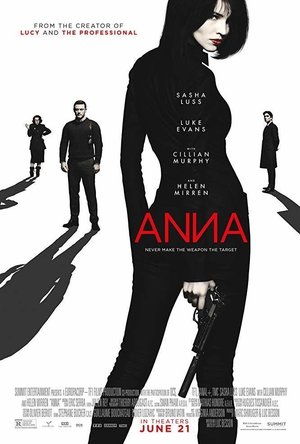

Appearances are deceiving, not only with our main character Anna but with the trailer for this film too. What I was expecting was Atomic Blonde, what I got was Atomic Blonde mixed with Red Sparrow but with none of the redeeming features of either.
I would normally at this point write a slightly expanded synopsis of the film, but reading back my notes even I can't remember (or work out) what happened at the beginning of the film.
This confusion is the one consistent thing throughout the whole film.
The TV shows Hustle and Leverage like to do the reveal where they show you a scene unfold and then play it back a little later showing you the truth behind what actually happened. Anna does this too, excessively. We jump around the timeline so much that eventually when you see the words "X months earlier" you just let out a resigned sigh.
I've been contemplating how the film would have played out if they'd don't it in a more traditional/chronological order. I'm not sure that there would have been enough to keep you interested in what was going on. It certainly would have left the ending surprise heavy with little to no pay off for your patience.
Anna looked to be a serious action-fest and in the trailer we see a well choreographed restaurant fight that I had particularly been looking forward to. The finished product was somehow incredibly dull and unengaging and I think that's entirely down to the music. In the trailer they picked an upbeat track and the action is cut to coincide with the punchy notes, it makes you react to what's happening. The music in the final cut does not contribute anything to what's going on at all. I've seen this happen previously with Kingsman: The Golden Circle, although in that case the scene wasn't hurt as much as here.
Luke Evans is the main Russian spy, Alex, he's strong and decisive. Cillian Murphy is the CIA agent, Lenny, he's abrasive and suspicious. Both characters are ultimately the same, but different. There's little to work out about either man or their relationship with Anna.
Anna is played by Sasha Luss, her only other acting credit is in Valerian and the City with a longer than necessary name (actual title of the film... I'm sure of it), I honestly wouldn't have recognised her from it. There's little that's memorable about her in this, which is worrying as the main character. The part was let down by the story, and while I'm sure she has the ability to do Anna justice I don't think anything here gave her the opportunity to try.
We're also treated to Helen Mirren, she is wonderful all the time, and this wasn't any different. I loved her performance in this as it was something a bit grittier, but I don't think her character and the script really aligned. She's shown as an astute spy and she picks up on the little details... unless it's essential to the plot that she doesn't.
Perhaps I'm being too harsh, but the promise of the trailer and the delivery of the film held very different things for the viewer. There are much better examples of this sort of film out there, it doesn't feel like it brings anything new to the table.
Originally posted on: https://emmaatthemovies.blogspot.com/2019/07/anna-movie-review.html
I would normally at this point write a slightly expanded synopsis of the film, but reading back my notes even I can't remember (or work out) what happened at the beginning of the film.
This confusion is the one consistent thing throughout the whole film.
The TV shows Hustle and Leverage like to do the reveal where they show you a scene unfold and then play it back a little later showing you the truth behind what actually happened. Anna does this too, excessively. We jump around the timeline so much that eventually when you see the words "X months earlier" you just let out a resigned sigh.
I've been contemplating how the film would have played out if they'd don't it in a more traditional/chronological order. I'm not sure that there would have been enough to keep you interested in what was going on. It certainly would have left the ending surprise heavy with little to no pay off for your patience.
Anna looked to be a serious action-fest and in the trailer we see a well choreographed restaurant fight that I had particularly been looking forward to. The finished product was somehow incredibly dull and unengaging and I think that's entirely down to the music. In the trailer they picked an upbeat track and the action is cut to coincide with the punchy notes, it makes you react to what's happening. The music in the final cut does not contribute anything to what's going on at all. I've seen this happen previously with Kingsman: The Golden Circle, although in that case the scene wasn't hurt as much as here.
Luke Evans is the main Russian spy, Alex, he's strong and decisive. Cillian Murphy is the CIA agent, Lenny, he's abrasive and suspicious. Both characters are ultimately the same, but different. There's little to work out about either man or their relationship with Anna.
Anna is played by Sasha Luss, her only other acting credit is in Valerian and the City with a longer than necessary name (actual title of the film... I'm sure of it), I honestly wouldn't have recognised her from it. There's little that's memorable about her in this, which is worrying as the main character. The part was let down by the story, and while I'm sure she has the ability to do Anna justice I don't think anything here gave her the opportunity to try.
We're also treated to Helen Mirren, she is wonderful all the time, and this wasn't any different. I loved her performance in this as it was something a bit grittier, but I don't think her character and the script really aligned. She's shown as an astute spy and she picks up on the little details... unless it's essential to the plot that she doesn't.
Perhaps I'm being too harsh, but the promise of the trailer and the delivery of the film held very different things for the viewer. There are much better examples of this sort of film out there, it doesn't feel like it brings anything new to the table.
Originally posted on: https://emmaatthemovies.blogspot.com/2019/07/anna-movie-review.html

Gareth von Kallenbach (980 KP) rated Cherry (2021) in Movies
Feb 25, 2021

Tom Holland and Joe and Anthony Russo have teamed up again but this time on a project which is about as far away from the Marvel universe as possible. Based on the book Nico Walker; “Cherry” is a compelling tale told in segments that depict a different style and phase of the main character’s life.
Holland stars as a young man who is trying to find a direction in his life. He meets a young girl named Emily (Ciara Bravo), and soon begins a relationship with her. This phase of the film plays out as a Young Romance film and the audience is given a good look at their world.
When Emily decides to move to Montreal to go to school and escape the issues she has’ Cherry goes into a downward spiral and enlists in the Army as a way to escape his pain and to try to find direction.
The film takes a dramatic turn at this point as Emily and Cherry reunite and marries but he is facing his pending military service which will split the couple. The film then pivots and becomes a war movie as we see Cherry go through Basic Training and then is deployed to Afghanistan as a medic. The horrors he experiences during his two years in the service traumatize him and he returns home to Emily with a severe case of PTSD which complicates their life and relationship.
The film then pivots again to show a descent into depression and drug addiction as Cherry and Emily fall deeply into the spell of drugs which causes Cherry to become more and more desperate to fund their habit which soon includes bank robbery.
While the film is deeply dark and depressing; there is a thread of hope throughout the film as despite their numerous issues; the bond between Emily and Cherry remains despite challenges well beyond what any normal relationship faces.
The honest and brutal nature of the story is amplified by the fact that this is a true story based on the life of Nico Walker. There have been films that depict the challenges facing Vets such as “The Deer Hunter” “Coming Home”, and “Born on the 4th of July”, which underscores the struggles that Vietnam Vets faced after their service. While “Cherry” looks at a modern conflict; it underscores how Vets are still struggling to get the care they need as many survivors to return broken and unable to resume their lives.
Holland and Bravo have solid chemistry with one another and the story is gripping and engaging throughout. Seeing Holland in a much more mature and darker role than we are used to seeing him in shows that he has a range of talents and is very capable of taking on a variety of parts.
Joe and Anthony Russo moved well from their recent Marvel films to a deeply personal and troubling story and the fact that they cover the multiple genres in each of the film segments shows they are very talented filmmakers with a bright future.
Do not be shocked to see “Cherry” come up at the next awards season as it is a film not to be missed and you can see it on Apple TV on March 12th. and cinemas on February 26th.
4.5 stars out of 5
Holland stars as a young man who is trying to find a direction in his life. He meets a young girl named Emily (Ciara Bravo), and soon begins a relationship with her. This phase of the film plays out as a Young Romance film and the audience is given a good look at their world.
When Emily decides to move to Montreal to go to school and escape the issues she has’ Cherry goes into a downward spiral and enlists in the Army as a way to escape his pain and to try to find direction.
The film takes a dramatic turn at this point as Emily and Cherry reunite and marries but he is facing his pending military service which will split the couple. The film then pivots and becomes a war movie as we see Cherry go through Basic Training and then is deployed to Afghanistan as a medic. The horrors he experiences during his two years in the service traumatize him and he returns home to Emily with a severe case of PTSD which complicates their life and relationship.
The film then pivots again to show a descent into depression and drug addiction as Cherry and Emily fall deeply into the spell of drugs which causes Cherry to become more and more desperate to fund their habit which soon includes bank robbery.
While the film is deeply dark and depressing; there is a thread of hope throughout the film as despite their numerous issues; the bond between Emily and Cherry remains despite challenges well beyond what any normal relationship faces.
The honest and brutal nature of the story is amplified by the fact that this is a true story based on the life of Nico Walker. There have been films that depict the challenges facing Vets such as “The Deer Hunter” “Coming Home”, and “Born on the 4th of July”, which underscores the struggles that Vietnam Vets faced after their service. While “Cherry” looks at a modern conflict; it underscores how Vets are still struggling to get the care they need as many survivors to return broken and unable to resume their lives.
Holland and Bravo have solid chemistry with one another and the story is gripping and engaging throughout. Seeing Holland in a much more mature and darker role than we are used to seeing him in shows that he has a range of talents and is very capable of taking on a variety of parts.
Joe and Anthony Russo moved well from their recent Marvel films to a deeply personal and troubling story and the fact that they cover the multiple genres in each of the film segments shows they are very talented filmmakers with a bright future.
Do not be shocked to see “Cherry” come up at the next awards season as it is a film not to be missed and you can see it on Apple TV on March 12th. and cinemas on February 26th.
4.5 stars out of 5