

Camino Winds
8.0 Rate It
Book
The next book in the no 1 Sunday Times bestselling Camino Island series! When Hurricane Leo...
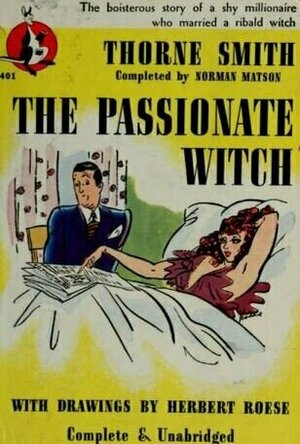
The Passionate Witch
Book
Mr. T. Wallace Wooly, a self-important tycoon, but at heart a shy brown rabbit of a man, meets his...

Bubblesreview (110 KP) rated All That Remains: A Life in Death in Books
Apr 7, 2019
▪ Descriptive
▪ Very fascinating
▪ Surprisingly life-affirming
Cons:
▪ Could be a possible military/trauma PTSD trigger
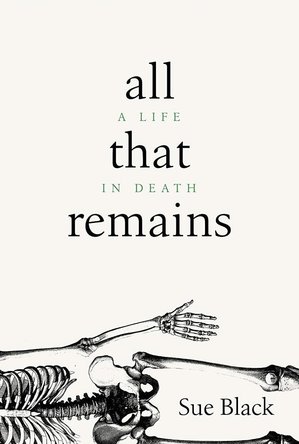
What an incredible book. When I first picked this up I was sceptical about reading it right now, I thought this was going to be a dark, depressing read about death. It certainly is about death but surprisingly not in a dark or depressing way.
I've been suffering with a bereavement since November after my best friend was killed in a road accident, hit by a drunk driver. I have been struggling quite a bit with this and there doesn't seem to be any support for people struggling with bereavement, there is one local charity that provides free counselling but I'm currently on a 16+ week waiting list before they can even assess me to see if they can help me.
So you can see why I was hesitant to read this, however, after reading some reviews on it i took the risk and dived in. I'm glad I did.
I found this actually very refreshing and life-affirming, it's made me see life and death in a different way and I feel like it's helped me cope a little better whilst I wait for counselling.
The chapter about the authors personal experience with bereavements was nice to be reminded that everyone deals with grief in their own ways, even if it may seem odd to others.
I really enjoyed reading the scientific parts of this book aswell, as detailed as some of it was it was actually really interesting. It was also nice to learn about all the different options available now days for what happens to our bodies. Donating your body to a medical school is one option I wasn't even aware of.
The epilogue was a tear jerker, I admit I struggled to read through those last pages. It was very personal to Blacks family and very detailed about her wishes when her time comes.
I highly respect Black for making such a personal memoir published.
This was an emotional, uplifting, scientific memoir that I highly recommend.

Bob Mann (459 KP) rated If Beale Street Could Talk (2018) in Movies
Sep 28, 2021

‘Is there not one righteous among them?”
― James Baldwin, If Beale Street Could Talk
Beale Street refers to the jumpin’ heart of Memphis where Louis Armstrong was born. As explained in text from Baldwin’s source book (requiring a speed read!) it’s used as a metaphor for the birthplace of every black person in America. (“Every black person in America was born on Beale Street“). But the story is set in Harlem, New York, and with this intellectual stretch, before I even get past the title, I am immediately reaching for the “P-word”, of which more later.
The Plot
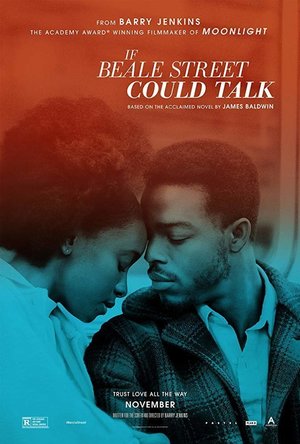
Tish (KiKi Layne) is 19 and in love with her lifelong friend ‘Fonny’ (Stephan James). So much in love in fact (and so careless) that Tish is now pregnant with his child. Tish must break this news to both families herself, since Fonny is inside awaiting trial for a vicious rape that he claims he didn’t commit. Tish and their joint families are trying to help, but can Fonny be released in time to see the birth of his child? Or are the institutions so set against him that release is impossible and death row might await?
Interwoven with Love and Anger
At its heart, this film portrays a truly beautiful love story. Tish and Fonny (both adorably played by the young leads) are friends becoming more than friends. We see their emerging love through flashback scenes. Some of these, particularly one on a metro train, are exquisitely done; long gazes into eyes, starting as one thing and ending as another.
In another scene, Fonny takes Tish’s virginity, and it’s done with style, taste and finesse. For younger teens this should be compulsory viewing as an antidote to all the horrible porn they are seeing on the internet: THIS is what sex, based on a foundation of true love, is all about. (The film is UK15 rated for “infrequent very strong language, strong sex” – I actually agree with the rating for the language (and actually I think an act of marital violence should also have also been referenced)…. but not for the sex, which should be 12A).
It’s a love story then? Well, yes, but offset against that, it’s a very angry film, seething with rage about how the police force and the justice system is set ‘against the black man’. Director Barry Jenkins (of – eventual – Oscar winner “Moonlight” fame) has a message to impart and he is intent on imparting it.
A great ensemble performance
The film didn’t get a SAG nomination for the ensemble cast, but it almost feels that they missed out here. As well as the two young leads being spectacular, the whole of the rest of the cast really gel well together, particularly the respective parents: Colman Domingo (“Selma“) as Tish’s father Joseph; Regina King as Tish’s mother Sharon; Michael Beach (“Patriots Day“) as Fonny’s father Frank and Aunjanue Ellis as his bible-bashing mother. A dramatic scene where they all collectively hear the news about the pregnancy is both comical and shocking in equal measure.
Poor sound mixing
If this film gets an Oscar nomination for sound, I’ll frankly be cross! There is significant use of sonorous, bass-heavy music and effects (including a lovely cello theme by Nicholas Britell) – all very effective; there is a lot of earnest and quietly spoken dialogue between the characters – also moody and effective. Unfortunately the two are mixed together in some scenes and frankly I couldn’t make out what was being said. Most frustrating.
In addition, there is voiceover narration from Tish (if you follow my blog regularly you KNOW what I think about that!). Actually, this isn’t as overly intrusive as in films like “The Hate U Give“, but it sounds like it was recorded in a dustbin! It’s a bit like that effect you get with headphones where the plug isn’t quite in the socket, and everything sounds way off and tinny. When combined with Layne’s accent the effect, again, made the dialogue difficult to comprehend.
The c-word and the n-word
There’s a degree of bad language in the film, albeit mild in comparison to “The Favourite“! Tish’s sister (Teyonah Parris) uses the c-word in one very funny dissing of Fonny’s ‘up-themselves’ sisters (Ebony Obsidian and Dominique Thorne). But the n-word is used repeatedly during the film, and that I can never get used to. I ‘get it’ (in the sense that I understand the perception) that this is a word that ‘only black people can use between themselves’. But this just feels elitist and wrong to me. At a time when Viggo Mortensen gets crucified for using it once (while being descriptive and in-context) during a press junket for “Green Book“, I just feel that if a word is taboo it should be taboo, period.
The p-word
My p-word here is “pretentious”. Barry Jenkins clearly feels he has something to prove after the success of “Moonlight“, and there are certainly moments of directorial brilliance in the film. As previously mentioned, the sex scene is one of the best I’ve seen in a long while. Also beautifully done are a birthing scene and two confrontational scenes in Puerto Rico. But there are also moments that seem to be staged, artificial and too ‘arty’ for their own good. Any hidden meaning behind them completely passed me by. (Examples are Sharon’s wig scene and a pan around Fonny’s wood sculpture). It all seems to be “trying too hard”.
Hate for the police is also writ large on the film, with every discriminatory police officer in the whole of the US embodied in the wicked sneering face of the police office Bell (Ed Skrein).
A platform that should be used for more than ranting
This is a film written and directed by an American black man (Jenkins) and largely fully cast with American black people. And I’m a white Englishman commenting on it. I’m clearly unqualified to pass judgement on how black America really feels about things! But comment I will from this fug of ignorance.
It feels to me that the “Black Lives Movement” has given, at long last, black film-makers like Jenkins a platform in cinema to present from. This is a great thing. But I’m sensing that at the moment the tone of the output from that platform (such as this film) seems to me heavily tinged with anger: a scream of frustration about the system and racial injustice over the years. It’s the film-makers right to make films about subjects dear to them. And I’m sure this summer we’ll sadly again see atrocities as previously seen in the likes of Ferguson and Dallas, fuelling the fire of hate. But I would personally really like to see someone like Jenkins use his undoubted talents to make a more uplifting film: a film reflecting the more positive strives that are happening in society, allowing for people of all races and all sexual orientations to make their way in business (not drug-running or crime!) and/or life in general. Those good news stories – the positive side of race relations – are out there and my view is that someone like Barry Jenkins should be telling them.
Final thoughts
I wasn’t as much of a fan of “Moonlight” as the Academy, and this film also left me conflicted. The film is well-made and the cast is very engaging. It also has a love story at its heart that is moody but well-done. Overall though the movie felt over-engineered and a little pretentious, and that knocked it down a few pegs for me.
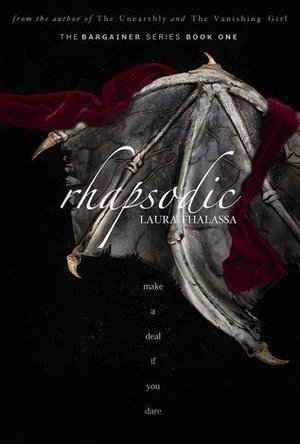
Rhapsodic (The Bargainer #1)
9.5 Rate It
Book
Callypso Lillis is a siren with a very big problem, one that stretches up her arm and far into her...
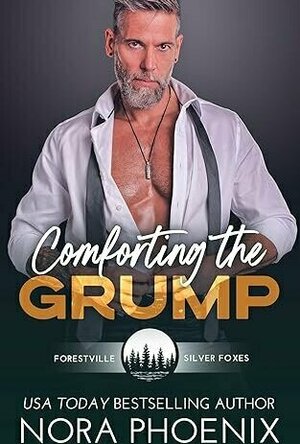
Comforting the Grump (Forestville Silver Foxes #5)
8.0
Rate It
Book
I don’t do emotions or romantic entanglements. My life is simple: I work hard and I play hard,...
Contemporary MM Romance Series
The Final Day
Book
A major release in the New York Times bestselling One Second After series, set in an alternate...
Science fiction
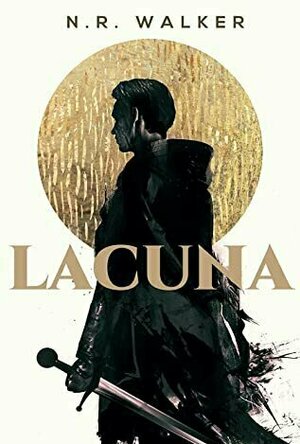

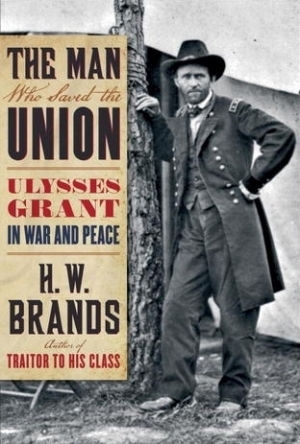
The Man Who Saved the Union: Ulysses Grant in War and Peace
Book
From New York Times bestselling author H. W. Brands, a masterful biography of the Civil War general...
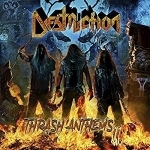
Thrash Anthems II by Destruction
Album Watch
German thrash legends DESTRUCTION return with, Thrash Anthems II, the follow-up to 2007's Thrash...
Metal