
Search
Search results

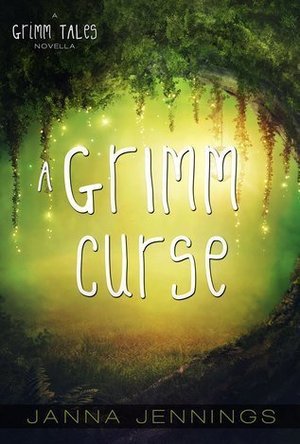
Hazel (1853 KP) rated A Grimm Curse (Grimm Tales #3) in Books
Dec 17, 2018

<i>This eBook was provided by the publisher via NetGalley in exchange for an honest review </i>
Janna Jennings’ latest book, <i>A Grimm Curse</i>, is set long before the previous two novellas in <i>A Grimm Tales</i> series. Rather than focusing on Andi, a girl from the “real” world, this is a story about the characters in the fairytales – most importantly Cynthia or, whom readers may know her better as, Cinderella.
As in the traditional tale, Cynthia works as a slave for her horrible stepmother and stepsisters – a fate she succumbed to after the death of her father. There is also an upcoming ball at the palace for the prince who is seeking a bride. This, however, is where the similarities end. As well as <i>Cinderella</i>, other fairytales make their appearance, particularly <i>The Frog Prince </i>and <i>Rapunzel</i>. But something is unsettling the characters; they are experiencing bad dreams. Or are they memories?
Cynthia is a much more admirable character than the original Cinderella. She is clever, determined and independent – she does not need a fairy godmother for a start! Neither has she any interest in the prince. If she is going to escape from servitude it will be by her own dexterity, rather than her reliance on someone else to save her.
<i>A Grimm Curse</i> can work as a prequel to the first in the series as it sets the scene that Andi will come across. It can also survive as a stand alone as there is no reference to the events of the other books, however knowledge of these will help the ending make more sense.
Personally I preferred <i>A Grimm Curse</i> to the stories that Jennings’ previously wrote. I had misgivings about the author’s use of fairytales that were not one of those collected by the <i>Brothers Grimm</i>. The tales in this book were, however, so therefore fit better with the title.
I strongly recommend this story to readers – adult and adolescent – who are still in love with fairytales or retellings. It is as though it is written with feminism in mind as the heroine does not need a man to rescue her, thus is in keeping with modern times rather than the time period of the originals.
Janna Jennings’ latest book, <i>A Grimm Curse</i>, is set long before the previous two novellas in <i>A Grimm Tales</i> series. Rather than focusing on Andi, a girl from the “real” world, this is a story about the characters in the fairytales – most importantly Cynthia or, whom readers may know her better as, Cinderella.
As in the traditional tale, Cynthia works as a slave for her horrible stepmother and stepsisters – a fate she succumbed to after the death of her father. There is also an upcoming ball at the palace for the prince who is seeking a bride. This, however, is where the similarities end. As well as <i>Cinderella</i>, other fairytales make their appearance, particularly <i>The Frog Prince </i>and <i>Rapunzel</i>. But something is unsettling the characters; they are experiencing bad dreams. Or are they memories?
Cynthia is a much more admirable character than the original Cinderella. She is clever, determined and independent – she does not need a fairy godmother for a start! Neither has she any interest in the prince. If she is going to escape from servitude it will be by her own dexterity, rather than her reliance on someone else to save her.
<i>A Grimm Curse</i> can work as a prequel to the first in the series as it sets the scene that Andi will come across. It can also survive as a stand alone as there is no reference to the events of the other books, however knowledge of these will help the ending make more sense.
Personally I preferred <i>A Grimm Curse</i> to the stories that Jennings’ previously wrote. I had misgivings about the author’s use of fairytales that were not one of those collected by the <i>Brothers Grimm</i>. The tales in this book were, however, so therefore fit better with the title.
I strongly recommend this story to readers – adult and adolescent – who are still in love with fairytales or retellings. It is as though it is written with feminism in mind as the heroine does not need a man to rescue her, thus is in keeping with modern times rather than the time period of the originals.
Sophia (Bookwyrming Thoughts) (530 KP) rated Gamer Girl in Books
Jan 23, 2020


I was in the process of getting another book entirely at the library when I noticed Mari Mancusi's Gamer Girl peeking out from its hiding place between two other books. Being the occasional gamer myself (though currently I'm being a little too scholarly to even focus on gaming), I could definitely relate to the title (not so much the synopsis).
There's much to love about Gamer Girl: the synopsis made the book sound like a very happy book something that I've been on the hunt for awhile. The cover is simplistic and gorgeous it definitely puts down the entire idea of the book with the drawing of the main character, Maddy, and the avatar she uses in a game (Fields of Fantasy) she gets for her birthday shortly after her parents divorce. The interior is just as gorgeous as the cover the chapter headings depict Maddy's main emotions she's feeling by the end of the chapter.
Mancusi's writing style and use of Maddy's voice is great as well Maddy is a very relatable character and she has an attitude that isn't annoying, making the book feel perfectly paced as Maddy gets to know SirLeo in Fields of Fantasy and falls in love with him. For awhile it probably feels as though Maddy will find out SirLeo is really an online predator.
Much as I really loved Gamer Girl and Mancusi's writing style, the book feels as though it's aimed more toward middle grade than a high schooler my age. The book is stereotypical with Maddy being bullied by the "Royal Court" as soon as she starts a new school and Maddy tries to escape from the troubles of her reality by entering the gaming world and playing Fields of Fantasy with an elfin character named Allora, someone she would rather be. It all leads to a very cute and adorable ending with the popular guy falling for the outcast very happy and light-hearted, and certainly not something you're likely to come across in real life, compared to the realistic drama of Margo Kelly's Who R U Really.
----------------
Review originally posted at <a href="http://bookwyrming-thoughts.blogspot.com/2015/01/review-gamer-girl-by-mari-mancusi.html">Bookwyrming Thoughts</a>
<a href="http://bookwyrming-thoughts.blogspot.com/"><img src="http://3.bp.blogspot.com/-cG5gfBqJVzk/VA5BIojjZ9I/AAAAAAAAD1g/7srLUfpAGEU/s1600/banner.png"; /></a>
There's much to love about Gamer Girl: the synopsis made the book sound like a very happy book something that I've been on the hunt for awhile. The cover is simplistic and gorgeous it definitely puts down the entire idea of the book with the drawing of the main character, Maddy, and the avatar she uses in a game (Fields of Fantasy) she gets for her birthday shortly after her parents divorce. The interior is just as gorgeous as the cover the chapter headings depict Maddy's main emotions she's feeling by the end of the chapter.
Mancusi's writing style and use of Maddy's voice is great as well Maddy is a very relatable character and she has an attitude that isn't annoying, making the book feel perfectly paced as Maddy gets to know SirLeo in Fields of Fantasy and falls in love with him. For awhile it probably feels as though Maddy will find out SirLeo is really an online predator.
Much as I really loved Gamer Girl and Mancusi's writing style, the book feels as though it's aimed more toward middle grade than a high schooler my age. The book is stereotypical with Maddy being bullied by the "Royal Court" as soon as she starts a new school and Maddy tries to escape from the troubles of her reality by entering the gaming world and playing Fields of Fantasy with an elfin character named Allora, someone she would rather be. It all leads to a very cute and adorable ending with the popular guy falling for the outcast very happy and light-hearted, and certainly not something you're likely to come across in real life, compared to the realistic drama of Margo Kelly's Who R U Really.
----------------
Review originally posted at <a href="http://bookwyrming-thoughts.blogspot.com/2015/01/review-gamer-girl-by-mari-mancusi.html">Bookwyrming Thoughts</a>
<a href="http://bookwyrming-thoughts.blogspot.com/"><img src="http://3.bp.blogspot.com/-cG5gfBqJVzk/VA5BIojjZ9I/AAAAAAAAD1g/7srLUfpAGEU/s1600/banner.png"; /></a>

Gareth von Kallenbach (980 KP) rated Vader Immortal VR in Video Games
Oct 8, 2020


The classic V.R. Series Star Wars: Vader Immortal has finally arrived for the Playstation V.R. and it is without a doubt the most immersive Star Wars experience available short of taking a trip to Star Wars: Galaxy’s Edge.
From the opening moments where players have to make the jump to Hyperspace I was hooked Flipping the switches and using the lever to make the jump was like a dream come true for someone who grew up on the original films in an era when Star Wars gaming was not really an option due to the technology of the time.
Players end up in Mustafar where they encounter Vader and must escape from Imperial detention. Along the way players will obtain a Lightsaber which will come in handy for defense as well as helping with various obstacles.
Players will have to climb, manipulate objects, hack, and fight I a fully immersive V.R. setting. Aside from stunning visuals the game also features an engaging original storyline which sets the stage for the next two chapters of the series and also keeps players immersed in the action and lore.
While it did at times take some getting used to in terms of navigation as my Droid companion had an issue with blocking my view at times in dark areas or various objects taking some work to get close enough to manipulate; I was hooked from the start.
Using the Lightsaber to deflect bolts back at Imperial Stormtroopers was great fun as was exploring the Star Wars universe in a new way. I do not want to spoil more about the game but let me just say it is fantastic and gives players new looks at Vader as well as the Star Wars Universe as a whole.
I played the game with the Playstation earbuds that came with the PSVR and had fantastic sound quality to go with the eye-popping visuals. I was delayed in my review as one of our Playstation Move controls malfunctioned and I had to wait for Sony to exchange it but once that was done I was back in the game and could not get enough.
The game is a must own for Star Wars fans and a great example of V.R. gaming done right.
From the opening moments where players have to make the jump to Hyperspace I was hooked Flipping the switches and using the lever to make the jump was like a dream come true for someone who grew up on the original films in an era when Star Wars gaming was not really an option due to the technology of the time.
Players end up in Mustafar where they encounter Vader and must escape from Imperial detention. Along the way players will obtain a Lightsaber which will come in handy for defense as well as helping with various obstacles.
Players will have to climb, manipulate objects, hack, and fight I a fully immersive V.R. setting. Aside from stunning visuals the game also features an engaging original storyline which sets the stage for the next two chapters of the series and also keeps players immersed in the action and lore.
While it did at times take some getting used to in terms of navigation as my Droid companion had an issue with blocking my view at times in dark areas or various objects taking some work to get close enough to manipulate; I was hooked from the start.
Using the Lightsaber to deflect bolts back at Imperial Stormtroopers was great fun as was exploring the Star Wars universe in a new way. I do not want to spoil more about the game but let me just say it is fantastic and gives players new looks at Vader as well as the Star Wars Universe as a whole.
I played the game with the Playstation earbuds that came with the PSVR and had fantastic sound quality to go with the eye-popping visuals. I was delayed in my review as one of our Playstation Move controls malfunctioned and I had to wait for Sony to exchange it but once that was done I was back in the game and could not get enough.
The game is a must own for Star Wars fans and a great example of V.R. gaming done right.

Darren (1599 KP) rated From Dusk Till Dawn 3: The Hangman's Daughter (2000) in Movies
Sep 2, 2019
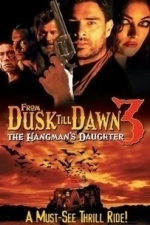

Thoughts on From Dusk till Dawn 3: The Hangman’s Daughter
Characters – Johnny Madrid is one of the most feared outlaws in the west, about to be executed, he is rescued and returns to his gang to continue his life of crime, he will kill some people, while protecting others, making him a morally confusing figure. Ambrose Bierce has come from America where he has survived a shooting, he wants peaceful life only to find himself in the middle of the battle. The Hangman is trying to eliminate the threats in the gang world including Johnny, mostly to protect his daughter, only it isn’t for him to choose. Esmeralda is his daughter that has been getting controlled for too long and is in love with Johnny, she goes on the run with him only to be left questioning his choices.
Performances – The performances here are poor once again, Marco Leonardi overplays is role in the film, while Michael Parks does the best he can with his role. We do end up meeting too many random characters that just seems to make everything struggle to get going in the performance side of the film.
Story – The story does return to the original format only in the western era, we have the outlaws, the victims and the authorities all ending up in the bar which is crawling with vampires and must put their difference aside to survive. This style did work first time, it doesn’t fail this time, but it is hard to become invested in the characters. the build up before the bar is a lot of filler because we do have a lot of people to learn their place and mentality which makes it hard to figure out who is the good and bad guys for the piece. We try to have a connection to the original movie with the creation of one of the vampires which better than the last time out too.
Horror/Western – The horror involved in the film is returning to the vampire outlet which again doesn’t feel scary as it could have been. The western side of the film just uses the criminal side of the last one only making it a prequel to the original.
Settings – The film is set in the western area, we do eventually hit the saloon made famous from the first film and this time we get to dive into the larger scale of the building.
Special Effects – The effects in the film are not at the best, we do get a couple of good moments only nothing that reaches the levels of the first film.
Scene of the Movie – Escape.
That Moment That Annoyed Me – To many characters.
Final Thoughts – This is a solid enough prequel, at least it does feel connected to the previous film which helps build on the legacy of the bar.
Overall: Simple prequel.
Characters – Johnny Madrid is one of the most feared outlaws in the west, about to be executed, he is rescued and returns to his gang to continue his life of crime, he will kill some people, while protecting others, making him a morally confusing figure. Ambrose Bierce has come from America where he has survived a shooting, he wants peaceful life only to find himself in the middle of the battle. The Hangman is trying to eliminate the threats in the gang world including Johnny, mostly to protect his daughter, only it isn’t for him to choose. Esmeralda is his daughter that has been getting controlled for too long and is in love with Johnny, she goes on the run with him only to be left questioning his choices.
Performances – The performances here are poor once again, Marco Leonardi overplays is role in the film, while Michael Parks does the best he can with his role. We do end up meeting too many random characters that just seems to make everything struggle to get going in the performance side of the film.
Story – The story does return to the original format only in the western era, we have the outlaws, the victims and the authorities all ending up in the bar which is crawling with vampires and must put their difference aside to survive. This style did work first time, it doesn’t fail this time, but it is hard to become invested in the characters. the build up before the bar is a lot of filler because we do have a lot of people to learn their place and mentality which makes it hard to figure out who is the good and bad guys for the piece. We try to have a connection to the original movie with the creation of one of the vampires which better than the last time out too.
Horror/Western – The horror involved in the film is returning to the vampire outlet which again doesn’t feel scary as it could have been. The western side of the film just uses the criminal side of the last one only making it a prequel to the original.
Settings – The film is set in the western area, we do eventually hit the saloon made famous from the first film and this time we get to dive into the larger scale of the building.
Special Effects – The effects in the film are not at the best, we do get a couple of good moments only nothing that reaches the levels of the first film.
Scene of the Movie – Escape.
That Moment That Annoyed Me – To many characters.
Final Thoughts – This is a solid enough prequel, at least it does feel connected to the previous film which helps build on the legacy of the bar.
Overall: Simple prequel.

Nicole Hadley (380 KP) rated The Sound of Freedom in Books
Jun 18, 2018
The Sound of Freedom by Kathy Kacer is a middle-grade novel about a Jewish family in Krakow, Poland in 1936. Life has become increasingly dangerous, as the violence and persecution of Jews increase. Anna is afraid if they don’t escape soon, something really bad will happen. Her father is a talented clarinetist in the Krakow Philharmonic Orchestra. They hear that Bronislaw Huberman is auditioning Jewish musicians from all over Europe for a new orchestra in Palestine. If her father auditions and is accepted, she and her grandmother can leave Poland with her father for a new life in Palestine.
Stories of Jews in the Holocaust have fascinated me since I was a kid. The first book about the Holocaust I read was Number the Stars by Lois Lowry, then later A Diary of Anne Frank, and many more. My interest in the Holocaust is why I requested a copy of this book from NetGalley.
The Sound of Freedom is an introduction to the beginning of the Holocaust for middle-grade students. The story is told through the eyes of Anna, focusing on the growing anti-Semitism she sees going on around her and that eventually happens to her. It is set in 1936, before Germany’s invasion of Poland and as Hitler is rising in power, so the real horrors of the Holocaust have not yet started.
While the story of Anna’s family is fiction, Bronislaw Huberman really was a world-renown violinist and did create the Palestine Philharmonic Orchestra to save over a thousand Jews by recruiting them for the newly formed orchestra. Anna’s story is representative of the lives saved by Bronislaw Huberman.
While the story is for middle-grade student, it tells the harsh reality of the what was happening. Readers will be faced with the problems and issues of the era. Some of the families leave the orchestra to go back to their homeland, and Anna is concerned for their safety and the reader is left to wonder what happened to them. The story also mentions the tensions between the Arabs and the Jewish peoples in Palestine. Anna's family may have escaped Poland, but they are faced with issues in Palestine.
I give the story 4.5 stars. I recommend it to anyone with an interest in the time-period. The Sound of Freedom would make an excellent addition to a Holocaust study.
I received an Advanced Readers Copy from Annick Press via NetGalley in exchange for an honest review.
Stories of Jews in the Holocaust have fascinated me since I was a kid. The first book about the Holocaust I read was Number the Stars by Lois Lowry, then later A Diary of Anne Frank, and many more. My interest in the Holocaust is why I requested a copy of this book from NetGalley.
The Sound of Freedom is an introduction to the beginning of the Holocaust for middle-grade students. The story is told through the eyes of Anna, focusing on the growing anti-Semitism she sees going on around her and that eventually happens to her. It is set in 1936, before Germany’s invasion of Poland and as Hitler is rising in power, so the real horrors of the Holocaust have not yet started.
While the story of Anna’s family is fiction, Bronislaw Huberman really was a world-renown violinist and did create the Palestine Philharmonic Orchestra to save over a thousand Jews by recruiting them for the newly formed orchestra. Anna’s story is representative of the lives saved by Bronislaw Huberman.
While the story is for middle-grade student, it tells the harsh reality of the what was happening. Readers will be faced with the problems and issues of the era. Some of the families leave the orchestra to go back to their homeland, and Anna is concerned for their safety and the reader is left to wonder what happened to them. The story also mentions the tensions between the Arabs and the Jewish peoples in Palestine. Anna's family may have escaped Poland, but they are faced with issues in Palestine.
I give the story 4.5 stars. I recommend it to anyone with an interest in the time-period. The Sound of Freedom would make an excellent addition to a Holocaust study.
I received an Advanced Readers Copy from Annick Press via NetGalley in exchange for an honest review.

Andy K (10827 KP) rated Creature from the Black Lagoon (1954) in Movies
Sep 22, 2019
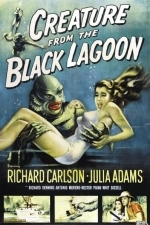

The creature lurks!
In the Amazon jungle, a prehistoric amphibian claw fossil is found prodding local scientists to investigate its origins. They decide on an expedition to gain more information and possibly locate its origins.
The journey is a dangerous one figuring out where to find the mysterious lagoon which is locked in a desolate location within the tropical jungle. Their undersea adventures are met with initial disappoint only locating some interesting plant and animal life.
Within the depths on the lagoon, a strange creature has taken notice of his new guests and is not too happy about it. He lurks submerged within the deep watching and waiting for his opportunity to strike. He ventures close by to gather information and figure out his opponents' vulnerabilities. He also notices the pretty girl among the crew of men.
After a few encounters with the creature, the scientists grow increasingly concerned after the creature has had his way with a few of them, so they attempt to make their escape. Somehow, a large fallen tree is now blocking their path which was clear when they arrived at the lagoon.
There will be an ultimate standoff to secure their release or the demise of the creature.
The look of this film is plain remarkable. This has to be one of the earliest movies to utilize extensive underwater footage and it is very believable. The cinematography for the time period is both beautiful and menacing when needed in glorious black and white.
Obviously, we are talking 1950s special effects here; however, the creature itself stands the test of time. I am not sure how the man in the rubber sit was able to not only see what he was doing, swim quickly in and under water as well as jump into the water while on fire at one point. The mask also was able to move the creature's mouth up and down as well as look like he was breathing while out of the water using his gills. The effect worked really well.
This film was made at a time when the previous Universal Studios monster films had run their course in the 1930s and 1940s, but were not yet into the ultra B movie era in the 1950s and beyond.
If Universal ever gets back to its current "Monster" universe after the mediocre Tom Cruise "Mummy" film, I'm sure the creature will rise again. Until then, enjoy this classic creature gem.
The journey is a dangerous one figuring out where to find the mysterious lagoon which is locked in a desolate location within the tropical jungle. Their undersea adventures are met with initial disappoint only locating some interesting plant and animal life.
Within the depths on the lagoon, a strange creature has taken notice of his new guests and is not too happy about it. He lurks submerged within the deep watching and waiting for his opportunity to strike. He ventures close by to gather information and figure out his opponents' vulnerabilities. He also notices the pretty girl among the crew of men.
After a few encounters with the creature, the scientists grow increasingly concerned after the creature has had his way with a few of them, so they attempt to make their escape. Somehow, a large fallen tree is now blocking their path which was clear when they arrived at the lagoon.
There will be an ultimate standoff to secure their release or the demise of the creature.
The look of this film is plain remarkable. This has to be one of the earliest movies to utilize extensive underwater footage and it is very believable. The cinematography for the time period is both beautiful and menacing when needed in glorious black and white.
Obviously, we are talking 1950s special effects here; however, the creature itself stands the test of time. I am not sure how the man in the rubber sit was able to not only see what he was doing, swim quickly in and under water as well as jump into the water while on fire at one point. The mask also was able to move the creature's mouth up and down as well as look like he was breathing while out of the water using his gills. The effect worked really well.
This film was made at a time when the previous Universal Studios monster films had run their course in the 1930s and 1940s, but were not yet into the ultra B movie era in the 1950s and beyond.
If Universal ever gets back to its current "Monster" universe after the mediocre Tom Cruise "Mummy" film, I'm sure the creature will rise again. Until then, enjoy this classic creature gem.

Ashley Catron (66 KP) rated Suite Francaise in Books
Mar 7, 2018
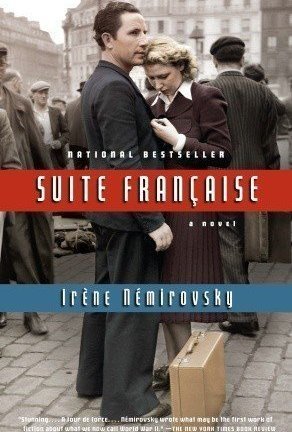
Suite Francaise by the talented Irene Nemirovsky is divided into two "books," so to speak. The first part, Storm in June, begins with the French fleeing parts of Paris and surrounding areas to avoid the German occupation. The story focuses on two families and one couple primarily: the Michauds, the Pericands, and Gabriel Corte with his mistress, Florence. Throughout the book the characters' stories are intertwined with one another beautifully in vignette style chapters. The first book covers June 1940 through the end of November in 1940. The main story in Storm encompasses the fear and desperation that so many French people experienced at the beginning of the war-fear they would never return home, fear they would be killed in an air raid, fear they would just not survive. In Dolce, the second part, covers how the French are handling things back at home after the Germans have begun occupying various cities and have begun living with the French in their homes. This part in the story covers Easter Sunday 1941 through the end of July 1941, so a much shorter time frame than Storm. This section focuses on a different set of characters, involving the Angelliers, the Sabaries, and the Montmorts. The main come away from this is, how do you put up with someone who may have killed your loved one in the war?
Overall, this book was incredible. I don't typically go for this type of book (war-themed), but I was intrigued and I'm so glad I gave it a chance. Irene Nemirovsky was a French-Russian who was writing these books while all of this was happening around her in France. While the characters in the stories are fictional, the emotions they feel and the thoughts they have are very real and very comparable to what others were feeling during this time. In the beginning, yoiu will find your heart racing as everyone flees their possessions, their livelihoods, their families, just to escape the Germans and the certain death they bring. Your breath will catch at the description of the sirens and the air raids, and you will be angry at these Germans for what they have done. However, in the second part, you will find yourself sympathizing with the Germans, even after the brutalities explained in the first part. You will find yourself thinking about the French and how torn they were seeing how kind and generous the Germans were, how the children loved them so, not understanding what horrors they had committed against others. Irene paints such a beautifully descriptive landscape that you will feel like you are experiencing all these accounts first hand. I would recommend this book to anyone who has an interest in war-era books, and even those who have never read it before.
Overall, this book was incredible. I don't typically go for this type of book (war-themed), but I was intrigued and I'm so glad I gave it a chance. Irene Nemirovsky was a French-Russian who was writing these books while all of this was happening around her in France. While the characters in the stories are fictional, the emotions they feel and the thoughts they have are very real and very comparable to what others were feeling during this time. In the beginning, yoiu will find your heart racing as everyone flees their possessions, their livelihoods, their families, just to escape the Germans and the certain death they bring. Your breath will catch at the description of the sirens and the air raids, and you will be angry at these Germans for what they have done. However, in the second part, you will find yourself sympathizing with the Germans, even after the brutalities explained in the first part. You will find yourself thinking about the French and how torn they were seeing how kind and generous the Germans were, how the children loved them so, not understanding what horrors they had committed against others. Irene paints such a beautifully descriptive landscape that you will feel like you are experiencing all these accounts first hand. I would recommend this book to anyone who has an interest in war-era books, and even those who have never read it before.

BookblogbyCari (345 KP) rated Guess Who in Books
Aug 14, 2018
Book Review by Cari Mayhew.
One murder; one room; 5 suspects. Now there’s a promising description for an intense read!
The story begins when central character, Morgan Shephard wakes up handcuffed in what appears to be a hotel room in London. Morgan is a resident detective for a daytime reality TV programme. With him there’s a lawyer, an actress, a teenager, a coffee shop worker, and a hotel cleaner. They find a dead body in the bath - the body of Morgan’s therapist. A message from a masked man appears on the TV screen explaining that Morgan has 3 hours to identify the murderer or the hotel will be blown up.
The characters find that they cannot escape the room. Morgan runs quick interviews with the suspects and finds that they all have links to the victim, but not as strong as his own. Before the 3 hours is up, while Morgan is searching the air ducts, the one suspect accuses another and proceeds to stab him to death. Morgan becomes fairly sure that he knows who murdered his therapist and calls the name out moments before the 3 hours are up. Then nothing happens so he calls out the names of all the suspects. An explosion is then heard by all, but everything remains as it was – there was no explosion. They then discover that they are not at all where they thought they were.
The chapters on Morgan’s current settings are spliced with chapters from other points in Morgan’s life with special emphasis on his solving of a murder which made him famous at age 11, and the reader discovers who has had the longest vendetta against Morgan, and the chapters slowly spell out why.
But this does little to address the reasoning behind the presence of the others in the room, until a further 2 vendettas are revealed.
I enjoyed the book and the story behind the masked man’s murderous hatred, but what I didn’t like was that the general premise of the book wasn’t lived up to. The 3 hours before the “explosion” was up at the 50% mark of the book, and the 5 suspects in the room all have incredibly weak links to the murder victim. I also think that more story could have been made around the lawyer whose big case Morgan was somehow embroiled in which was to take to trial that very day.
I found elements of the book too unrealistic, with extensive effort to bring the plotting to fruition, 1 completely needless and unnecessary victim, and an actual willing murder victim. Also Morgan’s drink and drug dependency did nothing to aid the story telling.
Although I was hoping for more from the book, the plot was indeed intense and I did have a good read.
One murder; one room; 5 suspects. Now there’s a promising description for an intense read!
The story begins when central character, Morgan Shephard wakes up handcuffed in what appears to be a hotel room in London. Morgan is a resident detective for a daytime reality TV programme. With him there’s a lawyer, an actress, a teenager, a coffee shop worker, and a hotel cleaner. They find a dead body in the bath - the body of Morgan’s therapist. A message from a masked man appears on the TV screen explaining that Morgan has 3 hours to identify the murderer or the hotel will be blown up.
The characters find that they cannot escape the room. Morgan runs quick interviews with the suspects and finds that they all have links to the victim, but not as strong as his own. Before the 3 hours is up, while Morgan is searching the air ducts, the one suspect accuses another and proceeds to stab him to death. Morgan becomes fairly sure that he knows who murdered his therapist and calls the name out moments before the 3 hours are up. Then nothing happens so he calls out the names of all the suspects. An explosion is then heard by all, but everything remains as it was – there was no explosion. They then discover that they are not at all where they thought they were.
The chapters on Morgan’s current settings are spliced with chapters from other points in Morgan’s life with special emphasis on his solving of a murder which made him famous at age 11, and the reader discovers who has had the longest vendetta against Morgan, and the chapters slowly spell out why.
But this does little to address the reasoning behind the presence of the others in the room, until a further 2 vendettas are revealed.
I enjoyed the book and the story behind the masked man’s murderous hatred, but what I didn’t like was that the general premise of the book wasn’t lived up to. The 3 hours before the “explosion” was up at the 50% mark of the book, and the 5 suspects in the room all have incredibly weak links to the murder victim. I also think that more story could have been made around the lawyer whose big case Morgan was somehow embroiled in which was to take to trial that very day.
I found elements of the book too unrealistic, with extensive effort to bring the plotting to fruition, 1 completely needless and unnecessary victim, and an actual willing murder victim. Also Morgan’s drink and drug dependency did nothing to aid the story telling.
Although I was hoping for more from the book, the plot was indeed intense and I did have a good read.
Darren (1599 KP) rated Alien Resurrection (1997) in Movies
Jun 20, 2019
Story: Alien: Resurrection starts as we arrive on a US space research facility where General Perez (Hedaya) is working on bringing back the aliens with clones of Ripley (Weaver), the latest number 8 shows incredible strength and development. Waiting for a delivery from Captain Elgyn (Wincott) and his crew Call (Ryder), Vriess (Pinon), Johner (Perlman) Hillard (Flowers) and Christie (Dourdan) a deal is agreed they can spend a couple of days’ rest on the research ship.
After Elgyn’s crew get involved in an altercation with the scientists they must escape but the xenomorphs have escaped onto the ship, joining up with Ripley the crew look for a way off the ship while staying alive.
Thoughts on Alien: Resurrection
Characters/Performance – Ripley is now a clone and the mother of the xenomorphs being created on the ship, she is stronger than before but becomes the best weapon against the xenomorphs. Call is the newest crew member of the pirates but she is harbouring a secret from the rest of the crew. The rest of the characters are your generic group of fighters, the tough one, the gunslinger, the smart one and the captain nothing original comes from these characters.
Performance wise, this isn’t the best Weaver alien performance but she is also brave enough to take it on with a different approach. Ryder is solid enough through the film. the rest of the cast are also solid with Ron Perlman giving his aggressive dick like performance on the good guys team.
Story – The story might not be the greatest, but it does capture what is needed for an alien movie, we have the military wanting to study the aliens for their own good, this happens every single film, we also have the group of soldiers needing to fight them off, but this film does offer a chance to build the relationship between the xenomorphs and Ripley. The problem for a lot of this story telling it that it isn’t original and isn’t on the same levels as the earlier films.
Action/Horror/Sci-Fi – The action is all mindless like you would expect from big budget style sequel too far down the line, the horror is now nearly all gone from the franchise but the sci-fi angle continues on strongly as we see how the aliens are now finding new ways to breed.
Settings – The whole film is set upon the space facility craft which is good because it keeps everything within the one location which is all we want in these films.
Special Effects – The special effects are good in this film and are one of the extra highlights within the film.
Final Thoughts – The weakest part of the Weaver alien films but still a good enjoyable enough watch.
Overall: Enjoyable enough.
https://moviesreview101.com/2017/09/27/alien-resurrection-1997/
After Elgyn’s crew get involved in an altercation with the scientists they must escape but the xenomorphs have escaped onto the ship, joining up with Ripley the crew look for a way off the ship while staying alive.
Thoughts on Alien: Resurrection
Characters/Performance – Ripley is now a clone and the mother of the xenomorphs being created on the ship, she is stronger than before but becomes the best weapon against the xenomorphs. Call is the newest crew member of the pirates but she is harbouring a secret from the rest of the crew. The rest of the characters are your generic group of fighters, the tough one, the gunslinger, the smart one and the captain nothing original comes from these characters.
Performance wise, this isn’t the best Weaver alien performance but she is also brave enough to take it on with a different approach. Ryder is solid enough through the film. the rest of the cast are also solid with Ron Perlman giving his aggressive dick like performance on the good guys team.
Story – The story might not be the greatest, but it does capture what is needed for an alien movie, we have the military wanting to study the aliens for their own good, this happens every single film, we also have the group of soldiers needing to fight them off, but this film does offer a chance to build the relationship between the xenomorphs and Ripley. The problem for a lot of this story telling it that it isn’t original and isn’t on the same levels as the earlier films.
Action/Horror/Sci-Fi – The action is all mindless like you would expect from big budget style sequel too far down the line, the horror is now nearly all gone from the franchise but the sci-fi angle continues on strongly as we see how the aliens are now finding new ways to breed.
Settings – The whole film is set upon the space facility craft which is good because it keeps everything within the one location which is all we want in these films.
Special Effects – The special effects are good in this film and are one of the extra highlights within the film.
Final Thoughts – The weakest part of the Weaver alien films but still a good enjoyable enough watch.
Overall: Enjoyable enough.
https://moviesreview101.com/2017/09/27/alien-resurrection-1997/
Darren (1599 KP) rated Fear, Inc. (2016) in Movies
Oct 24, 2019

Contains spoilers, click to show
Characters – Joe is a stoner that has been promising to find a new job while living off his girlfriend, he loves horror movies and is looking for real fear from a horror event, which leads him to make the mistake to call Fear, Inc, this is easily one of the most unlikeable characters I have ever seen in the leading role in horror. Lindsey is his girlfriend, she seems to have a successful job which we never learn and has been putting up with Joe’s problems, the two have no chemistry and seem like complete opposites. Ben is the best friend that gives the warning to Joe about what will happen if they get involved with the game.
Performances – Lucas Neff in the leading role gives us one of the most annoying characters I have seen in horror. Caitlin Stasey is usually a good actress to watch, but in this film, it just doesn’t connect with what we are meant to see from them. Chris Martquette is solid enough in this role without doing anything truly memorable.
Story – The story here follows one man that wants to experience fear in this life and decides to get involved with a shady company promising to give him an experience unlike anything he has had before, how far will they go to get the scare? This is the question asked in this movie which doesn’t reach the potential it could as the led is the most unlikeable character you will see in horror, he makes everything out to be a joke never making us believe anything that is going on, even with the film having a great twist which should save it.
Comedy/Horror – The film tries to give us moments of comedy to mix with the horror, but the horror doesn’t hit the peril feeling moments you need from what could be going on.
Settings – The film tries to keep us around the house which clearly looks out priced for the couple involved, once we escape the house the film does become more interesting.
Special Effects – The effects in the film are good for what is created and could easily be the only highlight of the film.
Scene of the Movie – The final 30 minutes are the most interesting.
That Moment That Annoyed Me – Joe is annoying throughout.
Final Thoughts – This is a horror comedy that fails to deliver on the levels it needs to, making us not care about the characters in this situation.
Overall: Terrible and boring.
Performances – Lucas Neff in the leading role gives us one of the most annoying characters I have seen in horror. Caitlin Stasey is usually a good actress to watch, but in this film, it just doesn’t connect with what we are meant to see from them. Chris Martquette is solid enough in this role without doing anything truly memorable.
Story – The story here follows one man that wants to experience fear in this life and decides to get involved with a shady company promising to give him an experience unlike anything he has had before, how far will they go to get the scare? This is the question asked in this movie which doesn’t reach the potential it could as the led is the most unlikeable character you will see in horror, he makes everything out to be a joke never making us believe anything that is going on, even with the film having a great twist which should save it.
Comedy/Horror – The film tries to give us moments of comedy to mix with the horror, but the horror doesn’t hit the peril feeling moments you need from what could be going on.
Settings – The film tries to keep us around the house which clearly looks out priced for the couple involved, once we escape the house the film does become more interesting.
Special Effects – The effects in the film are good for what is created and could easily be the only highlight of the film.
Scene of the Movie – The final 30 minutes are the most interesting.
That Moment That Annoyed Me – Joe is annoying throughout.
Final Thoughts – This is a horror comedy that fails to deliver on the levels it needs to, making us not care about the characters in this situation.
Overall: Terrible and boring.