

Fantasy Basketball All In One Tools, News & More!
Sports and Utilities
App
Download this ONE fantasy basketball app and enjoy all your online fantasy basketball resources! ...
Lyndsey Gollogly (2893 KP) rated Buzzing Easter Bunnies in Books
Feb 22, 2022


33 of 230
Kindle
Buzzing Easter Bunnies
By Nick Spalding
⭐️⭐️⭐️⭐️
Every story needs a decent climax...
There are plenty of things Christina Barclay would like to do before she hits thirty at Easter. Having an orgasm with somebody else in the room is most definitely one of them.
Up to now, her love life has been sorely lacking in the toe-curling department - but luckily for Christina, she's just started dating Matthew Adrian Bunion, a man whose bedroom inexperience is more than made up for by his never-ending enthusiasm. Mr Bunion will not rest until his new girlfriend is satisfied - no matter what the cost in rechargeable batteries, physical injury or public embarrassment.
Hahah this was so so funny much better than his Christmas one. I was reading this at 1:30am and trying hard not to laugh out loud and wake my husband. Definitely for lighthearted fun.

Saatchi Art - Buy and Sell Original Paintings, Photography, Sculptures, and More!
Shopping and Lifestyle
App
Discover, buy, and sell art on the go with Saatchi Art for iPhone. It’s never been easier for...
Chelsea (449 KP) rated House Of Leaves in Books
Sep 7, 2017
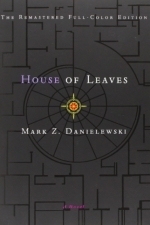

This is a book put together by a guy named Johnny who finds an incomplete mass of manuscript and notes in a chest in a room of a blind man who just recently died, named Zampano. He supposedly died of old age, but even that was questionable. The scatter of pages are written about a serious of videos about a house. This house is by no means your average house. The chilling oddity begins with the discovery that the house is actually bigger on the inside than it is on the outside... I cant say any more on this without possible spoilers... The whole story is presented as true, and the videos referenced were shot by the family living in the house.
The manuscript gets into incredible detail with a million footnotes and at first glance some pages could be out of a text book. Johnny, who has compiled the mass into book form, has decided that 95% of the references don't actually exist. Johnny makes his own notes and includes his own story in amongst the footnotes.
At first, I was not at all interested in Johnny's story or his many sexcapades, but the further in you go, the more the book ends up intruding into his own life. Also, the first many pages of Zampano's writings are difficult to get into. The flip flop between Johnny and Zampano's radically different writing styles takes a bit to get used to.
However, once you've gotten into the book, you're in completely and tangled in its labyrinth. This is not your average story, book, anything.

Nicole Hadley (380 KP) rated The Discovery Express in Books
Jun 18, 2018

On the first page the reader meets Pierre Henri, who is to be the conductor of the journey the reader is about the embark on. He explains that this is to be no ordinary train ride, and along with geographer, explorer and adventurer Nancy Delaney you begin travelling in time, history and across the world. The purpose of this trip is to find Professor Pendleton – the leader of the crew, whom without Pierre and Nancy are lost. As we travel across each carriage, each room, and each landmark there are many many clues and information under each flap and it is important that they aren’t missed. From flying machines, the Panama Canal, to one of my favourite pages on the hot air balloon, there will be much fun to be had while learning about inventions of our past and some of the most talent engineers ever.
My words really cannot do this book justice, it is when you get to see the book in person that you realise just how much it is going to spark the imagination of children. Apart from it looking beautiful, it is a textural delight on each page which sparks interaction between those reading through the book. This book is particularly brilliant for those wanting to be scientists or engineers, and those who simply love discovery and adventure.
I recommend this book to children and people who love adventure and trains.
I received this an ARC of All Aboard The Discovery Express from NetGalley via Quarto Publishing Group and Wide Eyed Editions.

JT (287 KP) rated The Ward (2010) in Movies
Mar 16, 2020
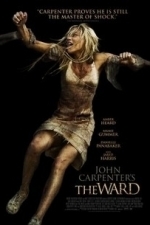

I’m a big fan of his work, but that is his early work with the likes of Halloween and The Thing as my personal favourites, but here Carpenter’s trademark suspense is all but lost in a story that is as predictable as it is stupid.
After setting fire to a barn Kristen (Amber Heard) is sent to a mental hospital, where she is terrorised by a ghost, a hidden past his reflected upon but never fully delved into. There is of course more to it than that, and Heard spends a vast majority of the time either locked in her room or trying to escape while at the same time piecing the puzzle together with the help of some of her fellow inmates.
Carpenter’s use of the wide camera angle is effective in places, and the long cold corridors of the ward are enough to give anyone the chills. However, it is not built on in any way and all the suspense is somewhat lost by the poor acting and monotonous build-up to the next potential terrifying scene. When the ghost is revealed it is, to be honest laughable and not in the least bit frightening which is probably one of the main downfalls of the film.
The twist ending is anything but predictable and you could have spotted it a mile off, it’s a poor effort this perhaps not helped in the writing department, but Carpenter is one of the masters of horror but here he hasn’t even bothered to turn up.


Studio Television Production and Directing: Concepts, Equipment, and Procedures
Book
Master the fundamentals of studio production procedure and become an effective leader on set. Gain...
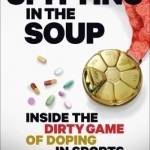
Spitting in the Soup: Inside the Dirty Game of Doping in Sports
Book
Doping is as old as organized sports. From baseball to horse racing, cycling to track and field,...
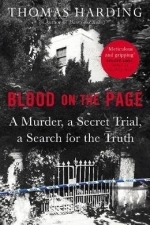
Blood on the Page
Book
'Meticulous and gripping' Philippe Sands, author of East West Street A groundbreaking examination of...

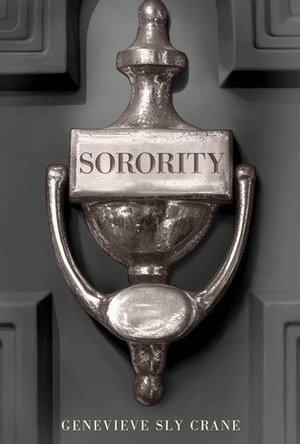

Well, this was a weird one. I'm not sure what I was expecting, but it wasn't this. We are introduced to the sorority girls in the first chapter by a "chorus," who tells us who lives in each room and a small bit about each one. Except for Margot's room, we're told; Margot is dead.
Then the following chapters detail a snippet of time in each girls' life. Some chapters may take place before Margot's death; others take place after. I was really glad I was reading a hardcopy, because at the start of each chapter, I had to flip back to that first chapter about all of the girls and find that girl's little paragraph or so blurb that introduced them. I could never keep any of them straight--perhaps because there was so many or maybe because most them didn't really stand out to me.
Because yes: I didn't really love this one. The short bits of time spent with each character make it hard to get attached to anyone. While we are technically following the thread of Margot's death, there's really no arc to the story. The book probably speaks to some higher meaning that I just didn't get. Instead it's a bit disturbing (some of the chapters are really awful), and no one is happy at all, which was really depressing. Sure, some of these dark glimpses into people's lives can be a little oddly fascinating, but honestly, it was often horrifying too. For me, it felt like the book was trying to be literary and clever and it just didn't work for me (or, more likely, I'm just not a good candidate for literary, smart books, ha).
For instance, was this one praising or mocking sororities? I really don't know. Margot's death seemed so pointless, so it certainly didn't seem to be doing the idea of sororities any favors. A lot of the book didn't seem to show the sisterhood in a good light. Yeah, I just didn't get it. I'm not sure exactly why I slogged through it, except that the full details of Margot's death aren't completely revealed until the end. I actually liked Margot the best, but she was dead, and yes, that probably sums up this book the best for me.
Overall, this one was too weird for me. I can do dark, but dark, strange, no real plot, and few characters with any redeemable value--it just didn't work for me. I'm sure it is enjoyable for others, especially those that don't need a real plot arc. And I do feel the need to point out that there's a trigger for self-harm, suicide, and eating disorders in this novel.