

Andy K (10826 KP) rated Back to the Future (1985) in Movies
Apr 10, 2019


To say this movie (and the original Star Wars trilogy) defined my childhood is an understatement. The year 1985 meant I was 14 years old and lived within biking distance of the theatre where it was showing. Only Back to the Future and The Empire Strikes Back have the distinction of being movies I saw at least fifteen times during their initial run; at one point every day for a week straight.
The story of how the film got made is an interesting as the perfect screenplay itself. Basically Bob Zemeckis and Bob Gale shopped the movie around after they had made a few films, including Used Cars (good movie), but studios weren't interested. Except Spielberg. Unfortunately, the duo had just worked with Spielberg on 1941 and it was a dud.
Luckily, Zemeckis directed Romancing the Stone in 1984, so they finally went back to Spielberg with that clout and got the deal done. BTTF was actually the first film released under Spielberg's Amblin Entertainment (with the E.T. logo) that Spielberg himself did not direct.
Then, casting. Filmmakers really wanted Michael J. Fox, but he was not available due to his TV schedule filming sitcom Family Ties. They had to move on, so they cast Eric Stoltz and filmed for 5 weeks.
Zemeckis felt like something wasn't right and asked Spielberg to take a look at the dailies. They agreed Stoltz was a good actor, but not right for the part of Marty McFly. They begged the Family Ties people to let Michael do both and they finally agreed. I can't believe how Michael did two full time jobs during production, but he did and managed to create an unforgettable character that will live forever in movie history.
If anyone ever decides it is a good idea to remake, reboot and/or get a sequel going I will personally go to their house and punch them in the face! ?

Lee (2222 KP) rated The Personal History of David Copperfield (2019) in Movies
Jan 26, 2020
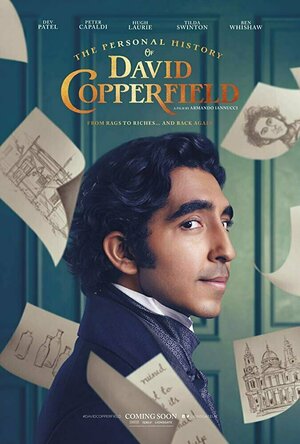


Dev Patel stars as Copperfield, the star and narrator of the story which charts his personal rise from rags to riches during Victorian England. We begin though with Copperfield as an adult, recounting his life story to a small theatre audience as he steps into a painted backdrop behind him on stage, transporting him, and us, to the location of his birth. He enters the family home and continues to narrate from within the scene as his mother struggles with labour. It’s just one of a variety of wonderfully inventive storytelling devices that the movie employs throughout.
While the chaos of childbirth plays out, the first in a long line of star-studded supporting characters arrives, David’s eccentric Aunt Betsey (Tilda Swinton), and we immediately get a glimpse of the kind of humour Iannucci has brought to the story as she sets about upsetting Peggotty, the family housekeeper, and declares that the baby will definitely be a girl.
From there, the storyline is fast paced, weaving between locations as David grows up - from an overturned boat house in Yarmouth, to the chaos of London and the difficulties of working in a bottle factory, and on to the Kent countryside. Along the way we meet yet more big names, including Peter Capaldi, Ben Whishaw, Hugh Laurie, Paul Whitehouse and Benedict Wong. Not to mention countless other recognisable faces.
The Personal History of David Copperfield is a real mixing pot of beautiful visuals, quirky humour and larger than life characters. Realism has been ditched in order to deliver a whimsical tale that is accessible to all ages. Unfortunately though, it just didn’t work for me. Aside from the opening scenes, and the occasional moment later on, the humour didn’t land at all. In fact, I got more laughs from the incredible movie Parasite that I saw just the night before seeing this.
Dev Patel, always impressive and enjoyable in everything he does, is charming as David Copperfield and is definitely the standout. Benedict Wong and Hugh Laurie were both enjoyable, but I felt the others all suffered from a script that just wasn’t strong enough. A beautifully shot movie, bold and bright and vibrant, but instantly forgettable.

Lonely Planet Germany
Lonely Planet, Marc Di Duca, Andrea Schulte-Peevers and Kerry Christiani
Book
Lonely Planet: The world's leading travel guide publisher Lonely Planet Germany is your passport to...

Parkland: Birth of a Movement
8.0 Rate It
Book
The New York Times bestselling author of Columbine offers a deeply moving account of the...

Lonely Planet Great Britain
Lonely Planet, Marc Di Duca, Neil Wilson and Oliver Berry
5.0 Rate It
Book
Lonely Planet: The world's leading travel guide publisher Lonely Planet Great Britain is your...

Pinball Arcade Plus
Games
App
Winner of the Best Mobile Game of 2012 on G4TV! Pinball Arcade by FarSight Studios features exact...
Handel
Book
Handel is one of the most remarkable figures in the history of western music. His compositions form...

Darren (1599 KP) rated The Town That Dreaded Sundown (2014) in Movies
Nov 23, 2019
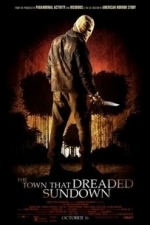

Story: The Town That Dreaded Sundown starts when Jami (Timlin) and her boyfriend Corey (Clark) are attending the drive-in-movie-theatre showing the movie based on the real murders set in Texarkana 65-years-ago, moving to lover’s lane the killer known as The Phantom catches them, murdering Corey, leaving Jami with a message and the town is thrown back into fear again.
When the Phantom strikes again, he leaves Jami with a warning that he stop until she gives up her own secret, with the town bringing in the Texas Rangers Lone Wolf Morales (Anderson) to hunt down the before more people are murdered, is this the original killer returning or a copycat.
Thoughts on The Town That Dreaded Sundown
Characters – Jami breaks the mould of the final girl, she is a survivor of the first attack being left with a message of trying to find Mary. Jami starts looking into the history of the town going in search of what happened 65 years ago, needing to decide about her own future in the town or going off to college. Jami isn’t a teenager that is going to be running, she is almost like the messenger for the killer. Lillian is the grandmother of Jami, she has raised her after her parent’s death, she wants what is best for her even though she might know something about the past. Lone Wolf Morales is a Texas Ranger that has come to the town in search of the answers, he has taken complete control of the investigation and will listen to any story which might uncover the truth about what is happening. Nick is the former classmate of Jami’s he works in the achieves where he helps Jami learn about the history of the town becoming a new love interest for her.
Performances – Addison Timlin in the leading role makes for a great scream figure, while not just looking like a victim. Anthony Anderson does seem to bring a little bit of humour to the film, while the rest of the cast don’t put a foot wrong.
Story – The story here follows a town which suffered from a serial killer spree 65-years ago, a film which bought back the memories and now a new killer has arrived killing mindlessly through town. This story might follow elements of the traditional stalker killer, which for the most part is an easy watch, when it jumps out to the next level of being a meta sequel, while also taking the story in a new direction, we get a nice mix of the three, with the idea that this is based on an unsolved murder spree, a reality check on a film that is about those murders and a potential copycat or supernatural killer, we are kept guessing. The story however is filled with weaknesses because we did get hints of people that would have been involved and they just seem to drop the potential of us having suspects, while the killer reveal is also largely disappointing by the end. This story does make us feel like we are watching a more serious version of Scream with how the world is created around us.
Horror/Mystery – The horror is a blood soaked slasher style, we get plenty of rules being broken for that genre too, with Jami not being killed in the opening attack, we also get to see how the killer isn’t slow and is predatory at times, with the mystery being around who the killer could be and why they have targeted certain people through the film.
Settings – The film is set in a small town on the border of two states, this means we get the police arguing over who should lead the case, as well as being in a place with a history of a serial killer.
Special Effects – When it comes to the effects, we know we are going to get plenty of blood with the kills that aren’t as bloody as they could have been, but show the brutality of the kill.
Scene of the Movie – The aerial field shot.
That Moment That Annoyed Me – The killer reveal is weak.
Final Thoughts – This is a slasher that is a joy to watch because it turns the rules of the genre on its head, even if the final reveal is the weak point of the film.
Overall: Slasher to Admire.

Sass Perilla (36 KP) rated The Master and Margarita in Books
Aug 9, 2019
Firstly, I didn’t intend to write an essay on this novel. However, once started I found I had a lot to say, and the more I thought about the plot and characters, the more ideas and parallels were sparked, so I am hopeful that the verbosity of this review can be forgiven.
At the risk of sounding both ignorant and uncultured, I found this novel (at least at first) bloody hard slog; not least because the Russian characters have three names, plus a nickname, plus a pun on their name (none of which work particularly well in translation and all of which sound rather similar to the English untrained ear). As an example- Ivan Nikolaevich Ponyrev (who seems to be referred to by any and all of these names) is also known as “Homeless” and “the poet” is a key character in the opening section of the novel. To further demonstrate: there are 17 different names that start with A that are used to refer to 15 different characters with Andreyevich used as the middle name of a bereaved uncle, who makes a journey from Kiev after his nephew is beheaded in a freak tram accident- and Andrey the buffet manager at a Moscow theatre. Clear as mud right? And that is before starting on similarly named characters with the initials M, P, L and S! At my last count there were 45 distinct characters, and I am fairly sure there will be some that I have missed. Hence, I did a lot of re-reading to work out exactly who was doing what to whom.
Additionally, I would suggest you need to be wary of the different translations. The distinct changes in meaning are subtle but important. To triangulate I had three versions at my disposal: Hugh Aplin’s translation (available for free on Kindle), the audiobook version translated by Richard Pevear and Larissa Volokhonsky (which I listened to simultaneously when reading the book to come to my own interpretation, and the subtitles for the Russian TV miniseries from 2005 when I gave up trying to work out who was who from name alone!
So those were my “technical” issues (if you like) with engaging with this novel, and this lack of clarity and understanding (and my own lack of contextual knowledge of Stalinist Russia) meant I missed many of the (what I am sure are hysterically funny to those in the know) satirical jokes in the opening section. That said, the random action and quick changes of focus, undercurrent of chaos in Moscow despite entrenched hierarchal structures and clear threat that (any) one could go missing at any time, for an unclear reason gave a clear insight into the mind and fears of a 1930s Russian citizen. No wonder it was available only in censored form for so long.
Despite these hardships, there were some genuinely laugh out loud moments in the first Moscow based part of the novel. The citizens have not lost their individuality, as they scrabble and fight for bank notes in the theatre, which are later revealed to be worthless. Nor have they lost their sense of pride and vanity, which we see in the female theatre goers, so desperate to attain the fashionable French couture (which later literally disappears from their bodies leaving semi-naked citizenesses desperately trying to cover themselves in a scene reminiscent of “Allo Allo” meets “Benny Hill”). When Professor Woland says his show will “expose” what the locals have failed to realise is that it is their (moral) shortcomings that are about to be revealed. The message is clearly, that no government can successfully legislate against human nature.
Oooh- and another fun fact, apparently Woland (later revealed- or perhaps is implied- to be Satan) was the inspiration to the Rolling Stones 1968 hit “Sympathy for the Devil”, well at least that is what my Google-Fu tells me.
Obviously, there were substantial hurdles to leap, however, I found by the second half of the novel, when we finally meet the eponymous characters, I had got in to the swing of things and begun to embrace the farcical surrealism of the novel.
The second “book” marks a change in tone, although it continues to cut away to scenes of Jesus’ sentencing by Pilate and execution (here known in the Aramaic form Yeshua). Ironically it is these scenes that are the most “real” and substantially human, as Pilate’s decision weighs head achingly heavily on him throughout. The Master and Margarita seem to be the only two characters fully invested in the authenticity of literature, and serve as a counterpoint to the heavily censored “monstrous” writing of Ivan and the rest of the writers’ union Massolit, more interested in fine dining and what their positions can do for them then the production of quality writing.
And it is Margarita’s journey of discovery and liberation from the stodgy, miserable societal expectations of that leads her back to her Master. Bulgakov mixes classical myth, Russian folklore and Bible stories to give us an impression of the timelessness of the central romance. As the worlds of communist Moscow and the inner worlds of the Master and Margarita collide, we are informed of the former’s desire to excuse all magic (and mischief) as the product of mass hypnosis, when the latter (and the reader) are fully aware of the spiritual significance and dimension of the events.
Clever, astute and in places laugh out loud funny, this novel none-the-less requires a level of dedication from the non-Russian speaking reader. Worth a read? Yes. Worth a re-read? Maybe not.

Emma @ The Movies (1786 KP) rated The Personal History of David Copperfield (2019) in Movies
Mar 2, 2020

Young David Copperfield is sent off into the world by his step-father. Unaware of the real woes of the world he must keep his spirits up as his surroundings changes to a much harsher nature. As he grows he's still a creative and happy-go-lucky young man but has he found himself in the place he truly wants to be?
I had to keep reminding myself that the film we were watching was being told to us by David himself, the chaotic nature throughout would have been, in part, down to his natural chaotic energy. It did become overwhelming at times though and starting the film with so many transitions was quite off putting.
I don't remember the last time I saw a cast this diverse, and that's a great thing but the cynical side of me did briefly wonder if it was diversity for the sake of that bit of recognition. Ugh, I hate thinking that, and it's in no way a reflection on the cast as they're all excellent actors, but I didn't feel like some of the character dynamics worked together. That may also have something to do with the frantic nature of everything else going on though.
There's definite theatre in this, each scene feels like it takes place in a confined space, like that of a stage, until it opens up at the end to its infinite future and possibilities.
Everything in this period drama feels wrong for a traditional period drama. The cities would normally be drab and dank but everything has a surprisingly light and airy nature to it, a quirk of David's optimism maybe? Each location was stunning though and designed perfectly for its needs. The Micawber's home being accessible from almost every angle to allow for the tussles with the creditors, and Mr Dick's room as a reflection of the chaos in his head. There was much to marvel at but so little time to see it as it fought for attention with the constantly moving script.
Dev Patel feels like the perfect choice for the role of Copperfield, the excitement and optimism in it is not that far off his portrayal of Sonny Kapoor in The Best Exotic Marigold Hotel. He brought the energy needed to keep up with the pace and it made for an entertaining lead.
Was this just too much though? So much story crammed into just 2 hours of screen time. Too many great actors never really getting a chance to make an impact [a very similar feeling to the Knives Out's roster]. A pace that was akin to a 2 hour version of Clue's multiple endings. Too much, I was exhausted after seeing it.
Having only seen Iannucci's directing before in Death Of Stalin I'm unsure as to whether this pacing issue is something common to him, I genuinely don't remember that being quite this chaotic, but that alone was enough to put me off. The experience felt rushed and that's never how I want to feel when I watch a film.
Originally posted on: http://emmaatthemovies.blogspot.com/2020/03/the-personal-history-of-david.html
Kevin Phillipson (10072 KP) Jul 29, 2020