
Search
Search results

Merissa (14142 KP) created a post
Jan 20, 2026


David McK (3880 KP) rated Sworn Sword (The Bloody Aftermath of 1066, #1) in Books
Jan 30, 2019 (Updated Jul 9, 2023)
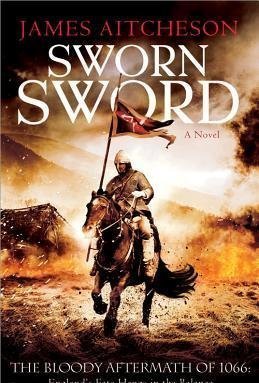

About a month or so ago, I was in my local Waterstones when I spotted two books both set around the time of the Norman Invasion but telling the tale but different angles: <i>Hereward</i> and this. Humming ang haaing, I eventually decided on <i>Hereward</i> and then, later, came across this novel for sale in Tesco's picking it up there.
Of the two books, I have to say - and despite a title that sounds like a bad b-movie ('"Sworn Sword: 1066: The Aftermath!" coming soon to a theatre near you!') - this is the better. Told in first person prose, this novel is from the point of view of a Norman Knight (whereas <i>Hereward</i> was from that of an Anglo-Saxon), and reminded me very much of one of the better Bernard Cornwell books in that the history covered (albeit slighlty fictionalised to fit the demands of the story) is just as interesting as the actual plot.
The first in a series of books set in the same period, I think I will be picking up more of these!
Of the two books, I have to say - and despite a title that sounds like a bad b-movie ('"Sworn Sword: 1066: The Aftermath!" coming soon to a theatre near you!') - this is the better. Told in first person prose, this novel is from the point of view of a Norman Knight (whereas <i>Hereward</i> was from that of an Anglo-Saxon), and reminded me very much of one of the better Bernard Cornwell books in that the history covered (albeit slighlty fictionalised to fit the demands of the story) is just as interesting as the actual plot.
The first in a series of books set in the same period, I think I will be picking up more of these!
David McK (3880 KP) rated Assassin's Creed (2016) in Movies
Jun 9, 2019 (Updated Jan 18, 2020)

What. On. Earth.
Another (IMO) failed attempt to bring a video game - in this case, Ubisofts long-running Assassin's Creeds series - to the big screen.
For those not in the know (anyone?), those games sees the player taking the part of a character reliving the memories of one of their ancestors through a device known as the animus, with a whole alt-past mysticism behind it all, and with a centuries-long war between the Templars (the bad guys, in all bit one game) and the Assassin's bubbling along in the background.
And, right there's, is why I think most of these video-game-to-movies adaptations fail: in the game, you're (as the player) are an active participant whereas in the movie theatre you're passive.
It probably also doesn't help that the film seems largely based on one of the more universally-disliked portions of the source material (i.e. the present day parts, which have more or less been completely dropped in the games that came out after this film) rather than the more-interesting past! On the plus side, however, at least they went for a new period of history to visit instead of something already covered by the games.
Another (IMO) failed attempt to bring a video game - in this case, Ubisofts long-running Assassin's Creeds series - to the big screen.
For those not in the know (anyone?), those games sees the player taking the part of a character reliving the memories of one of their ancestors through a device known as the animus, with a whole alt-past mysticism behind it all, and with a centuries-long war between the Templars (the bad guys, in all bit one game) and the Assassin's bubbling along in the background.
And, right there's, is why I think most of these video-game-to-movies adaptations fail: in the game, you're (as the player) are an active participant whereas in the movie theatre you're passive.
It probably also doesn't help that the film seems largely based on one of the more universally-disliked portions of the source material (i.e. the present day parts, which have more or less been completely dropped in the games that came out after this film) rather than the more-interesting past! On the plus side, however, at least they went for a new period of history to visit instead of something already covered by the games.

Andy K (10826 KP) rated Back to the Future (1985) in Movies
Apr 10, 2019


My entire childhood
So funny how seeing a "decked out" DeLorean in a Target parking lot the other day made me want to rewatch Back to the Future again soon. It had been on my rewatch list ever since I purchased the trilogy on Blu Ray on Black Friday, but just hadn't gotten around to it yet.
To say this movie (and the original Star Wars trilogy) defined my childhood is an understatement. The year 1985 meant I was 14 years old and lived within biking distance of the theatre where it was showing. Only Back to the Future and The Empire Strikes Back have the distinction of being movies I saw at least fifteen times during their initial run; at one point every day for a week straight.
The story of how the film got made is an interesting as the perfect screenplay itself. Basically Bob Zemeckis and Bob Gale shopped the movie around after they had made a few films, including Used Cars (good movie), but studios weren't interested. Except Spielberg. Unfortunately, the duo had just worked with Spielberg on 1941 and it was a dud.
Luckily, Zemeckis directed Romancing the Stone in 1984, so they finally went back to Spielberg with that clout and got the deal done. BTTF was actually the first film released under Spielberg's Amblin Entertainment (with the E.T. logo) that Spielberg himself did not direct.
Then, casting. Filmmakers really wanted Michael J. Fox, but he was not available due to his TV schedule filming sitcom Family Ties. They had to move on, so they cast Eric Stoltz and filmed for 5 weeks.
Zemeckis felt like something wasn't right and asked Spielberg to take a look at the dailies. They agreed Stoltz was a good actor, but not right for the part of Marty McFly. They begged the Family Ties people to let Michael do both and they finally agreed. I can't believe how Michael did two full time jobs during production, but he did and managed to create an unforgettable character that will live forever in movie history.
If anyone ever decides it is a good idea to remake, reboot and/or get a sequel going I will personally go to their house and punch them in the face! ?
To say this movie (and the original Star Wars trilogy) defined my childhood is an understatement. The year 1985 meant I was 14 years old and lived within biking distance of the theatre where it was showing. Only Back to the Future and The Empire Strikes Back have the distinction of being movies I saw at least fifteen times during their initial run; at one point every day for a week straight.
The story of how the film got made is an interesting as the perfect screenplay itself. Basically Bob Zemeckis and Bob Gale shopped the movie around after they had made a few films, including Used Cars (good movie), but studios weren't interested. Except Spielberg. Unfortunately, the duo had just worked with Spielberg on 1941 and it was a dud.
Luckily, Zemeckis directed Romancing the Stone in 1984, so they finally went back to Spielberg with that clout and got the deal done. BTTF was actually the first film released under Spielberg's Amblin Entertainment (with the E.T. logo) that Spielberg himself did not direct.
Then, casting. Filmmakers really wanted Michael J. Fox, but he was not available due to his TV schedule filming sitcom Family Ties. They had to move on, so they cast Eric Stoltz and filmed for 5 weeks.
Zemeckis felt like something wasn't right and asked Spielberg to take a look at the dailies. They agreed Stoltz was a good actor, but not right for the part of Marty McFly. They begged the Family Ties people to let Michael do both and they finally agreed. I can't believe how Michael did two full time jobs during production, but he did and managed to create an unforgettable character that will live forever in movie history.
If anyone ever decides it is a good idea to remake, reboot and/or get a sequel going I will personally go to their house and punch them in the face! ?


Lee (2222 KP) rated The Personal History of David Copperfield (2019) in Movies
Jan 26, 2020
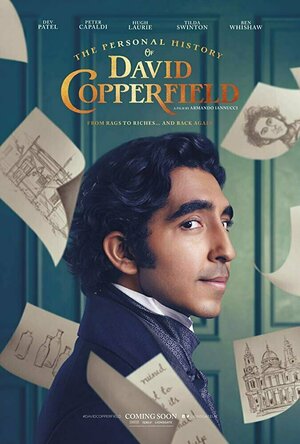


Based on the famous and beloved novel by Charles Dickens, Armando Iannucci (Veep, The Thick of It, The Death of Stalin) brings us this fresh new take on David Copperfield. And it’s like no other Dickens adaptation you’ve ever seen before.
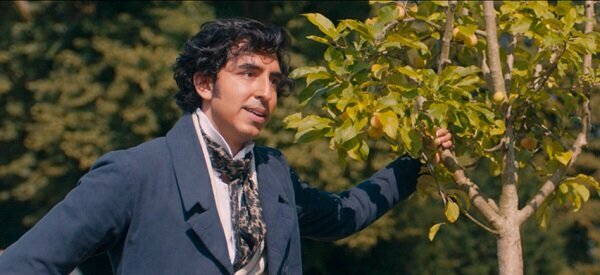
Dev Patel stars as Copperfield, the star and narrator of the story which charts his personal rise from rags to riches during Victorian England. We begin though with Copperfield as an adult, recounting his life story to a small theatre audience as he steps into a painted backdrop behind him on stage, transporting him, and us, to the location of his birth. He enters the family home and continues to narrate from within the scene as his mother struggles with labour. It’s just one of a variety of wonderfully inventive storytelling devices that the movie employs throughout.
While the chaos of childbirth plays out, the first in a long line of star-studded supporting characters arrives, David’s eccentric Aunt Betsey (Tilda Swinton), and we immediately get a glimpse of the kind of humour Iannucci has brought to the story as she sets about upsetting Peggotty, the family housekeeper, and declares that the baby will definitely be a girl.
From there, the storyline is fast paced, weaving between locations as David grows up - from an overturned boat house in Yarmouth, to the chaos of London and the difficulties of working in a bottle factory, and on to the Kent countryside. Along the way we meet yet more big names, including Peter Capaldi, Ben Whishaw, Hugh Laurie, Paul Whitehouse and Benedict Wong. Not to mention countless other recognisable faces.
The Personal History of David Copperfield is a real mixing pot of beautiful visuals, quirky humour and larger than life characters. Realism has been ditched in order to deliver a whimsical tale that is accessible to all ages. Unfortunately though, it just didn’t work for me. Aside from the opening scenes, and the occasional moment later on, the humour didn’t land at all. In fact, I got more laughs from the incredible movie Parasite that I saw just the night before seeing this.
Dev Patel, always impressive and enjoyable in everything he does, is charming as David Copperfield and is definitely the standout. Benedict Wong and Hugh Laurie were both enjoyable, but I felt the others all suffered from a script that just wasn’t strong enough. A beautifully shot movie, bold and bright and vibrant, but instantly forgettable.
Dev Patel stars as Copperfield, the star and narrator of the story which charts his personal rise from rags to riches during Victorian England. We begin though with Copperfield as an adult, recounting his life story to a small theatre audience as he steps into a painted backdrop behind him on stage, transporting him, and us, to the location of his birth. He enters the family home and continues to narrate from within the scene as his mother struggles with labour. It’s just one of a variety of wonderfully inventive storytelling devices that the movie employs throughout.
While the chaos of childbirth plays out, the first in a long line of star-studded supporting characters arrives, David’s eccentric Aunt Betsey (Tilda Swinton), and we immediately get a glimpse of the kind of humour Iannucci has brought to the story as she sets about upsetting Peggotty, the family housekeeper, and declares that the baby will definitely be a girl.
From there, the storyline is fast paced, weaving between locations as David grows up - from an overturned boat house in Yarmouth, to the chaos of London and the difficulties of working in a bottle factory, and on to the Kent countryside. Along the way we meet yet more big names, including Peter Capaldi, Ben Whishaw, Hugh Laurie, Paul Whitehouse and Benedict Wong. Not to mention countless other recognisable faces.
The Personal History of David Copperfield is a real mixing pot of beautiful visuals, quirky humour and larger than life characters. Realism has been ditched in order to deliver a whimsical tale that is accessible to all ages. Unfortunately though, it just didn’t work for me. Aside from the opening scenes, and the occasional moment later on, the humour didn’t land at all. In fact, I got more laughs from the incredible movie Parasite that I saw just the night before seeing this.
Dev Patel, always impressive and enjoyable in everything he does, is charming as David Copperfield and is definitely the standout. Benedict Wong and Hugh Laurie were both enjoyable, but I felt the others all suffered from a script that just wasn’t strong enough. A beautifully shot movie, bold and bright and vibrant, but instantly forgettable.

Darren (1599 KP) rated The Town That Dreaded Sundown (2014) in Movies
Nov 23, 2019

Verdict: Slasher 101
Story: The Town That Dreaded Sundown starts when Jami (Timlin) and her boyfriend Corey (Clark) are attending the drive-in-movie-theatre showing the movie based on the real murders set in Texarkana 65-years-ago, moving to lover’s lane the killer known as The Phantom catches them, murdering Corey, leaving Jami with a message and the town is thrown back into fear again.
When the Phantom strikes again, he leaves Jami with a warning that he stop until she gives up her own secret, with the town bringing in the Texas Rangers Lone Wolf Morales (Anderson) to hunt down the before more people are murdered, is this the original killer returning or a copycat.
Thoughts on The Town That Dreaded Sundown
Characters – Jami breaks the mould of the final girl, she is a survivor of the first attack being left with a message of trying to find Mary. Jami starts looking into the history of the town going in search of what happened 65 years ago, needing to decide about her own future in the town or going off to college. Jami isn’t a teenager that is going to be running, she is almost like the messenger for the killer. Lillian is the grandmother of Jami, she has raised her after her parent’s death, she wants what is best for her even though she might know something about the past. Lone Wolf Morales is a Texas Ranger that has come to the town in search of the answers, he has taken complete control of the investigation and will listen to any story which might uncover the truth about what is happening. Nick is the former classmate of Jami’s he works in the achieves where he helps Jami learn about the history of the town becoming a new love interest for her.
Performances – Addison Timlin in the leading role makes for a great scream figure, while not just looking like a victim. Anthony Anderson does seem to bring a little bit of humour to the film, while the rest of the cast don’t put a foot wrong.
Story – The story here follows a town which suffered from a serial killer spree 65-years ago, a film which bought back the memories and now a new killer has arrived killing mindlessly through town. This story might follow elements of the traditional stalker killer, which for the most part is an easy watch, when it jumps out to the next level of being a meta sequel, while also taking the story in a new direction, we get a nice mix of the three, with the idea that this is based on an unsolved murder spree, a reality check on a film that is about those murders and a potential copycat or supernatural killer, we are kept guessing. The story however is filled with weaknesses because we did get hints of people that would have been involved and they just seem to drop the potential of us having suspects, while the killer reveal is also largely disappointing by the end. This story does make us feel like we are watching a more serious version of Scream with how the world is created around us.
Horror/Mystery – The horror is a blood soaked slasher style, we get plenty of rules being broken for that genre too, with Jami not being killed in the opening attack, we also get to see how the killer isn’t slow and is predatory at times, with the mystery being around who the killer could be and why they have targeted certain people through the film.
Settings – The film is set in a small town on the border of two states, this means we get the police arguing over who should lead the case, as well as being in a place with a history of a serial killer.
Special Effects – When it comes to the effects, we know we are going to get plenty of blood with the kills that aren’t as bloody as they could have been, but show the brutality of the kill.
Scene of the Movie – The aerial field shot.
That Moment That Annoyed Me – The killer reveal is weak.
Final Thoughts – This is a slasher that is a joy to watch because it turns the rules of the genre on its head, even if the final reveal is the weak point of the film.
Overall: Slasher to Admire.
Story: The Town That Dreaded Sundown starts when Jami (Timlin) and her boyfriend Corey (Clark) are attending the drive-in-movie-theatre showing the movie based on the real murders set in Texarkana 65-years-ago, moving to lover’s lane the killer known as The Phantom catches them, murdering Corey, leaving Jami with a message and the town is thrown back into fear again.
When the Phantom strikes again, he leaves Jami with a warning that he stop until she gives up her own secret, with the town bringing in the Texas Rangers Lone Wolf Morales (Anderson) to hunt down the before more people are murdered, is this the original killer returning or a copycat.
Thoughts on The Town That Dreaded Sundown
Characters – Jami breaks the mould of the final girl, she is a survivor of the first attack being left with a message of trying to find Mary. Jami starts looking into the history of the town going in search of what happened 65 years ago, needing to decide about her own future in the town or going off to college. Jami isn’t a teenager that is going to be running, she is almost like the messenger for the killer. Lillian is the grandmother of Jami, she has raised her after her parent’s death, she wants what is best for her even though she might know something about the past. Lone Wolf Morales is a Texas Ranger that has come to the town in search of the answers, he has taken complete control of the investigation and will listen to any story which might uncover the truth about what is happening. Nick is the former classmate of Jami’s he works in the achieves where he helps Jami learn about the history of the town becoming a new love interest for her.
Performances – Addison Timlin in the leading role makes for a great scream figure, while not just looking like a victim. Anthony Anderson does seem to bring a little bit of humour to the film, while the rest of the cast don’t put a foot wrong.
Story – The story here follows a town which suffered from a serial killer spree 65-years ago, a film which bought back the memories and now a new killer has arrived killing mindlessly through town. This story might follow elements of the traditional stalker killer, which for the most part is an easy watch, when it jumps out to the next level of being a meta sequel, while also taking the story in a new direction, we get a nice mix of the three, with the idea that this is based on an unsolved murder spree, a reality check on a film that is about those murders and a potential copycat or supernatural killer, we are kept guessing. The story however is filled with weaknesses because we did get hints of people that would have been involved and they just seem to drop the potential of us having suspects, while the killer reveal is also largely disappointing by the end. This story does make us feel like we are watching a more serious version of Scream with how the world is created around us.
Horror/Mystery – The horror is a blood soaked slasher style, we get plenty of rules being broken for that genre too, with Jami not being killed in the opening attack, we also get to see how the killer isn’t slow and is predatory at times, with the mystery being around who the killer could be and why they have targeted certain people through the film.
Settings – The film is set in a small town on the border of two states, this means we get the police arguing over who should lead the case, as well as being in a place with a history of a serial killer.
Special Effects – When it comes to the effects, we know we are going to get plenty of blood with the kills that aren’t as bloody as they could have been, but show the brutality of the kill.
Scene of the Movie – The aerial field shot.
That Moment That Annoyed Me – The killer reveal is weak.
Final Thoughts – This is a slasher that is a joy to watch because it turns the rules of the genre on its head, even if the final reveal is the weak point of the film.
Overall: Slasher to Admire.

Sass Perilla (36 KP) rated The Master and Margarita in Books
Aug 9, 2019
Worth a read? Yes. Worth a reread? Maybe not.
Contains spoilers, click to show
The Master and Magarita: Mikhail Bulgakov
Firstly, I didn’t intend to write an essay on this novel. However, once started I found I had a lot to say, and the more I thought about the plot and characters, the more ideas and parallels were sparked, so I am hopeful that the verbosity of this review can be forgiven.
At the risk of sounding both ignorant and uncultured, I found this novel (at least at first) bloody hard slog; not least because the Russian characters have three names, plus a nickname, plus a pun on their name (none of which work particularly well in translation and all of which sound rather similar to the English untrained ear). As an example- Ivan Nikolaevich Ponyrev (who seems to be referred to by any and all of these names) is also known as “Homeless” and “the poet” is a key character in the opening section of the novel. To further demonstrate: there are 17 different names that start with A that are used to refer to 15 different characters with Andreyevich used as the middle name of a bereaved uncle, who makes a journey from Kiev after his nephew is beheaded in a freak tram accident- and Andrey the buffet manager at a Moscow theatre. Clear as mud right? And that is before starting on similarly named characters with the initials M, P, L and S! At my last count there were 45 distinct characters, and I am fairly sure there will be some that I have missed. Hence, I did a lot of re-reading to work out exactly who was doing what to whom.
Additionally, I would suggest you need to be wary of the different translations. The distinct changes in meaning are subtle but important. To triangulate I had three versions at my disposal: Hugh Aplin’s translation (available for free on Kindle), the audiobook version translated by Richard Pevear and Larissa Volokhonsky (which I listened to simultaneously when reading the book to come to my own interpretation, and the subtitles for the Russian TV miniseries from 2005 when I gave up trying to work out who was who from name alone!
So those were my “technical” issues (if you like) with engaging with this novel, and this lack of clarity and understanding (and my own lack of contextual knowledge of Stalinist Russia) meant I missed many of the (what I am sure are hysterically funny to those in the know) satirical jokes in the opening section. That said, the random action and quick changes of focus, undercurrent of chaos in Moscow despite entrenched hierarchal structures and clear threat that (any) one could go missing at any time, for an unclear reason gave a clear insight into the mind and fears of a 1930s Russian citizen. No wonder it was available only in censored form for so long.
Despite these hardships, there were some genuinely laugh out loud moments in the first Moscow based part of the novel. The citizens have not lost their individuality, as they scrabble and fight for bank notes in the theatre, which are later revealed to be worthless. Nor have they lost their sense of pride and vanity, which we see in the female theatre goers, so desperate to attain the fashionable French couture (which later literally disappears from their bodies leaving semi-naked citizenesses desperately trying to cover themselves in a scene reminiscent of “Allo Allo” meets “Benny Hill”). When Professor Woland says his show will “expose” what the locals have failed to realise is that it is their (moral) shortcomings that are about to be revealed. The message is clearly, that no government can successfully legislate against human nature.
Oooh- and another fun fact, apparently Woland (later revealed- or perhaps is implied- to be Satan) was the inspiration to the Rolling Stones 1968 hit “Sympathy for the Devil”, well at least that is what my Google-Fu tells me.
Obviously, there were substantial hurdles to leap, however, I found by the second half of the novel, when we finally meet the eponymous characters, I had got in to the swing of things and begun to embrace the farcical surrealism of the novel.
The second “book” marks a change in tone, although it continues to cut away to scenes of Jesus’ sentencing by Pilate and execution (here known in the Aramaic form Yeshua). Ironically it is these scenes that are the most “real” and substantially human, as Pilate’s decision weighs head achingly heavily on him throughout. The Master and Margarita seem to be the only two characters fully invested in the authenticity of literature, and serve as a counterpoint to the heavily censored “monstrous” writing of Ivan and the rest of the writers’ union Massolit, more interested in fine dining and what their positions can do for them then the production of quality writing.
And it is Margarita’s journey of discovery and liberation from the stodgy, miserable societal expectations of that leads her back to her Master. Bulgakov mixes classical myth, Russian folklore and Bible stories to give us an impression of the timelessness of the central romance. As the worlds of communist Moscow and the inner worlds of the Master and Margarita collide, we are informed of the former’s desire to excuse all magic (and mischief) as the product of mass hypnosis, when the latter (and the reader) are fully aware of the spiritual significance and dimension of the events.
Clever, astute and in places laugh out loud funny, this novel none-the-less requires a level of dedication from the non-Russian speaking reader. Worth a read? Yes. Worth a re-read? Maybe not.
Firstly, I didn’t intend to write an essay on this novel. However, once started I found I had a lot to say, and the more I thought about the plot and characters, the more ideas and parallels were sparked, so I am hopeful that the verbosity of this review can be forgiven.
At the risk of sounding both ignorant and uncultured, I found this novel (at least at first) bloody hard slog; not least because the Russian characters have three names, plus a nickname, plus a pun on their name (none of which work particularly well in translation and all of which sound rather similar to the English untrained ear). As an example- Ivan Nikolaevich Ponyrev (who seems to be referred to by any and all of these names) is also known as “Homeless” and “the poet” is a key character in the opening section of the novel. To further demonstrate: there are 17 different names that start with A that are used to refer to 15 different characters with Andreyevich used as the middle name of a bereaved uncle, who makes a journey from Kiev after his nephew is beheaded in a freak tram accident- and Andrey the buffet manager at a Moscow theatre. Clear as mud right? And that is before starting on similarly named characters with the initials M, P, L and S! At my last count there were 45 distinct characters, and I am fairly sure there will be some that I have missed. Hence, I did a lot of re-reading to work out exactly who was doing what to whom.
Additionally, I would suggest you need to be wary of the different translations. The distinct changes in meaning are subtle but important. To triangulate I had three versions at my disposal: Hugh Aplin’s translation (available for free on Kindle), the audiobook version translated by Richard Pevear and Larissa Volokhonsky (which I listened to simultaneously when reading the book to come to my own interpretation, and the subtitles for the Russian TV miniseries from 2005 when I gave up trying to work out who was who from name alone!
So those were my “technical” issues (if you like) with engaging with this novel, and this lack of clarity and understanding (and my own lack of contextual knowledge of Stalinist Russia) meant I missed many of the (what I am sure are hysterically funny to those in the know) satirical jokes in the opening section. That said, the random action and quick changes of focus, undercurrent of chaos in Moscow despite entrenched hierarchal structures and clear threat that (any) one could go missing at any time, for an unclear reason gave a clear insight into the mind and fears of a 1930s Russian citizen. No wonder it was available only in censored form for so long.
Despite these hardships, there were some genuinely laugh out loud moments in the first Moscow based part of the novel. The citizens have not lost their individuality, as they scrabble and fight for bank notes in the theatre, which are later revealed to be worthless. Nor have they lost their sense of pride and vanity, which we see in the female theatre goers, so desperate to attain the fashionable French couture (which later literally disappears from their bodies leaving semi-naked citizenesses desperately trying to cover themselves in a scene reminiscent of “Allo Allo” meets “Benny Hill”). When Professor Woland says his show will “expose” what the locals have failed to realise is that it is their (moral) shortcomings that are about to be revealed. The message is clearly, that no government can successfully legislate against human nature.
Oooh- and another fun fact, apparently Woland (later revealed- or perhaps is implied- to be Satan) was the inspiration to the Rolling Stones 1968 hit “Sympathy for the Devil”, well at least that is what my Google-Fu tells me.
Obviously, there were substantial hurdles to leap, however, I found by the second half of the novel, when we finally meet the eponymous characters, I had got in to the swing of things and begun to embrace the farcical surrealism of the novel.
The second “book” marks a change in tone, although it continues to cut away to scenes of Jesus’ sentencing by Pilate and execution (here known in the Aramaic form Yeshua). Ironically it is these scenes that are the most “real” and substantially human, as Pilate’s decision weighs head achingly heavily on him throughout. The Master and Margarita seem to be the only two characters fully invested in the authenticity of literature, and serve as a counterpoint to the heavily censored “monstrous” writing of Ivan and the rest of the writers’ union Massolit, more interested in fine dining and what their positions can do for them then the production of quality writing.
And it is Margarita’s journey of discovery and liberation from the stodgy, miserable societal expectations of that leads her back to her Master. Bulgakov mixes classical myth, Russian folklore and Bible stories to give us an impression of the timelessness of the central romance. As the worlds of communist Moscow and the inner worlds of the Master and Margarita collide, we are informed of the former’s desire to excuse all magic (and mischief) as the product of mass hypnosis, when the latter (and the reader) are fully aware of the spiritual significance and dimension of the events.
Clever, astute and in places laugh out loud funny, this novel none-the-less requires a level of dedication from the non-Russian speaking reader. Worth a read? Yes. Worth a re-read? Maybe not.

Emma @ The Movies (1786 KP) rated The Personal History of David Copperfield (2019) in Movies
Mar 2, 2020

More classic literature retold for the modern audience, this time with a very distinctive and chaotic style.
Young David Copperfield is sent off into the world by his step-father. Unaware of the real woes of the world he must keep his spirits up as his surroundings changes to a much harsher nature. As he grows he's still a creative and happy-go-lucky young man but has he found himself in the place he truly wants to be?
I had to keep reminding myself that the film we were watching was being told to us by David himself, the chaotic nature throughout would have been, in part, down to his natural chaotic energy. It did become overwhelming at times though and starting the film with so many transitions was quite off putting.
I don't remember the last time I saw a cast this diverse, and that's a great thing but the cynical side of me did briefly wonder if it was diversity for the sake of that bit of recognition. Ugh, I hate thinking that, and it's in no way a reflection on the cast as they're all excellent actors, but I didn't feel like some of the character dynamics worked together. That may also have something to do with the frantic nature of everything else going on though.
There's definite theatre in this, each scene feels like it takes place in a confined space, like that of a stage, until it opens up at the end to its infinite future and possibilities.
Everything in this period drama feels wrong for a traditional period drama. The cities would normally be drab and dank but everything has a surprisingly light and airy nature to it, a quirk of David's optimism maybe? Each location was stunning though and designed perfectly for its needs. The Micawber's home being accessible from almost every angle to allow for the tussles with the creditors, and Mr Dick's room as a reflection of the chaos in his head. There was much to marvel at but so little time to see it as it fought for attention with the constantly moving script.
Dev Patel feels like the perfect choice for the role of Copperfield, the excitement and optimism in it is not that far off his portrayal of Sonny Kapoor in The Best Exotic Marigold Hotel. He brought the energy needed to keep up with the pace and it made for an entertaining lead.
Was this just too much though? So much story crammed into just 2 hours of screen time. Too many great actors never really getting a chance to make an impact [a very similar feeling to the Knives Out's roster]. A pace that was akin to a 2 hour version of Clue's multiple endings. Too much, I was exhausted after seeing it.
Having only seen Iannucci's directing before in Death Of Stalin I'm unsure as to whether this pacing issue is something common to him, I genuinely don't remember that being quite this chaotic, but that alone was enough to put me off. The experience felt rushed and that's never how I want to feel when I watch a film.
Originally posted on: http://emmaatthemovies.blogspot.com/2020/03/the-personal-history-of-david.html
Young David Copperfield is sent off into the world by his step-father. Unaware of the real woes of the world he must keep his spirits up as his surroundings changes to a much harsher nature. As he grows he's still a creative and happy-go-lucky young man but has he found himself in the place he truly wants to be?
I had to keep reminding myself that the film we were watching was being told to us by David himself, the chaotic nature throughout would have been, in part, down to his natural chaotic energy. It did become overwhelming at times though and starting the film with so many transitions was quite off putting.
I don't remember the last time I saw a cast this diverse, and that's a great thing but the cynical side of me did briefly wonder if it was diversity for the sake of that bit of recognition. Ugh, I hate thinking that, and it's in no way a reflection on the cast as they're all excellent actors, but I didn't feel like some of the character dynamics worked together. That may also have something to do with the frantic nature of everything else going on though.
There's definite theatre in this, each scene feels like it takes place in a confined space, like that of a stage, until it opens up at the end to its infinite future and possibilities.
Everything in this period drama feels wrong for a traditional period drama. The cities would normally be drab and dank but everything has a surprisingly light and airy nature to it, a quirk of David's optimism maybe? Each location was stunning though and designed perfectly for its needs. The Micawber's home being accessible from almost every angle to allow for the tussles with the creditors, and Mr Dick's room as a reflection of the chaos in his head. There was much to marvel at but so little time to see it as it fought for attention with the constantly moving script.
Dev Patel feels like the perfect choice for the role of Copperfield, the excitement and optimism in it is not that far off his portrayal of Sonny Kapoor in The Best Exotic Marigold Hotel. He brought the energy needed to keep up with the pace and it made for an entertaining lead.
Was this just too much though? So much story crammed into just 2 hours of screen time. Too many great actors never really getting a chance to make an impact [a very similar feeling to the Knives Out's roster]. A pace that was akin to a 2 hour version of Clue's multiple endings. Too much, I was exhausted after seeing it.
Having only seen Iannucci's directing before in Death Of Stalin I'm unsure as to whether this pacing issue is something common to him, I genuinely don't remember that being quite this chaotic, but that alone was enough to put me off. The experience felt rushed and that's never how I want to feel when I watch a film.
Originally posted on: http://emmaatthemovies.blogspot.com/2020/03/the-personal-history-of-david.html

Bob Mann (459 KP) rated The Personal History of David Copperfield (2019) in Movies
Jan 8, 2021
The fantastic ensemble cast (1 more)
Great directing and editing
Effortlessly stylish and entertaining
The Personal History of David Copperfield starts with the young man (Dev Patel) regaling a theatre audience with a reading of his autobiography. This immediately pitches him into witnessing his own birth to widowed single mother Clara (the wonderful Morfydd Clark, or "Saint Maud" fame). From there, Copperfield goes helter-skelter into a rollercoaster life encompassing workhouse-bottling poverty, fish-gutting and rich gentlemanly pursuits.
You have to admire the artistry of Dickens. Of course, I am aware of some of the plethora of rich and complex characters that Dickens imagined including the rascally Mr Micawber (Peter Capaldi) and the ever-'umble but conniving Uriah Heep (Ben Wishaw). But the story is literally rammed with amazing characters. It's almost as if Dickens conjured up full pen-portraits of 30 different characters and then contrived to fit them somehow into the story. Remarkably rich.
There's a very striking nature to the casting of this movie. It had me going "Wha?? Who??" while watching it. Because the roles are cast multi-culturally, without nature to the demographics of the time and - crucially - to the relationship between the characters. For example, with Copperfield, you might - with a bit of a squint - play along with it since we never see the father. But then the mother of the (very-much-white) Steerforth (Aneurin Barnard) turns up as Nigerian-born actress Nikki Amuka-Bird (who is fabulous). Benedict Wong also turns up as legal director Mr Wickfield. It was as if the casting was done purely on talent and regardless of race and appropriateness for the Dickensian times. Which is refreshingly different and much to be welcomed.
Sarah Crowe has won a number of awards for her casting of the film and a BAFTA nomination too. And well deserved, since she pulls in a truly stellar ensemble cast. As well as those mentioned above, we also have Hugh Laurie as the addled Mr Dick; Tilda Swinton as Betsey Trotwood; Anna Maxwell Martin as Mrs Strong; Paul Whitehouse as Daniel Peggotty; and Gwendoline Christie as the evil Mrs Murdstone. Even Daisy May Cooper (from TV's "This Country") turns up and is particularly effective as Peggoty - the housemaid and friend to Copperfield. And casting Morfydd Clark in a second role as the scatty love interest Dora Spenlow is also both brilliant and provocative.
With such a wealth of talent on show, it's difficult to pull out specific performances. This is a movie that genuinely deserved to make the SAG Ensemble award list.
When I saw that the director of this was Armando Iannucci, I raised an eyebrow. For the subject matter seemed to be at right angles to the normal satirical thrust of the director. But the guy behind "The Thick of It" and "The Death of Stalin" reigned in his most satirical barbs and - together with his regular collaborative screenwriter Simon Blackwell - turned the movie into a delightfully quirky telling of the story. I felt that there was something of the Guy Ritchie "Sherlock Holmes" behind the very effective use of the cutting and on screen handwriting.
In that cutting, many of the scene transitions are masterfully done. So a special shout-out to the film editors Mick Audsley and Peter Lambert here. A memorable example is a flashback in the "boat house" where a background tarpaulin blows away to reveal Steerforth on horseback in France: simply breathtaking.
This was a refreshing movie. Endlessly innovative and entertaining. It makes me even possibly want to revisit trying to read the book again! Highly recommended.
(For the full graphical review, please check out the review here - https://rb.gy/ba74zo ).
You have to admire the artistry of Dickens. Of course, I am aware of some of the plethora of rich and complex characters that Dickens imagined including the rascally Mr Micawber (Peter Capaldi) and the ever-'umble but conniving Uriah Heep (Ben Wishaw). But the story is literally rammed with amazing characters. It's almost as if Dickens conjured up full pen-portraits of 30 different characters and then contrived to fit them somehow into the story. Remarkably rich.
There's a very striking nature to the casting of this movie. It had me going "Wha?? Who??" while watching it. Because the roles are cast multi-culturally, without nature to the demographics of the time and - crucially - to the relationship between the characters. For example, with Copperfield, you might - with a bit of a squint - play along with it since we never see the father. But then the mother of the (very-much-white) Steerforth (Aneurin Barnard) turns up as Nigerian-born actress Nikki Amuka-Bird (who is fabulous). Benedict Wong also turns up as legal director Mr Wickfield. It was as if the casting was done purely on talent and regardless of race and appropriateness for the Dickensian times. Which is refreshingly different and much to be welcomed.
Sarah Crowe has won a number of awards for her casting of the film and a BAFTA nomination too. And well deserved, since she pulls in a truly stellar ensemble cast. As well as those mentioned above, we also have Hugh Laurie as the addled Mr Dick; Tilda Swinton as Betsey Trotwood; Anna Maxwell Martin as Mrs Strong; Paul Whitehouse as Daniel Peggotty; and Gwendoline Christie as the evil Mrs Murdstone. Even Daisy May Cooper (from TV's "This Country") turns up and is particularly effective as Peggoty - the housemaid and friend to Copperfield. And casting Morfydd Clark in a second role as the scatty love interest Dora Spenlow is also both brilliant and provocative.
With such a wealth of talent on show, it's difficult to pull out specific performances. This is a movie that genuinely deserved to make the SAG Ensemble award list.
When I saw that the director of this was Armando Iannucci, I raised an eyebrow. For the subject matter seemed to be at right angles to the normal satirical thrust of the director. But the guy behind "The Thick of It" and "The Death of Stalin" reigned in his most satirical barbs and - together with his regular collaborative screenwriter Simon Blackwell - turned the movie into a delightfully quirky telling of the story. I felt that there was something of the Guy Ritchie "Sherlock Holmes" behind the very effective use of the cutting and on screen handwriting.
In that cutting, many of the scene transitions are masterfully done. So a special shout-out to the film editors Mick Audsley and Peter Lambert here. A memorable example is a flashback in the "boat house" where a background tarpaulin blows away to reveal Steerforth on horseback in France: simply breathtaking.
This was a refreshing movie. Endlessly innovative and entertaining. It makes me even possibly want to revisit trying to read the book again! Highly recommended.
(For the full graphical review, please check out the review here - https://rb.gy/ba74zo ).
Bob Mann (459 KP) rated Bohemian Rhapsody (2018) in Movies
Sep 28, 2021
“Fame and fortune and everything that goes with it”.
Sometimes a trailer generates a bit of a buzz of excitement with a cinema audience and the first showings of the trailer for “Bohemian Rhapsody” was a case in point. But would the film live up to the potential?
The Plot
Farrokh Bulsara (Rami Malek), born in Zanzibar to Indian parents, is a shy boy with a dramatic singing voice. At a concert he meets Mary (Lucy Boynton) who becomes the “love of his life”. When a space for a lead singer becomes available in a college band, Farrokh leaps at the chance and onstage becomes an exuberant extrovert. The band, of course, changes its name to Queen and with Farrokh assuming the name of Freddie Mercury they are set for global success. But Freddie is a complex character, and the demands and temptations of global super-stardom take a terrible toll.
The Review
Wow! What a great film on so many different levels. As a biopic of Mercury and a history of one of the greatest ever rock bands, the film is highly entertaining. But I wasn’t prepared for how emotional I would find it. Mercury’s life is befitting of a Shakespearian tragedy: an estrangement from his ‘conservative’ father (Ace Bhatti); a public extravert, but privately an insecure and needy bi-sexual, constantly searching for his perch in life; a meteoric rise and an equally spectacular and historic fall.
Do you remember where you were (if anywhere!) during the historic Live Aid concert at Wembley in July 1985? My eagle-minded wife had to remind me that we were travelling to Hampshire to house hunt because of my graduate job offer from IBM Hursley Park. My 3 month old daughter was rolling around, unstrapped, in a carry cot on the back seat: different times; different rules! Why this is relevant is that the film culminates in a recreation of the band’s spectacular 20 minute set for 1985’s Live Aid concert at Wembley. It’s a spectacular piece of cinema and one that – for me – puts the much hyped concert scenes from “A Star is Born” back in its box. Aside from a few niggles (the sound engineers in the booth were, if I’m not mistaken, all the size of Hagrid!) it’s a spectacular piece of CGI work.
It’s also worth remembering that whilst today’s massive stadium concerts from the likes of Adele and Coldplay are commonplace, back in the UK of 1985 most of the bands played in more traditional theatre venues: this really was an historic event on so many levels.
If I’m being critical, there are a few bits of the movie that are a tad tacky and twee. A whizz around the world of tour locations is composed of some pretty ropy animations that didn’t work for me. And a few of the ‘creations’ of classic songs – particularly “Another One Bites the Dust” – are a bit forced. Countering that though, the “Bohemian Rhapsody” is mesmerising.
The Turns
I’ll just put it right out there, Rami Malek is just sensational as Mercury! I first called out Malek as someone to watch in “Need For Speed“, but since then he’s gone on to major fame in the TV series “Mr Robot”. Here he is a force of nature on the screen and you literally can’t take your eyes off him. Every nuance of Mercury’s tortured soul is up there. I would love to see the performance recognized in the Awards season, with the showreel clip being a brilliant standoff in the rain with Paul Prenter (“Downton’s” Allen Leech).
The rest of the band – Ben Hardy as drummer Roger Taylor; Gwilym Lee as lead guitar Brian May; and Joseph Mazzello (yes, young Tim from “Jurassic Park”!) as bass guitarist John Deacon – all work well together, with Lee looking more like Brian May than Brian May!
Lucy Boynton, so great in “Sing Street“, gets a meaty dramatic role to sink her teeth into, and the ever-reliable Tom Hollander is great as the band’s legal rep/manager Jim “Miami” Beech: his ‘knowing looks’ near the end of the film are brilliantly done.
The surprise piece of casting though was the very welcome return of Mike Myers as the exec Ray Foster: only seen spasmodically on screen since 2009’s “Inglorious Basterds”. It’s a role that reminded me of Tom Cruise‘s turn in “Tropic Thunder”! But it’s well done. After making “Bohemian Rhapsody” famous again in “Wayne’s World”, how could he have refused? I say “Welcome back Mr Myers”: you’ve been missed.
And a final shout out to Paul Jones, my son-in-law’s brother, who gets a full screen appearance in the crowd, arms outstretched, during the “Fat Bottomed Girls” set! (I must admit, I missed it, so will have to go and see it again!)
Final Thoughts
This is a film that grabs you and propels you through the story at a fast lick. It’s a surprisingly moving story, with a well-known and tragic finale. It’s not a perfect film, but it is up there wih the year’s best as a high-energy cinema experience.
The Plot
Farrokh Bulsara (Rami Malek), born in Zanzibar to Indian parents, is a shy boy with a dramatic singing voice. At a concert he meets Mary (Lucy Boynton) who becomes the “love of his life”. When a space for a lead singer becomes available in a college band, Farrokh leaps at the chance and onstage becomes an exuberant extrovert. The band, of course, changes its name to Queen and with Farrokh assuming the name of Freddie Mercury they are set for global success. But Freddie is a complex character, and the demands and temptations of global super-stardom take a terrible toll.
The Review
Wow! What a great film on so many different levels. As a biopic of Mercury and a history of one of the greatest ever rock bands, the film is highly entertaining. But I wasn’t prepared for how emotional I would find it. Mercury’s life is befitting of a Shakespearian tragedy: an estrangement from his ‘conservative’ father (Ace Bhatti); a public extravert, but privately an insecure and needy bi-sexual, constantly searching for his perch in life; a meteoric rise and an equally spectacular and historic fall.
Do you remember where you were (if anywhere!) during the historic Live Aid concert at Wembley in July 1985? My eagle-minded wife had to remind me that we were travelling to Hampshire to house hunt because of my graduate job offer from IBM Hursley Park. My 3 month old daughter was rolling around, unstrapped, in a carry cot on the back seat: different times; different rules! Why this is relevant is that the film culminates in a recreation of the band’s spectacular 20 minute set for 1985’s Live Aid concert at Wembley. It’s a spectacular piece of cinema and one that – for me – puts the much hyped concert scenes from “A Star is Born” back in its box. Aside from a few niggles (the sound engineers in the booth were, if I’m not mistaken, all the size of Hagrid!) it’s a spectacular piece of CGI work.
It’s also worth remembering that whilst today’s massive stadium concerts from the likes of Adele and Coldplay are commonplace, back in the UK of 1985 most of the bands played in more traditional theatre venues: this really was an historic event on so many levels.
If I’m being critical, there are a few bits of the movie that are a tad tacky and twee. A whizz around the world of tour locations is composed of some pretty ropy animations that didn’t work for me. And a few of the ‘creations’ of classic songs – particularly “Another One Bites the Dust” – are a bit forced. Countering that though, the “Bohemian Rhapsody” is mesmerising.
The Turns
I’ll just put it right out there, Rami Malek is just sensational as Mercury! I first called out Malek as someone to watch in “Need For Speed“, but since then he’s gone on to major fame in the TV series “Mr Robot”. Here he is a force of nature on the screen and you literally can’t take your eyes off him. Every nuance of Mercury’s tortured soul is up there. I would love to see the performance recognized in the Awards season, with the showreel clip being a brilliant standoff in the rain with Paul Prenter (“Downton’s” Allen Leech).
The rest of the band – Ben Hardy as drummer Roger Taylor; Gwilym Lee as lead guitar Brian May; and Joseph Mazzello (yes, young Tim from “Jurassic Park”!) as bass guitarist John Deacon – all work well together, with Lee looking more like Brian May than Brian May!
Lucy Boynton, so great in “Sing Street“, gets a meaty dramatic role to sink her teeth into, and the ever-reliable Tom Hollander is great as the band’s legal rep/manager Jim “Miami” Beech: his ‘knowing looks’ near the end of the film are brilliantly done.
The surprise piece of casting though was the very welcome return of Mike Myers as the exec Ray Foster: only seen spasmodically on screen since 2009’s “Inglorious Basterds”. It’s a role that reminded me of Tom Cruise‘s turn in “Tropic Thunder”! But it’s well done. After making “Bohemian Rhapsody” famous again in “Wayne’s World”, how could he have refused? I say “Welcome back Mr Myers”: you’ve been missed.
And a final shout out to Paul Jones, my son-in-law’s brother, who gets a full screen appearance in the crowd, arms outstretched, during the “Fat Bottomed Girls” set! (I must admit, I missed it, so will have to go and see it again!)
Final Thoughts
This is a film that grabs you and propels you through the story at a fast lick. It’s a surprisingly moving story, with a well-known and tragic finale. It’s not a perfect film, but it is up there wih the year’s best as a high-energy cinema experience.