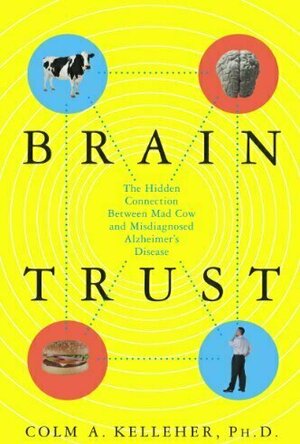
Brain Trust: The Hidden Connection Between Mad Cow and Misdiagnosed Alzheimer's Disease
Book
This illuminating exposé of the threat to our nation's health reveals for the first time how Mad...
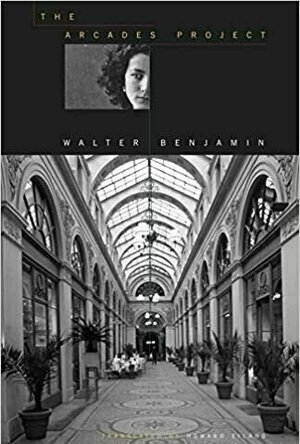
The Arcades Project
Book
"To great writers," Walter Benjamin once wrote, "finished works weigh lighter than those fragments...
Ruthless Criticism: New Perspectives in US Communications History
Book
Ruthless Criticism was first published in 1993. Minnesota Archive Editions uses digital technology...
Doodle Jump HD
Games
App
BE WARNED: Insanely addictive! "possibly the best iPhone game ever created" - Touch Arcade From...

Microeconomics X: College and AP Economics
Education and Productivity
App
Microeconomics X is the most effective study tool for microeconomics at the AP or intro college...
Mark @ Carstairs Considers (2508 KP) rated A Perfect Bind in Books
Sep 29, 2021
I enjoyed the first book in the series because of the unique premise, and this book didn’t disappoint. Once again, the secret bookroom provides a great motive for Tru to get involved in solving a crime, and the plot weaves in some fun, surprising directions. I had the killer figured out before it was revealed, but I think I figured it out about the same time Tru did, so I was proud of myself. A couple of characters annoyed me, but for the most part I loved the cast, and I enjoyed seeing depth to them as the book went along. I smiled and laughed my way through the book, especially at the romantic sub-plots. This book is perfectly delightful.
Merissa (13856 KP) rated A Theory of Crystal: A Paladins of Crystal Novella in Books
Oct 18, 2023
This was a great read, and I love the world it is set in. Each of the characters has a distinct voice, making it easy to know who is speaking. Some of the comments they came out with were just brilliant. And I loved their reactions to Yelena, both as a boy and as a woman.
Without giving anything away, I loved the surprise cameo at the end, giving this book the perfect ending for Yelena and her men.
A brilliant addition that I just wanted to be longer as I love the world... and the author's writing! Definitely recommended by me.
** same worded review will appear elsewhere **
* A copy of this book was provided to me with no requirements for a review. I voluntarily read this book; the comments here are my honest opinion. *
Merissa
Archaeolibrarian - I Dig Good Books!
Oct 16, 2023
BookblogbyCari (345 KP) rated This Idea Must Die in Books
Aug 14, 2018
There’s nothing like reading a popular science book to make you feel more worldly wise! The Idea Must Die is a compilation of over 150 separate articles, by different contributors, arguing that certain scientific concepts are blocking progress and should be put to rest.
Its scope is very broad - at first I felt the book was concentrating on physics, but it later went on to include psychology, linguistics, genetics, criminology, economics and computer science. The title of each article comes from the concept that it is argued should be put to rest.
There were plenty of articles I found interesting and learnt from, including: - “Long-term memory is immutable”, "One genome per individual", “Economic growth”, "Intelligence as property", "Continuity of time", Knowing is half the battle" and "Information overload", “Essentialism”, "Malthuanism" (which is the idea that population will outstrip food supply).
For the majority of the articles I agreed that the theory should be put to rest, and plenty that I thought it was good to see included. These included topics such as: race, nurture vs nature, reductionism. Cancer research theories were also addressed.
There were several topics I was surprised to see argued against, such as evidence-based medicine, scientific method, evolution, carbon footprint, string theory, culture, science being self-correcting.
It was refreshing to see "We are stone age thinkers" but I was disappointed to see the title "Languages condition worldviews". It was also a shame to see AI there, along with robot companions. Ideas in some chapters were disconcerting, claiming there's no self, no cognitive agency, and no free will.
There was a potentially useful article entitled "Scientific knowledge structured as literature" suggesting how publication could move to a new updated method.
With each article ranging in length from a mere 1 to 7 pages, it is an incredibly easy book to dip in and out of, or to fit around a busy week. At times there is a flow between one chapter and the next, but not always. Several of the articles proffer conflicting viewpoints, prompting the reader to reflect and wonder.
Some articles are more-well written than others, and similarly some arguments are more strongly put forward. Usually only one argument is made per article, but at times there were several. I believe some of the articles were chosen for their brevity, which is a shame because some of the articles could use a stronger argument. Some articles are hard to get your head around. The language is not always accessible and often presumes reader already has some knowledge of the subject. Although intriguing to begin with, with so many articles it began to feel dry and laborious at about 60% through. Some articles I deliberately skipped, others I attempted but found impenetrable.
It’s a refreshing read if you haven’t picked a science book in some time and it’s definitely a thought-provoking read if you feel confident that you can get to grips with the material.
For more of my reviews, check out www.bookblogbycari.com
Play in Early Childhood Education: Learning in Diverse Contexts
Marjory Ebbeck and Manjula Waniganayake
Book
The topic of play is fundamental to understanding how children grow and learn. Play in Early...
Learn Photoshop CS 6 compositing basics Edition
Photo & Video and Education
App
CREATE STUNNING COMPOSITING USING PHOTOSHOP CS 6 Learn how to use the power of Photoshop CS 6 to...