

Alex Kapranos recommended Something Else by The Kinks in Music (curated)



Nick McCabe recommended Halloween by John Carpenter in Music (curated)

Shelle Perry (66 KP) rated Abide With Me : A Sister Agatha and Father Selwyn Mystery in Books
Dec 16, 2020


Darren (1599 KP) rated Pod (2015) in Movies
Oct 14, 2019
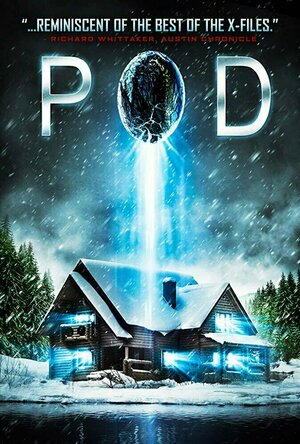

Performances – The performances in this film are focused on the three main actors, if we are being honest none of them set the world alight here, with Lauren Ashley Carter being completely over the top with her reactions, Dean Cates being very bland with his actions and Brian Morvant never hitting the marks of a true crazy person.
Story – The story here feels like it should be focusing on the relationship between the siblings, as we have the two left to decide whether their brother is insane or there is something happening in the cabin, the balance is shown early on but then soon just becomes a creature feature which fails to deliver because of the abrupt style of anything happening. There was a large part of potential here, but the bickering doesn’t make you care and the conspiracy theory all becomes something we have seen.
Horror/Mystery – The horror in the film comes in the final 15 minutes and never draws us into being scared and like the mystery side of the film just doesn’t become the important side of things like it should do.
Settings – Most of the film is set in the cabin which does plan into the isolation and paranoid idea.
Special Effects – The effects are used well and only when needed with most being practical dealing with creating the pod.
Scene of the Movie – What is in the basement.
That Moment That Annoyed Me – We didn’t explore the different life styles of the two siblings.
Final Thoughts – This is a lacklustre horror mystery movie that doesn’t use its strengths well enough through the film.
Overall: Lacklustre Horror Movie.

ClareR (6256 KP) rated Bone China in Books
Aug 19, 2019
We also get to see some of Hester’s past before Cornwall - and the reason why she has ended up in Morvoren House; and that of Louise, some 40 years before Hester’s arrival.
Unsurprisingly, bone china features prominently in this story, and I was delighted to hear the story of the willow pattern again - a story that my own grandmother used to tell me when showing me her willow pattern tea service.
Louise’s story tells of the time after her mother and siblings have died of phthisis (or tuberculosis), and her father, who was a doctor, deciding that he will find a cure for it. Prisoners from the local prison are kept in caves beneath the house, the theory being that the fresh air would strengthen their lungs. I know! Horrifying!!
I didn’t find the jumping between timelines at all confusing, and I really enjoyed the way it did this. The unreliability of Hester’s narrative due to gin and laudanum was also really well done. I never knew if what was happening was due to the gin, laudanum, actual reality or the fairies!
And the landscape and sights of Cornwall were beautifully described. I love Cornwall - it’s one of my most favourite places. The rawness of the coast is a pleasure to read about, and instantly took me to the cliffs by the sea.
I tried to make this book last longer, but had no luck at all because I was desperate to know what was going to happen! And that ending - I’m still in shock!!!!
Many thanks to NetGalley and the publisher for my copy of this completely absorbing book! It was a pleasure to read.

Guitarist's Reference
Music and Games
App
ALL-IN-ONE Package: Guitar Chords, Chord Progressions (new), Scales, Triads, Arpeggios, Notes On The...
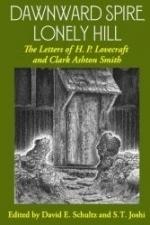
Dawnward Spire, Lonely Hill: The Letters of H.P. Lovecraft and Clark Ashton Smith
David E. Schultz and S. T. Joshi
Book
The publication of the fifteen-year correspondence of two of the titans of weird fiction, H. P....
Horror
iSolunar™ Hunting & Fishing Times
Sports and Weather
1.0 Rate It
App
iSolunar™ Hunting & Fishing Times is the #1 solunar tables app and determines the best hunting...

Journal of Renal Care
Education and Magazines & Newspapers
App
Download the Journal of Renal Care(JORC) app to access the latest research on all aspects of chronic...

Restricted Licence NZ
Education
App
For more reviews follow us on Facebook: https://www.facebook.com/letsgetlegalnz/ Planning to get...