

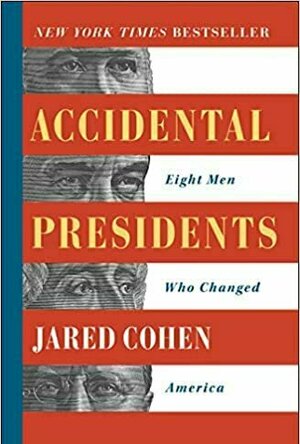
Accidental Presidents
Book
This New York Times bestselling "deep dive into the terms of eight former presidents is chock-full...

Gareth von Kallenbach (980 KP) rated Black Mass (2015) in Movies
Aug 6, 2019


Johnny Depp (Pirates of the Caribbean, Sleepy Hollow, Edward Scissorhands) assumes the role of Bulger and audiences will not be able to take their eyes off of him in this film. Every movement, word, and action that he provides on screen demonstrates his versatility and ability to wear the skin and assume identity of those that he portrays. His portrayal of Whitey Bulger separates him from the “Jack Sparrow” identity that his audiences have become accustomed to. Even more impressive about his acting is the way in which the film’s direction displays more of a human element to this monster. The audience is shown countless acts of brutality undertaken by Bulger or on his orders, but there are moments in which you feel a sense of sorrow for the character. In no way do the moments allow for redemption or offer excuses for his actions, but it allows for the portrayal of a more human element. Humanizing Bulger allows for a much fuller picture of what took place during his life and demonstrates that crime was not the only factor.
The film takes all of us into a very dark place. We see a monster in action. We see countless people fall victim to Bulger and his organization. Depp intimidates not only the other characters being portrayed, but the audience in the way that his eyes always seem so cold and heartless. It is said that when you look into someone’s eyes, you can see their soul. With Whitey Bulger, his soul is absent whenever he is portrayed onscreen. This helps to solidify Depp’s portrayal of Bulger and the way that he lived his life. He was a cold, heartless monster. The only sense of a soul or any humanity comes with the direction of the film to make this monster human.

Nominated for an Oscar, BAFTA and Golden Globe,Trumbo is a recent film based on the original biography Dalton Trumbo written by Bruce Cook in 1977. Its adaptation to film provided the perfect opportunity to republish this extremely well researched book. With a forward written by John McNamara, the screenwriter of the motion picture, the story of Dalton Trumbo’s life is just as intriguing as it was almost forty years ago. But who is Trumbo?
If, like me, you have never heard of Trumbo or even the infamous “Hollywood Ten,” it may take a while for it to become clear as to why it was worth Cook’s time to produce a book about the man. Dalton Trumbo was a well-known screenwriter of films such as Papillon, Lonely Are The Brave and Roman Holiday as well as author of the novel Johnny Got His Gun. However these are not all he is famous for. During his life, Trumbo became a member of the Communist Party, which Hollywood branded as an Un-American Activity and thus blacklisted him, as well as other screenwriters, directors and actors. Ten of these men, Trumbo included, were imprisoned for their political beliefs – yet nothing prevented Trumbo from continuing his fairly successful career.
Interestingly, Cook begins the book with the final stages of Trumbo’s life. At time of writing Trumbo was still alive, although rather poorly. After contracting lung cancer, having a lung removed, and suffering a heart attack, Trumbo was a very sick man; nonetheless he was still enthusiastic about being interviewed and telling his personal story.
From his childhood, to his evening shifts at a bakery, Cook details Trumbo’s early life, emphasizing the hard upbringing he had before he found himself in the world of Hollywood. Although roughly 75% of the book focuses on Trumbo’s career, Cook highlights Trumbo as a family man, with both a wife and three children who he absolutely adores.
Cook constantly refers to the Hollywood Ten as a concept that the reader should already be familiar with. Granted, someone who picks up this book is more likely to do so having a prior interest in the central figure, and thus already know about his background; however those ignorant on the topic eventually gather a better understanding on the topic once reaching the relevant chapters. It also becomes clearer why Trumbo is worth reading/writing about – he may have been blacklisted, but he managed to break through all the barriers and reinstate his name and many others.
Reading this half a century after the event, it seems strange that Trumbo was imprisoned. He had not done anything intrinsically wrong, it was purely prejudice against his political beliefs that got him into the mess he found himself. But when you consider the events of the time: World War Two, the Cold War, the Korean War, and Vietnam; it is understandable why many feared those who claimed to be Communists.
Cook’s narrative does not flow as a story, and much of it is broken up with quotes from various people he interviewed. The timeline jumps about between past and present (1970s), which occasionally gets a bit confusing. A large part of the book is spent analyzing many of Trumbo’s works – both for screen and written formats – which, unless you have a particular interest, can be a little tedious.
It has got to be said that Bruce Cook was an exemplary writer with a great eye for detail. He did not jump to conclusions or only talk about things from his point of view. Instead he interviewed, what seems like, everyone who ever met Trumbo, and based his writing on fact backed up with numerous quotes and citations.
This edition of Trumbo contains a selection of photographs taken on the set of the movie. Disappointingly it does not contain any of Trumbo himself – you would think that some photos could have been tracked down!
Trumbo is not a book that will interest everyone. Most people today – particularly in England – will probably be unaware of who Dalton Trumbo was, and thus would only seek out this publication due to a fascination with film production. I have not seen the film, but after reading this and discovering how books go from novels, to screenplays to moving image, it would be interesting to find out which parts of Trumbo’s life made it onto the big screen.

<i>I received this book for free through Goodreads First Reads.</i>
Nominated for an Oscar, BAFTA and Golden Globe, <i>Trumbo</i> is a recent film based on the original biography <i>Dalton Trumbo</i> written by Bruce Cook in 1977. Its adaptation to film provided the perfect opportunity to republish this extremely well researched book. With a forward written by John McNamara, the screenwriter of the motion picture, the story of Dalton Trumbo’s life is just as intriguing as it was almost forty years ago. But who is Trumbo?
If, like me, you have never heard of Trumbo or even the infamous “Hollywood Ten,” it may take a while for it to become clear as to why it was worth Cook’s time to produce a book about the man. Dalton Trumbo was a well-known screenwriter of films such as <i>Papillon, Lonely Are The Brave</i> and <i>Roman Holiday</i> as well as author of the novel <i>Johnny Got His Gun</i>. However these are not all he is famous for. During his life, Trumbo became a member of the Communist Party, which Hollywood branded as an Un-American Activity and thus blacklisted him, as well as other screenwriters, directors and actors. Ten of these men, Trumbo included, were imprisoned for their political beliefs – yet nothing prevented Trumbo from continuing his fairly successful career.
Interestingly, Cook begins the book with the final stages of Trumbo’s life. At time of writing Trumbo was still alive, although rather poorly. After contracting lung cancer, having a lung removed, and suffering a heart attack, Trumbo was a very sick man; nonetheless he was still enthusiastic about being interviewed and telling his personal story.
From his childhood, to his evening shifts at a bakery, Cook details Trumbo’s early life, emphasizing the hard upbringing he had before he found himself in the world of Hollywood. Although roughly 75% of the book focuses on Trumbo’s career, Cook highlights Trumbo as a family man, with both a wife and three children who he absolutely adores.
Cook constantly refers to the Hollywood Ten as a concept that the reader should already be familiar with. Granted, someone who picks up this book is more likely to do so having a prior interest in the central figure, and thus already know about his background; however those ignorant on the topic eventually gather a better understanding on the topic once reaching the relevant chapters. It also becomes clearer why Trumbo is worth reading/writing about – he may have been blacklisted, but he managed to break through all the barriers and reinstate his name and many others.
Reading this half a century after the event, it seems strange that Trumbo was imprisoned. He had not done anything intrinsically wrong, it was purely prejudice against his political beliefs that got him into the mess he found himself. But when you consider the events of the time: World War Two, the Cold War, the Korean War, and Vietnam; it is understandable why many feared those who claimed to be Communists.
Cook’s narrative does not flow as a story, and much of it is broken up with quotes from various people he interviewed. The timeline jumps about between past and present (1970s), which occasionally gets a bit confusing. A large part of the book is spent analyzing many of Trumbo’s works – both for screen and written formats – which, unless you have a particular interest, can be a little tedious.
It has got to be said that Bruce Cook was an exemplary writer with a great eye for detail. He did not jump to conclusions or only talk about things from his point of view. Instead he interviewed, what seems like, everyone who ever met Trumbo, and based his writing on fact backed up with numerous quotes and citations.
This edition of <i>Trumbo</i> contains a selection of photographs taken on the set of the movie. Disappointingly it does not contain any of Trumbo himself – you would think that some photos could have been tracked down!
<i>Trumbo</i> is not a book that will interest everyone. Most people today – particularly in England – will probably be unaware of who Dalton Trumbo was, and thus would only seek out this publication due to a fascination with film production. I have not seen the film, but after reading this and discovering how books go from novels, to screenplays to moving image, it would be interesting to find out which parts of Trumbo’s life made it onto the big screen.
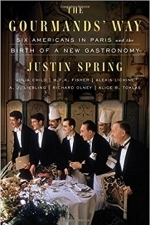
The Gourmands’ Way: Six Americans in Paris and the Birth of a New Gastronomy
Book
“In The Gourmands’ Way, Justin Spring brilliantly recounts the French odyssey of six remarkable...
Biography food
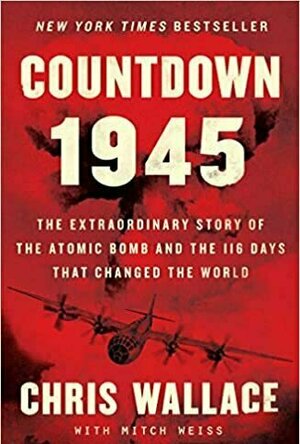
Countdown 1945
Book
From Chris Wallace, the veteran journalist and anchor of Fox News Sunday, comes an electrifying...
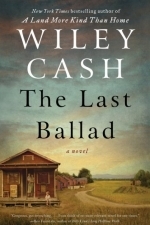
The Last Ballad
Book
The author of the celebrated bestseller A Land More Kind Than Home returns with this eagerly awaited...
Historical fiction
Driven Toward Madness: The Fugitive Slave Margaret Garner and Tragedy on the Ohio
Book
The story of Margaret Garner-the runaway slave who, when confronted with capture, slit the throat of...

The Poison Belt: Being an Account of Another Adventure of Prof. George E. Challenger, Lord John Roxton, Prof. Summerlee, and Mr. E.D. Malone, the Discoverers of the Lost World
Arthur Conan Doyle and Joshua Glenn
Book
What would you do if you alone had discovered that the entire planet was about to be engulfed in a...