
Anne (15130 KP) rated This Tender Land in Books
Nov 4, 2019
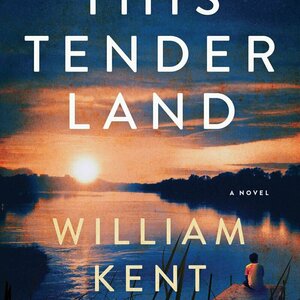
This story is about 4 orphans on a life-changing journey during the era of the Great Depression in 1932.
In Minnesota, they are at a horrible place called The Lincoln School, where Native American children that have been separated from their families are sent to get an education. It's also where Odie is, who is the MC/one of the 4 orphans in this story. After getting in a lot of trouble and gaining the school superintendent's attention and wrath, Odie, his brother, Albert, their friend, Mose, and Emmy all run away together in a canoe they stole, going to the Missippi and to find a place of their own.
What follows is the telling of their journey during the summer, an adventure where they meet others who are wandering and on their own journeys as well. They meet all types of people like pig farmers, faith healers and others who are lost and trying to find their own way in life and to their own places to call home as well.
It's a coming of age tale, where they come across and are deciding and figuring things out for themselves like religion, belief in God, first crush/love, what's right and wrong, how to treat others with respect and love and so many things.
This story kept sucking me back in whenever I listened to it so I felt like I was there on the banks of the river watching their story or in the school or in the faith revival tents or towns along the way. I was a bit overwhelmed at times from the bigger picture they were showing and talking about along the way, but it also resonated with me a lot and reminded me a lot of Mark Twain's writing with his books about Huck Finn and Tom Sawyer that I remember loving and connecting with when I was younger.
The only thing that bothered me some was that if like me you try to go for clean reads, there's a little bit of language throughout the book, but other than that it was a really good story and the audio was great.
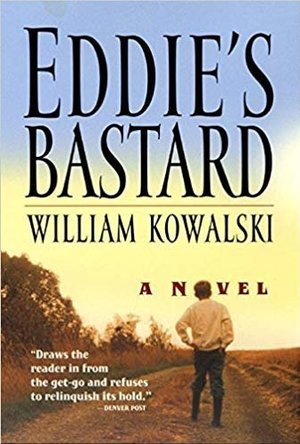
Eddie's Bastard
9.0 Rate It
Book
In this rich, deeply resonant literary debut, twenty-eight-year-old William Kowalski explores the...
fiction literary fiction contemporary American
A Death at Crooked Creek: The Case of the Cowboy, the Cigarmaker, and the Love Letter
Book
"This is an extraordinary and ground-breaking book, a wonderfully creative mix of fact and theory,...

Darren (1599 KP) rated In the Tall Grass (2019) in Movies
Oct 14, 2019
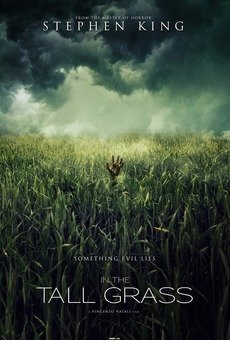

Performances – When it comes to the performances this is a hard one to hate or enjoy anybody in the film, nobody is bad, Laysla De Oliveira and Avery Whitted as the brother sister don’t have the best chemistry. Patrick Wilson does go full crazy for parts of the film and it is the best part to watch.
Story – The story here follows a group of people that lost in tall grass which seems to have a mind of itself which will see them needing to figure out how to make it out alive. This is a story that does do a lot of confusing things because we do try to capture the magic of ‘Triangle’ only for it to be way to confusing for the most part because we are going over and over through different points of view which just doesn’t give us enough to work with because a lot happens in pitch black too which doesn’t make it clear just what was happening. This is a story you could break down and figure out what happened, but it isn’t a causal watch when figuring out the loops.
Horror – The horror in the film is meant to come from the unknown in the grass and just what happens within the grass.
Settings – The film wants to use the tall grass for the settings, I guess this is an American thing for it to be scary.
Special Effects – The effects used in the film are mostly shock for gore, which are fine, but just don’t shock the way they want too.
Scene of the Movie – Ross finds a way in.
That Moment That Annoyed Me – Too many attempts to create a reset.
Final Thoughts – This is a horror that just doesn’t get to any horror levels, if you have seen ‘Triangle’ you will have seen a much more interesting and better version of this story.
Overall: Just not Triangle.
Musical Maryland: A History of Song and Performance from the Colonial Period to the Age of Radio
David K. Hildebrand and Elizabeth M. Schaaf
Book
In Musical Maryland, the first comprehensive survey of the music emanating from the Old Line State,...

How to Meditate with Pema Chödrön
Lifestyle and Health & Fitness
App
“We train in being present with whatever arises in our experience, whether it is pain or pleasure,...
The Last Collection
Book
An American woman becomes entangled in the intense rivalry between iconic fashion designers Coco...
Historical Romance

Nica's Dream: The Life and Legend of the Jazz Baroness
Book
It's a misty night in 1950s New York. A silver Rolls-Royce screeches to a stop at the neon-lit...
Lady In The Lake
8.0 Rate It
Book
The revered New York Times bestselling author returns with a novel set in 1960s Baltimore that...

Goddess in the Stacks (553 KP) rated Darius the Great is Not Okay in Books
Dec 25, 2018
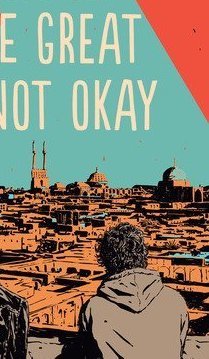
Darius is a great main character. He's funny, self-deprecating, and complex. He has clinical depression, is medicated for it, and can sometimes tell when it's the depression making him think a certain way, but sometimes he can't. He's biracial, visiting Iran and his mother's Persian family for the first time, and adjusting to Persian social norms and traditions while trying not to lose sight of his American life. His connection with his father is tenuous and fraught with miscommunication, and lot of the book is spent wrestling with that relationship. His new friend, Sohrab, is a great foil to that, as his father is completely absent from his life, having been arrested and thrown in jail prior to the start of the story, largely for being in the wrong place at the wrong time, and being part of a minority religion.
There are so many small things touched on this book - suspicion at customs when flying through, bullying at school for being Persian, not speaking his family's language because his mother didn't teach it to him (and feeling cut off because of it) - all little things that a lot of immigrant children deal with.
Aside from the cultural things the book addresses, there's also the mental health aspect. Both Darius and his father have clinical depression, and there's stigma attached to having the diagnosis, and to taking pills for it. We see how their mental states affects their relationship with each other and with the rest of their family, and it's quite powerful. The author talks about having clinical depression in an afterword, and includes some resources that helped him. This is an #ownvoices novel in more ways than one, and it really shows. Excellent book.
You can find all my reviews at http://goddessinthestacks.com