

The Earth by Tinybop
Education and Reference
App
Dig into our planet and the forces that shape it. Trigger earthquakes! Make volcanos erupt!...

Purple Phoenix Games (2266 KP) rated Tetris: The Card Game in Tabletop Games
Jul 2, 2020
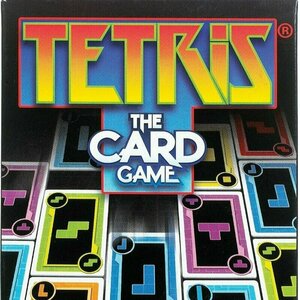


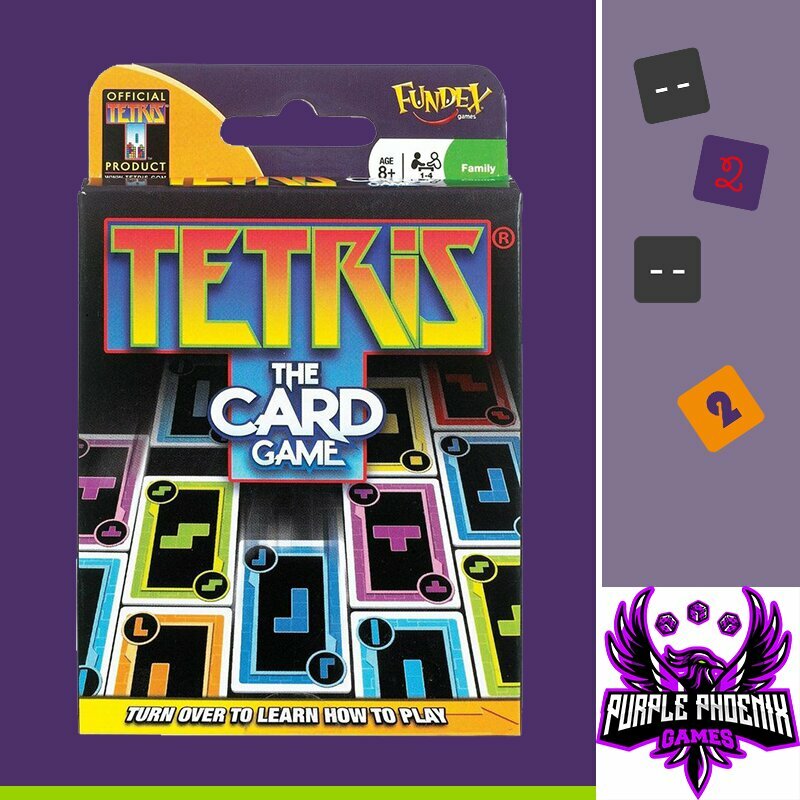
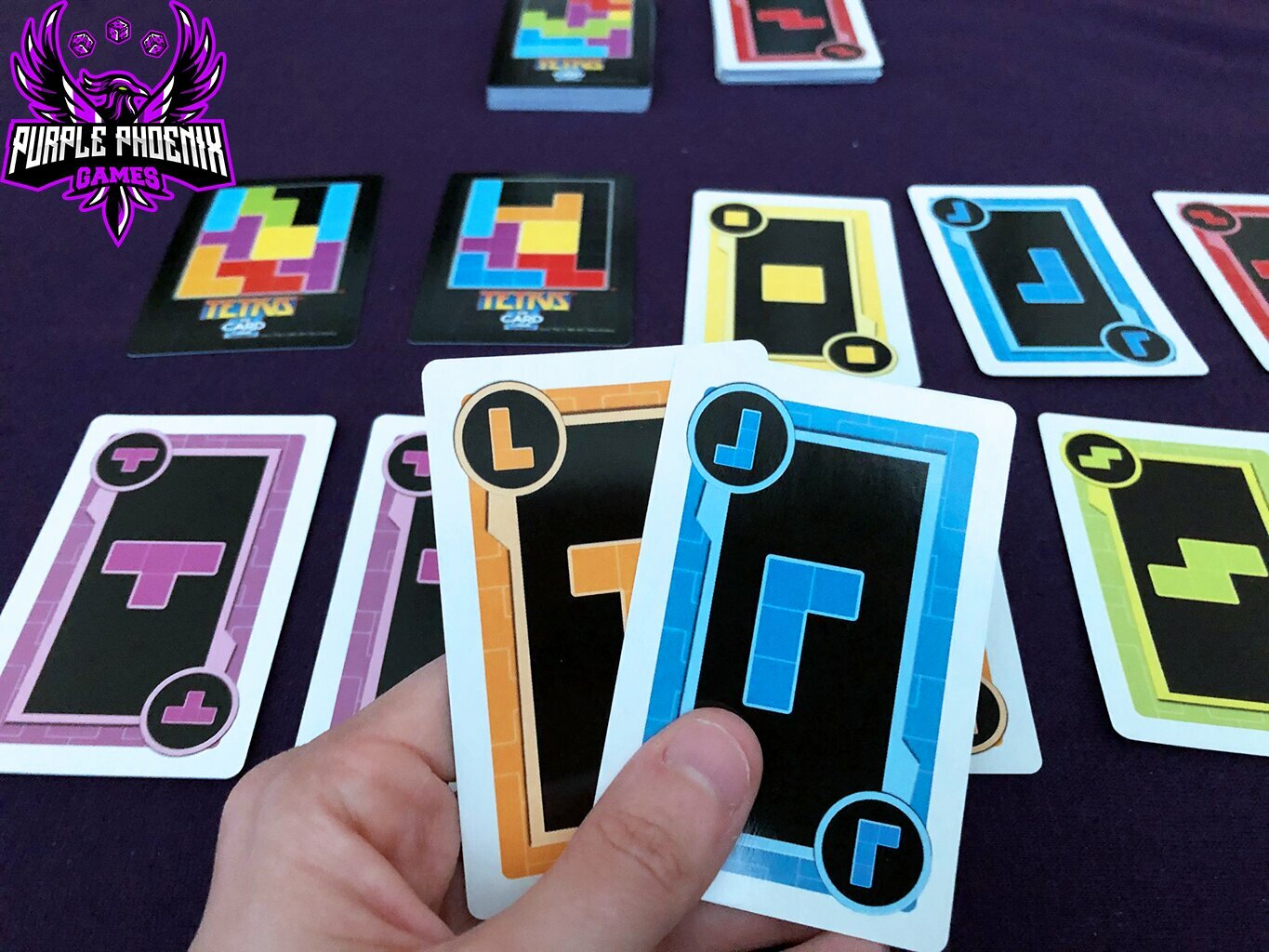
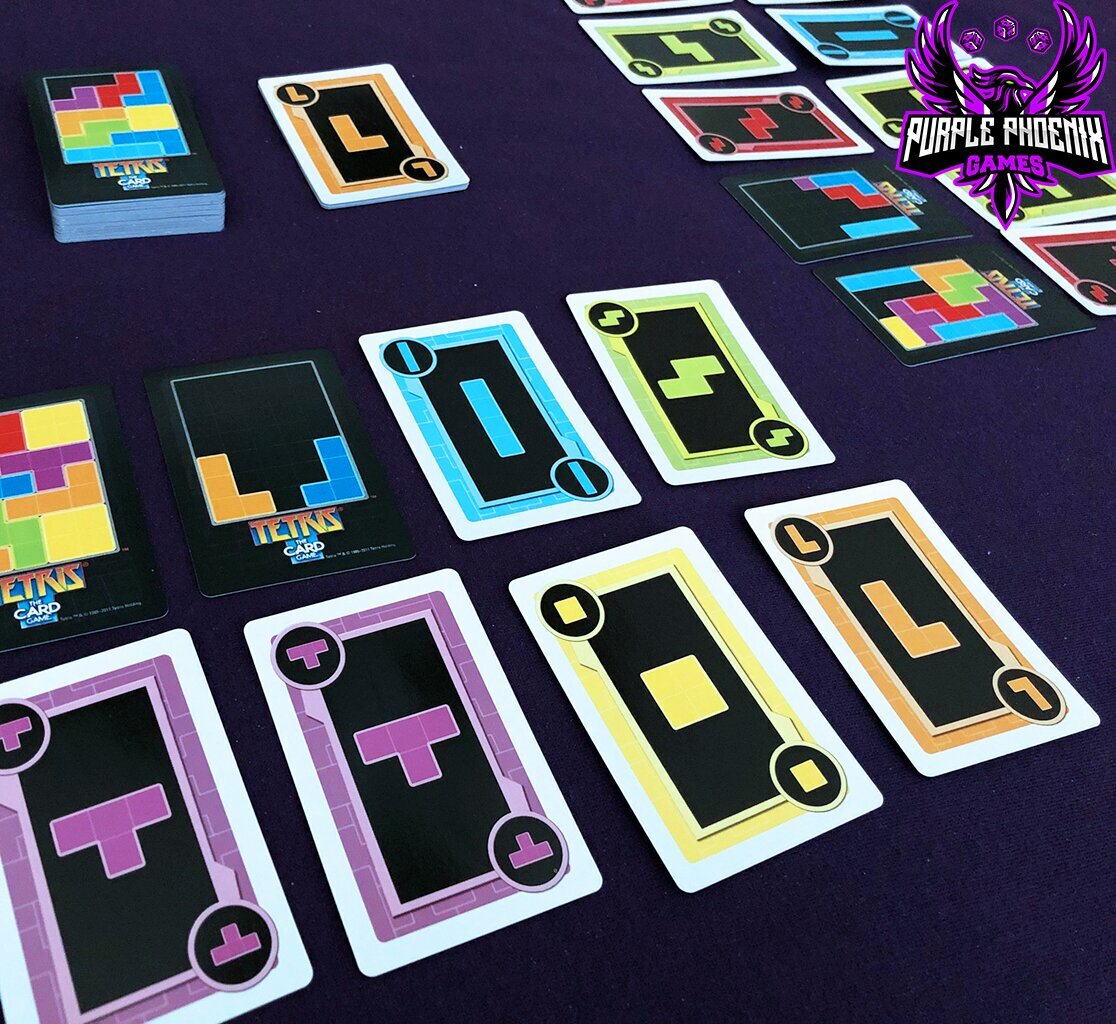
Tetris: The Card Game is a game of hand management and pattern recognition in which players are racing to be the first to earn 10 points. Setup is simple – shuffle the entire deck of cards, and deal 10 to each player. The cards are double-sided, with one side depicting a Tetris Matrix, and the other depicting a specific Tetromino. Arrange your cards in a 2×5 grid, with the Tetromino side facing up. This grid will act as your personal scoring track. Place the remaining cards, Matrix-side up, in a draw deck in the center of the table. Deal 1 additional card to each player, to go in hand, and the game is ready to begin! You will be using your hand of cards, Tetromino side, to complete the Matrix side of the top card of the draw deck.
A round of play is pretty straight-forward: draw one card, play one card. At the start of your turn, draw the top card from the draw deck. This will reveal a new Matrix on the next card of the draw pile. Choose one of your two cards in hand to complete at least 1 row in the revealed Matrix. Play the card, showing your opponents how it would fit into the Matrix, and score points. You score 1 point per row completed, so if your piece completes 2 rows, you would score 2 points. To track your points, you flip over cards in your 2×5 grid to their Matrix sides, to represent your scored points. If on your turn, you are unable to complete a Matrix line with either of your cards in hand, you must discard one card, and are also penalized by having to forfeit one of your earned points, flipping that card back to its Tetromino side. There are also a handful of Special cards that can be used to manipulate play, whether Reversing the play direction, or forcing a player to lose a point, and that adds a new little twist to the game. The game ends when one player has scored all 10 points and is declared the winner!
Probably the best things about Tetris: The Card Game, is that it is so simple to learn and play. The simplicity brings back the nostalgia of the original game to the extreme. It’s a super light game that can be used as a filler/palate cleanser between bigger games, or just as a game to toss on the table when you’ve got 5 free minutes. Another added bonus of its simplicity is that it is pretty friendly for younger/newer gamers. Looking to get your young’uns into the hobby, or just spreading some happiness with friends and colleagues? This is a good introductory game that is light-hearted, although not a complete brain burner.
Now, on the flip side, there are some drawbacks to this game. The first and biggest being that it is entirely based upon the luck of the draw. There is pretty much no strategy involved, because you are at the mercy of the draw deck. You really can’t set up a game strategy that can be adapted throughout a play because the game is so dependent upon luck. Depending on the current Matrix in play, certain Tetrominos could not be used at all to complete a row, so you end up having to burn a turn (and losing a point) to discard a card. And then you have to hope for the best next turn. Another drawback of this version of Tetris is the hand limit of 2 cards. That severely limits your options each turn, and can turn the game from light-hearted to frustrating because of a lack of choices. This hand limit also limits any strategic options. Certain Matrices can only be completed by certain Tetrominos, so unless you have those in hand, you’re stuck wasting a turn. The Special cards included in the game add a twist to the gameplay, but are a little too ‘take that’ for my taste. But without them, there is no player interaction at all. So it’s kind of a lose-lose situation for me in that regard.
Ultimately, I would say that the OG Tetris is still king. This game attempts to encompass the atmosphere and enjoyability of the video game, but it just falls flat for me. It is too dependent upon luck, and doesn’t offer enough strategic choices for players, so it ends up feeling bland and unengaging. Am I happy with this game? Honestly, no. But playing this with the right group of people could still result in some entertainment and good times. If luck-based games are your thing, then definitely consider this game. But if not, let OG Tetris be your go-to game to fulfill your tile-dropping, row-completing urges. Purple Phoenix Games gives Tetris: The Card Game a blocky 4 / 12.


Hazel (1853 KP) rated Where's Wally? The Colouring Book in Books
Dec 17, 2018


“The ultimate colouring challenge!”
Everyone knows who Wally is. Created by Martin Handford, Wally first appeared in the book <i>Where’s Wally?</i> in 1987, and has since become famous throughout the world. The aim of the book is to locate Wally and all of his friends in numerous crowded, hand-drawn scenes.
Whilst the colouring book franchise is taking the world by storm, what better time to release a <i>Where’s Wally?</i> colouring book? The idea is the same as the previous Handford publications, in that the ultimate aim is to find Wally; however in this instance it is also left up to you to add the colour to the scenes.
<i>Where’s Wally?</i> fans will recognize many of the drawings from the original books, and therefore will already know where Wally is hiding – but it is much harder to spot him without his traditional red and white stripes being shaded in.
There are twenty-seven double-paged scenes to colour in and keep you entertained for hours. Those familiar with Handford’s illustrations will be aware of the detail he includes; and yes, you are meant to colour ALL of it! This colouring book will definitely take you a while to complete. The downside to such detailed pages is that there are so many tiny elements to add colour to. You will need to keep your pencils sharpened and sit in a well-lit area.
The pages are quite thick, but as they are double sided I would be wary of using felt-tip pens. Perhaps test them on the title page first to make sure they do not bleed through to the other side. Also, only fine tipped pens will be suitable in order to stay within the lines.
Many people believe that colouring is childish, but this book proves otherwise. You will need lots of control and patience in order to finish this book. Good luck.

Got It Study - Homework Help
Education and Productivity
App
Stuck on a homework problem, test question, or assignment and need to solve the problem right away? ...

Jordans Out - Release Dates & Trivia 2016 Edition
Sports and Games
App
Stay On Top Of Your Favorite Jordans With The Very First & Original Jordan Out App. Are you a true...
Mystery Spinner: The Life and Death of an Extraordinary Cricketer
Book
It is no mystery that today Jack Iverson is virtually unknown. An unexceptional estate agent who...

Crime City Car Driving
Games and Entertainment
App
Car driving is always fun. Getting into a car after committing a crime is the most adventurous...

Dictionary.com for iPad
Reference and Education
App
Download the most essential and comprehensive dictionary app for dependable definitions at your...
Build A Word Easy Spelling Long&Short Vowels,Sight
Education and Games
App
* "It is clear this app was created by those that understand learning and for those of an...

No Shame (No Shame #4)
10.0 Rate It
Book
(This is NOT a stand alone novel. See end of this description for details) Brad feels nothing but...
M_M Contemporary Romance