Big Fun Casino - Best Slot Machines
Games
7.0 Rate It
App
Yes, You’re Special. Because You’re invited to Our Fun Casino Night! Don’t Miss Out this...
Macroeconomics
Book
or the two-semester principles of economics course. An intuitive and grounded approach to economics...


Gareth von Kallenbach (980 KP) rated the PC version of Crysis Remastered in Video Games
Oct 8, 2020
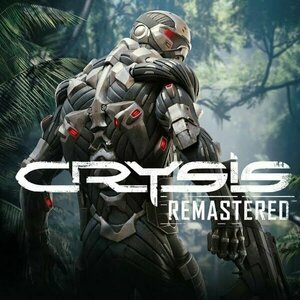


In the age of remasters gamers now can experience the game with remastered graphics which brings the graphics in the game to a more modern level.
Players play a member of an elite unit who wear specialized Nano Suits during high-risk missions. The suits can make the wearer invisible, move faster, and armor up to absorb energy. The biggest issue is that those abilities do take a considerable amount of power and can only be used for brief increments so players will have to use them strategically.
When a mission goes wrong players must attempt to battle hordes of North Korean troops and other threats to achieve various goals and mission objectives.
Players will be able to utilize an arsenal of weapons ranging from pistols, shotguns, machine guns, grenades, and their fists and must make sure to use ammunition wisely as the supply is not infinite and players will have to recover weapons from enemies when they deplete their ammunition or resort to using their fists until they can find resupply options.
While the game does look more modern, the gameplay is still jerky especially in combat. Compared to modern shooters the smoothness and speed factor is lacking and it at times has a herky-jerky gameplay to it. Being able to cleanly shoot an enemy is erratic as some are real bullet sponges while others in the same class go down fairly easily.
The game also uses a checkpoint save system so failing to complete an objective will have players trying a scenario repeatedly until they are successful.
Players will also be able to utilize vehicles that they find which can help when they need to make a fast escape from a location or if they opt to make a direct assault.
The sound and graphics of the game are solid but the gameplay was decidedly retro and had many of the issues that bothered me with the original release. I had hoped for a total redo but in many ways it was like slapping a new coat of paint on an old car and expecting top of the line performance.
Crysis: Remastered is a nice trip down memory lane but pails when compared to more modern games in terms of enjoyment as I think a new game in the series would have been better. Perhaps this is a way to test what the current demand for the franchise is. For now the game is a nice piece of updated nostalgia.

Super Blend Me!
Book
Jason Vale, the world s number one name in juicing, is back with his first ever protein-based...

FieldMonitor
Photo & Video and Utilities
App
***Please read this entire description before purchasing, and contact me if you have any...

Hipster CEO
Games and Business
App
Hipster CEO 2 is COMING SOON but in the meantime why not sharpen your entrepreneurial skills on the...

Purple Phoenix Games (2266 KP) rated Agropolis in Tabletop Games
Sep 24, 2020
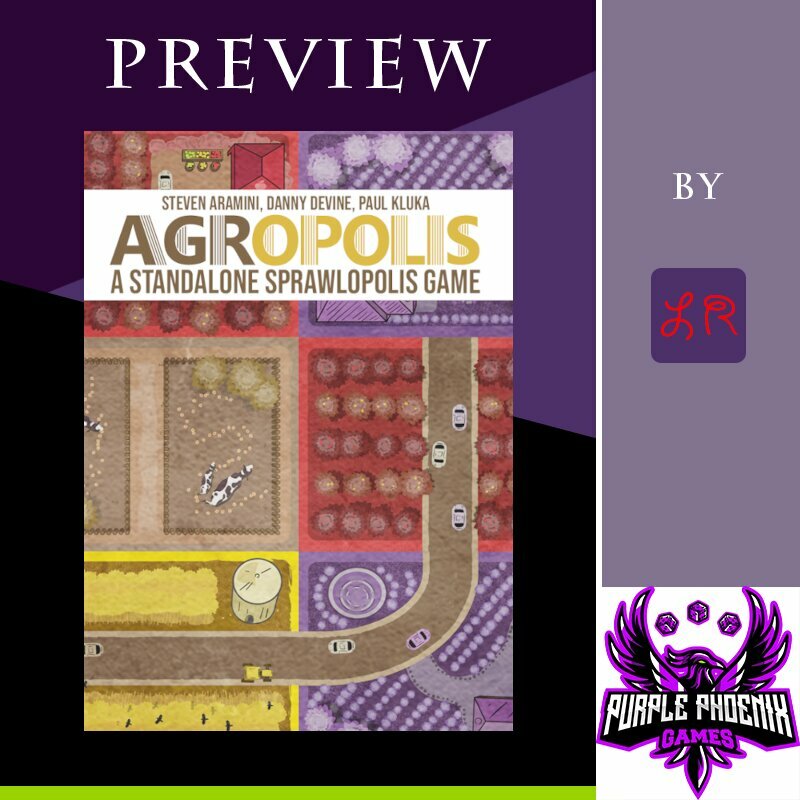
Disclaimer: We were provided a copy of Agropolis for the purposes of this preview. The components are not yet finalized, and will probably change from what you see here to the finished Kickstarter campaign. Agropolis is a stand-alone expansion to the popular ButtonShy title, Sprawlopolis. We have reviewed Sprawlopolis (as both a Solo Chronicles, as well as Multiplayer) in the past, so I do not intend to rehash the entire ruleset in this preview. -L
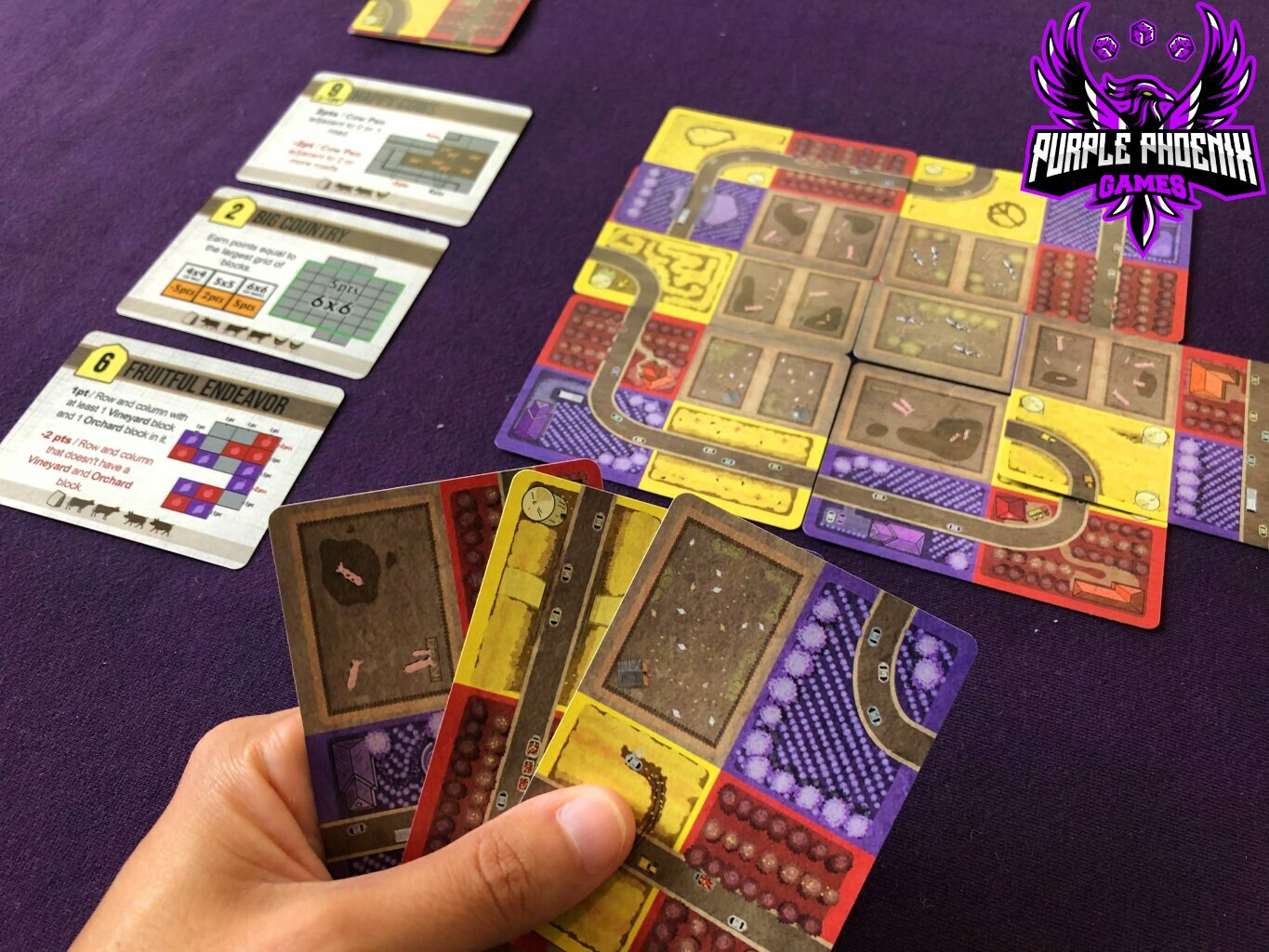
In Agropolis, players are working cooperatively to create a cohesive and thriving rural community. The overall gameplay is the same as Sprawlopolis, with a few thematic differences. To begin the game, randomly select 3 cards to dictate the scoring conditions for your specific game. Deal 1 card to each player (3 to the starting player), and place one card face-up in the center of the table. On your turn, you will draw a card, play a card into the communal countryside, pass your remaining cards to the next player, and then draw a new card. The goal is to create a countryside that scores enough points to surpass the combined total of the 3 scoring condition cards.
Each card is divided into four zones: cornfields, livestock pens, orchards, and vineyards. The selected scoring condition cards determine how you can earn and lose points for your card/zone placements in the countryside. That’s where strategy comes into play – you can’t just place your cards wherever you want! There has to be a method to the madness, and each placement must be carefully selected for maximum end-game points. When all cards have been played, tally up your points – earning points for each zone, gaining/losing points for scoring conditions, and deducting points for roads. If your final score is higher than the total of the 3 scoring conditions combined, then you have won!
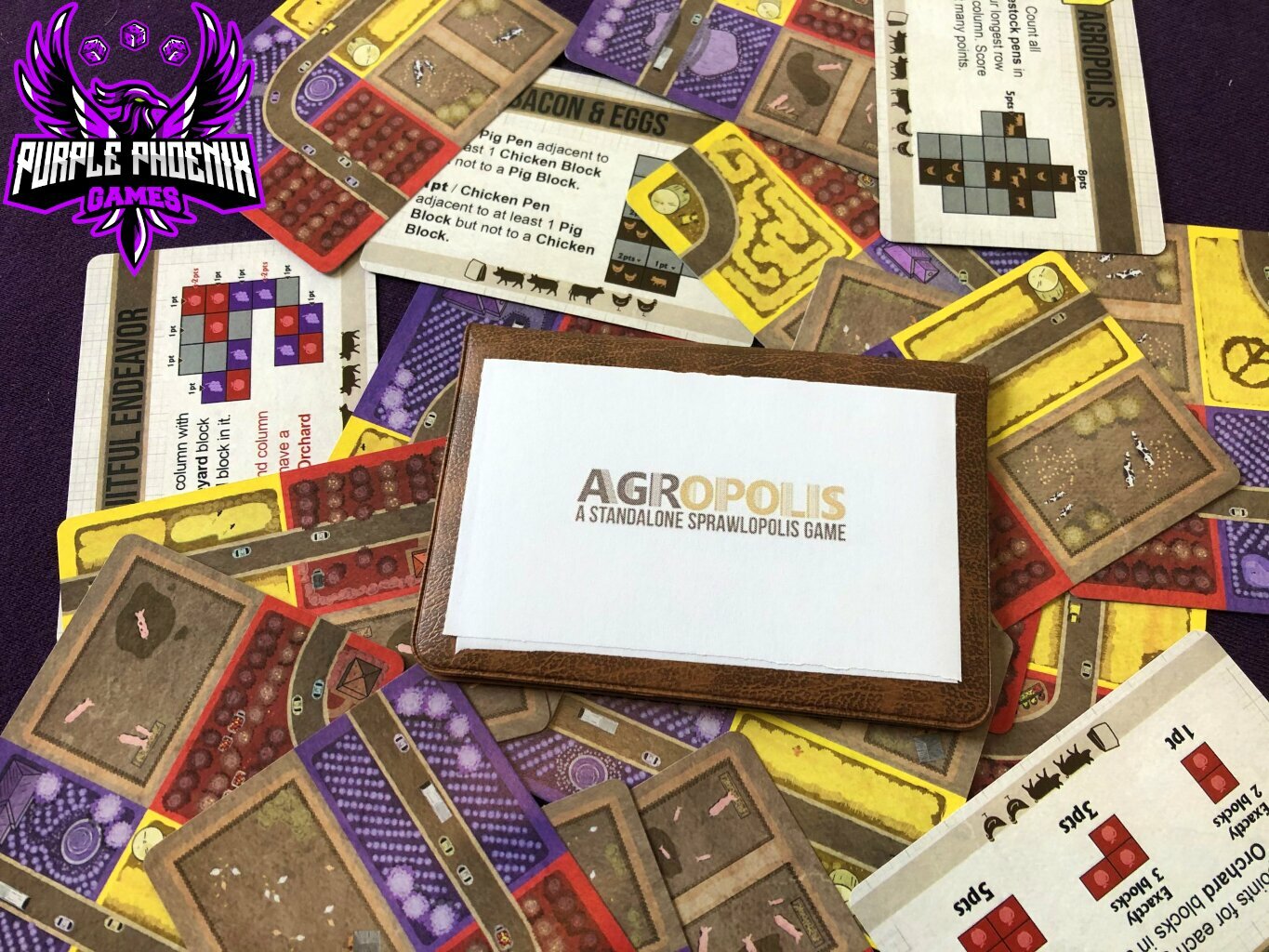
As a big fan of Sprawlopolis, I am happy to report that ButtonShy has done it again with Agropolis. The overall gameplay and atmosphere is the same between both games, which adds a comfort and familiarity to the game, but the thematic differences and scoring conditions make the game feel subtly unique. Aside from a country theme, Agropolis has an optional challenge known as the Feed Fee. Certain cards have a feedbag and livestock symbol underneath the card’s score, and all cards have a combination of livestock symbols at the bottom of the scoring description. To play with the Feed Fee, simply count the number of that specific type of livestock across all 3 scoring condition cards and add that to your scoring total. You might even have multiple Feed Fees in play for a single game! That is a new added challenge unique to Agropolis, and can really up the ante of the gameplay.
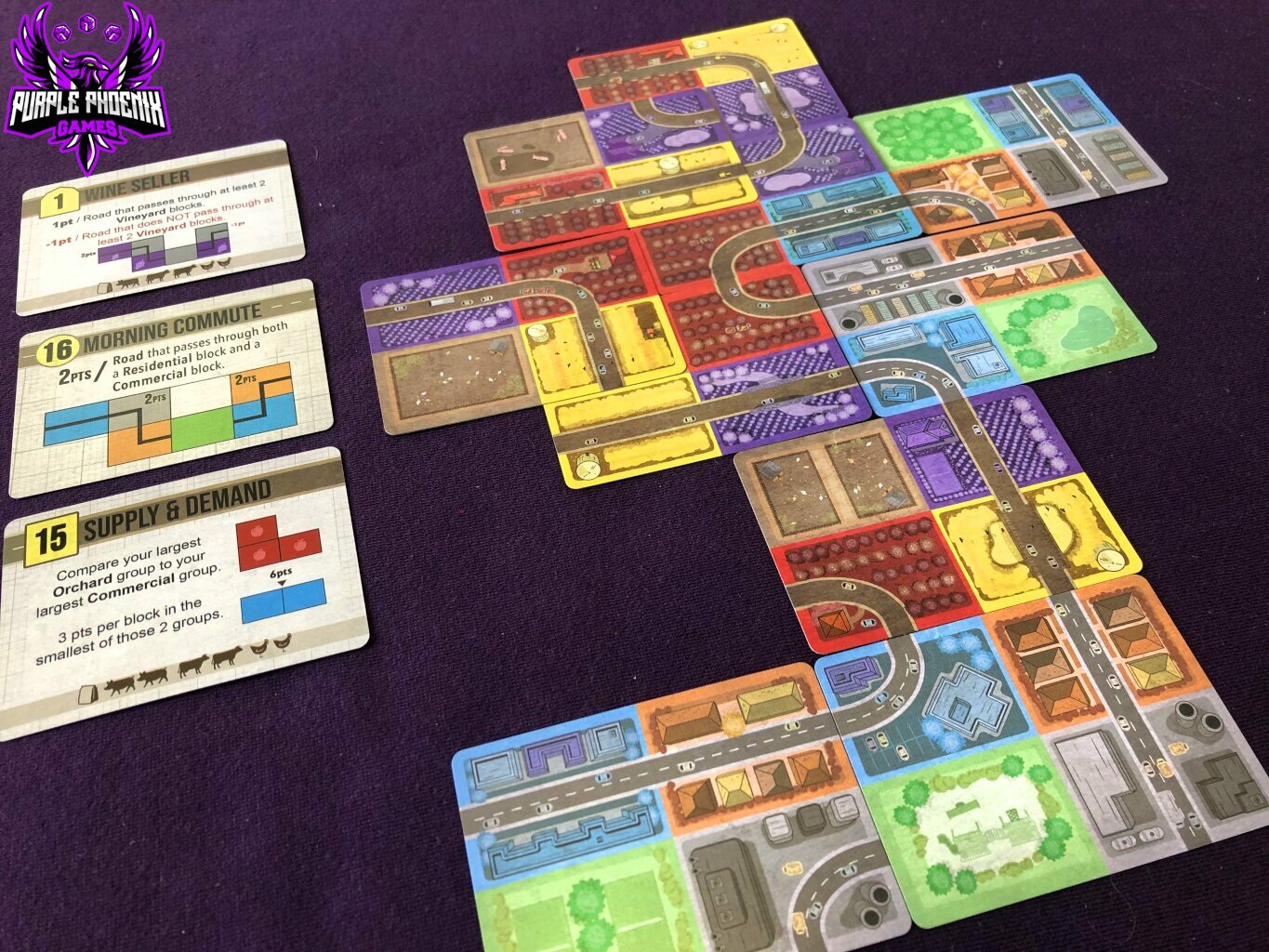
Our preview copy of Agropolis also came with a 6-card combo pack expansion that allows you to combine both Agropolis and Sprawlopolis into one big game. To play with the combo pack, randomly select one scoring condition card from the three decks: Agropolis, Sprawlopolis, and the combo pack. Randomly select another combo pack card to be the starting card of your city/country blended community. On your turn, you will draw 1 Agropolis card and 1 Sprawlopolis card. Play only one of those cards to the tableau, and the other is discarded. When both draw decks run out, the game is over and points are tallied. This combo game is uniquely challenging because you have scoring conditions from both games. You can’t focus on the city-side and let the country peter out, because at least one of the scoring condition cards calls for a country-specific goal. This combo pack takes the simplicity of both games and really ups the amount of strategy required for success. Definitely a combo I will be playing a lot!
All in all, how is Agropolis? The gameplay itself is simple, strategic, and satisfying to play. Although nearly identical to Sprawlopolis, the thematic differences and country-specific scoring conditions make the game feel new and refreshing. I absolutely love the 6-card combo pack to combine both games together. It just heightens the gameplay and strategic considerations, and takes it from a smaller game to something with a little more heft. Some people are all about that city life, but I think Agropolis will show you the beauty of the rural community. Be sure to check out the Kickstarter campaign, going live on Tuesday, September 29th!

GREG - A Mathematical Puzzle Game To Train Your Brain Skills
Games and Education
App
### • Apple Best New Games • #1 Puzzle Game App • “A puzzle game that will test your speed...
Purple Phoenix Games (2266 KP) rated Cloud Control in Tabletop Games
Dec 31, 2020
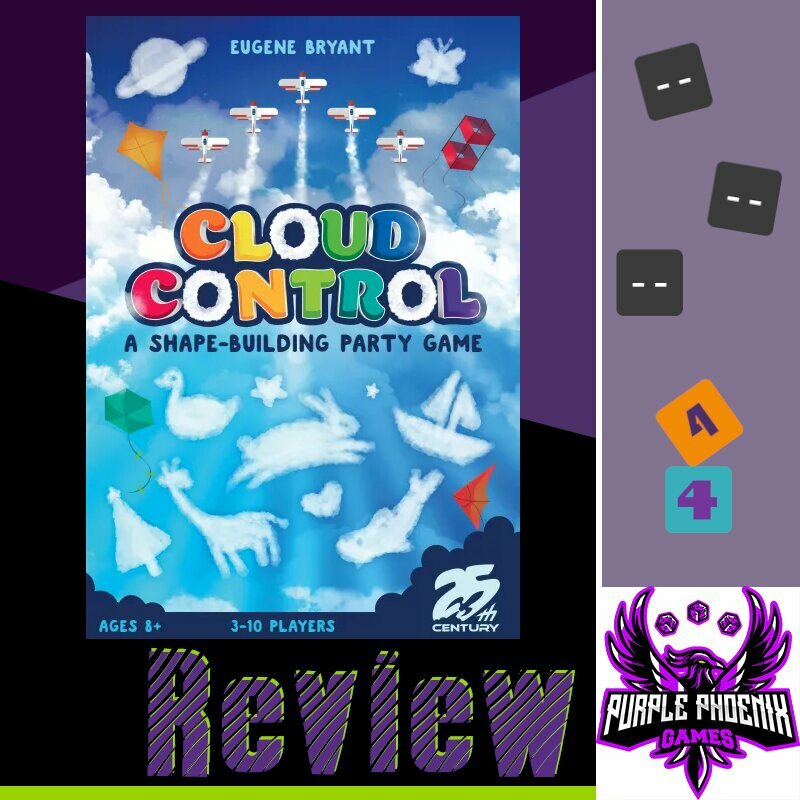
Cloud Control is a 3-10 player party game of building unique cloud shapes from cues on cards. By manipulating basic cloud shapes players must get their opponents to guess what they are building to score VP kites.
DISCLAIMER: We were provided a copy of this game for the purposes of this review. This is a retail copy of the game, so what you see in these photos is exactly what would be received in your box. I do not intend to cover every single rule included in the rulebook, but will describe the overall game flow and major rule set so that our readers may get a sense of how the game plays. For more in depth rules, you may purchase a copy online or from your FLGS. -T
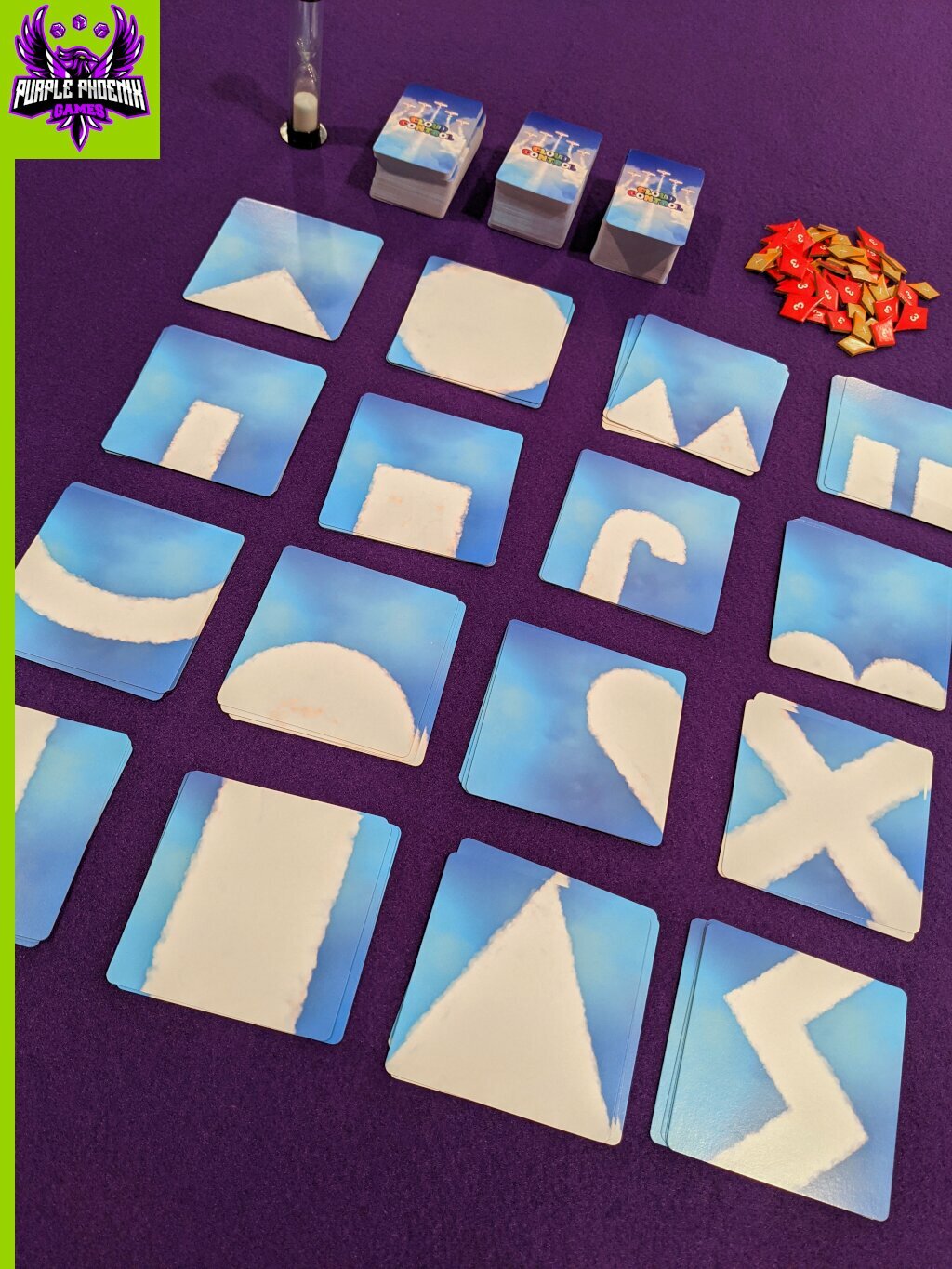
To setup shuffle the cards into one gigantic pile or into smaller stacks, as shown below. Separate the square cloud shape cards by shape and place them into stacks by shape. Place the VP kites and sand timer nearby and determine the starting player. The game may now begin with the first cloud artist!
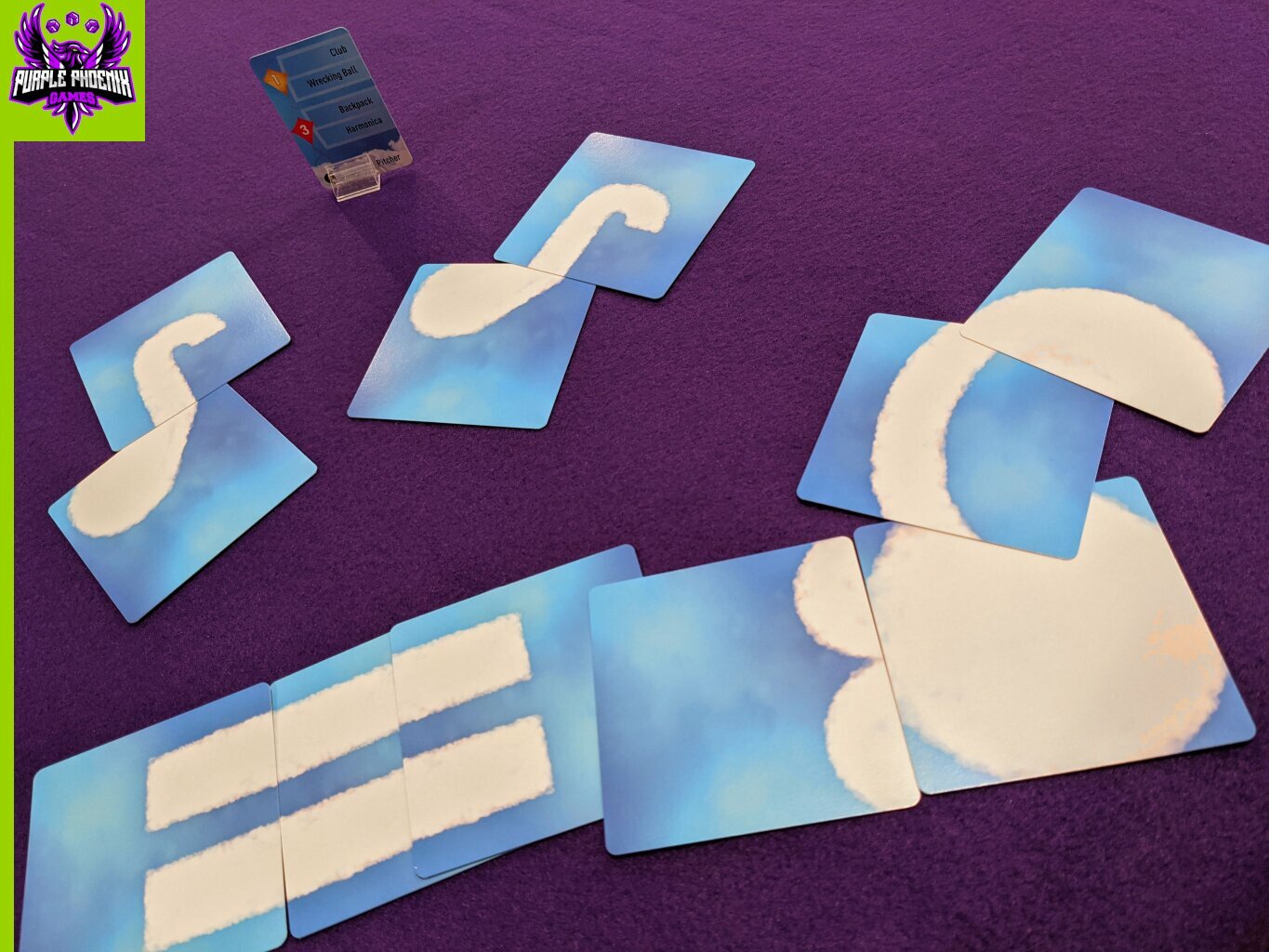
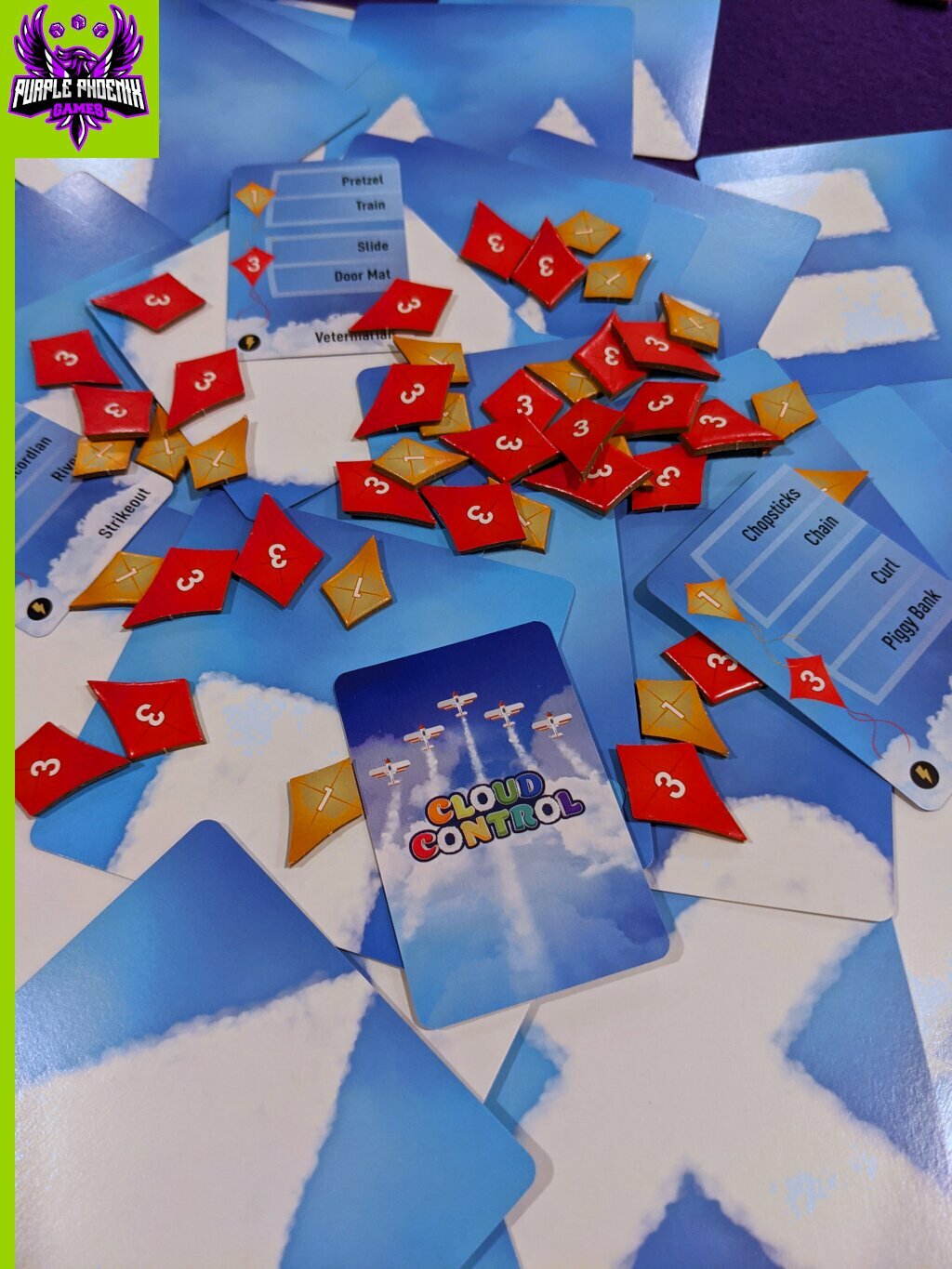
On a turn the active player will draw a Shape Card, choose one of the shapes and then have someone start the timer. Within the 90 seconds provided the player will need to grab Cloud Cards from the stacks to create their versions of the shapes prompted. Once the timer runs out, or other players correctly guesses what is being built, both the artist and guessers will receive point kites equal to the difficulty of the shapes identified. Easier creations will score 1VP while more difficult ones will score 3VP. Play then proceeds to the next player in table order to take their turn.
Once every player has had a turn to build, a lightning round will commence. The starting player will choose a Shape Card and then announce to all players the shape to be built. The players will have 90 seconds to each build the shape announced by taking only ONE Cloud Card at a time to add to their creation. Once the timer is out of sand, it is flipped once again for players to explain their creations. At the end of this arguing period all players will vote and the shape with the most votes will earn 5VP.
Players will each have one more turn to earn points for Shape Cards, and the winner is the player with the most VPs.
Components. This game is a bunch of Cloud Cards, 300 Shape Cards (plus extra blanks if you received the promos), VP kites, and a sand timer. The timer is normal sand timer quality, the cards used throughout the game are all fine quality, and the kites are cute red and gold tokens. The art style in the game is very light and airy and fits very well with the theme. Again, I have no problems with the components from 25th Century Games.
The gameplay is really fun, and turns (though 90 seconds long) seem like they go by so quickly that one could easily lose track of time playing. Having to work super fast because you are trying to score all the shapes on the card is harrying and stressful, or just a little less so if you decide to go big and detailed for just 3VP on one shape. Finding interesting uses for the basic shapes keeps all players active and on the edge of their seats. This truly is a wonderful party game (for when you can have game nights again).
Why didn’t I rate it higher then if I seem to like it so much? Well, for my typical game group, we tend to gravitate toward games with more meat on their bones. So I really do not see this getting played a ton on a regular rotation. That said, I am basing this on our game nights we had pre-COVID so things may certainly change once we are able to get together as a large group again. While I have played this with different player counts, I haven’t been able to get more than four to play. So I am keeping my rating open for now. I could see it improving down the road when I am able to play this with more people. I just really want to test its limit of 10 players and see how it goes. If it can handle 8+ and still be just as fun as with three or four, I will update this review and the graphic up top.
For now, Purple Phoenix Games gives this one a floaty 8 / 12. I do love being able to bust out my creative side and think more in geometric shapes. Every player I have played with seems to also enjoy it quite a bit. It is simple to teach and learn, plays quickly, and offers so many opportunities to laugh hysterically as players attempt to create common items or concepts from uncommon basic cloud shapes. If you are looking for something a little different to bring to game night or offer your friends and family, check out Cloud Control. And post some photos of your better creations. I want to see them!