

Gareth von Kallenbach (980 KP) rated Rocketman (2019) in Movies
Jun 19, 2019
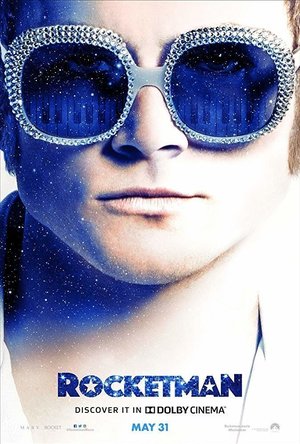


The film opens with a flamboyantly dressed John entering rehab in one of his stage costumes. As he opens up with his group, he shares the story of his childhood as a shy child who is desperate to have his father show him any signs of approval or affection.
When it is discovered that he has talent with the piano; his grandmother encourages him and even takes him to apply for a position at the Royal Academy of Music.
His mother (Bryce Dallas Howard) is moderately supportive but is more focused on her social life brought on by her failing marriage.
As the film unfolds; we see Elton working in a backup band and in time answering an ad that puts him with an agent. Paired with the man who would eventually change his life; Bernie Taupin (Jamie Bell), Elton and Bernie combine to write a series of songs which in turn leads him to a series of gigs in Los Angeles. The film shifts into high gear at this point as we see how their music becomes a smash and leads to a series of parties, drugs, and money.
Elton meets Manager John Reid (Richard Madden), who becomes his
As the record sales and hits mount, so does the destructive behaviors which leads Elton down a destructive path that threatens everything he has worked for.
The movie is a masterpiece of music and story and it cleverly uses musical montages and segments around the performances to outline various segments of his life and his rise to stardom.
The performances are amazing and Egerton was simply amazing as he not only captured the complexity of his character but performed all the vocals of the hit songs himself and they were spot on.
During our Press Screening I noticed many people singing along, tapping their feet, or bobbing their heads along with the music which helps to underscore just how timeless and popular his catalog of music has been as the songs have endured the test of time.
The film also evokes some unexpected emotion as there were more than a few people wiping their eyes during the film which at its core is a store of a young, shy boy desperate to be accepted and loved.
I truly hope the film is recognized come Awards season as it is a wonderful and memorable cinematic experience.
http://sknr.net/2019/05/31/rocketman/

Call Recorder - IntCall
Utilities and Social Networking
App
***Best call recorder app - over 11 million installs around the world. New users get free...

Venture Capital Tax Reliefs
Book
Venture Capital Tax Reliefs, Third Edition provides an overview of the major investment schemes...

WomanLog Pro Calendar
Health & Fitness and Lifestyle
App
WomanLog is a menstrual and fertility calendar for women. User interface languages: English,...

WomanLog Calendar
Health & Fitness and Lifestyle
App
WomanLog is a menstrual and fertility calendar for women. User interface languages: English,...
Video Production Handbook
Jim Owens and Gerald Millerson
Book
Techniques matter! Great ideas don't automatically translate into great programs. It's not enough...
Ande Thomas (69 KP) rated The Time Traveler's Wife in Books
May 30, 2019
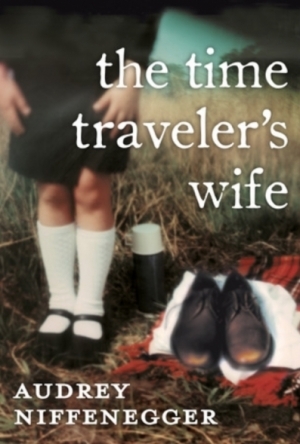


Spoilers abound.
<spoiler>
First, I'd be remiss not to at least acknowledge the creepy factor of a 40 year old naked man befriending a 6 year old girl. It's been discussed ad nauseum, but I've got to put my two cents in.
The whole experience reeks of grooming. Henry shows up, naked, in a young girl's life and (although true) casually explains that he's a <i>time traveler</i>. Her imagination is hooked. Her very own secret Magic Man. Over the following years, their friendship blossoms, and Henry refuses to tell her anything about the future. He is friendly, charming even, and always respectful. But he remains an enigma. Clare is pulled in by the mystery of the Magic Man. All she knows are the dates of his future arrivals. Until one day he begins to break his rule and tell her that they will be together. They'll get married and be in love and have a life. What changed? Why is he suddenly willing to tell her snippets of her future life? Puberty. She admits her desire to be with him and he basically says "keep waiting, it'll happen."
From that moment, her life has been decided - by Henry, and for Henry. Clare spends the entirety of her teenage existence (and beyond) waiting on Henry. The whole of her character arc is basically one big middle finger to the Bechdel test. Henry leads her by a leash with clues and vague promises of the future. We'll be together when you're older (we're destined). We'll have sex on your 18th birthday (wait for me). We'll meet in Chicago (move to Chicago). Even after his dying breath, he subtly slides direction her way. "I hope you move on, but by the way, I'll drop by when you're EIGHTY. But by all means...move on." Is it coincidence that Henry's time traveling mimics an emotionally abusive relationship? Clare tells us, "Henry is an artist of another sort, a disappearing artist. Our life together in this too-small apartment is punctuated by Henry’s small absences. Sometimes he disappears unobtrusively . . . Sometimes it’s frightening." Sure, you say, but he can't help it. He wants to be there for her. <i>It's just the way he is.</i> It's not even hinted at. Multiple people tell Clare <b>to her face</b> that Henry is bad news. But she won't hear it, because he spent her entire childhood molding her into his wife.
The author doesn't hide the allusion to Homer. Rather, she beats us over the head with it. And sure, it makes sense; Clare is the patiently waiting wife, Henry the distant traveler. Even Alba takes up her role as Telemachus, going on her own journeys in search of her father. But do we need both main characters referring to Henry by name, as Odysseus? We get it, girl. You want to write your own romantic Odyssey. Ease up.
Oh, and by the way - Clare's quote above? That's one of her first comments on married life. Her first thoughts after the wedding are "Why is my husband always gone? Why am I always afraid for him?" Henry's first thoughts? "How can Clare listen to Cheap Trick?" Let me remind you that this is the guy who's willing to rattle off a comprehensive list of early punk before jumping up to join in singing a Prince song, but he's upset that his wife listens to The Eagles instead of some obscure as hell French punk band. Also, this man who is thrilled to share musical tastes with a young teen with a mohawk then laments that the kid can't find his own music and has to take his? He preaches the meaning of punk before privately questioning why those kids want to be punk? Here's a guy who's entire life was shaped by music - both of his parents made livings playing music written before they were even born, yet he can't comprehend why two preteens could (or should) like The Clash, or why Clare would like The Beatles. <i>Stay in your own time,</i> he is essentially saying, <i>leave the time traveling to me.</i>
The guy doesn't even realize the pain he causes. Ingrid asks him "Why were you so mean to me?" "Was I," he says, "I didn't want to be." I know, I know. Everyone around her didn't want him to see her or speak to her. But need I remind you - dude time travels and frequently gives himself tips from the future. "Hey pal, take it easy on Ingrid," or "Bro, Ingrid is really shaken up, don't listen to her family or doctor, she needs some closure." But of course, nothing can really change, everything is the way it is.
This is all before I even begin to mention how much Niffenegger LOVES to name-drop. Of course there's the aforementioned punk band name-vomit, mentions of Henry's parents' work can't go by without naming a specific piece, despite adding nothing to the story or our understanding of the characters, there are two separate references to Claude Levi-Strauss (why?), and various other casual mentions of figures that seem to serve no purpose other than to prove that Henry is smart, and knows smart people things.
</spoiler>
I wanted to like this book more, I thought it had a fascinating premise and an interesting perspective. Obviously, I'm not a regular consumer of romance, and I realize that the problems I have with this book are problems shared by a large portion of the genre. But I am positive that we can have a love story that isn't mired by (at best) morally ambiguous relationships. I understand it was a different world when it was published, and that's not directly anyone's fault. Questions of consent and power and respect have been thrust into the spotlight in the short years since this book was published, but that's the lens with which I have to peer through. Stop glorifying these vapid, and frankly, abusive relationships as the paragon of romance. We're better than this. We need to be.

iLiveMath Animals Of Africa
Education and Social Networking
App
***** Featured in Top-10 iPad Education Apps by GameClassroom.com ***** Tip: If you have a white...

TMNT: Brothers Unite
Games and Entertainment
App
Take back the streets of NYC with the most shell-tastic team of secret superdudes EVER! Play as...

Bob Mann (459 KP) rated The Hate U Give (2018) in Movies
Sep 28, 2021
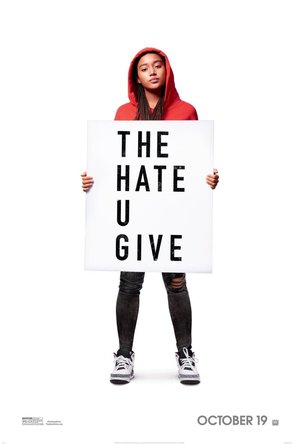

I’m afraid this movie didn’t do very well on either a) or b) at my showing: about 20 people left immediately, and more tellingly about another 20 people left in the first half hour. There’s a reason for that: the first half hour of this film is goddamn awful!
Starr Carter (Amandla Stenberg) is a sixteen year-old resident of Garden Heights, a black neighbourhood in a US city, where she lives with her younger brother and step-brother. Their parents Maverick (Russell Hornsby, “Fences“) and Lisa (Regina Hall) are devoting all of their energies to “break the cycle” and get their kids out of the neighbourhood and off to college and better futures. As such, the kids attend not the rough-house local school but a much more upper-class establishment: there Starr has to play a different role, with links to her origins being kept hidden even from her white boyfriend Chris (K.J. Apa).
But all that changes when her boyhood friend Khalil (Algee Smith) is shot and killed in a police stop-and-search. As the only witness, and with Khalil linked to local gang lord King (Anthony Mackie), Starr’s anonymous world is about to get a national focus shone onto it.
Man… I hate voiceovers in films and always have. So I really hated the start of this film which has Starr narrating ABSOLUTELY EVERYTHING (“Blah, blah, blah..”): no audience discovery is required. It also starts with a sort of highschool romance vibe, but not one that’s well done with kissing (“Blah, blah, blah..”) while the local Mean Girls look on (“Blah, blah”) then with Starr’s friends trying to act street (“blah, blah”) while Starr tries not to be street, all to the constant droning of Starr’s voiceover (“Blah, blah, blah..”). (I never walk out of movies…. but I can kind of understand the rationale of those who did).
Fortunately the voiceover then largely recedes (it only pops up with occasional staccato “thoughts”, before storming back for a “blah, blah” finale). And with the shooting, the film takes on a much more interesting slant, giving Amandla Stenberg a chance to really shine.
I have commented on Ms Stenberg before: she was the only really good thing in the recent “The Darkest Minds“. Here she exhibits a tremendous range from the delighted (her smile is radiant and seems astonishingly unforced) to the heartbroken and furious. There’s also a really strong supporting cast with great turns from Hornsby, Hall, Mackie and Smith. Hornsby in particular I found great as the Dad desperately tutoring his kids in military (but loving) fashion to avoid his mistakes.
For me, this seemed to be a surprisingly atypical view of a black ghetto-living family. A scene set in a diner is genuinely touching at emphasising the loving and close-knit nature of the Carter family.
Where I will struggle here is in trying to interpret my overall feelings about the film. As a white, older male person I have three degrees of separation from Starr’s perspective. And these are undoubtedly difficult issues to juggle with. The riots that happened recently in towns like Ferguson ape the activities on screen uncomfortably. Your sympathies might lie to some degree with the unfortunate white police officer (Drew Starkey); sympathies supported by the views of Starr’s police officer uncle Carlos (Common): until Starr points out via a punchy question that you REALLY shouldn’t feel like that… and your views are brought up with a jolt.
Aside from the rights and wrongs of the incident, there’s a frustrating dichotomy at play in the film with black and white communities wanting to be treated equally but never wanting to be treated the same. “You don’t SEE me” wails Starr. “I see you” replies Chris (as if James Cameron was directing!) But does he really? Without colour, I do not consider myself to be remotely capable of fully understanding Starr’s perspective on life. It made me want to read the source novel by Angie Thomas to try to get better insight.
Directed by George Tillman Jr., it’s undoubtedly a mixed bag, but I came down in the end on the side of it being good rather than bad… it has certainly had me thinking for a couple of days. The clumsy voiceovers and story elements in the opening and closing scenes mask a number of parallel and interesting story strands that generate conflicting thoughts about the state of race relations in today’s America. Jackson sang “It doesn’t matter if you’re black or white”: and it really shouldn’t, but actually in some quarters, it clearly still does.