
Search
Search results

groundedGeek (4 KP) rated This American Life in Podcasts
Jan 10, 2018



Almost always great
The topics on this show are sometimes hit-or-miss, but often you will come across an absolute gem of a theme and the stories shared are fascinating. I rated it higher because more often than not I find the topics really interesting. On occasion there will be a dud where the host isn't as engaging or the stories just aren't my taste, but the great thing about the show is that even those episodes hit home for someone most likely. There really is something for everyone in this series... if the current episode doesn't float your boat, it's likely a previous one will be fascinating or maybe the next topic will be right up your alley.
The episodes are "investigative" in nature where the host has interviewed people and tells the true story as they go, but like many "documentary" style features in this day and age... they can sometimes be driven to tell the story they want you to hear, guiding you to the conclusion that fits their narrative rather than simply providing the facts and letting the listener draw their own conclusions. To be fair, this makes it more entertaining... because simple fact-finding would likely be boring in podcast form. It's not necessarily a criticism... Michael Moore is an example of the worst purveyor of this kind of "documentary" style... generate a conclusion, craft the clips, audio and narrative to support that conclusion... voila... Michael Moore movie. While I don't prefer that style of "documentary" because it is obviously biased, there is no doubt that Michael Moore knows how to sell his story and makes entertaining films. TAL is not quite the same, it's probably unfair to put them in that category, but there is with some of the hosts, a definite feel that they have the conclusion they want you to draw firm in their mind when they provide the accompanying stories...
Other times there isn't any agenda, they simply want to provide you with fascinating stories about fascinating people in this fascinating country... and when they do that, they do it spectacularly. I feel like my criticism above could possibly be misconstrued as a knock on the show, but discerning listeners likely recognize when this is sometimes happening and it doesn't take away from the enjoyment of the journey the show takes you on. It's not a knock, it's a fun show.
The episodes are "investigative" in nature where the host has interviewed people and tells the true story as they go, but like many "documentary" style features in this day and age... they can sometimes be driven to tell the story they want you to hear, guiding you to the conclusion that fits their narrative rather than simply providing the facts and letting the listener draw their own conclusions. To be fair, this makes it more entertaining... because simple fact-finding would likely be boring in podcast form. It's not necessarily a criticism... Michael Moore is an example of the worst purveyor of this kind of "documentary" style... generate a conclusion, craft the clips, audio and narrative to support that conclusion... voila... Michael Moore movie. While I don't prefer that style of "documentary" because it is obviously biased, there is no doubt that Michael Moore knows how to sell his story and makes entertaining films. TAL is not quite the same, it's probably unfair to put them in that category, but there is with some of the hosts, a definite feel that they have the conclusion they want you to draw firm in their mind when they provide the accompanying stories...
Other times there isn't any agenda, they simply want to provide you with fascinating stories about fascinating people in this fascinating country... and when they do that, they do it spectacularly. I feel like my criticism above could possibly be misconstrued as a knock on the show, but discerning listeners likely recognize when this is sometimes happening and it doesn't take away from the enjoyment of the journey the show takes you on. It's not a knock, it's a fun show.

**✿❀ Maki ❀✿** (7 KP) rated Sword Art Online: 1: Aincrad in Books
May 3, 2018
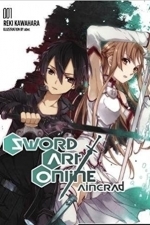

I don't know why I did this to myself. I knew I wasn't going to enjoy it. I suppose that in my mind, I thought of it as reconnaissance work, to try to better understand where all of the "Kirito" and "Asuna" clones suddenly flooding the few MMOs I played were coming from.
<img src="http://i1321.photobucket.com/albums/u556/kotonemaki/For%20R%20Purposes/12.29.12%20If%20SAO%20was%20Real_zpsjsrg8fz5.jpg"/>;
I enjoyed the premise of the light novel - the whole "being trapped in a video game until you beat it and if you die in the game you die in real life" thing. I also liked the idea that once in the game, the players were stripped of their anonymity. They were forced to play as themselves, rather than the avatars they had created to represent themselves.
And it's nice that the novel/anime/manga have managed to carve out their own space in the "virtual reality gone wrong" genre, and give .hack// some competition.
But I really, <i>really</i> did not like Kirito.
Maybe I'm a bit prejudiced against the character because of the flood of people naming themselves Kirito in MMOs who made the games obnoxious to play for months on end, since a good portion of them had no idea what they were doing. They all chose to play tanks (of course) and completely ruined it for people looking for a tank who knew what they were doing, or made it harder for actual tanks to get a party, because nobody trusted anybody to know what they were doing in those dark years after the anime first came out.
Maybe it's because Kirito (the actual character) was such a complete special snowflake, without any real redeeming qualities, other than the fact that he managed to luck into his power. That, and his relationship with Asuna are all that really define his character.
I've heard that their characters and the build up of their relationship are handled better in the anime, and doesn't come across as so insta-love. But to be honest, I've got no desire to watch the anime just to get character development when it should have been handled better in the novel that the anime was based on in the first place.
<img src="http://i1321.photobucket.com/albums/u556/kotonemaki/For%20R%20Purposes/12.29.12%20If%20SAO%20was%20Real_zpsjsrg8fz5.jpg"/>;
I enjoyed the premise of the light novel - the whole "being trapped in a video game until you beat it and if you die in the game you die in real life" thing. I also liked the idea that once in the game, the players were stripped of their anonymity. They were forced to play as themselves, rather than the avatars they had created to represent themselves.
And it's nice that the novel/anime/manga have managed to carve out their own space in the "virtual reality gone wrong" genre, and give .hack// some competition.
But I really, <i>really</i> did not like Kirito.
Maybe I'm a bit prejudiced against the character because of the flood of people naming themselves Kirito in MMOs who made the games obnoxious to play for months on end, since a good portion of them had no idea what they were doing. They all chose to play tanks (of course) and completely ruined it for people looking for a tank who knew what they were doing, or made it harder for actual tanks to get a party, because nobody trusted anybody to know what they were doing in those dark years after the anime first came out.
Maybe it's because Kirito (the actual character) was such a complete special snowflake, without any real redeeming qualities, other than the fact that he managed to luck into his power. That, and his relationship with Asuna are all that really define his character.
I've heard that their characters and the build up of their relationship are handled better in the anime, and doesn't come across as so insta-love. But to be honest, I've got no desire to watch the anime just to get character development when it should have been handled better in the novel that the anime was based on in the first place.

Rachel King (13 KP) rated Quatrain in Books
Feb 11, 2019

This book is four short stories that each take place in a different world of Shinn's creation. I am only familiar with two of those worlds, so I read the corresponding stories first, starting with Flight. This story was interesting as it gave me a peek into the corruption that was occurring at Windy Point with the Archangel Raphael, and how the lesser people viewed the angels at this time. The ending was slightly disappointing, but I understand that Shinn could not cause any major drama regarding Raphael since this story is meant to be a prequel to Archangel (Samaria, Book 1).
The second story I read was Flame, which centered around Senneth, the mystic who wields fire, with appearances by several of the other characters that appear in the Twelve Houses series, starting with Mystic and Rider (The Twelve Houses, Book 1). I enjoyed this story because it gave me an idea of what Senneth did when she was a lone nomad, as well as how the people of Gillengaria reacted when a new mystic was discovering her abilities. I can't imagine being in such a situation and not reacting similarly. This story also shows how Senneth and Tayse first meet and her first thoughts at this meeting, which is intriguing enough that I hope she writes more in the Twelve Houses series.
The third story I read was Gold, based in the world from her book, Summers at Castle Auburn, which I have not read. This story centers around a princess living in the land of Alora for a time, which is strikingly similar to the concepts of the world of Fae, and how she fights to resist the allure. I enjoyed this story so much that I intend to read the book it is based on to get more of the tantalizing story between Orlain and Zara. This was my favorite short story of the book.
I read maybe two pages of the story Blood before I lost interest and shut the book. This story is based on her previous work Heart of Gold, which is a science fiction title. I have very little interest in this genre, and I did not feel compelled to read this particular story, which is not to say that the story was bad. It's just not my cup of tea.
The second story I read was Flame, which centered around Senneth, the mystic who wields fire, with appearances by several of the other characters that appear in the Twelve Houses series, starting with Mystic and Rider (The Twelve Houses, Book 1). I enjoyed this story because it gave me an idea of what Senneth did when she was a lone nomad, as well as how the people of Gillengaria reacted when a new mystic was discovering her abilities. I can't imagine being in such a situation and not reacting similarly. This story also shows how Senneth and Tayse first meet and her first thoughts at this meeting, which is intriguing enough that I hope she writes more in the Twelve Houses series.
The third story I read was Gold, based in the world from her book, Summers at Castle Auburn, which I have not read. This story centers around a princess living in the land of Alora for a time, which is strikingly similar to the concepts of the world of Fae, and how she fights to resist the allure. I enjoyed this story so much that I intend to read the book it is based on to get more of the tantalizing story between Orlain and Zara. This was my favorite short story of the book.
I read maybe two pages of the story Blood before I lost interest and shut the book. This story is based on her previous work Heart of Gold, which is a science fiction title. I have very little interest in this genre, and I did not feel compelled to read this particular story, which is not to say that the story was bad. It's just not my cup of tea.

Movie Metropolis (309 KP) rated You're Next (2013) in Movies
Jun 11, 2019
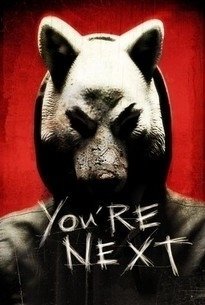

Finding a good horror film has been a little like a prompt train over the last few years, they are few and far between. However, 2013 has produced more than its fair share of movies within the genre, with the excellent The Purge, released earlier this year; Insidious 2, which is in cinemas this autumn and of course, the subject of this review; You’re Next. But can this modern horror film deliver the thrills and spills of those of yesteryear?
Relative newcomer Adam Wingard directs this rather formulaic home invasion film with some nice creative touches and a rousing score, borrowing heavily from other similar films like the dire When a Stranger Calls, the excellent The Strangers and the downright ridiculous Black Christmas.
However, what sets You’re Next apart from the pack is in its comic timing. Rather than going for full shock value, the film delivers a comedic edge which is welcome in breaking up the bludgeoning and stabbing, which there is a huge amount of.
The plot is simple, a family gathers at their parents’ large manor house to celebrate an anniversary, only to be taunted and butchered by a group of masked killers intent on ruining the party. There are the usual horror clichés of people being watched from outside, people being crept up on from behind and the gem that is thinking there is someone there and realising it’s just a member of the family, but Wingard keeps it feeling fresh and new throughout.
The acting is generally terrible, as is the case with many horror films, but because the movie never takes itself too seriously, the performances add to the overall effect rather than become an annoyance. One stand-out characterisation is Sharni Vinson as Erin, a larger than life Australian who really comes into her own in the battle between the ever decreasing family and the constant onslaught of the masked murderers.
Whilst not scaling the heights of last year’s Cabin in the Woods, You’re Next really helps show that there is life in a genre which has been inundated with cheap knock-offs, countless sequels and pointless remakes.
It is daft, unoriginal and full of lifeless characters, but as a slice of truly terrifying horror and a piece of laugh out loud dark comedy, it succeeds and is highly recommended.
Relative newcomer Adam Wingard directs this rather formulaic home invasion film with some nice creative touches and a rousing score, borrowing heavily from other similar films like the dire When a Stranger Calls, the excellent The Strangers and the downright ridiculous Black Christmas.
However, what sets You’re Next apart from the pack is in its comic timing. Rather than going for full shock value, the film delivers a comedic edge which is welcome in breaking up the bludgeoning and stabbing, which there is a huge amount of.
The plot is simple, a family gathers at their parents’ large manor house to celebrate an anniversary, only to be taunted and butchered by a group of masked killers intent on ruining the party. There are the usual horror clichés of people being watched from outside, people being crept up on from behind and the gem that is thinking there is someone there and realising it’s just a member of the family, but Wingard keeps it feeling fresh and new throughout.
The acting is generally terrible, as is the case with many horror films, but because the movie never takes itself too seriously, the performances add to the overall effect rather than become an annoyance. One stand-out characterisation is Sharni Vinson as Erin, a larger than life Australian who really comes into her own in the battle between the ever decreasing family and the constant onslaught of the masked murderers.
Whilst not scaling the heights of last year’s Cabin in the Woods, You’re Next really helps show that there is life in a genre which has been inundated with cheap knock-offs, countless sequels and pointless remakes.
It is daft, unoriginal and full of lifeless characters, but as a slice of truly terrifying horror and a piece of laugh out loud dark comedy, it succeeds and is highly recommended.

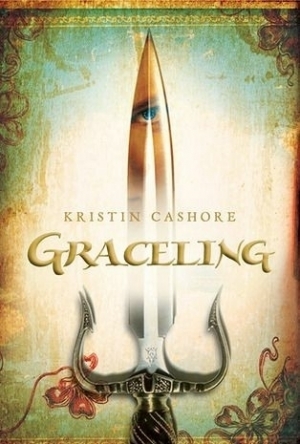
I enjoyed this fantasy book despite not particularly connecting with the main character. Katsa can be harsh and unrelatable, but the plot of the book is interesting. I listened to the book rather than reading it, so I think that I noticed the writing style/grammar problems less than those who were actually looking at the words.
The premise was fascinating - some people grow into special abilities called graces although each grace is different. Katsa has a fighting grace, which her King has her use to intimidate and harm people. Despite hating it, she never fights against it and accepts her position as a killer. I understand the fear of the King's anger, but cannot reconcile that with allowing oneself to be used and abused in such a manner. She is a fighter and strong enough that no one should be able to command her. Her freedom and her choices should be her own, but she allows herself to be manipulated for a long time.
Po, on the other hand, was very likable. He brings out a better side of Katsa and forces her to realize that she does not have to be the King's puppet. He is intelligent, a revered fighter and kind. I also liked another character, but as they do not have a role until the later half of the book - I'm afraid that talking about them might spoil details.
The world building was decent and I hope that it is expanded in future books, as this is not a standalone. The journey Katsa goes on is chronicled beautifully, but I don't feel like I know the world itself or its monarchies well. There are seven kingdoms and I would not be able to detail customs, names or climate of many of them.
Overall, the plot is relatively predictable although there were a few points that weren't expected. The pacing was steady throughout, but some scene changes and plot progressions seemed to jump forward when the plot would have been better served if they were expanded upon. For example, the conflict of the plot built and then the climax and "resolution" was mere moments so if you weren't paying close attention you may have missed it.
I would recommend this to young adult/teen readers who enjoy fantasy books - and I can't wait to read the next book in the series.
The premise was fascinating - some people grow into special abilities called graces although each grace is different. Katsa has a fighting grace, which her King has her use to intimidate and harm people. Despite hating it, she never fights against it and accepts her position as a killer. I understand the fear of the King's anger, but cannot reconcile that with allowing oneself to be used and abused in such a manner. She is a fighter and strong enough that no one should be able to command her. Her freedom and her choices should be her own, but she allows herself to be manipulated for a long time.
Po, on the other hand, was very likable. He brings out a better side of Katsa and forces her to realize that she does not have to be the King's puppet. He is intelligent, a revered fighter and kind. I also liked another character, but as they do not have a role until the later half of the book - I'm afraid that talking about them might spoil details.
The world building was decent and I hope that it is expanded in future books, as this is not a standalone. The journey Katsa goes on is chronicled beautifully, but I don't feel like I know the world itself or its monarchies well. There are seven kingdoms and I would not be able to detail customs, names or climate of many of them.
Overall, the plot is relatively predictable although there were a few points that weren't expected. The pacing was steady throughout, but some scene changes and plot progressions seemed to jump forward when the plot would have been better served if they were expanded upon. For example, the conflict of the plot built and then the climax and "resolution" was mere moments so if you weren't paying close attention you may have missed it.
I would recommend this to young adult/teen readers who enjoy fantasy books - and I can't wait to read the next book in the series.

Goddess in the Stacks (553 KP) rated Reign of the Fallen in Books
Mar 22, 2018
Reign of the Fallen has a pretty interesting premise - there are a few different school of magic in this world, and our main character is a necromancer. (One of the side characters is a Beast Master, and another is a Healer. We also see Weather Mages.) Necromancers, far from being the mysterious evil mages we see in most fantasy, are revered and noble in this world; they bring souls back from the Deadlands, when they can, so they can continue "living" in the real world. "Living" is a loose term - they must make sure they are completely covered at all times - if a living person sees any of their flesh, they turn - immediately - into terrifying monsters that hunt and kill both the living and the Dead. And the more they kill, the more powerful they become. Thankfully, people are very, very careful, and so Shades are very rare! .....or they were. Now that someone has started to purposefully make them, shit's hitting the fan.
Odessa and her friends - three other Necromancers, a Healer, a Beast Master, and a Princess - set out to solve this mystery and take out the shades wreaking havoc on the kingdom. Entwined in that plot is the near-breaking of Odessa's spirit when one of her friends dies, and the recovery from that, as well as romances with people of both genders. Yay for bisexual representation! (One of her Necromancer friends is also in a homosexual relationship with the Healer, and it's all perfectly normal. I love seeing so many fantasy YA books these days not treating that as something special or other. Yay for culture changing! Maybe someday it won't even be so out-of-the-ordinary that I'll feel the need to point it out!)
The book had a few technical problems - a few scenes where I was confused how a character had gotten someplace when I thought they were somewhere else, some confusion in how a scene was described - but those could be overlooked with how wonderful the rest of the book was.
The plot was wrapped up very nicely by the end of the book, so I don't know if there will be a sequel or not, but I really enjoyed the world and would definitely read one if she writes it!
You can find all my reviews at http://goddessinthestacks.wordpress.com
Odessa and her friends - three other Necromancers, a Healer, a Beast Master, and a Princess - set out to solve this mystery and take out the shades wreaking havoc on the kingdom. Entwined in that plot is the near-breaking of Odessa's spirit when one of her friends dies, and the recovery from that, as well as romances with people of both genders. Yay for bisexual representation! (One of her Necromancer friends is also in a homosexual relationship with the Healer, and it's all perfectly normal. I love seeing so many fantasy YA books these days not treating that as something special or other. Yay for culture changing! Maybe someday it won't even be so out-of-the-ordinary that I'll feel the need to point it out!)
The book had a few technical problems - a few scenes where I was confused how a character had gotten someplace when I thought they were somewhere else, some confusion in how a scene was described - but those could be overlooked with how wonderful the rest of the book was.
The plot was wrapped up very nicely by the end of the book, so I don't know if there will be a sequel or not, but I really enjoyed the world and would definitely read one if she writes it!
You can find all my reviews at http://goddessinthestacks.wordpress.com

Cynthia Armistead (17 KP) rated Indulgence in Death (In Death, #31) in Books
Mar 1, 2018
I quite enjoyed this one. There was less gratuitous bitching between Roarke and Eve - perhaps they're learning to work together as a couple better, as most people do if they're going to make it in the long run. That's good to see depicted realistically, for a change.
The plot itself was a bit of a puzzle, and has been adequately described in the book description. I honestly can't say much more without spoilers.
One of the things I really enjoy about this series is that Eve is shown to be growing as an individual, and not just in her relationship with Roarke. She has relaxed in her interactions with her partner, Peabody. She thinks about how the current murder spree might affect her friends, and reaches out to warn some of her friends not to take any private appointments until the case is over. The Eve we met in the earliest books wouldn't have done that - for one thing, she had very few connections to other people. When she realizes that one of her friends is still grieving deeply for a loved one who was murdered in an earlier novel, she invites him over for a gathering of friends the following weekend - despite the fact that she really doesn't like socializing at all (and follows through by making that weekend happen and inviting the rest of their circle of friends).
As usual, I enjoyed the depiction of a society that has largely gotten past the need to worry about criminalizing what goes on between consenting adults or the genders of adults persons engaged in a relationship. It's still a bit silly about permitting some drugs while criminalizing others - there's no explanation of why are alcohol, tobacco, caffeine, and "boosters" and "focus" permissible while "whore," "rabbit," "zeus," "zoner," and others are illegal - but I suppose that's one of those areas where Robb/Roberts and I just don't see eye to eye.
I can't think of many authors who can take a series to 31 volumes and keep me interested. I'm not going to claim that these books are deathless prose, but they're fun, and they keep me interested. I haven't been driven to pick up anything she's published as Nora Roberts, but I'll keep reading this series for a while yet, and I might even go back someday and read this series over again from the beginning.
The plot itself was a bit of a puzzle, and has been adequately described in the book description. I honestly can't say much more without spoilers.
One of the things I really enjoy about this series is that Eve is shown to be growing as an individual, and not just in her relationship with Roarke. She has relaxed in her interactions with her partner, Peabody. She thinks about how the current murder spree might affect her friends, and reaches out to warn some of her friends not to take any private appointments until the case is over. The Eve we met in the earliest books wouldn't have done that - for one thing, she had very few connections to other people. When she realizes that one of her friends is still grieving deeply for a loved one who was murdered in an earlier novel, she invites him over for a gathering of friends the following weekend - despite the fact that she really doesn't like socializing at all (and follows through by making that weekend happen and inviting the rest of their circle of friends).
As usual, I enjoyed the depiction of a society that has largely gotten past the need to worry about criminalizing what goes on between consenting adults or the genders of adults persons engaged in a relationship. It's still a bit silly about permitting some drugs while criminalizing others - there's no explanation of why are alcohol, tobacco, caffeine, and "boosters" and "focus" permissible while "whore," "rabbit," "zeus," "zoner," and others are illegal - but I suppose that's one of those areas where Robb/Roberts and I just don't see eye to eye.
I can't think of many authors who can take a series to 31 volumes and keep me interested. I'm not going to claim that these books are deathless prose, but they're fun, and they keep me interested. I haven't been driven to pick up anything she's published as Nora Roberts, but I'll keep reading this series for a while yet, and I might even go back someday and read this series over again from the beginning.

MStykal (3 KP) rated The Resistance in Tabletop Games
Nov 20, 2018
Excellent intro into social deduction games (3 more)
Easy to teach
Creates interesting moments
High player count
Component quality is lacking (3 more)
Seriously effected by the metagame (i.e. you were a spy last game, you're a spy this game)
Outshined by other, more impressive games.
Puts introverted players in awkward situations.
Good... Until it's not
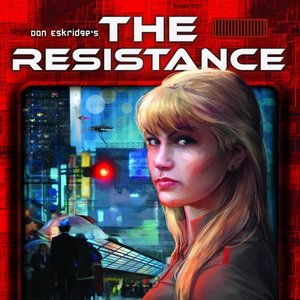
First off... I love this game. I've had some of the best moments in my gaming history playing this game. It's a simple, quick, satisfying game of bluffing and lying to your friends. But... I'm a good liar. I'm not in the camp of "This game is broken" or "I'm too good at this so it's not fun", because neither of those are true. And maybe my lack of appreciation comes from spending hours playing this over and over early on in my collections history. But truth be told, there are better games that do everything this does and more. This is a good entrance point for people into social deduction games. Unfortunately, it makes introverted people uncomfortable when another, louder, more confident gamer is shouting about something. To be honest, that's the issue with the whole genre, but this is often the starting off point that sullies more involved games for some players. Games like Burke's Gambit, which is similar but with more things players can do. Avalon, which is this game with more in depth roles. One Night Ultimate Werewolf/Alien/Vampire, which is a lot of the same but with an app to moderate it and interesting and plentiful player powers. Secret Hitler, which if you can get past the theme, is amazing, and brings the same feel but with more choices and consequences for your actions.
The Resistance is a fine game. It's only great or good until your group has built up such a metagame that it's not great or good anymore. But then something surprises you and it's back up there. Until you play with a different group. Until you play a different game. Until you evolve naturally past The Resistance into another similar game. I'd always recommend this to new gamers. Because it's a good game... Until... It's not good anymore. Then it's always there for a new friend coming to play. For a session with the new players. It's a good game... Until... It's not.
The Resistance is a fine game. It's only great or good until your group has built up such a metagame that it's not great or good anymore. But then something surprises you and it's back up there. Until you play with a different group. Until you play a different game. Until you evolve naturally past The Resistance into another similar game. I'd always recommend this to new gamers. Because it's a good game... Until... It's not good anymore. Then it's always there for a new friend coming to play. For a session with the new players. It's a good game... Until... It's not.

Hazel (1853 KP) rated The Professor (McMurtrie and Drake Legal Thrillers #1) in Books
Dec 17, 2018
<i>I received this book for free through Goodreads First Reads.</i>
<i>The Professor</i>, a legal thriller by American author Robert Bailey, is a well-written novel about an investigation into a fatal car crash. A collision between a speeding truck and a family car resulted in the death of all four people in the vehicles. The mother of one of the deceased is determined to find out the truth about what happened and so enlists the help of an old friend, Thomas McMurtrie, the Professor.
Although everything revolves around the upcoming trial, the story is really focused on two people in particular. One is the aforementioned Professor and the other is an ex-student of his, Rick Drake. Tom used to be a lawyer but after persuasion from Coach Paul Bryant he took up a position at the University of Alabama teaching law. Now at 68 years old he is forced into retirement. Rick Drake, on the other hand, is a young and struggling lawyer, who after punching Tom due to his hot headedness is finding it difficult to pick up work. Putting aside their differences, the two of the come together to try and win this court case. The opposition, however, seem determined to make that impossible by using any means possible.
The prologue initially misled me. It explains how Tom became a professor in 1969 by detailing his meeting with Coach Paul Bryant who is more often referred to as the Man. This title, as well as the capitalization, led me to believe that he would be a sinister, untrustworthy character in this story. That turned out not to be the case – nor was he even in it, having long passed away. He was known as the Man in the same way that Tom is known as the Professor, due to respect and admiration.
There were times when I did not like what was happening in the novel, particularly the murders of Rick’s key witnesses, but once the trial actually began it got really exciting with the pace picking up as I hoped that everything would resolve itself.
For those who love crime novels this is a definite read. I cannot be entirely sure but the caption on the back cover “The First McMurtrie & Drake Investigation” implies that this could become a series rather than a standalone story; in which case it would be interesting to discover what the pair do next.
<i>The Professor</i>, a legal thriller by American author Robert Bailey, is a well-written novel about an investigation into a fatal car crash. A collision between a speeding truck and a family car resulted in the death of all four people in the vehicles. The mother of one of the deceased is determined to find out the truth about what happened and so enlists the help of an old friend, Thomas McMurtrie, the Professor.
Although everything revolves around the upcoming trial, the story is really focused on two people in particular. One is the aforementioned Professor and the other is an ex-student of his, Rick Drake. Tom used to be a lawyer but after persuasion from Coach Paul Bryant he took up a position at the University of Alabama teaching law. Now at 68 years old he is forced into retirement. Rick Drake, on the other hand, is a young and struggling lawyer, who after punching Tom due to his hot headedness is finding it difficult to pick up work. Putting aside their differences, the two of the come together to try and win this court case. The opposition, however, seem determined to make that impossible by using any means possible.
The prologue initially misled me. It explains how Tom became a professor in 1969 by detailing his meeting with Coach Paul Bryant who is more often referred to as the Man. This title, as well as the capitalization, led me to believe that he would be a sinister, untrustworthy character in this story. That turned out not to be the case – nor was he even in it, having long passed away. He was known as the Man in the same way that Tom is known as the Professor, due to respect and admiration.
There were times when I did not like what was happening in the novel, particularly the murders of Rick’s key witnesses, but once the trial actually began it got really exciting with the pace picking up as I hoped that everything would resolve itself.
For those who love crime novels this is a definite read. I cannot be entirely sure but the caption on the back cover “The First McMurtrie & Drake Investigation” implies that this could become a series rather than a standalone story; in which case it would be interesting to discover what the pair do next.
Amy Curtis (49 KP) rated Pride and Prejudice in Books
Dec 31, 2018
Modest Romance
Contains spoilers, click to show
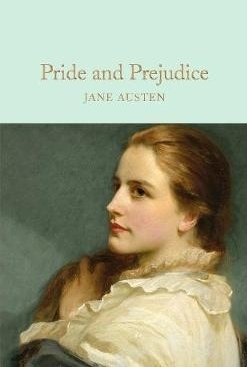
Everyone always mentions this novel, it’s a classic, how can it not be mentioned? When I picked up this novel, I was just praying that it wouldn’t be one of those clichés where everyone says it’s amazing and once you’ve read it you think to yourself, what was all the fuss about? I’m pleased to say that this was not the case.
Most people know the rough story of this novel but I will give a little recap anyway. You are introduced to a middle-class family with 5 young girls that are ready to be married off. The mother is a hysterical kind of woman that cannot keep herself out of her daughter’s business. The eldest daughter Jane is a very shy individual and she falls in love with a wealthy man Mr. Bingley. When Mr. Bingley arrives in town, he brings with him his friend Mr. Darcy who is constantly described as a disagreeable fellow particularly as he does not enjoy the social norms that were custom in this era. Jane’s sister Elizabeth finds something curious about this man and spends the majority of the narrative expressing her dislike of him. Eventually though, he wins her round but the journey is what is so beautiful about this novel.
When I read this, I really thought it was going to be a cliché novel and I was pleasantly surprised as to how much I enjoyed it. You can see parallels between the relationship with Mr. Darcy and Elizabeth Bennet and Jane Eyre and Mr. Rochester. Looking back on this, there are quite a lot of similarities between these two novels and the characters that make them.
Austen has created an incredible classic novel that highlights what life was like in this era and how people behaved. You could look at this novel as a study of personalities. The romance between the two is incredibly sweet especially when it seems as though it would be such an unlikely couple. Both characters have to have internal battles before they are both ready to open up to each other and declare how they really feel.
I can now understand why this novel has been such a fascination for literary scholars. It is beautifully written and contains the modest kind of romance that leaves you wanting more. It will be going up there as one of my favourite works of literature.
Most people know the rough story of this novel but I will give a little recap anyway. You are introduced to a middle-class family with 5 young girls that are ready to be married off. The mother is a hysterical kind of woman that cannot keep herself out of her daughter’s business. The eldest daughter Jane is a very shy individual and she falls in love with a wealthy man Mr. Bingley. When Mr. Bingley arrives in town, he brings with him his friend Mr. Darcy who is constantly described as a disagreeable fellow particularly as he does not enjoy the social norms that were custom in this era. Jane’s sister Elizabeth finds something curious about this man and spends the majority of the narrative expressing her dislike of him. Eventually though, he wins her round but the journey is what is so beautiful about this novel.
When I read this, I really thought it was going to be a cliché novel and I was pleasantly surprised as to how much I enjoyed it. You can see parallels between the relationship with Mr. Darcy and Elizabeth Bennet and Jane Eyre and Mr. Rochester. Looking back on this, there are quite a lot of similarities between these two novels and the characters that make them.
Austen has created an incredible classic novel that highlights what life was like in this era and how people behaved. You could look at this novel as a study of personalities. The romance between the two is incredibly sweet especially when it seems as though it would be such an unlikely couple. Both characters have to have internal battles before they are both ready to open up to each other and declare how they really feel.
I can now understand why this novel has been such a fascination for literary scholars. It is beautifully written and contains the modest kind of romance that leaves you wanting more. It will be going up there as one of my favourite works of literature.