
Search
Search results

Bob Mann (459 KP) rated Copshop (2021) in Movies
Sep 15, 2021
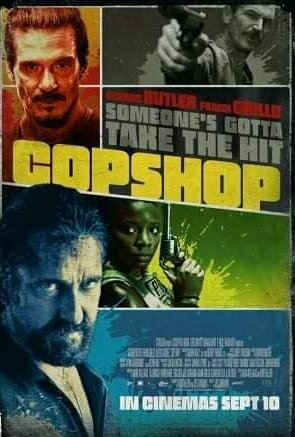


Ludicrous plot points ruin a promising actioner.
Teddy Murretto (Frank Grillo) is arrested after deliberately punching dedicated rookie cop Valerie Young (Alexis Louder) and incarcerated within Gun Creek City police station. Soon after, Bob Viddick (Gerard Butler) is dumped in the opposite cell for drunk driving. It’s clear both men intended to end up there, but why?
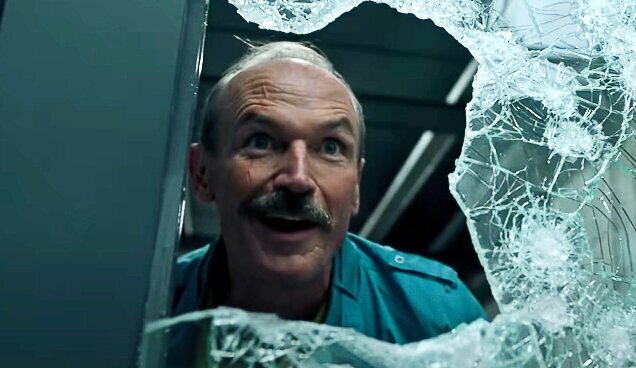
The wheels come off the night big time though when the psychopathic Anthony Lamb (Toby Huss) arrives, having the same mission as Viddick.
Positives:
- While the three male leads have fun with their roles, the star of the show for me was the (unknown to me) Alexis Louder. She delivers a really strong performance here, with a confident stillness in some of her close-ups.
- There are a number of nice lines in the script, some of which made me laugh out loud, which I wasn't expecting to do.
- As a 'park your brain at the door' shoot-em-up, the ending is fun, similar in many ways I thought to the claustrophobic violence of "Free Fire".
Negatives:
- Here's YET another example of a script that is downright insulting to the audience's intelligence. There are some genuine "WTF" moments in this script. I can't go into details without dropping spoilers, but the biggest of these - you'll know it when you see it - is a genuine "HANG ON A MINUTE!!!" moment.
- The sound mix drowns out a lot of the (already drawly and indistinct) dialogue with the incessant music. It's really difficult to pick up on some of the lines.
- There's something surprisingly 'retro' about the whole movie, right down to the use of split-screen at the end. The titles feel as if they were from a 70's TV show like Kojak. I could imagine this would work well... if the movie had actually been set in the 70's!
Summary Thoughts on "Copshop": There's almost a good little action film buried in here struggling to get out. Alexis Louder makes a very positive impression with the best parts of the film happening when she is verbally sparring with Butler. But a good action movie needs to keep things credible, albeit on the edge of credibility (e.g. John McClane's lift shaft fall in "Die Hard" is very much on the boundary, if a little over it). Thanks to some ludicrous decisions within the script, this one lost all credibility for me and took me right out of the story.
(For the full graphical and video reviews, please check out onemannsmovies on the web, Facebook and Tiktok. Thanks).
The wheels come off the night big time though when the psychopathic Anthony Lamb (Toby Huss) arrives, having the same mission as Viddick.
Positives:
- While the three male leads have fun with their roles, the star of the show for me was the (unknown to me) Alexis Louder. She delivers a really strong performance here, with a confident stillness in some of her close-ups.
- There are a number of nice lines in the script, some of which made me laugh out loud, which I wasn't expecting to do.
- As a 'park your brain at the door' shoot-em-up, the ending is fun, similar in many ways I thought to the claustrophobic violence of "Free Fire".
Negatives:
- Here's YET another example of a script that is downright insulting to the audience's intelligence. There are some genuine "WTF" moments in this script. I can't go into details without dropping spoilers, but the biggest of these - you'll know it when you see it - is a genuine "HANG ON A MINUTE!!!" moment.
- The sound mix drowns out a lot of the (already drawly and indistinct) dialogue with the incessant music. It's really difficult to pick up on some of the lines.
- There's something surprisingly 'retro' about the whole movie, right down to the use of split-screen at the end. The titles feel as if they were from a 70's TV show like Kojak. I could imagine this would work well... if the movie had actually been set in the 70's!
Summary Thoughts on "Copshop": There's almost a good little action film buried in here struggling to get out. Alexis Louder makes a very positive impression with the best parts of the film happening when she is verbally sparring with Butler. But a good action movie needs to keep things credible, albeit on the edge of credibility (e.g. John McClane's lift shaft fall in "Die Hard" is very much on the boundary, if a little over it). Thanks to some ludicrous decisions within the script, this one lost all credibility for me and took me right out of the story.
(For the full graphical and video reviews, please check out onemannsmovies on the web, Facebook and Tiktok. Thanks).

Lyndsey Gollogly (2893 KP) rated Between Wrath & Mercy ( The Divine Between 1) in Books
Jan 15, 2024


10 of 220
Kindle
Between Wrath & Mercy ( The Divine Between 1)
By Jess Wisecup
⭐️⭐️⭐️⭐️
A mother will do anything to save her child, no matter the cost.
After her daughter is kidnapped, Emmeline Highclere—a thirty-four-year-old mother living in isolation with memories and grief her only companion—must do everything in her limited power and divine abilities to get the girl back.
Emmeline believes her daughter, Elora, is the Beloved—the conduit with goddess-granted divine abilities prophesied to bring peace to the Three Kingdoms. Because the last person thought to be the Beloved was brutally murdered by the enemy kingdom of Folterra, Emmeline has dedicated the last sixteen years to hiding her daughter and keeping her safe. When Elora is kidnapped by a Folterran prince, Emmeline must leave her place of hiding, resolving to do anything to rescue her daughter. But to have any chance against those who took the girl, Emmeline must call upon one of the most powerful conduits in the Three Kingdoms, the Crown Prince of Vesta—the man who broke her heart—and hope he helps her despite their estrangement.
With the weight of his father’s impending death hanging over his head, Crown Prince Rainier has begun to make moves to prove his dedication to assume the role of king. When he is visiting the estate that was once a second home to him, the woman who has long haunted his dreams and consumed his thoughts appears before him, asking for his help to find the child she had with another man. Now, he must decide: does he drop what he is doing to help Emmeline, or does he maintain his unwavering duty to the Crown?
Now, Emmeline and Rainier must work together to find the Beloved—to save the girl from the Folterrans and fulfill the prophecy of peace—while they both battle feelings of remorse, grief, and heartbreak, trying to ignore the heated desire and simmering attraction between them that never left.
This was really good! The characters really draw you in and I love the story. My only issue was it was very repetitive and could have done with a lot less it. I settled for a 4⭐️ as 3 was a bit to low as I did really like it. Also a very abrupt cliffhanger at the end which is Annoying. Oh and how did they not see who the father was from the start?
Kindle
Between Wrath & Mercy ( The Divine Between 1)
By Jess Wisecup
⭐️⭐️⭐️⭐️
A mother will do anything to save her child, no matter the cost.
After her daughter is kidnapped, Emmeline Highclere—a thirty-four-year-old mother living in isolation with memories and grief her only companion—must do everything in her limited power and divine abilities to get the girl back.
Emmeline believes her daughter, Elora, is the Beloved—the conduit with goddess-granted divine abilities prophesied to bring peace to the Three Kingdoms. Because the last person thought to be the Beloved was brutally murdered by the enemy kingdom of Folterra, Emmeline has dedicated the last sixteen years to hiding her daughter and keeping her safe. When Elora is kidnapped by a Folterran prince, Emmeline must leave her place of hiding, resolving to do anything to rescue her daughter. But to have any chance against those who took the girl, Emmeline must call upon one of the most powerful conduits in the Three Kingdoms, the Crown Prince of Vesta—the man who broke her heart—and hope he helps her despite their estrangement.
With the weight of his father’s impending death hanging over his head, Crown Prince Rainier has begun to make moves to prove his dedication to assume the role of king. When he is visiting the estate that was once a second home to him, the woman who has long haunted his dreams and consumed his thoughts appears before him, asking for his help to find the child she had with another man. Now, he must decide: does he drop what he is doing to help Emmeline, or does he maintain his unwavering duty to the Crown?
Now, Emmeline and Rainier must work together to find the Beloved—to save the girl from the Folterrans and fulfill the prophecy of peace—while they both battle feelings of remorse, grief, and heartbreak, trying to ignore the heated desire and simmering attraction between them that never left.
This was really good! The characters really draw you in and I love the story. My only issue was it was very repetitive and could have done with a lot less it. I settled for a 4⭐️ as 3 was a bit to low as I did really like it. Also a very abrupt cliffhanger at the end which is Annoying. Oh and how did they not see who the father was from the start?
Cori June (3033 KP) rated Gun, With Occasional Music in Books
Nov 23, 2021

Banter (1 more)
Good premise
Easily distracted while reading (2 more)
Poor execution of idea
Not good with explanations
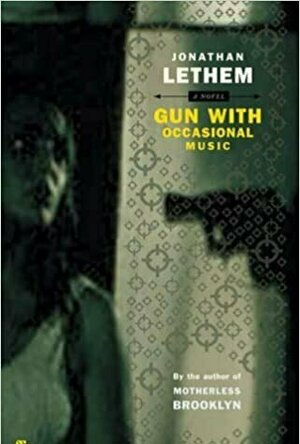
I went into this book with low expectations. I mean there's a kangaroo with a gun. How serious can you take it? But suprisingly, I wouldn't say it qualified as absurdist noir/sci-fi.
The noir part is ok, pretty straightforward; however the point is to try and solve it along with the detective, or in this case private inquisitor, but the character made leaps and bounds with his puzzling and I was ".... how did you figure that?" Or I was more intrigued by the babyheads (which got a passing explanation that was blah and not enough) or the fact that the government encouraged the use of addictive drugs like forgetol or avoidtol (yeah super creative names but it got the point across) or why it was considered rude to ask questions or what is up with the Karma card? Most of which you get 0 answers.
The sci-fi aspect is surface level with the evolution of animals and the accelerated intelligence of babies/child. Freezing prisoners instead if regular jail. It was meh with sparatic points of interesting.
The dystopian world was well thought out but he did spend way too much waxing poetic on sunsets and sunrises. Don't get me wrong I love sunsets and sunrises but when I tried to see if there would be important information dropped at these points I got nothing.
The banter between characters was pretty good. Not the best bit it was good fir a small chuckle or appreciation.
The main character is not an likeable one however I found myself rooting for him. And I was repulsed by him and not just because of how he treats women. He even admits it is wrong. He's a very angry main character.
There is a take on body dysphoria, although as this book came out in the 90s I don't know if that was intentional or not.
Not having body dysphoria, but understanding how you can be uncomfortable in your own skin. I wonder if it's a semi accurate description?????
I almost rated it a five but I am still confused and am going "WTF did I just read?" So I thought a lot and was also way too easily distracted by other things (like tiktok or tv or my own thoughts). I should have been able to read this book in a day slow pacing or not and kept getting bored with it. I'll probably unhaul it at a used bookstore where someone can appreciate it more than I.
The noir part is ok, pretty straightforward; however the point is to try and solve it along with the detective, or in this case private inquisitor, but the character made leaps and bounds with his puzzling and I was ".... how did you figure that?" Or I was more intrigued by the babyheads (which got a passing explanation that was blah and not enough) or the fact that the government encouraged the use of addictive drugs like forgetol or avoidtol (yeah super creative names but it got the point across) or why it was considered rude to ask questions or what is up with the Karma card? Most of which you get 0 answers.
The sci-fi aspect is surface level with the evolution of animals and the accelerated intelligence of babies/child. Freezing prisoners instead if regular jail. It was meh with sparatic points of interesting.
The dystopian world was well thought out but he did spend way too much waxing poetic on sunsets and sunrises. Don't get me wrong I love sunsets and sunrises but when I tried to see if there would be important information dropped at these points I got nothing.
The banter between characters was pretty good. Not the best bit it was good fir a small chuckle or appreciation.
The main character is not an likeable one however I found myself rooting for him. And I was repulsed by him and not just because of how he treats women. He even admits it is wrong. He's a very angry main character.
There is a take on body dysphoria, although as this book came out in the 90s I don't know if that was intentional or not.
Not having body dysphoria, but understanding how you can be uncomfortable in your own skin. I wonder if it's a semi accurate description?????
I almost rated it a five but I am still confused and am going "WTF did I just read?" So I thought a lot and was also way too easily distracted by other things (like tiktok or tv or my own thoughts). I should have been able to read this book in a day slow pacing or not and kept getting bored with it. I'll probably unhaul it at a used bookstore where someone can appreciate it more than I.

Hazel (2934 KP) rated The Lost Children (DCI Matilda Darke #9) in Books
Sep 11, 2022
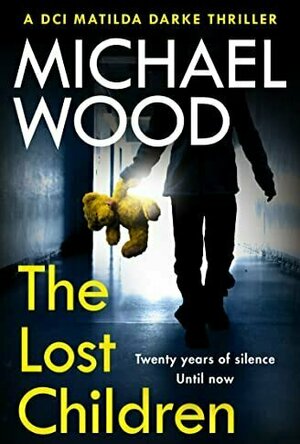
I have run out of superlatives to say how good this series is so I will just say ... wow, Mr Wood you have done it again and written an absolute corker.
At the very start of the book, Mr Wood gives a clear warning that this novel deals with child abuse and historical child abuse. I went into it wondering whether it was going to be too much to read about such abhorrent behaviour but whilst it was difficult, I feel Mr Wood did it with honesty but without over-doing it.
DCI Matilda Darke and her team are called to the truly horrific murder of a prominent property developer in his home. It, quite literally, sickens many of those attending the scene but this appears to be personal rather than your run-of-the-mill murder and as the Team start to investigate and delve deeper into the life of the victim, it becomes clear that someone doesn't want them to but what transpires, no one saw coming.
This is a fast paced, gripping, tense and quite emotional book. Yes, it's dark, gritty and, at times, a difficult read but it is done with care and compassion and that same care and compassion drives the determination from DCI Darke and her team to bring those responsible for heinous crimes against children to justice regardless of who the perpetrators are and the consequences to their own careers and futures.
Mr Wood has created the characters of DCI Darke and her team with such strength that you really get attached to them and the more books in the series you read, the stronger that attachment gets. I know they aren't real people but the strength of their development makes them feel like they are.
What this books reminds us of is that child abuse has happened and continues to happen; unfortunately, all too often those disgusting people who do this get away with it but we must remember that the perpetrators are just as likely to be "respectable" people in power as they are to be the 'dirty old men' we are warned about as children as this book highlights.
I have no hesitation whatsoever in recommending this book and the rest of the series to others who enjoy cracking good crime novels that don't shy away from difficult subjects and I must thank HarperCollins UK, One More Chapter and NetGalley for enabling me to read and share my thoughts of The Lost Children.
I can't wait to read number 10!
At the very start of the book, Mr Wood gives a clear warning that this novel deals with child abuse and historical child abuse. I went into it wondering whether it was going to be too much to read about such abhorrent behaviour but whilst it was difficult, I feel Mr Wood did it with honesty but without over-doing it.
DCI Matilda Darke and her team are called to the truly horrific murder of a prominent property developer in his home. It, quite literally, sickens many of those attending the scene but this appears to be personal rather than your run-of-the-mill murder and as the Team start to investigate and delve deeper into the life of the victim, it becomes clear that someone doesn't want them to but what transpires, no one saw coming.
This is a fast paced, gripping, tense and quite emotional book. Yes, it's dark, gritty and, at times, a difficult read but it is done with care and compassion and that same care and compassion drives the determination from DCI Darke and her team to bring those responsible for heinous crimes against children to justice regardless of who the perpetrators are and the consequences to their own careers and futures.
Mr Wood has created the characters of DCI Darke and her team with such strength that you really get attached to them and the more books in the series you read, the stronger that attachment gets. I know they aren't real people but the strength of their development makes them feel like they are.
What this books reminds us of is that child abuse has happened and continues to happen; unfortunately, all too often those disgusting people who do this get away with it but we must remember that the perpetrators are just as likely to be "respectable" people in power as they are to be the 'dirty old men' we are warned about as children as this book highlights.
I have no hesitation whatsoever in recommending this book and the rest of the series to others who enjoy cracking good crime novels that don't shy away from difficult subjects and I must thank HarperCollins UK, One More Chapter and NetGalley for enabling me to read and share my thoughts of The Lost Children.
I can't wait to read number 10!

Endeavor (Voyagers #4)
9.0 Rate It
Book
Jared: Challenging the status quo in Hollywood doesn’t make me the most popular director in...
Contemporary MMM Romance

Chris Sawin (602 KP) rated A Nightmare on Elm Street (1984) in Movies
Jun 20, 2019 (Updated Jun 23, 2019)

Nancy Thompson (Heather Langenkamp) and her friends have more on their plate to worry about than typical high school drama. A child murderer named Fred Krueger (Robert Englund) was killed by the parents residing on Elm Street after they took matters into their own hands when the justice system failed to get the redemption the parents so desperately seeked. That was thought to be the end of it and everyone tried to move on with their lives. That is until Nancy, her boyfriend Glen (Johnny Depp), her best friend Tina (Amanda Wyss), and Tina's boyfriend Rod (Jsu Garcia) begin having nightmares about the same man. A man wearing a red and green striped sweater, brown fedora, and a four finger-bladed leather glove. Could Fred Krueger really be exacting his revenge from beyond the grave and in the dreams of his victims?
Wes Craven is probably best known for the Scream franchise since it's the most successful set of films he's ever been a part of, at least as far as the box office is concerned, but there was another film that he created that spawned seven sequels and a remake. A film that is looked at as a horror classic and is considered to be the first commercially successful release from New Line Cinema. That film is A Nightmare on Elm Street.
A Nightmare on Elm Street is looked at by some (including myself) as the best film in the franchise. While most of the sequels feature a Freddy that is more interested in cracking a joke than being an intimidating serial killer, the original film is where he seems to shine brightest. He seems to always be lurking in the shadows making it nearly impossible to get a clear look at his face. Remember when films left a bit of a mystery to things rather than being entirely realistic and showing every little detail when it came to gore? Well, this is a good example.
The deaths of Tina and Glen could arguably be reason alone to watch the film. Tina's death is so original and so well done. One of the reasons it still holds up today is because it was done with practical effects. The same can be said about Glen's death. The only thing more impressive than his death is the fact that it's Johnny Depp's debut. Both deaths are two of the most memorable in horror film history.
Despite A Nightmare on Elm Street being one of the most influential horror films of our time, it still has that cheesiness associated with most horror films that come out of the eighties. Bad acting (Heather Langenkamp especially. The "Screw your pass!" scene is a good example, but is hilarious in its own right) and dated special effects being the best examples. While the practical effects are a good thing and are much preferred over CGI, some of them haven't aged well over the past 26 years. The scene of Freddy chasing Tina is probably the best example of this. His arms stretching inhuman lengths to scratch the walls and Tina ripping off his face just didn't hold up as well as other effects in the film.
A Nightmare on Elm Street is a beloved horror classic that gave birth to one of the most iconic serial killers in the genre. The original film features some of the most creative deaths and practical effects (seeing Freddy in the wall above Nancy's bed in the beginning of the film is one of the best scenes) to come out of any horror film held in such high regard. The film's charm will go over a lot of people's heads who look into it for the first time after seeing the remake which will probably result in the film getting more flack than it deserves. But nevertheless, it's hard to deny the impact Freddy and Wes Craven have had on this genre thanks to this film.
Special Features: The two-disc Infinifilm is packed with extras including:
Feature commentary including a variety of topics: the financial problems the film had with writer/director Wes Craven, producer Bob Shaye, actor John Saxon, and cinematographer Jacques Haitkin sharing their thoughts, Heather Langenkamp and Wes Craven talk about how great it was to work with Johnny Depp, Amanda Wyss goes into detail about not knowing much about the horror genre before taking her role as Tina, a discussion of how Robert Englund got the role of Fred Krueger and Englund shares his thoughts on the Fred Krueger character. Everything from the problems the film had to Freddy's popularity to the film's reputation and more are discussed by the cast and crew.
Original commentary includes Heather Langenkamp, John Saxon, Wes Craven, and Jacques Haitkin.
Beyond the Movie Features include The House That Freddy Built: The Legacy of New Line Horror and Night Terrors: The Origins of Wes Craven's Nightmares.
All Access Pass Features include three alternate endings, Never Sleep Again: The making of A Nightmare on Elm Street, a trivia challenge and the theatrical trailer.
There's also Infinifilm bonus features that can be accessed while the film is playing and the original screenplay can be viewed as a DVD-ROM feature.
The film is remastered and restored from the original film negative and is presented in both Dolby Digital 5.1-EX surround sound and DTS-ES 6.1 Surround Sound.
Wes Craven is probably best known for the Scream franchise since it's the most successful set of films he's ever been a part of, at least as far as the box office is concerned, but there was another film that he created that spawned seven sequels and a remake. A film that is looked at as a horror classic and is considered to be the first commercially successful release from New Line Cinema. That film is A Nightmare on Elm Street.
A Nightmare on Elm Street is looked at by some (including myself) as the best film in the franchise. While most of the sequels feature a Freddy that is more interested in cracking a joke than being an intimidating serial killer, the original film is where he seems to shine brightest. He seems to always be lurking in the shadows making it nearly impossible to get a clear look at his face. Remember when films left a bit of a mystery to things rather than being entirely realistic and showing every little detail when it came to gore? Well, this is a good example.
The deaths of Tina and Glen could arguably be reason alone to watch the film. Tina's death is so original and so well done. One of the reasons it still holds up today is because it was done with practical effects. The same can be said about Glen's death. The only thing more impressive than his death is the fact that it's Johnny Depp's debut. Both deaths are two of the most memorable in horror film history.
Despite A Nightmare on Elm Street being one of the most influential horror films of our time, it still has that cheesiness associated with most horror films that come out of the eighties. Bad acting (Heather Langenkamp especially. The "Screw your pass!" scene is a good example, but is hilarious in its own right) and dated special effects being the best examples. While the practical effects are a good thing and are much preferred over CGI, some of them haven't aged well over the past 26 years. The scene of Freddy chasing Tina is probably the best example of this. His arms stretching inhuman lengths to scratch the walls and Tina ripping off his face just didn't hold up as well as other effects in the film.
A Nightmare on Elm Street is a beloved horror classic that gave birth to one of the most iconic serial killers in the genre. The original film features some of the most creative deaths and practical effects (seeing Freddy in the wall above Nancy's bed in the beginning of the film is one of the best scenes) to come out of any horror film held in such high regard. The film's charm will go over a lot of people's heads who look into it for the first time after seeing the remake which will probably result in the film getting more flack than it deserves. But nevertheless, it's hard to deny the impact Freddy and Wes Craven have had on this genre thanks to this film.
Special Features: The two-disc Infinifilm is packed with extras including:
Feature commentary including a variety of topics: the financial problems the film had with writer/director Wes Craven, producer Bob Shaye, actor John Saxon, and cinematographer Jacques Haitkin sharing their thoughts, Heather Langenkamp and Wes Craven talk about how great it was to work with Johnny Depp, Amanda Wyss goes into detail about not knowing much about the horror genre before taking her role as Tina, a discussion of how Robert Englund got the role of Fred Krueger and Englund shares his thoughts on the Fred Krueger character. Everything from the problems the film had to Freddy's popularity to the film's reputation and more are discussed by the cast and crew.
Original commentary includes Heather Langenkamp, John Saxon, Wes Craven, and Jacques Haitkin.
Beyond the Movie Features include The House That Freddy Built: The Legacy of New Line Horror and Night Terrors: The Origins of Wes Craven's Nightmares.
All Access Pass Features include three alternate endings, Never Sleep Again: The making of A Nightmare on Elm Street, a trivia challenge and the theatrical trailer.
There's also Infinifilm bonus features that can be accessed while the film is playing and the original screenplay can be viewed as a DVD-ROM feature.
The film is remastered and restored from the original film negative and is presented in both Dolby Digital 5.1-EX surround sound and DTS-ES 6.1 Surround Sound.

Sophia (Bookwyrming Thoughts) (530 KP) rated Lucid in Books
Jan 23, 2020
<b><i>I received this book for free from Xpresso Book Tours in exchange for an honest review. This does not affect my opinion of the book or the content of my review.</i></b>
<i>Lucid</i> is really weird it's <b>not exactly a book with contents that I usually come across.</b> The last time I actually read a book that dealt with dreams was <i><a title="The Vault of Dreamers by Caragh M. O'Brien" href="https://bookwyrmingthoughts.com/arc-review-the-vault-of-dreamers-by-caragh-m-obrien/"; target="_blank" rel="noopener">The Vault of Dreamers</a></i>. <i>Lucid</i> kind of... <b>throws in dreams and nightmares together</b> when Lori Blaine's psychologist encourages her to finally go through a door reoccurring in her dreams for years. When Lori does, she is plunged into another world entirely where danger lurks around every corner.
<b>Bonansinga writes in a different style than what you might be used to.</b> As I read <i>Lucid</i>, <b>I felt like I was watching an episode of a TV series, or just merely an actress reading a script.</b> While Lori is our main character most of the time, <b>the author shifts outside of the character's thoughts every so often</b> and focuses on the dialogue and actions of the people around her. There's are a few moments where it's <b>almost as though there's a narrator observing everything going on but accidentally slips up and quickly tries to fix everything by repositioning the camera. Meanwhile, the characters, or "actors," pretend not to notice.</b>
<blockquote style="text-align: left;">They swerved around the body, which lay in a heap near the shouldergiving it a wide berthand then roared off into the night.
They never saw the body behind them casually sit up, rise to its feet, and walk away.
I promise Ill tell you everything, Lori was saying, searching through the glove box, as the damaged Geo chugged down a hill.</blockquote>
I've also <b>never seen so many caps in a book before.</b> I don't mean the first letter in every sentence, I mean the I'M YELLING AT YOU THOUGH INTERMASPACE kind. (Or <a title="Daughter of Deep Silence by Carrie Ryan" href="https://bookwyrmingthoughts.com/dnf-review-daughter-of-deep-silence-by-carrie-ryan/"; target="_blank" rel="noopener">my brain is raging at a book.</a> It's not necessarily one I didn't finish.)
<i>Lucid</i> is very <b>action-packed and vivid, but I don't really feel like this is a stand alone.</b> There's a pretty solid ending, but there may be a subtle loose end or two (I'll have to mull it over in my brain). <b>The dream world, however...</b>
I'm still very confused. I know there are five stages of sleep: brain activity slows down in the first, brain activity is everywhere in the second as the body transitions into the third stage, where brain activity is low. The fourth stage is similar to the third stage as the body prepares for the fifth stage, which is known as REM, or rapid eye movement, and dreams come alive.
I totally summarized that part. I probably came across this on a boring day and didn't remember anything but rapid eye movement is where dreams occur. REM is also a unit of measurement measuring the amount of radiation absorbed by human tissue. *drum rolls* I promise I'm not showing off.
Anyhoo, back to this whole dream world thing Bonansinga built <i>Lucid</i> on. According to the book, <b>there are three dimensions.</b> There's <b>WAKEworld</b>, which I assume is when all of us are awake and slouching in office/desk chairs (or curled up with a good book); <b>REMspace</b>, which I assume is the dream world and where you dream; and then there's <b>LIMBOspace/LIMBOworld</b>, which, knowing the word limbo, it's the middle world between dreams and wakefulness.
<b>I get the gist. But I don't <i>understand</i> how this whole LIMBOspace/LIMBOworld works.</b> I mean, <b>is it connected to that in-between where you're not living or dead,</b> because it's connected to comatose states? <b>What happens if Lori actually "ran out of time?"</b> She'll be a vegetable, most likely, but <b>if she runs out of time... is she a vegetable forever until her body is just a pile of bones and dust somewhere? But then what happens when you <i>are</i> a pile of bones and dust somewhere? Do you continue existing in this LIMBOspace, or do you just disappear?</b>
I could be over thinking this and taking it a curious step further than what is actually necessary (I would still wonder about that connection to comatose states though). <b><i>Lucid</i> has mind-boggling and creepy moments throughout the book, but it's really just similar to someone trying to stop demons entering the real world. Bonansinga just takes it from a dream level rather than an inferno one.</b> Points given for a unique take on an overused plot.
<a href="https://bookwyrmingthoughts.com/review-lucid-by-jay-bonansinga/"; target="_blank">This review was originally posted on Bookwyrming Thoughts</a>
<i>Lucid</i> is really weird it's <b>not exactly a book with contents that I usually come across.</b> The last time I actually read a book that dealt with dreams was <i><a title="The Vault of Dreamers by Caragh M. O'Brien" href="https://bookwyrmingthoughts.com/arc-review-the-vault-of-dreamers-by-caragh-m-obrien/"; target="_blank" rel="noopener">The Vault of Dreamers</a></i>. <i>Lucid</i> kind of... <b>throws in dreams and nightmares together</b> when Lori Blaine's psychologist encourages her to finally go through a door reoccurring in her dreams for years. When Lori does, she is plunged into another world entirely where danger lurks around every corner.
<b>Bonansinga writes in a different style than what you might be used to.</b> As I read <i>Lucid</i>, <b>I felt like I was watching an episode of a TV series, or just merely an actress reading a script.</b> While Lori is our main character most of the time, <b>the author shifts outside of the character's thoughts every so often</b> and focuses on the dialogue and actions of the people around her. There's are a few moments where it's <b>almost as though there's a narrator observing everything going on but accidentally slips up and quickly tries to fix everything by repositioning the camera. Meanwhile, the characters, or "actors," pretend not to notice.</b>
<blockquote style="text-align: left;">They swerved around the body, which lay in a heap near the shouldergiving it a wide berthand then roared off into the night.
They never saw the body behind them casually sit up, rise to its feet, and walk away.
I promise Ill tell you everything, Lori was saying, searching through the glove box, as the damaged Geo chugged down a hill.</blockquote>
I've also <b>never seen so many caps in a book before.</b> I don't mean the first letter in every sentence, I mean the I'M YELLING AT YOU THOUGH INTERMASPACE kind. (Or <a title="Daughter of Deep Silence by Carrie Ryan" href="https://bookwyrmingthoughts.com/dnf-review-daughter-of-deep-silence-by-carrie-ryan/"; target="_blank" rel="noopener">my brain is raging at a book.</a> It's not necessarily one I didn't finish.)
<i>Lucid</i> is very <b>action-packed and vivid, but I don't really feel like this is a stand alone.</b> There's a pretty solid ending, but there may be a subtle loose end or two (I'll have to mull it over in my brain). <b>The dream world, however...</b>
I'm still very confused. I know there are five stages of sleep: brain activity slows down in the first, brain activity is everywhere in the second as the body transitions into the third stage, where brain activity is low. The fourth stage is similar to the third stage as the body prepares for the fifth stage, which is known as REM, or rapid eye movement, and dreams come alive.
I totally summarized that part. I probably came across this on a boring day and didn't remember anything but rapid eye movement is where dreams occur. REM is also a unit of measurement measuring the amount of radiation absorbed by human tissue. *drum rolls* I promise I'm not showing off.
Anyhoo, back to this whole dream world thing Bonansinga built <i>Lucid</i> on. According to the book, <b>there are three dimensions.</b> There's <b>WAKEworld</b>, which I assume is when all of us are awake and slouching in office/desk chairs (or curled up with a good book); <b>REMspace</b>, which I assume is the dream world and where you dream; and then there's <b>LIMBOspace/LIMBOworld</b>, which, knowing the word limbo, it's the middle world between dreams and wakefulness.
<b>I get the gist. But I don't <i>understand</i> how this whole LIMBOspace/LIMBOworld works.</b> I mean, <b>is it connected to that in-between where you're not living or dead,</b> because it's connected to comatose states? <b>What happens if Lori actually "ran out of time?"</b> She'll be a vegetable, most likely, but <b>if she runs out of time... is she a vegetable forever until her body is just a pile of bones and dust somewhere? But then what happens when you <i>are</i> a pile of bones and dust somewhere? Do you continue existing in this LIMBOspace, or do you just disappear?</b>
I could be over thinking this and taking it a curious step further than what is actually necessary (I would still wonder about that connection to comatose states though). <b><i>Lucid</i> has mind-boggling and creepy moments throughout the book, but it's really just similar to someone trying to stop demons entering the real world. Bonansinga just takes it from a dream level rather than an inferno one.</b> Points given for a unique take on an overused plot.
<a href="https://bookwyrmingthoughts.com/review-lucid-by-jay-bonansinga/"; target="_blank">This review was originally posted on Bookwyrming Thoughts</a>

Darren (1599 KP) rated Annabelle Comes Home (2019) in Movies
Jul 10, 2019
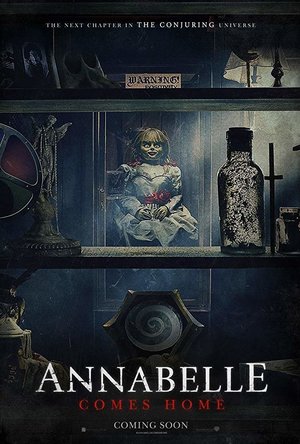
Director: Gary Dauberman
Writer: Gary Dauberman (Screenplay) James Wan (Story)
Starring: Vera Farmiga, Patrick Wilson, Mckenna Grace, Madison Iseman, Katie Sarife, Michael Cimino, Samara Lee
Plot: While babysitting the daughter of Ed and Lorraine Warren, a teenager and her friend unknowingly awaken an evil spirit trapped in a doll.
Tagline – The Next Chapter In The Conjuring Universe
Runtime: 1 Hour 46 Minutes
There may be spoilers in the rest of the review
Verdict: Relentless Scares
Story: Annabelle Comes Home starts one year after the Warren’s Ed (Wilson) and Lorraine (Farmiga) bring the Annabelle doll home, knowing its power to control the other items inside their blessed room. With Ed and Lorraine going on a business trip, it leaves their daughter Judy (Grace) with girl next door babysitter Mary Ellen (Iseman), who has planned a little birthday surprise.
When Mary Ellen’s best friend Daniela (Sarife) decides to visit, with questions about the house, getting a moment alone, she sneaks into the blessed room, only to unleash a host of evil upon the three for a night of terror, all thanks to the dreaded Annabelle doll.
Thoughts on Annabelle Comes Home
Characters – Judy Warren is the daughter of the famous paranormal investigators, she is treated differently at school because of this, with some students being scared, while others just bully her, she does see spirits too and is a shy little girl, she just wants to make friends like any young girl and is struggling with the fact nobody will be her friend except her babysitter Mary Ellen. She does know how to handle herself when hauntings start happening around her house though. Mary Ellen is the girl next door babysitter, she might well be worried about who will take her to homecoming, but she is a friend that Judy needs. Daniela Rios is the best friend of Mary Ellen, she invites herself over to look around, in hopes that she could find a way to connect with her deceased father, whose death was an accident, but she believes was her fault, she unleashes all the evil items on the household, which would make her truly horrible, until you add in the reason why she is trying to find forgiveness. Ed and Lorraine are the familiar faces, only they are basically extended cameos in the film. Bob is the love interest of Mary Ellen and he does through the generic awkward moments of trying to ask her out, he is good for a laugh too.
Performances – McKenna Grace takes over the role of the daughter, she does make us believe that her character has become distant from the world around her, makes us believe she is feeling lonely and isolated too. Madison Iseman makes for an easy pick for the babysitter, she comes off friendly and gives the scream level required to show the fear. Katie Sarife is strong as friend who unleashes everything, somehow making a character we could hate feel sympathy towards. Vera Farmiga and Patrick Wilson do seem to be here as a draw, only they are barely even in the film.
Story – The story here follows a babysitter’s friend visiting the Warren’s house who unleashes all the evil from the safety, only for the three girls needing to put a halt to this before they can become the latest victims of the curses they have. This story does have a few positives and negatives, the first positive being see how the daughter of the Warren’s is struggling with making connections in life because of their work, we could have easily dived deeper with this, but it was nice to see a change in why somebody is isolated. The pure number of different evil figures we meet through the film is brilliant to see because this opens the doors to seemingly endless amounts of spin off movies now, which could be seen as a negative because, while this is an Annabelle movie, it does tend to focus on the other evil, instead of the main one attached to Annabelle. We could get into character decisions, which aren’t the smartest especially when it comes to knowing who the character of Judy is meant to be.
Horror/Mystery – The horror in the film, is an endless amounts of jump scares, this does work because each does have its own way of being effective, even if a lot if music goes silent and either a boom or something charging the screen. The mystery comes from each new evil that we get to see, we get glimpses into a few leading us to only want to know more.
Settings – The film is set in one singular location, the Warren house, this has all the evil set up within it, which means once it comes out and traps them, they don’t know what will come next.
Special Effects – The effect in the film are strong throughout, with each creation look different, with a couple of tricks for the Ferryman coming off nicely.
Scene of the Movie – The circular shot, I am a fan of this shot even if it was the same as the Nun.
That Moment That Annoyed Me – I can’t help but think one of the rules for babysitting at the Warren’s, would be, anything slightly strange happens, get out until we come home.
Final Thoughts – This is a nice jump scare filled horror, it has plenty of references to the previous films and does leave us wanting more from this universe.
Overall: Jump scares for everyone.
Rating
Writer: Gary Dauberman (Screenplay) James Wan (Story)
Starring: Vera Farmiga, Patrick Wilson, Mckenna Grace, Madison Iseman, Katie Sarife, Michael Cimino, Samara Lee
Plot: While babysitting the daughter of Ed and Lorraine Warren, a teenager and her friend unknowingly awaken an evil spirit trapped in a doll.
Tagline – The Next Chapter In The Conjuring Universe
Runtime: 1 Hour 46 Minutes
There may be spoilers in the rest of the review
Verdict: Relentless Scares
Story: Annabelle Comes Home starts one year after the Warren’s Ed (Wilson) and Lorraine (Farmiga) bring the Annabelle doll home, knowing its power to control the other items inside their blessed room. With Ed and Lorraine going on a business trip, it leaves their daughter Judy (Grace) with girl next door babysitter Mary Ellen (Iseman), who has planned a little birthday surprise.
When Mary Ellen’s best friend Daniela (Sarife) decides to visit, with questions about the house, getting a moment alone, she sneaks into the blessed room, only to unleash a host of evil upon the three for a night of terror, all thanks to the dreaded Annabelle doll.
Thoughts on Annabelle Comes Home
Characters – Judy Warren is the daughter of the famous paranormal investigators, she is treated differently at school because of this, with some students being scared, while others just bully her, she does see spirits too and is a shy little girl, she just wants to make friends like any young girl and is struggling with the fact nobody will be her friend except her babysitter Mary Ellen. She does know how to handle herself when hauntings start happening around her house though. Mary Ellen is the girl next door babysitter, she might well be worried about who will take her to homecoming, but she is a friend that Judy needs. Daniela Rios is the best friend of Mary Ellen, she invites herself over to look around, in hopes that she could find a way to connect with her deceased father, whose death was an accident, but she believes was her fault, she unleashes all the evil items on the household, which would make her truly horrible, until you add in the reason why she is trying to find forgiveness. Ed and Lorraine are the familiar faces, only they are basically extended cameos in the film. Bob is the love interest of Mary Ellen and he does through the generic awkward moments of trying to ask her out, he is good for a laugh too.
Performances – McKenna Grace takes over the role of the daughter, she does make us believe that her character has become distant from the world around her, makes us believe she is feeling lonely and isolated too. Madison Iseman makes for an easy pick for the babysitter, she comes off friendly and gives the scream level required to show the fear. Katie Sarife is strong as friend who unleashes everything, somehow making a character we could hate feel sympathy towards. Vera Farmiga and Patrick Wilson do seem to be here as a draw, only they are barely even in the film.
Story – The story here follows a babysitter’s friend visiting the Warren’s house who unleashes all the evil from the safety, only for the three girls needing to put a halt to this before they can become the latest victims of the curses they have. This story does have a few positives and negatives, the first positive being see how the daughter of the Warren’s is struggling with making connections in life because of their work, we could have easily dived deeper with this, but it was nice to see a change in why somebody is isolated. The pure number of different evil figures we meet through the film is brilliant to see because this opens the doors to seemingly endless amounts of spin off movies now, which could be seen as a negative because, while this is an Annabelle movie, it does tend to focus on the other evil, instead of the main one attached to Annabelle. We could get into character decisions, which aren’t the smartest especially when it comes to knowing who the character of Judy is meant to be.
Horror/Mystery – The horror in the film, is an endless amounts of jump scares, this does work because each does have its own way of being effective, even if a lot if music goes silent and either a boom or something charging the screen. The mystery comes from each new evil that we get to see, we get glimpses into a few leading us to only want to know more.
Settings – The film is set in one singular location, the Warren house, this has all the evil set up within it, which means once it comes out and traps them, they don’t know what will come next.
Special Effects – The effect in the film are strong throughout, with each creation look different, with a couple of tricks for the Ferryman coming off nicely.
Scene of the Movie – The circular shot, I am a fan of this shot even if it was the same as the Nun.
That Moment That Annoyed Me – I can’t help but think one of the rules for babysitting at the Warren’s, would be, anything slightly strange happens, get out until we come home.
Final Thoughts – This is a nice jump scare filled horror, it has plenty of references to the previous films and does leave us wanting more from this universe.
Overall: Jump scares for everyone.
Rating

Purple Phoenix Games (2266 KP) rated Salty Dogs in Tabletop Games
Aug 27, 2019

Avast ye land lubbers!! Batten down the hatches! I am a scary pirate! Ok so maybe that last one isn’t necessarily historically accurate, but it’s fun. Sometimes you can enjoy something purely because it’s fun and you don’t have to analyze everything down to the mechanic or pixel. I am not even going to attempt that with this one, but I will explain the rules and our thoughts through several plays of Salty Dogs.
Salty Dogs is a small card game – it fits into a normal deck box – where each player is captaining their pirate ship and vying to become King of the Mountain! … or, rather, the High Seas! Players must protect their crew and be the last pirate ship standing to win the game!
DISCLAIMER: We were provided a review copy of this game for the purposes of this review. These are preview copy components, and I do not know if the final components will be similar or different, or if the Kickstarter campaign will alter or add anything through stretch goals. Similarly, you will see the play mat that was provided. You can download a play mat from the game’s website or order these from the publisher. -T
Setup is easy peasy scurvy squeezy. Remove from the deck all the pirate cards (they have a blue banner with a unique name at the bottom). Shuffle these, and deal each player five pirates. This will make up the crew for each player’s ship. No individual cards have certain abilities – they are all the same – so either place your crew randomly or choose who you would prefer to be Captain, First Mate, and then dump the others into the generic Pirate spaces. From there shuffle the remaining pirate cards into the deck, deal each player five cards and the battle is on!
On your turn, draw a card and play a card. Ok, on to final thoughts! Kidding, but game play is really that easy. There is no hand minimum or maximum limit, but it usually stays around five for the duration of the game. Cards drawn will be pirates, actions, attacks, illnesses, cures, or defense cards. You use pirate cards to refill any vacant crew slot on your ship. Vacancies happen when an opponent plays an attack or illness card on one of your crew. Your crew may only be attacked in a certain order with the first attackable card being furthest away from your Captain, and said Captain being targeted last. So your pirate is ill, eh? Simply play a cure card that affects the illness and heal your crew right up. Example – you have contracted Scurvy. Well, obviously the only cure for Scurvy is Piggy Peg Leg’s Gumbo. So throw the Gumbo card to cure your crew’s illness. That dastardly Captain Doodles McPoodle is firing their cannon attacks at you? Throw your Fog defense card to protect yourself – BOOM! There are several other illness and action combinations in the game I will allow you to discover for yourselves.
A note about attacking First Mates and Captains. First Mates are immune to Mutiny cards, and the Captain is immune to Mutiny AND Illness cards. This is a rule pair that can easily be forgotten, so try to keep that in mind the whole time as your crews are blown to smithereens.
Components. Per my disclaimer we were sent the deck of cards and four optional play mats. These components may change or improve over the course of the upcoming Kickstarter campaign, but I will comment on what we were sent. The cards are of good quality and the art upon them and throughout the game is quirky, but really really good. We really enjoyed seeing some tongue-in-cheek pop culture references in the pirate cards and in the accompanying art. The play mats feel like the top layer of a mouse pad – they are silky smooth and just as thin. I thought having thin play mats would be a negative, but then I packed up the game again and was thankful that they weren’t complete neoprene pads. So I’m in on those play mats. If you don’t splurge for the play mats, just line up your crew in front of you and it’s quite functional that way as well.
Salty Dogs. What did we think? Well, honestly, we really loved it. The art is whimsical and colorful. The cards are all super useful, and there’s something to be said about just obliterating your opponents’ ships and giving in to the piratey bloodlust. I was targeted early and was raring to come back as soon as I could in the next game. With so many pirate games, take that games, card games, and battle games on the market, I still think most gamers will enjoy Salty Dogs. It is not at all a brain burner, but it’s a great light (and light-hearted) filler game that will leave you with a smile on your face and a desire to play again and again. We at Purple Phoenix Games highly recommend this title, and cannot wait to see what the Kickstarter campaign has in store. May yer poop decks be sparkling and yer booty be plentiful!
Salty Dogs is a small card game – it fits into a normal deck box – where each player is captaining their pirate ship and vying to become King of the Mountain! … or, rather, the High Seas! Players must protect their crew and be the last pirate ship standing to win the game!
DISCLAIMER: We were provided a review copy of this game for the purposes of this review. These are preview copy components, and I do not know if the final components will be similar or different, or if the Kickstarter campaign will alter or add anything through stretch goals. Similarly, you will see the play mat that was provided. You can download a play mat from the game’s website or order these from the publisher. -T
Setup is easy peasy scurvy squeezy. Remove from the deck all the pirate cards (they have a blue banner with a unique name at the bottom). Shuffle these, and deal each player five pirates. This will make up the crew for each player’s ship. No individual cards have certain abilities – they are all the same – so either place your crew randomly or choose who you would prefer to be Captain, First Mate, and then dump the others into the generic Pirate spaces. From there shuffle the remaining pirate cards into the deck, deal each player five cards and the battle is on!
On your turn, draw a card and play a card. Ok, on to final thoughts! Kidding, but game play is really that easy. There is no hand minimum or maximum limit, but it usually stays around five for the duration of the game. Cards drawn will be pirates, actions, attacks, illnesses, cures, or defense cards. You use pirate cards to refill any vacant crew slot on your ship. Vacancies happen when an opponent plays an attack or illness card on one of your crew. Your crew may only be attacked in a certain order with the first attackable card being furthest away from your Captain, and said Captain being targeted last. So your pirate is ill, eh? Simply play a cure card that affects the illness and heal your crew right up. Example – you have contracted Scurvy. Well, obviously the only cure for Scurvy is Piggy Peg Leg’s Gumbo. So throw the Gumbo card to cure your crew’s illness. That dastardly Captain Doodles McPoodle is firing their cannon attacks at you? Throw your Fog defense card to protect yourself – BOOM! There are several other illness and action combinations in the game I will allow you to discover for yourselves.
A note about attacking First Mates and Captains. First Mates are immune to Mutiny cards, and the Captain is immune to Mutiny AND Illness cards. This is a rule pair that can easily be forgotten, so try to keep that in mind the whole time as your crews are blown to smithereens.
Components. Per my disclaimer we were sent the deck of cards and four optional play mats. These components may change or improve over the course of the upcoming Kickstarter campaign, but I will comment on what we were sent. The cards are of good quality and the art upon them and throughout the game is quirky, but really really good. We really enjoyed seeing some tongue-in-cheek pop culture references in the pirate cards and in the accompanying art. The play mats feel like the top layer of a mouse pad – they are silky smooth and just as thin. I thought having thin play mats would be a negative, but then I packed up the game again and was thankful that they weren’t complete neoprene pads. So I’m in on those play mats. If you don’t splurge for the play mats, just line up your crew in front of you and it’s quite functional that way as well.
Salty Dogs. What did we think? Well, honestly, we really loved it. The art is whimsical and colorful. The cards are all super useful, and there’s something to be said about just obliterating your opponents’ ships and giving in to the piratey bloodlust. I was targeted early and was raring to come back as soon as I could in the next game. With so many pirate games, take that games, card games, and battle games on the market, I still think most gamers will enjoy Salty Dogs. It is not at all a brain burner, but it’s a great light (and light-hearted) filler game that will leave you with a smile on your face and a desire to play again and again. We at Purple Phoenix Games highly recommend this title, and cannot wait to see what the Kickstarter campaign has in store. May yer poop decks be sparkling and yer booty be plentiful!
Darren (1599 KP) rated Angel Has Fallen (2019) in Movies
Aug 22, 2019
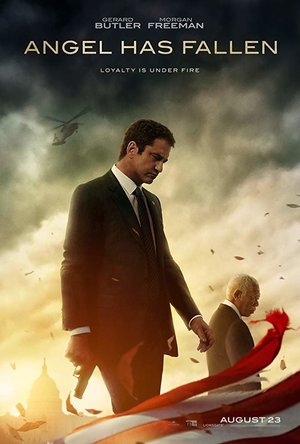
Verdict: Franchise Hasn’t Fallen
Story: Angel Has Fallen starts when Mike banning (Butler) is the only survivor of a drone attack on President Allan Trumbull (Freeman), the rest of the team are killed and Mike has been framed for the assassination attempt. FBI agent Helen Thompson (Smith) is investigating the case, with Mike looking cut and dry to have been the man behind it, but when Mike escapes, he sets out to prove his innocence.
Mike turns to his estranged father Clay (Nolte) as he looks to discover why his old friend an private contractor Wade Jennings (Huston) has set him up and how he can prove his isn’t involved despite a nationwide manhunt for him.
Thoughts on Angel Has Fallen
Characters – Mike Banning is still a senior secret service man, playing righthand to the President, he has been keeping his injuries secret, which is nice to see an action man actually suffering injuries, instead of just being fine, like most action stars. He does his duty saving the President from an attack, only to find himself framed. When the people come to finish the job on Banning, he escapes and uses all his training to allude and search for a way to prove his innocence. Allan Trumbull is now the President, stepping up from his role as the Vice in the previous two outings, he is looking to change certain ideas, though he spends most of his film in a coma after the attack, he is the only other witness who could defend Mike’s involvement too. Wade Jennings is the private military contractor and old military buddy of Mike’s, he has framed him and is using his expertly trained team to hunt him down and finish off the job. Leah is the wife of Mike’s she is trying to keep him from working now they have a child and must deal with the consequences of seeing the name dragged through the dirt. FBI Agent Helen Thompson is trying to put the pieces together, seeing Mike as the prime suspect, she just wants the case closed without anybody else being hurt. Clay Banning is the estranged father of Mike’s he has been off the grid for years because of his own trauma from his time in the war, he is the only person Mike knows he can turn too.
Performances – Gerard Butler is great in the leading role, he is always going to be a bankable star when it comes to action roles and this is no different. Morgan Freeman does everything you would expect from a President role, without needing to do much. Piper Perabo takes over from Radha Mitchell in the wife role, which doesn’t have much to do if we are being honest. Danny Huston is one of these actors that you know is always going to be a villain, he does everything we know he can do in this role. Nick Nolte is a lot of fun, bringing his trademark estranged father role to the big screen once again, he gets a few laughs in too.
Story – The story here sees Mike Banning being framed for the assassination attempt of the President, the figure that he has been guarding for years and he must go off the grid to prove who was really behind it. The story is one that is great to watch for action, but if you have seen the previous instalments of the franchise, you will be left asking a few questions. First what happened to President Benjamin Asher, we have zero mention of him, secondly, how is nobody on Mike’s side after all he has done in the past, like seriously, he pretty much saved the President against impossible odds twice. While this question could be answered with the number of pieces of evidence placed on him, it still doesn’t seem to fit the character these people have created. Away from these questions, we must say this does build on the scale of the previous film’s stories, which is good because it does feel different, which each film does do. We could easily watch this story as a single film too and the fact that we do touch on the physical injuries that Mike has suffered through his job, does show a vulnerable action character.
Action – The action is big, we might not have the large scale opening attack, but once we get into the military formations ideas, we get plenty of tactical shootings.
Settings – The film does build on the settings, with the first one being one building, the second being one city, now we have a nationwide hunt.
Special Effects – The effects, well this has been an issue for the franchise all along, but the green screen scenes are so clear to see it almost feels like they didn’t finish the job yet.
Scene of the Movie – Mike and Clay have an escape plan.
That Moment That Annoyed Me – No mention of former President Benjamin Asher, like what happened here?
Final Thoughts – This is a action sequel that does enough different to make it feel fresh even if certain parts of the story feels too farfetched, it does continue to have a 24 vibe to everything, but it is well for a watch if you have seen the franchise or not.
Overall: Trilogy that hasn’t Fallen.
Story: Angel Has Fallen starts when Mike banning (Butler) is the only survivor of a drone attack on President Allan Trumbull (Freeman), the rest of the team are killed and Mike has been framed for the assassination attempt. FBI agent Helen Thompson (Smith) is investigating the case, with Mike looking cut and dry to have been the man behind it, but when Mike escapes, he sets out to prove his innocence.
Mike turns to his estranged father Clay (Nolte) as he looks to discover why his old friend an private contractor Wade Jennings (Huston) has set him up and how he can prove his isn’t involved despite a nationwide manhunt for him.
Thoughts on Angel Has Fallen
Characters – Mike Banning is still a senior secret service man, playing righthand to the President, he has been keeping his injuries secret, which is nice to see an action man actually suffering injuries, instead of just being fine, like most action stars. He does his duty saving the President from an attack, only to find himself framed. When the people come to finish the job on Banning, he escapes and uses all his training to allude and search for a way to prove his innocence. Allan Trumbull is now the President, stepping up from his role as the Vice in the previous two outings, he is looking to change certain ideas, though he spends most of his film in a coma after the attack, he is the only other witness who could defend Mike’s involvement too. Wade Jennings is the private military contractor and old military buddy of Mike’s, he has framed him and is using his expertly trained team to hunt him down and finish off the job. Leah is the wife of Mike’s she is trying to keep him from working now they have a child and must deal with the consequences of seeing the name dragged through the dirt. FBI Agent Helen Thompson is trying to put the pieces together, seeing Mike as the prime suspect, she just wants the case closed without anybody else being hurt. Clay Banning is the estranged father of Mike’s he has been off the grid for years because of his own trauma from his time in the war, he is the only person Mike knows he can turn too.
Performances – Gerard Butler is great in the leading role, he is always going to be a bankable star when it comes to action roles and this is no different. Morgan Freeman does everything you would expect from a President role, without needing to do much. Piper Perabo takes over from Radha Mitchell in the wife role, which doesn’t have much to do if we are being honest. Danny Huston is one of these actors that you know is always going to be a villain, he does everything we know he can do in this role. Nick Nolte is a lot of fun, bringing his trademark estranged father role to the big screen once again, he gets a few laughs in too.
Story – The story here sees Mike Banning being framed for the assassination attempt of the President, the figure that he has been guarding for years and he must go off the grid to prove who was really behind it. The story is one that is great to watch for action, but if you have seen the previous instalments of the franchise, you will be left asking a few questions. First what happened to President Benjamin Asher, we have zero mention of him, secondly, how is nobody on Mike’s side after all he has done in the past, like seriously, he pretty much saved the President against impossible odds twice. While this question could be answered with the number of pieces of evidence placed on him, it still doesn’t seem to fit the character these people have created. Away from these questions, we must say this does build on the scale of the previous film’s stories, which is good because it does feel different, which each film does do. We could easily watch this story as a single film too and the fact that we do touch on the physical injuries that Mike has suffered through his job, does show a vulnerable action character.
Action – The action is big, we might not have the large scale opening attack, but once we get into the military formations ideas, we get plenty of tactical shootings.
Settings – The film does build on the settings, with the first one being one building, the second being one city, now we have a nationwide hunt.
Special Effects – The effects, well this has been an issue for the franchise all along, but the green screen scenes are so clear to see it almost feels like they didn’t finish the job yet.
Scene of the Movie – Mike and Clay have an escape plan.
That Moment That Annoyed Me – No mention of former President Benjamin Asher, like what happened here?
Final Thoughts – This is a action sequel that does enough different to make it feel fresh even if certain parts of the story feels too farfetched, it does continue to have a 24 vibe to everything, but it is well for a watch if you have seen the franchise or not.
Overall: Trilogy that hasn’t Fallen.