
Search
Search results

Beckie Shelton (40 KP) rated Trophy Wife (The Dumont Diaries, #0.5-5) in Books
Feb 8, 2018
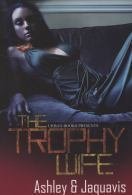

MMM, this is a hard one, on the one hand, I very much enjoyed Trophy Wife and on the other, there was some real no no's that totally turn me off when it comes to erotic fiction.
This is the main reason I've marked it down in my ratings.
Now obviously what sinks my ship may float your boat and more, we are all different and you may find my reasons don't bother you at all.
Now there are gonna be some teeny spoilers ahead as It's major unavoidable if I am going to explain why I've marked this down.
My major hard limit
CHEATING!!!!!
and not only cheating, the fact that no one's really bothered and I know this may seem a bit boring, but I like my Lover & Lovee to save the honey for each other, no excuses, no we were on a break and definitely no contact of any kind whatsoever, no exceptions and that means kissing also.
Why you might ask.
BECAUSE THERE MEANT TO BE BLOODY IN LOVE!!!!!!
or getting there at least and I'm a die hard romantic like that.
So yes no bodily contact with others while still being as filthy as downright sin is the flavour I like to see in my reading.
So, of course, this is where Trophy Wife let me down a bit, I maybe could have overlooked this if either Nathan or Candy had got their knickers in a twist diva style or something to that effect, but no let's brush it under the carpet like it never happened, and yes it's still cheating in my book when he takes his ex-girlfriend back and sleeps with her while still being married to Candy.
So the poor boy needed to get his leg over with his ex to decide he's in love with his wife geez!!
What happened did a shag unlock his brain.
And I do know that Candy is not exactly innocent either, They both behaved like a pair of absolute bloody pillocks in my opinion.
The second thing I had an issue with was the car incident. I have nothing against voyeurism at all but when Nathan gets candy to perform a certain service for his business associate and calls her a derogatory name in front of him well this wasn't hot or sexy one iota I was cringing in shame for the poor girl, awful behaviour.
The third and final thing and it may seem a tad silly but it's the name CANDY!!!
I hate it, it sounds like a stereotypical strippers name, which I know Candy is, but couldn't the poor girl have had something more sophisticated than Candy.
Despite my above bugbears, I really did like the rest of this book. It was mucky as hell and hot hot hot.
The story flowed brilliantly and I especially loved seeing the inner thoughts of both Candy & Nathan.
I feel that we needed to see inside Nathan's head as well as if I hadn't I don't know if I could have warmed to him at all.
He was such a dominant man, his vulnerability was so well hidden that it was his musings inside is own head that showed he had a softer side.
Trophy Wife by Alessandra Torre gets a three & half from me a great read with some issues that for me are just personal preferences.
You they might not affect at all.
Trophy Wife is currently free on KU.
https://www.beckiebookworm.com/
https://www.facebook.com/beckiebookworm/
This is the main reason I've marked it down in my ratings.
Now obviously what sinks my ship may float your boat and more, we are all different and you may find my reasons don't bother you at all.
Now there are gonna be some teeny spoilers ahead as It's major unavoidable if I am going to explain why I've marked this down.
My major hard limit
CHEATING!!!!!
and not only cheating, the fact that no one's really bothered and I know this may seem a bit boring, but I like my Lover & Lovee to save the honey for each other, no excuses, no we were on a break and definitely no contact of any kind whatsoever, no exceptions and that means kissing also.
Why you might ask.
BECAUSE THERE MEANT TO BE BLOODY IN LOVE!!!!!!
or getting there at least and I'm a die hard romantic like that.
So yes no bodily contact with others while still being as filthy as downright sin is the flavour I like to see in my reading.
So, of course, this is where Trophy Wife let me down a bit, I maybe could have overlooked this if either Nathan or Candy had got their knickers in a twist diva style or something to that effect, but no let's brush it under the carpet like it never happened, and yes it's still cheating in my book when he takes his ex-girlfriend back and sleeps with her while still being married to Candy.
So the poor boy needed to get his leg over with his ex to decide he's in love with his wife geez!!
What happened did a shag unlock his brain.
And I do know that Candy is not exactly innocent either, They both behaved like a pair of absolute bloody pillocks in my opinion.
The second thing I had an issue with was the car incident. I have nothing against voyeurism at all but when Nathan gets candy to perform a certain service for his business associate and calls her a derogatory name in front of him well this wasn't hot or sexy one iota I was cringing in shame for the poor girl, awful behaviour.
The third and final thing and it may seem a tad silly but it's the name CANDY!!!
I hate it, it sounds like a stereotypical strippers name, which I know Candy is, but couldn't the poor girl have had something more sophisticated than Candy.
Despite my above bugbears, I really did like the rest of this book. It was mucky as hell and hot hot hot.
The story flowed brilliantly and I especially loved seeing the inner thoughts of both Candy & Nathan.
I feel that we needed to see inside Nathan's head as well as if I hadn't I don't know if I could have warmed to him at all.
He was such a dominant man, his vulnerability was so well hidden that it was his musings inside is own head that showed he had a softer side.
Trophy Wife by Alessandra Torre gets a three & half from me a great read with some issues that for me are just personal preferences.
You they might not affect at all.
Trophy Wife is currently free on KU.
https://www.beckiebookworm.com/
https://www.facebook.com/beckiebookworm/

Kristy H (1252 KP) rated Small Admissions in Books
Feb 13, 2018

Kate Pearson is going through a rough time. She's been dumped by Robert, her incredibly handsome French boyfriend, and she turned down a spot in her grad school program, so instead of living a dream life in Paris, she's living on the couch, barely able to wash her own hair. Her friend Chloe feels responsible (Robert is her cousin, after all), her friend Vicki is just annoyed (Vicki has no patience for wallowing), and Kate's older sister Angela just wants to fix everything. She connects Kate to a lead for an interview at the admissions department at the Hudson Day School. Surprising everyone, Kate gets the job, and suddenly has to get her life together. There's no time for self-pity during admissions season, after all. Indeed, Kate finds herself drawn to her job, her new colleagues, and the various children she meets while at work. And while Kate's working non-stop, her friends are busy falling in love, feeling guilty about their role in Kate's earlier breakdown regarding Robert, and generally making a mess of things. Will Kate make her own mess at the new admissions gig as well, or is this the fresh chance she needed?
I am torn somewhat on my thoughts for this book. It starts off quite witty and drew me in immediately. It's told from a multitude of perspectives, including Kate's friends (Chloe and Vicki), her sister (Angela) and Kate, and Kate's new boss, Henry. It's also interspersed with tales of several children trying to get into private school, along with the perspectives of their parents. There's definitely some nuance and depth there, but sometimes it's A LOT. A lot of characters, a lot of jumping of back and forth. I won't lie: Kate's friends certainly annoyed me at times. The side show with them can be humorous, but often just irritating. I found myself wanting more Kate.
The problem with all the jumping around is that I didn't really get to know the characters as much as I wanted, which was a shame, because they were fascinating. Kate, Chloe, Angela, Henry -- they were intriguing and, when featured, seemed real, even if Angela was driving us crazy meddling into Kate's life, as was Chloe with her never-ending guilt over her supposed role in Kate's breakdown. Poeppel has done an excellent job of creating real, flawed characters, and I just wish they all received a little more face-time. The snippets from the kids (and parents) applying for school are great, too, but it's hard not to see them sometimes as a detraction from our main characters, especially a side plot with two fervent (and delusional) parents.
Still, don't think I didn't enjoy the book, because I did. There are some wise and wonderful moments and some instances where I found myself laughing out loud. Kate is endearing, and you cannot help but rooting for her character. This book is redeemed by her and her journey. She is an inspiration. Because of her and my various feelings for this novel, my final rating falls at 3.75 stars.
I received a copy of this novel from the publisher and Edelweiss (thank you) in return for an unbiased review; it is available everywhere as of 12/27/2016.
I am torn somewhat on my thoughts for this book. It starts off quite witty and drew me in immediately. It's told from a multitude of perspectives, including Kate's friends (Chloe and Vicki), her sister (Angela) and Kate, and Kate's new boss, Henry. It's also interspersed with tales of several children trying to get into private school, along with the perspectives of their parents. There's definitely some nuance and depth there, but sometimes it's A LOT. A lot of characters, a lot of jumping of back and forth. I won't lie: Kate's friends certainly annoyed me at times. The side show with them can be humorous, but often just irritating. I found myself wanting more Kate.
The problem with all the jumping around is that I didn't really get to know the characters as much as I wanted, which was a shame, because they were fascinating. Kate, Chloe, Angela, Henry -- they were intriguing and, when featured, seemed real, even if Angela was driving us crazy meddling into Kate's life, as was Chloe with her never-ending guilt over her supposed role in Kate's breakdown. Poeppel has done an excellent job of creating real, flawed characters, and I just wish they all received a little more face-time. The snippets from the kids (and parents) applying for school are great, too, but it's hard not to see them sometimes as a detraction from our main characters, especially a side plot with two fervent (and delusional) parents.
Still, don't think I didn't enjoy the book, because I did. There are some wise and wonderful moments and some instances where I found myself laughing out loud. Kate is endearing, and you cannot help but rooting for her character. This book is redeemed by her and her journey. She is an inspiration. Because of her and my various feelings for this novel, my final rating falls at 3.75 stars.
I received a copy of this novel from the publisher and Edelweiss (thank you) in return for an unbiased review; it is available everywhere as of 12/27/2016.
As a young teen, Charlotte was kidnapped, and spent over four horrible years as a prisoner of her kidnapper, locked in his attic. The only thing that kept Charlotte going through the violence was the thoughts of her family: her mom, dad, and twin sister, Alexa. She imagined Alexa fulfilling all the fantasies the girls wrote down in their dream book. Then, one day, Charlotte manages to escape. She's suddenly "free," but the life she returns to as a sixteen-year-old is nothing like she imagined. Her parents have split, her mother is an alcoholic, her father is using her disappearance for fame, and her sister has completely changed. Charlotte, meanwhile, is struggling with the return to normalcy and finds herself obsessed with the girl kidnapped before herself: a girl her keeper tortured her with to behave, using her death as a way to keep Charlotte in life. Will Charlotte ever be able to move on until she knows what happened to the girl before her?
This was an interesting and rather original novel. Where often you get a story leading up to a kidnapping, or a mystery trying to solve who kidnapped someone, in Kensie's tale, Charlotte's actual confinement takes up little of the story. She learns who her kidnapper is pretty quickly (he never revealed his name to her). Instead, the novel truly does focus on the aftermath of her kidnapping: how will Charlotte recover from this horrible trauma. And, indeed, how will her family recover as well? The novel hooks you very quickly, and I found myself then wondering how Kensie would sustain such an odd plot without the push of a kidnapping or whodunnit (although there is Charlotte's desire to find the girl before her, but we only have her word that she existed). But the novel is very nuanced and has a psychological depth to it. Initially, I was wary that Charlotte wasn't going to exhibit a lot of signs of a young girl who spent four years trapped and abused; she seemed to jump easily from twelve to sixteen. But as Kensie peels away the layers, we do see how much Charlotte is suffering, and how hard it is for her to adjust to life outside of the attic.
While the tale focuses on Charlotte, we also get to see how her disappearance affected her family, as well, which is an interesting technique, as many kidnapping stories don't always involve the family. The dynamic between Charlotte and her twin, for instance, is a complex one, and well-portrayed. Kensie also throws in several surprises along the way, plot-wise: in a novel where you wouldn't think there would be much to hide. These devices don't seem contrived, however, but fit in nicely with the flow of the story.
Overall, this was a nice change of pace from a typical kidnapping novel and well-written. I still think some of Charlotte's adjustment was a little too easy overall, but it didn't detract from my overall enjoyment of the novel. A strong 3.5 stars.
I received a copy of this novel from the publisher and Edelweiss (thank you!) in return for an unbiased review; it is available everywhere as of 11/1/2016.
This was an interesting and rather original novel. Where often you get a story leading up to a kidnapping, or a mystery trying to solve who kidnapped someone, in Kensie's tale, Charlotte's actual confinement takes up little of the story. She learns who her kidnapper is pretty quickly (he never revealed his name to her). Instead, the novel truly does focus on the aftermath of her kidnapping: how will Charlotte recover from this horrible trauma. And, indeed, how will her family recover as well? The novel hooks you very quickly, and I found myself then wondering how Kensie would sustain such an odd plot without the push of a kidnapping or whodunnit (although there is Charlotte's desire to find the girl before her, but we only have her word that she existed). But the novel is very nuanced and has a psychological depth to it. Initially, I was wary that Charlotte wasn't going to exhibit a lot of signs of a young girl who spent four years trapped and abused; she seemed to jump easily from twelve to sixteen. But as Kensie peels away the layers, we do see how much Charlotte is suffering, and how hard it is for her to adjust to life outside of the attic.
While the tale focuses on Charlotte, we also get to see how her disappearance affected her family, as well, which is an interesting technique, as many kidnapping stories don't always involve the family. The dynamic between Charlotte and her twin, for instance, is a complex one, and well-portrayed. Kensie also throws in several surprises along the way, plot-wise: in a novel where you wouldn't think there would be much to hide. These devices don't seem contrived, however, but fit in nicely with the flow of the story.
Overall, this was a nice change of pace from a typical kidnapping novel and well-written. I still think some of Charlotte's adjustment was a little too easy overall, but it didn't detract from my overall enjoyment of the novel. A strong 3.5 stars.
I received a copy of this novel from the publisher and Edelweiss (thank you!) in return for an unbiased review; it is available everywhere as of 11/1/2016.


Emma Montague is an Englishwoman living in the U.S. She left behind her parents as soon as she could: feeling trapped by her mother's snobbery and outgoing personality, so different from Emma's quiet and introverted self. But life in the high-powered banking world in New York City isn't exactly for Emma either. She finds everyone so false: women who only care about clothes and finding a man, too many nights at bars, and pressure to use dating apps. Her one long-term relationship winds up nowhere, and so Emma finds herself on the move again: this time to the beach town of Westport, CT. She takes a break from banking and finds herself renting a house in this seaside town. Emma quickly finds herself falling for landlord, Dominic, a bartender in Westport. A father to six-year-old Jesse, Dominic seems to be the opposite of Emma in every way. Emma isn't sure that the two could ever really be together, but she can't seem to stop her heart from falling for Dominic. Are they meant to be?
Ugh, this book. Some of it was enjoyable, and yet so much of it was just so damn frustrating. First of all, the entire thing seemed like it was based on just a mountain of stereotypes and tropes. Emma has built-in stereotypes and preconceived notions about Dominic (a bartender can't be anything like a banker, apparently, or share any of the same interests). Every woman in the banking world is a vapid idiot except Emma. All New Yorkers just want to get married and move to the suburbs. And so on and so on. It gets really old after a while.
Then, the whole different worlds thing: Emma versus Dom style. As a moving forward plot device, it just seemed incredibly forced. I understand that the "we're from two different worlds" idea still exists today, but really? It's that hard to overcome that a woman considers just dropping the only guy who has ever made her happy, because he seems beneath her? It would be different if the book put forth some real reasons that their class differences threatened their relationship, but it really doesn't. It's all half developed and mostly based on Emma's speculation.
That brings me to Emma. I wanted to like Emma. I could see a lot of Emma in myself - a quiet introvert who doesn't take well to people, who needs time to warm up. I understand that. But oh my gosh, she drove me crazy. So wishy washy! So indecisive! So unable to just follow her *own* thoughts and feelings. She drove me insane. It's very hard to fully enjoy a novel where you often want to wring the neck of the main character.
All of that, truly, I could have probably forgiven if Green hadn't taken the plot off the deep end near the end of the novel. I was so irritated and so upset: I went through all of the above for THIS? I won't spoil it, but let's just say I didn't sign up for a Nicholas Sparks novel. Any of the novel's redeeming qualities (a cute cat, a somewhat cute kid, Emma's dad) went out the window.
Overall, I just didn't enjoy this one. Too much of the plot devices irritated me, and then-BOOM-the actual plot drove me over the edge.
Ugh, this book. Some of it was enjoyable, and yet so much of it was just so damn frustrating. First of all, the entire thing seemed like it was based on just a mountain of stereotypes and tropes. Emma has built-in stereotypes and preconceived notions about Dominic (a bartender can't be anything like a banker, apparently, or share any of the same interests). Every woman in the banking world is a vapid idiot except Emma. All New Yorkers just want to get married and move to the suburbs. And so on and so on. It gets really old after a while.
Then, the whole different worlds thing: Emma versus Dom style. As a moving forward plot device, it just seemed incredibly forced. I understand that the "we're from two different worlds" idea still exists today, but really? It's that hard to overcome that a woman considers just dropping the only guy who has ever made her happy, because he seems beneath her? It would be different if the book put forth some real reasons that their class differences threatened their relationship, but it really doesn't. It's all half developed and mostly based on Emma's speculation.
That brings me to Emma. I wanted to like Emma. I could see a lot of Emma in myself - a quiet introvert who doesn't take well to people, who needs time to warm up. I understand that. But oh my gosh, she drove me crazy. So wishy washy! So indecisive! So unable to just follow her *own* thoughts and feelings. She drove me insane. It's very hard to fully enjoy a novel where you often want to wring the neck of the main character.
All of that, truly, I could have probably forgiven if Green hadn't taken the plot off the deep end near the end of the novel. I was so irritated and so upset: I went through all of the above for THIS? I won't spoil it, but let's just say I didn't sign up for a Nicholas Sparks novel. Any of the novel's redeeming qualities (a cute cat, a somewhat cute kid, Emma's dad) went out the window.
Overall, I just didn't enjoy this one. Too much of the plot devices irritated me, and then-BOOM-the actual plot drove me over the edge.
Kristy H (1252 KP) rated Y is for Yesterday (Kinsey Millhone, #25) in Books
Feb 13, 2018
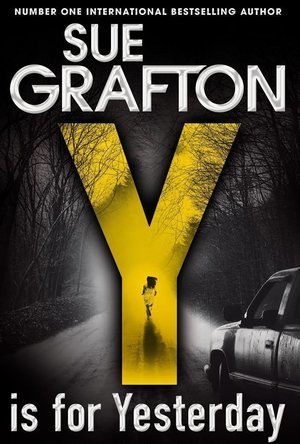
The 25th book in Sue Grafton's formidable Kinsey Millhone series actually kicks us back to 1979, where a group of male teens at a private school in Santa Teresa are found responsible for killing a female classmate. Several went to prison and now the one deemed responsible for the murder, Fritz McCabe, has been released. His parents hire Kinsey to assist them with a blackmail case--apparently these juvenile delinquents also made a sex tape before the murder, and it's turned up with Fritz's release. Kinsey quickly finds herself drawn up in their twisted world, but she's also watching her back, as Ned Lowe from [b:X|24940998|X (Kinsey Millhone, #24)|Sue Grafton|https://images.gr-assets.com/books/1429811123s/24940998.jpg|44598633] still has his sights set on Kinsey.
The result is two pronged story--a focus on Kinsey as she tackles the McCabes and their blackmail/extortion plot, delving deeper into the 1979 murder and sexual assault, but also a continuation of the Ned Lowe story and its associated players. <i>There's a lot going on in this book,</i> as Grafton also throws in a plotline involving romantic shenanigans with Kinsey's cousin, Anna, plus Henry's hosting of the homeless Pearl and her pals in his backyard. Grafton is pretty deft at juggling multiple threads, but whew. The one thing I can say, is that both the Ned situation and the teens' videotape allow for some very timely and nuanced thoughts and ruminations on rape, and you sadly realize we haven't made any progress in society on this front since in the 1980s.
Alas, though, for me, <i>this novel gets off to a slow start and never fully recovers.</i> It took a while to keep track of all the teen players from '79 (and present), and the jumps in time in the storytelling don't really help. Even worse, our heroine, Kinsey, is off her game after the attack from Ned. Yes, she is still the Kinsey we know and love, but she's hurting, more cautious, and changed, and well, it's hard to read about sometimes.
The novel just seemed more tedious than usual and bogged down in some unnecessary details. There were definitely moments with Kinsey that made me smile and laugh, but otherwise, we don't have many characters to root for. The entire group originating in 1979 is pretty despicable. Their story picks up a bit at the end, and I was definitely interested in the outcome, but it didn't have the same flair as previous Kinsey novels. Of note, though, despite how different technology was in the late '70s, Grafton did a good job in denoting how teens remain teens, regardless the decade.
Overall, I will always love Kinsey, but the last two in this series have been a bit disappointing. Here's hoping that <i>Z</i> ends on a high note fitting our beloved heroine.
You can read my review of X <a href="https://www.goodreads.com/review/show/1268956692?book_show_action=false&from_review_page=1">here</a>;.
<center><a href="http://justacatandabookatherside.blogspot.com/">Blog</a>; ~ <a href="https://twitter.com/mwcmoto">Twitter</a>; ~ <a href="https://www.facebook.com/justacatandabook/">Facebook</a>; ~ <a href="https://plus.google.com/u/0/+KristyHamiltonbooks">Google+</a>; ~ <a href="https://www.instagram.com/justacatandabook/">Instagram</a>; </center>
The result is two pronged story--a focus on Kinsey as she tackles the McCabes and their blackmail/extortion plot, delving deeper into the 1979 murder and sexual assault, but also a continuation of the Ned Lowe story and its associated players. <i>There's a lot going on in this book,</i> as Grafton also throws in a plotline involving romantic shenanigans with Kinsey's cousin, Anna, plus Henry's hosting of the homeless Pearl and her pals in his backyard. Grafton is pretty deft at juggling multiple threads, but whew. The one thing I can say, is that both the Ned situation and the teens' videotape allow for some very timely and nuanced thoughts and ruminations on rape, and you sadly realize we haven't made any progress in society on this front since in the 1980s.
Alas, though, for me, <i>this novel gets off to a slow start and never fully recovers.</i> It took a while to keep track of all the teen players from '79 (and present), and the jumps in time in the storytelling don't really help. Even worse, our heroine, Kinsey, is off her game after the attack from Ned. Yes, she is still the Kinsey we know and love, but she's hurting, more cautious, and changed, and well, it's hard to read about sometimes.
The novel just seemed more tedious than usual and bogged down in some unnecessary details. There were definitely moments with Kinsey that made me smile and laugh, but otherwise, we don't have many characters to root for. The entire group originating in 1979 is pretty despicable. Their story picks up a bit at the end, and I was definitely interested in the outcome, but it didn't have the same flair as previous Kinsey novels. Of note, though, despite how different technology was in the late '70s, Grafton did a good job in denoting how teens remain teens, regardless the decade.
Overall, I will always love Kinsey, but the last two in this series have been a bit disappointing. Here's hoping that <i>Z</i> ends on a high note fitting our beloved heroine.
You can read my review of X <a href="https://www.goodreads.com/review/show/1268956692?book_show_action=false&from_review_page=1">here</a>;.
<center><a href="http://justacatandabookatherside.blogspot.com/">Blog</a>; ~ <a href="https://twitter.com/mwcmoto">Twitter</a>; ~ <a href="https://www.facebook.com/justacatandabook/">Facebook</a>; ~ <a href="https://plus.google.com/u/0/+KristyHamiltonbooks">Google+</a>; ~ <a href="https://www.instagram.com/justacatandabook/">Instagram</a>; </center>

Zuky the BookBum (15 KP) rated The Ridge in Books
Mar 15, 2018
When I saw John Rector had another novel coming out I was really excited. I read a previous book of his, <i>Ruthless</i>, which I really enjoyed, so I was sure I was going to like this one, but it didn't live up to my expectations.
This book sounds like it's going to be about a creepy neighbourhood, and while it is, it also isn't. Sure, our characters live in a Stepford Wives feeling place, but we actually only meet 2 or 3 extra characters who live in the neighbourhood, so when the synopsis says something about "exposing the community's pretty lies", there didn't feel like there was much of that. It was far more about a woman digging up secrets on an institute that happens to have all its employees living in one area. This isn't particularly a bad thing, it's just something to note. It's not quite as Stepford Wives as you might think!
This book is 90% conversation and 10% description, so if you're the kind of person who likes descriptive, poetic reads, this certainly won't be for you, but for me, all the speech wasn't an issue, it was sometimes what was being said that I had an issue with. Lots of the time I felt conversation was a little bland, stiff and unrealistic. In terms of descriptive writing, about the neighbourhood or a person, there was nothing special to note. There was also a rehashing of several particular phrases that began to grate on me quite soon into the book.
To begin with, I did really like this novel, I found myself rushing through it, intrigued to know what was going on. It was subtle but it was creepy. Towards the middle, my interest began to dip a bit. I had started to guess what was happening, as well as there being a not-so-exciting reveal. Some parts of the story also started to feel amiss, such as the roses bushes outside of Rachel's being described as "in full bloom" after the scene of her hacking away at them... continuity was sometimes a little shady.
What really let this novel down for me was the characters and the immaturity of them all. None of them felt real, so it was difficult picturing them in situations. Particularly our MC, Megan, who was really juvenile and melodramatic. And naive. Oh so very, stupidly, unrealistically naive. It was so easy to become annoyed by her rash decision making and all the different ways she handled situations. What really got me, was her revealing conversation with Mercer about midway through the book. I couldn't wrap my head around how she could turn around and call him "crazy" after everything she had been through. It felt totally off kilter!
I liked and I didn't like this book. I think it could have been so much creepier and mysterious than it was. I felt there was too much time being spent on Megan's thoughts of Chicago and her marriage to fully appreciate the weirdness of the community she lived in. Ultimately, this book was too simple. It all worked out too well and everything slot perfectly into place, which totally isn't my kind of thriller story.
<i>Thanks to Netgalley and Thomas & Mercer for giving me the opportunity to read this in exchange for an honest review.</i>
This book sounds like it's going to be about a creepy neighbourhood, and while it is, it also isn't. Sure, our characters live in a Stepford Wives feeling place, but we actually only meet 2 or 3 extra characters who live in the neighbourhood, so when the synopsis says something about "exposing the community's pretty lies", there didn't feel like there was much of that. It was far more about a woman digging up secrets on an institute that happens to have all its employees living in one area. This isn't particularly a bad thing, it's just something to note. It's not quite as Stepford Wives as you might think!
This book is 90% conversation and 10% description, so if you're the kind of person who likes descriptive, poetic reads, this certainly won't be for you, but for me, all the speech wasn't an issue, it was sometimes what was being said that I had an issue with. Lots of the time I felt conversation was a little bland, stiff and unrealistic. In terms of descriptive writing, about the neighbourhood or a person, there was nothing special to note. There was also a rehashing of several particular phrases that began to grate on me quite soon into the book.
To begin with, I did really like this novel, I found myself rushing through it, intrigued to know what was going on. It was subtle but it was creepy. Towards the middle, my interest began to dip a bit. I had started to guess what was happening, as well as there being a not-so-exciting reveal. Some parts of the story also started to feel amiss, such as the roses bushes outside of Rachel's being described as "in full bloom" after the scene of her hacking away at them... continuity was sometimes a little shady.
What really let this novel down for me was the characters and the immaturity of them all. None of them felt real, so it was difficult picturing them in situations. Particularly our MC, Megan, who was really juvenile and melodramatic. And naive. Oh so very, stupidly, unrealistically naive. It was so easy to become annoyed by her rash decision making and all the different ways she handled situations. What really got me, was her revealing conversation with Mercer about midway through the book. I couldn't wrap my head around how she could turn around and call him "crazy" after everything she had been through. It felt totally off kilter!
I liked and I didn't like this book. I think it could have been so much creepier and mysterious than it was. I felt there was too much time being spent on Megan's thoughts of Chicago and her marriage to fully appreciate the weirdness of the community she lived in. Ultimately, this book was too simple. It all worked out too well and everything slot perfectly into place, which totally isn't my kind of thriller story.
<i>Thanks to Netgalley and Thomas & Mercer for giving me the opportunity to read this in exchange for an honest review.</i>
Zuky the BookBum (15 KP) rated Behind Closed Doors in Books
Mar 15, 2018
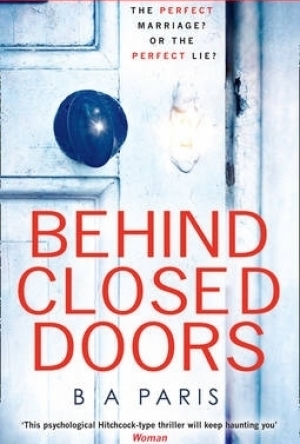

Also find my review here: http://bit.ly/28KzCFf
<b><i>Fear," he whispered. "There is nothing quite like it. I love how it looks, I love how it feels, I love how it smells. And I especially love the sound of it." I felt his tongue on my cheek. "I even love the taste of it.</i></b>
Welcome to Jack and Grace's perfect life and perfect marriage. Jack's an amazing, handsome and successful lawyer for battered woman and Grace is the gorgeous put-together house wife... or so it seems. But what if Grace were to tell she wasn't a house wife, she was in fact a prisoner locked up by her own husband who craves nothing more than seeing and feeling another person's fear? Would you believe her?
I loved all the twists and turns and edge of the seat moments within this novel. It was an excellent thriller that Im sure thousands have and will continue to enjoy. Im definitely going to keep my eyes peeled for any more novels from Paris as I loved her style of writing and felt her story telling flowed perfectly.
The characters were very well developed and you really got a good insight into their lives, thoughts and feelings. Paris did an excellent job at making two very unique characters. Without trying to give too much away, Jack is a very different kind of sadistic captor. Hes so terrifying because he could definitely be real. He could be your neighbour, your boss, your friend even. Hes just a seemingly normal guy but what lies underneath is far from normal.
Grace can be a little stupid and doesnt often act quick enough, its no use for her to try anyway as Jack is always one step ahead. Shes trapped and she knows it, therefore shes an interesting character to see progress through the novel as we see her seemingly give up against her captor, but really, underneath, shes cunning and planning the whole time.
If it wasnt for the fact that you could easily guess how this was going to end once the idea was placed in front of you, it might have even got a 5 star rating. Though the end was predictable there was still some element of shock to it, especially the last heart breaking / lifting scene. <spoiler>The final scene shared between Grace and Esther was such a wonderful way to end this book, it rounded this book off so well. The perfect ending!</spoiler>
The weird thing is, the whole time I read this I thought how far fetched and silly it was, though I was enjoying it, but when you think about it, its not <i>that</i> far fetched. You hear all these terrible stories about women kidnapped and held against their will who are given the freedom to go outside but theyre so paralysed by fear of what could happen, they never say a thing to anyone. Jaycee Lee Dugard, for example, was kidnapped and kept hidden for 18 years! Keeping someone captive isnt that uncommon and Im sure there are actually some terrified women out there that are living a life something very similar to this. So when you put it into that perspective this becomes a very chilling horror story rather than just a fast paced thriller.
<b><i>Fear," he whispered. "There is nothing quite like it. I love how it looks, I love how it feels, I love how it smells. And I especially love the sound of it." I felt his tongue on my cheek. "I even love the taste of it.</i></b>
Welcome to Jack and Grace's perfect life and perfect marriage. Jack's an amazing, handsome and successful lawyer for battered woman and Grace is the gorgeous put-together house wife... or so it seems. But what if Grace were to tell she wasn't a house wife, she was in fact a prisoner locked up by her own husband who craves nothing more than seeing and feeling another person's fear? Would you believe her?
I loved all the twists and turns and edge of the seat moments within this novel. It was an excellent thriller that Im sure thousands have and will continue to enjoy. Im definitely going to keep my eyes peeled for any more novels from Paris as I loved her style of writing and felt her story telling flowed perfectly.
The characters were very well developed and you really got a good insight into their lives, thoughts and feelings. Paris did an excellent job at making two very unique characters. Without trying to give too much away, Jack is a very different kind of sadistic captor. Hes so terrifying because he could definitely be real. He could be your neighbour, your boss, your friend even. Hes just a seemingly normal guy but what lies underneath is far from normal.
Grace can be a little stupid and doesnt often act quick enough, its no use for her to try anyway as Jack is always one step ahead. Shes trapped and she knows it, therefore shes an interesting character to see progress through the novel as we see her seemingly give up against her captor, but really, underneath, shes cunning and planning the whole time.
If it wasnt for the fact that you could easily guess how this was going to end once the idea was placed in front of you, it might have even got a 5 star rating. Though the end was predictable there was still some element of shock to it, especially the last heart breaking / lifting scene. <spoiler>The final scene shared between Grace and Esther was such a wonderful way to end this book, it rounded this book off so well. The perfect ending!</spoiler>
The weird thing is, the whole time I read this I thought how far fetched and silly it was, though I was enjoying it, but when you think about it, its not <i>that</i> far fetched. You hear all these terrible stories about women kidnapped and held against their will who are given the freedom to go outside but theyre so paralysed by fear of what could happen, they never say a thing to anyone. Jaycee Lee Dugard, for example, was kidnapped and kept hidden for 18 years! Keeping someone captive isnt that uncommon and Im sure there are actually some terrified women out there that are living a life something very similar to this. So when you put it into that perspective this becomes a very chilling horror story rather than just a fast paced thriller.
Zuky the BookBum (15 KP) rated Mercy Snow: A Novel in Books
Mar 15, 2018
Also read my review here: http://bookbum.weebly.com/book-reviews/mercy-snow-by-tiffany-baker
<b><i>The real trick to holding two things together, June was coming to see, wasnt how rightly they were bound but how well. Sometimes a loose thread was a saving grace.</b></i>
This is more a review on the characters than the overall novel because the plot took a back step to the characters stories.
Beautiful writing style! Its so elegant and well formed. Easy to read yet full of vivid imagery and scenery. Every character, no matter how small, was really well formed and interesting to read about. Unfortunately, there were some really dislikable characters in this novel.
I thought I liked June, I thought she was a brave outsider doing her best to assimilate but it just turns out shes selfish! You would have thought that a woman who knows what it feels like to be on the outside of everyone else would sympathise with the likes of Mercy and her family, but instead she does whatever she can to get rid of them, all for her own selfish needs and even after she knows how heart broken her son is. I thought maybe it had something to do with Cal, as it was obvious he was angry and controlling at times, but I still couldnt sympathise with her because, in the end, she could have just left the Snows alone, rather than torment and threaten them. <spoiler>She was also everything I hate a woman can be when her partner cheats on her - forgiving and accepting. No. <b>No.</b> Never, ever, ever, ever, ever accept infidelity.</spoiler>
Mercy, of course, was supposed to be every readers hero. She was the kind of person you wish you could be. She was gentle and kind, she was obedient and caring, and most of all, she was selfless. She held no grudges against anyone, even those who were plotting against her, all she wanted to do was help people prove her brother's innocence, and that her family werent the neer-do-wells everyone believed them to be.
Although Mercy was lovely, Hazel was by far my favourite character because she was <i>so genuine.</i> She wasnt perfect, she had her doubts and silly thoughts, <b><i>Hazel supposed she ought to thank her, but instead she felt a hot flush across her chest. They were </i>her<i> sheep, and Fergus was </i>her<i> man,</b></i> but she tried her best to do what was right and that made her a really likable person.
Nate really grew as a character throughout the novel. To begin with, he remained a bit of a nothingy addition to the story, but he gradually became one of the nicest characters to read about. He was so warm and kind, he didnt take after his father at all, which is clearly a good thing! He was a total cutie as well, the part with the lamb birthing almost had my heart melting! (although it was also a little too TMI when it talked about his hand in her really warm uterus . *shudder*)
Cal doesnt even get a paragraph because of what a twat he was.
This was a lovely book, full of morals and thought-provoking subjects. What started out as a bit of a boring and weird read for me, turned into something really wonderful. Im glad I picked this up.
<b><i>The real trick to holding two things together, June was coming to see, wasnt how rightly they were bound but how well. Sometimes a loose thread was a saving grace.</b></i>
This is more a review on the characters than the overall novel because the plot took a back step to the characters stories.
Beautiful writing style! Its so elegant and well formed. Easy to read yet full of vivid imagery and scenery. Every character, no matter how small, was really well formed and interesting to read about. Unfortunately, there were some really dislikable characters in this novel.
I thought I liked June, I thought she was a brave outsider doing her best to assimilate but it just turns out shes selfish! You would have thought that a woman who knows what it feels like to be on the outside of everyone else would sympathise with the likes of Mercy and her family, but instead she does whatever she can to get rid of them, all for her own selfish needs and even after she knows how heart broken her son is. I thought maybe it had something to do with Cal, as it was obvious he was angry and controlling at times, but I still couldnt sympathise with her because, in the end, she could have just left the Snows alone, rather than torment and threaten them. <spoiler>She was also everything I hate a woman can be when her partner cheats on her - forgiving and accepting. No. <b>No.</b> Never, ever, ever, ever, ever accept infidelity.</spoiler>
Mercy, of course, was supposed to be every readers hero. She was the kind of person you wish you could be. She was gentle and kind, she was obedient and caring, and most of all, she was selfless. She held no grudges against anyone, even those who were plotting against her, all she wanted to do was help people prove her brother's innocence, and that her family werent the neer-do-wells everyone believed them to be.
Although Mercy was lovely, Hazel was by far my favourite character because she was <i>so genuine.</i> She wasnt perfect, she had her doubts and silly thoughts, <b><i>Hazel supposed she ought to thank her, but instead she felt a hot flush across her chest. They were </i>her<i> sheep, and Fergus was </i>her<i> man,</b></i> but she tried her best to do what was right and that made her a really likable person.
Nate really grew as a character throughout the novel. To begin with, he remained a bit of a nothingy addition to the story, but he gradually became one of the nicest characters to read about. He was so warm and kind, he didnt take after his father at all, which is clearly a good thing! He was a total cutie as well, the part with the lamb birthing almost had my heart melting! (although it was also a little too TMI when it talked about his hand in her really warm uterus . *shudder*)
Cal doesnt even get a paragraph because of what a twat he was.
This was a lovely book, full of morals and thought-provoking subjects. What started out as a bit of a boring and weird read for me, turned into something really wonderful. Im glad I picked this up.

Heather Cranmer (2721 KP) rated Pitch Green (Dimensions in Death, #1) in Books
Jun 7, 2018
(This review can also be found on my blog <a href="http://themisadventuresofatwentysomething.blogspot.com">The (Mis)Adventures of a Twenty-Something Year Old Girl</a>).
Those who know me know that YA horror is my favourite genre. I was lucky enough to be asked by Jolly Fish Press to review a book that fit that genre. The book was Pitch Green (Dimensions in Death #1) by The Brothers Washburn. I definitely wasn't disappointed with this book.
Camm and Cal have been best friends forever. They've pretty much gone through everything together including the disappearance of Camm's little brother seven years ago. As Camm and Cal dig deeper to solve Cal's little brother's disappearance, they discover that more children have gone missing in their little hometown starting back in 1941. They also discover that some sinister force is behind the disappearance. Will Camm and Cal lose their life in the process of uncovering this mystery or will they lose their sanity?
Okay, I don't really get the title of this book. I understand the whole "green" part of the title which I won't explain due to small spoilers, but I don't understand the "pitch" bit. It's definitely an unusual title, that's for sure. However, I don't like or dislike the title. It just leaves me perplexed.
I'm definitely a fan of this spooky looking cover! I love the spooky green font and the creepy looking grandfather clock with the hanging man pendulum which features quite frequently in the book. I do believe that the cover of this book gives its readers a glimpse into what to expect.
I enjoyed the world building. I could definitely picture the creepy mansion in my mind, and because I live by lots of plants (not the green kind), I could totally relate to the Trona plant mentioned throughout the book.
I enjoyed the pacing of this book although I must admit that there was a chapter or two when I thought that the pacing was going to be slow. However, it quickly picked up, and I was hooked. I finished Pitch Green sooner then I had anticipated...that's how great the pacing was!
The only problem I had with this book was the fact that Camm and Cal seemed a bit younger than 18. They came across, to me, as being about 12 or 13 years old due to their actions, dialogue, and thoughts. Other than that, they were quite enjoyable characters. I loved how much of a wise cracker Camm was.
As I said before, the dialogue didn't match that of two 18 year olds. Don't get me wrong, the dialogue did make me laugh quite a bit, but it was off. The dialogue wasn't that bothersome after I got farther into the book and just imagined Camm and Cal to be two 14 year olds talking to each other. As for language, there is only one swear word.
I will definitely be buying the next book in the series. The ending of this book definitely left me wanting more despite the characters acting younger than their age.
I'd definitely recommend this book to everyone aged 13+ especially those who are fans of the horror genre.
(I was given a copy of this book from the publishers in exchange for a fair and honest review).
Those who know me know that YA horror is my favourite genre. I was lucky enough to be asked by Jolly Fish Press to review a book that fit that genre. The book was Pitch Green (Dimensions in Death #1) by The Brothers Washburn. I definitely wasn't disappointed with this book.
Camm and Cal have been best friends forever. They've pretty much gone through everything together including the disappearance of Camm's little brother seven years ago. As Camm and Cal dig deeper to solve Cal's little brother's disappearance, they discover that more children have gone missing in their little hometown starting back in 1941. They also discover that some sinister force is behind the disappearance. Will Camm and Cal lose their life in the process of uncovering this mystery or will they lose their sanity?
Okay, I don't really get the title of this book. I understand the whole "green" part of the title which I won't explain due to small spoilers, but I don't understand the "pitch" bit. It's definitely an unusual title, that's for sure. However, I don't like or dislike the title. It just leaves me perplexed.
I'm definitely a fan of this spooky looking cover! I love the spooky green font and the creepy looking grandfather clock with the hanging man pendulum which features quite frequently in the book. I do believe that the cover of this book gives its readers a glimpse into what to expect.
I enjoyed the world building. I could definitely picture the creepy mansion in my mind, and because I live by lots of plants (not the green kind), I could totally relate to the Trona plant mentioned throughout the book.
I enjoyed the pacing of this book although I must admit that there was a chapter or two when I thought that the pacing was going to be slow. However, it quickly picked up, and I was hooked. I finished Pitch Green sooner then I had anticipated...that's how great the pacing was!
The only problem I had with this book was the fact that Camm and Cal seemed a bit younger than 18. They came across, to me, as being about 12 or 13 years old due to their actions, dialogue, and thoughts. Other than that, they were quite enjoyable characters. I loved how much of a wise cracker Camm was.
As I said before, the dialogue didn't match that of two 18 year olds. Don't get me wrong, the dialogue did make me laugh quite a bit, but it was off. The dialogue wasn't that bothersome after I got farther into the book and just imagined Camm and Cal to be two 14 year olds talking to each other. As for language, there is only one swear word.
I will definitely be buying the next book in the series. The ending of this book definitely left me wanting more despite the characters acting younger than their age.
I'd definitely recommend this book to everyone aged 13+ especially those who are fans of the horror genre.
(I was given a copy of this book from the publishers in exchange for a fair and honest review).

Hazel (1853 KP) rated Clover Moon in Books
Dec 7, 2018
<i>This eBook was provided by the publisher via NetGalley in exchange for an honest review </i>
Although now in her seventies, the Nation’s favourite children’s author, Dame Jacqueline Wilson, is continuing to write after surpassing one hundred novels. Many children (mostly girls) grow up reading her stories, myself being amongst that number. Even my sister, who hated reading, purchased a number of her books. It has been well over a decade since I last read a Jacqueline Wilson, however after seeing her latest novel was available for review, I thought I would give it a go.
<i>Clover Moon</i> is set in poverty-stricken Victorian London, where eleven-year-old Clover, the eldest of six siblings, lives with her father and stepmother. Like many stepmother’s in children’s literature, Clover’s treats her like a slave – a position she is destined to stay in unless she gets a job in a factory. With no school to attend, Clover becomes a second mother to her younger brother’s and sisters, yet nothing can prepare her for the devastating impact a wave of Scarlet Fever brings. With only an old doll maker who cares about her, Clover is desperate to get out of her situation; so after a chance meeting with an artist who tells her about a home for destitute girls, Clover decides to seek out the help and life she deserves.
Although only eleven, Clover has the responsibilities of someone of a more mature age. It is hard to imagine sending a child out to work, or trusting them to look after a newborn baby. Children reading this book will learn the difference between their lives and the life of a child in the 1800s.
As always, Jacqueline Wilson gives her main character a happy ending – although in this instance it still remains a bit uncertain. Despite the horrible circumstances, Wilson manages to pump her story full of enthusiastic optimism, thus portraying Clover as a strong, determined heroine.
Most of Jacqueline Wilson’s earlier books were set in the present day; there were still unhappy situations, but the settings were based on ideas the reader would be familiar with. In the case of <i>Clover Moon</i>, unless children have been educated about the poor in Victorian England, it is unlikely that they will be able to fully comprehend Clover’s predicament. As a result, the book is more suitable for young teenagers than the usual target audience of eight to twelve year olds.
Comparing my memories of Jacqueline Wilson books I read as a child with her latest publication, <i>Clover Moon</i> felt like something different; a new direction. As I have not read any of her work between the early 2000s and now, I am not sure when this change occurred, but it feels as though Wilson is delving deeper into her main character’s thoughts and feelings, and creating a more insightful storyline. On the other hand, I may simply be more intuitive as an adult than I was a child.
Although <i>Clover Moon</i> did not turn out to be the style of writing I was expecting I thoroughly enjoyed it. In fact, this difference made it possible to distance myself from the author’s renown, and treat it as an individual story. Clover is an admirable character who, through her narration, provides both an entertaining story and brief historical education. Fans of Jacqueline Wilson will not be disappointed with this latest publication; and if you are a new reader, <i>Clover Moon</i> is a great place to start.
Although now in her seventies, the Nation’s favourite children’s author, Dame Jacqueline Wilson, is continuing to write after surpassing one hundred novels. Many children (mostly girls) grow up reading her stories, myself being amongst that number. Even my sister, who hated reading, purchased a number of her books. It has been well over a decade since I last read a Jacqueline Wilson, however after seeing her latest novel was available for review, I thought I would give it a go.
<i>Clover Moon</i> is set in poverty-stricken Victorian London, where eleven-year-old Clover, the eldest of six siblings, lives with her father and stepmother. Like many stepmother’s in children’s literature, Clover’s treats her like a slave – a position she is destined to stay in unless she gets a job in a factory. With no school to attend, Clover becomes a second mother to her younger brother’s and sisters, yet nothing can prepare her for the devastating impact a wave of Scarlet Fever brings. With only an old doll maker who cares about her, Clover is desperate to get out of her situation; so after a chance meeting with an artist who tells her about a home for destitute girls, Clover decides to seek out the help and life she deserves.
Although only eleven, Clover has the responsibilities of someone of a more mature age. It is hard to imagine sending a child out to work, or trusting them to look after a newborn baby. Children reading this book will learn the difference between their lives and the life of a child in the 1800s.
As always, Jacqueline Wilson gives her main character a happy ending – although in this instance it still remains a bit uncertain. Despite the horrible circumstances, Wilson manages to pump her story full of enthusiastic optimism, thus portraying Clover as a strong, determined heroine.
Most of Jacqueline Wilson’s earlier books were set in the present day; there were still unhappy situations, but the settings were based on ideas the reader would be familiar with. In the case of <i>Clover Moon</i>, unless children have been educated about the poor in Victorian England, it is unlikely that they will be able to fully comprehend Clover’s predicament. As a result, the book is more suitable for young teenagers than the usual target audience of eight to twelve year olds.
Comparing my memories of Jacqueline Wilson books I read as a child with her latest publication, <i>Clover Moon</i> felt like something different; a new direction. As I have not read any of her work between the early 2000s and now, I am not sure when this change occurred, but it feels as though Wilson is delving deeper into her main character’s thoughts and feelings, and creating a more insightful storyline. On the other hand, I may simply be more intuitive as an adult than I was a child.
Although <i>Clover Moon</i> did not turn out to be the style of writing I was expecting I thoroughly enjoyed it. In fact, this difference made it possible to distance myself from the author’s renown, and treat it as an individual story. Clover is an admirable character who, through her narration, provides both an entertaining story and brief historical education. Fans of Jacqueline Wilson will not be disappointed with this latest publication; and if you are a new reader, <i>Clover Moon</i> is a great place to start.