
Search
Search results

Bob Mann (459 KP) rated The Children Act (2018) in Movies
Sep 28, 2021
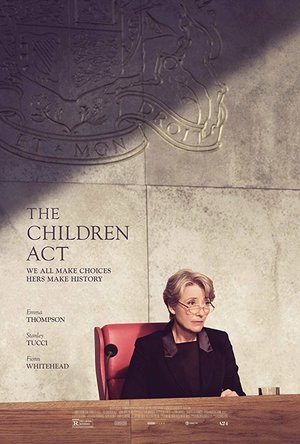

“And the Oscar goes to”… (or should go to)… “Dame Emma Thompson”.
Given my last review was for “The Equalizer 2“, where Denzel was judge, jury and executioner, it’s a nice seque that this film follows the life of a senior judge in London’s Law Courts: trying to do the justice job, but in the right way!
Judge Maye (Thompson) is a childless wife to her loving husband Jack (Tucci), but is also a workaholic. This is driving the long-term couple to the point of infidelity: a fact the ever-focused Fiona – whose life, to her, probably feels to be in a perfect if selfish equilibrium – is oblivious to. With Fiona’s intense but comfortable world about to cave in around her, her increasing stress is not helped by the latest case she is working on: one where Adam ( Fionn Whitehead from “Dunkirk“), a Jehovah’s Witness boy and a minor, is refusing on religious grounds the blood transfusion he desperately needs to fight his leukaemia. Fiona’s decisions in the months ahead go much further than a simple judgement on the case.
Two acting giants – one born in London; one born in New York – tower over this Ian McEwan adaptation like leviathons. I bandy around the phrase “national treasure” a lot in these reviews but, if there was a league table of national treasures, Emma Thompson would qualify for the Champion’s League every season. Here she is simply breathtakingly powerful in the lead role of Judge Fiona Maye, exhibiting such extremes of emotion that you would like to think that an Oscar nomination would be assured. (However, before I run out and put a £10 bet on her to win, the film is such a small British film that unfortunately both a nomination and a win seem unlikely! THIS IS A CRIME! So I have added the tag #OscarBuzz to this post…. please share and lobby people, lobby! Perhaps at the very least we can hope for some BAFTA recognition).
Sometimes a masterly lead performance can make a co-star performance seem unbalanced, but no such danger here. Stanley Tucci makes a perfect acting foil for Thompson: if he were a wine he would be described as “exasperation, frustration, compassion with strong notes of respect”. And he carries it off with perfection.
This is an incredibly intelligent film, working on so many different levels and subject to so much interpretation. Fiona’s feelings for the troubled teenager feel more maternal than sexual, but when those feelings become returned and escalate the whole piece develops a queasily oedipal quality. Many films have focused on illicit attractions between teacher and pupil, but here lies a new variation, with Maye fighting against her best professional insticts to ‘do the right thing’. “I’m frightened of myself” she eventually wails to a colleague.
In his opening hospital scenes*, Adam seems completely other-wordly compared to a typical teen and this comes across as utterly false. That is, until you consider the oddness of his family background and Jehovah’s Witness upbringing. As such, the film just about gets away with it. Whitehead does a good job with a difficult role. (*It took my wife to point out – after the film, thank goodness – the similarities between this hospital scene and a famous guitar-playing scene in “Airplane” at which I dissolved into guffaws!).
If you’ve been in a court, you’ll know that there is something regal and magical about a judge in full regalia entering a packed courtroom. So it’s unusual to see the view from the other side of the door… a non-descript office corridor and a non-descript door. Helping the judge on this side of the door is her PA Nigel, played by the brilliant Jason Watkins: a TV regular (e.g. “Line of Duty”, “W1A”) but seen far less at the movies.
As a story of obsessive fixation, it borders on McEwan’s disturbing earlier work “Enduring Love”. And it has the potential to go in lots of interesting directions as a sort of bonkers platonic love triangle (“He wants to live with US?” splutters Tucci). Where the story does end up going was not particularly to my liking, and a melodramatic concert scene was – for me – a little overdone. However it does give rise to a scene (the ‘sopping wet’ scene) that shows Thompson at her most brilliant: if she DID get Oscar or BAFTA nominated then this will be her pre-announcement snippet.
It’s a great film for showcasing acting talent, but beware: it’s not got a “lot of laffs”. As such it’s very much a “Father Ted film” that takes a while to recover from.
Judge Maye (Thompson) is a childless wife to her loving husband Jack (Tucci), but is also a workaholic. This is driving the long-term couple to the point of infidelity: a fact the ever-focused Fiona – whose life, to her, probably feels to be in a perfect if selfish equilibrium – is oblivious to. With Fiona’s intense but comfortable world about to cave in around her, her increasing stress is not helped by the latest case she is working on: one where Adam ( Fionn Whitehead from “Dunkirk“), a Jehovah’s Witness boy and a minor, is refusing on religious grounds the blood transfusion he desperately needs to fight his leukaemia. Fiona’s decisions in the months ahead go much further than a simple judgement on the case.
Two acting giants – one born in London; one born in New York – tower over this Ian McEwan adaptation like leviathons. I bandy around the phrase “national treasure” a lot in these reviews but, if there was a league table of national treasures, Emma Thompson would qualify for the Champion’s League every season. Here she is simply breathtakingly powerful in the lead role of Judge Fiona Maye, exhibiting such extremes of emotion that you would like to think that an Oscar nomination would be assured. (However, before I run out and put a £10 bet on her to win, the film is such a small British film that unfortunately both a nomination and a win seem unlikely! THIS IS A CRIME! So I have added the tag #OscarBuzz to this post…. please share and lobby people, lobby! Perhaps at the very least we can hope for some BAFTA recognition).
Sometimes a masterly lead performance can make a co-star performance seem unbalanced, but no such danger here. Stanley Tucci makes a perfect acting foil for Thompson: if he were a wine he would be described as “exasperation, frustration, compassion with strong notes of respect”. And he carries it off with perfection.
This is an incredibly intelligent film, working on so many different levels and subject to so much interpretation. Fiona’s feelings for the troubled teenager feel more maternal than sexual, but when those feelings become returned and escalate the whole piece develops a queasily oedipal quality. Many films have focused on illicit attractions between teacher and pupil, but here lies a new variation, with Maye fighting against her best professional insticts to ‘do the right thing’. “I’m frightened of myself” she eventually wails to a colleague.
In his opening hospital scenes*, Adam seems completely other-wordly compared to a typical teen and this comes across as utterly false. That is, until you consider the oddness of his family background and Jehovah’s Witness upbringing. As such, the film just about gets away with it. Whitehead does a good job with a difficult role. (*It took my wife to point out – after the film, thank goodness – the similarities between this hospital scene and a famous guitar-playing scene in “Airplane” at which I dissolved into guffaws!).
If you’ve been in a court, you’ll know that there is something regal and magical about a judge in full regalia entering a packed courtroom. So it’s unusual to see the view from the other side of the door… a non-descript office corridor and a non-descript door. Helping the judge on this side of the door is her PA Nigel, played by the brilliant Jason Watkins: a TV regular (e.g. “Line of Duty”, “W1A”) but seen far less at the movies.
As a story of obsessive fixation, it borders on McEwan’s disturbing earlier work “Enduring Love”. And it has the potential to go in lots of interesting directions as a sort of bonkers platonic love triangle (“He wants to live with US?” splutters Tucci). Where the story does end up going was not particularly to my liking, and a melodramatic concert scene was – for me – a little overdone. However it does give rise to a scene (the ‘sopping wet’ scene) that shows Thompson at her most brilliant: if she DID get Oscar or BAFTA nominated then this will be her pre-announcement snippet.
It’s a great film for showcasing acting talent, but beware: it’s not got a “lot of laffs”. As such it’s very much a “Father Ted film” that takes a while to recover from.

Purple Phoenix Games (2266 KP) rated Hierarchy in Tabletop Games
Oct 1, 2019
It’s the moment you’ve all been waiting for – the next installment in the Button Shy wallet series is here! *Crowd roar* After my discovery of Button Shy through their Kickstarter for Sprawlopolis, I have actively been on the lookout for their games. When I saw the call for reviewers for their newest card game, I knew I wanted to be involved! So how does Hierarchy hold up compared to their other wildly successful wallet games? Keep reading to find out!
Hierarchy is an abstract strategy game of perfect information for 2 players. Comprised of a mere 14 playing cards (excluding title and reference cards) it is quite the compact game – as is to be expected from the Button Shy crew. In a game of Hierarchy, players take turns playing cards from their open hand (no hidden information here!) on top of the last card played by their opponent, per the placement restrictions. To win, you must be able to play a card on top of which your opponent is unable to play a card – effectively ‘checkmating’ them and claiming victory for yourself!
DISCLAIMER: We were provided a prototype copy of this game for the purposes of this review. As this is a preview copy of the game, I do not know if the final rules or components will be similar or different to what we were provided. -T
Here’s how it works in detail. Each player first receives a Quick Reference Card, and is then dealt half of the deck (7 cards). The cards are double-sided to represent the two player colors – purple and gold – so each player flips their 7 cards to show their chosen color. Since this is a game of perfect information, all cards are laid out on the table, so each player always knows what cards their opponent has available to them. The player who was dealt the ‘Imposter’ card goes first. Each card has a specific number, ranging from 1 to 13, as well as a specific ability. To play a card, its number must be higher than that of the card below it, unless the card’s specific ability says it can be played otherwise. For example, if I play the Queen (#12), Travis could play the King (#13, numerically higher) or the Assassin (#1) since its power allows it to be played atop any card except for the Tower and Leper. Don’t be worried about having to memorize all the card abilities – they are all detailed on the Quick Reference Cards (see photo below). Play continues back and forth until one player is unable to play a card, either because they have no cards left at all or because they have no valid cards left to play. That player loses the game, and the remaining player is the top of the Hierarchy! (Roll credits)
Let’s talk components first. They’re excellent, which is no surprise coming from ButtonShy. Of course, we just have a preview copy of the game, so I can only imagine that the card quality might be up for improvement during the Kickstarter. That being said, the cards we received are nice and sturdy, as is the tell-tale wallet of a ButtonShy game. The text on the cards is a good size, and the font is easy to read. The artwork is fine, but quite honestly not something I looked at in depth until Travis mentioned the style. I think that’s because the cards are all monochrome, the art just didn’t really draw my eye. Not a knock on the game, just something I noticed! Speaking of color, I personally love the player color choices of Purple and Gold – the school colors of my Alma Mater ((the University of Northern Iowa, go Panthers!)(also of the Alma Mater of the rest of us – Western Illinois University – GO NECKS! -T)). Maybe I’m biased, but I think those two colors are a great combination 🙂
And how about the gameplay? I think it’s excellent. For such a compact and ‘light’ game, the strategy required for success keeps the game extremely engaging. You always know the cards your opponent has, and you’ve got to be thinking at least several turns in advance to try to back them into a corner while not letting yourself fall victim to an unnoticed strategic play. Another neat thing about Hierarchy is how quickly it plays – typically in 20 minutes or less. You might have to devote a decent amount of brainpower to outwitting your opponent, but you definitely don’t need to devote hours of time during your game night for this game, and I love that. Gamers who enjoy games like Citadels or Love Letter might enjoy the familiarity of Hierarchy’s gameplay coupled with the intimacy of a strictly 2-player game. The final verdict from me is that Button Shy has another hit on their hands with Hierarchy. I am very much looking forward to following the campaign, and definitely plan to pull this game out many times in my future!
Hierarchy is an abstract strategy game of perfect information for 2 players. Comprised of a mere 14 playing cards (excluding title and reference cards) it is quite the compact game – as is to be expected from the Button Shy crew. In a game of Hierarchy, players take turns playing cards from their open hand (no hidden information here!) on top of the last card played by their opponent, per the placement restrictions. To win, you must be able to play a card on top of which your opponent is unable to play a card – effectively ‘checkmating’ them and claiming victory for yourself!
DISCLAIMER: We were provided a prototype copy of this game for the purposes of this review. As this is a preview copy of the game, I do not know if the final rules or components will be similar or different to what we were provided. -T
Here’s how it works in detail. Each player first receives a Quick Reference Card, and is then dealt half of the deck (7 cards). The cards are double-sided to represent the two player colors – purple and gold – so each player flips their 7 cards to show their chosen color. Since this is a game of perfect information, all cards are laid out on the table, so each player always knows what cards their opponent has available to them. The player who was dealt the ‘Imposter’ card goes first. Each card has a specific number, ranging from 1 to 13, as well as a specific ability. To play a card, its number must be higher than that of the card below it, unless the card’s specific ability says it can be played otherwise. For example, if I play the Queen (#12), Travis could play the King (#13, numerically higher) or the Assassin (#1) since its power allows it to be played atop any card except for the Tower and Leper. Don’t be worried about having to memorize all the card abilities – they are all detailed on the Quick Reference Cards (see photo below). Play continues back and forth until one player is unable to play a card, either because they have no cards left at all or because they have no valid cards left to play. That player loses the game, and the remaining player is the top of the Hierarchy! (Roll credits)
Let’s talk components first. They’re excellent, which is no surprise coming from ButtonShy. Of course, we just have a preview copy of the game, so I can only imagine that the card quality might be up for improvement during the Kickstarter. That being said, the cards we received are nice and sturdy, as is the tell-tale wallet of a ButtonShy game. The text on the cards is a good size, and the font is easy to read. The artwork is fine, but quite honestly not something I looked at in depth until Travis mentioned the style. I think that’s because the cards are all monochrome, the art just didn’t really draw my eye. Not a knock on the game, just something I noticed! Speaking of color, I personally love the player color choices of Purple and Gold – the school colors of my Alma Mater ((the University of Northern Iowa, go Panthers!)(also of the Alma Mater of the rest of us – Western Illinois University – GO NECKS! -T)). Maybe I’m biased, but I think those two colors are a great combination 🙂
And how about the gameplay? I think it’s excellent. For such a compact and ‘light’ game, the strategy required for success keeps the game extremely engaging. You always know the cards your opponent has, and you’ve got to be thinking at least several turns in advance to try to back them into a corner while not letting yourself fall victim to an unnoticed strategic play. Another neat thing about Hierarchy is how quickly it plays – typically in 20 minutes or less. You might have to devote a decent amount of brainpower to outwitting your opponent, but you definitely don’t need to devote hours of time during your game night for this game, and I love that. Gamers who enjoy games like Citadels or Love Letter might enjoy the familiarity of Hierarchy’s gameplay coupled with the intimacy of a strictly 2-player game. The final verdict from me is that Button Shy has another hit on their hands with Hierarchy. I am very much looking forward to following the campaign, and definitely plan to pull this game out many times in my future!
Bob Mann (459 KP) rated Fantastic Beasts: Crimes of Grindelwald (2018) in Movies
Sep 28, 2021
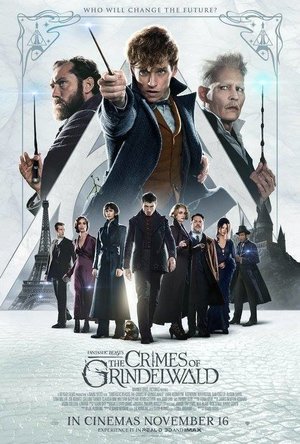


Lestranger than fiction.
I must be one of the last people to watch this in the cinema, thanks to an irritating bout of sickness and – well – frankly total bloody apathy! For me this is the franchise that nobody asked for and nobody wanted. (Well, “nobody” is probably overstating the case, since there is probably a bunch of Potterheads out there who are shouting at me right now). But judging from the opinion of my daughter-in-law, who could win “Mastermind” with her knowledge of the original Potter series as her specialist subject, I am certainly not alone in my lack of enthusiasm.
The Plot
I’d really love to tell you about the plot. I really would! But I would struggle to pull all the multitude of strands together from J.K. Rowling’s story and coherently explain them to anyone. If Rowling had put ten thousand monkeys (not a million – it’s no bloody Shakespeare) into a room with typewriters and locked the door I wouldn’t be surprised.
Let me try at a high level….. The arch-criminal wizard Grindelwald (Johnny Depp) is being tortured in ‘Trump Tower’, but manages to escape and flees to Paris in pursuit of a mysterious circus performer called Credence (Ezra Miller) and his bewitched companion Nagini (nudge, nudge, wink, wink) played fetchingly by Claudia Kim. Someone needs to stop him, and all eyes are on Albus Dumbledore (Jude Law). But he is unable to do so, since he and Grindelwald are “closer than brothers” (nudge, nudge, wink, wink). So a reluctant and UK-grounded Newt Scamander (Eddie Redmayne) is smuggled into the danger zone… which suits him just fine since his love Tina (Katherine Waterston) is working for the ministry there, and the couple are currently estranged due to a (topical) bout of ‘Fake News’.
Throw in a potential love triangle between Newt, his brother Theseus (Callum Turner) and old Hogwart’s schoolmate Leta Lestrange (Zoë Kravitz) and about a half dozen other sub-plots and you have… well… a complete bugger’s muggle – – sorry – – muddle.
A plot that’s all at sea
Above all, I really can’t explain the crux of the plot. A venerable diarrhoea of exposition in a crypt, during an inexplicably quiet fifteen minutes (given ‘im-who-can-be-named is next door with about a thousand other people!) left me completely bewildered. A bizarre event at sea (no spoilers) would seem to make absolutely NO SENSE when considered with another reveal at the end of the film. I thought I must have clearly missed something… or I’d just not been intelligent enough to process the information…. or…. it was actually completely bonkers! Actually, I think it’s the latter: in desperation I went on a fan site that tried to explain the plot. While it was explained there, the explanation aligned with what I thought had happened: but it made no mention of the ridiculousness of the random coincidence involved!
The turns
The film’s a mess. Which is a shame since everyone involved tries really hard. Depp oozes evil very effectively (he proves that nicely on arriving in Paris, and doubles-down about 5 minutes later: #veryverydark). Redmayne replays his Newt-act effectively but once again (and I see I made the same comments in my “Fantastic Beasts” review) his character mumbles again so much that many of his lines are unintelligible.
I also complained last time that the excellent actress Katherine Waterston was criminally underused as the tentative love interest Tina. this trend unfortunately continues unabated in this film…. you’ll struggle afterwards to write down what she actually did in this film.
Jacob (Dan Fogler) and Queenie (Alison Sudol, looking for all the world in some scenes like Rachel Weisz) reprise their roles in a sub-plot that goes nowhere in particular.
Of the newcomers, Jude Law as Dumbledore is a class-act but has very little screen time: hopefully he will get more to do next time around. Zoë Kravitz impresses as Leta.
Wizards of the screen
As you would expect from a David Yates / David Heyman Potter collaboration, the product design, costume design and special effects are all excellent. Some scenes are truly impressive – an ‘explosion’ in a Parisian garret is particularly spectacular.
But special effects alone do not a great film make. Many reviews I’ve seen complain that this was a ‘filler’ film… a set-up film for the rest of the series. And I can understand that view. If you analyse the film overall, virtually NOTHING of importance actually happens: it’s like the “Order of the Phoenix” of the prequels.
Final Thoughts
I dragged myself along to see this one because “I thought I should”. The third in the series will really need to sparkle to make me want to see it. If J.K. Rowling were to take me advice (she won’t – she NEVER returns my calls!) then she would sculpt the story-arc but leave the screenwriting to someone better. The blame for this one, I’m afraid, lies at Rowling’s door alone.
The Plot
I’d really love to tell you about the plot. I really would! But I would struggle to pull all the multitude of strands together from J.K. Rowling’s story and coherently explain them to anyone. If Rowling had put ten thousand monkeys (not a million – it’s no bloody Shakespeare) into a room with typewriters and locked the door I wouldn’t be surprised.
Let me try at a high level….. The arch-criminal wizard Grindelwald (Johnny Depp) is being tortured in ‘Trump Tower’, but manages to escape and flees to Paris in pursuit of a mysterious circus performer called Credence (Ezra Miller) and his bewitched companion Nagini (nudge, nudge, wink, wink) played fetchingly by Claudia Kim. Someone needs to stop him, and all eyes are on Albus Dumbledore (Jude Law). But he is unable to do so, since he and Grindelwald are “closer than brothers” (nudge, nudge, wink, wink). So a reluctant and UK-grounded Newt Scamander (Eddie Redmayne) is smuggled into the danger zone… which suits him just fine since his love Tina (Katherine Waterston) is working for the ministry there, and the couple are currently estranged due to a (topical) bout of ‘Fake News’.
Throw in a potential love triangle between Newt, his brother Theseus (Callum Turner) and old Hogwart’s schoolmate Leta Lestrange (Zoë Kravitz) and about a half dozen other sub-plots and you have… well… a complete bugger’s muggle – – sorry – – muddle.
A plot that’s all at sea
Above all, I really can’t explain the crux of the plot. A venerable diarrhoea of exposition in a crypt, during an inexplicably quiet fifteen minutes (given ‘im-who-can-be-named is next door with about a thousand other people!) left me completely bewildered. A bizarre event at sea (no spoilers) would seem to make absolutely NO SENSE when considered with another reveal at the end of the film. I thought I must have clearly missed something… or I’d just not been intelligent enough to process the information…. or…. it was actually completely bonkers! Actually, I think it’s the latter: in desperation I went on a fan site that tried to explain the plot. While it was explained there, the explanation aligned with what I thought had happened: but it made no mention of the ridiculousness of the random coincidence involved!
The turns
The film’s a mess. Which is a shame since everyone involved tries really hard. Depp oozes evil very effectively (he proves that nicely on arriving in Paris, and doubles-down about 5 minutes later: #veryverydark). Redmayne replays his Newt-act effectively but once again (and I see I made the same comments in my “Fantastic Beasts” review) his character mumbles again so much that many of his lines are unintelligible.
I also complained last time that the excellent actress Katherine Waterston was criminally underused as the tentative love interest Tina. this trend unfortunately continues unabated in this film…. you’ll struggle afterwards to write down what she actually did in this film.
Jacob (Dan Fogler) and Queenie (Alison Sudol, looking for all the world in some scenes like Rachel Weisz) reprise their roles in a sub-plot that goes nowhere in particular.
Of the newcomers, Jude Law as Dumbledore is a class-act but has very little screen time: hopefully he will get more to do next time around. Zoë Kravitz impresses as Leta.
Wizards of the screen
As you would expect from a David Yates / David Heyman Potter collaboration, the product design, costume design and special effects are all excellent. Some scenes are truly impressive – an ‘explosion’ in a Parisian garret is particularly spectacular.
But special effects alone do not a great film make. Many reviews I’ve seen complain that this was a ‘filler’ film… a set-up film for the rest of the series. And I can understand that view. If you analyse the film overall, virtually NOTHING of importance actually happens: it’s like the “Order of the Phoenix” of the prequels.
Final Thoughts
I dragged myself along to see this one because “I thought I should”. The third in the series will really need to sparkle to make me want to see it. If J.K. Rowling were to take me advice (she won’t – she NEVER returns my calls!) then she would sculpt the story-arc but leave the screenwriting to someone better. The blame for this one, I’m afraid, lies at Rowling’s door alone.
Bob Mann (459 KP) rated Skyscraper (2018) in Movies
Sep 29, 2021
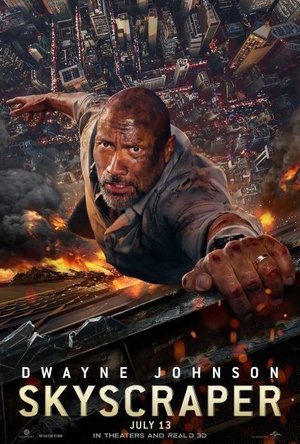

As sponsored by Duck Tape.
I have a fundamental problem with this film. And it’s not that it’s an irrevocably cheesy and derivative action movie, since you could automatically assume that by watching the ridiculously over-the-top trailer. But more on that later.
Dwayne Johnson plays Will Sawyer, a security expert left one-legged after a disastrous FBI operation 10 years previously. Now Will has moved with his wife Sarah (Neve Campbell, “Scream”, “House of Cards”) and two young kids into “The Pearl” in Hong Kong, the tallest building – by several Shards – in the world, designed and constructed by tech billionaire Zhao Long Ji (Chin Han, “Independence Day: Resurgence“). As the first residents, the family live in isolated splendour on a high floor. But in true “Die Hard” fashion, baddies, led by a the unconvincingly evil “Scandinavian” Kores Botha (Roland Møller, “The Commuter“), are intent on controlling and then destroying the high-rise. As fire races up towards his family, Will has to use all his physical capabilities to re-enter the building and save his family.
Now, there are implausible leaps in films and then there are IMPLAUSIBLE leaps!
As a story it’s well-crafted but completely bonkers. There are more ludicrous plot holes than muscles on Johnson’s well-crafted body. Why exactly does Botha needs to implement such a ridiculously convoluted plot to secure his goal? Why wasn’t the lift drop delayed by two minutes? Why don’t critical access controls have two-factor authentication? And – most perplexing of all – why don’t the “heaven cameras” show the building below?!!
Big, bigger, biggest!
Both “Die Hard” and “The Towering Inferno”, of which this is an unsubtle blend, could both be similarly accused of lacking credibility but were fun rides. This is not in the same league as either, but has its moments of vertiginous excitement. Johnson is suitably energetic in the muscular lead but lacks acting nuance. I was trying to analyse why this is, and I came down to his eyeballs! In conversation with Campbell, his eyes dart from left to right and back again, as if an army of ants are running over her face. He needs to take lessons on fixed stares from Michael Caine!
Duck tape! Anyone knows if you put two bits together you never get them apart again!
As the title of this review implies, Duck Tape also plays a key role: not for Johnson the fancy blue light/red light gloves of Tom Cruise! It also derives one of the best of a series of quotable lines from the film: “If it can’t be fixed with Duck Tape, you’re not using enough Duck Tape!”.
Neve Campbell is actually the best actor in the film, proving to be suitably kick-ass in her own right. It’s a shame she’s been rather tagged as ‘the screaming girl from “Scream”… no, not Barrymore, the other one’: she deserves more feature film opportunities like this one.
The best acting in the movie from Neve Campbell, here with a Noah Cottrell and a supremely confident performance by McKenna Roberts.
Rawson Marshall Thurber (“Central Intelligence“, “Dodgeball”) keeps the action to a tight 102 minutes, but needs to keep more control over his Hong Kong extras: there is far too much ‘twenty-second-pointing’ and over exuberant jumping up and down going on that draws the attention away from the principals. This is particularly the case in the Die-Hard rip-off of an ending (“HOOOLLLLLLYYYYYY!!!”).
As a popcorn piece of escapist nonsense, it’s serviceable and delivers as a B-grade movie… it’s not good enough to be a “Die Hard” classic, and not bad enough to be a “so bad it’s good” disaster like “Into the Storm“.
Taiwanese actress Hannah Quinlivan as Xia, the ruthless hit-girl.
You’ll note that I haven’t rubbished the film per se. So why then do I hold a negative view of the flick, and indeed somewhat regret going to see it?
One word – – Grenfell.
I knew the plot on going in, but didn’t equate just how damaging the mental effects of that dreadful night of 14th June 2017 were on my soul. Traumatic incendiary scenes together with some insensitive dialogue (“We’re going to turn that tower into a chimney”) broke through the wall of “entertainment” and left just a sick feeling in my stomach. And my wife had exactly the same feelings as we debriefed afterwards. This is a film that might have benefited from sitting on the shelf for a couple of years before release.
If you can separate in your mind the movie story from the shocking reality of one of life’s most unpleasant recent twists, then good for you: go and enjoy the movie. But I wasn’t so lucky so on a purely personal basis this is one occasion when I will give a film two ratings.
Dwayne Johnson plays Will Sawyer, a security expert left one-legged after a disastrous FBI operation 10 years previously. Now Will has moved with his wife Sarah (Neve Campbell, “Scream”, “House of Cards”) and two young kids into “The Pearl” in Hong Kong, the tallest building – by several Shards – in the world, designed and constructed by tech billionaire Zhao Long Ji (Chin Han, “Independence Day: Resurgence“). As the first residents, the family live in isolated splendour on a high floor. But in true “Die Hard” fashion, baddies, led by a the unconvincingly evil “Scandinavian” Kores Botha (Roland Møller, “The Commuter“), are intent on controlling and then destroying the high-rise. As fire races up towards his family, Will has to use all his physical capabilities to re-enter the building and save his family.
Now, there are implausible leaps in films and then there are IMPLAUSIBLE leaps!
As a story it’s well-crafted but completely bonkers. There are more ludicrous plot holes than muscles on Johnson’s well-crafted body. Why exactly does Botha needs to implement such a ridiculously convoluted plot to secure his goal? Why wasn’t the lift drop delayed by two minutes? Why don’t critical access controls have two-factor authentication? And – most perplexing of all – why don’t the “heaven cameras” show the building below?!!
Big, bigger, biggest!
Both “Die Hard” and “The Towering Inferno”, of which this is an unsubtle blend, could both be similarly accused of lacking credibility but were fun rides. This is not in the same league as either, but has its moments of vertiginous excitement. Johnson is suitably energetic in the muscular lead but lacks acting nuance. I was trying to analyse why this is, and I came down to his eyeballs! In conversation with Campbell, his eyes dart from left to right and back again, as if an army of ants are running over her face. He needs to take lessons on fixed stares from Michael Caine!
Duck tape! Anyone knows if you put two bits together you never get them apart again!
As the title of this review implies, Duck Tape also plays a key role: not for Johnson the fancy blue light/red light gloves of Tom Cruise! It also derives one of the best of a series of quotable lines from the film: “If it can’t be fixed with Duck Tape, you’re not using enough Duck Tape!”.
Neve Campbell is actually the best actor in the film, proving to be suitably kick-ass in her own right. It’s a shame she’s been rather tagged as ‘the screaming girl from “Scream”… no, not Barrymore, the other one’: she deserves more feature film opportunities like this one.
The best acting in the movie from Neve Campbell, here with a Noah Cottrell and a supremely confident performance by McKenna Roberts.
Rawson Marshall Thurber (“Central Intelligence“, “Dodgeball”) keeps the action to a tight 102 minutes, but needs to keep more control over his Hong Kong extras: there is far too much ‘twenty-second-pointing’ and over exuberant jumping up and down going on that draws the attention away from the principals. This is particularly the case in the Die-Hard rip-off of an ending (“HOOOLLLLLLYYYYYY!!!”).
As a popcorn piece of escapist nonsense, it’s serviceable and delivers as a B-grade movie… it’s not good enough to be a “Die Hard” classic, and not bad enough to be a “so bad it’s good” disaster like “Into the Storm“.
Taiwanese actress Hannah Quinlivan as Xia, the ruthless hit-girl.
You’ll note that I haven’t rubbished the film per se. So why then do I hold a negative view of the flick, and indeed somewhat regret going to see it?
One word – – Grenfell.
I knew the plot on going in, but didn’t equate just how damaging the mental effects of that dreadful night of 14th June 2017 were on my soul. Traumatic incendiary scenes together with some insensitive dialogue (“We’re going to turn that tower into a chimney”) broke through the wall of “entertainment” and left just a sick feeling in my stomach. And my wife had exactly the same feelings as we debriefed afterwards. This is a film that might have benefited from sitting on the shelf for a couple of years before release.
If you can separate in your mind the movie story from the shocking reality of one of life’s most unpleasant recent twists, then good for you: go and enjoy the movie. But I wasn’t so lucky so on a purely personal basis this is one occasion when I will give a film two ratings.

Christina Haynes (148 KP) rated War of the Cards in Books
Feb 16, 2018

Contains spoilers, click to show
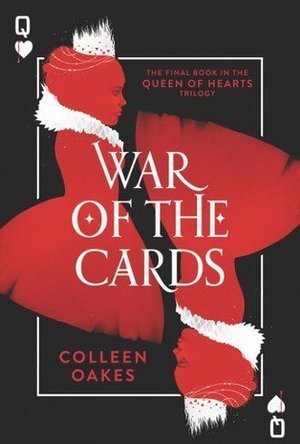
WAR OF THE CARDS
COLLEEN OAKES
352
FAIRYTALE RETELLINGS / FANTASY
She paused and drew a finger dramatically across her neck.
“OFF WITH THEIR HEADS!”
The army answered back.
OFF WITH THEIR HEADS!”
This book gave me chills!
Sypnosis:
The final book in the twisted YA trilogy re-imagining of the origin story of the Queen of Hearts. Dinah has lost everyone she ever loved. Her brother was brutally murdered. The wicked man she believed was her father betrayed her. Her loyal subjects have been devastated by war. And the boy she gave her heart to broke it completely.
Main characters:
– Dinah (the Queen of Hearts)
– Wardley
– Cheshire
– Sir Gorrann
– Mundoo
Main events:
Dinah is now ready for battle against her “father” the King of Hearts. Her and her gang of Yurkei – Spades and friends, head off the palace to battle for the crown.
Most exciting part:
When Dinah steps through the sky curtain. Ooh.
My favourite part:
The battle scene – you see how much Dinah’s character development has changed.
My summary:
Very good book – a great ending to the series. I love retellings and this one is one of my favourites. Great links and references to the original stories with names and descriptions.
My Review:
The Queen of Hearts she made some tarts all on a summer’s day. The Knave of Hearts he stole the tarts and took them clean away. The King of Hearts called for the tarts and beat the Knave full sore. The Knave of Hearts brought back the tarts and vowed he’d steal no more.
This story isn’t a nice as that poem, this story involves heartbreak, love, murder, revenge, family feuds and lots of secret plotting. Colleen Oakes turns a classic story into an amazing retelling of the infamous Queen of Hearts.
SPOILERS
Dinah is born into royalty, daughter of Queen Davianna and the cruel King of Hearts. Dinah’s mother died when she was young, leaving her and her Mad as a Hatter brother Charles alone. After her brother is murdered in cold blood Dinah is soon to be blamed by the King of Hearts and the rest of the Kingdom. She soon flees after a man in a cloak tells her to run and leave the palace.
She leaves her Kingdom and the love of her life Wardley behind and ends up in the Twisted Woods. Throughout the first two books, you see her hate her father and why. She finds out she has a sister called Vittiore who in fact is not her sister and her father lied about who she actually was, by claiming he met someone who later became pregnant, when in fact he found her and made her pretend she was his daughter. The way he treats Dinah and her brother. How the cruel King rules Wonderland and treats his people.
You travel with Dinah and a Spade called Sir Gorrann, (who she meets in the Twisted Woods) to where the Yureki live. You meet them and find out they are in fact good people who later help her take the role as Queen of Hearts.
But most importantly you find out that her father is, in fact, Cheshire the King of Heart’s loyal advisor. Who was “in love” with Queen Davianna and had a secret affair with her which lead to Dinah. I say “in love” because later it’s revealed that all along Cheshire had planned this moment and wanted to be apart of Wonderland more closely like having a daughter as the Queen of Hearts! So it’s unclear whether he did actually love her, or if he loved the fact of her. As we all know Cheshire loves himself.
The third book for me tests Dinah in more ways, what she has been through is a lot. But now she has to face rejection from the man she has always loved. Becoming a leader of many men who in fact don’t get along. Realising all her life she has feared a man who isn’t actually her father, who is the real reason her mother died; through neglect. Her brother wasn’t murdered by who she thought – the King of Hearts. Her sister isn’t her sister. But most importantly Dinah learns how to keep her head.
I loved this series because I loved Dinah. I felt for her the whole time and not once did I hate her. Yes, she did something so bad and later regretted it by cutting off Vittiore’s head when she saw her and Wardley in bed together – which later made him hate her. But she also beat the King of Hearts, led an army of Yurkei and Spades to war and beat the Kings army. Trained a Hornhoov called Morte who was her loyal friend till the end. She even went into the Sky Curtain and came out alive. She kept her promises of peace and followed through by changing the ways of the Wonderlanders lives. She destroyed the horrible Black Tower and changed the lives of the Spades for the better. Gave Cheshire his just desserts, tried to make amends with Wardley and became the Queen Wonderland needs and deserves.
Dinah is amazing and despite a few bad things she has done, she is a good person who knows right and wrong and wants to makes things better and I loved following her on this journey throughout Wonderland.
Rating:
5 ★ – AMAZING
Love, Christina ?
COLLEEN OAKES
352
FAIRYTALE RETELLINGS / FANTASY
She paused and drew a finger dramatically across her neck.
“OFF WITH THEIR HEADS!”
The army answered back.
OFF WITH THEIR HEADS!”
This book gave me chills!
Sypnosis:
The final book in the twisted YA trilogy re-imagining of the origin story of the Queen of Hearts. Dinah has lost everyone she ever loved. Her brother was brutally murdered. The wicked man she believed was her father betrayed her. Her loyal subjects have been devastated by war. And the boy she gave her heart to broke it completely.
Main characters:
– Dinah (the Queen of Hearts)
– Wardley
– Cheshire
– Sir Gorrann
– Mundoo
Main events:
Dinah is now ready for battle against her “father” the King of Hearts. Her and her gang of Yurkei – Spades and friends, head off the palace to battle for the crown.
Most exciting part:
When Dinah steps through the sky curtain. Ooh.
My favourite part:
The battle scene – you see how much Dinah’s character development has changed.
My summary:
Very good book – a great ending to the series. I love retellings and this one is one of my favourites. Great links and references to the original stories with names and descriptions.
My Review:
The Queen of Hearts she made some tarts all on a summer’s day. The Knave of Hearts he stole the tarts and took them clean away. The King of Hearts called for the tarts and beat the Knave full sore. The Knave of Hearts brought back the tarts and vowed he’d steal no more.
This story isn’t a nice as that poem, this story involves heartbreak, love, murder, revenge, family feuds and lots of secret plotting. Colleen Oakes turns a classic story into an amazing retelling of the infamous Queen of Hearts.
SPOILERS
Dinah is born into royalty, daughter of Queen Davianna and the cruel King of Hearts. Dinah’s mother died when she was young, leaving her and her Mad as a Hatter brother Charles alone. After her brother is murdered in cold blood Dinah is soon to be blamed by the King of Hearts and the rest of the Kingdom. She soon flees after a man in a cloak tells her to run and leave the palace.
She leaves her Kingdom and the love of her life Wardley behind and ends up in the Twisted Woods. Throughout the first two books, you see her hate her father and why. She finds out she has a sister called Vittiore who in fact is not her sister and her father lied about who she actually was, by claiming he met someone who later became pregnant, when in fact he found her and made her pretend she was his daughter. The way he treats Dinah and her brother. How the cruel King rules Wonderland and treats his people.
You travel with Dinah and a Spade called Sir Gorrann, (who she meets in the Twisted Woods) to where the Yureki live. You meet them and find out they are in fact good people who later help her take the role as Queen of Hearts.
But most importantly you find out that her father is, in fact, Cheshire the King of Heart’s loyal advisor. Who was “in love” with Queen Davianna and had a secret affair with her which lead to Dinah. I say “in love” because later it’s revealed that all along Cheshire had planned this moment and wanted to be apart of Wonderland more closely like having a daughter as the Queen of Hearts! So it’s unclear whether he did actually love her, or if he loved the fact of her. As we all know Cheshire loves himself.
The third book for me tests Dinah in more ways, what she has been through is a lot. But now she has to face rejection from the man she has always loved. Becoming a leader of many men who in fact don’t get along. Realising all her life she has feared a man who isn’t actually her father, who is the real reason her mother died; through neglect. Her brother wasn’t murdered by who she thought – the King of Hearts. Her sister isn’t her sister. But most importantly Dinah learns how to keep her head.
I loved this series because I loved Dinah. I felt for her the whole time and not once did I hate her. Yes, she did something so bad and later regretted it by cutting off Vittiore’s head when she saw her and Wardley in bed together – which later made him hate her. But she also beat the King of Hearts, led an army of Yurkei and Spades to war and beat the Kings army. Trained a Hornhoov called Morte who was her loyal friend till the end. She even went into the Sky Curtain and came out alive. She kept her promises of peace and followed through by changing the ways of the Wonderlanders lives. She destroyed the horrible Black Tower and changed the lives of the Spades for the better. Gave Cheshire his just desserts, tried to make amends with Wardley and became the Queen Wonderland needs and deserves.
Dinah is amazing and despite a few bad things she has done, she is a good person who knows right and wrong and wants to makes things better and I loved following her on this journey throughout Wonderland.
Rating:
5 ★ – AMAZING
Love, Christina ?

Hadley (567 KP) rated The Turn of the Screw in Books
Mar 24, 2020 (Updated Mar 24, 2020)

Well written (1 more)
Ahead of its time
Overly descriptive (1 more)
Vague
The ghost stories of the Victorian era are full of scares and mysteries- - - from the karma-ridden future, past and present ghosts of Charles Dickens' "A Christmas Carol" to the comedic ghost story by Oscar Wilde called 'the Canterville Ghost." But among all of them, Henry James found another subject to add to the pot in the novella 'the Turn of the Screw.'
With only 93 pages and the viewpoint of a governess, the story is one that has been up for debate as to its meaning for over a century, a story that blends child abuse and ghostly possession way ahead of its time. But even with its great plot, the story falls short and becomes bland throughout most of its short pages.
So why is the meaning of the Turn of the Screw still being debated? There's only one thing that has caused that --- it's in the way that James wrote the story, nothing is explained and everything is vague, these being very important parts that can keep this book from being enjoyable to many readers. Here's a summary of the story: a woman becomes governess of two children, one of which is sent home from school (technically expelled, in today's terms), the entire book has this woman trying to figure out why the child was sent home, but with ghosts thrown into the mix.
The story starts off with a man telling this ghost story from letters he received from a woman (the governess). But, even at the end of the book, the story never turns back to the man finishing the letters, yet this was done so masterfully that when you are done with the book, you completely forget about the man at the beginning, something that isn't easily done today in most writing. The man is reading these letters to a small audience that is also never revealed why, something that will seem completely irrelevant for the reader.
Readers finally get their paranormal fix when our main character, the governess, sees her first ghost in the Turn of the Screw. Our governess goes on an isolated walk when she spots an older man staring at her from a tower on the estate. But not until after a second encounter with this man, she decides to tell a housemaid about it, who quickly knows whom she speaks of. The maid is very certain that the man the governess has spotted twice is a deceased man that used to work for the family, but the maid is terrified by this because this man seems to have been abusive towards the son of the family and now seems to be continuing to torment him even after death.
Our governess seems to go down a path of paranoia as she seems to believe that the children are seeing the ghosts, too, but refusing to tell her so, and she becomes convinced that the key to getting them to confess is to finding out why the boy was sent home from school in the first place. She tries many times to get him to tell her why, but lets him take control of the conversations where he is able to divert the attention to something else. When things seem to be too much for the governess and housemaid to handle, they decide to try to write the childrens' uncle, and ask him to visit - - - this being the uncle that hired the governess and asked to never be bothered by her again, and that he wants nothing to do with his niece and nephew ever again, and especially don't write to him about any problems.
James is considered one of the greatest authors of the English language, but although this novella did very well, he wasn't known for ghost stories. His most popular book is 'the Portrait of a Lady,' which is about a young woman who comes into a large amount of money only to have it stolen by two con-men. Being that he is a Victorian-era writer, you can expect the overly long paragraphs and descriptions that the time was known for in 'the Turn of the Screw.' I personally felt the story had too many interludes of the governess' thoughts and ideas, which border on rambling. There seemed no point in the governess obsessing over why the boy was sent home from school when there are ghosts tormenting them at home- - - how this mode was suppose to work has left me clueless.
It's a usual horror trope to have children being possessed as the core of a book because it's something that can shake adults to their core at the thought that their own children could be that vulnerable. But James was way ahead of his time in the Turn of the Screw. He was able to put together psychological standpoints that weren't even discussed in his time, bouncing between child abuse with those children acting out to the power that abusers can still hold over their victims, even after death.
I'm giving the story a high rating, although I really didn't enjoy it. Why? Because it was a great idea and it was well written. If James hadn't been so vague on key parts, and hadn't left readers with a shocking unexplained ending, then maybe I would have liked it more. I can only recommend this book to people who like Victorian ghost stories, but for paranormal lovers, I think it falls short.
With only 93 pages and the viewpoint of a governess, the story is one that has been up for debate as to its meaning for over a century, a story that blends child abuse and ghostly possession way ahead of its time. But even with its great plot, the story falls short and becomes bland throughout most of its short pages.
So why is the meaning of the Turn of the Screw still being debated? There's only one thing that has caused that --- it's in the way that James wrote the story, nothing is explained and everything is vague, these being very important parts that can keep this book from being enjoyable to many readers. Here's a summary of the story: a woman becomes governess of two children, one of which is sent home from school (technically expelled, in today's terms), the entire book has this woman trying to figure out why the child was sent home, but with ghosts thrown into the mix.
The story starts off with a man telling this ghost story from letters he received from a woman (the governess). But, even at the end of the book, the story never turns back to the man finishing the letters, yet this was done so masterfully that when you are done with the book, you completely forget about the man at the beginning, something that isn't easily done today in most writing. The man is reading these letters to a small audience that is also never revealed why, something that will seem completely irrelevant for the reader.
Readers finally get their paranormal fix when our main character, the governess, sees her first ghost in the Turn of the Screw. Our governess goes on an isolated walk when she spots an older man staring at her from a tower on the estate. But not until after a second encounter with this man, she decides to tell a housemaid about it, who quickly knows whom she speaks of. The maid is very certain that the man the governess has spotted twice is a deceased man that used to work for the family, but the maid is terrified by this because this man seems to have been abusive towards the son of the family and now seems to be continuing to torment him even after death.
Our governess seems to go down a path of paranoia as she seems to believe that the children are seeing the ghosts, too, but refusing to tell her so, and she becomes convinced that the key to getting them to confess is to finding out why the boy was sent home from school in the first place. She tries many times to get him to tell her why, but lets him take control of the conversations where he is able to divert the attention to something else. When things seem to be too much for the governess and housemaid to handle, they decide to try to write the childrens' uncle, and ask him to visit - - - this being the uncle that hired the governess and asked to never be bothered by her again, and that he wants nothing to do with his niece and nephew ever again, and especially don't write to him about any problems.
James is considered one of the greatest authors of the English language, but although this novella did very well, he wasn't known for ghost stories. His most popular book is 'the Portrait of a Lady,' which is about a young woman who comes into a large amount of money only to have it stolen by two con-men. Being that he is a Victorian-era writer, you can expect the overly long paragraphs and descriptions that the time was known for in 'the Turn of the Screw.' I personally felt the story had too many interludes of the governess' thoughts and ideas, which border on rambling. There seemed no point in the governess obsessing over why the boy was sent home from school when there are ghosts tormenting them at home- - - how this mode was suppose to work has left me clueless.
It's a usual horror trope to have children being possessed as the core of a book because it's something that can shake adults to their core at the thought that their own children could be that vulnerable. But James was way ahead of his time in the Turn of the Screw. He was able to put together psychological standpoints that weren't even discussed in his time, bouncing between child abuse with those children acting out to the power that abusers can still hold over their victims, even after death.
I'm giving the story a high rating, although I really didn't enjoy it. Why? Because it was a great idea and it was well written. If James hadn't been so vague on key parts, and hadn't left readers with a shocking unexplained ending, then maybe I would have liked it more. I can only recommend this book to people who like Victorian ghost stories, but for paranormal lovers, I think it falls short.
Purple Phoenix Games (2266 KP) rated Gorinto in Tabletop Games
Mar 2, 2020
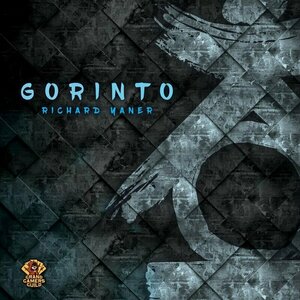
I have been noticing that as I do more and more reviews and previews I am learning to absolutely adore abstract strategy games. Like, I LOVE them now. So when a call for reviewers came out for a new abstract game with art by Josh Cappel, I was immediately intrigued. I love games with an Asian style (even if loosely themed), and games that reward players for thinking ahead and maximizing their turns. Wait, it plays in 30-60 minutes too? I’m a fan.
A “gorinto” is a Japanese five-tier pagoda tower where each tier is representative of something of religious importance. In this game, each tier is representative of one of the elements: fire, water, wind, earth, and void. In this prototype version, the season tracking pawn is a representative gorinto. To gain deeper understanding of these elements and attain ultimate Wisdom is the goal of the game of Gorinto.
DISCLAIMER: We were provided a prototype copy of this game for the purposes of this review. These are preview copy components, and the final components will be different from these shown. Also, it is not my intention to detail every rule in the game. You are invited to download the rulebook, back the game through the Kickstarter campaign running until March 4, 2020, or purchase through any retailers stocking it after fulfillment. -T
To setup, each player will choose a color, take the play mat of matching color, and place their score marker on the score board. The season tracker will be placed on the scoreboard as well, along with the randomized Goal cards and end-of-game element scoring cards. The main play board will be populated with randomized element tiles pulled from the bag in the shape of a mountain, with 10 tiles placed along the side and top edges of the built mountain of tiles. Determine the first player and the game is ready to be played.
On a player’s turn they will choose one of these outlying tiles to move onto the board. Once placed, the player will choose tiles, based on the placed tile’s power, from the board. For example, “fire spreads tall,” so if a Fire tile is placed on the board, a player may choose any tile from the column where it was placed two spaces above or below the placed tile. The number of tiles that can be plucked from the board depends on the player’s “understanding” of the element (the number of tiles of that type on the player’s board +1). With two tiles on a player’s personal board, they can choose three tiles when moving that type of tile, in the example – fire.
Tiles moved from the left side of the mountain can only move horizontally in their row and tiles moved from the top of the mountain can only move vertically in their column. With each of the elements possessing different ways tiles can be chosen from the mountain, and understanding of each element affecting how many tiles can be chosen, players need to plan ahead for their turns… except that other players will be doing the same and planning their own strategies to destroy their opponents’ plans.
When there are fewer tiles to be moved outside the mountain than there are players, the season (round) ends. At this point, players will score the Goal cards before setting up for the next season.
Each season the Goal cards will be scored – so players will know throughout the game upon what they should be concentrating their efforts. Examples of these Goal cards are: score your tallest stack (1 point per tile), then score your shortest stack (0 points if no tiles on a stack); score your stacks with odd number of tiles twice; score the stack with the median number of tiles three times. By being able to manipulate and keep track of the tile stacks players can be planning their scores ahead of time for each season.
Components. Again, this is a prototype copy of the game, but already one can see the direction this game is headed, and it’s glorious! I have seen the Kickstarter page, and am super excited about seeing nearly every component get a fantastic upgrade. The art direction is incredible, the physical components are plastic and cardboard heaven. I am even pretty happy with this prototype copy. Yeah, the tiles are squarish wooden tiles with stickers, and the retail copy will have sexy interlocking plastic tokens, and the player boards in prototype are rectangular, but the retail copy will have a fancy contoured edge. Even so! The game looks amazing on the table, and will be even more so once it goes to manufacturing in earnest.
I mentioned in my intro that I am falling more in love with abstracts the more I play them. Has it just been that abstracts have been getting better and better lately, or am I leveling up as a gamer? I don’t know and I don’t care. Abstracts hold a very special place in my heart now, and this one is one of the best I have played. Most abstracts get a bad rap for being themeless and boring to look at, but Gorinto brings it and I’m totally diggin’ it. I love games like Gekitai, Calico, Elementos, Hive, and Onitama, and now there’s another to add to my display case of amazing abstracts.
If you enjoy themed abstract strategy games, games that make you think without bogging you down, and games that make you smile even when you lose simply because you enjoyed the experience, you should check this one out. There is still time to back it through Kickstarter, but the campaign ends on Wednesday, March 6. At the time of writing, the campaign is funded at over 500%.
A “gorinto” is a Japanese five-tier pagoda tower where each tier is representative of something of religious importance. In this game, each tier is representative of one of the elements: fire, water, wind, earth, and void. In this prototype version, the season tracking pawn is a representative gorinto. To gain deeper understanding of these elements and attain ultimate Wisdom is the goal of the game of Gorinto.
DISCLAIMER: We were provided a prototype copy of this game for the purposes of this review. These are preview copy components, and the final components will be different from these shown. Also, it is not my intention to detail every rule in the game. You are invited to download the rulebook, back the game through the Kickstarter campaign running until March 4, 2020, or purchase through any retailers stocking it after fulfillment. -T
To setup, each player will choose a color, take the play mat of matching color, and place their score marker on the score board. The season tracker will be placed on the scoreboard as well, along with the randomized Goal cards and end-of-game element scoring cards. The main play board will be populated with randomized element tiles pulled from the bag in the shape of a mountain, with 10 tiles placed along the side and top edges of the built mountain of tiles. Determine the first player and the game is ready to be played.
On a player’s turn they will choose one of these outlying tiles to move onto the board. Once placed, the player will choose tiles, based on the placed tile’s power, from the board. For example, “fire spreads tall,” so if a Fire tile is placed on the board, a player may choose any tile from the column where it was placed two spaces above or below the placed tile. The number of tiles that can be plucked from the board depends on the player’s “understanding” of the element (the number of tiles of that type on the player’s board +1). With two tiles on a player’s personal board, they can choose three tiles when moving that type of tile, in the example – fire.
Tiles moved from the left side of the mountain can only move horizontally in their row and tiles moved from the top of the mountain can only move vertically in their column. With each of the elements possessing different ways tiles can be chosen from the mountain, and understanding of each element affecting how many tiles can be chosen, players need to plan ahead for their turns… except that other players will be doing the same and planning their own strategies to destroy their opponents’ plans.
When there are fewer tiles to be moved outside the mountain than there are players, the season (round) ends. At this point, players will score the Goal cards before setting up for the next season.
Each season the Goal cards will be scored – so players will know throughout the game upon what they should be concentrating their efforts. Examples of these Goal cards are: score your tallest stack (1 point per tile), then score your shortest stack (0 points if no tiles on a stack); score your stacks with odd number of tiles twice; score the stack with the median number of tiles three times. By being able to manipulate and keep track of the tile stacks players can be planning their scores ahead of time for each season.
Components. Again, this is a prototype copy of the game, but already one can see the direction this game is headed, and it’s glorious! I have seen the Kickstarter page, and am super excited about seeing nearly every component get a fantastic upgrade. The art direction is incredible, the physical components are plastic and cardboard heaven. I am even pretty happy with this prototype copy. Yeah, the tiles are squarish wooden tiles with stickers, and the retail copy will have sexy interlocking plastic tokens, and the player boards in prototype are rectangular, but the retail copy will have a fancy contoured edge. Even so! The game looks amazing on the table, and will be even more so once it goes to manufacturing in earnest.
I mentioned in my intro that I am falling more in love with abstracts the more I play them. Has it just been that abstracts have been getting better and better lately, or am I leveling up as a gamer? I don’t know and I don’t care. Abstracts hold a very special place in my heart now, and this one is one of the best I have played. Most abstracts get a bad rap for being themeless and boring to look at, but Gorinto brings it and I’m totally diggin’ it. I love games like Gekitai, Calico, Elementos, Hive, and Onitama, and now there’s another to add to my display case of amazing abstracts.
If you enjoy themed abstract strategy games, games that make you think without bogging you down, and games that make you smile even when you lose simply because you enjoyed the experience, you should check this one out. There is still time to back it through Kickstarter, but the campaign ends on Wednesday, March 6. At the time of writing, the campaign is funded at over 500%.

Lee (2222 KP) rated Wonder Woman (2017) in Movies
Jul 14, 2017
After a pretty lengthy drought, we finally get another decent DC movie
As the DC TV universe continues to go from strength to strength, the DC movie universe is gradually going downhill. Don’t get me wrong, I really liked Man of Steel, despite the overloaded CGI destruction at the end. I didn’t mind Batman Vs Superman either, even with Jesse Eisenberg doing his very best to try and ruin it. But, despite successfully introducing two other major DC heavyweight characters (and not so successfully introducing a few others) and picking up steam in the final act, the movie struggled. Suicide Squad then managed to take bad to a completely new level, and was just a complete train-wreck.
Batman Vs Superman was our first introduction to Wonder Woman in the DC movie universe, and she was the most entertaining and promising aspect of the whole movie. As a child of the 70s, I grew up watching and enjoying the Wonder Woman TV show, along with re-runs of the Batman 60s show and of course the Christopher Reeve Superman movies. After all these years of countless Batman and Superman movies, it was great to not only see Wonder Woman finally on the big screen, but also to see her being portrayed so well. Now, with her standalone movie coming out a few months before the mediocre looking Justice League movie, this is not only an important movie for DC but also an important first step in finally bringing strong female superheroes to the big screen. Paving the way for Captain Marvel, a Black Widow standalone movie, and more. This had to be good.
Thankfully, it is. Although there’s still a long way to go in order to reach the level that Marvel already managed to achieve many movies ago, this is indeed a serious step up for DC. Opening with a brief scene set in present day, Wonder Woman then takes us back to Themyscira. A paradise island, hidden from view from the rest of the world, where a young Diana lives peacefully among her Amazon tribe. Despite their peaceful existence though, the Amazons are constantly preparing themselves for the return of Ares, God of War. Archery and combat training is undertaken daily on the island, under the guidance of Dianas aunt, General Antiope (Robin Wright). Diana is keen to train too and her reluctant mother, Queen Hippolyta (Connie Nielsen), eventually agrees, requesting that General Antiope train her hard and make her the best. As Diana grows into a woman, training has clearly gone well and she’s even managing to give her aunt a good run for her money! Just in time too as World War 1 pilot Steve Trevor (Chris Pine) crashes through the invisible barrier cloaking the island and crash lands into the sea, closely followed by a bunch of Germans who are on his tail. Time for the Amazon women to put their training to good use, but not without some casualties…
Steve tells Diana of the great war that’s raging throughout the world and Diana believes this to be the return of Ares. She decides to leave her home and travel with Steve to put an end to Ares once and for all. So, she grabs her shield and lasso of truth and ‘borrows’ the sacred ‘God Killer’ sword from the tower it rests in and off they go. Leaving behind the bright, vibrant island of Themyscira and returning to the traditional, dark grey pallet of colours that we’re used to seeing in our DC movies as they head to war-torn London.
Steve takes over as charming tour guide as Diana enters the human world for the first time. Her innocence and curiosity of the modern world are played beautifully by Gadot, with plenty of fish-out-of-water style humour too. But she’s also never afraid to question and stand up for what she believes in and tackle those who try and oppose her, giving an interesting perspective on aspects of humanity which deserve to be questioned. Her drive to get to the front-line of war, to seek out Ares and supposedly end all war by defeating him, constantly driving her forward. Romance eventually blossoms between Diana and Steve, but it feels natural and believable and helps to hold the movie together during some of its slower moments.
When Wonder Woman manages to get to the front line and steps out into no-mans land, ignoring the advice of Steve and those around her, it’s magnificent. It heralds the first in a series of magnificent action sequences involving German soldiers as she puts her training to good use. Initially shielding herself from the onslaught of bullets before moving onto the offensive with some bad-ass combat moves, slo-mo back-flips, jumps, whip action and displays of pure power and strength. Everything we got a glimpse of in Batman Vs Superman, ramped up to the max, perfectly executed and accompanied by a rocking soundtrack!
Where Wonder Woman doesn’t work so well is in the handling of its villains. Whenever we switch to General Ludendorff and Doctor Poison, busily developing deadly gases to unleash, momentum seems to be lost. And as for Ares, when we do finally meet him he’s pretty laughable, with no clearly defined motivation or character. Following a bit of villain monologue, we get the general gist of what his beef is and then the last 20 minutes or so descend into the over the top CG destruction that we’re so used to seeing now in these movies. It’s a minor gripe, and not handled as badly as some previous movies, but along with the pacing issues it does affect the overall enjoyment of the movie somewhat.
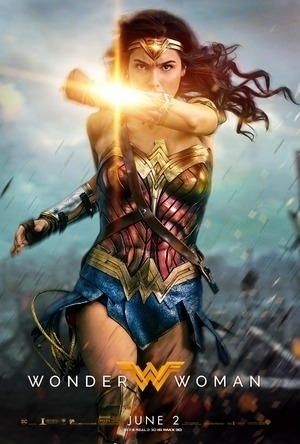
None of this detracts from Wonder Woman herself though. Gal Gadot has truly made this role her own and displays the perfect mix of strength, beauty, brains, confidence, determination and general all-round girl power. She can more than hold her own in the DC universe and should hopefully be a prominent force in the upcoming Justice League movie and beyond.
Batman Vs Superman was our first introduction to Wonder Woman in the DC movie universe, and she was the most entertaining and promising aspect of the whole movie. As a child of the 70s, I grew up watching and enjoying the Wonder Woman TV show, along with re-runs of the Batman 60s show and of course the Christopher Reeve Superman movies. After all these years of countless Batman and Superman movies, it was great to not only see Wonder Woman finally on the big screen, but also to see her being portrayed so well. Now, with her standalone movie coming out a few months before the mediocre looking Justice League movie, this is not only an important movie for DC but also an important first step in finally bringing strong female superheroes to the big screen. Paving the way for Captain Marvel, a Black Widow standalone movie, and more. This had to be good.
Thankfully, it is. Although there’s still a long way to go in order to reach the level that Marvel already managed to achieve many movies ago, this is indeed a serious step up for DC. Opening with a brief scene set in present day, Wonder Woman then takes us back to Themyscira. A paradise island, hidden from view from the rest of the world, where a young Diana lives peacefully among her Amazon tribe. Despite their peaceful existence though, the Amazons are constantly preparing themselves for the return of Ares, God of War. Archery and combat training is undertaken daily on the island, under the guidance of Dianas aunt, General Antiope (Robin Wright). Diana is keen to train too and her reluctant mother, Queen Hippolyta (Connie Nielsen), eventually agrees, requesting that General Antiope train her hard and make her the best. As Diana grows into a woman, training has clearly gone well and she’s even managing to give her aunt a good run for her money! Just in time too as World War 1 pilot Steve Trevor (Chris Pine) crashes through the invisible barrier cloaking the island and crash lands into the sea, closely followed by a bunch of Germans who are on his tail. Time for the Amazon women to put their training to good use, but not without some casualties…
Steve tells Diana of the great war that’s raging throughout the world and Diana believes this to be the return of Ares. She decides to leave her home and travel with Steve to put an end to Ares once and for all. So, she grabs her shield and lasso of truth and ‘borrows’ the sacred ‘God Killer’ sword from the tower it rests in and off they go. Leaving behind the bright, vibrant island of Themyscira and returning to the traditional, dark grey pallet of colours that we’re used to seeing in our DC movies as they head to war-torn London.
Steve takes over as charming tour guide as Diana enters the human world for the first time. Her innocence and curiosity of the modern world are played beautifully by Gadot, with plenty of fish-out-of-water style humour too. But she’s also never afraid to question and stand up for what she believes in and tackle those who try and oppose her, giving an interesting perspective on aspects of humanity which deserve to be questioned. Her drive to get to the front-line of war, to seek out Ares and supposedly end all war by defeating him, constantly driving her forward. Romance eventually blossoms between Diana and Steve, but it feels natural and believable and helps to hold the movie together during some of its slower moments.
When Wonder Woman manages to get to the front line and steps out into no-mans land, ignoring the advice of Steve and those around her, it’s magnificent. It heralds the first in a series of magnificent action sequences involving German soldiers as she puts her training to good use. Initially shielding herself from the onslaught of bullets before moving onto the offensive with some bad-ass combat moves, slo-mo back-flips, jumps, whip action and displays of pure power and strength. Everything we got a glimpse of in Batman Vs Superman, ramped up to the max, perfectly executed and accompanied by a rocking soundtrack!
Where Wonder Woman doesn’t work so well is in the handling of its villains. Whenever we switch to General Ludendorff and Doctor Poison, busily developing deadly gases to unleash, momentum seems to be lost. And as for Ares, when we do finally meet him he’s pretty laughable, with no clearly defined motivation or character. Following a bit of villain monologue, we get the general gist of what his beef is and then the last 20 minutes or so descend into the over the top CG destruction that we’re so used to seeing now in these movies. It’s a minor gripe, and not handled as badly as some previous movies, but along with the pacing issues it does affect the overall enjoyment of the movie somewhat.
None of this detracts from Wonder Woman herself though. Gal Gadot has truly made this role her own and displays the perfect mix of strength, beauty, brains, confidence, determination and general all-round girl power. She can more than hold her own in the DC universe and should hopefully be a prominent force in the upcoming Justice League movie and beyond.

Chris Sawin (602 KP) rated Venom: Let There Be Carnage (2021) in Movies
Dec 14, 2021
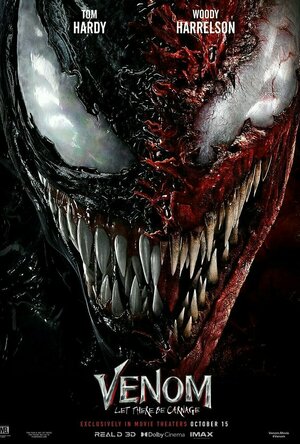
Tom Hardy's performance. (2 more)
Better CGI than the first film.
The film is stupidly fun.
It is REALLY dumb. (2 more)
Shriek is a wasted character.
Woody Harrelson's "hair."
Idiotic Gold
Venom was an unlikely hit for Sony Pictures making over $850 million worldwide – despite being a sloppy mess of a film.
Written by Jeff Pinkner (Jumanji (2019), The Dark Tower), Scott Rosenberg (Con Air, Gone in 60 Seconds), and Kelly Marcel (Cruella, Fifty Shades of Grey), the first Venom film boasted cheesy 90s dialogue, ugly, blobby CGI/special effects sequences, and a wacky performance from Tom Hardy.
However, its sequel – Venom: Let There Be Carnage – is essentially the restaurant/lobster tank sequence from the first film stretched across 90-minutes of absurdity.
If you revisit Venom before watching Venom: Let There Be Carnage – and more specifically, the end credits sequence from the first film – the difference between the two is almost night and day. At the end of the last film, Eddie showed a calm, confident demeanor totally confident in his demeanor when interviewing Cletus Kasady (Woody Harrelson).
However, in the actual sequel itself, Eddie is back to looking sick, sweating profusely, and constantly fidgeting while talking to Cletus, obviously showing signs that his attempts to keep Venom under control have taken a toll on him.
Meanwhile, it seems as though the filmmakers couldn’t decide on how to style Harrelson’s red-haired wig for the film, as it humorously changes in appearance nearly every time Cletus is on screen.
Not learning anything from Anne’s (Michelle Williams) decision to leave him in the first film, Venom: Let There Be Carnage sees Eddie attempting to cover Cletus as a way to right his struggling journalism career.
But after Cletus gets a taste of Eddie’s blood, he becomes Carnage, the unpredictable and murderous son of the symbiote.
Kelly Marcell is the only writer from the first film to return, but the sequel mark’s Tom Hardy first feature film writing credit. Hardy contributed a ton of material regarding the intricacies of Venom and Eddie’s relationship – and it shows, as because they obviously know each other very well, the two drive each other crazy and argue like an old married couple.
For example, Venom is sick of eating chickens and being restrained by Eddie’s rules, and throws weird, symbiotic tantrums when he doesn’t get his way, acting very much like a child who isn’t able to play with their favorite toy or eat their favorite candy.
What’s intriguing about Venom and Eddie’s relationship is that it’s complicated, to say the least. There are homosexual undertones in the film, with Venom seemingly having his own ‘coming out party’ and even confessing his love for Eddie, but most of the film’s romantic undertones deal with both Eddie and Venom’s desire to win back Annie – the former because he’s still in love with her, and the latter because he wants Eddie to be happy, as the two humans are better together than they are apart.
It’s not as awkward as Eddie and Venom having a baby in the comics, but it’s still a peculiar way to go about exploring their relationship. Yet, it kind of works with the overall hectic and fast paced nature of the film.
The sequel also features an overall improvement in CGI and special effects, with Venom appearing more detailed in both the black, sleeker, and shinier parts of his body and his head, while his teeth have so much more detail than they did in his first outing.
Carnage being red also allows the audience to decipher what’s occurring on screen so much easier than in the first film, whose final fight between Venom and Riot is a horrid mess of two gray and black symbiotes that kind of just mashes them together into an indistinguishable blob of CGI and hopes that the audience’s imagination can do most of the heavy lifting.
Notably, there’s also a ton of fire in Let There Be Carnage, an ambient background addition which adds additional light sources and makes the action so much easier for your eyes to process.
The transformation sequences are special effects masterpieces because they have almost a werewolf kind of aspect to them – those in-between animations of Tom Hardy’s and Woody Harrelson’s faces being half transformed go a long way.
In particular, Carnage’s introduction is a pretty incredible display, as he causes a ton of mayhem and kills a massive amount of people. However, there is one lame aspect of Carnage’s CGI appearance, which is the goofy ‘tornado’ he turns into to as he violently sweep across his prison block – thankfully, however, it’s a simple thing to look past.
As for the Shriek (Naomie Harris)/Officer Mulligan (Stephen Graham), her entire side story is ultimately unnecessary. Shriek is only included in the film because of her ability to scream, and thus hurt symbiotes (due to their weakness to loud sounds).
Harris also uses a really stupid raspy voice for the role and is basically wasted overall in both her talents as an actor and as a meaningful character.
Venom: Let There Be Carnage never tries to be anything other than a dumb superhero film, but if you hated the first film, the sequel won’t make you feel any differently about Marvel’s lethal protector.
Hardy, in dual roles, is what makes these films worthwhile in the slightest, as his intricately comical self-chemistry is insane. The film also boasts what feels like an accelerated pace that moves the story from action sequence to action sequence before coming to an end rather quickly, leaving Venom: Let There Be Carnage to stand as one of those a special kind of stupid blockbuster endeavors that, every so often, strikes idiotic gold.
The sequel is a definite improvement over the first film in the sense that it totally embraces its stupidity resulting in a comic book film that feels light, silly, and amusingly psychotic all at the same time.
Oh, and in case you’re wondering – yes, the end-credits sequence is as worthwhile as the internet has made it out to be.
Written by Jeff Pinkner (Jumanji (2019), The Dark Tower), Scott Rosenberg (Con Air, Gone in 60 Seconds), and Kelly Marcel (Cruella, Fifty Shades of Grey), the first Venom film boasted cheesy 90s dialogue, ugly, blobby CGI/special effects sequences, and a wacky performance from Tom Hardy.
However, its sequel – Venom: Let There Be Carnage – is essentially the restaurant/lobster tank sequence from the first film stretched across 90-minutes of absurdity.
If you revisit Venom before watching Venom: Let There Be Carnage – and more specifically, the end credits sequence from the first film – the difference between the two is almost night and day. At the end of the last film, Eddie showed a calm, confident demeanor totally confident in his demeanor when interviewing Cletus Kasady (Woody Harrelson).
However, in the actual sequel itself, Eddie is back to looking sick, sweating profusely, and constantly fidgeting while talking to Cletus, obviously showing signs that his attempts to keep Venom under control have taken a toll on him.
Meanwhile, it seems as though the filmmakers couldn’t decide on how to style Harrelson’s red-haired wig for the film, as it humorously changes in appearance nearly every time Cletus is on screen.
Not learning anything from Anne’s (Michelle Williams) decision to leave him in the first film, Venom: Let There Be Carnage sees Eddie attempting to cover Cletus as a way to right his struggling journalism career.
But after Cletus gets a taste of Eddie’s blood, he becomes Carnage, the unpredictable and murderous son of the symbiote.
Kelly Marcell is the only writer from the first film to return, but the sequel mark’s Tom Hardy first feature film writing credit. Hardy contributed a ton of material regarding the intricacies of Venom and Eddie’s relationship – and it shows, as because they obviously know each other very well, the two drive each other crazy and argue like an old married couple.
For example, Venom is sick of eating chickens and being restrained by Eddie’s rules, and throws weird, symbiotic tantrums when he doesn’t get his way, acting very much like a child who isn’t able to play with their favorite toy or eat their favorite candy.
What’s intriguing about Venom and Eddie’s relationship is that it’s complicated, to say the least. There are homosexual undertones in the film, with Venom seemingly having his own ‘coming out party’ and even confessing his love for Eddie, but most of the film’s romantic undertones deal with both Eddie and Venom’s desire to win back Annie – the former because he’s still in love with her, and the latter because he wants Eddie to be happy, as the two humans are better together than they are apart.
It’s not as awkward as Eddie and Venom having a baby in the comics, but it’s still a peculiar way to go about exploring their relationship. Yet, it kind of works with the overall hectic and fast paced nature of the film.
The sequel also features an overall improvement in CGI and special effects, with Venom appearing more detailed in both the black, sleeker, and shinier parts of his body and his head, while his teeth have so much more detail than they did in his first outing.
Carnage being red also allows the audience to decipher what’s occurring on screen so much easier than in the first film, whose final fight between Venom and Riot is a horrid mess of two gray and black symbiotes that kind of just mashes them together into an indistinguishable blob of CGI and hopes that the audience’s imagination can do most of the heavy lifting.
Notably, there’s also a ton of fire in Let There Be Carnage, an ambient background addition which adds additional light sources and makes the action so much easier for your eyes to process.
The transformation sequences are special effects masterpieces because they have almost a werewolf kind of aspect to them – those in-between animations of Tom Hardy’s and Woody Harrelson’s faces being half transformed go a long way.
In particular, Carnage’s introduction is a pretty incredible display, as he causes a ton of mayhem and kills a massive amount of people. However, there is one lame aspect of Carnage’s CGI appearance, which is the goofy ‘tornado’ he turns into to as he violently sweep across his prison block – thankfully, however, it’s a simple thing to look past.
As for the Shriek (Naomie Harris)/Officer Mulligan (Stephen Graham), her entire side story is ultimately unnecessary. Shriek is only included in the film because of her ability to scream, and thus hurt symbiotes (due to their weakness to loud sounds).
Harris also uses a really stupid raspy voice for the role and is basically wasted overall in both her talents as an actor and as a meaningful character.
Venom: Let There Be Carnage never tries to be anything other than a dumb superhero film, but if you hated the first film, the sequel won’t make you feel any differently about Marvel’s lethal protector.
Hardy, in dual roles, is what makes these films worthwhile in the slightest, as his intricately comical self-chemistry is insane. The film also boasts what feels like an accelerated pace that moves the story from action sequence to action sequence before coming to an end rather quickly, leaving Venom: Let There Be Carnage to stand as one of those a special kind of stupid blockbuster endeavors that, every so often, strikes idiotic gold.
The sequel is a definite improvement over the first film in the sense that it totally embraces its stupidity resulting in a comic book film that feels light, silly, and amusingly psychotic all at the same time.
Oh, and in case you’re wondering – yes, the end-credits sequence is as worthwhile as the internet has made it out to be.
Daniel Boyd (1066 KP) rated The Legend of Zelda: Breath of the Wild in Video Games
Jul 25, 2017
Bonus Points - An Example Of The Favoritism Towards Certain Developers In The Gaming Industry, Even When They Don’t Deliver
Zelda: Breath Of The Wild came out last month and it has taken the gaming world by storm. As a non Zelda fan, I am left wondering why this is the case. Why is this Zelda game so revolutionary? I don’t own the game, but I have played the first few hours of it and I have read a good number of reviews on the game. There are a few critics claiming that this game, ‘writes a new chapter in the videogames industry,’ and that it is an, ‘evolution of everything that has come before.’
While I appreciate that this is a well made game and it is doing new things within the Zelda franchise, these statements stick in my throat a little. This isn’t because I don’t agree that this is an impressive game, because it is. Other than the odd frame rate drop, there aren’t many flaws with this game and I did enjoy the few hours that I spent with it, (I had a lend of a friends Switch for the night so I could try the game for myself.)
My problem comes from the fact that this is a well made game that isn’t doing anything that hasn’t been done before a million times and frankly been done better. Full disclosure, I have never been a Zelda fan, but I wanted this game to convert me and I’m sorry to say that it didn’t. The purpose of this piece isn’t to attack the Zelda franchise, so you fanboys can put your pitchforks down. What I want to discuss is how when Nintendo do anything that is slightly better than a disaster, it is heralded as the brave new step in video games by a large number of the video game press.
I get it, nostalgia is a powerful lens and most writers in their 30’s grew up playing on Nintendo systems and franchises like Mario and Zelda, but as someone who is around ten years younger and grew up with Playstation, I don’t feel that Nintendo has advanced a great deal since the turn of the millennium and frankly, I don’t see Nintendo as having broken any new ground in the last twenty years.
If games like Breath of the Wild came out on another console, they wouldn’t be lauded as the best thing since sliced bread. In fact they have, it’s called Horizon: Zero Dawn! When Horizon came out it received a positive critical reception and high sales, but no one was writing articles claiming it was the next step in the evolution of video games. Splatoon has been put on a pedestal and has been described as ‘fresh,’ and, ‘unique,’ even though it is nothing more than a dumbed down version of Team Fortress 2 for a younger audience. Super Mario Maker was released in 2015 and it was essentially a $60 level editor. Level editors have been included in other games since forever and no fuss has been made, but when Nintendo sell an entire game based on the concept, it’s hailed as another, ‘triumph by Nintendo.’
When you compare Breath of The Wild to other recent open world games like The Witcher or Skyrim, there is nothing that makes it unique from a design and functionality standpoint. If Breath of The Wild came out in 2008, then sure you could get away with labeling it revolutionary, but in this day and age it isn’t any more special than Horizon or Skyrim.
Let’s look at some of the features that have been called unique in the game. The tower climbing to uncover zones of the map mechanic has been done in the Assassin’s Creed and Far Cry series’. Using plants for crafting and cooking has been done in Far Cry and Skyrim. Far Cry 2 and Dead Island had degradable weapons. The inventory system is very reminiscent of multiple Ubisoft titles; essentially Breath of The Wild has taken some elements from other games and made something from that within the Zelda universe.
This may sound patronizing, but it honestly isn’t intended that way. I get it, Nintendo fans have had it hard over these last five years, they have had nothing to be proud of since the launch of the Wii and they have had to stand by their console of choice and defend themselves with very little ammo to defend themselves with, but as a result nowadays when anything better than a car crash is released by them it is inflated by a large number of critics in the industry and so Nintendo fans are given a justification for putting their mediocre games on a pedestal. This is why to the rest of the industry it appears that Nintendo fans can’t accept things for the way that they really are and everything is blown so far out of proportion.
Some examples of Nintendo games being blown out of proportion and reviewers being clouded by nostalgia are available to go and check out right now on Metacritic. Zelda: Skyward Sword is currently sitting at a 93, Zelda: Twilight Princess is sitting at a 95 and Metroid: Other M has a 79. All three of these games are recognized as subpar and once the novelty wore off, even the most hardcore of Nintendo fans would agree that these are forgettable, black marks on the respective franchises track records. Not that BOTW isn’t a game for Zelda fans to be proud of, because it is. I can see why this would be people’s game of the year so far and I can see why it could be considered as the best Zelda game, but to someone that isn’t a Zelda fan that praise is meaningless.
In summary, the inflation of mediocrity in the industry has to stop, if we want gaming to improve. If we want to break new ground across the gaming media, these sycophants and apologists living in a false perception of reality have to go. These novelty games that are applauded for simply carrying the title of a beloved franchise, have to stop being praised so highly and given a free pass of any sort of criticism just because of a nostalgic lens.
While I appreciate that this is a well made game and it is doing new things within the Zelda franchise, these statements stick in my throat a little. This isn’t because I don’t agree that this is an impressive game, because it is. Other than the odd frame rate drop, there aren’t many flaws with this game and I did enjoy the few hours that I spent with it, (I had a lend of a friends Switch for the night so I could try the game for myself.)
My problem comes from the fact that this is a well made game that isn’t doing anything that hasn’t been done before a million times and frankly been done better. Full disclosure, I have never been a Zelda fan, but I wanted this game to convert me and I’m sorry to say that it didn’t. The purpose of this piece isn’t to attack the Zelda franchise, so you fanboys can put your pitchforks down. What I want to discuss is how when Nintendo do anything that is slightly better than a disaster, it is heralded as the brave new step in video games by a large number of the video game press.
I get it, nostalgia is a powerful lens and most writers in their 30’s grew up playing on Nintendo systems and franchises like Mario and Zelda, but as someone who is around ten years younger and grew up with Playstation, I don’t feel that Nintendo has advanced a great deal since the turn of the millennium and frankly, I don’t see Nintendo as having broken any new ground in the last twenty years.
If games like Breath of the Wild came out on another console, they wouldn’t be lauded as the best thing since sliced bread. In fact they have, it’s called Horizon: Zero Dawn! When Horizon came out it received a positive critical reception and high sales, but no one was writing articles claiming it was the next step in the evolution of video games. Splatoon has been put on a pedestal and has been described as ‘fresh,’ and, ‘unique,’ even though it is nothing more than a dumbed down version of Team Fortress 2 for a younger audience. Super Mario Maker was released in 2015 and it was essentially a $60 level editor. Level editors have been included in other games since forever and no fuss has been made, but when Nintendo sell an entire game based on the concept, it’s hailed as another, ‘triumph by Nintendo.’
When you compare Breath of The Wild to other recent open world games like The Witcher or Skyrim, there is nothing that makes it unique from a design and functionality standpoint. If Breath of The Wild came out in 2008, then sure you could get away with labeling it revolutionary, but in this day and age it isn’t any more special than Horizon or Skyrim.
Let’s look at some of the features that have been called unique in the game. The tower climbing to uncover zones of the map mechanic has been done in the Assassin’s Creed and Far Cry series’. Using plants for crafting and cooking has been done in Far Cry and Skyrim. Far Cry 2 and Dead Island had degradable weapons. The inventory system is very reminiscent of multiple Ubisoft titles; essentially Breath of The Wild has taken some elements from other games and made something from that within the Zelda universe.
This may sound patronizing, but it honestly isn’t intended that way. I get it, Nintendo fans have had it hard over these last five years, they have had nothing to be proud of since the launch of the Wii and they have had to stand by their console of choice and defend themselves with very little ammo to defend themselves with, but as a result nowadays when anything better than a car crash is released by them it is inflated by a large number of critics in the industry and so Nintendo fans are given a justification for putting their mediocre games on a pedestal. This is why to the rest of the industry it appears that Nintendo fans can’t accept things for the way that they really are and everything is blown so far out of proportion.
Some examples of Nintendo games being blown out of proportion and reviewers being clouded by nostalgia are available to go and check out right now on Metacritic. Zelda: Skyward Sword is currently sitting at a 93, Zelda: Twilight Princess is sitting at a 95 and Metroid: Other M has a 79. All three of these games are recognized as subpar and once the novelty wore off, even the most hardcore of Nintendo fans would agree that these are forgettable, black marks on the respective franchises track records. Not that BOTW isn’t a game for Zelda fans to be proud of, because it is. I can see why this would be people’s game of the year so far and I can see why it could be considered as the best Zelda game, but to someone that isn’t a Zelda fan that praise is meaningless.
In summary, the inflation of mediocrity in the industry has to stop, if we want gaming to improve. If we want to break new ground across the gaming media, these sycophants and apologists living in a false perception of reality have to go. These novelty games that are applauded for simply carrying the title of a beloved franchise, have to stop being praised so highly and given a free pass of any sort of criticism just because of a nostalgic lens.