
Search
Search results

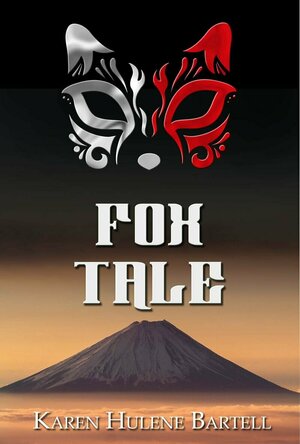
Debbiereadsbook (1804 KP) rated Fox Tale (Sacred Emblems #0) in Books
Apr 27, 2024

great reading about Japan.
Independent reviewer for Archaeolibrarian, I was gifted my copy of this book.
Ava is in Japan, writing a travel article. Meeting Chase, with his wonderful tales of Japanese myths and legends, helps her write a different take. But she never expected to meet up with her ex, Rafe, who left her two years ago without a word. Both men are hiking things. Can Ava choose?
I don't read reviews before I read a book, not anymore, but I will read them AFTER I've read said book, but before I write my review for one reason only: did they feel the same about this book as I did.
In this case: nope. They all loved this book and I . . . didn't.
I'm not saying I didn't like this book, I just found it hard work.
It's almost all written from Ava's point of view, in the first person. Rafe gets two very small bits, not even a chapter, in the third. I needed more from Rafe, and Chase, to be fair, to offset Ava.
There is a huge amount of repeated wording. Mostly around how Ava feels and thinks about Chase. "Apart from his silver hair, he looks young" or words to that effect are the most common. It began to get a bit much. "Seven hundred and seventy *something*, next winter" is another. The same things about the fox stories from Japanese lore pop up time and again too.
Apart from that, I liked this book. I couldn't see where it was going, nor how it was getting there, so when it did all go down, I was surprised and I liked the way it all happened.
Although there is the repetition of the lore, I did enjoy reading about the Japanese traditions and myths and legends.
There are some difficult topics here: death of a spouse, suicide, mental health issues and readers do need to be aware. Things are not how they seem, however, but the warning still needs to be made.
This is the first I've read of this author, and I always ask myself, will I read more? Not at this time. I won't say no to reading something else at a later date though.
3 good stars
*same worded review will appear elsewhere
Ava is in Japan, writing a travel article. Meeting Chase, with his wonderful tales of Japanese myths and legends, helps her write a different take. But she never expected to meet up with her ex, Rafe, who left her two years ago without a word. Both men are hiking things. Can Ava choose?
I don't read reviews before I read a book, not anymore, but I will read them AFTER I've read said book, but before I write my review for one reason only: did they feel the same about this book as I did.
In this case: nope. They all loved this book and I . . . didn't.
I'm not saying I didn't like this book, I just found it hard work.
It's almost all written from Ava's point of view, in the first person. Rafe gets two very small bits, not even a chapter, in the third. I needed more from Rafe, and Chase, to be fair, to offset Ava.
There is a huge amount of repeated wording. Mostly around how Ava feels and thinks about Chase. "Apart from his silver hair, he looks young" or words to that effect are the most common. It began to get a bit much. "Seven hundred and seventy *something*, next winter" is another. The same things about the fox stories from Japanese lore pop up time and again too.
Apart from that, I liked this book. I couldn't see where it was going, nor how it was getting there, so when it did all go down, I was surprised and I liked the way it all happened.
Although there is the repetition of the lore, I did enjoy reading about the Japanese traditions and myths and legends.
There are some difficult topics here: death of a spouse, suicide, mental health issues and readers do need to be aware. Things are not how they seem, however, but the warning still needs to be made.
This is the first I've read of this author, and I always ask myself, will I read more? Not at this time. I won't say no to reading something else at a later date though.
3 good stars
*same worded review will appear elsewhere
Running with the Werewolf (Darkaway Island #1)
8.0 Rate It
Book
Welcome to Darkaway Island: A destination resort for supernaturals. Where Monsters Come to Play! ...
Paranormal Romance Rom-Com
Merissa (14152 KP) rated Blossom and the Beast (The Alder Tales #1) in Books
Jun 8, 2023
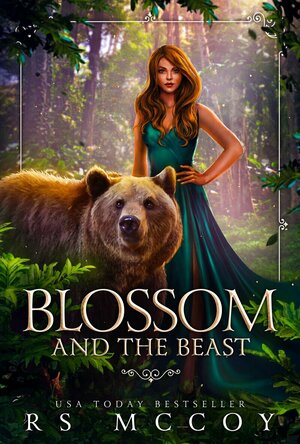

Okay, so this book is a Fairy Tale Retelling of Beauty and the Beast. With that in mind, I thought I had a fairly good idea of what to expect. Boy, was I wrong!
In Blossom and the Beast, Blossom is the youngest daughter of a clan chief. Her father has a fox for a totem animal, her three brothers are bears(!), and it is suspected that Blossom will be the same. She has a very inquisitive mind and struggles against the rules and traditions that bind her under the canopy. On a trip out of camp (when she shouldn't have been) she is spotted by Kaide. He immediately wants her in his life and does whatever it takes to ensure it. He is determined to win her over though, so he treats her with every respect.
With political manoeuvrings galore, plus a sweet and sensual romance, this book is more than just a Fairy Tale Retelling! This is an amazing book in its own right, and should definitely be recognised as such. Amazing story, with well-rounded and believable characters, this story will entice and enthral.
I will say one thing about the ending without giving out any spoilers - BE CAREFUL!!! When I finished the ending, my Kindle nearly went for a burton! It was so close to hitting the wall as I stomped around my home in disbelief. Without giving too many details, I sort of knew how it was going to end, without knowing the specific details. When those details came to life, I screeched as I couldn't believe it. It was a train wreck that I could see happening, without any means of stopping it! I was actually complaining to Blossom (my Kindle) about her actions and what she should have done instead - much to the amusement of my husband may I just add!
With no editing or grammatical errors that I found, this story certainly deserves its 5-star rating. Absolutely fantastic and I really, REALLY, can't wait for the second book to see where it will go.
* A copy of this book was provided to me with no requirements for a review. I voluntarily read this book, and the comments here are my honest opinion. *
Merissa
Archaeolibrarian - I Dig Good Books!
May 31, 2016
In Blossom and the Beast, Blossom is the youngest daughter of a clan chief. Her father has a fox for a totem animal, her three brothers are bears(!), and it is suspected that Blossom will be the same. She has a very inquisitive mind and struggles against the rules and traditions that bind her under the canopy. On a trip out of camp (when she shouldn't have been) she is spotted by Kaide. He immediately wants her in his life and does whatever it takes to ensure it. He is determined to win her over though, so he treats her with every respect.
With political manoeuvrings galore, plus a sweet and sensual romance, this book is more than just a Fairy Tale Retelling! This is an amazing book in its own right, and should definitely be recognised as such. Amazing story, with well-rounded and believable characters, this story will entice and enthral.
I will say one thing about the ending without giving out any spoilers - BE CAREFUL!!! When I finished the ending, my Kindle nearly went for a burton! It was so close to hitting the wall as I stomped around my home in disbelief. Without giving too many details, I sort of knew how it was going to end, without knowing the specific details. When those details came to life, I screeched as I couldn't believe it. It was a train wreck that I could see happening, without any means of stopping it! I was actually complaining to Blossom (my Kindle) about her actions and what she should have done instead - much to the amusement of my husband may I just add!
With no editing or grammatical errors that I found, this story certainly deserves its 5-star rating. Absolutely fantastic and I really, REALLY, can't wait for the second book to see where it will go.
* A copy of this book was provided to me with no requirements for a review. I voluntarily read this book, and the comments here are my honest opinion. *
Merissa
Archaeolibrarian - I Dig Good Books!
May 31, 2016

Emma @ The Movies (1786 KP) rated Midsommar (2019) in Movies
Jun 20, 2020
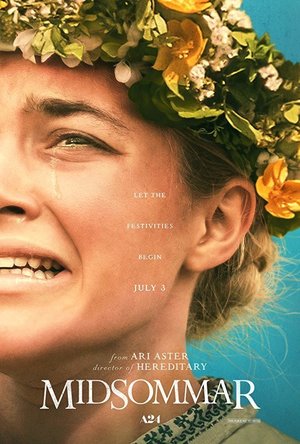

Midsommar is listed as "drama, horror, mystery" on IMDb, and you know how I am with horror... but honestly, this is such a bad categorisation to me. If anything it's a psychological drama/thriller. I found nothing in it to be horror-worthy and I definitely wasn't scared at any point. We should probably just create a genre of "weird AF" and put it in that.
Christopher and the lads are planning a trip to Sweden to participate in the mid-summer festival of Pelle's community. After his girlfriend Dani receives some devastating news he invites her along in an empty gesture, the last thing he expects is for her to accept.
When they arrive in the village they're instantly in awe of the idyllic landscape and setting. The community welcomes them with open arms and hallucinogenic substances, but Dani's trip brings up her recent trauma and she's left uneasy. Everything is different here, but they roll with it and try to experience what the members of this community do. As the first ceremony reaches its peak the guests are left shocked and terrified. Can they, should they, battle through their preconceptions and get to the end of the festival? Or should they leave?
Midsommar runs at 2 hours and 27 minutes, that's long for most films. I don't know how this manages to be that long, there really doesn't seem to be enough content for that amount of time. Something worked though, I wasn't bored. Potentially that was through confusion at the bizarreness. I'm hoping someone has worked out how much of the runtime was taken up by silence. It could easily have been cut down. Dani's family issues don't have much of an impact on the story. It certainly didn't need to depict what happened, leaving those bits out would have just meant some changes to imagery later and the beginning would have tightened up a lot.
There's no denying that the setting for the film is beautiful and the sets are intricate and yet understated. It really does illustrate the community's simple living and traditions. That combined with the basic clothing and headdresses all create an innocent and tranquil image for the commune.
Visuals within the film are frustrating, they like a good odd transition. Early on we have a scene that moves from an apartment to an airplane, Dani walks into the apartment's bathroom and we're transitioned into the plane bathroom in a magnificently done shot. It was strange but worked so smoothly. But the transitions eventually became tiring to watch. We also get an overhead sweeping shot of forest that could have been lifted straight from Pet Semetary. Then there's the road shot where the camera turns upside down and films for an inexplicably long amount of time. *sigh*
The audio is something that's interesting to me. At the beginning the music is abrasive and really quite difficult to sit through and that almost certainly, combined with Pugh's wailing, contributed to a couple deciding to leave the screening I was in. There's a significant amount of the film where there's little to no sound at all, but this opening was harsh and while it offers a contrast between the lifestyles in the film it in no way felt beneficial. When we come to Sweden quiet and serene is the overriding sense. The first time we really encounter any noise is during the first ceremony and the audio is muted to reflect the shock of Dani, that felt like it worked. Sadly, that scene had issues for me outside of this moment.
At the festival our group are going to witness an event that only happens every 90 years. This sticks nicely to a life cycle that is explained to them when they're being shown around. Aster did a lot of research on traditions and folklore, lots of it feels authentic if a little busy with different ideas. There are a couple of things that aren't addressed when it comes to their life cycle and the ritual, although this is something that I thought about after seeing it so during the film it's not much of a problem.
I have been trying to finish this review for a week, sometimes I come across ones that are trickier than others and this is one of them. I still don't know how I really feel about Midsommar, what I do know is that I can't rave about it like some people have been. The acting was mediocre, and while the idea was intriguing I feel like the script and the way it was executed didn't appeal to me. I didn't find the brightness of the film and the darkness of the tale combined well to make for a thrilling production. I would much rather see this sort of thing as a grittier crime drama.
As a passing comment though I would like to say that everyone in the screen laughed at the sex scene, and I think everyone should appreciate the penis make-up.
Originally posted on: https://emmaatthemovies.blogspot.com/2019/07/midsommar-movie-review.html
Christopher and the lads are planning a trip to Sweden to participate in the mid-summer festival of Pelle's community. After his girlfriend Dani receives some devastating news he invites her along in an empty gesture, the last thing he expects is for her to accept.
When they arrive in the village they're instantly in awe of the idyllic landscape and setting. The community welcomes them with open arms and hallucinogenic substances, but Dani's trip brings up her recent trauma and she's left uneasy. Everything is different here, but they roll with it and try to experience what the members of this community do. As the first ceremony reaches its peak the guests are left shocked and terrified. Can they, should they, battle through their preconceptions and get to the end of the festival? Or should they leave?
Midsommar runs at 2 hours and 27 minutes, that's long for most films. I don't know how this manages to be that long, there really doesn't seem to be enough content for that amount of time. Something worked though, I wasn't bored. Potentially that was through confusion at the bizarreness. I'm hoping someone has worked out how much of the runtime was taken up by silence. It could easily have been cut down. Dani's family issues don't have much of an impact on the story. It certainly didn't need to depict what happened, leaving those bits out would have just meant some changes to imagery later and the beginning would have tightened up a lot.
There's no denying that the setting for the film is beautiful and the sets are intricate and yet understated. It really does illustrate the community's simple living and traditions. That combined with the basic clothing and headdresses all create an innocent and tranquil image for the commune.
Visuals within the film are frustrating, they like a good odd transition. Early on we have a scene that moves from an apartment to an airplane, Dani walks into the apartment's bathroom and we're transitioned into the plane bathroom in a magnificently done shot. It was strange but worked so smoothly. But the transitions eventually became tiring to watch. We also get an overhead sweeping shot of forest that could have been lifted straight from Pet Semetary. Then there's the road shot where the camera turns upside down and films for an inexplicably long amount of time. *sigh*
The audio is something that's interesting to me. At the beginning the music is abrasive and really quite difficult to sit through and that almost certainly, combined with Pugh's wailing, contributed to a couple deciding to leave the screening I was in. There's a significant amount of the film where there's little to no sound at all, but this opening was harsh and while it offers a contrast between the lifestyles in the film it in no way felt beneficial. When we come to Sweden quiet and serene is the overriding sense. The first time we really encounter any noise is during the first ceremony and the audio is muted to reflect the shock of Dani, that felt like it worked. Sadly, that scene had issues for me outside of this moment.
At the festival our group are going to witness an event that only happens every 90 years. This sticks nicely to a life cycle that is explained to them when they're being shown around. Aster did a lot of research on traditions and folklore, lots of it feels authentic if a little busy with different ideas. There are a couple of things that aren't addressed when it comes to their life cycle and the ritual, although this is something that I thought about after seeing it so during the film it's not much of a problem.
I have been trying to finish this review for a week, sometimes I come across ones that are trickier than others and this is one of them. I still don't know how I really feel about Midsommar, what I do know is that I can't rave about it like some people have been. The acting was mediocre, and while the idea was intriguing I feel like the script and the way it was executed didn't appeal to me. I didn't find the brightness of the film and the darkness of the tale combined well to make for a thrilling production. I would much rather see this sort of thing as a grittier crime drama.
As a passing comment though I would like to say that everyone in the screen laughed at the sex scene, and I think everyone should appreciate the penis make-up.
Originally posted on: https://emmaatthemovies.blogspot.com/2019/07/midsommar-movie-review.html

Goddess in the Stacks (553 KP) rated Toil & Trouble: 15 Tales of Women & Witchcraft in Books
Dec 22, 2018
Toil & Trouble was a much-hyped anthology of YA stories, and I think it lived up to that hype. I really enjoyed almost every story in this book - only one or two of them were less than awesome. And they still weren't bad! Anthologies like this keep introducing me to yet more authors that I want to read, and just keep growing my TBR list! Some of the authors in this book I was familiar with; while I hadn't read her work yet, I met Zoraida Córdova at the Baltimore Book Festival, and she was amazing. I'm familiar with Brandy Colbert's work, and have not yet read Anna-Marie McLemore but desperately want to, and her story in this work (Love Spell) only increases that need.
I read this book just before Halloween, and it was a perfect choice. I'm not a fan of actual horror novels, which seem to be what everyone else is reading this time of year. Give me my strong witchy women! The stories in this book are all young women - teens to early adulthood - learning to rely on themselves. They embrace what family traditions mean to them, or break free of them entirely if they're the wrong path. They break social taboos and fall in love where they will. They FIGHT for what they want.
I think my favorite story in this book involved a woman whose powers had been bound by her coven until she was old enough to use them wisely, but had to watch her father die in an accident when she could have healed him if she'd had access to her magic. She went to an ancient place of power in the mountains and broke the binding, horrifying her coven. The story is actually about her defying them further in refusing her destined soul mate for the girl she's been in love with since she was a child, and Fate's punishment for that. The two girls fighting for each other and for their own magic was amazing. (The Heart in Her Hands, Tess Sharpe.) Unfortunately it doesn't look like it's part of a larger story, I was hoping for more in that world!
As far as I can tell, only one of the stories is part of something larger - I'm pretty sure Zoraida Córdova's story is part of her Brooklyn Brujas world. Other than that, they all appear to be standalones, which is a little sad as I'd like to see more of many of these worlds!
Toil & Trouble is an outstanding anthology of magical women, and I loved it.
You can find all my reviews at http://goddessinthestacks.com
I read this book just before Halloween, and it was a perfect choice. I'm not a fan of actual horror novels, which seem to be what everyone else is reading this time of year. Give me my strong witchy women! The stories in this book are all young women - teens to early adulthood - learning to rely on themselves. They embrace what family traditions mean to them, or break free of them entirely if they're the wrong path. They break social taboos and fall in love where they will. They FIGHT for what they want.
I think my favorite story in this book involved a woman whose powers had been bound by her coven until she was old enough to use them wisely, but had to watch her father die in an accident when she could have healed him if she'd had access to her magic. She went to an ancient place of power in the mountains and broke the binding, horrifying her coven. The story is actually about her defying them further in refusing her destined soul mate for the girl she's been in love with since she was a child, and Fate's punishment for that. The two girls fighting for each other and for their own magic was amazing. (The Heart in Her Hands, Tess Sharpe.) Unfortunately it doesn't look like it's part of a larger story, I was hoping for more in that world!
As far as I can tell, only one of the stories is part of something larger - I'm pretty sure Zoraida Córdova's story is part of her Brooklyn Brujas world. Other than that, they all appear to be standalones, which is a little sad as I'd like to see more of many of these worlds!
Toil & Trouble is an outstanding anthology of magical women, and I loved it.
You can find all my reviews at http://goddessinthestacks.com
MaryAnn (14 KP) rated Warriors with Holy Hands in Books
Nov 4, 2019
Warriors With Holy Hands is the story of a young woman who finds herself lost in time and whose life over a period of three years is spiraling downward. Ruth Falk is stricken with an inexplicable illness and then orphaned. With only a distant relative in her life now, Ruth faces a life of debilitating pain and infirmity. She determines to look to the past for answers she believes her bloodline may reveal.
Searching through diaries and records, Ruth discovers blood relatives and others who lived far away over the course of a century. We follow their lives across three generations culminating in the revelation of indisputable connections that are createdwords and actions with lasting results.
Ruth learns that a curse spoken by one ancestor may have had a devastating domino effect, one whose beginning also engaged her prayer-warrior grandmother in a pitched spiritual battle to break. A challenged believer herself, Ruth grows in the faith of her predecessors who faced ominous situations.
The rich symbolism of Judaism provides a backdrop for the saga with traditions and meaning sprinkled throughout the story.
When she faces increasing paralysis, Ruth and a birth friend in the faith journey to the Southern Highlands of Tennessee where it all began. Here in the span of seven daysover ten monthsall that has unraveled in recent years comes together. Life as she knows it will never be the same.
God reveals himself to Ruth and others in remarkable ways along a tortuous path that comes full circle.
Warriors is a mystery that is finally, stunningly, revealed as serendipitous fruit from the branches of a family tree. It is a story of encouragement and life that empowers those who seek God and believe.
My Thoughts: This is a story about Ruth, a woman who is injured while deployed. As she recovers from her injuries, including PTSD and other physical injuries, she learns about her past through journals that her aunt gave to her. The author has done a skillful job of intertwining the history from the journals to the present time to Ruth. The author Peter Toeg, presents us with a good picture of how we can be affected by our past relatives whether it's good or bad.
I love history and journals. We cal learn so much through our past. This is a story about healing, both physically and of course, spiritually. The author has done a brilliant job with this storyline and I believe that others will enjoy this book also.
Searching through diaries and records, Ruth discovers blood relatives and others who lived far away over the course of a century. We follow their lives across three generations culminating in the revelation of indisputable connections that are createdwords and actions with lasting results.
Ruth learns that a curse spoken by one ancestor may have had a devastating domino effect, one whose beginning also engaged her prayer-warrior grandmother in a pitched spiritual battle to break. A challenged believer herself, Ruth grows in the faith of her predecessors who faced ominous situations.
The rich symbolism of Judaism provides a backdrop for the saga with traditions and meaning sprinkled throughout the story.
When she faces increasing paralysis, Ruth and a birth friend in the faith journey to the Southern Highlands of Tennessee where it all began. Here in the span of seven daysover ten monthsall that has unraveled in recent years comes together. Life as she knows it will never be the same.
God reveals himself to Ruth and others in remarkable ways along a tortuous path that comes full circle.
Warriors is a mystery that is finally, stunningly, revealed as serendipitous fruit from the branches of a family tree. It is a story of encouragement and life that empowers those who seek God and believe.
My Thoughts: This is a story about Ruth, a woman who is injured while deployed. As she recovers from her injuries, including PTSD and other physical injuries, she learns about her past through journals that her aunt gave to her. The author has done a skillful job of intertwining the history from the journals to the present time to Ruth. The author Peter Toeg, presents us with a good picture of how we can be affected by our past relatives whether it's good or bad.
I love history and journals. We cal learn so much through our past. This is a story about healing, both physically and of course, spiritually. The author has done a brilliant job with this storyline and I believe that others will enjoy this book also.
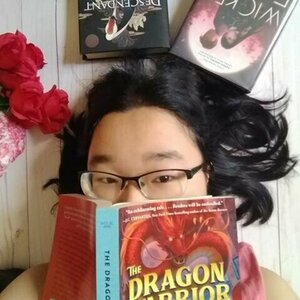
Sophia (Bookwyrming Thoughts) (530 KP) rated Killer of Enemies (Killer of Enemies, #1) in Books
Jan 23, 2020

Original Rating: 3.5 out of 5
This review and more can be found at <a href="http://www.bookwyrmingthoughts.com/2015/07/review-killer-of-enemies-by-joseph-bruchac.html">Bookwyrming Thoughts</a>
I never thought I would ever come across a book that dumps information on you AND like it.
With a post-apocalyptic world where people are ruled over genetically modified people who are barely human anymore, Joseph Bruchac has obviously planned this book very well and vividly, even with the amount of information he dumps on you for most of the book. I find that the information dump actually goes very well with the amount of action there is. Take away all of the information, and you'll be left with an empty husk of a book that is just full of nonstop action, which would definitely backfire big time on the author because it would be pretty undeveloped.
Bruchac is very detail-oriented throughout the book it's not just the information being dumped. Lozen, our main character who is a monster hunter for the genetically modified people ruling over her home, apparently goes into excruciating detail about some things, such as talking about someone's body odor or eating a monster's heart (that was gross).
Killer of Enemies also promotes diversity in the young adult genre Lozen is a Native American, and I can honestly say I have never had a Native American in any book I've read so far until now. There are hints of Native American traditions and culture woven throughout, and I find that it's probably one of the reasons why I actually enjoyed this a lot more than I would have without the Native American aspect.
Despite how awesome and diverse Killer of Enemies, there were just some things that knocked down some points. Throughout the information dumping, I don't think Bruchac actually mentions why or how the four rulers of Haven actually got their names. The Dreamer and Lady Time make sense, but the Jester doesn't really make sense, and Diablita Loca (how do you even say that?) makes no sense whatsoever.
There also doesn't seem to be a purpose, and while there does seem to be one, I just can't really tell at all. The entire book is pretty much described in less than ten words: hunting weird monsters, telling stories, flashbacks, and information dump.
I did, however, like how Bruchac ends Killer of Enemies by saying something along the lines of, "Just because this story is over doesn't mean everything is now peachy and happily ever after. It's just uncertain, but right now, everything is great."
This review and more can be found at <a href="http://www.bookwyrmingthoughts.com/2015/07/review-killer-of-enemies-by-joseph-bruchac.html">Bookwyrming Thoughts</a>
I never thought I would ever come across a book that dumps information on you AND like it.
With a post-apocalyptic world where people are ruled over genetically modified people who are barely human anymore, Joseph Bruchac has obviously planned this book very well and vividly, even with the amount of information he dumps on you for most of the book. I find that the information dump actually goes very well with the amount of action there is. Take away all of the information, and you'll be left with an empty husk of a book that is just full of nonstop action, which would definitely backfire big time on the author because it would be pretty undeveloped.
Bruchac is very detail-oriented throughout the book it's not just the information being dumped. Lozen, our main character who is a monster hunter for the genetically modified people ruling over her home, apparently goes into excruciating detail about some things, such as talking about someone's body odor or eating a monster's heart (that was gross).
Killer of Enemies also promotes diversity in the young adult genre Lozen is a Native American, and I can honestly say I have never had a Native American in any book I've read so far until now. There are hints of Native American traditions and culture woven throughout, and I find that it's probably one of the reasons why I actually enjoyed this a lot more than I would have without the Native American aspect.
Despite how awesome and diverse Killer of Enemies, there were just some things that knocked down some points. Throughout the information dumping, I don't think Bruchac actually mentions why or how the four rulers of Haven actually got their names. The Dreamer and Lady Time make sense, but the Jester doesn't really make sense, and Diablita Loca (how do you even say that?) makes no sense whatsoever.
There also doesn't seem to be a purpose, and while there does seem to be one, I just can't really tell at all. The entire book is pretty much described in less than ten words: hunting weird monsters, telling stories, flashbacks, and information dump.
I did, however, like how Bruchac ends Killer of Enemies by saying something along the lines of, "Just because this story is over doesn't mean everything is now peachy and happily ever after. It's just uncertain, but right now, everything is great."
Gareth von Kallenbach (980 KP) rated Rock the Kasbah (2016) in Movies
Aug 6, 2019


Music is a language that transcends race, gender, age, and nationality. It is timeless. It is transformative. Music has the power to shape and redefine culture. In Rock the Kasbah, Bill Murray plays Richie Lanz, a washed up Rock manager who seeks to bring one of his acts to Afghanistan as part of the USO tour. Within the first day of arrival, his plans are unraveled as his singer (Zooey Deschanel) panics and runs off with his money and passport in order to return back to America.
After meeting a myriad of characters (Bruce Willis, Kate Hudson. Danny McBride) in Kabul, he is presented with a new opportunity to introduce the world to a true talent. He discovers a young Pashtun girl with an amazing voice who dreams of being able to compete on “Afghan Star,” a musical competition show similar to “American Idol.” Cultural norms forbid her from singing and participating in the competition which demonstrate the complexity of Afghan culture, history, and politics. Understanding the threat to himself and Salima (Leem Lubany), Richie arranges for her to appear on the show, defying traditions and customs.
The film itself is a decent adaptation of the real story captured in the documentary Afghan Star which examines the life of Setara who must go into hiding because of her appearance in the competition. Rock the Kasbah has moments of genuine humor which fully utilizes Bill Murray’s true talents. Unfortunately, there are points where the plot and the storyline does not seem to fit together seamlessly. One great aspect of the film is its use of music to demonstrate the reach that it has across cultural lines. The love of music and artistic expression which had been severely restricted during the years of Taliban rule and Mujahedeen influence survived and is emblematic of how the people and the culture is much more complex and relatable than many would assume. This film goes beyond a story of a young singer trying to express herself and a manager trying to reclaim the glory of years ago. It is about the culture, history, and political framework of Afghanistan and the Afghan people.
It promotes them in a more positive light without relegating them to being a monolithic culture and people. It provides more insight into the circumstances that many of the people both in the cities and the tribal regions deal with. Audiences will be satisfied Rock the Kasbah as it is a musical and comedic showcase. They may even find themselves singing “Wild World” long after the credits roll.
After meeting a myriad of characters (Bruce Willis, Kate Hudson. Danny McBride) in Kabul, he is presented with a new opportunity to introduce the world to a true talent. He discovers a young Pashtun girl with an amazing voice who dreams of being able to compete on “Afghan Star,” a musical competition show similar to “American Idol.” Cultural norms forbid her from singing and participating in the competition which demonstrate the complexity of Afghan culture, history, and politics. Understanding the threat to himself and Salima (Leem Lubany), Richie arranges for her to appear on the show, defying traditions and customs.
The film itself is a decent adaptation of the real story captured in the documentary Afghan Star which examines the life of Setara who must go into hiding because of her appearance in the competition. Rock the Kasbah has moments of genuine humor which fully utilizes Bill Murray’s true talents. Unfortunately, there are points where the plot and the storyline does not seem to fit together seamlessly. One great aspect of the film is its use of music to demonstrate the reach that it has across cultural lines. The love of music and artistic expression which had been severely restricted during the years of Taliban rule and Mujahedeen influence survived and is emblematic of how the people and the culture is much more complex and relatable than many would assume. This film goes beyond a story of a young singer trying to express herself and a manager trying to reclaim the glory of years ago. It is about the culture, history, and political framework of Afghanistan and the Afghan people.
It promotes them in a more positive light without relegating them to being a monolithic culture and people. It provides more insight into the circumstances that many of the people both in the cities and the tribal regions deal with. Audiences will be satisfied Rock the Kasbah as it is a musical and comedic showcase. They may even find themselves singing “Wild World” long after the credits roll.
Life of 60 Sahaba ( Islam Quran Hadith - Ramadan Islamic Apps )
Book and Education
App
Al-Khawarizmi is a trusted name in Islamic Apps development for years. We have sold thousands of...
Rock 'n' Film: Cinema's Dance with Popular Music
Book
Rock 'N' Film presents a cultural history of films about US and British rock music during the period...