
Midge (525 KP) rated The Twelve Dice of Christmas in Books
Dec 10, 2018
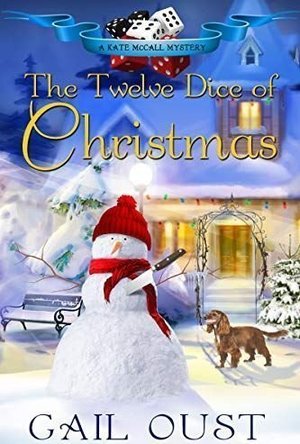
Welcome to Serenity Cove, a peaceful Southern community where the residents like to play dice, and when there is a dark mystery, play detective.
With Christmas fast approaching, Kate McCall and her retired friends get into the holiday spirit by agreeing to help the elderly Eula Mae Snow decorate her home, even when it means sorting through many of the older woman’s belongings. Intent on doing a good deed and uncovering a bright collection of seasonal decorations, Kate is stopped dead in her tracks when instead she discovers the skeleton of a man showing clear signs of foul play.
Many in Serenity Cove thought that Waylon Snow had run off and left town and his wife, Eula Mae, more than two decades earlier. But with the appearance of his skeleton and a whole host of clues pointing to Eula Mae as the murderer, Kate will have to put her sleuthing skills to work to figure out who could have committed the evil deed.
Kate and her retired friends, known as The Bunco Babes, are feeling festive and they are planning a cookie exchange and ugly sweater contest for their last dice game session of the season. As they plan their holidays, they decide to help their friend decorate her house for the annual charity Christmas Home Tour. The Bunco Babes get cracking, and in the process of hunting for the Christmas decorations, Kate discovers the skeleton in the root cellar. Kate now has a twenty-five-year-old mystery to contend with. Can she solve it?
This is my first novel by Gail Oust and I really enjoyed it. I love that it is an old mystery set in Christmastime. Although this is the fourth book in a mystery series, you do not need to have read the previous books in sequence to be able to follow the story properly.
I found many of the characters very funny and easy to relate to, particularly Kate herself, but also Eula Mae's granddaughter, Tammy Lynn and Bill Lewis, Kate's "significant other". Many of the other characters in the book were extremely amusing and unusual. Kate and the Town Sheriff, Sheriff Wiggins have history, Although he is not in Kate's fan club, can she use her powers of persuasion on him to allow the Bunco Babes into the house in time for it to be decorated for the Christmas Home Tour?
You’ll treasure this sweet Christmas mystery, as I did!
Thanks to Netgalley and Beyond the Page Publishing for a copy of this book.

Tower Keepers
Games, Entertainment and Stickers
App
Heroic strategy RPG with deep solo campaign and real-time head to head battles! Train an epic army...

Sonic The Hedgehog Classic
Games, Entertainment and Stickers
10.0 Rate It
App
The Sonic game that started it all is now free-to-play and optimized for mobile devices! Race at...

Kid Chameleon Classic
Games and Stickers
App
Enter Kid Chameleon and experience SEGA's colossal platformer! Unleash your super powers in...

Altered Beast Classic
Games, Entertainment and Stickers
App
Venture into the underworld in SEGA’s legendary beat ‘em up Altered Beast, now available on...

International Finance and Open-Economy Macroeconomics: 2016
Giancarlo Gandolfo and Daniela Federici
Book
This rigorous textbook tames technicalities and makes even the most complex models accessible to...
Chambers Dictionary of Great Quotations
Book
With over 25,000 quotations from over 4,000 sources, The Chambers Dictionary of Great Quotations is...

LINE PLAY - Our Avatar World
Social Networking and Games
App
Create a NEW you and decorate your own special place on LINE PLAY! Double the fun by meeting new...

Shirley Manson recommended Walk Across the Rooftops by The Blue Nile in Music (curated)

Phillip McSween (751 KP) rated Battlefield Earth (2000) in Movies
Oct 2, 2019
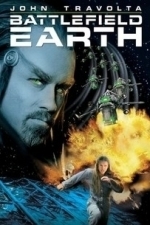


Acting: 3
Less than two minutes in, the movie has one of those bloodcurdling “NO!” screams after main character Jonnie Goodboy Tyler (Barry Pepper) finds out someone close to him has died. That’s when I remember saying to myself: “What the hell did I just get myself into? I gotta sit through the rest of this?” You would think, “Well, it’s only uphill from here.” You, madam or sir, would be wrong. From John Travolta and Forest Whitaker’s painful performances as aliens to the rest of this horrid cast, I can’t really decide who did the worst job. I gave them a 3 because, well, I’m assuming they showed up on set everyday.
Beginning: 0
Cinematography/Visuals: 3
Fast forward to four minutes after the “scream”. You see a bunch of cavemen (ish) beating up a prop from a broken down minigolf fun center. You see this happening with weird cut shots and slow motion, all while focusing on the anger and intent of the cavemen who see it as a threat. It is quite possibly one of the dumbest scenes I have seen in film. It angers me even now just thinking about it.
Conflict: 6
Entertainment Value: 0
Memorability: 0
The only thing I need to remember is this movie is garbage and to run if someone ever mentions watching it. There is nothing about this movie I will ever treasure.
Pace: 2
Let me watch paint dry and see if I’m not more entertained. My wife captured a caterpillar in a jar recently because she thinks it may become a butterfly. I’m pretty sure it’s dying because it only moves an inch every few hours. That inch outpaces the speed at which this movie drags along. Give me the DMV. Give me the longest wait at any Disneyworld ride. Give me the lines for the 2008 voting stations. I will take any of these things over Battlefield Earth.
Plot: 0
Resolution: 1
Ended just like it began: As a failed movie with no redeeming qualities whatsoever.
Overall: 17
I usually don’t judge people on tastes. We’re all different and we all like different things. But if you enjoyed this movie in any shape or fashion and you profess to be my friend, please lose my number. The passion with which I hate this movie has no end.