
Search
Search results

Ivana A. | Diary of Difference (1171 KP) rated The Turning Point (The ELI Chronicles, #3) in Books
Oct 5, 2020

<a href="https://amzn.to/2Wi7amb">Wishlist</a>; | <a
<a href="https://diaryofdifference.com/">Blog</a>; | <a href="https://www.facebook.com/diaryofdifference/">Facebook</a>; | <a href="https://twitter.com/DiaryDifference">Twitter</a>; | <a href="https://www.instagram.com/diaryofdifference/">Instagram</a>; | <a href="https://www.pinterest.co.uk/diaryofdifference/pins/">Pinterest</a>;
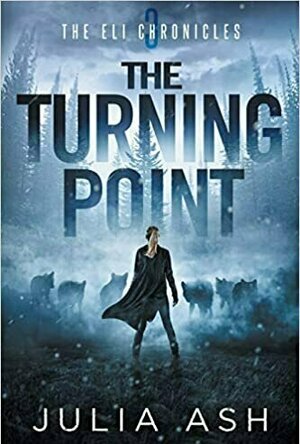
The Turning Point by Julia Ash is the third book in the ELI Chronicles. Thank you to Julia, for sending me a copy of this book in exchange for my honest review. Read my reviews of the first two books in the series:
<b>The ELI Chronicles Series</b>
#1 <a href="https://www.goodreads.com/review/show/2387441859">The One and Only</a> - ★★★★
#2 <a href="https://www.goodreads.com/review/show/2803361466">The Tether</a> - ★★★★
#3 <a href="https://www.goodreads.com/review/show/3377612307">The Turning Point</a> - ★★★★
<img src="https://diaryofdifference.com/wp-content/uploads/2020/08/Book-Review-Banner-77.png"/>;
The Turning Point continues where the previous book left off. If you haven’t read the previous books in the series, I would recommend reading my review on the first book - The One and Only, as this review contains spoilers from the other two previous books. Now that you have been warned, I can safely continue. :)
<b><i>Ruby Spencer has continuously saved the world.</i></b>
First, it was the zombie infection. Then, she was turned into a vampire against her will. In the first book we found out her blood was special, and in the second book - we find out why. Her blood was a result of a donor from another planet, which she ended up saving in the second book. And this time - the planet needs help again. But also this time - Ruby might not be the one that can save it.
Because the animals have their own language, and Ruby cannot understand it. If she could understand them, she would know that they are tired of being puppets to the humans and the vampires. And wolves are more than happy to lead this rebelion.
Without an alpha that can fight for their rights and lead their uprising, the animals will destroy everything in front of them. Ruby is the only one who can connect the animals with their rightful king - is she could only find him.
I have to admit, I struggled a bit at the beginning, when at one point we were introduced to all the different creatures and abilities (zombies, vampires, sculpting, werewolves, multiple planets, search for the true king). While the first and second book were more focused on one part of the story, in this book we had all of the different aspects colliding into one. And despite my struggles at the beginning, it all worked out in the end.
<b><i>I really loved this book, and it was a perfect last book to conclude this series.
</i></b>
The ending was beautiful and I enjoyed the final few twists, where you couldn’t trust anyone. I loved the love this family had for each other, and how kind and generous they always are. They care so much for each other, it's really nice to read it. It was such an adventurous ride, and I was eager to know how it ended. I am also glad they gave Zagan another chance to prove he changed, and that he deserves another chance at life.
If you have read my previous reviews - you will know me and Clay don’t really get along. But this book changed my opinion a bit, and I actually ended up liking his character and his story in this book. (surprise, surprise).
The ELI Chronicles, as a whole, is a series not only about zombie apocalypse, vampires, werewolves, rightful kings and special abilities, but also a story about the true power of one family, and their love for each other. Julia Ash managed to combine these two things into the books so well, and make this journey not only adventurous, but also heartwarming.
<b><i>And I have to say - I am glad that I am part of it by reading this series.</i></b>
I am glad I have experienced this book, and grown together with it. Thinking of where I was on my journey when I started the first book, and where I am now, I can understand and appreciate this story way more and connect better with it. Definitely a must-read for all fans of sci-fi, adventure and thrillers.
<a href="https://diaryofdifference.com/">Blog</a>; | <a href="https://www.facebook.com/diaryofdifference/">Facebook</a>; | <a href="https://twitter.com/DiaryDifference">Twitter</a>; | <a href="https://www.instagram.com/diaryofdifference/">Instagram</a>; | <a href="https://www.pinterest.co.uk/diaryofdifference/pins/">Pinterest</a>;
The Turning Point by Julia Ash is the third book in the ELI Chronicles. Thank you to Julia, for sending me a copy of this book in exchange for my honest review. Read my reviews of the first two books in the series:
<b>The ELI Chronicles Series</b>
#1 <a href="https://www.goodreads.com/review/show/2387441859">The One and Only</a> - ★★★★
#2 <a href="https://www.goodreads.com/review/show/2803361466">The Tether</a> - ★★★★
#3 <a href="https://www.goodreads.com/review/show/3377612307">The Turning Point</a> - ★★★★
<img src="https://diaryofdifference.com/wp-content/uploads/2020/08/Book-Review-Banner-77.png"/>;
The Turning Point continues where the previous book left off. If you haven’t read the previous books in the series, I would recommend reading my review on the first book - The One and Only, as this review contains spoilers from the other two previous books. Now that you have been warned, I can safely continue. :)
<b><i>Ruby Spencer has continuously saved the world.</i></b>
First, it was the zombie infection. Then, she was turned into a vampire against her will. In the first book we found out her blood was special, and in the second book - we find out why. Her blood was a result of a donor from another planet, which she ended up saving in the second book. And this time - the planet needs help again. But also this time - Ruby might not be the one that can save it.
Because the animals have their own language, and Ruby cannot understand it. If she could understand them, she would know that they are tired of being puppets to the humans and the vampires. And wolves are more than happy to lead this rebelion.
Without an alpha that can fight for their rights and lead their uprising, the animals will destroy everything in front of them. Ruby is the only one who can connect the animals with their rightful king - is she could only find him.
I have to admit, I struggled a bit at the beginning, when at one point we were introduced to all the different creatures and abilities (zombies, vampires, sculpting, werewolves, multiple planets, search for the true king). While the first and second book were more focused on one part of the story, in this book we had all of the different aspects colliding into one. And despite my struggles at the beginning, it all worked out in the end.
<b><i>I really loved this book, and it was a perfect last book to conclude this series.
</i></b>
The ending was beautiful and I enjoyed the final few twists, where you couldn’t trust anyone. I loved the love this family had for each other, and how kind and generous they always are. They care so much for each other, it's really nice to read it. It was such an adventurous ride, and I was eager to know how it ended. I am also glad they gave Zagan another chance to prove he changed, and that he deserves another chance at life.
If you have read my previous reviews - you will know me and Clay don’t really get along. But this book changed my opinion a bit, and I actually ended up liking his character and his story in this book. (surprise, surprise).
The ELI Chronicles, as a whole, is a series not only about zombie apocalypse, vampires, werewolves, rightful kings and special abilities, but also a story about the true power of one family, and their love for each other. Julia Ash managed to combine these two things into the books so well, and make this journey not only adventurous, but also heartwarming.
<b><i>And I have to say - I am glad that I am part of it by reading this series.</i></b>
I am glad I have experienced this book, and grown together with it. Thinking of where I was on my journey when I started the first book, and where I am now, I can understand and appreciate this story way more and connect better with it. Definitely a must-read for all fans of sci-fi, adventure and thrillers.

Hazel (1853 KP) rated Unrivalled in Books
May 25, 2017


Indistinctive
This ARC was provided by the publisher via NetGalley in exchange for an honest review
Unrivalled is the first book in a new young adult series by Alyson Noël. Set in Hollywood, this story takes a look at what it is like to be young and famous, as well as what it is like to be aspiring to be. The lives of four eighteen year olds from completely different circumstances are suddenly thrown together in a prestigious competition to become the best promoter of VIP nightclubs owned by the infamous Ira Redmond.
Layla and Tommy, from less notable backgrounds, are determined to become famous through journalism and guitar playing. For Layla, this competition means winning enough money to go to college in New York. For Tommy, the prize will help him to move up from his lowly rented apartment and begin to make himself known. Aster, on the other hand, is already rich, she does not care about the money, she cares about winning. Winning means being noticed, which for an aspiring actress is an important career move.
The fourth character is already famous and is a face that Redmond has challenged the competitors to get to enter their respective nightclubs. Madison Brooks has made her way to the top as America’s hottest teenage actress – yet how she has managed this is unclear. As the story goes on it becomes clear that Madison has a shaky past that is constantly trying to catch up with her. No one other than her trusted staff know of the true Madison, so when she goes missing the police suspect foul play. The only problem is Layla, Tommy and Aster are so mixed up in recent events surrounding Madison that they immediately become the prime suspects.
Unrivalled is a book that needs a required taste to fully enjoy. The focus is on celebrity life style, which for me is not something I am interested in. I found myself lacking in sympathy for any of the characters – although I slightly liked Layla’s ambition to become a reporter as journalism and writing IS something I am drawn to. What is annoying is that Unrivalled is only the first novel in a series, so I never got to find out what happened to Madison after plowing through pages of tedious narrative. But to be honest, I do not really care about the result.
It is my lack of interest in the subject matter that consequently leaves me to only give this book a two star rating. However, I would like to emphasize that Noël knows how to write. For the right target audience Unrivalled will be a captivating novel. It emphasizes the glamorous and the not-so-glamorous aspects of becoming famous, which the three contestants soon discover: as Shakespeare put it “All that glitters is not gold.”
If you have an interest in celebrity culture, teenage romance and a bit of mystery, then this book may well be for you. If not, you may be headed for disappointment.
Unrivalled is the first book in a new young adult series by Alyson Noël. Set in Hollywood, this story takes a look at what it is like to be young and famous, as well as what it is like to be aspiring to be. The lives of four eighteen year olds from completely different circumstances are suddenly thrown together in a prestigious competition to become the best promoter of VIP nightclubs owned by the infamous Ira Redmond.
Layla and Tommy, from less notable backgrounds, are determined to become famous through journalism and guitar playing. For Layla, this competition means winning enough money to go to college in New York. For Tommy, the prize will help him to move up from his lowly rented apartment and begin to make himself known. Aster, on the other hand, is already rich, she does not care about the money, she cares about winning. Winning means being noticed, which for an aspiring actress is an important career move.
The fourth character is already famous and is a face that Redmond has challenged the competitors to get to enter their respective nightclubs. Madison Brooks has made her way to the top as America’s hottest teenage actress – yet how she has managed this is unclear. As the story goes on it becomes clear that Madison has a shaky past that is constantly trying to catch up with her. No one other than her trusted staff know of the true Madison, so when she goes missing the police suspect foul play. The only problem is Layla, Tommy and Aster are so mixed up in recent events surrounding Madison that they immediately become the prime suspects.
Unrivalled is a book that needs a required taste to fully enjoy. The focus is on celebrity life style, which for me is not something I am interested in. I found myself lacking in sympathy for any of the characters – although I slightly liked Layla’s ambition to become a reporter as journalism and writing IS something I am drawn to. What is annoying is that Unrivalled is only the first novel in a series, so I never got to find out what happened to Madison after plowing through pages of tedious narrative. But to be honest, I do not really care about the result.
It is my lack of interest in the subject matter that consequently leaves me to only give this book a two star rating. However, I would like to emphasize that Noël knows how to write. For the right target audience Unrivalled will be a captivating novel. It emphasizes the glamorous and the not-so-glamorous aspects of becoming famous, which the three contestants soon discover: as Shakespeare put it “All that glitters is not gold.”
If you have an interest in celebrity culture, teenage romance and a bit of mystery, then this book may well be for you. If not, you may be headed for disappointment.

Lee (2222 KP) rated American Made (2017) in Movies
Aug 31, 2017

A fun, entertaining movie
Anytime I mention to my family that I'm going to see a Tom Cruise movie, they roll their eyes and take the piss. The words 'man crush' are used, and I just take it on the chin (sometimes). The truth is though, many of my favourite movies are Tom Cruise movies. I'm not a fan of his earlier stuff (my wife is the complete opposite), but I pretty much love anything after his Vanilla Sky/Magnolia days. And he's clearly a hell of a nice guy outside of the movies too, despite what anything thinks about his religious beliefs. But then he went and made The Mummy earlier this year - a serious dip in Cruise quality. Can American Made be the movie to get him back on track?
It certainly is an idea role for Cruise. Based on a true story, Cruise plays Barry Seal. Top pilot for TWA and bored of the same old routine day in, day out. When his co-pilot and passengers are all asleep during a flight, he relieves the monotony by faking some heavy turbulence in order to wake them all up, but it's not enough. So, when he's approached by CIA agent Schafer (Domhnall Gleeson) to work for them, flying exciting reconnaissance missions over South America, he jumps at the chance. And then during a refueling stop in Colombia, Seal is recruited by Pablo Escobar's drug cartel, who offer to pay him $2000 for each kilo of cocaine he can carry from Columbia to Louisiana. Then he begins flying guns from Arkansas to Nicaragua while still continuing the drugs runs. Seal finds himself with more money than he can spend, burying bags of it in his backyard and piling it up in wardrobes. He can't turn around without bumping into money, and all the while the stakes are getting higher, the potential consequences of his actions increasing.
Caught up in among all of this are Seals wife and kids. Finding themselves woken by him at 4am and being told they need to move home before their house is raided at 6am, before gradually adjusting to their new, increasingly expensive lifestyle. We never quite get to spend enough time with that part of Barry's life, taking a backseat instead to the roller coaster thrill seeking that he's got himself wrapped up in outside of home.
Cruise charms and grins his way through all of this perfectly. Obviously he did all of the flying scenes himself and he must have had a real blast making this movie. There's a good deal of humour throughout and the use of film grain, handheld cameras and Kodak style lighting help to give it a real 70s-80s feel to match the era it's set in. A fun, entertaining movie and a return to form for Mr Cruise!
It certainly is an idea role for Cruise. Based on a true story, Cruise plays Barry Seal. Top pilot for TWA and bored of the same old routine day in, day out. When his co-pilot and passengers are all asleep during a flight, he relieves the monotony by faking some heavy turbulence in order to wake them all up, but it's not enough. So, when he's approached by CIA agent Schafer (Domhnall Gleeson) to work for them, flying exciting reconnaissance missions over South America, he jumps at the chance. And then during a refueling stop in Colombia, Seal is recruited by Pablo Escobar's drug cartel, who offer to pay him $2000 for each kilo of cocaine he can carry from Columbia to Louisiana. Then he begins flying guns from Arkansas to Nicaragua while still continuing the drugs runs. Seal finds himself with more money than he can spend, burying bags of it in his backyard and piling it up in wardrobes. He can't turn around without bumping into money, and all the while the stakes are getting higher, the potential consequences of his actions increasing.
Caught up in among all of this are Seals wife and kids. Finding themselves woken by him at 4am and being told they need to move home before their house is raided at 6am, before gradually adjusting to their new, increasingly expensive lifestyle. We never quite get to spend enough time with that part of Barry's life, taking a backseat instead to the roller coaster thrill seeking that he's got himself wrapped up in outside of home.
Cruise charms and grins his way through all of this perfectly. Obviously he did all of the flying scenes himself and he must have had a real blast making this movie. There's a good deal of humour throughout and the use of film grain, handheld cameras and Kodak style lighting help to give it a real 70s-80s feel to match the era it's set in. A fun, entertaining movie and a return to form for Mr Cruise!

Haley Mathiot (9 KP) rated Fade to Black (Rojan Dizon, #1) in Books
Apr 27, 2018


Imagine a combination of 1984, The Hunger Games, and a James Patterson mystery novel. That is the best way I can sum up Fade to Black. A world so intriguing, mysterious, and exciting that you want to live in it, and yet then again, maybe you don’t. A plot that never stops moving and throwing stuff at you, and with every page you become more and more wrapped up in it. Characters that you want to be, or be friends with, or take a good swing at. I am so excited about this novel, guys. I can’t recommend it enough.
First, the characters/narrator. I love Jake. I love Pacha. I love Rojan. I love them all. I love the way they talk to each other (or don’t talk to each other) and argue with each other. And the narrator, Rojan, is awesome. There are three things that makes Rojan a fantastic character, and a new favorite of mine.
First, he’s different. He’s not the “guy who wants to be a hero,” or the “I want to prove myself” or “I’m looking for my one-true-love” kind of guy. No, Rojan just wants to finish his damn job and get on with his damn life. He doesn’t want to be a hero or a villain: he just wants to get paid, go home, and find a new girl to chase. He’s the reluctant hero.
Second, the word “loyal” is not in Rojan’s repertoire. He specifically admits to enjoying the chase more than the catch, and for some reason, that’s really attractive! And of course, the girl he falls for is so perfect for him that it’s not even funny… in fact, if she’d come to terms with the idea, he might actually manage not to cheat on her. At the very end after he’s managed to kill the bad guys, save the planet, and rescue the girl, the only thing he was focused on was getting into the nurses pants.
Third, his personality is just fantastic. He’s such a pessimist, and admits to being a cynic. He makes the most absurdly snarky comments about everything, to the point that even in a tense scene there’s comic relief because he’s such a clever bastard (as a matter of fact, I think he actually calls himself that at least once).
The ending was wonderful, and left me feeling satisfied and complete, even though I can’t wait for the next book: not because it had a cliff-hanger, but because it was just so good!
Only thing I hate: It’s book 1 in a 3-book series, and the other two aren’t published… This happened to me while reading Daughter of Smoke and Bone, and The Better Part of Darkness. Gah! So annoying!
Content/Recommendation: Language and violence and dark humor. Mention of rape and sex. This is an adult book, maybe older teens, ages 18+. It’s totally worth the read. It’s also hilarious.
First, the characters/narrator. I love Jake. I love Pacha. I love Rojan. I love them all. I love the way they talk to each other (or don’t talk to each other) and argue with each other. And the narrator, Rojan, is awesome. There are three things that makes Rojan a fantastic character, and a new favorite of mine.
First, he’s different. He’s not the “guy who wants to be a hero,” or the “I want to prove myself” or “I’m looking for my one-true-love” kind of guy. No, Rojan just wants to finish his damn job and get on with his damn life. He doesn’t want to be a hero or a villain: he just wants to get paid, go home, and find a new girl to chase. He’s the reluctant hero.
Second, the word “loyal” is not in Rojan’s repertoire. He specifically admits to enjoying the chase more than the catch, and for some reason, that’s really attractive! And of course, the girl he falls for is so perfect for him that it’s not even funny… in fact, if she’d come to terms with the idea, he might actually manage not to cheat on her. At the very end after he’s managed to kill the bad guys, save the planet, and rescue the girl, the only thing he was focused on was getting into the nurses pants.
Third, his personality is just fantastic. He’s such a pessimist, and admits to being a cynic. He makes the most absurdly snarky comments about everything, to the point that even in a tense scene there’s comic relief because he’s such a clever bastard (as a matter of fact, I think he actually calls himself that at least once).
The ending was wonderful, and left me feeling satisfied and complete, even though I can’t wait for the next book: not because it had a cliff-hanger, but because it was just so good!
Only thing I hate: It’s book 1 in a 3-book series, and the other two aren’t published… This happened to me while reading Daughter of Smoke and Bone, and The Better Part of Darkness. Gah! So annoying!
Content/Recommendation: Language and violence and dark humor. Mention of rape and sex. This is an adult book, maybe older teens, ages 18+. It’s totally worth the read. It’s also hilarious.

Ross (3284 KP) rated The Darkslayer: Wrath of the Royals in Books
Feb 5, 2019
Strong debut novel, deeper than expected
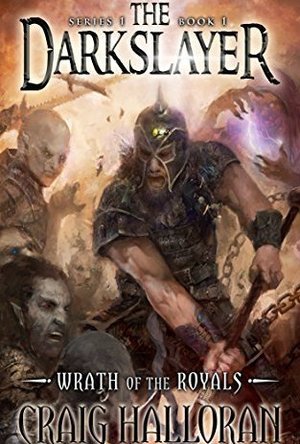
Wrath of the Royals, the first in the 16 book Darkslayer series following Venir, the Darkslayer (an axe-wielding barbarian) and his companion Melagal (the cowardly "rogue") as they run from the titular wrath of one of the royal families. Venir tends to get himself into bets, as alpha male types just seem attracted to him, and one such bet ends him in the bad books with one of the most powerful, and twisted, royal families.
This leads to the pair going on the run to escape the inevitable wrath. However, little do they know that the Underlings (those twisted, evil humanoids Venir is driven to hunt) are after Venir from different angles - one due to his relentless genocide of their race, and another due to being hired to hunt him down by the royals.
On the surface, I expected this to be a basic sword and sorcery tale; the barbarian wandering the wilds hacking down the Underlings. I was pleasantly surprised to find a fairly well told tale with different layers and a more intricate plot than I had expected.
Halloran's prose is decent, with a good knack for getting the balance between over-narration and concise descriptions. There is enough description of the world without it being laboured. There are some odd choices for phrases or wording here or there (eg "Impending pain was on its way"), and the book could do with a decent thorough edit, but for a first book it is a good effort.
The world of Bish turns out to be something of an experiment on the part of a God, seeing if she can design a world that will remain in permanent conflict for eternity, good and evil constantly vying but neither side ever truly winning. While this could be seen as literally setting up for "deus ex machina" whenever the author chooses, this didn't really come to the fore in this book.
Venir is a reasonably well-crafted character, albeit a stupid brute and something like Logen Ninefingers from Joe Abercrombie's First Law (when he puts on his magical helmet (yes I know!) he becomes more driven to destruction, somewhat akin to the emergence of The Bloody Nine). Numerous times he just gets up in the night and wanders off searching for the conflict he has sensed, the helmet guiding him onwards. But his actions play well off those of his travelling companions, which has now become something like the fellowship of the ring, but without a ring.
The book ends with an extended epilogue giving an idea of Venir's life before he found his magical axe, shield and mind-controlling helmet.
A good self-contained book, which concludes well and could be read on its own, without continuing the series, though I plan to (ideally before my Kindle Unlimited period runs out!).
This leads to the pair going on the run to escape the inevitable wrath. However, little do they know that the Underlings (those twisted, evil humanoids Venir is driven to hunt) are after Venir from different angles - one due to his relentless genocide of their race, and another due to being hired to hunt him down by the royals.
On the surface, I expected this to be a basic sword and sorcery tale; the barbarian wandering the wilds hacking down the Underlings. I was pleasantly surprised to find a fairly well told tale with different layers and a more intricate plot than I had expected.
Halloran's prose is decent, with a good knack for getting the balance between over-narration and concise descriptions. There is enough description of the world without it being laboured. There are some odd choices for phrases or wording here or there (eg "Impending pain was on its way"), and the book could do with a decent thorough edit, but for a first book it is a good effort.
The world of Bish turns out to be something of an experiment on the part of a God, seeing if she can design a world that will remain in permanent conflict for eternity, good and evil constantly vying but neither side ever truly winning. While this could be seen as literally setting up for "deus ex machina" whenever the author chooses, this didn't really come to the fore in this book.
Venir is a reasonably well-crafted character, albeit a stupid brute and something like Logen Ninefingers from Joe Abercrombie's First Law (when he puts on his magical helmet (yes I know!) he becomes more driven to destruction, somewhat akin to the emergence of The Bloody Nine). Numerous times he just gets up in the night and wanders off searching for the conflict he has sensed, the helmet guiding him onwards. But his actions play well off those of his travelling companions, which has now become something like the fellowship of the ring, but without a ring.
The book ends with an extended epilogue giving an idea of Venir's life before he found his magical axe, shield and mind-controlling helmet.
A good self-contained book, which concludes well and could be read on its own, without continuing the series, though I plan to (ideally before my Kindle Unlimited period runs out!).

Rachel King (13 KP) rated A Short History of Myth in Books
Feb 11, 2019
For such a short book, I developed quite a strong opinion about the text while reading it. I have been curious about Armstrong's writings for a long time, but this is the first attempt I have made at actually reading anything by her. I have always been a fan of ancient mythology, such as Greek and Egyptian, so this seemed like an easy choice.
In seven chapters, Armstrong takes a simplified stroll through history, focusing on the concept of myth and its impact on civilization. All throughout the book, she attempts to support her claim that a person can believe in myths without believing that the myths are actually true, and that the failure of modern society is by not following her specific edict. While this notion strikes me as absurd, I keep reading because, hey, it's a short book.
While I know only bits and pieces about many of the world's religions, I do know both the history and the holy book of my religion, Christianity. It becomes apparent to me early in the text that she is masking her opinions and interpretations of this religion as actual fact, so I can only imagine how she misconstrues other religions.
Her citations were lacking to me, with many claims going unsupported, others only partially supported, such as citation #84 and #30, and some citations simply not even applying to the specified text, such as citation #87. In citation #55, she claims that the Bible contains a Creation myth in which God brings the world into being by killing a sea monster, but one of the four verses she cites make no reference to anything of the sort (Job 3:12), and the other three (Isaiah 27:1, Job 26:13, Psalm 74:14) that do mention a leviathan cannot be interpreted that way when read in context. Isaiah is describing the end of days, while Job merely says that God created the serpent, and the verse in Psalm is within the context of a song about God rescuing the Hebrews from Egyptian slavery -- no relevancy to Creation. She makes the claim that Paul "was not much interested in Jesus's teachings, which he rarely quotes, or in the events of his earthly life." This claim is easily disproved by examining how Paul's words line up with Jesus's in John 5:21 vs. 1 Corinthians 15:22, Matthew 6:25 vs. Philippians 4:6, and many other passages.
While going through the citations, I got the feeling that the author depended on secondary sources for her information without actually studying the original source of her information. The book struck me as highly opinionated, vague, and too general for the topic being addressed. I have no doubt that there are better and more thorough books available on the topic of myth. I do not believe that I will be reading any more of Armstrong's works in the future.
In seven chapters, Armstrong takes a simplified stroll through history, focusing on the concept of myth and its impact on civilization. All throughout the book, she attempts to support her claim that a person can believe in myths without believing that the myths are actually true, and that the failure of modern society is by not following her specific edict. While this notion strikes me as absurd, I keep reading because, hey, it's a short book.
While I know only bits and pieces about many of the world's religions, I do know both the history and the holy book of my religion, Christianity. It becomes apparent to me early in the text that she is masking her opinions and interpretations of this religion as actual fact, so I can only imagine how she misconstrues other religions.
Her citations were lacking to me, with many claims going unsupported, others only partially supported, such as citation #84 and #30, and some citations simply not even applying to the specified text, such as citation #87. In citation #55, she claims that the Bible contains a Creation myth in which God brings the world into being by killing a sea monster, but one of the four verses she cites make no reference to anything of the sort (Job 3:12), and the other three (Isaiah 27:1, Job 26:13, Psalm 74:14) that do mention a leviathan cannot be interpreted that way when read in context. Isaiah is describing the end of days, while Job merely says that God created the serpent, and the verse in Psalm is within the context of a song about God rescuing the Hebrews from Egyptian slavery -- no relevancy to Creation. She makes the claim that Paul "was not much interested in Jesus's teachings, which he rarely quotes, or in the events of his earthly life." This claim is easily disproved by examining how Paul's words line up with Jesus's in John 5:21 vs. 1 Corinthians 15:22, Matthew 6:25 vs. Philippians 4:6, and many other passages.
While going through the citations, I got the feeling that the author depended on secondary sources for her information without actually studying the original source of her information. The book struck me as highly opinionated, vague, and too general for the topic being addressed. I have no doubt that there are better and more thorough books available on the topic of myth. I do not believe that I will be reading any more of Armstrong's works in the future.
Rachel King (13 KP) rated Burned (House of Night, #7) in Books
Feb 11, 2019
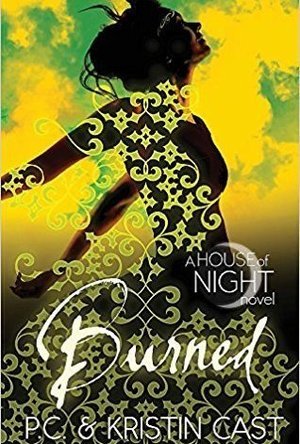
I liked this book a bit more than the previous book in the series simply because it looks like some of the characters are maturing passed some of their more annoying tweeny quirks and developing some depth. Stevie Rae always bugged me in previous books for her cliche hick-like speech and tastes in clothes, etc., but in this book, she starts to discover that the lines between good and evil are sometimes much harder to discern as she tries to juggle her relationship with Rephaim and still be what everyone else in her life wants her to be. She does this by lying, lying, lying, which is very bad, but at least she is taking risks to truly do the right thing, even if she is going about it the very wrong way. What did bug me was that the way she was caught between Dallas and Rephaim felt like the authors were attempting to make her be some kind of Zoey copycat, and the way Stevie Rae was handling the situation so poorly pretty much made it a forgone conclusion that whomever she hurt more would be the one going evil, making her the responsible party, even though the guy making the choice should be responsible for his own decisions.
I also like the maturity that James Stark reaches in his quest to save Zoey. While it is cliche to say that love conquers all, his love for her forces him to grow up and be a man, instead of just a petty, jealous, hormonal teen. The lengths he goes to save her could put a few grown men to shame, and if she ever rejects him in future books for any reason at all, she does not deserve him.
On the flip side, Zoey's other friends, i. e. Damien, Jack, and the twins are barely even mentioned throughout the entire book, except to provide color for the background or some comic relief. I don't really miss them, either, as their antics are so formulaic as to make me cringe every time I read about them.
I am undecided as to whether I like Aphrodite's character. While she does not seem to be growing in maturity very much - as in losing her bitchiness - she does seem to be coming to terms with how she appears to others. At the same time, she is learning to wield her arrogance with purpose as she gains the title of Prophetess and show some true emotion for her friends.
I really hope that this series wraps up soon, as this plot feels like it is spiraling out of control with all of the loose ends, unexplained pieces, and growing cast list that simply can not be given enough attention to detail in every single book, even with the random deaths of several characters in a single book.
I also like the maturity that James Stark reaches in his quest to save Zoey. While it is cliche to say that love conquers all, his love for her forces him to grow up and be a man, instead of just a petty, jealous, hormonal teen. The lengths he goes to save her could put a few grown men to shame, and if she ever rejects him in future books for any reason at all, she does not deserve him.
On the flip side, Zoey's other friends, i. e. Damien, Jack, and the twins are barely even mentioned throughout the entire book, except to provide color for the background or some comic relief. I don't really miss them, either, as their antics are so formulaic as to make me cringe every time I read about them.
I am undecided as to whether I like Aphrodite's character. While she does not seem to be growing in maturity very much - as in losing her bitchiness - she does seem to be coming to terms with how she appears to others. At the same time, she is learning to wield her arrogance with purpose as she gains the title of Prophetess and show some true emotion for her friends.
I really hope that this series wraps up soon, as this plot feels like it is spiraling out of control with all of the loose ends, unexplained pieces, and growing cast list that simply can not be given enough attention to detail in every single book, even with the random deaths of several characters in a single book.

Movie Metropolis (309 KP) rated The Jungle Book (2016) in Movies
Jun 10, 2019

A New Classic
There’s an old saying; “if it ain’t broke, don’t fix it”, and that was the kind of reaction many people had towards Disney’s live-action remake of The Jungle Book.
Helmed by Iron Man director, Jon Favreau, it certainly garnered a mixed response come its first trailer release late last year. But what is the finished product like? And are we looking at a new classic?
Rudyard Kipling’s The Jungle Book is one of the most recognisable tales ever, despite its wafer thin plot, and the 1967 Disney animation is faithful to the first, and unfortunately also the latter.
We join this film in the midst of the action, as our young hero Mowgli (played by an unbelievably good Neel Sethi) learns how to run with his family – an adoptive pack of wolves. As the story progresses, Mowgli meets a whole host of friendly, and not so friendly, jungle animals as he strives to find just who he is.
This is a much darker interpretation of the classic story than we have been used to. There are scenes here that are genuinely terrifying, helped in part by the breath-taking CGI used to render the animals, with one infamous tiger in particular being the stuff of nightmares.
Speaking of which, an all-star cast that includes Ben Kingsley, Bill Murray, Scarlett Johansson, Idris Elba, Christopher Walken and Lupita Nyong’o lend their voices to fan favourites like Bagheera, Baloo, Kaa, Shere Khan, King Louie and Raksha. The vocal performances from each are sublime with Murray being a particular highlight with his comedic persona fitting perfectly with Baloo.
The jungle is brought to the screen in such detail that each frame is brimming with creatures, plants and life. In 3D, it is one of the most magnificent settings ever put to film as vibrant colours make the eyes dance with excitement. It lives and breathes right before your very eyes.
Then there’s the soundtrack. It’s true that the majority of the animation’s songs failed to make the cut, but looking back, it was only Bare Necessities that made any sort of impact and thankfully this survives, receiving a thundering orchestral backing track in the process. Christopher Walken’s gangster-like singing gives I Wanna Be Like You a whole new edge.
Nevertheless, it does, at times feel like Jon Favreau is going through the motions with the rest of the story – setting Mowgli up for one big set piece after another, though a few nice additions keep the plot flowing right up until the harrowing and beautifully filmed finale.
Overall, Disney has another classic on their hands. The Jungle Book is one of the most spectacular and breath-taking films ever put to the big screen. From a magnificent score to exceptional voice acting, it’s practically perfect in every way.
https://moviemetropolis.net/2016/04/16/a-new-classic-the-jungle-book-review/
Helmed by Iron Man director, Jon Favreau, it certainly garnered a mixed response come its first trailer release late last year. But what is the finished product like? And are we looking at a new classic?
Rudyard Kipling’s The Jungle Book is one of the most recognisable tales ever, despite its wafer thin plot, and the 1967 Disney animation is faithful to the first, and unfortunately also the latter.
We join this film in the midst of the action, as our young hero Mowgli (played by an unbelievably good Neel Sethi) learns how to run with his family – an adoptive pack of wolves. As the story progresses, Mowgli meets a whole host of friendly, and not so friendly, jungle animals as he strives to find just who he is.
This is a much darker interpretation of the classic story than we have been used to. There are scenes here that are genuinely terrifying, helped in part by the breath-taking CGI used to render the animals, with one infamous tiger in particular being the stuff of nightmares.
Speaking of which, an all-star cast that includes Ben Kingsley, Bill Murray, Scarlett Johansson, Idris Elba, Christopher Walken and Lupita Nyong’o lend their voices to fan favourites like Bagheera, Baloo, Kaa, Shere Khan, King Louie and Raksha. The vocal performances from each are sublime with Murray being a particular highlight with his comedic persona fitting perfectly with Baloo.
The jungle is brought to the screen in such detail that each frame is brimming with creatures, plants and life. In 3D, it is one of the most magnificent settings ever put to film as vibrant colours make the eyes dance with excitement. It lives and breathes right before your very eyes.
Then there’s the soundtrack. It’s true that the majority of the animation’s songs failed to make the cut, but looking back, it was only Bare Necessities that made any sort of impact and thankfully this survives, receiving a thundering orchestral backing track in the process. Christopher Walken’s gangster-like singing gives I Wanna Be Like You a whole new edge.
Nevertheless, it does, at times feel like Jon Favreau is going through the motions with the rest of the story – setting Mowgli up for one big set piece after another, though a few nice additions keep the plot flowing right up until the harrowing and beautifully filmed finale.
Overall, Disney has another classic on their hands. The Jungle Book is one of the most spectacular and breath-taking films ever put to the big screen. From a magnificent score to exceptional voice acting, it’s practically perfect in every way.
https://moviemetropolis.net/2016/04/16/a-new-classic-the-jungle-book-review/

Maddi Zoe (6 KP) rated The Disaster Artist (2017) in Movies
Feb 8, 2018
Comedic value (1 more)
Acting
Not such a disaster
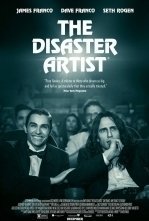
The Franco brothers star side-by-side in their first major collaboration, in this comedic drama, The Disaster Artist, based on the making of the cult classic 'The Room'.
The film follows Tommy Wiseau (James Franco) as he writes, directs, produces and stars in his first movie alongside best friend Greg Sestero (Dave Franco). It is almost unbelievable as a true story, it just seems like another mad Franco/Rogen movie. But it isn't, this actually happened.
'The Room' was released in 2003, and became a cult classic because of how hilariously awful it was. The storyline, writing, and acting are all very bizarre, and very bad.
But The Disaster Artist is a great movie, with an array of amazing actors, bringing to life the making of the movie, with hilarity.
Before going into this movie, I knew about The Room and had seen several scenes. But all I knew was that it was about the making of the movie, starring James and Dave Franco and also Seth Rogen. But there are many more actors in this that I did not know about which made for a great surprise. Josh Hutcherson, one of my personal favourites, appears as Philip Haldiman who plays 'Denny' in 'The Room', and also Zac Efron, as Dan Janjigian who plays 'Chris-R'.
The actors play excellently all the things that went wrong on the set, such as Wiseau forgetting one line for two hours for a 30-second scene, and his insistence on the cameras catching some great shots of him during the sex scenes.
The casting was great, although they did as expected and almost the whole cast are friends of James, Dave or Rogen. It works though, and they all have brilliant chemistry. It will seem obvious that James and Dave work well together, as they are brothers, but in this movie they play best friends. I think the fact that they are brothers perhaps helped them out as it is a very rocky friendship, and they could perhaps remember times they have had spats about various things.
I can not say too much about the movie without giving away spoilers. But at end of the movie they play some of the scenes side by side; the scene from the movie, alongside the scene that this cast re-enacted. They are pretty accurate, but very funny.
Tommy Wiseau himself also makes a cameo. Make sure you stay until after the credits.
Overall, it is a brilliantly made movie, with both funny and endearing moments. Part of me hopes that on special features on their DVD you can watch the entirety of 'The Room' re-enacted by these actors. The film has already received many nominations for prestigious awards, and I am not surprised.
I would definitely recommend going to see this movie, but at least watch a YouTube summary of 'The Room' first.
The film follows Tommy Wiseau (James Franco) as he writes, directs, produces and stars in his first movie alongside best friend Greg Sestero (Dave Franco). It is almost unbelievable as a true story, it just seems like another mad Franco/Rogen movie. But it isn't, this actually happened.
'The Room' was released in 2003, and became a cult classic because of how hilariously awful it was. The storyline, writing, and acting are all very bizarre, and very bad.
But The Disaster Artist is a great movie, with an array of amazing actors, bringing to life the making of the movie, with hilarity.
Before going into this movie, I knew about The Room and had seen several scenes. But all I knew was that it was about the making of the movie, starring James and Dave Franco and also Seth Rogen. But there are many more actors in this that I did not know about which made for a great surprise. Josh Hutcherson, one of my personal favourites, appears as Philip Haldiman who plays 'Denny' in 'The Room', and also Zac Efron, as Dan Janjigian who plays 'Chris-R'.
The actors play excellently all the things that went wrong on the set, such as Wiseau forgetting one line for two hours for a 30-second scene, and his insistence on the cameras catching some great shots of him during the sex scenes.
The casting was great, although they did as expected and almost the whole cast are friends of James, Dave or Rogen. It works though, and they all have brilliant chemistry. It will seem obvious that James and Dave work well together, as they are brothers, but in this movie they play best friends. I think the fact that they are brothers perhaps helped them out as it is a very rocky friendship, and they could perhaps remember times they have had spats about various things.
I can not say too much about the movie without giving away spoilers. But at end of the movie they play some of the scenes side by side; the scene from the movie, alongside the scene that this cast re-enacted. They are pretty accurate, but very funny.
Tommy Wiseau himself also makes a cameo. Make sure you stay until after the credits.
Overall, it is a brilliantly made movie, with both funny and endearing moments. Part of me hopes that on special features on their DVD you can watch the entirety of 'The Room' re-enacted by these actors. The film has already received many nominations for prestigious awards, and I am not surprised.
I would definitely recommend going to see this movie, but at least watch a YouTube summary of 'The Room' first.

Enjoyable return to some old friends
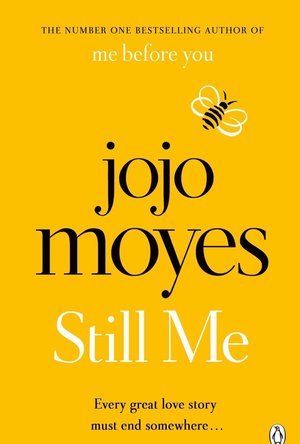
Louisa Clark is attempting to follow advice to live boldly and try new things, which leads her to New York City. There, she becomes enmeshed in the life of the wealthy Gopnik family, serving as Agnes Gopnik's personal assistant. As such, Lou has plenty of time to tend to Agnes' every whim, but it takes some time to realize she might not be spending quite so much time on finding herself. Lou is far away from her boyfriend, Sam, who is still serving as a paramedic in England, and they are finding that long-distance romance isn't so easy. Meanwhile, Lou meets a new friend in New York, Joshua Ryan, who causes her to question many of her feelings. Lou loves New York, its pace and fashion, and many of the people she meets. But she still feels torn between worlds and her quest to discover who she really is, for once and for all.
I had no idea that Moyes was writing a third book in this series until recently and also had no clue where the story would go, but I have come to really care for the character of Louisa and knew I'd read it. I have to say, this one really surprised me, and I ended up enjoying it far more than I thought I would. While pieces of it may be a bit predictable, other parts were a little surprising, and the cast of characters is just so enjoyable that you get sucked in immediately. I found myself looking forward to immersing myself in the novel after a long day. It was refreshing to see Lou start to look inward a bit more, maybe grow up a tad, and start looking after herself more. After all these novels, you feel responsible for her and also get frustrated with her decisions, as if she's a sister or friend of your own.
The novel does a strong job of showing how Lou is tugged between two places--America and England--and struggling to discover where she belongs. It also illustrates some surprising similarities between herself and her wealthy patron. Watching Lou deal with Agnes' secrets--and, as the younger wife of an older, wealthy man, she has many--you get to see her mettle and true character. There are also some lovely and funny appearances by Lou's family, whom I've come to quite adore. You'll fall for the Gopnik's eclectic neighbor, Margot, as well.
This novel is surprisingly touching at times and really I just enjoyed it. It's a typically well-written novel from Moyes, featuring well-loved characters and a cast of new, engaging ones that you can't help but fall for and love (or dislike, as required) as well. If you've enjoyed Lou before, I think you'll find this a nice addition. If you haven't read about her journey, I encourage you to go back and pick up the first book--she's a rewarding character to discover.
More at https://justacatandabookatherside.blogspot.com/.
I had no idea that Moyes was writing a third book in this series until recently and also had no clue where the story would go, but I have come to really care for the character of Louisa and knew I'd read it. I have to say, this one really surprised me, and I ended up enjoying it far more than I thought I would. While pieces of it may be a bit predictable, other parts were a little surprising, and the cast of characters is just so enjoyable that you get sucked in immediately. I found myself looking forward to immersing myself in the novel after a long day. It was refreshing to see Lou start to look inward a bit more, maybe grow up a tad, and start looking after herself more. After all these novels, you feel responsible for her and also get frustrated with her decisions, as if she's a sister or friend of your own.
The novel does a strong job of showing how Lou is tugged between two places--America and England--and struggling to discover where she belongs. It also illustrates some surprising similarities between herself and her wealthy patron. Watching Lou deal with Agnes' secrets--and, as the younger wife of an older, wealthy man, she has many--you get to see her mettle and true character. There are also some lovely and funny appearances by Lou's family, whom I've come to quite adore. You'll fall for the Gopnik's eclectic neighbor, Margot, as well.
This novel is surprisingly touching at times and really I just enjoyed it. It's a typically well-written novel from Moyes, featuring well-loved characters and a cast of new, engaging ones that you can't help but fall for and love (or dislike, as required) as well. If you've enjoyed Lou before, I think you'll find this a nice addition. If you haven't read about her journey, I encourage you to go back and pick up the first book--she's a rewarding character to discover.
More at https://justacatandabookatherside.blogspot.com/.