
Search
Search results

Gareth von Kallenbach (980 KP) rated Django Unchained (2012) in Movies
Aug 7, 2019
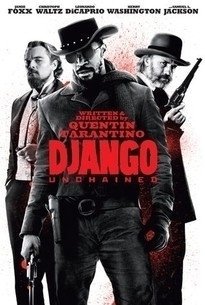


Writer-director Quentin Tarantino has returned in a big way with “Django Unchained” his homage to spaghetti Westerns. The film stars Jamie Foxx as a slave named Django who is part of a convoy of slaves being transported through Texas two years before the start of the Civil War. Django is unaware that his life is about to take a monumental turn when his caravan encounters Dr. King Schultz (Christoph Waltz) one dark evening. Schultz wishes to purchase Django, and when his current owners make the mistake of threatening the good doctor, he quickly turns the table on them and sets Django and his fellow slaves free. Schultz reveals to Django that he is in fact a bounty hunter and needs him to help identify three potential targets. Since Django last lived at the plantation where the three targets worked as overseers, he is essential to Schultz’s hunt. Schultz offers to free Django and pay him $75.00 for his assistance and the duo set off on their mission.
Some truly action-packed and hysterical scenes later, Schultz realizes that Django is an absolute natural for the business and decides to take him on for the winter as an assistant, even going so far as to offer to share one third of his bounties with them. In return, Schultz also offers to help Django reclaim his wife who was sold to a plantation somewhere in Tennessee. Schultz rationalizes that to show up now would be extremely dangerous, therefore the duo must wait out the winter earning money before embarking on their rescue mission.
The hard work of the team pays off and they learn that Django’s wife has been sold to one of the largest plantations under the ownership of Calvin Candie (Leonardo di Caprio), a despotic plantation owner who is as greedy as he is cruel. Despite having more money than he could ever use, Calvin likes to force certain members of his slaves to fight to the death. Schultz and Django decide to use this angle as their chance to get close to Calvin so they can verify that Django’s wife is indeed at the plantation and determine what it will take to buy or obtain her freedom. This proves to be no easy task as not only is Calvin surrounded by an army hired guns, but he also has a very surly and suspicious head of a household named Stephen (Samuel L. Jackson), eyeing every move that the strangers make and questioning their actions.
What follows is a hyperkinetic storm of violence, fury, music, and color in the true Tarantino style. The director is never one to shy away from blood and violence and there are tons of it in the film. The amazing thing about it is despite being graphic and, in some cases, borderline gratuitous, it does not distract from the enjoyment of the film and its characters. The performances were absolutely amazing, especially the work of Waltz, Foxx, and diCaprio. Jackson also does very solid supporting work as does Don Johnson in his appearance as an uber-racist plantation owner. Waltz worked previously with Tarantino on “Inglorious Bastards”, and this is where the Austrian actor really gained notice by Hollywood. This time out he gives a captivating performance as the complex killer with a heart of gold.
While I understand Tarantino’s style is not for everybody, it’s hard not to be impressed with the way he is able to paint a picture, fill it with interesting and quirky characters, and quickly tear it all apart as things descend into utter chaos and destruction. You alternate between laughing, cheering, and being shocked all the way through the film’s nearly three-hour runtime. Yet rarely did the film ever seem to drag on unnecessarily. There was some loss of pacing as the characters converged on Calvin’s plantation, and some may question some of the character changes or gaps in logic in the film’s finale.
I believe this film is one of the best films of the year. It captured so much of what an action film and drama should have: interesting, complex and well-acted characters, a good story, and plenty of action. Those who are easily offended will want to take note that the language in the film is extremely rough and there is frequent uses of racials lurs, as well is derogatory comments made about the black characters in the film. While this is intended to show the mindset and lifestyle of the 1860s in which the film is set, some may find it unsettling if they go in unprepared.
That being said I can honestly say that this was the most enjoyable Tarantino film I have ever seen and could be his best work to date.
Some truly action-packed and hysterical scenes later, Schultz realizes that Django is an absolute natural for the business and decides to take him on for the winter as an assistant, even going so far as to offer to share one third of his bounties with them. In return, Schultz also offers to help Django reclaim his wife who was sold to a plantation somewhere in Tennessee. Schultz rationalizes that to show up now would be extremely dangerous, therefore the duo must wait out the winter earning money before embarking on their rescue mission.
The hard work of the team pays off and they learn that Django’s wife has been sold to one of the largest plantations under the ownership of Calvin Candie (Leonardo di Caprio), a despotic plantation owner who is as greedy as he is cruel. Despite having more money than he could ever use, Calvin likes to force certain members of his slaves to fight to the death. Schultz and Django decide to use this angle as their chance to get close to Calvin so they can verify that Django’s wife is indeed at the plantation and determine what it will take to buy or obtain her freedom. This proves to be no easy task as not only is Calvin surrounded by an army hired guns, but he also has a very surly and suspicious head of a household named Stephen (Samuel L. Jackson), eyeing every move that the strangers make and questioning their actions.
What follows is a hyperkinetic storm of violence, fury, music, and color in the true Tarantino style. The director is never one to shy away from blood and violence and there are tons of it in the film. The amazing thing about it is despite being graphic and, in some cases, borderline gratuitous, it does not distract from the enjoyment of the film and its characters. The performances were absolutely amazing, especially the work of Waltz, Foxx, and diCaprio. Jackson also does very solid supporting work as does Don Johnson in his appearance as an uber-racist plantation owner. Waltz worked previously with Tarantino on “Inglorious Bastards”, and this is where the Austrian actor really gained notice by Hollywood. This time out he gives a captivating performance as the complex killer with a heart of gold.
While I understand Tarantino’s style is not for everybody, it’s hard not to be impressed with the way he is able to paint a picture, fill it with interesting and quirky characters, and quickly tear it all apart as things descend into utter chaos and destruction. You alternate between laughing, cheering, and being shocked all the way through the film’s nearly three-hour runtime. Yet rarely did the film ever seem to drag on unnecessarily. There was some loss of pacing as the characters converged on Calvin’s plantation, and some may question some of the character changes or gaps in logic in the film’s finale.
I believe this film is one of the best films of the year. It captured so much of what an action film and drama should have: interesting, complex and well-acted characters, a good story, and plenty of action. Those who are easily offended will want to take note that the language in the film is extremely rough and there is frequent uses of racials lurs, as well is derogatory comments made about the black characters in the film. While this is intended to show the mindset and lifestyle of the 1860s in which the film is set, some may find it unsettling if they go in unprepared.
That being said I can honestly say that this was the most enjoyable Tarantino film I have ever seen and could be his best work to date.
Gareth von Kallenbach (980 KP) rated The Promise (2017) in Movies
Jul 11, 2019
Roughly a year ago, I found myself in a heated exchange with a friend about full and appropriate representation of people and history in films. I discussed the merits of expanding the scope beyond films about slavery and segregation with respect to African-Americans and stories of despair for other marginalized groups. It is, for me, demeaning to a people’s contributions in society and trivializes experiences. After engaging in what seemed to be an hour, my friend focused more on what she had to say that considering what I was addressing. It proved true when she stated “Well… at least black people have movies about slavery! You should be happy. We don’t even have a movie about the Armenian Genocide!” I was shocked, momentarily. I had never stated that one group deserved more of the spotlight or one’s history is more important that another, just that we need to have appropriate representation and inclusion of stories. All of our stories should be told and shared, especially the ones that are not widely known, understood, or even having a place within social studies courses in our public schools.
I knew of the Armenian Genocide and had a general understanding about the atrocities committed by the Ottoman Empire. There are several international films that address what took place or have the Genocide as part of the story. Even My Big Fat Greek Wedding makes reference to how Greeks were brutalized by the Turks during the period. What we were missing, at least in the realm of American Cinema, was a representation for US audiences to witness the horrors that these people fell victim to and, for some, were able to survive. In The Promise, audiences will get a history lesson about man’s inhumanity to man.
When I first heard that this film was in production, I was interesting in how it would pan out. Would it be truthful, as painful as it may be? Would they overdo certain aspects? How much would they play with the truth? The filmmakers faced the same problems as those who brought forth Schindler’s List, The Pianist, and Life is Beautiful: How do you approach telling the story of genocide? How do you draw people in to a story that they may not be familiar with? Are people ready?
Summaries of the film that I read online made it seem as though this would be an Armenian version of Pearl Harbor in that this was a love story in the foreground of a film that features violence in the background. The summaries were misleading, maybe by design or maybe by mistake. The Promise, stars Oscar Isaac (Star Wars: The Force Awakens) as a young Armenia medical student, and Christian Bale (The Dark Knight) as a journalist for the associated press reporting on developments in the Ottoman Empire as war breaks out. The film whose description touts a love triangle in the midst of the Great War is far from what this films discusses and presents. There is a love story, however, it is not what the film is about or what is able to get the attention of the viewers.
The film reveals the deep held animosity of Armenians and other minority groups in the Ottoman Empire. It demonstrates the depth of mistrust and mistreatment of people who cast as “the other.” It is not simplistic in approach nor relying on over-the-top examples of violence in order for those watching to feel something. The development of events and characters permits the audience to connect with each of the characters, their families, their circumstances, and look for any moment in which they can escape the violence that is being committed to them. In no way does this film minimize what the victims went through. It doesn’t trivialize their experience in order to gain one’s attention.
The Promise satisfies the need for a discussion to emerge allowing for a truer examination of the genocide’s place in world history and within the framing of World War I. It presents a more representative picture of what people bore witness to or experienced themselves. With history, we are continuously searching for the truth and ensuring that history itself does not remained buried or ignored. This films serves the purpose in ensuring that more people are aware of not only the Armenian genocide, but all of the moving pieces that come with people fighting against an injustice or violence that is committed upon them because they are seen as less than or undesirable. It is my hope that with this film, studios see the necessity of bringing more stories of struggle, survival, and the will of humanity to overcome hardship and violence to audiences. The Promise although highly overdue, is essential, poignant, timely, and necessary in order for all of us to see that people are not forgotten.
I knew of the Armenian Genocide and had a general understanding about the atrocities committed by the Ottoman Empire. There are several international films that address what took place or have the Genocide as part of the story. Even My Big Fat Greek Wedding makes reference to how Greeks were brutalized by the Turks during the period. What we were missing, at least in the realm of American Cinema, was a representation for US audiences to witness the horrors that these people fell victim to and, for some, were able to survive. In The Promise, audiences will get a history lesson about man’s inhumanity to man.
When I first heard that this film was in production, I was interesting in how it would pan out. Would it be truthful, as painful as it may be? Would they overdo certain aspects? How much would they play with the truth? The filmmakers faced the same problems as those who brought forth Schindler’s List, The Pianist, and Life is Beautiful: How do you approach telling the story of genocide? How do you draw people in to a story that they may not be familiar with? Are people ready?
Summaries of the film that I read online made it seem as though this would be an Armenian version of Pearl Harbor in that this was a love story in the foreground of a film that features violence in the background. The summaries were misleading, maybe by design or maybe by mistake. The Promise, stars Oscar Isaac (Star Wars: The Force Awakens) as a young Armenia medical student, and Christian Bale (The Dark Knight) as a journalist for the associated press reporting on developments in the Ottoman Empire as war breaks out. The film whose description touts a love triangle in the midst of the Great War is far from what this films discusses and presents. There is a love story, however, it is not what the film is about or what is able to get the attention of the viewers.
The film reveals the deep held animosity of Armenians and other minority groups in the Ottoman Empire. It demonstrates the depth of mistrust and mistreatment of people who cast as “the other.” It is not simplistic in approach nor relying on over-the-top examples of violence in order for those watching to feel something. The development of events and characters permits the audience to connect with each of the characters, their families, their circumstances, and look for any moment in which they can escape the violence that is being committed to them. In no way does this film minimize what the victims went through. It doesn’t trivialize their experience in order to gain one’s attention.
The Promise satisfies the need for a discussion to emerge allowing for a truer examination of the genocide’s place in world history and within the framing of World War I. It presents a more representative picture of what people bore witness to or experienced themselves. With history, we are continuously searching for the truth and ensuring that history itself does not remained buried or ignored. This films serves the purpose in ensuring that more people are aware of not only the Armenian genocide, but all of the moving pieces that come with people fighting against an injustice or violence that is committed upon them because they are seen as less than or undesirable. It is my hope that with this film, studios see the necessity of bringing more stories of struggle, survival, and the will of humanity to overcome hardship and violence to audiences. The Promise although highly overdue, is essential, poignant, timely, and necessary in order for all of us to see that people are not forgotten.

Bob Mann (459 KP) rated Colette (2018) in Movies
Sep 28, 2021


“The hand that holds the pen writes history”.
Colette is yet another tale of female empowerment: a woman with real talent trying to break out of the gilded cage she finds herself trapped in.
The plot
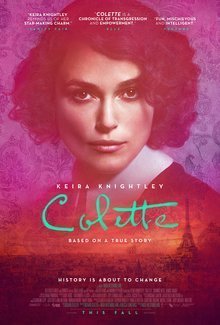
This is a true story, set in Paris in the late 19th Century. Colette (Keira Knightley), a beautiful country girl living in Burgundy is seduced by and then married to the much older Parisian ‘literary entrepreneur’ Willy (Dominic West). Willy is a “brand” in Paris: a well-known critic turned author. The only problem being that he does virtually no writing of his own but ghosts work out to his team. Colette exhibits a gift for writing slightly lascivious tales of her life (under the pseudonym Claudine) at her girl’s school, where clearly nighttime swimming lessons taught more than back stroke! As a result, Willy fills a financial hole by publishing Colette’s work in his name. The books fly off the shelves faster than the publishers can print them. But Willy has expensive habits and Colette gets locked into writing an ever-popular series but without a voice of her own.
Bohemian Rhapsodies
If the swinging 60’s started anywhere, it was probably in Paris during this time period! While Victorian England was staid and conservative, Paris – home of the Moulin Rouge – was a hot-bed of liberation. As a result, Colette and Willy’s marital affairs are – erm – sexually ‘fluid’. While Colette has to learn to live with her philandering ‘Free Willy’, he positively encourages the bi-sexual Colette to explore the other camp, as it were.
The turns
Keira Knightley turns in a truly cracking performance in the titular lead. No-one does ‘brooding’ better than Knightley, and she gets ample chance here to exercise that look, most notably in a train scene near the end of the film: if looks could kill.
Dominic West delivers as reliably a solid performance as you would expect from him, but he is such a despicable and loathsome character that it is difficult to warm to him.
Driving me mad (not sexually you understand…. although…) was the girl playing the American double-dip love interest Georgie: I knew her so well but just couldn’t place her. It was the American accent that threw me: she is of course Eleanor Tomlinson, Demelza from TV’s “Poldark”, here showing a lot more flesh than she can get away with on a Sunday night on BBC1!
An interesting choice of language
The film is obviously in English about one of France’s literary greats (although curiously Colette writes in French). My guess is that the film will go down like a lead balloon in France as a result. A part of me would have liked this to be French language with subtitles, but maybe that’s just me.
When you look at it objectively, Colette’s story is quite remarkable: what a clever and determined woman.
Gorgeous to look at
Aside from Knightley, the other star turn in the film comes from cinematographer Giles Nuttgens (who also did “Hell or High Water“). The scenes, particularly the bucolic ones set in the French countryside, are simply gorgeously photographed. The framing of the shots is also exquisite with an impressive shot of the slog up a spiral staircase to the couple’s flat being repeatedly used.
Sex vs violence – still not on a par in 2019
It remains curious to me how prudish both the UK and the US are still about sex on screen. In the UK the film is a 15 certificate; in the US the film is R-rated! Yes, there are some breasts on show, and a few mixed- and same-sex couplings (particularly during a frenetic 5 minute period in the middle of the film!), but they are artfully done and you don’t get to see much more than the breasts. In comparison, the violence that would get meted out during a 15/R action thriller would typically makes my eyes water.
But is it any good?
This is one of those films that is worthy, beautifully done, well acted but for some reason it felt to me like a bit of a slog. At 111 minutes it certainly felt a lot longer than it was. The middle reel of the film in particular is rather pedestrian (and yes, I recognise the irony of the fact that I just said there was the frenetic 5 minutes of sex during that part!). Maybe on the night I was just not in the mood for this type of film.
The director is Englishman Wash Westmoreland, whose last film back in 2014 was the impressive “Still Alice”.
I’m glad I’ve seen it, and it is a lot better than many films I saw last year. But in terms of my “re-watchability” quotient, its not going to rate that highly.
The plot
This is a true story, set in Paris in the late 19th Century. Colette (Keira Knightley), a beautiful country girl living in Burgundy is seduced by and then married to the much older Parisian ‘literary entrepreneur’ Willy (Dominic West). Willy is a “brand” in Paris: a well-known critic turned author. The only problem being that he does virtually no writing of his own but ghosts work out to his team. Colette exhibits a gift for writing slightly lascivious tales of her life (under the pseudonym Claudine) at her girl’s school, where clearly nighttime swimming lessons taught more than back stroke! As a result, Willy fills a financial hole by publishing Colette’s work in his name. The books fly off the shelves faster than the publishers can print them. But Willy has expensive habits and Colette gets locked into writing an ever-popular series but without a voice of her own.
Bohemian Rhapsodies
If the swinging 60’s started anywhere, it was probably in Paris during this time period! While Victorian England was staid and conservative, Paris – home of the Moulin Rouge – was a hot-bed of liberation. As a result, Colette and Willy’s marital affairs are – erm – sexually ‘fluid’. While Colette has to learn to live with her philandering ‘Free Willy’, he positively encourages the bi-sexual Colette to explore the other camp, as it were.
The turns
Keira Knightley turns in a truly cracking performance in the titular lead. No-one does ‘brooding’ better than Knightley, and she gets ample chance here to exercise that look, most notably in a train scene near the end of the film: if looks could kill.
Dominic West delivers as reliably a solid performance as you would expect from him, but he is such a despicable and loathsome character that it is difficult to warm to him.
Driving me mad (not sexually you understand…. although…) was the girl playing the American double-dip love interest Georgie: I knew her so well but just couldn’t place her. It was the American accent that threw me: she is of course Eleanor Tomlinson, Demelza from TV’s “Poldark”, here showing a lot more flesh than she can get away with on a Sunday night on BBC1!
An interesting choice of language
The film is obviously in English about one of France’s literary greats (although curiously Colette writes in French). My guess is that the film will go down like a lead balloon in France as a result. A part of me would have liked this to be French language with subtitles, but maybe that’s just me.
When you look at it objectively, Colette’s story is quite remarkable: what a clever and determined woman.
Gorgeous to look at
Aside from Knightley, the other star turn in the film comes from cinematographer Giles Nuttgens (who also did “Hell or High Water“). The scenes, particularly the bucolic ones set in the French countryside, are simply gorgeously photographed. The framing of the shots is also exquisite with an impressive shot of the slog up a spiral staircase to the couple’s flat being repeatedly used.
Sex vs violence – still not on a par in 2019
It remains curious to me how prudish both the UK and the US are still about sex on screen. In the UK the film is a 15 certificate; in the US the film is R-rated! Yes, there are some breasts on show, and a few mixed- and same-sex couplings (particularly during a frenetic 5 minute period in the middle of the film!), but they are artfully done and you don’t get to see much more than the breasts. In comparison, the violence that would get meted out during a 15/R action thriller would typically makes my eyes water.
But is it any good?
This is one of those films that is worthy, beautifully done, well acted but for some reason it felt to me like a bit of a slog. At 111 minutes it certainly felt a lot longer than it was. The middle reel of the film in particular is rather pedestrian (and yes, I recognise the irony of the fact that I just said there was the frenetic 5 minutes of sex during that part!). Maybe on the night I was just not in the mood for this type of film.
The director is Englishman Wash Westmoreland, whose last film back in 2014 was the impressive “Still Alice”.
I’m glad I’ve seen it, and it is a lot better than many films I saw last year. But in terms of my “re-watchability” quotient, its not going to rate that highly.

Contains spoilers, click to show
Where to begin with my review? I guess I should start out by being completely honest and mentioning that I did not buy Cinder for myself, and I likely never would have either. After begging me to read it for a while, my best friend ended up buying me a copy for Christmas in the hope that I would give it a go. And to be fair to her, I did. Four times to be precise. The first three times I ended up giving up before chapter four. However, don't let that deter you. On my fourth attempt, I loved it! The only reason I can think of as to why I struggled the other times was because I was in a serious book hangover from another story. So I was a little reluctant to start a new story with characters I wasn't invested in yet, and a story I already knew. Or at least, I thought I did.
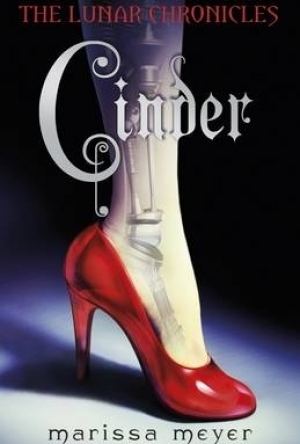
So let's start with the plot. Cinder is a retelling of Cinderella. Perhaps another reason for my lack of interest in the beginning as I've never really been a huge fan of that particular princess. What I do enjoy is a fresh twist on a well known story, so I should have known I would enjoy it if I gave it a chance. Like Cinderella, Cinder follows the story of a young girl who lives with her step-mother, and her two step-sisters, no love lost between them. In both, the girl leads a tough, though somewhat mundane life, right up until she meets her prince, and then things start to look up. Blah, blah, blah... We all know the story right? No. Marissa Meyer gives the traditional tale a new spin, and it was like reading the story for the first time. Because of this, I easily finished the story over one (busy) weekend. The story contained just the right mix of adventure, romance, and sci-fi to keep me hooked, even if -in places- the story seemed to drag a little. This was more than made up for with the explosive ending though. The story ends with enough unresolved conflict to keep you wanting more... And if you're anything like me, thankfully you don't have to wait months for the next one (It's called Scarlet BTW). Another great part of this story was the world building and backstory. At one point, the events of WW4 are mentioned, giving us a little insight as to how the world we know morphed into the one in the story. This also prevented the world from becoming too complicated when other races (The Lunars) are introduced, and helped blend the backstories of both races nicely. Lunars are the genetically mutated humans that live on the moon (Luna), and they have the ability to use a power known as "Glamour" to influence other's minds and make them see and believe what they want them to. This particular part impressed me as it was a clever way of introducing magic in an otherwise "normal" world. Because I'm a sucker for a bit of magic. The only real problem I had with this story was that the plot was somewhat predictable at times... For example, pretty much as soon as it was mentioned that there was once a princess who -if she was still alive- could usurp the Queen of the Lunars and restore peace to the two worlds... It was obvious that it was going to end up being Cinder. (This is confirmed at the end of the book).
Now, onto the characters! Meet our protagonist, Linh Cinder. Cinder is a sixteen-year-old living in New Beijing with her evil Step-mother and two step-sisters... But that's pretty much where the similarities with her and the traditional Cinderella end. Not only is our protagonist more than just a pretty face with a kind heart, she is a badass! Throughout the story she impressed me with her attitude, intelligence, and ability to call people out on their bullshit. Fair enough she came across a little whiny at times, but this can be overlooked when you remember she is pretty much still a child who has had a pretty rough life. Unable to remember her life before a crash that claimed the lives of her family, she was adopted by a man who soon died, leaving her at the mercy of his wife, who was not a fan of Cinder. Why, you ask? Well, Cinder is a cyborg, and that is unforgivable and clearly Cinder's fault... According to the step mother at least. Still, despite being shunned by most people who knew the truth about her, Cinder still manages to be a likable character. Yeah she has her flaws, but that's what I liked about her. She's realistic. She's embarrassed by the fact she is a cyborg, especially when she meets the handsome Prince Kai. It was frustrating at times to read scenes with these two, mainly because Cinder was reluctant to tell Kai about her being a cyborg, and it built a wall between them. I mean, I can see where she's coming from. It would be a nice change to just be a normal girl to someone after years of being told she was less. BUT DAMN GIRL! KAI IS A CINNAMON ROLL AND WOULD LOVE YOU EITHER WAY!!!
*Clears throat* Anyway, moving on... Now we can talk about Kai. Handsome, charming, clueless, Prince Kai. We meet Kai pretty early on in the story (first chapter in fact) and from the moment we meet him, we know he and Cinder are destined. Or at least I hope so... I haven't read the second book yet! The only child of the emperor, Kai will someday rule the Eastern Commonwealth. Unfortunately that day comes all too soon when his father contracts the plague and soon after dies, leaving the job to the young Prince. If I'm being completely honest, I was expecting him to crash and burn at some point, but I was pleasantly surprised when he managed to hack it, even going as far as to stand up to the Lunar Queen- A megabitch we will discuss later- despite the fact she could start a war that would cause chaos for the Earthlings. His character development was fun to read. He started as a charismatic prince with a rebellious streak, and by the end of the book he was an Emperor loyal to his people and smarter than he lets on. I was a little disappointed in his reaction to finding out Cinder was a cyborg (and a Lunar), but under the circumstances, he can be forgiven. I'm quite interested in how the rest of Emperor Kai's story is going to play out, especially as he seemed to have something planned at the end of the first book, but I have yet to see if my suspicions are correct about him.
Now time to talk about our main antagonist, Queen Levana AKA The Megabitch. As far as antagonists go, she isn't the most evil I've met, but she is one of the more interesting. Queen of the Lunars, she is a cold, flawless, evil lady, who hates technology, and is infamous for using her glamour to hide her true face. Her motives seem pretty simple. She wants to rule. As Queen of the Lunars, she can do this by marriage, or she can take it by force. She doesn't really seem to care which way she goes about it, but she does suggest a marriage alliance with Prince/Emperor Kai Puh-lease. He and Cinder are OTP. (Also, I have to praise Meyer for the lack of a love triangle here, even though it would have been easy enough to include one. Bless you, child!) For the majority of the story she seems to be cool and in control, which is worrying for those of us rooting for the heroes, but at the Ball Naturally Cinder manages to crack the flawless facade and give us a little insight to the Queen's weakness Score 1 for Cinder! I have a feeling though that the next time we see the Queen, she is going to up her game and really give our heroes some problems, but we shall see!
Overall, I really enjoyed Cinder and I'm glad that I gave it another go. I should really start listening when my friend suggests books to me. It was an entertaining, frustrating, and even heart-breaking story at times, but I loved it. Marissa Meyer has definitely earned another fan, and I cannot wait to get my hands on the rest of the series. I NEED TO KNOW WHAT HAPPENS TO MY SHIP. The book had a few issues of course, but not enough that I would hesitate to read the next book... Hopefully I'll get around to it soon! In the mean time, anyone debating reading Cinder, you should definitely do it! 100%. And if anyone -like me- is struggling to get into it... Stick at it! I swear it's worth it in the end!
So let's start with the plot. Cinder is a retelling of Cinderella. Perhaps another reason for my lack of interest in the beginning as I've never really been a huge fan of that particular princess. What I do enjoy is a fresh twist on a well known story, so I should have known I would enjoy it if I gave it a chance. Like Cinderella, Cinder follows the story of a young girl who lives with her step-mother, and her two step-sisters, no love lost between them. In both, the girl leads a tough, though somewhat mundane life, right up until she meets her prince, and then things start to look up. Blah, blah, blah... We all know the story right? No. Marissa Meyer gives the traditional tale a new spin, and it was like reading the story for the first time. Because of this, I easily finished the story over one (busy) weekend. The story contained just the right mix of adventure, romance, and sci-fi to keep me hooked, even if -in places- the story seemed to drag a little. This was more than made up for with the explosive ending though. The story ends with enough unresolved conflict to keep you wanting more... And if you're anything like me, thankfully you don't have to wait months for the next one (It's called Scarlet BTW). Another great part of this story was the world building and backstory. At one point, the events of WW4 are mentioned, giving us a little insight as to how the world we know morphed into the one in the story. This also prevented the world from becoming too complicated when other races (The Lunars) are introduced, and helped blend the backstories of both races nicely. Lunars are the genetically mutated humans that live on the moon (Luna), and they have the ability to use a power known as "Glamour" to influence other's minds and make them see and believe what they want them to. This particular part impressed me as it was a clever way of introducing magic in an otherwise "normal" world. Because I'm a sucker for a bit of magic. The only real problem I had with this story was that the plot was somewhat predictable at times... For example, pretty much as soon as it was mentioned that there was once a princess who -if she was still alive- could usurp the Queen of the Lunars and restore peace to the two worlds... It was obvious that it was going to end up being Cinder. (This is confirmed at the end of the book).
Now, onto the characters! Meet our protagonist, Linh Cinder. Cinder is a sixteen-year-old living in New Beijing with her evil Step-mother and two step-sisters... But that's pretty much where the similarities with her and the traditional Cinderella end. Not only is our protagonist more than just a pretty face with a kind heart, she is a badass! Throughout the story she impressed me with her attitude, intelligence, and ability to call people out on their bullshit. Fair enough she came across a little whiny at times, but this can be overlooked when you remember she is pretty much still a child who has had a pretty rough life. Unable to remember her life before a crash that claimed the lives of her family, she was adopted by a man who soon died, leaving her at the mercy of his wife, who was not a fan of Cinder. Why, you ask? Well, Cinder is a cyborg, and that is unforgivable and clearly Cinder's fault... According to the step mother at least. Still, despite being shunned by most people who knew the truth about her, Cinder still manages to be a likable character. Yeah she has her flaws, but that's what I liked about her. She's realistic. She's embarrassed by the fact she is a cyborg, especially when she meets the handsome Prince Kai. It was frustrating at times to read scenes with these two, mainly because Cinder was reluctant to tell Kai about her being a cyborg, and it built a wall between them. I mean, I can see where she's coming from. It would be a nice change to just be a normal girl to someone after years of being told she was less. BUT DAMN GIRL! KAI IS A CINNAMON ROLL AND WOULD LOVE YOU EITHER WAY!!!
*Clears throat* Anyway, moving on... Now we can talk about Kai. Handsome, charming, clueless, Prince Kai. We meet Kai pretty early on in the story (first chapter in fact) and from the moment we meet him, we know he and Cinder are destined. Or at least I hope so... I haven't read the second book yet! The only child of the emperor, Kai will someday rule the Eastern Commonwealth. Unfortunately that day comes all too soon when his father contracts the plague and soon after dies, leaving the job to the young Prince. If I'm being completely honest, I was expecting him to crash and burn at some point, but I was pleasantly surprised when he managed to hack it, even going as far as to stand up to the Lunar Queen- A megabitch we will discuss later- despite the fact she could start a war that would cause chaos for the Earthlings. His character development was fun to read. He started as a charismatic prince with a rebellious streak, and by the end of the book he was an Emperor loyal to his people and smarter than he lets on. I was a little disappointed in his reaction to finding out Cinder was a cyborg (and a Lunar), but under the circumstances, he can be forgiven. I'm quite interested in how the rest of Emperor Kai's story is going to play out, especially as he seemed to have something planned at the end of the first book, but I have yet to see if my suspicions are correct about him.
Now time to talk about our main antagonist, Queen Levana AKA The Megabitch. As far as antagonists go, she isn't the most evil I've met, but she is one of the more interesting. Queen of the Lunars, she is a cold, flawless, evil lady, who hates technology, and is infamous for using her glamour to hide her true face. Her motives seem pretty simple. She wants to rule. As Queen of the Lunars, she can do this by marriage, or she can take it by force. She doesn't really seem to care which way she goes about it, but she does suggest a marriage alliance with Prince/Emperor Kai Puh-lease. He and Cinder are OTP. (Also, I have to praise Meyer for the lack of a love triangle here, even though it would have been easy enough to include one. Bless you, child!) For the majority of the story she seems to be cool and in control, which is worrying for those of us rooting for the heroes, but at the Ball Naturally Cinder manages to crack the flawless facade and give us a little insight to the Queen's weakness Score 1 for Cinder! I have a feeling though that the next time we see the Queen, she is going to up her game and really give our heroes some problems, but we shall see!
Overall, I really enjoyed Cinder and I'm glad that I gave it another go. I should really start listening when my friend suggests books to me. It was an entertaining, frustrating, and even heart-breaking story at times, but I loved it. Marissa Meyer has definitely earned another fan, and I cannot wait to get my hands on the rest of the series. I NEED TO KNOW WHAT HAPPENS TO MY SHIP. The book had a few issues of course, but not enough that I would hesitate to read the next book... Hopefully I'll get around to it soon! In the mean time, anyone debating reading Cinder, you should definitely do it! 100%. And if anyone -like me- is struggling to get into it... Stick at it! I swear it's worth it in the end!

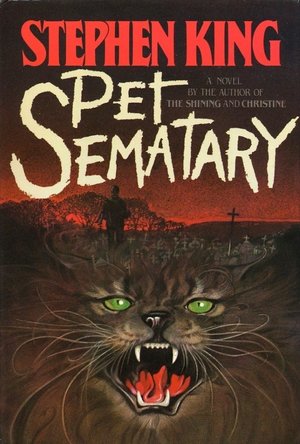
Hadley (567 KP) rated Pet Sematary in Books
Jul 31, 2019
Realistic horror scenes (1 more)
Great writing
Overuse of some words (1 more)
Some contradictions
Louis Creed, the main character of Stephen King's 'Pet Sematary,' wants a good life for his family. He's starting his first term as a newly appointed doctor for the University of Maine. Louis' family moved from Chicago to Maine for this very job, which consists of his young daughter, Ellie, his wife, Rachel, his infant son, Gage, and Ellie's black cat, Church (which is short for Winston Churchill). This cat quickly becomes the topic of conversation when the Creeds' new neighbor, Jud Crandall, warns them about the road in front of their house: " 'I'd get him fixed, ' Crandall said, crushing his smoke between his thumb and forefinger. 'A fixed cat don't tend to wander as much. But if it's all the time crossing back and forth, its luck will run out, and it'll end up there with the Ryder kids' coon and little Timmy Dessler's cocker spaniel and Missus Bradleigh's parakeet. Not that the parakeet got run over in the road, you understand. It just went feet up one day.' "
When Louis becomes curious about a trail behind his new home that leads into the woods, Jud gladly introduces the Creed family to the infamous 'Pet Sematary.' A place where children, for years, have buried their pets when they die. This place, and the death of Church, form the starting basis of King's amazing novel.
Louis' life suddenly changes after the death of a University student named Victor Pascow, and gets even worse when Louis starts to have dreams about him. One night, even the ghost of Pascow shows up at Louis' house: " He stood there with his head bashed in behind the left temple. The blood had dried on his face in maroon stripes like Indian warpaint. His collarbone jutted whitely. He was grinning. 'Come on, Doctor,' Pascow said. 'We got places to go.' " Louis ends up following Pascow to the pet sematary where he tells him: " 'I come as a friend,' Pascow said--- but was friend actually the word Pascow had used? Louis thought not. It was as if Pascow had spoken in a foreign language which Louis could understand through some dream magic... and friend was as close as to whatever word Pascow had actually used that Louis's struggling mind could come. ' Your destruction and the destruction of all you love is very near, Doctor.' He was close enough for Louis to be able to smell death on him. "
Later on, Louis feels Pascow's premonition might be coming true when he finds that Church has been killed by a passing vehicle. Jud, who happened to find Church, tells him to follow him so that they can bury the cat, but Jud doesn't stop at the pet sematary as expected, instead he goes past a deadfall barrier and continues on to a place he calls the Micmac Burial Ground, a burial ground that was made by the Micmac Indians. Through this entire scene, Louis experiences paranormal-type things, including the maniacal laughter of a disembodied voice. Jud warns Louis to not pay any attention to anything he experiences here: " 'You might see St. Elmo's fire- - - what the sailors call foo-lights. It makes funny shapes, but it's nothing. If you should see some of those shapes and they bother you, just look the other way. You may hear sounds like voices, but they are the loons down south toward Prospect. The sound carries. It's funny.' "
Now, the real story begins when Church returns to the house after his burial, where Louis finds dried blood on the cat's face and small pieces of plastic from the garbage bag his body had been in. Breathing and eating, the cat has certainly come back to life, but Louis notices that Church isn't the same as he was before; while Louis is in a hot bath, Church takes a seat on the toilet, where we witness him swaying back and forth, from this point on, Louis starts to regret following Jud to the Micmac burial ground.
Ellie, Louis' daughter, begins to suspect that something is different about Church, but she shrugs it off and doesn't necessarily question it:
" 'Daddy?' Ellie said in a low, subdued voice.
'What, Ellie? '
'Church smells funny.'
'Does he?' Louis asked, his voice carefully neutral.
'Yes!' Ellie said, distressed. 'Yes, he does! He never smelled funny before! He smells like... he smells like ka-ka!'
'Well, maybe he rolled in something bad, honey,' Louis said. 'Whatever that bad smell is, he'll lost it.'
'I certainly hope so,' Ellie said in a comical dowager's voice. She walked off. " King spends a majority of 'Pet Sematary' addressing everyone's fear of death; he discusses parents' fear of explaining death to their children for the first time, and even makes readers face the real nightmare of losing a child.
And the realism that King writes about is what makes him the great writer that he is today. King writes about the death of a child, but also makes Louis into a very real character that any parent could relate to. While many books touch on this subject, none can touch on grief like King does: " It was well for Louis- - - well for all three of the remaining family members--- that Steve had shown up as promptly as he had, because Louis was at least temporarily unable to make any kind of decision, even one so minor as giving his wife a shot to mute her deep grief. Louis hadn't even noticed that Rachel had apparently meant to go to the morning viewing in her housecoat, which she had misbuttoned. Her hair was uncombed, unwashed, tangled. Her eyes, blank brown orbits, bulged from sockets so sunken that they had almost become the eyes of a living skull. Her flesh was doughy. It hung from her face. She sat at the breakfast table that morning, munching unbuttered toast and talking in disjointed phrases that made no sense at all. At one point she had said abruptly, 'About that Winnebago you want to buy, Lou---' Louis had last spoken about buying a Winnebago in 1981. "
Yet, this isn't a book about grief, but a horror book about grief, which King masterfully put together. He molds the darkness of losing a child with the horror of making zombies, but King makes the story seem so realistic that any parent would go to the lengths that Louis did - - -and Jud, for that matter - - - even with the dire consequences at stake: " You're slanting all the evidence in favor of the conclusion you want to produce, his [Louis] mind protested. At least tell yourself the goddamned truth about the change in Church. Even if you want to disqualify the animals--- the mice and the birds--- what about the way he is? Muddled... that's the best word of all, that sums it up. The day we were out with the kite. You remember how Gage was that day? How vibrant and alive he was, reacting to everything? Wouldn't it be better to remember him that way? Do you want to resurrect a zombie from a grade-B horror picture? Or even something so prosaic as a retarded little boy? A boy who eats with his fingers and stares blankly at images on the TV screen and who will never learn to write his own name? What did Jud say about his dog? 'It was like washing a piece of meat.' Is that what you want? A piece of breathing meat? And even if you're able to be satisfied with that, how do you explain the return of your son from the dead to your wife? To your daughter? To Steve Masterton? To the world? What happens the first time Missy Dandridge pulls into the driveway and sees Gage riding his trike in the yard? Can't you hear her screams, Louis? Can't you see her harrowing her face with her fingernails? What do you say to the reporters? What do you say when a film crew from 'Real People' turns up on your doorstep, wanting to shoot film of your resurrected son? "
Pet Sematary is an emotional thrill ride, with Louis as a very relatable character, and the writing makes this a must-read book for all readers. With one of my favorite descriptive parts taking place in the 'Little God Swamp' that exists just outside of the Micmac Burial Ground when King describes the legendary Wendigo:
" The mist stained to a dull slate- gray for a moment, but this diffuse, ill-defined watermark was better than sixty feet high. It was no shade, no insubstantial ghost; he could feel the displaced air of its passage, could hear the mammoth thud of its feet coming down, the suck of mud as it moved on. For a moment he believed he saw twin yellow- orange sparks high above him. Sparks like eyes. "
The novel is so well-written that it reads easily, and King's descriptions put the reader right inside of the book.
With a few inconsistencies here and there, and overuse of some words, Pet Sematary is a very enjoyable book for lovers of the horror genre. I highly recommend this book!
When Louis becomes curious about a trail behind his new home that leads into the woods, Jud gladly introduces the Creed family to the infamous 'Pet Sematary.' A place where children, for years, have buried their pets when they die. This place, and the death of Church, form the starting basis of King's amazing novel.
Louis' life suddenly changes after the death of a University student named Victor Pascow, and gets even worse when Louis starts to have dreams about him. One night, even the ghost of Pascow shows up at Louis' house: " He stood there with his head bashed in behind the left temple. The blood had dried on his face in maroon stripes like Indian warpaint. His collarbone jutted whitely. He was grinning. 'Come on, Doctor,' Pascow said. 'We got places to go.' " Louis ends up following Pascow to the pet sematary where he tells him: " 'I come as a friend,' Pascow said--- but was friend actually the word Pascow had used? Louis thought not. It was as if Pascow had spoken in a foreign language which Louis could understand through some dream magic... and friend was as close as to whatever word Pascow had actually used that Louis's struggling mind could come. ' Your destruction and the destruction of all you love is very near, Doctor.' He was close enough for Louis to be able to smell death on him. "
Later on, Louis feels Pascow's premonition might be coming true when he finds that Church has been killed by a passing vehicle. Jud, who happened to find Church, tells him to follow him so that they can bury the cat, but Jud doesn't stop at the pet sematary as expected, instead he goes past a deadfall barrier and continues on to a place he calls the Micmac Burial Ground, a burial ground that was made by the Micmac Indians. Through this entire scene, Louis experiences paranormal-type things, including the maniacal laughter of a disembodied voice. Jud warns Louis to not pay any attention to anything he experiences here: " 'You might see St. Elmo's fire- - - what the sailors call foo-lights. It makes funny shapes, but it's nothing. If you should see some of those shapes and they bother you, just look the other way. You may hear sounds like voices, but they are the loons down south toward Prospect. The sound carries. It's funny.' "
Now, the real story begins when Church returns to the house after his burial, where Louis finds dried blood on the cat's face and small pieces of plastic from the garbage bag his body had been in. Breathing and eating, the cat has certainly come back to life, but Louis notices that Church isn't the same as he was before; while Louis is in a hot bath, Church takes a seat on the toilet, where we witness him swaying back and forth, from this point on, Louis starts to regret following Jud to the Micmac burial ground.
Ellie, Louis' daughter, begins to suspect that something is different about Church, but she shrugs it off and doesn't necessarily question it:
" 'Daddy?' Ellie said in a low, subdued voice.
'What, Ellie? '
'Church smells funny.'
'Does he?' Louis asked, his voice carefully neutral.
'Yes!' Ellie said, distressed. 'Yes, he does! He never smelled funny before! He smells like... he smells like ka-ka!'
'Well, maybe he rolled in something bad, honey,' Louis said. 'Whatever that bad smell is, he'll lost it.'
'I certainly hope so,' Ellie said in a comical dowager's voice. She walked off. " King spends a majority of 'Pet Sematary' addressing everyone's fear of death; he discusses parents' fear of explaining death to their children for the first time, and even makes readers face the real nightmare of losing a child.
And the realism that King writes about is what makes him the great writer that he is today. King writes about the death of a child, but also makes Louis into a very real character that any parent could relate to. While many books touch on this subject, none can touch on grief like King does: " It was well for Louis- - - well for all three of the remaining family members--- that Steve had shown up as promptly as he had, because Louis was at least temporarily unable to make any kind of decision, even one so minor as giving his wife a shot to mute her deep grief. Louis hadn't even noticed that Rachel had apparently meant to go to the morning viewing in her housecoat, which she had misbuttoned. Her hair was uncombed, unwashed, tangled. Her eyes, blank brown orbits, bulged from sockets so sunken that they had almost become the eyes of a living skull. Her flesh was doughy. It hung from her face. She sat at the breakfast table that morning, munching unbuttered toast and talking in disjointed phrases that made no sense at all. At one point she had said abruptly, 'About that Winnebago you want to buy, Lou---' Louis had last spoken about buying a Winnebago in 1981. "
Yet, this isn't a book about grief, but a horror book about grief, which King masterfully put together. He molds the darkness of losing a child with the horror of making zombies, but King makes the story seem so realistic that any parent would go to the lengths that Louis did - - -and Jud, for that matter - - - even with the dire consequences at stake: " You're slanting all the evidence in favor of the conclusion you want to produce, his [Louis] mind protested. At least tell yourself the goddamned truth about the change in Church. Even if you want to disqualify the animals--- the mice and the birds--- what about the way he is? Muddled... that's the best word of all, that sums it up. The day we were out with the kite. You remember how Gage was that day? How vibrant and alive he was, reacting to everything? Wouldn't it be better to remember him that way? Do you want to resurrect a zombie from a grade-B horror picture? Or even something so prosaic as a retarded little boy? A boy who eats with his fingers and stares blankly at images on the TV screen and who will never learn to write his own name? What did Jud say about his dog? 'It was like washing a piece of meat.' Is that what you want? A piece of breathing meat? And even if you're able to be satisfied with that, how do you explain the return of your son from the dead to your wife? To your daughter? To Steve Masterton? To the world? What happens the first time Missy Dandridge pulls into the driveway and sees Gage riding his trike in the yard? Can't you hear her screams, Louis? Can't you see her harrowing her face with her fingernails? What do you say to the reporters? What do you say when a film crew from 'Real People' turns up on your doorstep, wanting to shoot film of your resurrected son? "
Pet Sematary is an emotional thrill ride, with Louis as a very relatable character, and the writing makes this a must-read book for all readers. With one of my favorite descriptive parts taking place in the 'Little God Swamp' that exists just outside of the Micmac Burial Ground when King describes the legendary Wendigo:
" The mist stained to a dull slate- gray for a moment, but this diffuse, ill-defined watermark was better than sixty feet high. It was no shade, no insubstantial ghost; he could feel the displaced air of its passage, could hear the mammoth thud of its feet coming down, the suck of mud as it moved on. For a moment he believed he saw twin yellow- orange sparks high above him. Sparks like eyes. "
The novel is so well-written that it reads easily, and King's descriptions put the reader right inside of the book.
With a few inconsistencies here and there, and overuse of some words, Pet Sematary is a very enjoyable book for lovers of the horror genre. I highly recommend this book!

graveyardgremlin (7194 KP) rated Sweet Valley Confidential: Ten Years Later in Books
Feb 15, 2019


<b><i>"What a stupid book."</i></b>
That was my initial thought after turning the final page of <b>Sweet Valley Confidential: Ten Years Later</b>.
As a pre-teen, I was addicted to the <u>Sweet Valley High</u> series, and then later, the <u>Sweet Valley University</u> series as well. Before that even, I had read some of the Twins and Kids series, so when I heard this was coming out last year, I just knew I had to read it. I was excited beyond compare and went into full geek-out mode. Where are the perfect size-six Wakefield twins, and their friends and enemies, now? What are their occupations? Who are they dating or who'd they marry? And my questions kept going on and on. What has inspired this obsession? It's not like these books were high literature, but somehow they became ingrained into my life to this very day and I cannot help but remember SVH fondly.
It is nearly impossible to review the story within the covers without spoilers, but I am going to try my darnedest. Some cursing may or may not be involved.
<b>Short synopsis</b> (snarky comments in parentheses ;P):
Jessica has betrayed Elizabeth. <i>(Doesn't take a rocket scientist to figure out what she did. Anyone who's read the books could make an accurate guess.)</i> The Ultimate Betrayal. <i>(Oooooh!)</i> Elizabeth flees to New York. Elizabeth is a slightly sympathetic bitter victim/martyr who craves revenge throughout the book. Jessica is supposed to be a sympathetic betrayer/victim who's heartsick at destroying her sister. <i>(I don't buy it.)</i> Tons of reminiscing flashbacks ensue throughout the book, sometimes the same ones told by different characters, and take up about half of it, so there's barely any plot. Book ends with a thirteen-page <i>Where Are They Now?</i>-type epilogue that tells old fans what has happened to many major supporting characters from the original high school series. <i>(Apparently no one is allowed to be happy. And anyone you may have originally liked from SVH has turned into a big dick. WTF?)</i>
I expected to enjoy this as the usual over-the-top, soap opera stories I remember, but revamped a bit. Sadly, I was left feeling underwhelmed, disappointed, annoyed, and rather pissed off. For one thing, I could not buy the main betrayal -- <spoiler>Jessica and Todd?! In love!!?? Really? In what surreal dimension does that make any kind of sense? This broke the book for me. How can I believe anything else if this doesn't ring true. A passionate affair, sure. A one-night stand, why not? But actual 'til death do us part nonsense? Bull. Not when it's almost always been the Elizabeth and Todd, "made-for-each-other" type of thing. I actually wouldn't have minded if E & T hadn't ended up together, but for Todd to be with Jessica, that's just madness, plain and simple.</spoiler> -- it was just so unbelievable. And I mean that in a Sweet Valley way, which we all know is not steeped in any form of actual reality, so my standards are quite low and I expect the extraordinary and overwrought. So from this point on, which is within the first two chapters, I struggled, but somehow managed to read on. I admit, I gagged more than few times throughout the book. Who wouldn't when faced with passages such as this one,
<blockquote>"And what faces they were.
Gorgeous. Absolutely amazing. The kind you couldn't stop looking at. Their eyes were shades of aqua that danced in the light like shards of precious stones, oval and fringed with thick, light brown lashes long enough to cast a shadow on their cheeks. Their silky blond hair, the cascading kind, fell just below their shoulders. And to complete the perfection, their rosy lips looked as if they were penciled on. There wasn't a thing wrong with their figures, either. It was if billions of possibilities all fell together perfectly.
Twice."
-page 9/10</blockquote>
I hope you managed to hold onto your last meal. I barely did. I also had to endure "his beloved," "his love," and other similar nauseating descriptions.
This is not the PG-rated books from the past, the word "orgasm" is actually used. So is the F-bomb and other expletives. *gasp* Seriously, it does push the boundaries more than the innocent SVH series, but it's not very shocking by today's standards. Except that it does involve the Wakefield Twins, which was strange at first. Of course, current trends had to pop up, like Twitter and Facebook, Justin Timberlake and Beyonce, which always makes a book better and doesn't date it in the least. (That was heavy sarcasm in case you weren't sure.) The book does refer to some incidents and people from the SVU series, but only certain elements, otherwise it's mainly a continuation of high school and no one from the university days actually appears in the book.
Neither Elizabeth nor Jessica felt true to form, especially Jessica, and in fact, none of the characters, whether seen or just talked about, were right. Sure, some people change and some don't, but not a one was recognizable. Where did these strangers with the same names come from? Why couldn't there have been some semblance of the original shining through? Again, I have a hard time with the basis of the book, so that has severely colored my view of the entire thing, but as it stands, it was a complete waste of a good idea. I'd be willing to bet that any fan of SVH could come up with something a million times better than this dreck. Wasn't there an original ghostwriter available? You know, someone who might actually know the world and characters, and have the skill to develop them both in a believable manner?
The writing is rather clunky and purple-ly, often managing both at the same time. Redundancy abounds, editing mistakes, including wrong names and inconsistencies to previous events in SVH-iverse, and lots of use of the words "like" and "so", more-so in Jessica's narrative than anywhere else, which was really, really, so, like, irritating. Like, really. Ms. Pascal must have had a thesaurus at the ready, because there were big words awkwardly thrown into the narrative. While I appreciate authors utilizing lesser known or used words, some just don't blend well with the rest of the text and they pop-out unflatteringly. The structure needed fine-tuning and tenses were oddly used to differentiate the flashbacks from present day.
To put it succinctly, the writing isn't great and neither is the storyline, what there is of it. This was a bizarre read even by Sweet Valley standards and an insult to fans. Seriously, does Francine Pascal hate this universe and its readers? I think I'll stick to the <a href="http://www.goodreads.com/series/58723-sweet-valley-high">Sweet Valley High</a> series and make up my own stories about what happened afterward.
Slightly spoiler-ish lesson learned from this book:
<spoiler>Betrayal is okay as long as it's "Twu Luv."</spoiler>
Second lesson learned:
Everything always turns up fucking sunshine and roses and unicorns and lollipops for the worst person (or people) in the end.
I'd like to leave you with another winning description,
<blockquote>"There were no tears, but her mouth was twisted in a silent sob."
-page 17</blockquote>
<u>A thought a few hours after having finished this book:</u>
Maybe another "sequel" will eventually come out and it'll begin with Elizabeth waking up from the nightmare that is this book and we'll get the real ten years later story. Ahh, sweet dreams.
<u>Update: April 26, 2011:</u>
Oh yes, always good to blame the fans/readers for not liking their terrible book. By pointing out minor, petty reasons, I might add. <b>Warning:</b> book spoilers in article.
http://www.nytimes.com/2011/04/17/business/media/17sweet.html?_r=1
That was my initial thought after turning the final page of <b>Sweet Valley Confidential: Ten Years Later</b>.
As a pre-teen, I was addicted to the <u>Sweet Valley High</u> series, and then later, the <u>Sweet Valley University</u> series as well. Before that even, I had read some of the Twins and Kids series, so when I heard this was coming out last year, I just knew I had to read it. I was excited beyond compare and went into full geek-out mode. Where are the perfect size-six Wakefield twins, and their friends and enemies, now? What are their occupations? Who are they dating or who'd they marry? And my questions kept going on and on. What has inspired this obsession? It's not like these books were high literature, but somehow they became ingrained into my life to this very day and I cannot help but remember SVH fondly.
It is nearly impossible to review the story within the covers without spoilers, but I am going to try my darnedest. Some cursing may or may not be involved.
<b>Short synopsis</b> (snarky comments in parentheses ;P):
Jessica has betrayed Elizabeth. <i>(Doesn't take a rocket scientist to figure out what she did. Anyone who's read the books could make an accurate guess.)</i> The Ultimate Betrayal. <i>(Oooooh!)</i> Elizabeth flees to New York. Elizabeth is a slightly sympathetic bitter victim/martyr who craves revenge throughout the book. Jessica is supposed to be a sympathetic betrayer/victim who's heartsick at destroying her sister. <i>(I don't buy it.)</i> Tons of reminiscing flashbacks ensue throughout the book, sometimes the same ones told by different characters, and take up about half of it, so there's barely any plot. Book ends with a thirteen-page <i>Where Are They Now?</i>-type epilogue that tells old fans what has happened to many major supporting characters from the original high school series. <i>(Apparently no one is allowed to be happy. And anyone you may have originally liked from SVH has turned into a big dick. WTF?)</i>
I expected to enjoy this as the usual over-the-top, soap opera stories I remember, but revamped a bit. Sadly, I was left feeling underwhelmed, disappointed, annoyed, and rather pissed off. For one thing, I could not buy the main betrayal -- <spoiler>Jessica and Todd?! In love!!?? Really? In what surreal dimension does that make any kind of sense? This broke the book for me. How can I believe anything else if this doesn't ring true. A passionate affair, sure. A one-night stand, why not? But actual 'til death do us part nonsense? Bull. Not when it's almost always been the Elizabeth and Todd, "made-for-each-other" type of thing. I actually wouldn't have minded if E & T hadn't ended up together, but for Todd to be with Jessica, that's just madness, plain and simple.</spoiler> -- it was just so unbelievable. And I mean that in a Sweet Valley way, which we all know is not steeped in any form of actual reality, so my standards are quite low and I expect the extraordinary and overwrought. So from this point on, which is within the first two chapters, I struggled, but somehow managed to read on. I admit, I gagged more than few times throughout the book. Who wouldn't when faced with passages such as this one,
<blockquote>"And what faces they were.
Gorgeous. Absolutely amazing. The kind you couldn't stop looking at. Their eyes were shades of aqua that danced in the light like shards of precious stones, oval and fringed with thick, light brown lashes long enough to cast a shadow on their cheeks. Their silky blond hair, the cascading kind, fell just below their shoulders. And to complete the perfection, their rosy lips looked as if they were penciled on. There wasn't a thing wrong with their figures, either. It was if billions of possibilities all fell together perfectly.
Twice."
-page 9/10</blockquote>
I hope you managed to hold onto your last meal. I barely did. I also had to endure "his beloved," "his love," and other similar nauseating descriptions.
This is not the PG-rated books from the past, the word "orgasm" is actually used. So is the F-bomb and other expletives. *gasp* Seriously, it does push the boundaries more than the innocent SVH series, but it's not very shocking by today's standards. Except that it does involve the Wakefield Twins, which was strange at first. Of course, current trends had to pop up, like Twitter and Facebook, Justin Timberlake and Beyonce, which always makes a book better and doesn't date it in the least. (That was heavy sarcasm in case you weren't sure.) The book does refer to some incidents and people from the SVU series, but only certain elements, otherwise it's mainly a continuation of high school and no one from the university days actually appears in the book.
Neither Elizabeth nor Jessica felt true to form, especially Jessica, and in fact, none of the characters, whether seen or just talked about, were right. Sure, some people change and some don't, but not a one was recognizable. Where did these strangers with the same names come from? Why couldn't there have been some semblance of the original shining through? Again, I have a hard time with the basis of the book, so that has severely colored my view of the entire thing, but as it stands, it was a complete waste of a good idea. I'd be willing to bet that any fan of SVH could come up with something a million times better than this dreck. Wasn't there an original ghostwriter available? You know, someone who might actually know the world and characters, and have the skill to develop them both in a believable manner?
The writing is rather clunky and purple-ly, often managing both at the same time. Redundancy abounds, editing mistakes, including wrong names and inconsistencies to previous events in SVH-iverse, and lots of use of the words "like" and "so", more-so in Jessica's narrative than anywhere else, which was really, really, so, like, irritating. Like, really. Ms. Pascal must have had a thesaurus at the ready, because there were big words awkwardly thrown into the narrative. While I appreciate authors utilizing lesser known or used words, some just don't blend well with the rest of the text and they pop-out unflatteringly. The structure needed fine-tuning and tenses were oddly used to differentiate the flashbacks from present day.
To put it succinctly, the writing isn't great and neither is the storyline, what there is of it. This was a bizarre read even by Sweet Valley standards and an insult to fans. Seriously, does Francine Pascal hate this universe and its readers? I think I'll stick to the <a href="http://www.goodreads.com/series/58723-sweet-valley-high">Sweet Valley High</a> series and make up my own stories about what happened afterward.
Slightly spoiler-ish lesson learned from this book:
<spoiler>Betrayal is okay as long as it's "Twu Luv."</spoiler>
Second lesson learned:
Everything always turns up fucking sunshine and roses and unicorns and lollipops for the worst person (or people) in the end.
I'd like to leave you with another winning description,
<blockquote>"There were no tears, but her mouth was twisted in a silent sob."
-page 17</blockquote>
<u>A thought a few hours after having finished this book:</u>
Maybe another "sequel" will eventually come out and it'll begin with Elizabeth waking up from the nightmare that is this book and we'll get the real ten years later story. Ahh, sweet dreams.
<u>Update: April 26, 2011:</u>
Oh yes, always good to blame the fans/readers for not liking their terrible book. By pointing out minor, petty reasons, I might add. <b>Warning:</b> book spoilers in article.
http://www.nytimes.com/2011/04/17/business/media/17sweet.html?_r=1

The Bandersnatch (199 KP) rated Dracula in Books
Nov 7, 2019
Dracula was written by author Bram Stoker during the late 1890's and is set around the character of Dracula and his attempt to move from Transylvania to England so he can spread the curse of the undead (I.e. the creation of more vampires). English solicitor Jonathan Harker who'd originally gone to Transylvania to be legal aide for Dracula stops him with the help of Van Helsing and others which ends the life of one of them – Quincey-, the book ends with a note from Jonathan Harker that several people lived happily married and Jonathan has a son nicknamed for Quincey.
Dracula was published in London in May 1897 by Archibald Constable & Company and was later copyrighted in the U.S in 1899 and published by Doubleday & McClure of New York. Despite having decent praise form reviewers it wasn't an immediate bestseller. Although the English newspaper the Daily Mail ranked Stoker's writing prowess in Dracula above that of Mary Shelly, Edgar Allen Poe and Emily Bronte's Wuthering heights. Unfortunately it didn't make Stoker that much money and he'd had to petition for a compassionate grant from the royal literary fund. When he died his widow was forced to sell his notes and outlines of the book at an auction in 1913. It was the unauthorised adaption of Nosferatu by F. W. Murnau in 1922 and the resulting legal battle made when Stokers widow took affront that the novels popularity began to grow.
Before writing Dracula Bram Stoker had been researching European folklore and stories of vampires having been most influenced by Emily Gerard's “Transylvania Superstitions” 1885 essay...which included content about the vampire myth. Some historians insist that Vlad iii Dracula (More commonly known as Vlad the impaler) was the model for Stokers count but there's been no supporting evidence to make that true. According to one expert Stoker only borrowed the barest minimum of information of the Wallachian tyrant and he's not even mentioned in Stokers notes. Stoker was a member of the London library during the 1890's where books by Sabine Baring-Gould, Thomas Browne, AF Crosse and Charles Boner are attributed to Stokers research. Stoker would later claim he'd had a nightmare caused by over-eating crab meat about a “Vampire king” rising from his grave. Whitby on the Yorkshire coast contributed its landscape since Bram Stoker often holidayed there during the summer.
Dracula wasn't Stokers first choice as title for the story since he cycled through The Dead Un-Dead then simply the Un-Dead the count wasn't even supposed to be Count Dracula having had the name Count Wampyr for several drafts before Stoker became intrigued by the name Dracula. After reading “An account of the principles of Wallachia and Moldavia with political observations relative to them” written by author William Wilkinson (Published in 1820). the descendants of Vlad ii of Wallachia took the name Dracula or Dracul after being invested in the Order of the Dragon in 1431. In the old Romanian language the word Dracul mean “the Dragon” and Dracula meant “Son of the Dragon”. Nowadays however Dracul means “the Devil”
Whilst Dracula is known as THE Vampire novel its not the first. Johan Wolfgang Von Goethe had his book the Bride of Corinth published in 1797, 1871's Carmilla (a story about a lesbian vampire) was written by Sheridan Le Frau and James Malcolm Rymer's penny dreadful series Venny the Vampire was a product from the mid Victorian period. Even John Polidori created an image of a vampyric aristocrat in his 1819 story The Vampyre when he spent a summer with Merry Shelly (creator of Frankenstein) and her poet husband Percy Bysshe Shelly and Lord Bryon in 1816.
I really love Dracula. It showed the madness, the ethereal quality and the ultimate danger of what a vampire could do. Like many other goth inclined teenagers trying to find their feet in the world Dracula definitely added its two cents to my self worth and love of all things macabre. The fact it was written by a Victorian writer has added a unusual depth to the story as only a Victorian writer could. The culture of the Vampire has become deep rooted and wide spread in its acceptance and Dracula has definitely spearheaded such a phenomenon.
Abraham “Bram” Stoker was Born in Dublin, Ireland on the 8th of November 1847, He was the third of seven children born to Abraham and Charlotte Stoker and was bedridden with an unknown illness until he recovered at seven. He started schooling at a private school run by the Reverend William Woods and grew up without serious illness. Stoker excelled at sports at Trinity College Dublin having graduated in 1870 with a BA (Bachelor of Arts). He was an Auditor of the College Historical Society and the president of the University Philosophical Society where his first paper was on Sensationalism in fiction and society.
Thanks to his friend Dr. Maunsell, Stoker became interested in the theatre as a student and whilst working for the Irish civil service he became a theatre critic for the Dublin evening mail where he attracted notice for the quality of his reviews. Stoker gave a favourable review of Henry Irving's adaption of Hamlet in December 1876, this prompted Irving to invite him to dinner where they ended up becoming friends. Stoker wrote The Crystal Cup which was published by the London society in 1872 and The chain of Destiny which was released in four parts in the Shamrock. Stoker also wrote the non-fiction book the duties of clerks of petty sessions in Ireland which was published in 1879.
Bram stoker married Florence Balcombe the daughter of a lieutenent-colonel in 1978 and they moved to London. Where Stoker ended up the Business manager of the Lyceum theatre as well as manager for Henry Irving- a position he held for 27 years. Despite being a very busy man Stoker ended up writing several novels (as well as Dracula) Including The Snakes pass in 1890, the lady of the shroud in 1909 and the lair of the white worm in 1911. when Henry Irving died in 1906 he published his personal reminiscences of Henry Irving. Stoker also managed productions at the Prince of Wales theatre.
Bram stoker died after a series of strokes in London on April 20th 1912, the cause of death is split between the possibility of Tertiary Syphilis or overwork. He was cremated and was placed in a display urn at Golders Green Crematorium in North London, he was later joined by the ashes of his Son Irving Noel Stoker in 1961, his wife Florence was meant to join them but her ashes were scattered at the Gardens of rest.
Stoker was honoured with a Google Doogle (the banner on goggles homepage) on November 8th 2012 commemorating the 165th anniversary of his birth. An annual festival in honour of Bram Stoker happens in Dublin, its supported by the Bram stoker estate and was/is usually funded by Dublin City Council and Failte Ireland.
My opinion of Bran stoker is that of a decent hard working man who loved life. Stoker epitomises the phrases of “a man on a mission” and “a man who hussles”. Having worked extremely hard both creatively as a novelist and business wise as a theatre manager Stoker pretty much showed that if you work hard you could pretty much do anything you set your mind to.
And there you have it a book for all the ages, definitely under the banner of AWESOME!!!.
Dracula was published in London in May 1897 by Archibald Constable & Company and was later copyrighted in the U.S in 1899 and published by Doubleday & McClure of New York. Despite having decent praise form reviewers it wasn't an immediate bestseller. Although the English newspaper the Daily Mail ranked Stoker's writing prowess in Dracula above that of Mary Shelly, Edgar Allen Poe and Emily Bronte's Wuthering heights. Unfortunately it didn't make Stoker that much money and he'd had to petition for a compassionate grant from the royal literary fund. When he died his widow was forced to sell his notes and outlines of the book at an auction in 1913. It was the unauthorised adaption of Nosferatu by F. W. Murnau in 1922 and the resulting legal battle made when Stokers widow took affront that the novels popularity began to grow.
Before writing Dracula Bram Stoker had been researching European folklore and stories of vampires having been most influenced by Emily Gerard's “Transylvania Superstitions” 1885 essay...which included content about the vampire myth. Some historians insist that Vlad iii Dracula (More commonly known as Vlad the impaler) was the model for Stokers count but there's been no supporting evidence to make that true. According to one expert Stoker only borrowed the barest minimum of information of the Wallachian tyrant and he's not even mentioned in Stokers notes. Stoker was a member of the London library during the 1890's where books by Sabine Baring-Gould, Thomas Browne, AF Crosse and Charles Boner are attributed to Stokers research. Stoker would later claim he'd had a nightmare caused by over-eating crab meat about a “Vampire king” rising from his grave. Whitby on the Yorkshire coast contributed its landscape since Bram Stoker often holidayed there during the summer.
Dracula wasn't Stokers first choice as title for the story since he cycled through The Dead Un-Dead then simply the Un-Dead the count wasn't even supposed to be Count Dracula having had the name Count Wampyr for several drafts before Stoker became intrigued by the name Dracula. After reading “An account of the principles of Wallachia and Moldavia with political observations relative to them” written by author William Wilkinson (Published in 1820). the descendants of Vlad ii of Wallachia took the name Dracula or Dracul after being invested in the Order of the Dragon in 1431. In the old Romanian language the word Dracul mean “the Dragon” and Dracula meant “Son of the Dragon”. Nowadays however Dracul means “the Devil”
Whilst Dracula is known as THE Vampire novel its not the first. Johan Wolfgang Von Goethe had his book the Bride of Corinth published in 1797, 1871's Carmilla (a story about a lesbian vampire) was written by Sheridan Le Frau and James Malcolm Rymer's penny dreadful series Venny the Vampire was a product from the mid Victorian period. Even John Polidori created an image of a vampyric aristocrat in his 1819 story The Vampyre when he spent a summer with Merry Shelly (creator of Frankenstein) and her poet husband Percy Bysshe Shelly and Lord Bryon in 1816.
I really love Dracula. It showed the madness, the ethereal quality and the ultimate danger of what a vampire could do. Like many other goth inclined teenagers trying to find their feet in the world Dracula definitely added its two cents to my self worth and love of all things macabre. The fact it was written by a Victorian writer has added a unusual depth to the story as only a Victorian writer could. The culture of the Vampire has become deep rooted and wide spread in its acceptance and Dracula has definitely spearheaded such a phenomenon.
Abraham “Bram” Stoker was Born in Dublin, Ireland on the 8th of November 1847, He was the third of seven children born to Abraham and Charlotte Stoker and was bedridden with an unknown illness until he recovered at seven. He started schooling at a private school run by the Reverend William Woods and grew up without serious illness. Stoker excelled at sports at Trinity College Dublin having graduated in 1870 with a BA (Bachelor of Arts). He was an Auditor of the College Historical Society and the president of the University Philosophical Society where his first paper was on Sensationalism in fiction and society.
Thanks to his friend Dr. Maunsell, Stoker became interested in the theatre as a student and whilst working for the Irish civil service he became a theatre critic for the Dublin evening mail where he attracted notice for the quality of his reviews. Stoker gave a favourable review of Henry Irving's adaption of Hamlet in December 1876, this prompted Irving to invite him to dinner where they ended up becoming friends. Stoker wrote The Crystal Cup which was published by the London society in 1872 and The chain of Destiny which was released in four parts in the Shamrock. Stoker also wrote the non-fiction book the duties of clerks of petty sessions in Ireland which was published in 1879.
Bram stoker married Florence Balcombe the daughter of a lieutenent-colonel in 1978 and they moved to London. Where Stoker ended up the Business manager of the Lyceum theatre as well as manager for Henry Irving- a position he held for 27 years. Despite being a very busy man Stoker ended up writing several novels (as well as Dracula) Including The Snakes pass in 1890, the lady of the shroud in 1909 and the lair of the white worm in 1911. when Henry Irving died in 1906 he published his personal reminiscences of Henry Irving. Stoker also managed productions at the Prince of Wales theatre.
Bram stoker died after a series of strokes in London on April 20th 1912, the cause of death is split between the possibility of Tertiary Syphilis or overwork. He was cremated and was placed in a display urn at Golders Green Crematorium in North London, he was later joined by the ashes of his Son Irving Noel Stoker in 1961, his wife Florence was meant to join them but her ashes were scattered at the Gardens of rest.
Stoker was honoured with a Google Doogle (the banner on goggles homepage) on November 8th 2012 commemorating the 165th anniversary of his birth. An annual festival in honour of Bram Stoker happens in Dublin, its supported by the Bram stoker estate and was/is usually funded by Dublin City Council and Failte Ireland.
My opinion of Bran stoker is that of a decent hard working man who loved life. Stoker epitomises the phrases of “a man on a mission” and “a man who hussles”. Having worked extremely hard both creatively as a novelist and business wise as a theatre manager Stoker pretty much showed that if you work hard you could pretty much do anything you set your mind to.
And there you have it a book for all the ages, definitely under the banner of AWESOME!!!.
Mark Jaye (65 KP) rated Avengers: Infinity War (2018) in Movies
May 12, 2019

To Infinity....and Beyond!
Contains spoilers, click to show
Perhaps it's the eternal child in me, the three year old boy who developed a passion for superheroes after first seeing the 1966 Batman movie in the cinema (re-run of course, this was the 70's!), but this is without doubt the best film I have ever seen! Running at around 2 hours and 20 minutes in length (that's prior to the end credits mind you!) this movie brings together plot strands and characters from the Marvel Cinematic Universe's 10 year tapestry in what I will only describe as an epic thrill-ride.
I'm sure if you're reading this you know the plot. Thanos - the granite jawed world killer from the planet Titan, is rounding up the 6 all powerful infinity stones with which he plans to restore the balance of the universe through essentially wiping out 50% of everything. All that stands in his way are The Avengers, the Guardians of the Galaxy, Doctor Strange, Spiderman, Black Panther, and probably a few I've forgotten to mention! And that's pretty much the story.
We pick things up directly from the mid credits scene of Thor: Ragnarok where the refugee Asgardians, Bruce Banner, and Loki encountered a spaceship of epic proportions. We all knew it at the time... Thanos! Within the first five minutes or so we already have our first casualties at the hands of the purple behemoth which sets the tone for what follows. In possession of two of the stones Thanos dispatches his 'children' - the Black Order, to Earth to retrieve the Mind and Time stones whilst he tracks down the remaining ones. At quite a quick pace our heroes are introduced into the chaos and by employing this structure the writers ably break down the ensemble into smaller manageable groups. Stark, Peter Parker, and Doctor Strange are hurled into the vastness of Space where they encounter Peter Quill and some of his merry misfits, Thor and some of the other Guardians go off in search off forging a weapon to defeat Thanos, and Rogers, Romanoff, Wilson, Rhodes and Maximoff take Vision to Wakanda in order to try and separate the Mind Stone from him with the aid of T'Challa, Shuri and Okaye. Gamora finds herself the prisoner of her adoptive father - a storyline that gives both Brolin and Saldana a chance to really show their worth. Those are effectively the four story strands at play and each is a joy in its own right.
Each character stays true to form with Hemsworth taking the character along he rediscovered in 'Ragnarok' - albeit with some added darkness from the movie's opening moments. Chris Pratt is sheer joy as Quill/Starlord and his interplay with Stark and Hemsworth is a joy to behold. Tom Holland gets one of the best lines when responding to a question from Quill regarding a certain Kevin Bacon movie! Top marks also go to the man who launched this universe a decade ago as Iron Man - yes, Robert Downey Jr knocks it out of the park as a Tony Stark far removed from that we encountered back in the first movie of the MCU. His performance at the climax is simply first rate.
With such a large cast there are characters who don't get as much to do as others although everyone get's a 'moment or two' amongst proceedings. Those that particularly stand out, however, are Robert Downey Jr's Iron Man (reiterating my earlier comments), Chris Hemsworth as Thor (likewise), Zoe Saldana as Gamora (ditto), Chris Pratt as Starlord/Peter Quill (and again), Paul Bettany as Vision and Elisabeth Olsen as Wanda/Scarlet Witch. Surprisingly, Chris Evans doesn't seem to get much to do other than play an active role in a number of excellent battle sequences, although his introduction into the movie along with Black Widow and Falcon as they turn up in Scotland to save the day for Vision and Wanda Maximoff from the Black Order was a personal fist thumping the air moment!
There's simply so much to talk about and I'll stop myself there. If, like myself, you just can't avoid spoilers then chances are you know what happens in this movie by now...including that ending!!
Thanos is the perfect villain, fantastically realised, and given real motivation for his actions - the guy thinks he's showing mercy to the universe! I wouldn't agree that this is his movie as the film-makers have repeatedly stated however he is the central cog that keeps things turning.~Josh Brolin does an exceptional job in bringing Thanos to life. Given the feedback and reaction to Steppenwolf in the DCEU there could have been obvious concerns around another CGI villain. Fear not, the technology is exceptional and Brolin's features are evident 100% making Thanos a living creation.
Alan Silvestri's score is the perfect fit and really compliments the action unfolding on the screen. During the aforementioned fist in the air moment as Steve Rogers, Black Widow, and Falcon make their first appearance to take on the Black Order, Silvestri's 'Avengers' theme kicks in creating pure movie magic.
Simply put, this movie is pure perfection.
I'm sure if you're reading this you know the plot. Thanos - the granite jawed world killer from the planet Titan, is rounding up the 6 all powerful infinity stones with which he plans to restore the balance of the universe through essentially wiping out 50% of everything. All that stands in his way are The Avengers, the Guardians of the Galaxy, Doctor Strange, Spiderman, Black Panther, and probably a few I've forgotten to mention! And that's pretty much the story.
We pick things up directly from the mid credits scene of Thor: Ragnarok where the refugee Asgardians, Bruce Banner, and Loki encountered a spaceship of epic proportions. We all knew it at the time... Thanos! Within the first five minutes or so we already have our first casualties at the hands of the purple behemoth which sets the tone for what follows. In possession of two of the stones Thanos dispatches his 'children' - the Black Order, to Earth to retrieve the Mind and Time stones whilst he tracks down the remaining ones. At quite a quick pace our heroes are introduced into the chaos and by employing this structure the writers ably break down the ensemble into smaller manageable groups. Stark, Peter Parker, and Doctor Strange are hurled into the vastness of Space where they encounter Peter Quill and some of his merry misfits, Thor and some of the other Guardians go off in search off forging a weapon to defeat Thanos, and Rogers, Romanoff, Wilson, Rhodes and Maximoff take Vision to Wakanda in order to try and separate the Mind Stone from him with the aid of T'Challa, Shuri and Okaye. Gamora finds herself the prisoner of her adoptive father - a storyline that gives both Brolin and Saldana a chance to really show their worth. Those are effectively the four story strands at play and each is a joy in its own right.
Each character stays true to form with Hemsworth taking the character along he rediscovered in 'Ragnarok' - albeit with some added darkness from the movie's opening moments. Chris Pratt is sheer joy as Quill/Starlord and his interplay with Stark and Hemsworth is a joy to behold. Tom Holland gets one of the best lines when responding to a question from Quill regarding a certain Kevin Bacon movie! Top marks also go to the man who launched this universe a decade ago as Iron Man - yes, Robert Downey Jr knocks it out of the park as a Tony Stark far removed from that we encountered back in the first movie of the MCU. His performance at the climax is simply first rate.
With such a large cast there are characters who don't get as much to do as others although everyone get's a 'moment or two' amongst proceedings. Those that particularly stand out, however, are Robert Downey Jr's Iron Man (reiterating my earlier comments), Chris Hemsworth as Thor (likewise), Zoe Saldana as Gamora (ditto), Chris Pratt as Starlord/Peter Quill (and again), Paul Bettany as Vision and Elisabeth Olsen as Wanda/Scarlet Witch. Surprisingly, Chris Evans doesn't seem to get much to do other than play an active role in a number of excellent battle sequences, although his introduction into the movie along with Black Widow and Falcon as they turn up in Scotland to save the day for Vision and Wanda Maximoff from the Black Order was a personal fist thumping the air moment!
There's simply so much to talk about and I'll stop myself there. If, like myself, you just can't avoid spoilers then chances are you know what happens in this movie by now...including that ending!!
Thanos is the perfect villain, fantastically realised, and given real motivation for his actions - the guy thinks he's showing mercy to the universe! I wouldn't agree that this is his movie as the film-makers have repeatedly stated however he is the central cog that keeps things turning.~Josh Brolin does an exceptional job in bringing Thanos to life. Given the feedback and reaction to Steppenwolf in the DCEU there could have been obvious concerns around another CGI villain. Fear not, the technology is exceptional and Brolin's features are evident 100% making Thanos a living creation.
Alan Silvestri's score is the perfect fit and really compliments the action unfolding on the screen. During the aforementioned fist in the air moment as Steve Rogers, Black Widow, and Falcon make their first appearance to take on the Black Order, Silvestri's 'Avengers' theme kicks in creating pure movie magic.
Simply put, this movie is pure perfection.

Mayhawke (97 KP) rated I am No One in Books
Feb 13, 2018


Intriguing but ultimately disappointing
Written in the first person I Am No One is the account of recent events in the life of the fictional NY academic, Jeremy O'Keefe. O'Keefe, ironically an expert in surveillance, finds himself the subject of apparent scrutiny by unknown observers, a discovery that propels him into paranoia and pushes him to the boundaries of sanity. As the story is unpacked, page by page, it becomes clear that O'Keefe's paranoia is not unfounded, and that his initial confusion as to why anyone would want to bother observing the behaviour of a mundane and only moderately successful Professor actually belies a deeper understanding of the cause and his actions that precipitated it.
O'Keefe is a difficult character to really sympathise with. Whilst his ideology is admirably egalitarian he falls into that bracket of slightly stuffy, middle-class liberals who take themselves too seriously and fail to practise what they preach. In fairness to O'Keefe he largely has the grace and self-awareness to question the rationality of his fears and accidental moments of prejudice (though he is of the very typical male Liberal variety that doesn't seem to recognise the contradiction of professing himself feminist whilst watching porn): slightly pompous, slightly too much self-regard slightly too much sense of victimhood, he is not unlikeable just a bit of a non-entity. Whilst this is clearly intentional it makes his narrative stodgy. Not unreadable, but at the same time easy to put down for a week whilst a more engaging book is read. This is either a spectacularly adept piece of characterisation or an unfortunate reflection of the author, Patrick Flanery. I do hope it is the writing because if not then all the peculiar, inaccurate and unlikely observations made by O'Keefe onbehalf of his character regarding differences between the British and Americans are likely also Flanery's:. For example the breath-taking assertion that socio-economic failure is treated more harshly in the UK than in the US, when any basic knowledge of sociology in the two countries shows that the criteria for failure is a) much broader in the US and b) responded to far more harshly, e.g.: "if you don't earn enough from your three jobs to afford medical insurance to pay for your cancer treatment, you clearly haven't worked hard enough. The fault is yours , you are a failure and the punishment is premature death.". It is also difficult to accept that Flanery is regularly treated with distrust and dislike by bank cashiers for his Irish name. Quite aside from anything else most bank cashiers in this country now aren't old enough to remember the Irish troubles, and the bigots-for-bigotry's-sake have long since transferred their angst from the Irish to the Poles and the Muslims.
Flanery is also an academic, something that is abundantly obvious from the highly structured writing method he employs in this book. The reader is left with the impression that where other novelists write books to be read as stories Flanery has written a text with an eye to future deconstruction by English Lit students. That is not necessarily a bad thing, of course, but occasionally one wishes he could have been a little less concerned with construction in the minutiae and more concerned with crafting a story with a complete beginning, middle and end. And therein lies one of the greatest failings of this book: it has no real conclusion. Questions are raised that go unanswered. In particular, there are issues with characters, whose true identity may never be elaborated upon or, in the case of his girlfriend who makes a sudden, poorly explained behavioural volte-face that is entirely out of character but provides Flanery with a device to enable his protagonist take the critical closing step to the tale.
It seems that Flanery has written this book as a parable on the dangers of unfettered digital surveillance: how easy it is for those who wish to to access all our personal data and how very quickly and efficiently lives can be subverted. Whilst this may be a revelation to a few it has to be said that there is nothing revealed in this book about the scope and methods of data collection that anyone who has even a small amount of technical savvy won't already know, which rather undermines it as an expose. The book also attempts to portray how easy it is to suddenly and unintentionally find oneself on the wrong side of the law. Unfortunately in this story the actions which purport to have landed O'Keefe in possible criminality are so ridiculous and far-fetched that only the most paranoid would ever see an offence in them. Contrary to highlighting the ease with which the well intentioned can unwittingly find themselves in need of lawyers it suggests that all the peripheral characters are actually far more paranoid and delusional than O'Keefe will ever be.
All that aside this was an intriguing and mildly engaging story. Largely well-written but let down by a an unsatisfactory conclusion and a failure to induce the kind of fear that was intended.
O'Keefe is a difficult character to really sympathise with. Whilst his ideology is admirably egalitarian he falls into that bracket of slightly stuffy, middle-class liberals who take themselves too seriously and fail to practise what they preach. In fairness to O'Keefe he largely has the grace and self-awareness to question the rationality of his fears and accidental moments of prejudice (though he is of the very typical male Liberal variety that doesn't seem to recognise the contradiction of professing himself feminist whilst watching porn): slightly pompous, slightly too much self-regard slightly too much sense of victimhood, he is not unlikeable just a bit of a non-entity. Whilst this is clearly intentional it makes his narrative stodgy. Not unreadable, but at the same time easy to put down for a week whilst a more engaging book is read. This is either a spectacularly adept piece of characterisation or an unfortunate reflection of the author, Patrick Flanery. I do hope it is the writing because if not then all the peculiar, inaccurate and unlikely observations made by O'Keefe onbehalf of his character regarding differences between the British and Americans are likely also Flanery's:. For example the breath-taking assertion that socio-economic failure is treated more harshly in the UK than in the US, when any basic knowledge of sociology in the two countries shows that the criteria for failure is a) much broader in the US and b) responded to far more harshly, e.g.: "if you don't earn enough from your three jobs to afford medical insurance to pay for your cancer treatment, you clearly haven't worked hard enough. The fault is yours , you are a failure and the punishment is premature death.". It is also difficult to accept that Flanery is regularly treated with distrust and dislike by bank cashiers for his Irish name. Quite aside from anything else most bank cashiers in this country now aren't old enough to remember the Irish troubles, and the bigots-for-bigotry's-sake have long since transferred their angst from the Irish to the Poles and the Muslims.
Flanery is also an academic, something that is abundantly obvious from the highly structured writing method he employs in this book. The reader is left with the impression that where other novelists write books to be read as stories Flanery has written a text with an eye to future deconstruction by English Lit students. That is not necessarily a bad thing, of course, but occasionally one wishes he could have been a little less concerned with construction in the minutiae and more concerned with crafting a story with a complete beginning, middle and end. And therein lies one of the greatest failings of this book: it has no real conclusion. Questions are raised that go unanswered. In particular, there are issues with characters, whose true identity may never be elaborated upon or, in the case of his girlfriend who makes a sudden, poorly explained behavioural volte-face that is entirely out of character but provides Flanery with a device to enable his protagonist take the critical closing step to the tale.
It seems that Flanery has written this book as a parable on the dangers of unfettered digital surveillance: how easy it is for those who wish to to access all our personal data and how very quickly and efficiently lives can be subverted. Whilst this may be a revelation to a few it has to be said that there is nothing revealed in this book about the scope and methods of data collection that anyone who has even a small amount of technical savvy won't already know, which rather undermines it as an expose. The book also attempts to portray how easy it is to suddenly and unintentionally find oneself on the wrong side of the law. Unfortunately in this story the actions which purport to have landed O'Keefe in possible criminality are so ridiculous and far-fetched that only the most paranoid would ever see an offence in them. Contrary to highlighting the ease with which the well intentioned can unwittingly find themselves in need of lawyers it suggests that all the peripheral characters are actually far more paranoid and delusional than O'Keefe will ever be.
All that aside this was an intriguing and mildly engaging story. Largely well-written but let down by a an unsatisfactory conclusion and a failure to induce the kind of fear that was intended.

Darren (1599 KP) rated Akira (1988) in Movies
Jun 20, 2019
Story: In the aftermath of World War III in 1988 Tokyo has had to build again and 31 years later in the 2019 New-Tokyo is on the edge of the next war. We follow Kaneda and school student the leader of a biker gang including Tetsuo and Kei. When Tetsuo ends up involved in an accident after getting distracted by Takashi a young boy with certain abilities he gets taken by the government.
When Colonel Shikishima is running an operation to find Akira the cause of the previous World War the three children Takashi, Kiyoko and Masaru must prevent this happening while Tetsuo ends up becoming power and a threat to the whole city. Kaneda teams up with the resistance against the government through Kei and we follow as every side comes to a battle that will need to stop a future war.
Akira reaches levels most action films could never imagine with the number of character in the overall battle each having their own motives behind being involved. The look at what a future could have been all looks great and coming from a graphic novel everything works for what the film is trying to achieve. The violence is unlike anything you would have seen in an animated film which helps shows the world we will be entering.
Character Review
Kaneda: Kaneda is the leader of the school aged biker gang who drives the iconic red bike, when one of his gang is kidnapped by the government he joins the resistance against the government movement. Once we see what happens with his friend Tetsuo he must fight his old friend to stop the next World War happen. Kaneda is a great leading character that even after nearly 30 years is still one of the most iconic in all of animated film history.kaneda
Tetsuo: Tetsuo is a member of Kaneda’s biker gang but after he has an accident the government takes his away to use in their latest experiments. What happens to Tetsuo leads him to become a threat to the city as he searches for Akira a threat not just to Neo-Tokyo but the world. Tetsuo starts of as just a member of the gang wanting to become more and once he has the powers he learns he isn’t ready to have the leadership when he ends up turning on the people he once considered friends, a great villainous character without being a true villain.tetsuo
Kei: Kei is a member of the resistance that Kaneda rescues from the police before joining forces Kaneda to stop the government and rescue Tetsuo from bring Akira back from the dead. Kei is the potential romantic angle for Kaneda who is also as tough as they come, she also has a connection to the children with the abilities.kei
Support Characters: Akira has a large amount of supporting characters which include Kaneda’s gang who all stick with him when he needs to fight. We also have the resistance who help Kei and Kaneda achieve the battle. We have the three kids who have to abilities in their own right that together making the deadly but also fighting for the right thing. We also have one last group and that is the government who want to bring the Akira power back as a weapon.
Director Review: Katsuhiro Otomo – Katsuhiro brings us his own graphic novel to the bring screen which offers one of the most entertain and well developed characters in recent film.
Action: Akira has action from start to finish, we have a motorbike chase to open the film, constant chases to either reach someone or escape from them and the final fight oh my god what a brilliant conclusion.
Animation: Akira has simply brilliant looking animation that help bring the action to life and once more I refer to the final scene which is just breathtaking visual moment.
Sci-Fi: Akira brings us into a future world where the world has been through another World War and had to rebuild in a new future with the Neo-Tokyo.
Settings: Akira creates a futuristic looking world that helps us identify just how far into the future we have gone with the story.
Suggestion: Akira is one for all the animated fans to see because it really is a visual treat with a stunning story that will stick with you. (Animated Fans Watch)
Best Part: The final battle which will leave your jaw dropped with how amazing it looks.
Worst Part: I would say this is going to be too violent for certain animated fans.
Action Scene Of The Film: The final battle is easily the best scene in the whole film and could easily be the best one in action animated films.
Believability: No
Chances of Tears: No
Chances of Sequel: No
Post Credits Scene: No
Oscar Chances: No
Runtime: 2 Hours 4 Minutes
Tagline: Signal Traced to Tokyo!
Trivia: The movie takes place in 2019 and depicts Neo-Tokyo creating a new Olympic stadium. Coincidentally, Tokyo is scheduled to host the 2020 Summer Olympics.
Overall: Akira really is one of the best animated film that ever got made that will still be talked about for years to come.
https://moviesreview101.com/2015/09/30/akira-1988/
When Colonel Shikishima is running an operation to find Akira the cause of the previous World War the three children Takashi, Kiyoko and Masaru must prevent this happening while Tetsuo ends up becoming power and a threat to the whole city. Kaneda teams up with the resistance against the government through Kei and we follow as every side comes to a battle that will need to stop a future war.
Akira reaches levels most action films could never imagine with the number of character in the overall battle each having their own motives behind being involved. The look at what a future could have been all looks great and coming from a graphic novel everything works for what the film is trying to achieve. The violence is unlike anything you would have seen in an animated film which helps shows the world we will be entering.
Character Review
Kaneda: Kaneda is the leader of the school aged biker gang who drives the iconic red bike, when one of his gang is kidnapped by the government he joins the resistance against the government movement. Once we see what happens with his friend Tetsuo he must fight his old friend to stop the next World War happen. Kaneda is a great leading character that even after nearly 30 years is still one of the most iconic in all of animated film history.kaneda
Tetsuo: Tetsuo is a member of Kaneda’s biker gang but after he has an accident the government takes his away to use in their latest experiments. What happens to Tetsuo leads him to become a threat to the city as he searches for Akira a threat not just to Neo-Tokyo but the world. Tetsuo starts of as just a member of the gang wanting to become more and once he has the powers he learns he isn’t ready to have the leadership when he ends up turning on the people he once considered friends, a great villainous character without being a true villain.tetsuo
Kei: Kei is a member of the resistance that Kaneda rescues from the police before joining forces Kaneda to stop the government and rescue Tetsuo from bring Akira back from the dead. Kei is the potential romantic angle for Kaneda who is also as tough as they come, she also has a connection to the children with the abilities.kei
Support Characters: Akira has a large amount of supporting characters which include Kaneda’s gang who all stick with him when he needs to fight. We also have the resistance who help Kei and Kaneda achieve the battle. We have the three kids who have to abilities in their own right that together making the deadly but also fighting for the right thing. We also have one last group and that is the government who want to bring the Akira power back as a weapon.
Director Review: Katsuhiro Otomo – Katsuhiro brings us his own graphic novel to the bring screen which offers one of the most entertain and well developed characters in recent film.
Action: Akira has action from start to finish, we have a motorbike chase to open the film, constant chases to either reach someone or escape from them and the final fight oh my god what a brilliant conclusion.
Animation: Akira has simply brilliant looking animation that help bring the action to life and once more I refer to the final scene which is just breathtaking visual moment.
Sci-Fi: Akira brings us into a future world where the world has been through another World War and had to rebuild in a new future with the Neo-Tokyo.
Settings: Akira creates a futuristic looking world that helps us identify just how far into the future we have gone with the story.
Suggestion: Akira is one for all the animated fans to see because it really is a visual treat with a stunning story that will stick with you. (Animated Fans Watch)
Best Part: The final battle which will leave your jaw dropped with how amazing it looks.
Worst Part: I would say this is going to be too violent for certain animated fans.
Action Scene Of The Film: The final battle is easily the best scene in the whole film and could easily be the best one in action animated films.
Believability: No
Chances of Tears: No
Chances of Sequel: No
Post Credits Scene: No
Oscar Chances: No
Runtime: 2 Hours 4 Minutes
Tagline: Signal Traced to Tokyo!
Trivia: The movie takes place in 2019 and depicts Neo-Tokyo creating a new Olympic stadium. Coincidentally, Tokyo is scheduled to host the 2020 Summer Olympics.
Overall: Akira really is one of the best animated film that ever got made that will still be talked about for years to come.
https://moviesreview101.com/2015/09/30/akira-1988/