
Search
Search results

Merissa (14152 KP) created a post
Apr 28, 2026

Merissa (14152 KP) created a post
Mar 27, 2026


Hayley Hornibrook (48 KP) rated Innocent Traitor in Books
Jul 6, 2018



Alison is my favourite historical author - her characters are as close to their true stories as fiction can possibly allow them to be. She can get inside the time period and their heads to take the reader on an emotional and exciting journey. It is the plight of Tudor women she does this with best; and the two books about Anne Boleyn and Lady Jane Grey are my favourites. I have loved devouring her books - easy reads and original twists.
Merissa (14152 KP) created a post
Jun 11, 2026


ClareR (6256 KP) rated The Other Boleyn Girl in Books
Jun 24, 2019
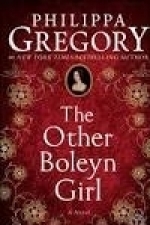

I read this quite a long time ago, but I have to say that I do read all of Philippa Gregory’s books because they’re just really good stories. I do have a bit of a thing about the Tudor period, and I’ve read a fair bit of both fiction and non-fiction around the period. I’m aware that this (and her others) may be heavily fictionalised, but part of reading is entertainment, no? But I do like how I feel immersed in these stories.
And who knew that Anne Boleyn’s sister had an affair with Henry VIII before Anne married him (well, when the book came out, not many people seemed to know - unless they were very heavily into their history!)? And honestly, I wouldn’t be overly surprised if a lot of goes on in the book actually happened!
And who knew that Anne Boleyn’s sister had an affair with Henry VIII before Anne married him (well, when the book came out, not many people seemed to know - unless they were very heavily into their history!)? And honestly, I wouldn’t be overly surprised if a lot of goes on in the book actually happened!

Deborah (162 KP) rated The Queen's Promise in Books
Dec 21, 2018
Yes, it's another Tudor historical novel and yes, it's another Tudor historical novel about Anne Boleyn!
This one I think is worth reading though. Although Anne carries one of the main narrative threads the book is really more about Henry Percy, 6th Earl of Northumberland, who had some sort of understanding with Anne before she caught the eye of that other Henry. I don't think his life is as well documented as other more prominent figures at court, but there is enough information there to give a foundation to his story. Our other main character is Will Chatton, who, along with his wife, is a fictional character created to give us a broader view of Tudor society and to assist Henry Percy and move the narrative along. Will is also friends in the novel with Robert Aske, who was a real historical figure.
Henry Percy has not generally been given much prominence, even in fiction, so this was a new angle, drawing out his character. His is not really a happy story, but he is certainly a sympathetic character and the author uses the forced break up of their relationship as a sort of catalyst for the change in Anne's behaviour to a harder outlook, so the reader can still sympathise with her. One thing that does puzzle me in 'real' history, and which I feel the author didn't convincingly explain in her own narrative, was why it was found necessary to break up Anne and Henry's relationship? That point aside, I thought this was a good read and a bit different to the usual court focused novels.
This one I think is worth reading though. Although Anne carries one of the main narrative threads the book is really more about Henry Percy, 6th Earl of Northumberland, who had some sort of understanding with Anne before she caught the eye of that other Henry. I don't think his life is as well documented as other more prominent figures at court, but there is enough information there to give a foundation to his story. Our other main character is Will Chatton, who, along with his wife, is a fictional character created to give us a broader view of Tudor society and to assist Henry Percy and move the narrative along. Will is also friends in the novel with Robert Aske, who was a real historical figure.
Henry Percy has not generally been given much prominence, even in fiction, so this was a new angle, drawing out his character. His is not really a happy story, but he is certainly a sympathetic character and the author uses the forced break up of their relationship as a sort of catalyst for the change in Anne's behaviour to a harder outlook, so the reader can still sympathise with her. One thing that does puzzle me in 'real' history, and which I feel the author didn't convincingly explain in her own narrative, was why it was found necessary to break up Anne and Henry's relationship? That point aside, I thought this was a good read and a bit different to the usual court focused novels.
ClareR (6256 KP) rated Tudor Dawn: Henry Tudor is ready to take the crown (The Tudor Series Book 1) in Books
Jul 2, 2019
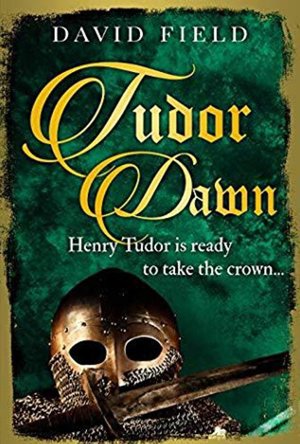
A really interesting history!
I really liked this - I’ve not read much about Henry Tudor, and everyone is always much more interested in Henry VIII and his promiscuous love life! Henry Tudor isn’t like his son at all. He may well have enjoyed the company of women, but David Field doesn’t play on that fact. I learnt so much about the history of Henry’s upbringing and subsequent escape into exile - and it is a vey male dominated book. We don’t see much of what his mother would have been doing, but we do learn about her hard work on his behalf.
I hadn’t realised that he’d been such a sickly child and that some of these problems followed him in to adulthood, or that he actually seemed to love his queen (although that may well be fictionalised - but I’d like to know!). This first book in the series takes up to Henry VII’s death. I think I will be reading the next in the series.
What I really liked about this book was that it’s more history than fiction. It’s not dry, academic type history though, and that’s what really drew me in.
Many thanks to Sapere Books for my copy of this book to read and honestly review. I really enjoyed it.
I hadn’t realised that he’d been such a sickly child and that some of these problems followed him in to adulthood, or that he actually seemed to love his queen (although that may well be fictionalised - but I’d like to know!). This first book in the series takes up to Henry VII’s death. I think I will be reading the next in the series.
What I really liked about this book was that it’s more history than fiction. It’s not dry, academic type history though, and that’s what really drew me in.
Many thanks to Sapere Books for my copy of this book to read and honestly review. I really enjoyed it.

Lottie disney bookworm (1056 KP) rated Six Tudor Queens: Katharine Parr, The Sixth Wife in Books
Mar 23, 2021
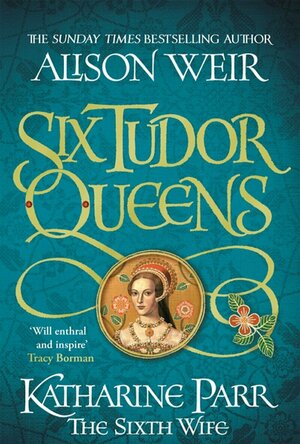
I have been reading Alison Weir books since I was a teenager so imagine how much I fangirled when I was given the opportunity to read an advanced copy of her final book in the Tudor Queens series!
To Netgalley and Headline, thank you, thank you, thank you!
It is my opinion that Katharine Parr is often the most overlooked of Henry VIII's wives: indeed most novels focus only on her life after becoming Queen. That is why this novel from Alison Weir was simply brilliant.
Weir introduces us to Katharine Parr as a girl, constantly surrounded by family and, after losing her father at a young age, being brought up by her uncle, aunt and her mother who was an attendant to Queen Katharine of Aragon.
The reader instantly falls in love with Katharine, an intelligent, caring child who is acutely aware of her eventual duty to her family but desperately wishes to remain in her carefree days with her siblings.
As we know, Tudor girls married young and Weir explores each of Katharine's four marriages in great detail: combining historical fact and storytelling in the way that only she can.
It struck me that, in three of Katharine's four marriages, she was used as a pawn, marrying for rank, power and connections as was the norm at the time.
However, in every one of these marriages Katharine was able to find love; even when marrying an old overweight Henry, already famous for disposing of numerous wives.
The writing during each of these marriages is rarely emotional: Katharine is a very rational and practical character, only showing real passion for religion. She is even super calm when she believes she is being investigated as a heretic!
It isn't until Katharine's fourth and final marriage that she marries for herself and for love. The passionate relationship between Katharine and Tom Seymour seeps into the writing at this point: introducing jealousy and anger where there has previously been merely a stoic resolve.
The fact that this novel spans the lifespan of Henry's marriages is fitting and really allows Weir to paint a picture of Tudor society throughout the religious reforms and upheavals associated with its monarch.
No one who has read Alison Weir's books before will be surprised that this is yet another success. Together with Philippa Gregory, Weir is a Queen of historical fiction and this novel is only the latest jewel in her crown.
To Netgalley and Headline, thank you, thank you, thank you!
It is my opinion that Katharine Parr is often the most overlooked of Henry VIII's wives: indeed most novels focus only on her life after becoming Queen. That is why this novel from Alison Weir was simply brilliant.
Weir introduces us to Katharine Parr as a girl, constantly surrounded by family and, after losing her father at a young age, being brought up by her uncle, aunt and her mother who was an attendant to Queen Katharine of Aragon.
The reader instantly falls in love with Katharine, an intelligent, caring child who is acutely aware of her eventual duty to her family but desperately wishes to remain in her carefree days with her siblings.
As we know, Tudor girls married young and Weir explores each of Katharine's four marriages in great detail: combining historical fact and storytelling in the way that only she can.
It struck me that, in three of Katharine's four marriages, she was used as a pawn, marrying for rank, power and connections as was the norm at the time.
However, in every one of these marriages Katharine was able to find love; even when marrying an old overweight Henry, already famous for disposing of numerous wives.
The writing during each of these marriages is rarely emotional: Katharine is a very rational and practical character, only showing real passion for religion. She is even super calm when she believes she is being investigated as a heretic!
It isn't until Katharine's fourth and final marriage that she marries for herself and for love. The passionate relationship between Katharine and Tom Seymour seeps into the writing at this point: introducing jealousy and anger where there has previously been merely a stoic resolve.
The fact that this novel spans the lifespan of Henry's marriages is fitting and really allows Weir to paint a picture of Tudor society throughout the religious reforms and upheavals associated with its monarch.
No one who has read Alison Weir's books before will be surprised that this is yet another success. Together with Philippa Gregory, Weir is a Queen of historical fiction and this novel is only the latest jewel in her crown.

Marylegs (44 KP) rated Dark Aemilia (UK Edition) in Books
Aug 14, 2019
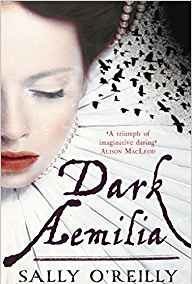
So I received Dark Aemilia from a Goodreads give away. All I can say is how lucky I was to receive such a good book, that otherwise I likely would not have taken a second glance at. This is a beautifully written piece of historical fiction. Which at its core, is a love story, between Aemilia Bassano and William Shakespeare. How their love blossomed and through many external factors was pulled apart. The book is laid out in acts and scenes like a play and tells the story from Aemilia point of view. I enjoyed being submerged in the Tudor London at the end of Elizabeth I reign. This book completely grabbed me from the start and had I had more free time I am sure I would have read this book in a day or two.
Unfortunately as I havent ever read historical fiction before I dont really have any point of reference for comparison. But what I will say is that I thoroughly enjoyed how realistic this book felt, but still was able to bring in completely fictitious elements of magic and witchcraft. Sam OReilly has managed to bring in these elements, which appealed to my love of fantasy, without being over the top. I particularly enjoyed the time when London was under the grips of the plague and thought it was just so well written and explained. At no point did I feel lost in descriptions, I was there, with Aemilia and that poor woman just couldnt catch a break.
There is mature content it is an adult story of love, so yes there is sex. I personally have no issue with this and believe it to be an integral addition to this story. It is done well and doesnt feel forced or overdone. I am struggling to put into words how much I enjoyed this book, I will read it again and I would recommend it. I will now even consider reading other historical fiction that I had not thought I would enjoy.
Unfortunately as I havent ever read historical fiction before I dont really have any point of reference for comparison. But what I will say is that I thoroughly enjoyed how realistic this book felt, but still was able to bring in completely fictitious elements of magic and witchcraft. Sam OReilly has managed to bring in these elements, which appealed to my love of fantasy, without being over the top. I particularly enjoyed the time when London was under the grips of the plague and thought it was just so well written and explained. At no point did I feel lost in descriptions, I was there, with Aemilia and that poor woman just couldnt catch a break.
There is mature content it is an adult story of love, so yes there is sex. I personally have no issue with this and believe it to be an integral addition to this story. It is done well and doesnt feel forced or overdone. I am struggling to put into words how much I enjoyed this book, I will read it again and I would recommend it. I will now even consider reading other historical fiction that I had not thought I would enjoy.
Merissa (14152 KP) rated A King Under Siege (The Plantagenet Legacy #1) in Books
Mar 10, 2022
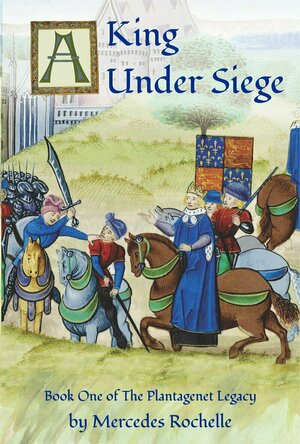
A KING UNDER SIEGE is the first book in The Plantagenet Legacy and details Richard II and the circumstances around the beginning of his reign. Crowned at ten, he was reliant upon his advisors for a time, although the frustration he felt was clear when their advice was less than helpful. We also get to meet Anne of Bohemia, his first wife and great love. Together with those of Richard's inner court, we see how it could have been (and probably was) for people at that time.
Told as an amalgamation of fact and fiction, you get the story and history with comments and questions raised by an observer. It is clear that a lot of research has gone into this book.
Richard was the last of Plantagenet kings in the direct line and you see his relationship with Henry Bolingbroke -- the most direct descendant in the male line, as opposed to the then-heir presumptive -- as a fraught affair, with Henry not involving himself too deeply in the politics of the time, but having great impact upon Richard when he did.
This part of the story takes us through to 1388, ending with a hint of Richard regaining control in 1389.
A story that will definitely intrigue and interest lovers of both the Plantagenet era and the Tudor, as this shows the build-up to future events. Definitely recommended by me.
** same worded review will appear elsewhere **
* A copy of this book was provided to me with no requirements for a review. I voluntarily read this book, and the comments here are my honest opinion. *
Merissa
Archaeolibrarian - I Dig Good Books!
Told as an amalgamation of fact and fiction, you get the story and history with comments and questions raised by an observer. It is clear that a lot of research has gone into this book.
Richard was the last of Plantagenet kings in the direct line and you see his relationship with Henry Bolingbroke -- the most direct descendant in the male line, as opposed to the then-heir presumptive -- as a fraught affair, with Henry not involving himself too deeply in the politics of the time, but having great impact upon Richard when he did.
This part of the story takes us through to 1388, ending with a hint of Richard regaining control in 1389.
A story that will definitely intrigue and interest lovers of both the Plantagenet era and the Tudor, as this shows the build-up to future events. Definitely recommended by me.
** same worded review will appear elsewhere **
* A copy of this book was provided to me with no requirements for a review. I voluntarily read this book, and the comments here are my honest opinion. *
Merissa
Archaeolibrarian - I Dig Good Books!