

Hexen 2.0: Suzanne Treister
Suzanne Treister and Lars Bang Larsen
Book
HEXEN2.0 is the sequel to HEXEN 2039 which imagined new technologies for psychological warfare...
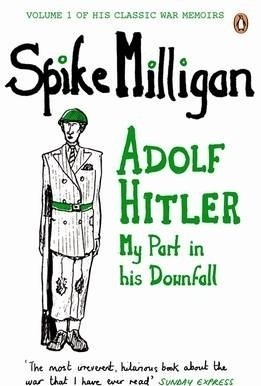
Adolf Hitler: My Part in His Downfall
7.7 Rate It
Book
Adolf Hitler: My Part on His Downfall is volume One of Spike Milligan's outrageous, hilarious,...
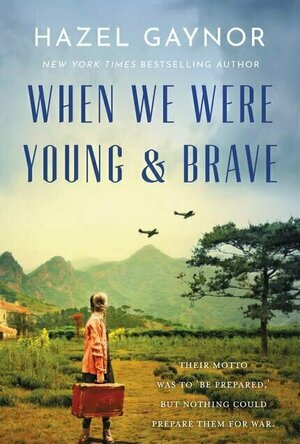
When we Were Young and Brave
9.0 Rate It
Book
Their motto was to be prepared, but nothing could prepare them for war. . . The New York Times...
historical literary women fiction
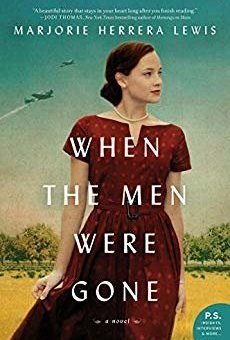
When the Men Were Gone
7.0
Rate It
Book
A cross between Friday Night Lights and The Atomic City Girls, When The Men Were Gone is a debut...
WWII WW2 World War 2 World War II football Texas
The Sabotage Diaries: The True Story of a Daring Band of Allied Special Forces and Their Covert Operations in Nazi-Occupied Greece
Book
Based on the wartime diaries of Allied soldier and saboteur Tom Barnes, this account of thrilling...

Lottie disney bookworm (1056 KP) rated Before the Crown in Books
Jun 14, 2020
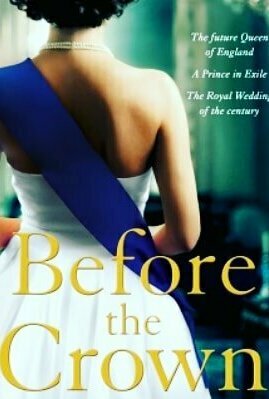
Before the Crown is a beautiful historical novel which delves deep into the romance between Princess Elizabeth and Prince Philip of Greece, perhaps better known as Queen Elizabeth II and the Duke of Edinburgh.
However, this is not a traditional romance and Harding does not hold back in laying out all the struggles Elizabeth and Philip faced. From the King and Queen's disapproval of the match for their daughter to the effects of public opinion on the relationship, Flora Harding covers it all.
Nor does this novel present the engagement as all hearts and flowers. Despite Elizabeth being attracted to Philip from a young age, this is initially a one-sided crush and a political arrangement for the couple. However, due to Flora Harding presenting her novel from the perspective of both Elizabeth and Philip, the reader is able to experience first hand the doubts, worries, longing and evolution of this infamous relationship.
I will be honest it is hard not to envision the Netflix series when you read this novel but it is by no means a copy cat situation. Harding provides such interesting insights into Philip's lifestyle and his family that it is hard not to pity the sacrifices that he makes in order to be with Elizabeth.
In 'The Crown' young Philip was a bit of a dirt bag and, although Harding's Prince is no angel, he is clearly fighting an uphill battle against the aristocracy's view of him. It is difficult not to sympathise.
I would have liked an author's note to know how much of the story is fact and how much is fiction or speculation. However, given the privacy of the Royal Family I imagine any factual insights are rare.
In summary, 'Before the Crown' is a captivating read, exploring the sacrifices and struggles where we often blindly see prejudice, all against the backdrop of WWII Europe.

Haley Mathiot (9 KP) rated The Postmistress in Books
Apr 27, 2018
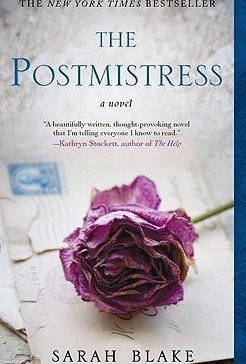


Genre: Fiction
Rating: DNF
(No Summary.)
The thing about reading is that you need to pick up the book, and be wrapped up in it. It needs to flow well. It must be readable. It must be understandable. Words create sentences and sentences create paragraphs, etc.
When I started reading The Postmistress, I felt like I’d jumped into the middle of a book, in the middle of a series, with no idea who was who or what was happening or even who the narrator was. The sentences didn’t make any sense. It was like reading sentences backwards. Have you ever tried that? Do it. Ok now that you’ve tried it, you know how I felt. It felt like a bunch of jumbled words.
The style was strange, there was weird punctuation that made what little clear sentences there were choppy and difficult to read. I kept reading the same phrase over and over and eventually giving up.
The point of view isn’t first person, nor is it third. And whatever person it was, it kept switching mid-chapter so I couldn't keep up. The dialogue felt out of place, like people from that time period shouldn’t be speaking like that (Or maybe I’m just not educated on WWII culture, which is more likely than not. I’ll give the author the benefit of the doubt).
And by page 15 I still had no clue who was who or what was going on. I felt no desire to continue reading, and trying to decipher the paragraphs felt like a chore.
And honestly, reading should not be a chore. I won’t finish a book if I could be reading better things.
I’m sorry to be so negative, I hate writing negative reviews. But I could not read this book. I couldn’t tell you what the plot was or what the characters were like if I tried.
As always, please remember that this is my personal opinion. Never decide to read or not to read a book based on one person’s views.
This was the second stop for Katrina’s Borrow My ARC Tour at Bloody Bad. Check the other tour stops here for other reviews, or see Amazon.com reviews.

Zuky the BookBum (15 KP) rated To Die in Spring in Books
Mar 15, 2018
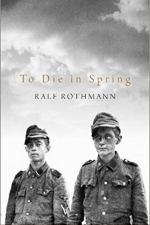

Towards the end of WWII, the Russians and the Americans were closing in and Germany were desperate. Boys, as young as 8 !!, were being forced into becoming soldiers and pushed to the front to fight for a country that were losing, brutally. Thousands of children’s lives were lost.
In this book we meet Walter and Fiete, both young men, aged 17, who are forced into becoming SS soldiers. They are best friends, but they’re very different. Walter is reserved and respectful, Fiete is loud, sarcastic and happy to voice his opinion on what he thinks of the war. Unfortunately, Fiete gets pushed on the front line, fighting a war he thinks is idiotic, so he attempts to desert. Deserters get executed by their own men.
This novel is so beautiful yet so horrible. You can’t really think of this novel as fiction when you know the contents within probably happened to thousands of teenagers. It’s so distressing when you think about how people were treated and how they lived during the war and this book represents it perfectly.
Reading this book, the fear and melancholy of being a soldier fighting a losing battle creeps through your bones. You’re there, stuck in a rotting basement, scared of death yet willing it on, just to get out. I applaud Rothmann for making those feelings so real in me… A young woman, sat on her train going into another day of work, of safety, but with goosebumps, because in her mind, she’s stuck outside in the cold, desperately trying to find a hiding place from the American war planes flying over.
This novel is an emotionally charged story about the brutality of war and the awful things young men were forced to do, just to have their pathetic Fuhrer shamefully kill himself and the battle be lost. I urge any person who likes to read war books, to read this one. The writing is stunning, the characters are real, and the story is harrowing.
<i>Thanks to Picador Books for providing me with an arc copy of this book in exchange for an honest review.</i>
Hazel (1853 KP) rated Purple Hearts in Books
Oct 24, 2017
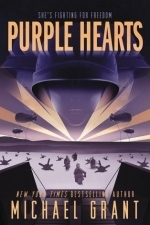

An epic tale of a reimagined World War II comes to an explosive end in this third and final book Purple Hearts. Michael Grant created an alternative history in which women were allowed to enter the army and fight alongside the men on the front lines in Europe. Having earned accolades, promotions and the right to go home to America at the conclusion of the previous book, Rio, Frangie and Rainy decide to stay for the remains of the war. It is 6th June 1944, and the battle on the sands of Omaha Beach is about to begin – D-Day.
The story rushes into the horrors of the D-Day landings where Rio, now a Sergeant, is leading her platoon through the treacherous battleground, whilst Frangie, the medic, tries to patch up fallen comrades. The author teases the reader with the introduction of new characters who promptly get killed during this fateful day and battles further along the line. There is no sugar coating the horrific experience of soldiers and civilians, regardless of whether the scenes are fictionalized or not.
The difficulty with writing a work of fiction about the final years of World War II is that the majority of readers will already know the facts. Therefore, it was impossible for Grant to compose a drastic alternative history. Despite the inclusion of women soldiers, the main events occur exactly as they did in reality, beginning with D-Day before moving on to Liberated France, the Hürtgen Forest, the Battle of the Bulge, and, eventually, VE Day.
The three main characters have undergone complete transformations since the beginning of book one. No longer are they the innocent girls mocked for the belief they could be as strong as male soldiers. As horror after horror unfolds, readers are left with only the hope that these three survive.
Throughout book one and two, the narrative was interspersed with a commentary from an anonymous female soldier in a bed at the 107th evacuee hospital in Würzburg, Germany. As promised at the beginning of the series, readers finally find out which character this nameless voice belongs to, although it is dragged out until the final pages of the book.
The title, Purple Hearts, refers to the medal earned by soldiers injured in battle. Rio, Frangie and Rainy have each received one, along with a few other characters. Unfortunately, many are killed in the battles, some who have been in the story from the start, making this an extremely shocking book. It goes to show how dangerous war is and the brutality WWII soldiers experienced. It is a surprise that as many survived as they did.
Although at this point the main focus of the story is the war, there is still the underlying theme of equality, both for women and for black people. Frangie provides the insight into the segregation of blacks, being assigned to black-only patrols and having white patients refuse to be treated by her. However, as the war gets more violent, these lines get blurred until it is (mostly) no longer important the colour of a soldier or medic’s skin.
Purple Hearts is a brilliant end to a challenging series. Readers become invested in the characters and are drawn into a story that is so true to form that it is easy to forget that women did not actually take part in the fighting. Evidently well researched, Michael Grant has penned a series that educates whilst it entertains, opening readers’ eyes to the truth about war. This is nothing like a textbook full of facts and figures, it is a moving, personal (forget the fictional bit) account of what WWII was really like. Written with young adults in mind, this is a great series for both teens and older readers.
Hazel (1853 KP) rated Purple Hearts in Books
Dec 7, 2018
An epic tale of a reimagined World War II comes to an explosive end in this third and final book <i>Purple Hearts</i>. Michael Grant created an alternative history in which women were allowed to enter the army and fight alongside the men on the front lines in Europe. Having earned accolades, promotions and the right to go home to America at the conclusion of the previous book, Rio, Frangie and Rainy decide to stay for the remains of the war. It is 6th June 1944, and the battle on the sands of Omaha Beach is about to begin – D-Day.
The story rushes into the horrors of the D-Day landings where Rio, now a Sergeant, is leading her platoon through the treacherous battleground, whilst Frangie, the medic, tries to patch up fallen comrades. The author teases the reader with the introduction of new characters who promptly get killed during this fateful day and battles further along the line. There is no sugar coating the horrific experience of soldiers and civilians, regardless of whether the scenes are fictionalized or not.
The difficulty with writing a work of fiction about the final years of World War II is that the majority of readers will already know the facts. Therefore, it was impossible for Grant to compose a drastic alternative history. Despite the inclusion of women soldiers, the main events occur exactly as they did in reality, beginning with D-Day before moving on to Liberated France, the Hürtgen Forest, the Battle of the Bulge, and, eventually, VE Day.
The three main characters have undergone complete transformations since the beginning of book one. No longer are they the innocent girls mocked for the belief they could be as strong as male soldiers. As horror after horror unfolds, readers are left with only the hope that these three survive.
Throughout book one and two, the narrative was interspersed with a commentary from an anonymous female soldier in a bed at the 107th evacuee hospital in Würzburg, Germany. As promised at the beginning of the series, readers finally find out which character this nameless voice belongs to, although it is dragged out until the final pages of the book.
The title, <i>Purple Hearts</i>, refers to the medal earned by soldiers injured in battle. Rio, Frangie and Rainy have each received one, along with a few other characters. Unfortunately, many are killed in the battles, some who have been in the story from the start, making this an extremely shocking book. It goes to show how dangerous war is and the brutality WWII soldiers experienced. It is a surprise that as many survived as they did.
Although at this point the main focus of the story is the war, there is still the underlying theme of equality, both for women and for black people. Frangie provides the insight into the segregation of blacks, being assigned to black-only patrols and having white patients refuse to be treated by her. However, as the war gets more violent, these lines get blurred until it is (mostly) no longer important the colour of a soldier or medic’s skin.
<i>Purple Hearts</i> is a brilliant end to a challenging series. Readers become invested in the characters and are drawn into a story that is so true to form that it is easy to forget that women did not actually take part in the fighting. Evidently well researched, Michael Grant has penned a series that educates whilst it entertains, opening readers’ eyes to the truth about war. This is nothing like a textbook full of facts and figures, it is a moving, personal (forget the fictional bit) account of what WWII was really like. Written with young adults in mind, this is a great series for both teens and older readers.