
Search
Search results

Bong Mines Entertainment (15 KP) rated Damn. by Kendrick Lamar in Music
Jun 7, 2019
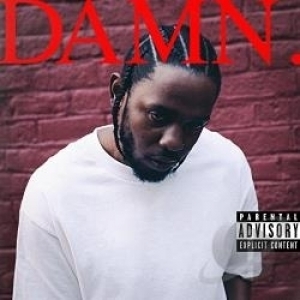


Kendrick Lamar is an iconic hip-hop artist outta Compton, California. Not too long ago, he released his fourth studio album, entitled, “DAMN.”.
1) Kendrick Lamar – “BLOOD.”
Lamar tackles the issue of life and death. He poses several questions over a melodic instrumental produced by Lamar, Bēkon, and Anthony “Top Dawg” Tiffith. One of them being, “Are we gonna live or die?” Lamar tells a brilliant story about him walking down a block, and he sees a blind lady in search of something she had lost. He goes over to help, and then he asks, “Hello, ma’am, can I be of any assistance? It seems to me that you have lost something. I would like to help you find it.” She replied, “Oh yes, you have lost something. You’ve lost your life.” And then we hear a gunshot. Lamar is shot. Did he lose his life? The dire ending answers the probing question posed in the beginning—we gonna die.
2) Kendrick Lamar – “DNA.”
Lamar explains why his DNA differs from a sucker’s DNA. His deoxyribonucleic acid consists of going through the school of hard knocks. He endured a rugged street life, prisons, money, drugs, alcohol, sex, murder, mayhem, loyalty, royalty, joy, etc. This is because his DNA comprises of things shared collectively by African-Americans who have been through the struggle. Lyrically, Lamar leaves earth, while rapping over an explosive track produced by Mike WiLL Made-It. From beginning to end, he doesn’t take a bar off and shows why conscience rap has resurrected into the new norm.
3) Kendrick Lamar – “YAH.”
Lamar let it be known that he’s diagnosed with real ni^^a conditions, and keeps it a hunnit by calling out Geraldo Rivera because of criticism Lamar received from a FOX NEWS segment. The kid Capri intro adds a classic east coast authenticity over a laid-back track produced by Bēkon, Anthony “Top Dawg” Tiffith, Sounwave, and DJ Dahi. Preconceived lies told by White slave masters to African slaves are melting like hot butter in the sun. Lamar, a descendant of those slaves, has awakened and knows himself.
4) Kendrick Lamar – “ELEMENT.”
Lamar, who Capri calls the ‘New Kung Fu Kenny’, continues his Shaolin-rap assault over a Wu-Tang-like track produced by Bēkon, Tae Beast, James Blake, Sounwave, and Ricci Riera. Lamar is simply on another level than his peers. He’s been through more sh*t than them, and he’s ready to put the Bible down and go eye for an eye for this sh*t. When he said, “I been stomped out in front of my mama / my daddy commissary made it to commas / B*tch, all my grandmas dead / So, ain’t nobody prayin’ for me, I’m on your head.”
5) Kendrick Lamar – “FEEL.”
Lamar beautifully expresses how he feels on a dope Sounwave-produced track, where Lamar raps, “I feel like the whole world want me to pray for ’em / But who the f*ck prayin’ for me?” Lamar feels that nobody ain’t prayin’ for him, and this void has him with a chip on his shoulders, looking at life from a dark, and troubled point of view. He feels pain and doesn’t see hope. Did the incident with the blind lady cause him to feel this way? Why does he feel this way? Kendrick raps, “I feel like it ain’t no tomorrow f*ck the world / The world is endin’, I’m done pretendin’… I feel like this gotta be the feelin’ what ‘Pac was…”
But Lamar knows ill-thinking is bad for his health, and he acknowledges the source of his negative thinking, “The feelin’ is toxic, I feel like I’m boxin’ demons / Monsters, false prophets schemin’,” and the list goes on and on. If no one is, just know that we are praying for you Kendrick, YAH-willing.
6) Kendrick Lamar – “LOYALTY” (FEAT. RIHANNA.)
Lamar and Rihanna explore one of the key elements in Lamar’s DNA, loyalty; and they pose a simple question—who are you loyal to? Is it your family? Friends? Or yourself? Maybe it’s money, weed, or alcoholic? Where does it begin and where does it end? Lamar and Rihanna do a wonderful job over a beautify track produced by Anthony “Top Dawg” Tiffith, Terrace Martin, Sounwave, and DJ Dahi.
7) Kendrick Lamar – “PRIDE.”
The Steve Lacy’s intro, “Love’s gonna get you killed, but pride’s gonna be the death of you and me,” fits perfect in the scheme of things. Lamar, a spiritual intellectual, understands Proverbs 16: 18, which states, “Pride goes before destruction, and a haughty spirit before a fall.” So, Lamar uses those reference points to further expound his faith. In the beginning, Lamar’s love for the blind lady got him shot. And now, will his pride, the great satisfaction he feels when he reviews all that he has achieved, will that be the death of him? Over a smooth/laid-back track produced by Bēkon, Anthony “Top Dawg” Tiffith, and Steve Lacy, Lamar states that he can’t fake being humble, just because people are insecure.
He answers the question of pride
Lamar raps, “Sick venom in men and women overcome with pride. A perfect world is never perfect, only filled with lies. Promises are broken and more resentment come alive. Race barriers make inferior of you and I. See, in a perfect world, I’ll choose faith over riches. I’ll choose work over b*tches, I’ll make schools out of prison. I’ll take all the religions and put ‘em all in one service. Just to tell ’em we ain’t sh*t, but He’s been perfect.”
If Lamar maintains his Israelite faith over riches, and keep that equation as the top priority, he won’t be a victim of pride. But the question is—can Lamar remain humble amidst all the madness?
8) Kendrick Lamar – “HUMBLE.”
Lamar shows that being humble is easier said than done. Over a bouncy-head-nodding track produced by Mike WiLL Made-It, Lamar speaks his mind and gives zero f*cks on what people think about him. He’s braggadocios, confident, and asserts himself as the king of rap music. He sends a cryptic message to his competition, “Watch my soul speak, you let the meds talk. If I kill a ni^^a, it won’t be the alcohol. I’m the realest ni^^a after all, b*tch, be humble.”
9) Kendrick Lamar – “LUST.”
Lamar tackles the issue of lust, one of the main causes that fuel what we do. He begins by creating a scene, where lust has him trying to stick the tip of his phallus inside a woman’s vagina. She agrees, causing blood to run through his favorite vein. His logic, it doesn’t matter what you do—just make it count.
So, over a chilled- track produced by BADBADNOTGOOD, Sounwave, and DJ Dahi, Lamar raps, “Hop in the shower, put on your makeup, lace your weave up. Touch on yourself, call up your ni^^a, tell him he ain’t sh*t. Credit card scam, get you a Visa, make him pay your rent. Hop on the ‘Gram, flex on the b*tches that be hatin’ on you. Pop you a pill, call up your b*tches, have ‘em waitin’ on you. Go to the club, have you some fun, make that ass bounce. It’s whatever, just make it count.”
10) Kendrick Lamar – “LOVE.” (FEAT. ZACARI.)
Lamar turns the lights down over a contemporary R&B love song, produced by Anthony “Top Dawg” Tiffith, Greg Kurstin, Sounwave, and Teddy Walton. The theme of love and lust continues, but this time, into a more unchartered direction. Zacari’s melodic cadence compliments Kung Fu Kenny’s intimate love-lyrics to the love of his life, probably his fiancé Whitney Alford, Lamar’s high school sweetheart.
11) Kendrick Lamar – “XXX.” (FEAT. U2.)
Lamar gets political over an NWA-type track produced By Bēkon, Anthony “Top Dawg” Tiffith, DJ Dahi, Sounwave, and Mike WiLL Made-It. The theme is America and the plight and strife of young African-American males trying to make ends meet. Lamar talks about a man who calls him, needing prayer and advice because his son had been murdered. He wants to know what to do and seeks advice from Lamar because he’s anointed.
But Lamar doesn’t sugarcoat his advice. He tells the man straight up, “If somebody kills my son, that means somebody’s gettin’ killed.” Then, Lamar goes on to tell the man how he would go about doing the killing. America is an eye-for-an-eye nation, and forgiveness is hardly practiced.
12) Kendrick Lamar – “FEAR.”
Lamar deeps dig into his soul to confront his fears. He does so over a conversation track produced by The Alchemist. Lamar uses Deuteronomy 28:28 to make sense of his damnation, where the title track derived from. “The Lord shall smite thee with madness, and blindness, and astonishment of heart…,” states the biblical commandment. Lamar reasons that YAH cursed the Israelites (so-called Blacks, Hispanics, and Native American Indians) because of their iniquity. So, that explains their conditions in the wilderness of North America.
Pride
So, Lamar’s fear of lose it all like the biblical character forced him or scared him to not spend a dime. Not because he is cheap, but because he didn’t want to spend money because he feared running out of money, and going back to Section 8. Lamar raps, “30 shows a month and I still won’t buy me no Lexus.” Not a lot of people can say this.
13) Kendrick Lamar – “GOD.”
Lamar talks about the success that he doesn’t want to lose. He compares it to what it was like when he didn’t have fame and fortune. Even though he chooses faith over riches, he’s still feeling good laughing to the bank like aha. Over a laid-back track produced by Bēkon, Anthony “Top Dawg” Tiffith, Cardo, Sounwave, Ricci Riera, and DJ Dahi, Lamar tells listeners, “Don’t judge me,” because this is what God feels like. Matthew 7:1 states,
14) Kendrick Lamar – “DUCKWORTH.”
Lamar uses his last name, Duckworth, as a song to explain the relationship between his father, Ducky, and Anthony Tiffith, CEO of Top Dawg Entertainment. Lamar explained if Tiffith had killed Ducky, then he would be serving life, and Lamar would’ve grown up without a father. And there would have been no Top Dawg Entertainment, and probably no Kendrick Lamar.

Cynthia Armistead (17 KP) rated Carniepunk in Books
Mar 1, 2018


As soon as I read about this collection on Kevin Hearne's Facebook, I knew I would be buying it. I don't care for carnivals at all, and every story will be related to one in some way - but there was just no way I was going to miss an Atticus and Oberon story! I even pre-ordered the book on Amazon, the first time I've ever done that. It was SO hard not to skip right ahead and read Hearne's contribution the moment the book was in my hot little hands, but I managed some discipline.
Rob Thurman's "Painted Love" opens the book. It is dark, but to be fair it isn't quite as dark as the only Thurman novel I've read, from the Cal Leandros series. I rather liked the twist. I adored the fiercely protective older sister, especially the way she is described. I'll rate this one at three.
I don't believe I've ever read anything by Delilah S. Dawson before, certainly not anything in the Blud universe, so I had no idea what to expect from "The Three Lives of Lydia." It was a far darker story than I would generally choose to read. I found the male love interest highly appealing. The portrayal of mental illness was horrific. I found it interesting that Dawson is an Atlantan as well as a fellow geeky mom, but I'm sure that I've never heard of her before. She does have a book coming out next year that looks promising, so I may give it a read. This one's a two.
Then there is the Iron Druid story! "The Demon Barker of Wheat Street" is set a few books back in the series' chronology (two weeks after "Two Ravens and One Crow"), so Granuaille isn't yet a full Druid. To make things even more interesting, Atticus accidentally offended the local elemental many years ago, so his magic doesn't work as well as usual in the area. The story isn't vital to the series, and knowledge of the series isn't necessary for enjoying it. Hearne's fans definitely won't want to miss it, though, and it could be used as a nice little taste of his style for new readers. Definitely a five.
I couldn't make it through "The Sweeter the Juice" by Mark Henry. Zombies are disgusting, but I was way squicked before the first walking dead even appeared on the scene. A one, just because there are no zeroes.
Jaye Wells is another new-to-me author, as far as I can remember at the moment. I didn't really like "The Werewife," to be honest. There was no joy anywhere in this story. There wasn't even a hint that perhaps the couple in the story had been happy together at one time. Both of them seemed pretty miserable, and I didn't like the way it ended. It didn't seem like there was any way to give them a happy ending, but that ending didn't feel "true." It gets a two, and that's only to set it apart from the previous story.
"The Cold Girl" by Rachel Caine is about an abusive teen relationship. Oh, and vampires. I'm not a Caine fan, but this story was better than some of her other work. Again, too dark for my tastes. If half stars were possible, it would have one. I'll be nice and round up to three.
The name Allison Pang sounds familiar, so maybe I've read something by her in the past. If I did, I'm certain that it wasn't set in the same world as "A Duet With Darkness," which says it is an Abby Sinclair story. I found the main character to be an annoying, immature twit, but I'm a sucker for fiction with musical influences. The music is well-done here. I don't know if I will read anything more by Ms. Pang or not - I suppose that depends on whether or not her other work has better characters and is also musical. This one gets a four.
I found "Recession of the Divine" by Hillary Jacques fascinating. The Greek inspiration was unusual. I didn't really buy the customers being quite so unquestioning of Ophelia's state, but it wasn't a major complaint overall. I was highly disappointed to find nothing but a credit in another anthology for her. But! Reading the author profiles at the end of the book pays off, because that's how I learned that she also writes as Regan Summers. Now her works published under that name are on my to-read shelf. Another five.
Jennifer Estep's "Parlor Tricks" was actually released free on Amazon a little while back to promote Carniepunk, so it was the first story I read. I enjoy the Elemental Assassin series in general, and this story is no exception. Again, knowledge of the series is not required to understand the story, and the story is not vital to the series. It is a nice little sample, though, and I enjoyed seeing Gin and Bria having a sisterly outing. I'm probably biased, but it gets a five.
I liked Kelly Meding's "Freak House" a lot, and her name sounded familiar, but the story was set in the "Strays" universe, which I was certain I had never heard of before. I actually stirred myself to look her up, and learned that I've had one of her books on my to-read list for ages, and Strays is a new series she's just starting. Djinn, werewolves, vampires, pixies, harpies, leprechauns, skinwalkers, and more, some "out" to humans, some living hidden - what's not to love? This one gets a four.
Nicole Peeler us yet another author who sounded vaguely familiar to me, and yep, there is one of her books on my to-read list (yes, it is massive, why do you ask?). It is, in fact, the first of the Jane True books, and "The Inside Man" is set in that world. Peeler's writing style dies not flow for me, but I liked Capitola Jones and her friends Shar and Moo. As clowns are indisputably evil, I had little to complain about in the story. It gets a three.
Succubus (former?) Jezzie is the main character in Jackie Kessler's story "A Chance in Hell." Obviously, the story is set her Hell on Earth series. I had to look that up, though, because while I know you're shocked, her name did not ring any bells for me. I don't actually have ALL the urban fantasy books on my to-read or read lists! The piece opens with a confusing remark about a demon eating Jezebel's face, when that definitely is not the anatomy in question. If that's a common euphemism, it is wholly new to me. Within the next couple of pages there are multiple references to the fact that she has fallen in love with a human since becoming mortal, but absolutely no explanation of how she would reconcile sex with an incubus with her human love. As much as I would prefer that it were not the case, the default assumption in our society is that people are monogamous. Therefore, when there is a deviation from that norm, the reader expects - something. Is it supposed to demonstrate that the fictional society is different? Is the character in an explicitly non-monogamous relationship? Is her love unrequited? Is the guy dead? Do demons not count? Is she just a skanky ho? Then this great love isn't mentioned again for the rest of the story, so none of the questions raised are answered. Oh. There is, in fact, a plot here, but I was so annoyed by that stuff that I almost failed to notice it. Demonic circus, yo. The whole demon thing reminds me too much of another series I've read in the past. I can't even remember the author's name, much less the title, right now, but Kessler's work feels derivative. She gets a two.
Next up is Kelly Gay - Hey look! Another author whose name I don't recognize! - with "Hell's Menagerie," a Charlie Madigan short story. Okay, this series is set in an alternate Atlanta. As an Atlanta girl, that certainly gets my attention. And Charlie is a single mother. I don't recall any other single mothers in the UF world right off. (Kate Daniels doesn't quite count, because she adopted her daughter as a teen. Although it is interesting to note that Kate is also Atlanta-based.) I was ready to like this one, based solely on what I knew of the series. Then there was a grammatical error on the second page of the story that set my teeth on edge, one which could not be chalked up to a character's voice. Add in the fact that we get a fast, "and also, Jim" style introduction to Charlie (who isn't even present in the story!), Rex, and Emma in less than two pages, and I am officially annoyed. It isn't an old matinee movie, so surely that information could have been worked in a little more naturally? Emma won me over. Mostly. There's some, "Not another super-gifted kid," reaction, but I guess if the mother is supposed to be all that it's to be expected that the daughter might be special, too. Hmm. A three.
The last piece is Seaman McGuire's "Daughter of the Midway, the Mermaid, and the Open, Lonely, Sea." Is that title a mouthful, or what? It has the feel of a Toby Daye story, although it isn't subtitled as such, and there are no fae so maybe it isn't in that universe at all. As there are other stories in the book that are set in the same world as their author's series, yet not marked in any way, lack of a subtitle can't be taken as a negative indicator, though. In any case, the story is poignant, which I've come to expect from McGuire. I didn't really like it, but I didn't dislike it, either. I couldn't "feel" Ada in any true sense. I have the same problem with Toby. A three at best.
Overall, the book was decent. The ratings only average out to 3.21, but I'm very glad to have read the stories by Hearne and Estep. Discovering Jacques/Summers was absolutely worthwhile. I really hate that I read as much of Henry's story as I did. If I could delete that from my memory, it would probably raise the rating for everything else.
Rest by Charlotte Gainsbourg
7.0 Rate It
Album Watch
Sometimes it takes a personal tragedy to catalyse an artist’s practise, a crack in everything, to...
Pop