

Hazel (1853 KP) rated In Picardy's Fields in Books
Nov 27, 2020
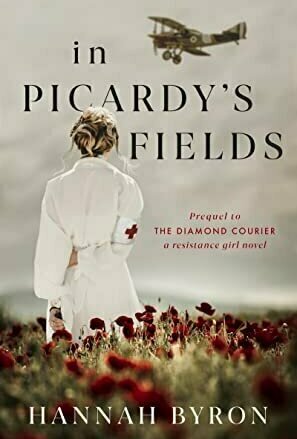

The author, Hannah Byron, accurately describes the devastation and dangers the characters faced both in Paris and at the front. Flowing seamlessly from scene to scene, Byron paints a dark picture of life in wartorn France at the same time as weaving a captivating story. Agnès is a reticent but strong woman, a stark contrast from the stuck-up Madeleine, used to getting her way. Yet both characters develop, forced to face horrifying circumstances. While Agnès becomes more confident, Madeleine uses her head-strong determination to secretly help the allied soldiers, even if it means putting herself in danger.
Whilst the war is the main feature of the novel, the author weaves themes of friendship and romance into the narrative. Although only two people narrate the story, In Picardy's Fields shows the importance of working together and putting aside prejudices. The undercurrent of a developing romance brings a sense of hope that everything will end happily, yet the reader also knows nothing is safe during wartime. With each turn of the page, disaster could befall the characters, which makes for a gripping read.
Hannah Byron admits she is not a medic or war expert, yet she undertook extensive research to make In Picardy's Fields as accurate as possible. She also confesses it is unlikely a female doctor went to the front lines, yet as a work of fiction, this does not matter, especially as Agnès's profession is key to the story.
Authors have written novels about the World Wars ad nauseum to the point that writing an original story seems impossible, but Hannah Byron proves this assumption wrong. In Picardy's Fields feels almost modern in some respects, despite being set in the 1910s, which adds a freshness to the story. These women, these characters are just like you and me, living in a time we could not possibly understand.
In Picardy's Fields is a fantastic debut novel and Hannah Byron is a writer to keep an eye on.
Countdown 1945
Book
From Chris Wallace, the veteran journalist and anchor of Fox News Sunday, comes an electrifying...

Harold Curwen and Oliver Simon: Curwen Press - Design
Peyton Skipwith and Brian Webb
Book
The finest books produced during the quarter century prior to the outbreak of the Great War were...
Mein Rant - A Summary in Light Verse of 'Mein Kampf'
R.F. Patterson and Heath Robinson
Book
R F Paterson was a great fan of Gilbert and Sullivan, and when Germany invaded Poland on 1st...
WWII Military History Magazine
Education and Magazines & Newspapers
App
World War II Military History Magazine is a monthly collection of expert articles charting the...

The War Of Mine
Games
App
Description "If you've not already played this brilliant, heart-wrenching game, then mobile is as...
Hazel (1853 KP) rated The Chilbury Ladies' Choir in Books
Dec 17, 2018

"Just because the men have gone to war, why do we have to close the choir? And precisely when we need it most!"
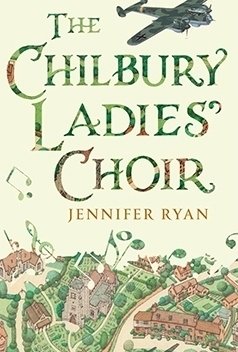
Set in the fictional village of Chilbury, Kent during the Second World War, <i>The Chilbury Ladies’ Choir</i> explores the lives of the women left behind whilst the men go off to fight. The remaining villagers are disappointed at the closing of the church choir, which, according to the vicar, cannot go on without any men to sing the tenor and bass parts. However, the arrival of bold, forthright Primrose Trent brings the birth of a new choir, a choir for women only.
Although a war is going on, the ladies of Chilbury have so many other things on their minds. Told through a conflation letters and diary entries, <i>The Chilbury Ladies’ Choir</i> reveals the everyday lives of a handful of characters. Mrs Tilling’s journal provides an overview of the general events, whilst 18-year-old Venetia’s letters divulge the wiles and charms she uses in the name of romance. Other characters, particularly the young teenager, Kitty, offer other insights to the goings on in the village.
From falling in love, to having babies, <i>The Chilbury Ladies’ Choir</i> is full of secrets, schemes and misunderstandings that almost let the villagers forget there is a war on. However, the effects of war do reach the little village, bringing with it terror and grief.
The individual stories that make up the book provide the reader with a number of scenarios that are full of emotion, but equally entertain. One moment the horror of war could leave readers in flood of tears, the next, Mrs B.’s pretentious personality and vaunting comments bring amusement and laughter.
All the while these events are playing out, the Chilbury Ladies’ Choir pulls the women together, providing them with a source of comfort to get them through the terrible times. No matter what disasters befall them, whether caused by war or their own actions, joining together in song gives them a purpose and opportunity to have a break from their fears and grief. War may destroy, but they will carry on singing.
Written in the manner of private letters and journals gives the novel a personal touch. The story is not merely narrated, it is expressed through the emotion and feelings of individual characters, making the scenarios seem more authentic. The downside to this method is the lack of distinction between each character’s voices. With no detectable dialect, the musings of a 13-year-old are composed in much the same manner as the much older Mrs Tilling.
<i>The Chilbury Ladies’ Choir</i> is an enjoyable piece of historical literature, which is bound to appeal to many people. Although set during World War II, its primary focus is on the people in the village, making it more attractive to readers who are fed up of reading about bombs and fighting. A mix of family issues, bribery and romance provide considerably more entertainment than a generic wartime novel. Being Jennifer Ryan’s debut novel, <i>The Chilbury Ladies’ Choir</i> is of a quality that suggests the author has so much more to deliver in the not-so-distant future.

This War of Mine
Games
App
"If you've not already played this brilliant, heart-wrenching game, then mobile is as good a place...

Bob Mann (459 KP) rated Alone in Berlin (2017) in Movies
Sep 29, 2021

After losing their only son in the French campaign, Berliners Otto (Brendan Gleeson,”Harry Potter and the Goblet of Fire”) and Anna (Emma Thompson, “Saving Mr Banks“) turn against the regime and in repeated acts of rebellion Otto laboriously hand writes subversive postcards to leave in office blocks around Berlin.
Resistance is futile. Otto (Brendan Gleeson) and Anna (Emma Thompson) out on a new mission.
Out to catch him is local police investigator Escherich (Daniel Brühl) but in an age before CCTV that’s no easy task and with increasing SS pressure the stakes for Escherich steadily increase. For Otto and Anna, the stress is there but both are resigned to their fate: with their son stolen from them for an unjust cause they are an island of indifference in an unholy land. Both are ‘alone in Berlin’.
Daniel Brühl as police detective Escherich getting more than he bargained for from the SS.
After 70 years it still chills the blood to see German locations decked out in Nazi regalia, but one of the joys of this film is this rendering of life in wartime Berlin: starting with jubilation at German progress prior to D-Day and turning to despair and genuine danger as the tide turns towards 1945. In a pretty bleak film there are touches of black comedy now and then: Otto’s carpentry company is being encouraged “by the Fuhrer” to double and triple their output… of coffins.
A (very clean) Berlin, decked out with Nazi regalia.
More joy comes from the star turns of Gleeson and Thompson, both of who deliver on their emotionally challenging roles. Gleeson in particular makes a very believable German with a sour demeanor and a steely determination. But the star acting turn for me goes to the wonderful Daniel Brühl (“Rush“) as the tormented police detective, bullied into an ethical corner by the SS. The finale of the film – whilst not seeming quite believable – makes for a nicely unexpected twist.
The Nazi Womens’ League out on another fund-raising sweep, providing Thompson with one of her best scenes in the film with an Oberführer’s wife.
Based on a novel by Hans Fallada, the lead writing credits for the piece are shared between Achim von Borries and the director Vincent Perez – in a rare directorial outing for the Swiss actor. The script exudes a melancholic gloom and at times expresses beautifully both the grief and love shared by this older couple. But some of the dialogue needs more work and we don’t see enough of Thompson in the early part of the film where her motivations should be being developed. This rather comes down to a lack of focus by the director. While the primary story of the card distribution is slight, it is compelling and a detour into a sub-story about an old Jewish lodger living upstairs is unnecessary and detracts from the overall story arc. I would have far preferred if the running time had been a tight 90 minutes just focused on Otto’s mission. One final comment on the script: did I mishear that Anna claimed to have a 6 year old child during an air raid scene? I know Emma Thompson looks great for her age, but….
Otto and Elise Hampel – the real life characters on which the film’s Otto and Anna Quangel were based.
I can’t finish this without commending the beautiful piano score of Alexandre Desplat. From the first note I knew it was him – he has such a characteristic style – and his clever use of the score complements the film exquisitely. “Small” films like this tend to rather disappear into the woodwork for Oscar consideration, but here’s a soundtrack that I think should be considered: (but what do I know… when “Nocturnal Animals” wasn’t even nominated in one of the Oscar crimes of the century!).
In summary, I found this a thoughtful and thought-provoking film, that – despite some of the mean reviews I’ve seen – I thought was well crafted and with excellent production design by Jean-Vincent Puzos (“Amour”). It will be particularly appreciated by older audiences looking for an untold story from the war, and by all lovers of fine acting performances by the three leads.
Bob Mann (459 KP) rated Darkest Hour (2017) in Movies
Sep 29, 2021
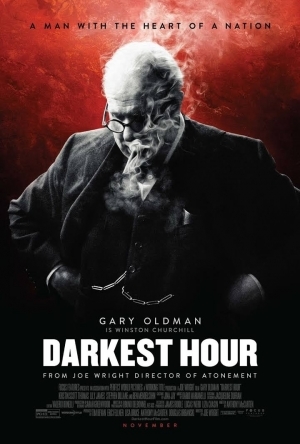
It’s 1940 and Western Europe is under siege. Neville Chamberlain (Ronald Pickup, “The Second Best Exotic Marigold Hotel“) is the Conservative Prime Minister but is voted out of office in an attempt to form a grand coalition government with Labour leader Clement Atlee (David Schofield). Despite appearing a shoe-in for the role, Viscount Halifax (Stephen Dillane) turns it down, thinking that his alternative (and bête noire) would drink from the poisoned chalice and be quickly be out of his (and Chamberlain’s) hair. For that alternative choice is the volatile and unpredictable Churchill (Gary Oldman), grudgingly invited into the job by King George VI (Ben Mendelsohn, “Rogue One“). With the Nazi’s bearing down on the 300,000 encircled troops at Dunkirk, and with calls from his war cabinet to capitulate and seek terms of settlement, this is indeed both Churchill’s, and the country’s, ‘darkest hour’.
Despite the woeful lack of historical knowledge among today’s youngsters, most will be at least aware of the story of Dunkirk, with many having absorbed Christopher Nolan’s film of last summer. This film is almost the matching bookend to that film, showing the terrifying behind-closed-door events that led up to that miracle. For it was terrifying seeing how close Britain came to the brink, and I’m not sure even I really appreciated that before. While this might have been a “thriller” if it had been a fictional story, we well know the outcome of the story: but even with this knowledge I still found the film to be extremely tense and claustrophobic as the net draws in around Churchill’s firmly-held beliefs.
Gary Oldman’s performance is extraordinary, and his award nominations are well-deserved. We have grown so used to some of his more over-the-top Russian portrayals in films like “Air Force One” and last year’s (pretty poor) “The Hitman’s Bodyguard” that it is easy to forget what a nuanced and flexible actor he is. Ever since that “No, surely not!” moment of that first glimpse of the film’s trailer, it has almost been impossible to ‘see’ Oldman behind the brilliant make-up of the character (Kazuhiro Tsuji gets a special credit for it). But his eyes are in there, and there are some extreme close-ups (for example, during a bizarre and tense phone call with Roosevelt (David Strathairn)) when you suddenly see “There you are!”.
The supportive wife – Clemmie (Kristin Scott Thomas) gives Winston (Gary Oldman) a hug.
While I have nothing against Brian Cox as an actor, I far prefer the portrayal of Churchill on show here compared to last year’s “Churchill“: true that that film was set three or four stressful years later, but Cox’s Churchill was portrayed as an incompetent fool, an embarrassment to the establishment that have to work around him. Oldman’s Churchill is irascible, unreasonable, but undeniably a leader and a great orator.
Mirroring “Churchill” though, the action is seen through the eyes of Churchill’s put-upon secretary, here played delightfully by Lily James (“Downton Abbey”, “Baby Driver“) who perfectly looks and sounds the part. The character is more successful than that of Ella Purnell’s Garrett in that she is given more room to develop her character and for the audience to warm to her. Oldman is getting all the kudos, but Lily James really deserves some for her touching and engaging performance here.
Perfectly cast: Lily James as Churchill’s secretary Elizabeth Layton.
Also in Oldman’s shadow is the always marvelous Kristin Scott Thomas (“Four Weddings and a Funeral”, “The English Patient”) as Clemmie Churchill, expressing all the love and frustration associated with being a long-suffering wife to an over-worked husband in the public service.
At the pen is “The Theory of Everything” writer Anthony McCarten, and I’d like to say its a great script but with most of the best lines (“a sheep in sheep’s clothing” – LoL) coming from Winston himself it’s difficult to tell. Some of the scenes can get a bit laborious and at 125 minutes – though not long by any means – the script could still perhaps have had a nip and tuck here and there.
Where some of this time is well spent though is in some sedate shots of London street life, across two separate scenes panning across everyday folk as the stresses of war start to become more evident. This is just one of the areas where director Joe Wright (“Atonement”, “Pride and Prejudice”) shows considerable panache, ably assisted by the cinematography of Bruno Delbonnel (“Inside Llewyn Davis“): a boy closes his telescope-fingers around Churchill’s plane; a bomb’s eye-view of the beleaguered Brigadier Nicholson in Calais; and – very impressively – the smoky imperiousness of the House of Commons set.
An atmospheric chamber: the recreation of the wartime House of Commons is spectacular (with production design by Sarah Greenwood (“Anna Karenina”, “Atonement”)).
And most-importantly Wright delivers what Christopher Nolan couldn’t deliver in “Dunkirk“: a properly CGI’d vista of hundred of small boats crossing the channel to Dunkirk. Now THAT is a scene that Kenneth Branagh could justly have looked in awe at!!!
There are a number of scenes that require disbelief to be suspended though: the biggest one being a tube train ride – very moving and effective I must say – but one that features the longest journey between any two stations on the District Line than has ever been experienced!
One stop on the District Line via Westminster…. via Harrow-on-the-Hill!
So this is a great film for really reliving a knife-edge moment in British history, and is highly recommended particularly for older viewers. If I’m honest though, between “Darkest Hour”, “Churchill” and John Lithgow’s excellent portrayal in “The Crown” I’m all over portrayals of the great man for a few years. Can we please move on now Hollywood?